
The ADDIE Model Created by Francisco Marin INTRODUCTION

The ADDIE Model Created by: Francisco Marin
INTRODUCTION The ADDIE model is an instructional design developed for the U. S Army in 1975 by the Centre for Educational Technology at Florida State University, ADDIE was later implemented across all branches of the U. S. Armed Forces. This same concept and model is now used by businesses, organizations, and in education for instructional design.
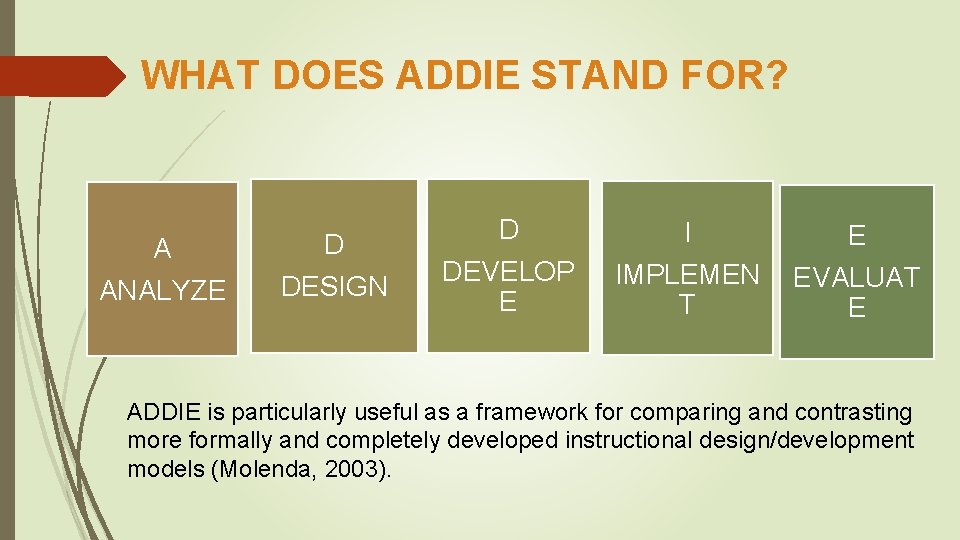
WHAT DOES ADDIE STAND FOR? A ANALYZE D DESIGN D I E DEVELOP E IMPLEMEN T EVALUAT E ADDIE is particularly useful as a framework for comparing and contrasting more formally and completely developed instructional design/development models (Molenda, 2003).
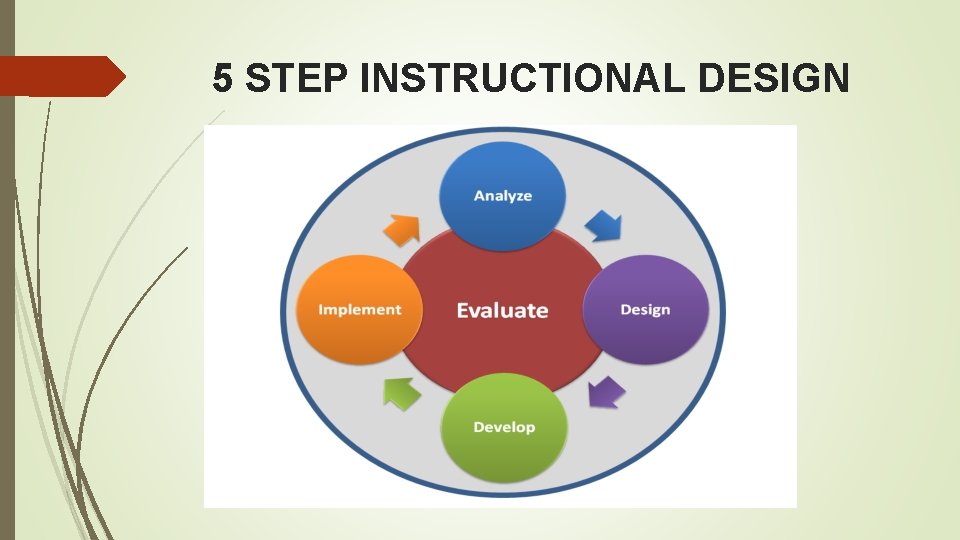
5 STEP INSTRUCTIONAL DESIGN
ANALYZE In the Analysis phase the problem is clarified by asking some of the following questions: Who is your audience What is your objective and goals What is the timeline, timeframe, due-dates Identify the problem When giving out work orders to the mechanics, I purposely ask them to check the bus repair order and identify the issue with the bus.
DESIGN The design phase is where you map out solutions, strategies, and the necessary methods to meet your goals, such as the following examples Introduce your training program Your instructional strategies What are the learning objectives State your goals Assessments, blueprint Who are the learners/participation Once the problem is identified, the mechanics request the parts needed for repairing the bus. Instructional design is not merely philosophy; it is not a set pf procedures arrived at by collaboration; it is a set of scientific principals and technology for implementing these principals in the development of instructional experiences and environments (Merrill, Drake, Lacy 1996)
DEVELOPMENT In the development stage, is where your analysis and design contents are chunked to develop your training program. In this stage, physical preparedness of media, technology tools, books, and software take place. Design your training media: smartphone, books, charts, laptop Create a content: guides, training program, Get feedback of the course: facilitators/trainers Conduct a test-run – sample test Student assessment A true physical course with contents The mechanic that is repairing the bus, uses the analyzers and collaborates with his peers to ensure proper repair is done.
IMPLEMENT During the implementation phase, training methods and the necessary tools are tested. Make sure all your training equipment is in order and is functional. Trainers and facilitators should cover the course curriculum Preparation of the learners: train them on new tools such as software and hardware Interaction with trainers and learners is very important at this stage Be consistent with your timeline and goals Arrange your learning space - your environment Instructions: be clear on expectations The mechanic then checks to ensure proper procedures were followed and makes certain that the repair is functional.
EVALUATE The evaluation phase consists of two parts: formative and summative. Formative evaluation is the assessment of the ADDIE procedures. Qualitative feedback – next steps – decisions – achievement - clarity Summative evaluation is designed for providing opportunities for feedback from the users. What was the purpose, evaluate student learning. Review ideas, objectives, results, and reactions Process training & feedback Collect Data Evaluate the learning purpose Revise content if necessary The mechanic completes the repair, conducts a safety inspection, and test drives the bus for evaluation, gives feedback with comments and results.
CONCLUSION ADDIE is used world wide and is effective in Instructional design. This model is designed for the purpose of student evaluation and learning outcomes. All the stages of ADDIE involve some type of formative evaluation, this model is phased in implementation stages to access student learning.
REFERENCES Molenda, M. (2003). In search of the elusive ADDIE model. Performance Improvements, 42(5), 34 -35 Merrill, M. D. , Drake, L. , Lacy, M. J. , Pratt, J, . & the ID 2 Research Group. (1996). Reclaiming instructional design. Education Technology, 36(5), 5 -7 Reiser, R. A. (2012). Trends and issues in instructional design and technology (3 rd ed. ). Boston ; Munich: Pearson.
- Slides: 11