
The Adaptive Dimension of Curriculum Rukhsana Bashir Lecturer
The Adaptive Dimension of Curriculum Rukhsana Bashir Lecturer Department of Special Education University of the Punjab, Lahore
Background • Adaptation is one important part of the process of change. • Teachers are expected to address the needs of an increasingly heterogeneous student population. • There is shift from the traditional paradigm to the evolving paradigm.
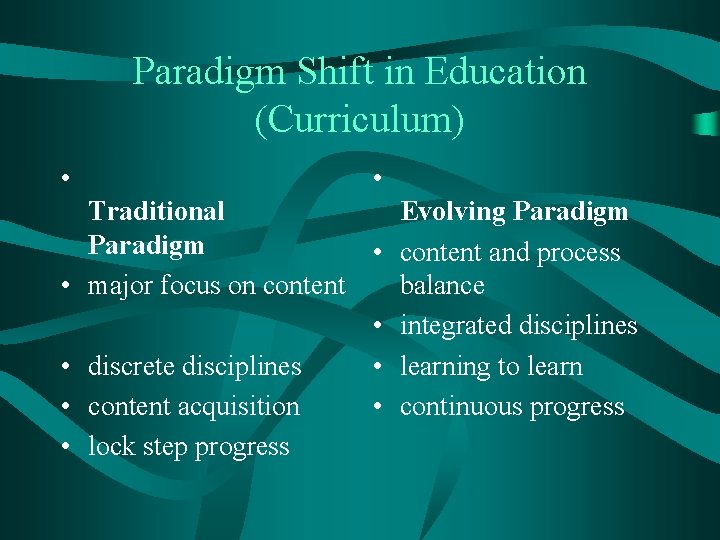
Paradigm Shift in Education (Curriculum) • • Traditional Evolving Paradigm • content and process • major focus on content balance • integrated disciplines • discrete disciplines • learning to learn • content acquisition • continuous progress • lock step progress
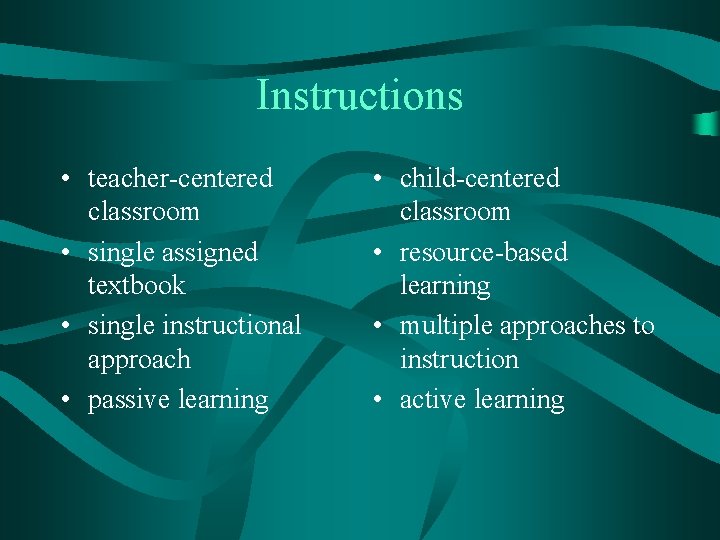
Instructions • teacher-centered classroom • single assigned textbook • single instructional approach • passive learning • child-centered classroom • resource-based learning • multiple approaches to instruction • active learning
Envinonment • competitive • system level management • supervision of learners • hierarchical structures • cooperative • school-site management • empowerment of learners • professional/collegial structures
Introduction • The Adaptive Dimension refers to the concept of making adjustments in approved educational programs to accommodate diversity in student learning needs. It includes those practices the teacher undertakes to make curriculum, instruction, and the learning environment meaningful and appropriate for each student.
Continue…. . • The Adaptive Dimension enables the teacher to: • Provide background knowledge or experience for a student when it is lacking; • Provide program enrichment and/or extension when it is needed; • Enhance student success and reduce the possibility of failure;
Address students' cultural needs; n Accommodate community needs; n Increase curriculum relevance for students; n Lessen discrepancies between student ability and achievement; n . Provide variety in learning materials, including community resources; and n. Maximize the student's potential for learning. n.
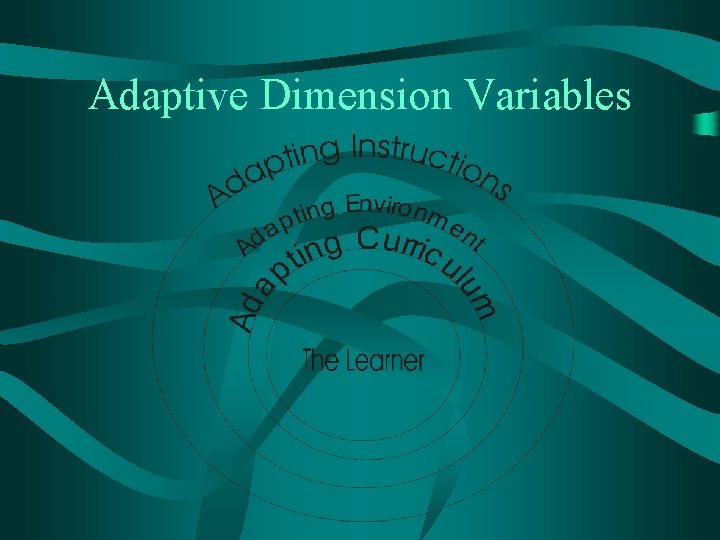
Adaptive Dimension Variables
The Learner • • • Learning Style Cognitive Development Physical Development Social Development Emotional Development Multiple Intelligences
Interests n Self Concept n Cultural Identity n
Learning Environment • Classroom Climate • Grouping Students for Instruction • Technical Support and Support Personnel • Physical Setting
Adapting Curriculum Assessment of Curriculum Concepts and Skills • Variations to Curriculum Content • Selection of Instructional Materials • Student Evaluation
Adapting Instructions • Instructional Strategies, Methods, and Skills • Reflection • Pacing and Timing Factors • Modification/Feedback Cycle
Summary • The Adaptive Dimension empowers the teacher to make adjustments in approved educational programs to accommodate variations in student needs. The document provides support for the position that decisions about adaptations are best made by professionals working with students on a daily basis.

Thanks
- Slides: 16