
The action plan on integration and inclusion 2021

- Slides: 13
The action plan on integration and inclusion 2021 -2027 Agnese Papadia Directorate General for Migration and Home Affairs European Commission
Why a new action plan on integration and inclusion? Ø Integration as part of a new, comprehensive approach to migration Ø Foster equality and social cohesion Ø Provide guidance and outline joint objectives Ø Increase the support offered by the Commission to Member States and integration stakeholders
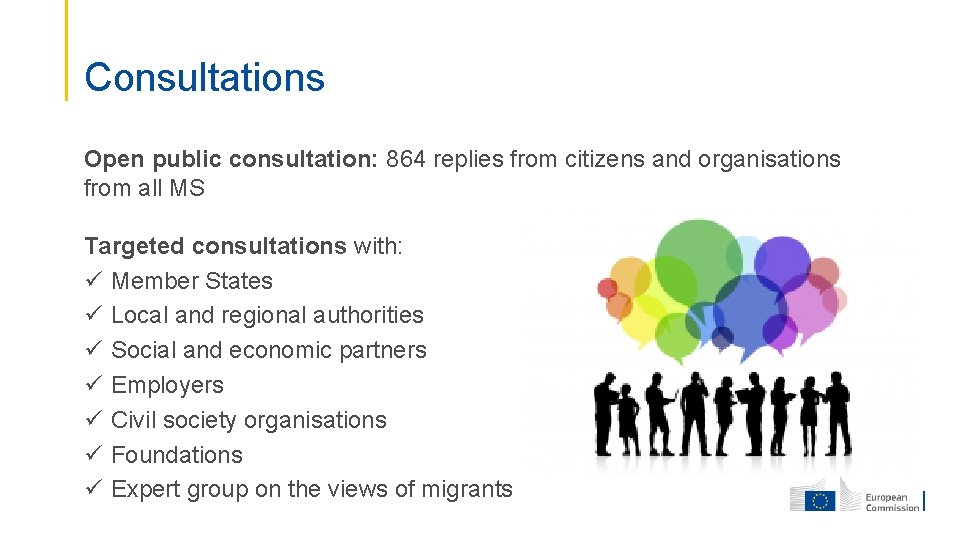
Consultations Open public consultation: 864 replies from citizens and organisations from all MS Targeted consultations with: ü Member States ü Local and regional authorities ü Social and economic partners ü Employers ü Civil society organisations ü Foundations ü Expert group on the views of migrants
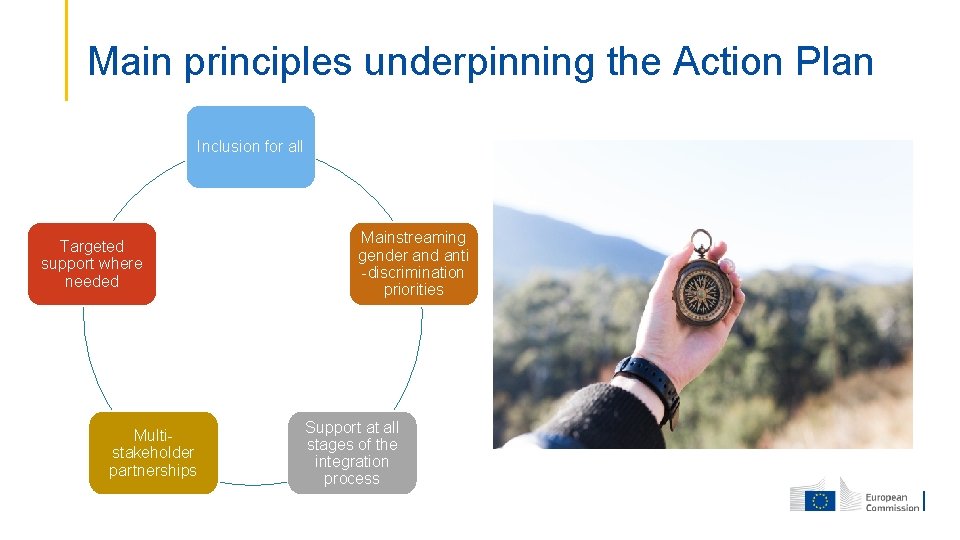
Main principles underpinning the Action Plan Inclusion for all Targeted support where needed Multistakeholder partnerships Mainstreaming gender and anti -discrimination priorities Support at all stages of the integration process
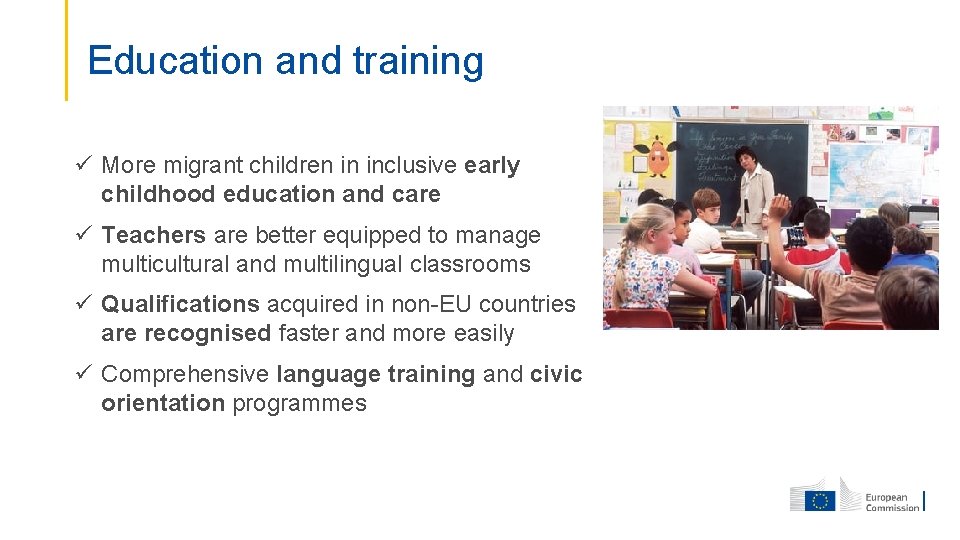
Education and training ü More migrant children in inclusive early childhood education and care ü Teachers are better equipped to manage multicultural and multilingual classrooms ü Qualifications acquired in non-EU countries are recognised faster and more easily ü Comprehensive language training and civic orientation programmes
Employment and skills ü Stronger cooperation between labour market actors ü More support for migrant entrepreneurs ü Increase participation of migrant women ü Assessment of migrants’ skills is more effective and faster ü More migrants participate in high-quality vocational education and training
Health ü Migrants are informed about their rights and have equal access to health care services, including mental health services ü Services are adapted to the specific needs of migrants ü Specific challenges faced by migrant women are fully considered
Housing ü Equal access to adequate and affordable housing ü Fight discrimination on the housing market ü More innovative inclusive housing solutions are widely used across the EU
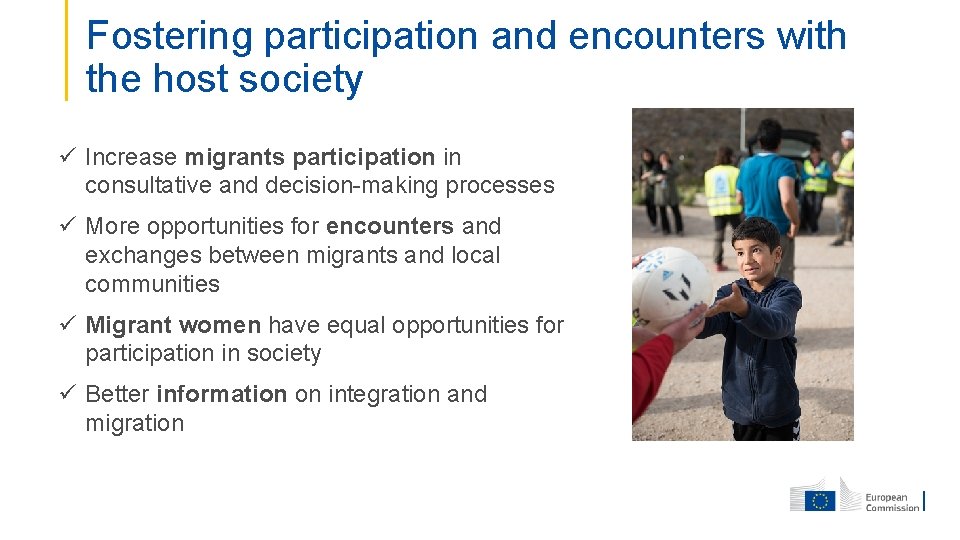
Fostering participation and encounters with the host society ü Increase migrants participation in consultative and decision-making processes ü More opportunities for encounters and exchanges between migrants and local communities ü Migrant women have equal opportunities for participation in society ü Better information on integration and migration
Enhance the use of digital tools for integration and inclusion ü Support Member States in assessing and improving digital integration services ü Increase digital skills among migrants
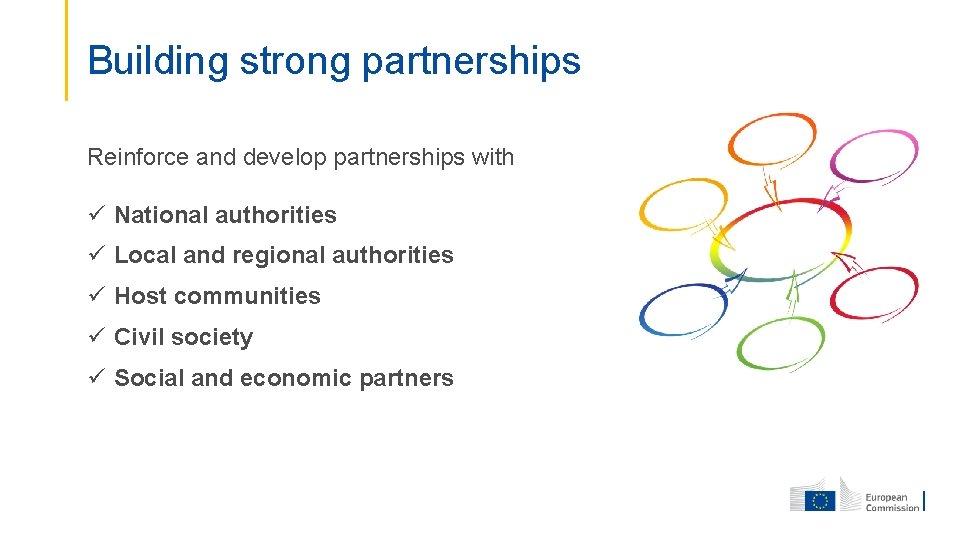
Building strong partnerships Reinforce and develop partnerships with ü National authorities ü Local and regional authorities ü Host communities ü Civil society ü Social and economic partners
Increased EU funding opportunities ü Coordinated approach at national, regional and local level in programming and implementation ü Synergies between different funds ü Easier access for local and regional authorities ü Involve key actors in programming, implementing and monitoring ü Take into account the situation of migrants and their children in national Recovery and Resilience Plans
Monitoring progress: towards an evidencebased integration and inclusion policy ü Launch a new Eurobarometer on integration ü Explore with Member States the development of a joint ‘scoreboard’ of integration policies