
THE ACCOMMODATION PROCESS AT CSU Lindsay Varkula M
- Slides: 19
THE ACCOMMODATION PROCESS AT CSU Lindsay Varkula, M. A. Graduate Assistant Office of Disability Services Cleveland State University
PRESENTATION OVERVIEW Federal law Registration/intake process Disability Services values Types of AHEAD and best practices for disability services in higher education accommodations and services
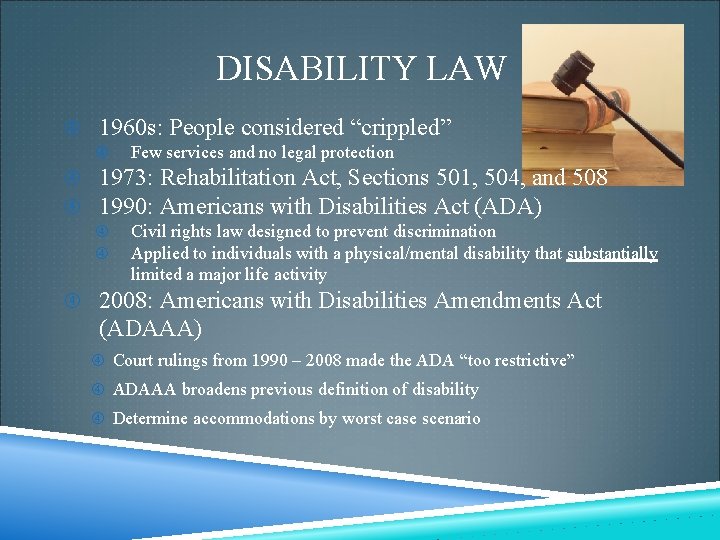
DISABILITY LAW 1960 s: People considered “crippled” Few services and no legal protection 1973: Rehabilitation Act, Sections 501, 504, and 508 1990: Americans with Disabilities Act (ADA) Civil rights law designed to prevent discrimination Applied to individuals with a physical/mental disability that substantially limited a major life activity 2008: Americans with Disabilities Amendments Act (ADAAA) Court rulings from 1990 – 2008 made the ADA “too restrictive” ADAAA broadens previous definition of disability Determine accommodations by worst case scenario
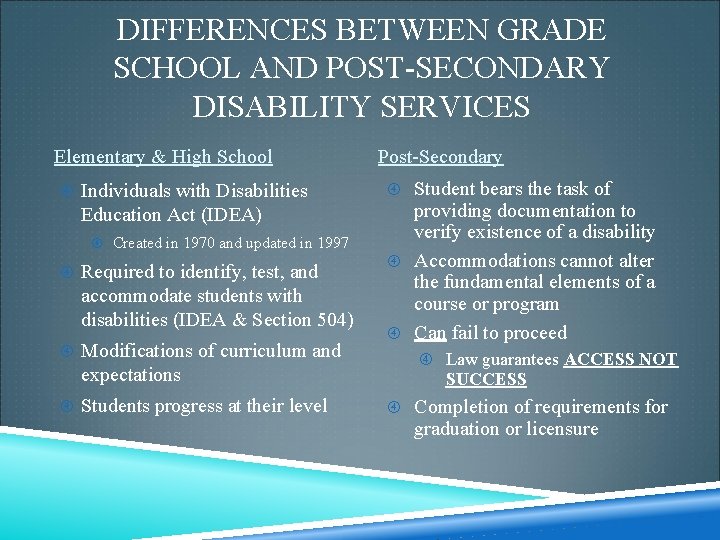
DIFFERENCES BETWEEN GRADE SCHOOL AND POST-SECONDARY DISABILITY SERVICES Elementary & High School Individuals with Disabilities Education Act (IDEA) Created in 1970 and updated in 1997 Required to identify, test, and accommodate students with disabilities (IDEA & Section 504) Modifications of curriculum and expectations Students progress at their level Post-Secondary Student bears the task of providing documentation to verify existence of a disability Accommodations cannot alter the fundamental elements of a course or program Can fail to proceed Law guarantees ACCESS NOT SUCCESS Completion of requirements for graduation or licensure
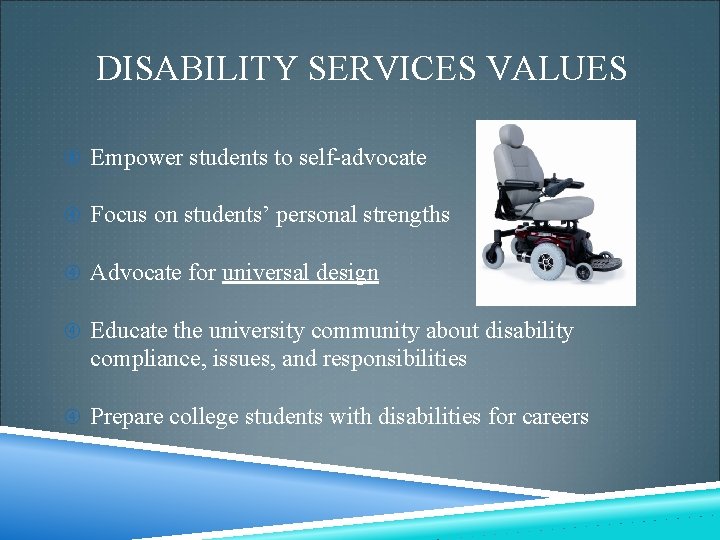
DISABILITY SERVICES VALUES Empower students to self-advocate Focus on students’ personal strengths Advocate for universal design Educate the university community about disability compliance, issues, and responsibilities Prepare college students with disabilities for careers
A. H. E. A. D. Association on Higher Education and Disability (AHEAD) http: //www. ahead. org/ AHEAD creates Best Practices guidelines for working with individuals with disabilities in a higher education setting CSU’s Office of Disability Services utilizes AHEAD guidelines
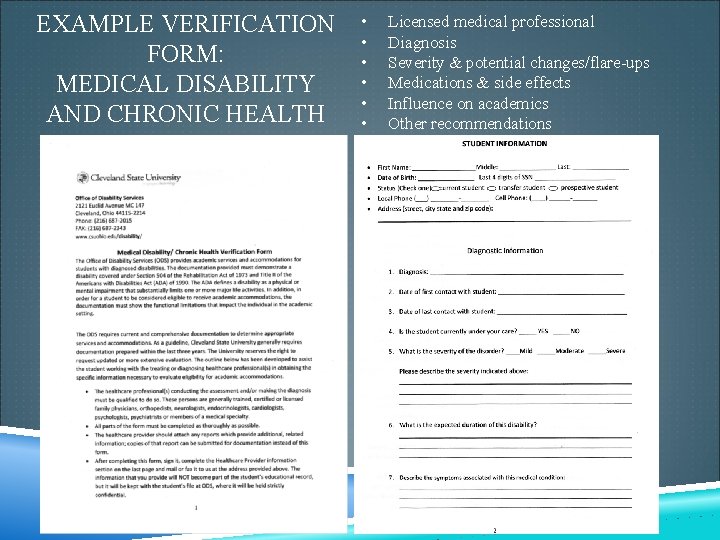
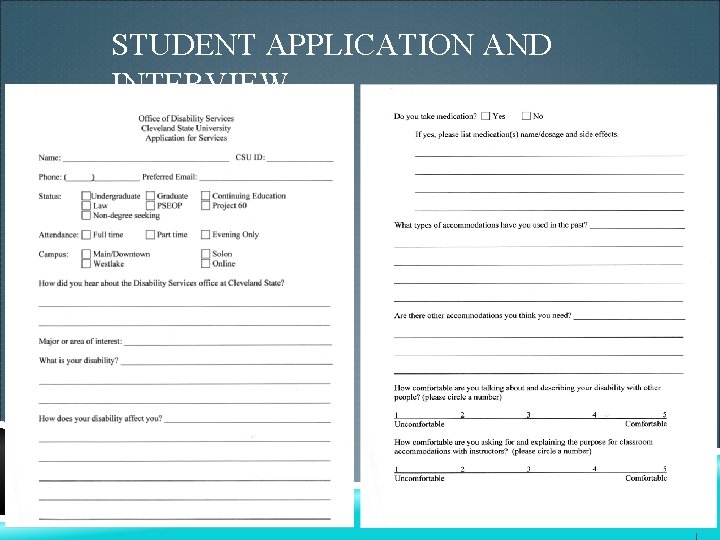
REGISTRATION/INTAKE PROCESS Documentation review Minimum documentation requirements Verification forms Interview Impact on performance Knowledge of disability and diagnosis Medication and side-effects Determination of appropriate accommodations
MINIMUM DOCUMENTATION REQUIREMENTS Current (generally within the past 3 years) Completed by a licensed professional Includes a diagnosis
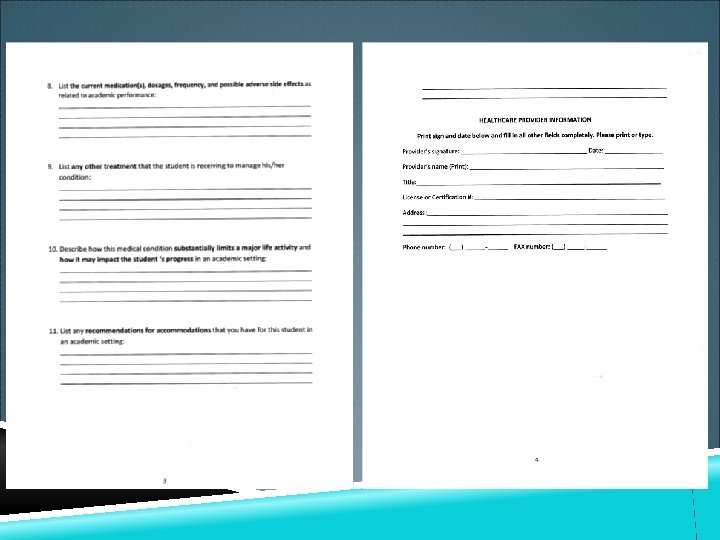
EXAMPLE VERIFICATION FORM: MEDICAL DISABILITY AND CHRONIC HEALTH • • • Licensed medical professional Diagnosis Severity & potential changes/flare-ups Medications & side effects Influence on academics Other recommendations
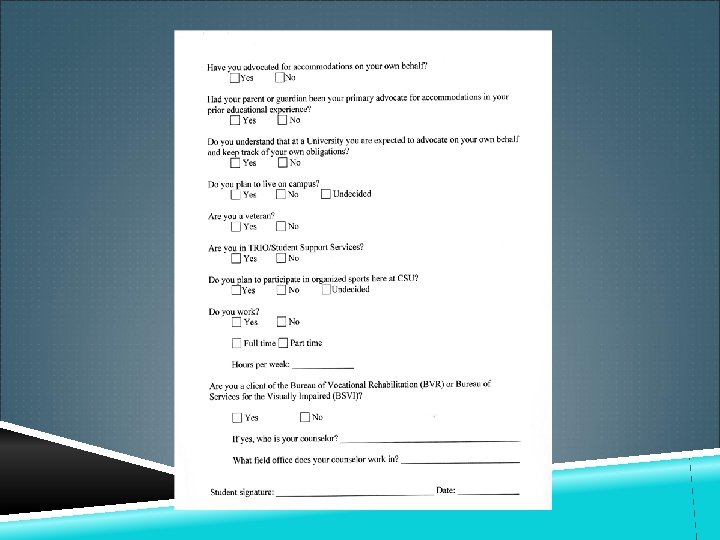
STUDENT APPLICATION AND INTERVIEW
ACCOMMODATION MEMOS After registering with ODS, students receive memos Students give memos to all instructors A short conversation with instructors is recommended ODS students must be given to all instructors at the beginning of each semester to receive accommodations No accommodations can be granted retrospectively Instructors are expected to provide all accommodations listed on memos Instructors encouraged to contact ODS if accommodations are not effective Instructors encouraged to contact ODS with concerns (attendance, exams, assignments) Instructors encouraged to call ODS for recommendations/collaborative problem-solving
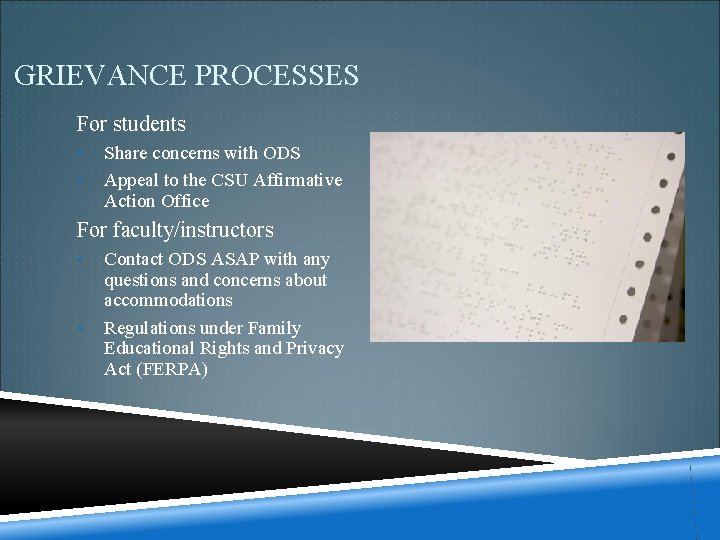
GRIEVANCE PROCESSES For students • • Share concerns with ODS Appeal to the CSU Affirmative Action Office For faculty/instructors • • Contact ODS ASAP with any questions and concerns about accommodations Regulations under Family Educational Rights and Privacy Act (FERPA)
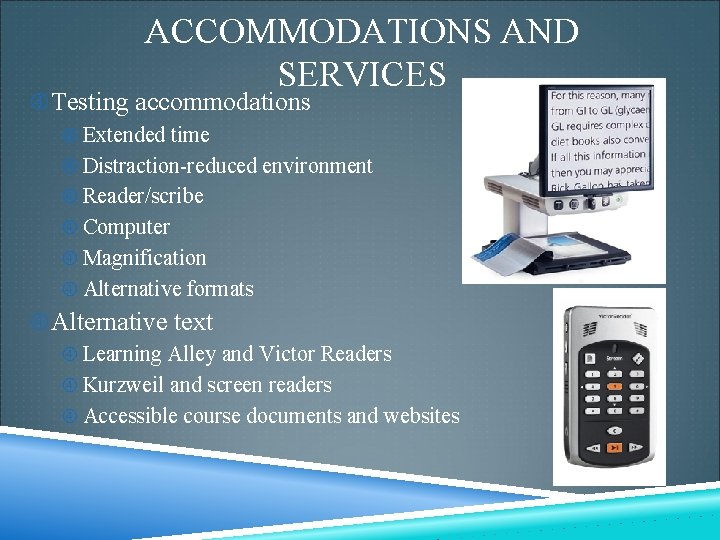
ACCOMMODATIONS AND SERVICES Testing accommodations Extended time Distraction-reduced environment Reader/scribe Computer Magnification Alternative formats Alternative text Learning Alley and Victor Readers Kurzweil and screen readers Accessible course documents and websites
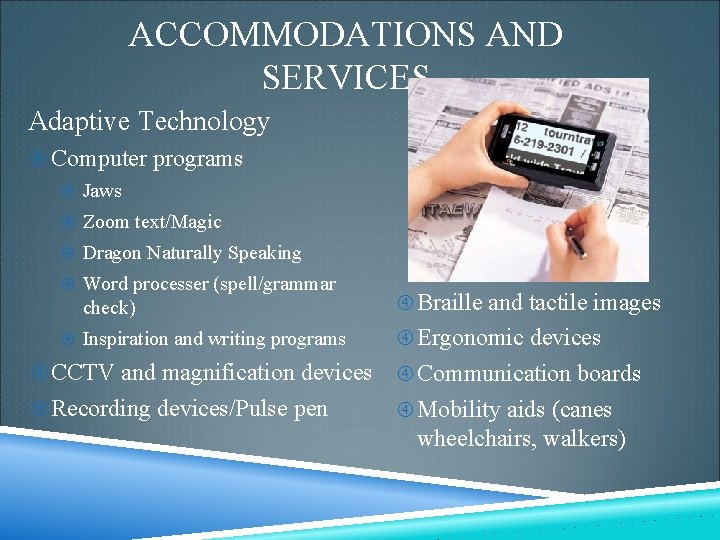
ACCOMMODATIONS AND SERVICES Adaptive Technology Computer programs Jaws Zoom text/Magic Dragon Naturally Speaking Word processer (spell/grammar check) Inspiration and writing programs Braille and tactile images Ergonomic devices CCTV and magnification devices Communication boards Recording devices/Pulse pen Mobility aids (canes wheelchairs, walkers)
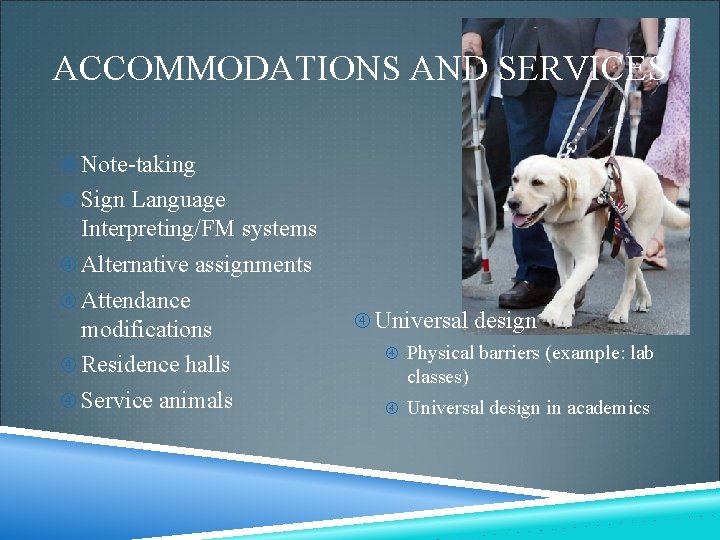
ACCOMMODATIONS AND SERVICES Note-taking Sign Language Interpreting/FM systems Alternative assignments Attendance modifications Residence halls Service animals Universal design Physical barriers (example: lab classes) Universal design in academics
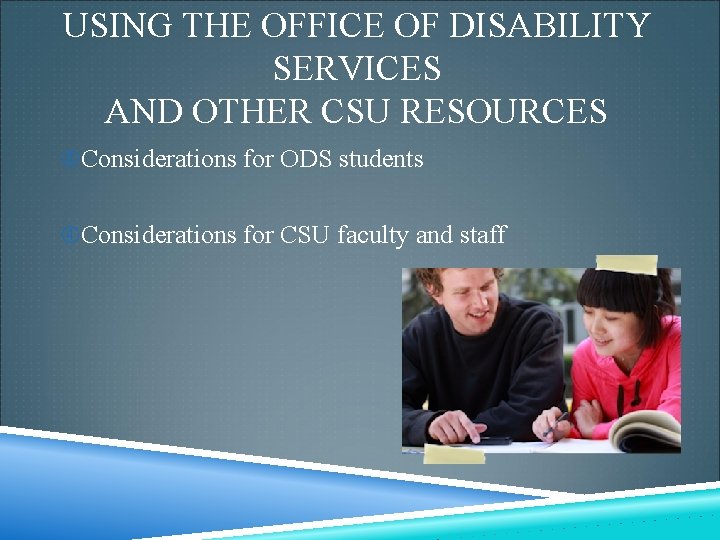
USING THE OFFICE OF DISABILITY SERVICES AND OTHER CSU RESOURCES Considerations for ODS students Considerations for CSU faculty and staff
Office of Disability Services 2121 Euclid Avenue MC 147 Cleveland, OH 44115 -2214 Phone: (216) 687 -2015 Fax: (216) 687 -2343 ods@csuohio. edu