
The Aboriginal Flag The symbolic meaning of the
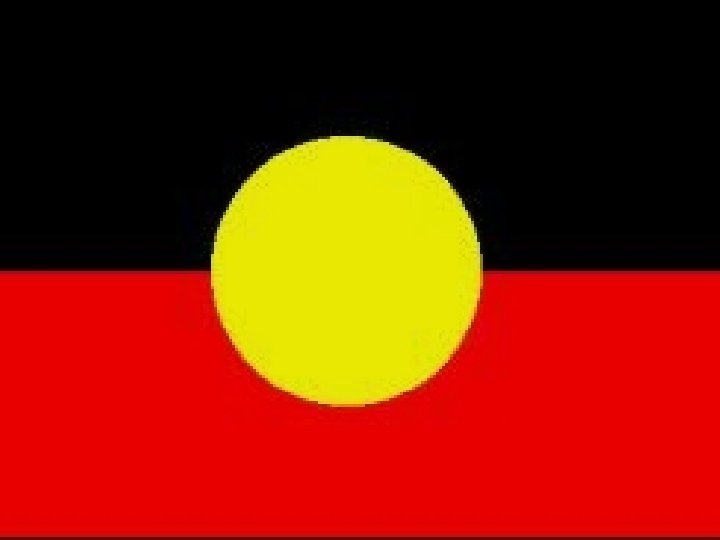
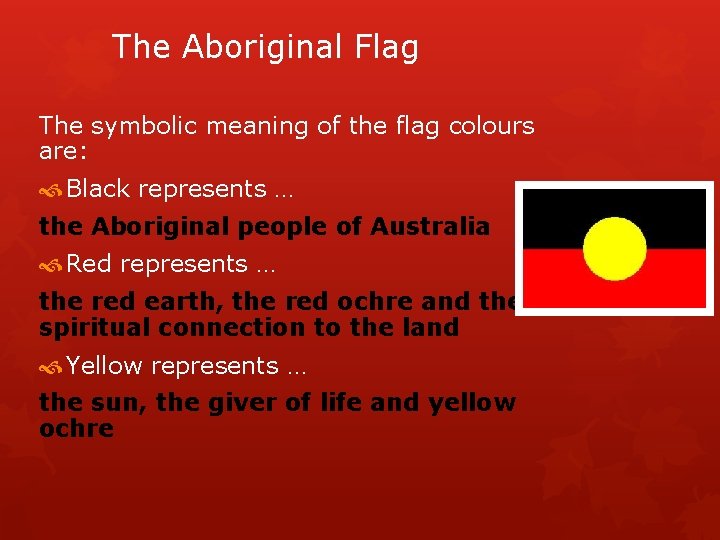
The Aboriginal Flag The symbolic meaning of the flag colours are: Black represents … the Aboriginal people of Australia Red represents … the red earth, the red ochre and the spiritual connection to the land Yellow represents … the sun, the giver of life and yellow ochre
The Aboriginal flag was designed by Indigenous Elder Harold Thomas in 1971. The flag is flown or displayed permanently at Aboriginal centres throughout Australia. It should only be flown by non-Aboriginal Australians when permission has been granted.
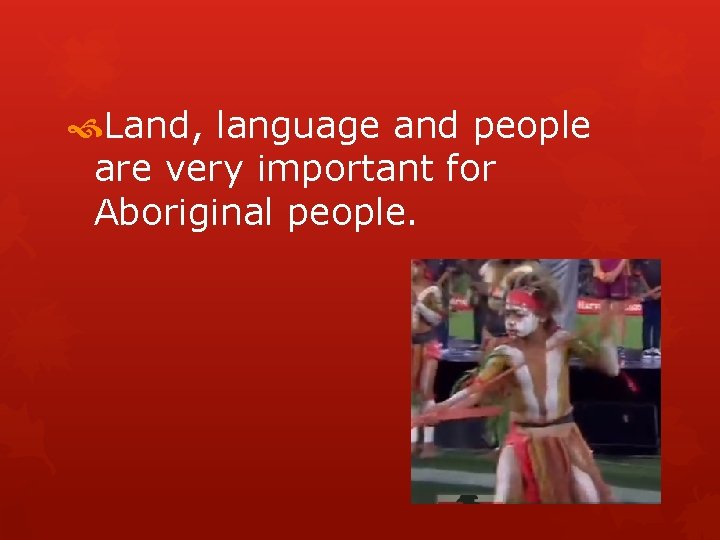
Land, language and people are very important for Aboriginal people.
Brisbane’s Aborigines Before European settlement, there were about 5 000 Aborigines in the Brisbane area. The two main clans around Brisbane were the Jagera (? ) and Turrbul peoples. Clans are a collection of families, who live together in the same area. People within the clan cannot marry each other.

Aboriginal Language In the Brisbane area, the people spoke the Yaggera language.
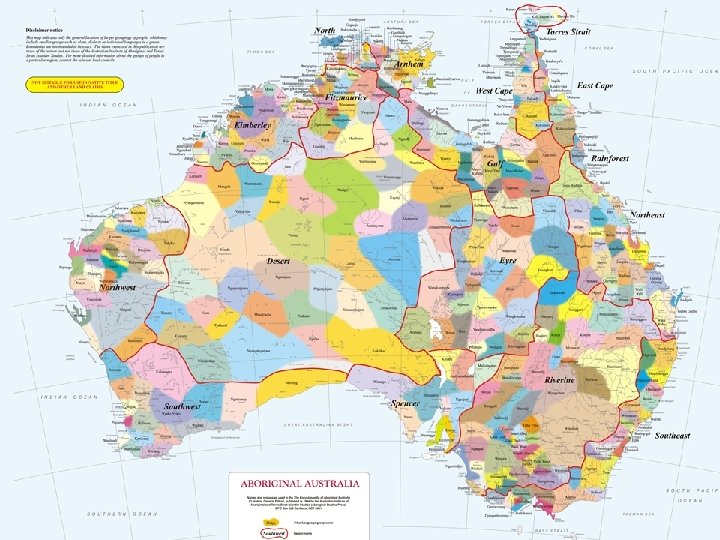

Where Brisbane’s Aboriginal people lived. The Turrbul mainly lived north of the Brisbane River. The Jagera were mostly located south of the river.
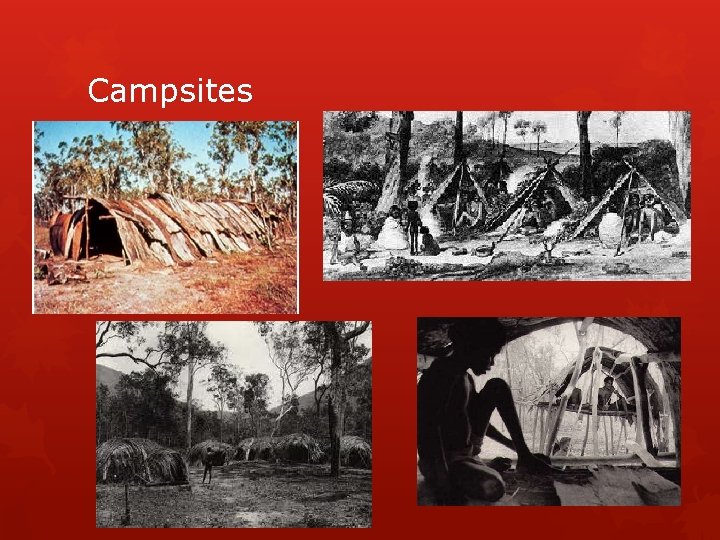
Campsites
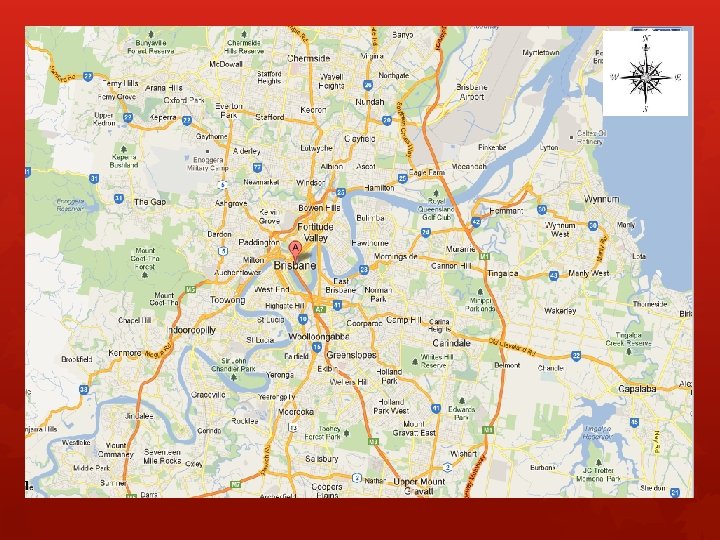
Campsites Brisbane was known as Mian-jin which means ‘place shaped like a spike’ The Turrbul and the Jagera had lots of campsites. Some were located at Woolloongabba, Toowong, Bowen Hills, Newstead, Nundah, Newmarket and Nudgee.
A popular camping and corroboree spot for the Turrbal people was Breakfast Creek. They called it Yowoggera, meaning corroboree place. The main camp for the Turrbal clan was where the Ekka is now situated.
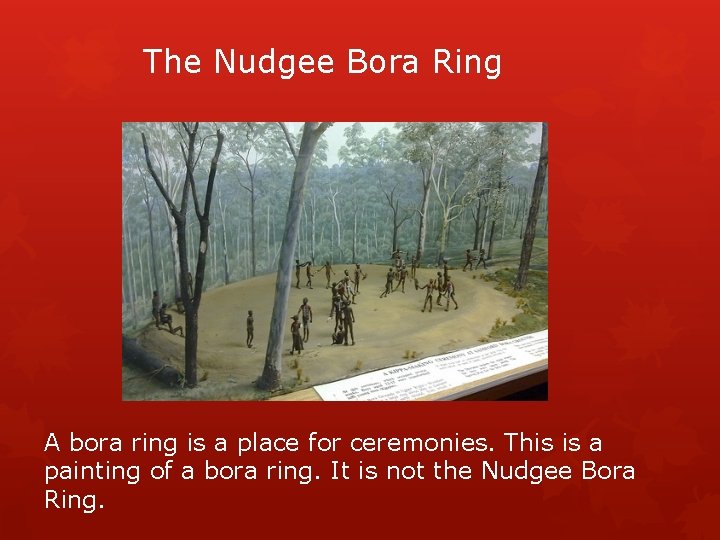
The Nudgee Bora Ring A bora ring is a place for ceremonies. This is a painting of a bora ring. It is not the Nudgee Bora Ring.
The Nudgee Bora Ring is on the south eastern edge of the Norths Banyo Rugby League Club playing fields, on Childs Rd. The Bora Ring was oval in shape, having dimensions of 21 metres by 17 metres. This was the ring used by the males. Women were strictly not allowed in the area. Aborigines from surrounding districts as far as Pinkenba and Zillmere would congregate at Nudgee to participate in ritual ceremonies, corroborees and tribal dances.
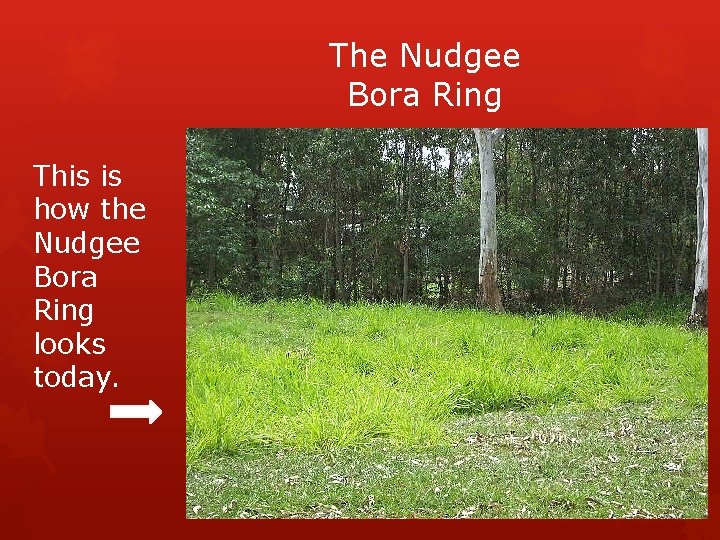
The Nudgee Bora Ring This is how the Nudgee Bora Ring looks today.
The Aboriginal people also had many pathways that allowed them access to different parts of Brisbane. The Turrbal clan visited other groups to share food when there was plenty.
Ceremonies Aboriginal ceremonies are used to teach rules and laws that are believed to have been handed down by dreamtime spirits. Most Aboriginal ceremonies are referred to as ‘men’s business. ’ There also another group of ceremonies called ‘secret women’s business’
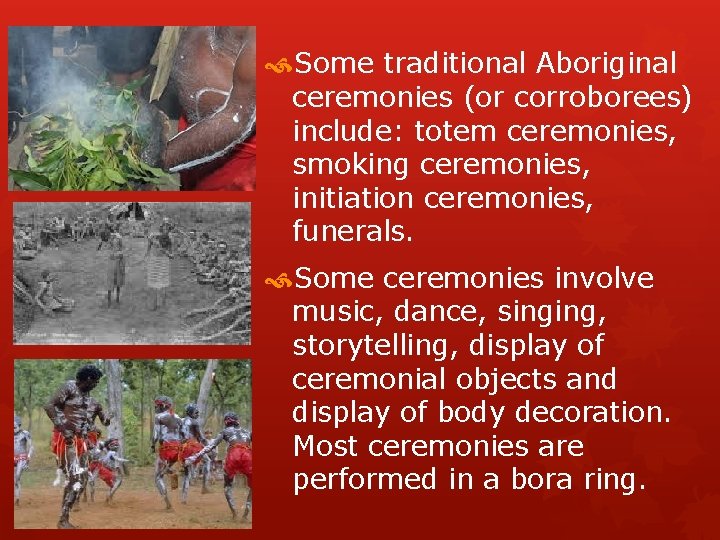
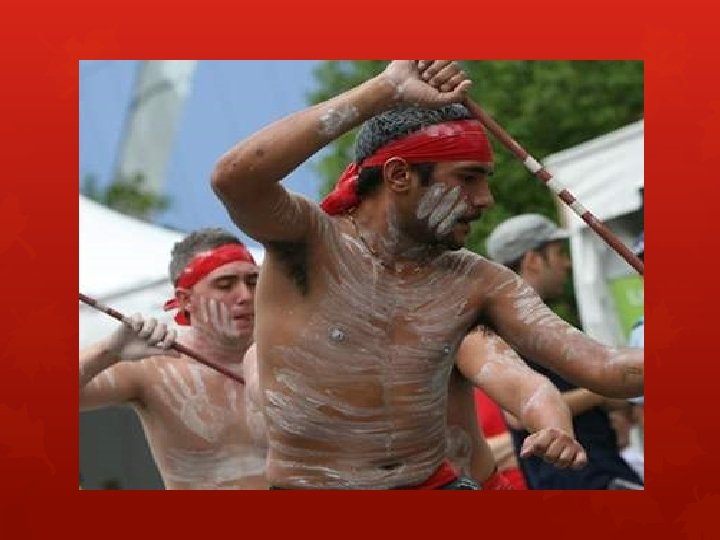
Some traditional Aboriginal ceremonies (or corroborees) include: totem ceremonies, smoking ceremonies, initiation ceremonies, funerals. Some ceremonies involve music, dance, singing, storytelling, display of ceremonial objects and display of body decoration. Most ceremonies are performed in a bora ring.

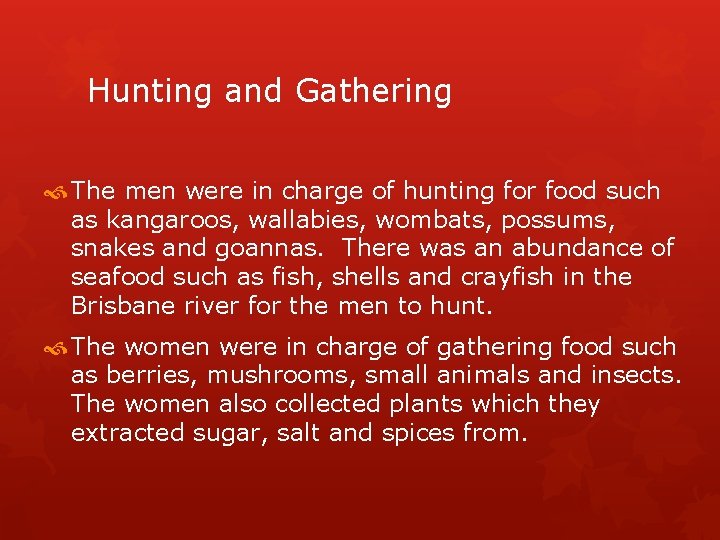
Hunting and Gathering The men were in charge of hunting for food such as kangaroos, wallabies, wombats, possums, snakes and goannas. There was an abundance of seafood such as fish, shells and crayfish in the Brisbane river for the men to hunt. The women were in charge of gathering food such as berries, mushrooms, small animals and insects. The women also collected plants which they extracted sugar, salt and spices from.
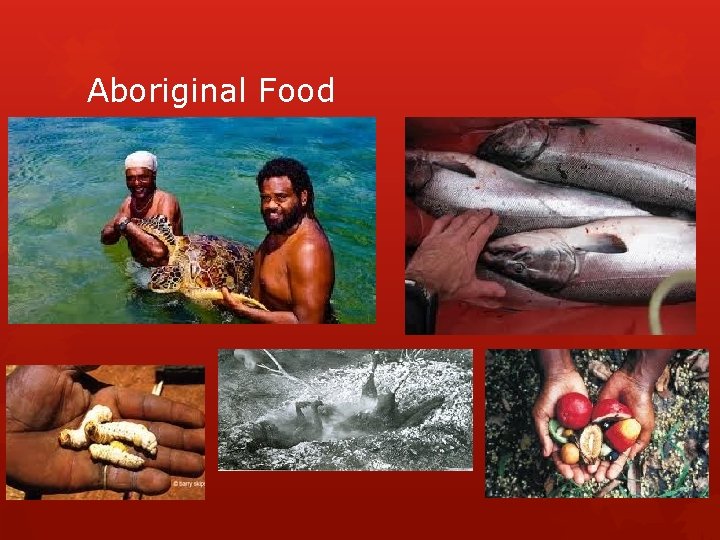
Aboriginal Food
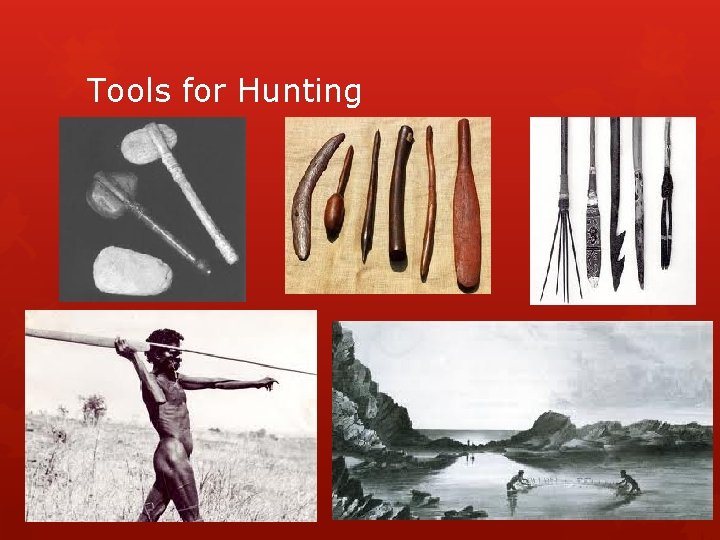
Tools for Hunting
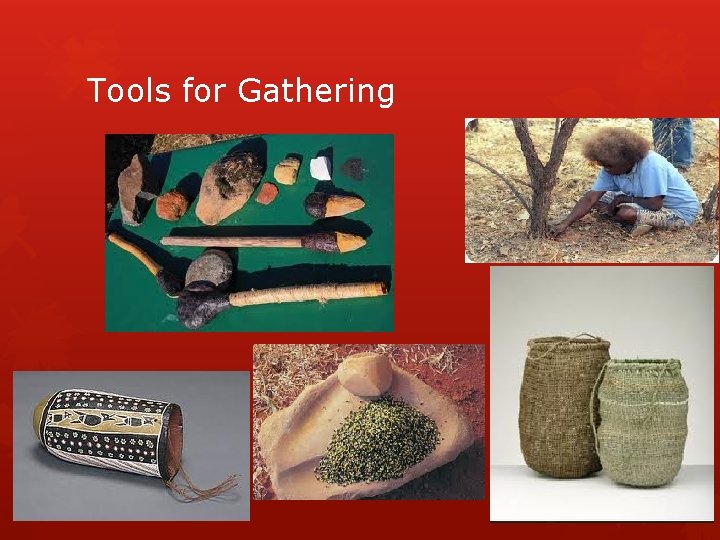
Tools for Gathering
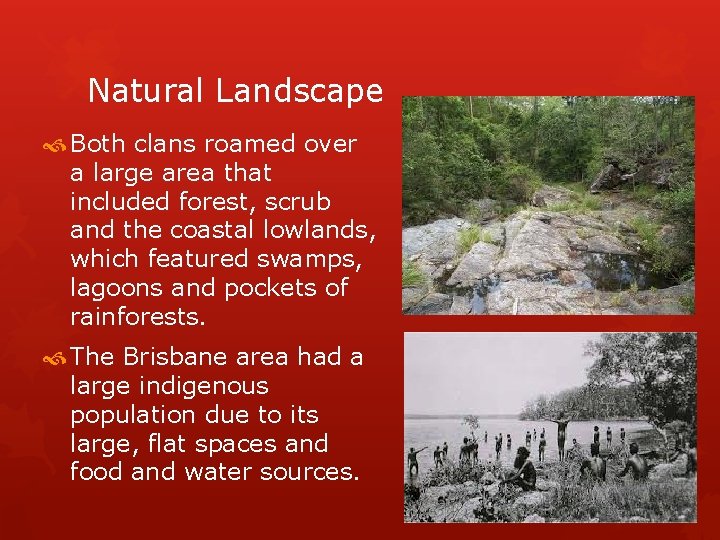
Natural Landscape Both clans roamed over a large area that included forest, scrub and the coastal lowlands, which featured swamps, lagoons and pockets of rainforests. The Brisbane area had a large indigenous population due to its large, flat spaces and food and water sources.
Brisbane Dreaming http: //aso. gov. au/titles/documentaries/brisbanedreaming/clip 1/ http: //aso. gov. au/titles/documentaries/brisbanedreaming/clip 2/ http: //aso. gov. au/titles/documentaries/brisbanedreaming/clip 3/
The Turrbal people were fishing people. The Brisbane River was an essential source of livelihood for the Turrbal people. Creeks and swamps around Brisbane were vital food sources. Tom Petrie recalled in his writing in 1901 that, as a young boy he used to catch tortoises with Turrbal children in the swamp at New Farm – which meant “a place of the land tortoise”. Binkenba was the Turrbal name for New Farm. Kurilpa was the Turrbal name for West End – which meant “a place for rats”.
- Slides: 27