
The abessive case of the Permic languages The
The abessive case of the Permic languages The 14 th International Morphology Meeting May 13 -16 Budapest, Hungary Arja Hamari Department of Finnish, Finno-Ugrian and Scandinavian Studies University of Helsinki, Finland
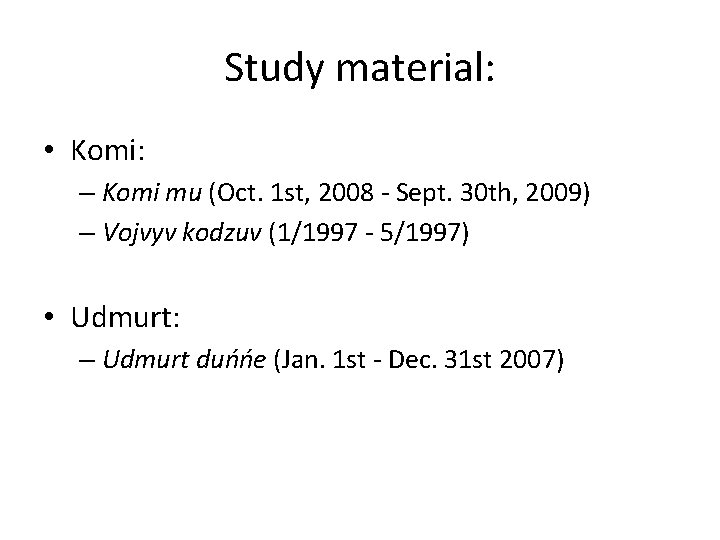
Study material: • Komi: – Komi mu (Oct. 1 st, 2008 - Sept. 30 th, 2009) – Vojvyv kodzuv (1/1997 - 5/1997) • Udmurt: – Udmurt duńńe (Jan. 1 st - Dec. 31 st 2007)
![Janhunen (1982: 31): "[--] Other suffixes in PU could also have had case-like uses:](http://slidetodoc.com/presentation_image_h2/fdeca109d8c43cf41e7bd485e3dfb7af/image-3.jpg "Janhunen (1982: 31): \"[--] Other suffixes in PU could also have had case-like uses:")
Janhunen (1982: 31): "[--] Other suffixes in PU could also have had case-like uses: it is difficult to distinguish a case ending from certain types of derivative morphemes. For instance, a caritive in *-ktå/ -ktä (used as a case form in Finnic) existed in PU, but whether it was a case form or a derivational formation remains unclear. "
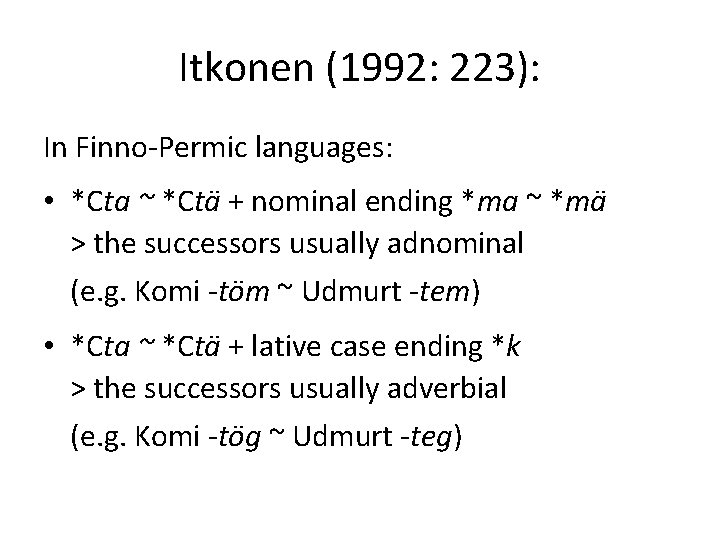
Itkonen (1992: 223): In Finno-Permic languages: • *Cta ~ *Ctä + nominal ending *ma ~ *mä > the successors usually adnominal (e. g. Komi -töm ~ Udmurt -tem) • *Cta ~ *Ctä + lative case ending *k > the successors usually adverbial (e. g. Komi -tög ~ Udmurt -teg)
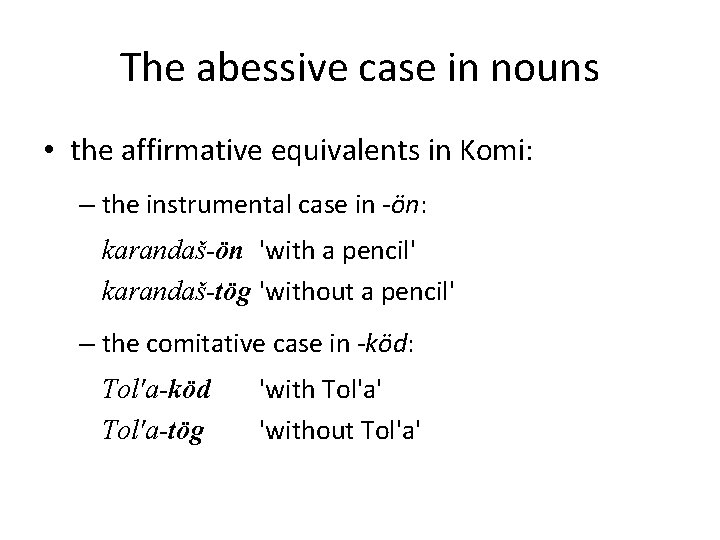
The abessive case in nouns • the affirmative equivalents in Komi: – the instrumental case in -ön: karandaš-ön 'with a pencil' karandaš-tög 'without a pencil' – the comitative case in -köd: Tol'a-köd Tol'a-tög 'with Tol'a' 'without Tol'a'
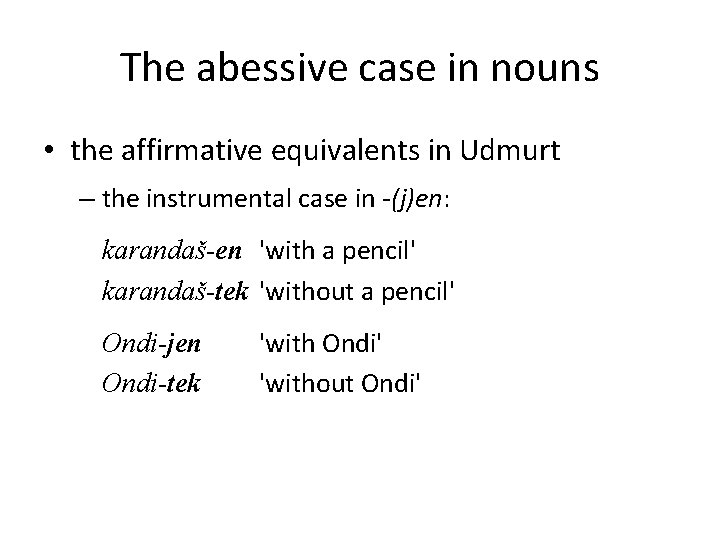
The abessive case in nouns • the affirmative equivalents in Udmurt – the instrumental case in -(j)en: karandaš-en 'with a pencil' karandaš-tek 'without a pencil' Ondi-jen Ondi-tek 'with Ondi' 'without Ondi'
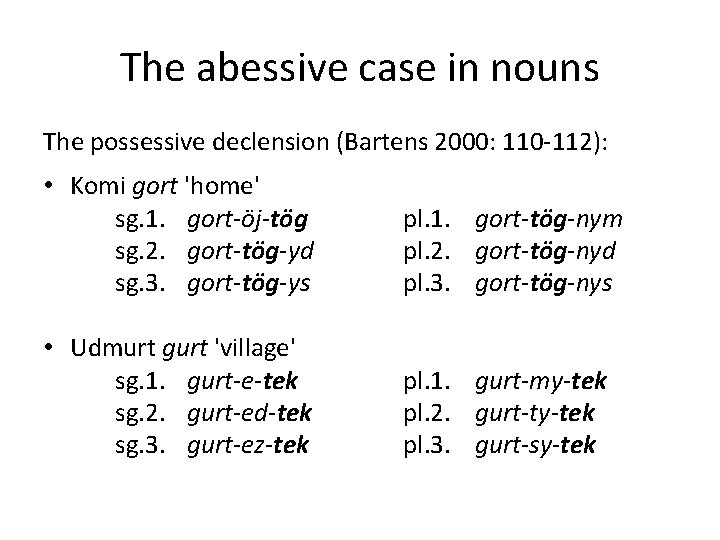
The abessive case in nouns The possessive declension (Bartens 2000: 110 -112): • Komi gort 'home' sg. 1. gort-öj-tög sg. 2. gort-tög-yd sg. 3. gort-tög-ys pl. 1. gort-tög-nym pl. 2. gort-tög-nyd pl. 3. gort-tög-nys • Udmurt gurt 'village' sg. 1. gurt-e-tek sg. 2. gurt-ed-tek sg. 3. gurt-ez-tek pl. 1. gurt-my-tek pl. 2. gurt-ty-tek pl. 3. gurt-sy-tek
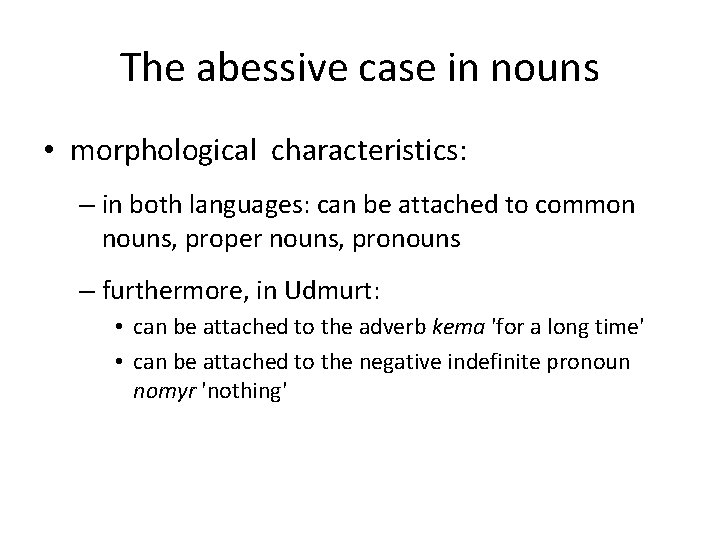
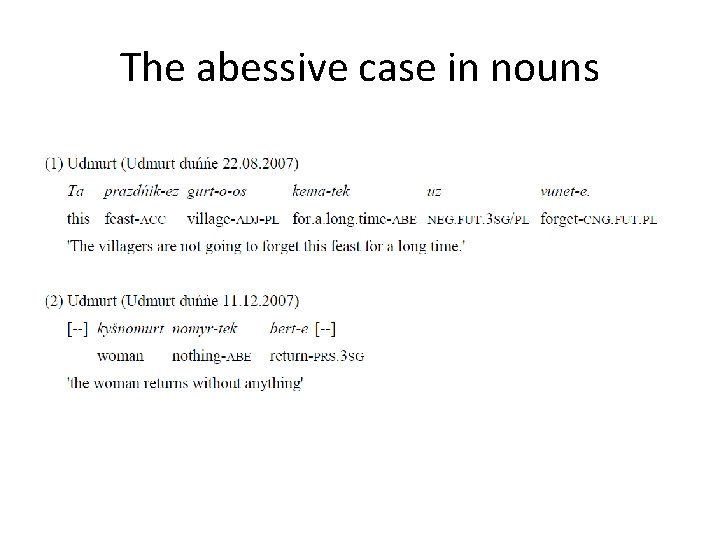
The abessive case in nouns • morphological characteristics: – in both languages: can be attached to common nouns, proper nouns, pronouns – furthermore, in Udmurt: • can be attached to the adverb kema 'for a long time' • can be attached to the negative indefinite pronoun nomyr 'nothing'
The abessive case in nouns
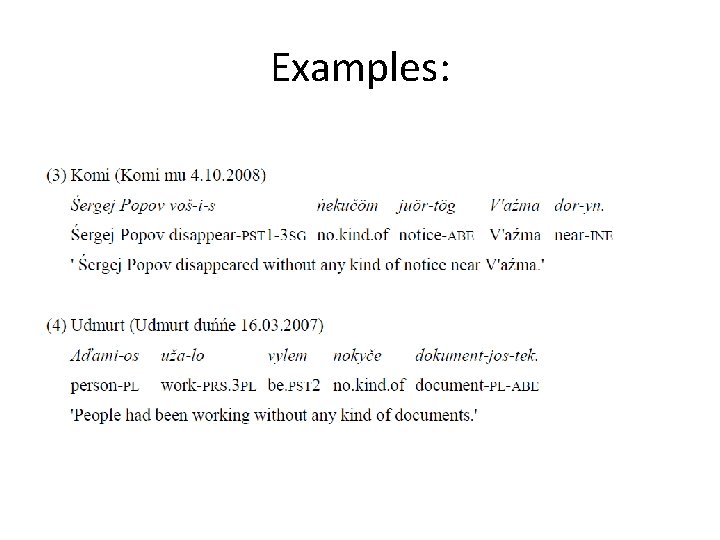
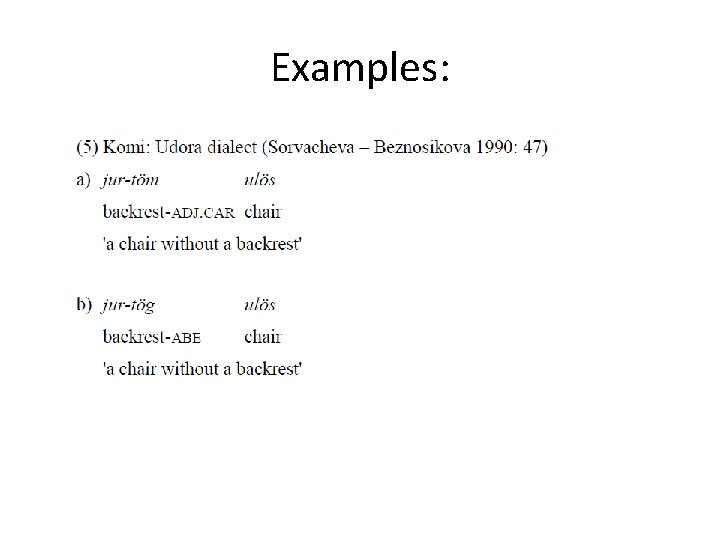
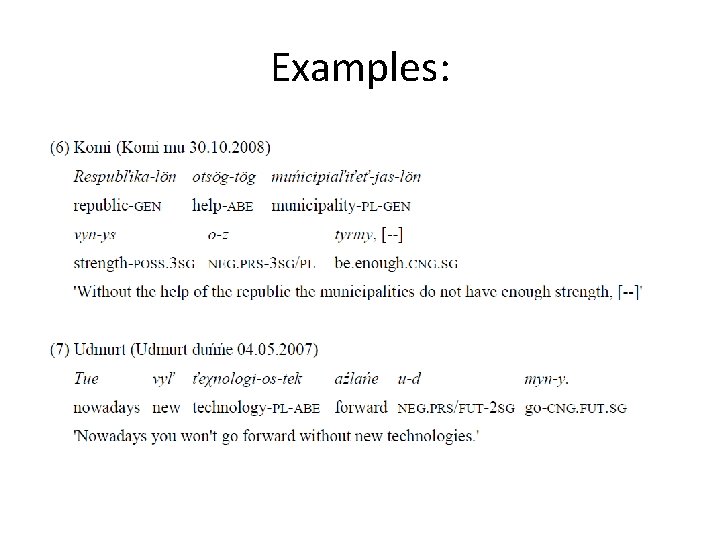
The abessive case in nouns • Syntactic characteristics: – in both languages: the case forms function as adverbials – in the Udora dialect of Komi: the case forms function both as adverbials and as attributes
Examples:
Examples:
The abessive case in nouns • in both languages: modifiers to the abessive forms – adjective – possessor in nominative or in genitive – negative indefinite pronoun – participle
Examples:
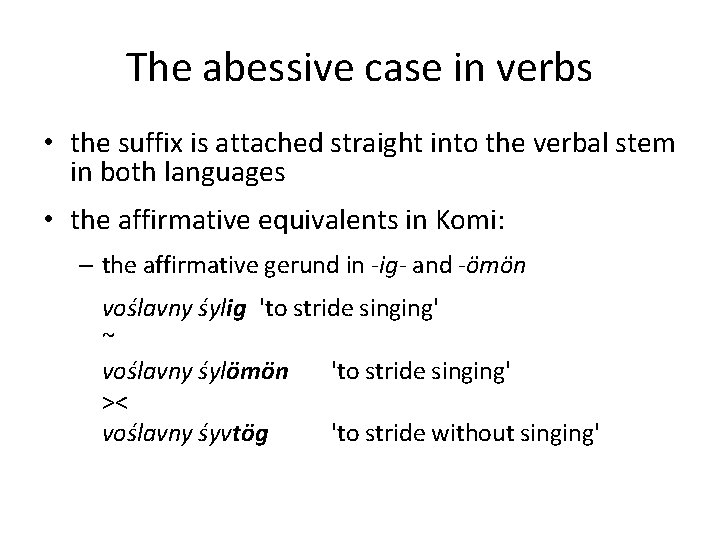
The abessive case in verbs • the suffix is attached straight into the verbal stem in both languages • the affirmative equivalents in Komi: – the affirmative gerund in -ig- and -ömön voślavny śylig 'to stride singing' ~ voślavny śylömön 'to stride singing' >< voślavny śyvtög 'to stride without singing'
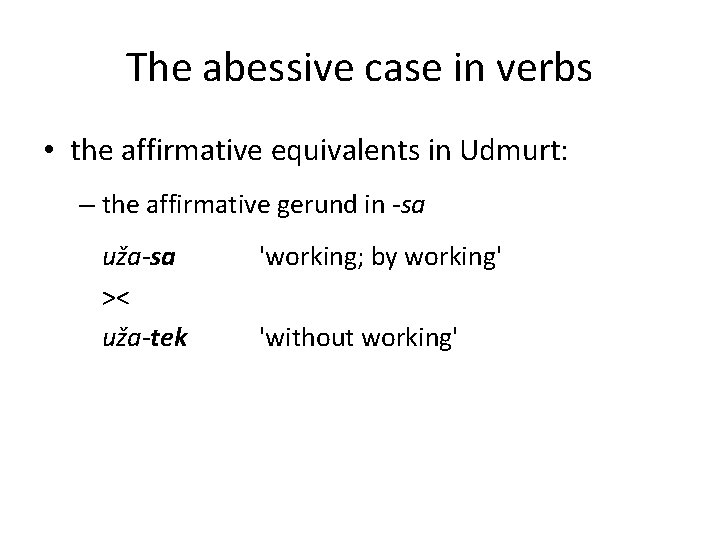
The abessive case in verbs • the affirmative equivalents in Udmurt: – the affirmative gerund in -sa uža-sa >< uža-tek 'working; by working' 'without working'
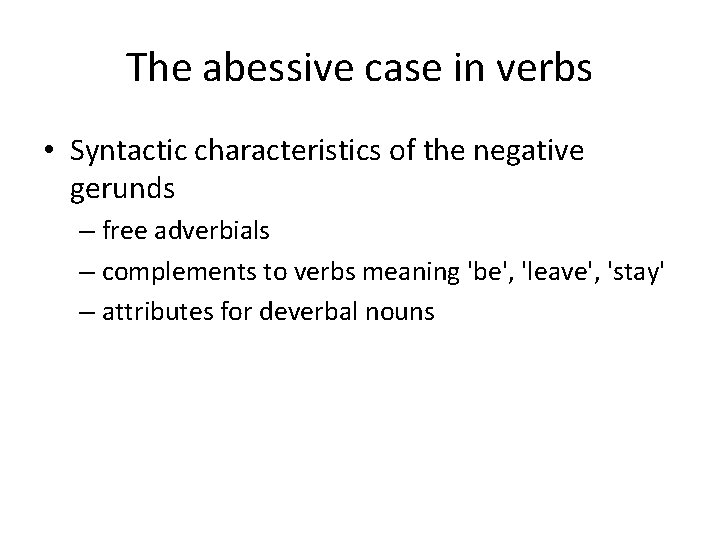
The abessive case in verbs • Syntactic characteristics of the negative gerunds – free adverbials – complements to verbs meaning 'be', 'leave', 'stay' – attributes for deverbal nouns
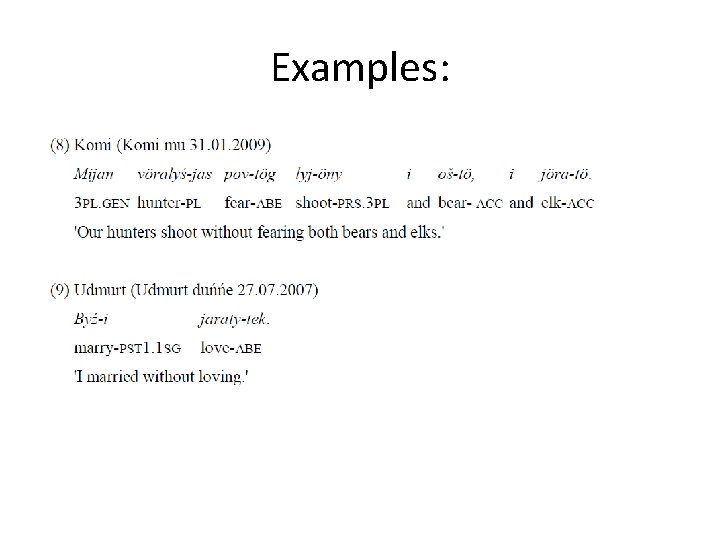
Examples:
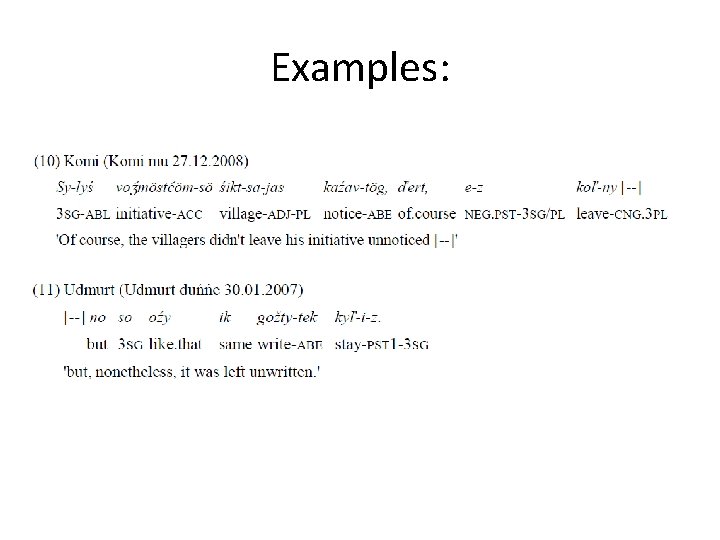
Examples:
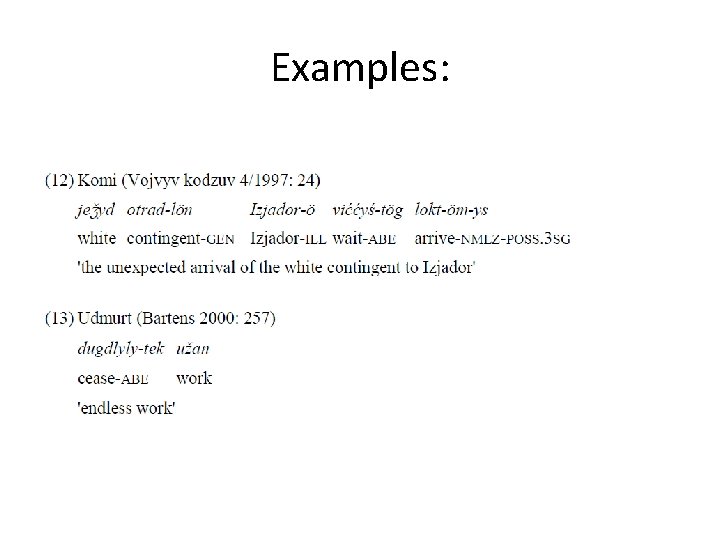
Examples:
The changes of the case system in Proto-Permian • Baker (1985: 137 -153): – phonological processes – secretion – semantic shifts – adaptation of nonflectional elements – case-compounding • was anything preserved from the older system? – the abessive case
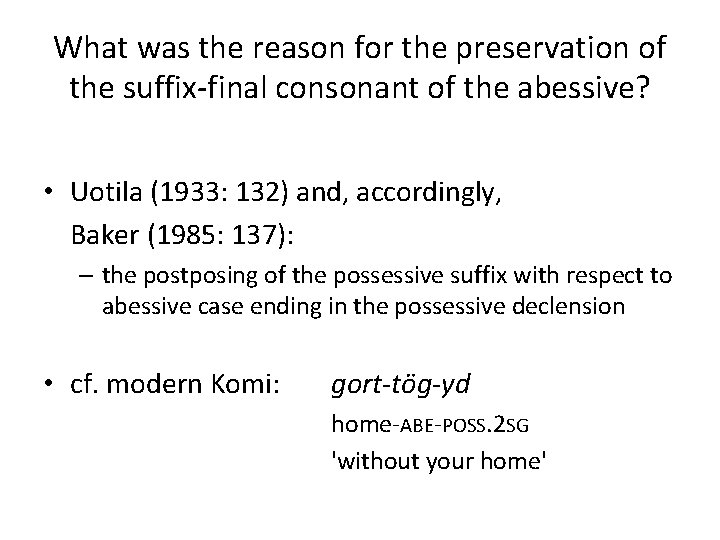
What was the reason for the preservation of the suffix-final consonant of the abessive? • Uotila (1933: 132) and, accordingly, Baker (1985: 137): – the postposing of the possessive suffix with respect to abessive case ending in the possessive declension • cf. modern Komi: gort-tög-yd home-ABE-POSS. 2 SG 'without your home'
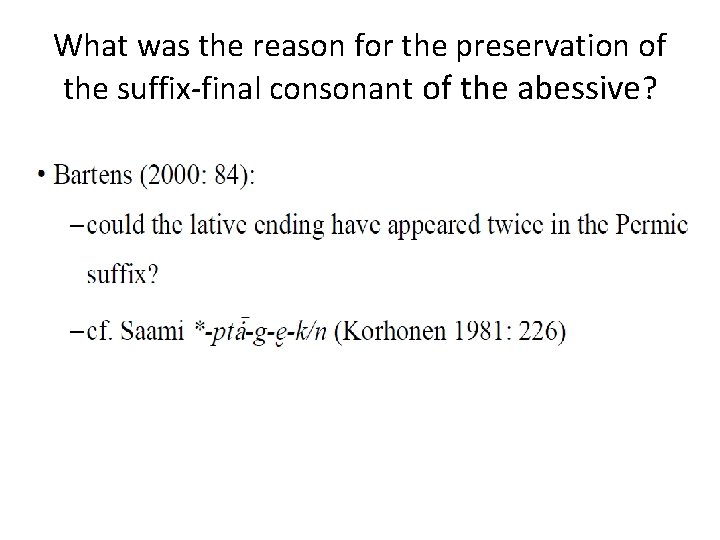
What was the reason for the preservation of the suffix-final consonant of the abessive?
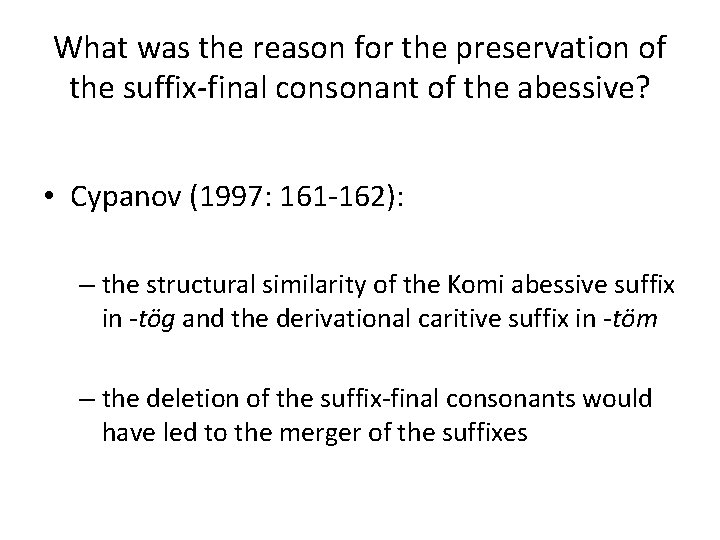
What was the reason for the preservation of the suffix-final consonant of the abessive? • Cypanov (1997: 161 -162): – the structural similarity of the Komi abessive suffix in -tög and the derivational caritive suffix in -töm – the deletion of the suffix-final consonants would have led to the merger of the suffixes
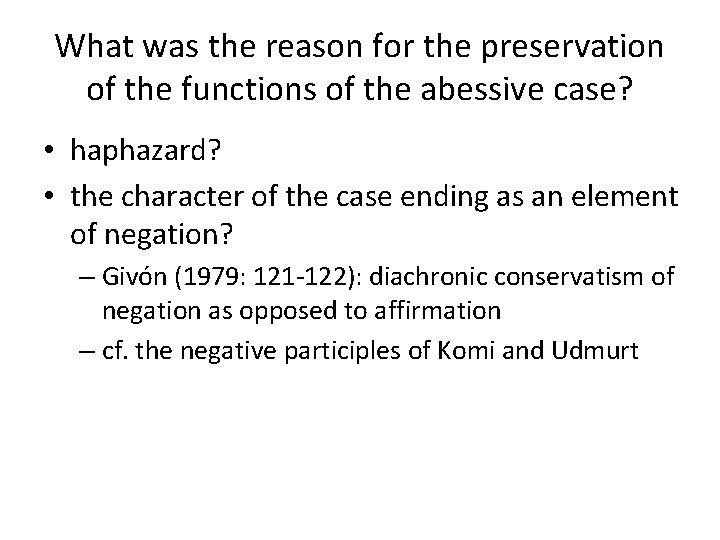
What was the reason for the preservation of the functions of the abessive case? • haphazard? • the character of the case ending as an element of negation? – Givón (1979: 121 -122): diachronic conservatism of negation as opposed to affirmation – cf. the negative participles of Komi and Udmurt
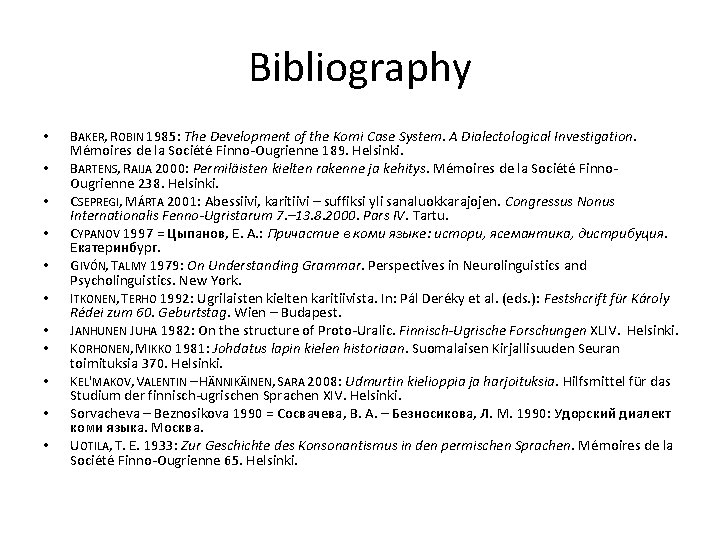
Bibliography • • • BAKER, ROBIN 1985: The Development of the Komi Case System. A Dialectological Investigation. Mémoires de la Société Finno-Ougrienne 189. Helsinki. BARTENS, RAIJA 2000: Permiläisten kielten rakenne ja kehitys. Mémoires de la Société Finno. Ougrienne 238. Helsinki. CSEPREGI, MÁRTA 2001: Abessiivi, karitiivi – suffiksi yli sanaluokkarajojen. Congressus Nonus Internationalis Fenno-Ugristarum 7. – 13. 8. 2000. Pars IV. Tartu. CYPANOV 1997 = Цыпанов, Е. А. : Причастие в коми языке: истори, ясемантика, дистрибуция. Екатеринбург. GIVÓN, TALMY 1979: On Understanding Grammar. Perspectives in Neurolinguistics and Psycholinguistics. New York. ITKONEN, TERHO 1992: Ugrilaisten kielten karitiivista. In: Pál Deréky et al. (eds. ): Festshcrift für Károly Rédei zum 60. Geburtstag. Wien – Budapest. JANHUNEN JUHA 1982: On the structure of Proto-Uralic. Finnisch-Ugrische Forschungen XLIV. Helsinki. KORHONEN, MIKKO 1981: Johdatus lapin kielen historiaan. Suomalaisen Kirjallisuuden Seuran toimituksia 370. Helsinki. KEL'MAKOV, VALENTIN – HÄNNIKÄINEN, SARA 2008: Udmurtin kielioppia ja harjoituksia. Hilfsmittel für das Studium der finnisch-ugrischen Sprachen XIV. Helsinki. Sorvacheva – Beznosikova 1990 = Сосвачева, В. А. – Безносикова, Л. М. 1990: Удорский диалект коми языка. Москва. UOTILA, T. E. 1933: Zur Geschichte des Konsonantismus in den permischen Sprachen. Mémoires de la Société Finno-Ougrienne 65. Helsinki.
- Slides: 26