
The ABCs of CBM for Math Spelling Writing

The ABCs of CBM for Math, Spelling, & Writing Michelle Hosp, Ph. D.

Objectives • • Overview of Curriculum-Based Measurement (CBM) Review CBM measures in: math, spelling, and writing (including writing IEP goals and objectives) Cover criteria for progress monitoring in math and spelling Provide information on where to obtain measures for math, spelling, and writing 2
CBM Research • • CBM research has been conducted over the past 25+ years Research has demonstrated that when teachers use CBM for instructional decision making: ¨ Students learn more ¨ Teacher decision making improves ¨ Students are more aware of their performance 3

Different Types of CBA 4
Salient Features of Mastery Measurement • • • Curriculum is broken down into specific subskills or short-term instructional objectives Assess specific skill that is being taught Example ¨ Multidigit addition, with regrouping Skills usually assessed using teachermade tests or tests in curriculum 5

Fourth Grade Math Computation Curriculum 1. 2. 3. 4. 5. 6. 7. 8. 9. 10. Multidigit addition with regrouping Multidigit subtraction with regrouping Multiplication facts, factors to 9 Multiply 2 -digit numbers by a 1 -digit number Multiply 2 -digit numbers by a 2 -digit number Division facts, divisors to 9 Divide 2 -digit numbers by a 1 -digit number Divide 3 -digit numbers by a 1 -digit number Add/subtract simple fractions, like denominators Add/subtract whole number and mixed number 6

Multidigit Addition Mastery Test 7
Mastery of 4 th Grade Math Multidigit + with regrouping Multidigit - with regrouping Multiplication facts to 9 8
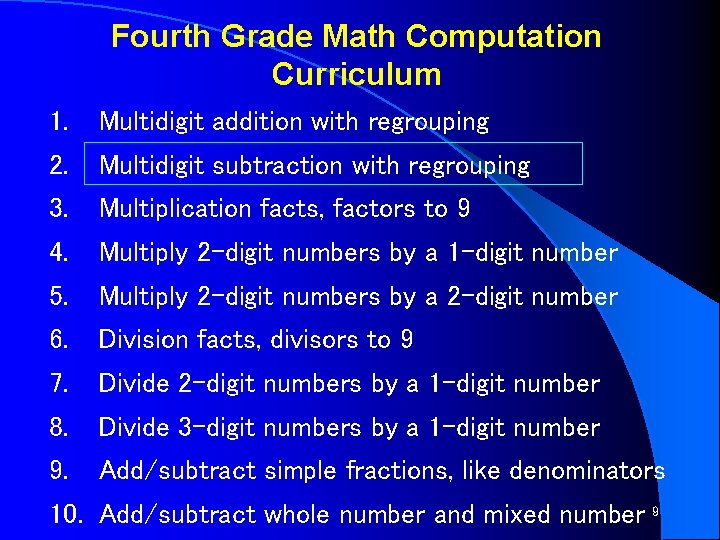
Fourth Grade Math Computation Curriculum 1. Multidigit addition with regrouping 2. Multidigit subtraction with regrouping 3. Multiplication facts, factors to 9 4. Multiply 2 -digit numbers by a 1 -digit number 5. Multiply 2 -digit numbers by a 2 -digit number 6. Division facts, divisors to 9 7. Divide 2 -digit numbers by a 1 -digit number 8. Divide 3 -digit numbers by a 1 -digit number 9. Add/subtract simple fractions, like denominators 10. Add/subtract whole number and mixed number 9

Multidigit Subtraction Mastery Test 10
Mastery of 4 th Grade Math Multidigit + with regrouping Multidigit - with regrouping Multiplication facts to 9 11
Downsides to Mastery Measurement • • • Skill Hierarchies Teacher-Made Tests ¨ Reliability & Validity are unknown Retention & generalization of skills are not usually measured Measurement of Short-Term Instructional Objectives Measurement shifts occur making it difficult to monitor overall progress because: 1. different skills are measured at different points in time 2. different skills are not of equal difficulty and do not represent equal curriculum units 12
Most Forms of Classroom Assessment Are Mastery Measurement CBM is NOT Mastery Measurement CBM is a General Outcome Measure

Fourth Grade Math Computation Curriculum 1. Multidigit addition with regrouping 2. Multidigit subtraction with regrouping 3. Multiplication facts, factors to 9 4. Multiply 2 -digit numbers by a 1 -digit number 5. Multiply 2 -digit numbers by a 2 -digit number 6. Division facts, divisors to 9 7. Divide 2 -digit numbers by a 1 -digit number 8. Divide 3 -digit numbers by a 1 -digit number 9. Add/subtract simple fractions, like denominators 10. Add/subtract whole number and mixed number 14
• Random numerals within problems (considering specifications of problem types) • Random placement of problem types on page 15
• Random numerals within problems (considering specifications of problem types) • Random placement of problem types on page 16
Donald’s Progress in Digits Correct Across the School Year Instructional Change 17
Salient Features of General Outcome Measurement • • General domains, not subskills ¨ Keeps global curriculum outcomes intact and uses long-term goals Makes no assumptions about instructional hierarchy for determining measurement (i. e. , CBM fits with any instructional approach) ¨ No measurement shifts 18
Salient Features of General Outcome Measurement (cont) • • Incorporates automatic tests of retention and generalization ¨ Measurement of Long-Term Curricular Goal Performance Test Construction ¨ Standardized procedures used to assess performance on the long-term goal ¨ Reliability & validity can be determined 19
Downsides to General Outcome Measurement • • Often lacks information on specific subskills ¨ If interested in identifying specific skills to teach, GOM not appropriate ¨ Need to use a diagnostic measure Fidelity of implementation is important 20

Math CBM
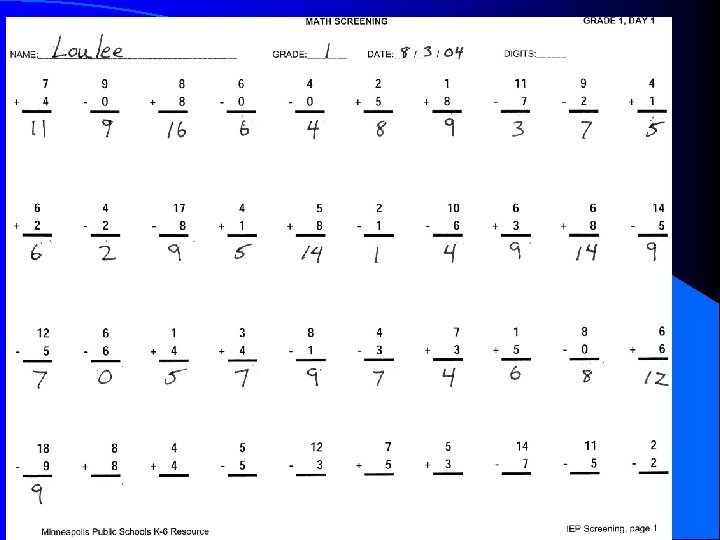
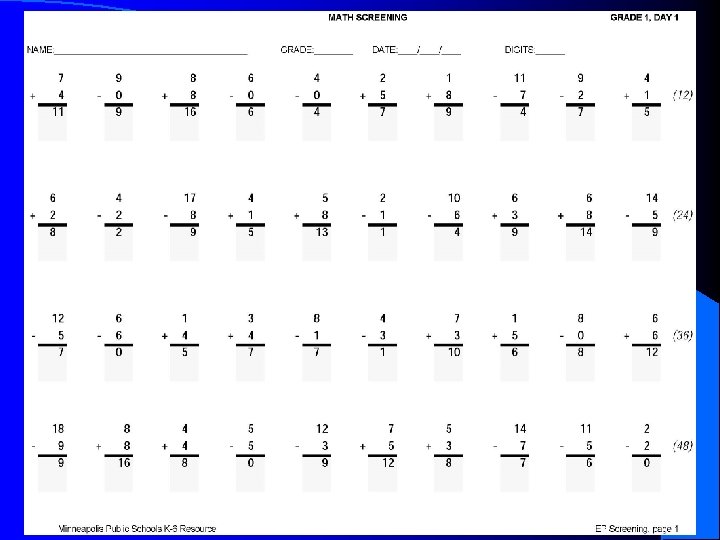
CBM and Math • • The number of correctly written digits in 2 minutes from the end-of-year curriculum Correct digits ¨ Not correct problems or answers ¨ 2 minutes 22
Math CBM • • • Student(s) are given a sheet of math problems and pencil Student(s) complete as many math problems as they can in 2 minutes At the end of 2 minutes the number of correctly written digits is counted 23
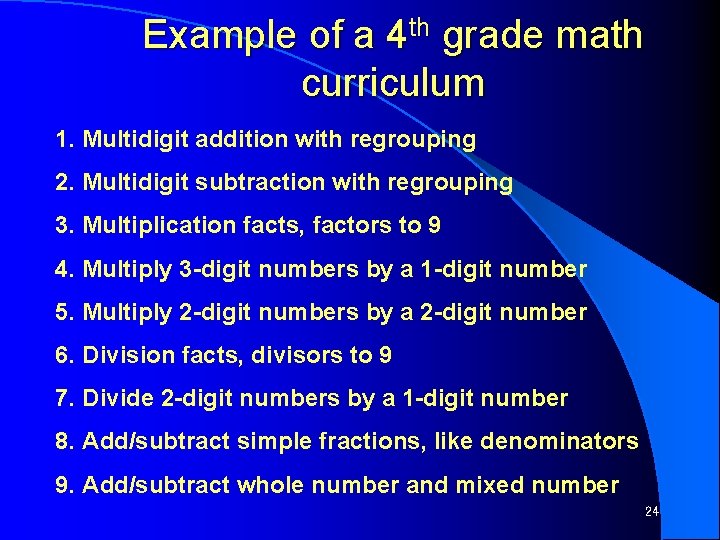
Example of a 4 th grade math curriculum 1. Multidigit addition with regrouping 2. Multidigit subtraction with regrouping 3. Multiplication facts, factors to 9 4. Multiply 3 -digit numbers by a 1 -digit number 5. Multiply 2 -digit numbers by a 2 -digit number 6. Division facts, divisors to 9 7. Divide 2 -digit numbers by a 1 -digit number 8. Add/subtract simple fractions, like denominators 9. Add/subtract whole number and mixed number 24

25
Math scoring criteria • • • If the answer is correct, the student earns the score equivalent to the number of correct digits written using the “longest method” taught to solve the problem, even if the work is not shown If a problem has been crossed out, credit is given for the correct digits written If the problem has not been completed, credit is earned for any correct digits written 26
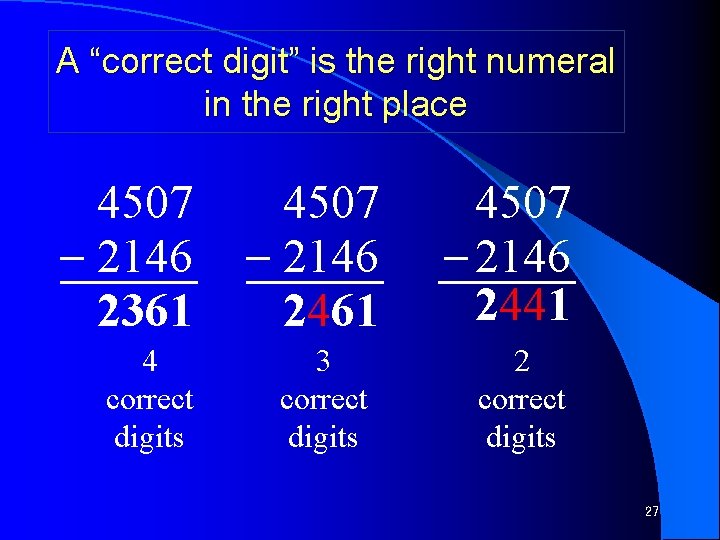
A “correct digit” is the right numeral in the right place 4507 2146 2361 4507 2146 2441 4 correct digits 3 correct digits 27
28
29
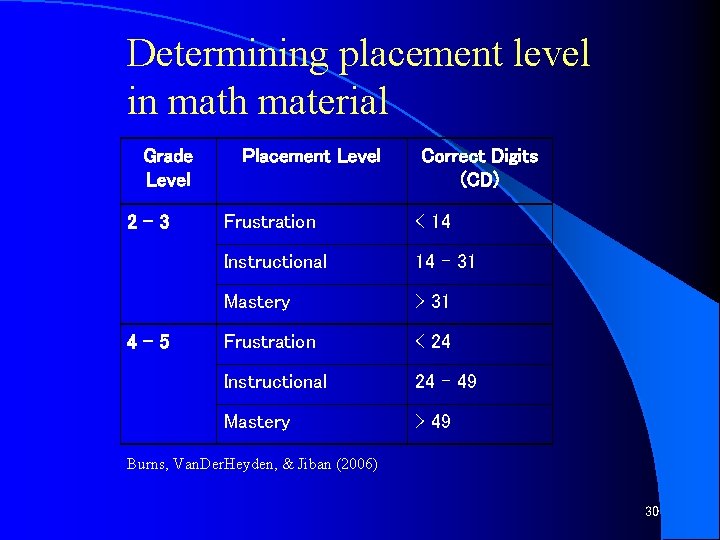
Determining placement level in math material Grade Level 2 -3 4– 5 Placement Level Correct Digits (CD) Frustration < 14 Instructional 14 – 31 Mastery > 31 Frustration < 24 Instructional 24 – 49 Mastery > 49 Burns, Van. Der. Heyden, & Jiban (2006) 30
![Weekly growth rates for math (Correct Digits [CD] in 2 minutes) Grade Realistic Weekly](http://slidetodoc.com/presentation_image_h/97495b9a646e8ade9caa9ed783081905/image-31.jpg "Weekly growth rates for math (Correct Digits [CD] in 2 minutes) Grade Realistic Weekly")
Weekly growth rates for math (Correct Digits [CD] in 2 minutes) Grade Realistic Weekly Growth Ambitious Weekly Growth Rate 1 . 3 CD . 5 CD 2 . 3 CD . 5 CD 3 . 3 CD . 5 CD 4 . 70 CD 1. 15 CD 5 . 75 CD 1. 20 CD 6 . 45 CD 1 CD From Fuchs, Hamlett, Walz, & Germann (1993) 31
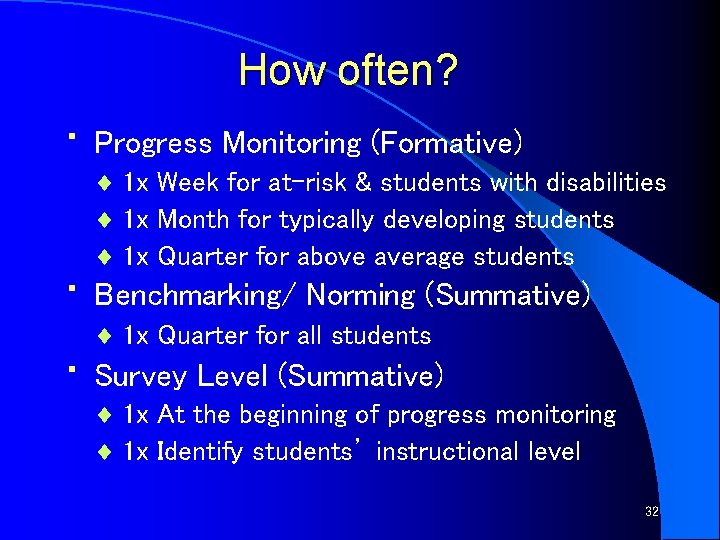
How often? • • • Progress Monitoring (Formative) ¨ 1 x Week for at-risk & students with disabilities ¨ 1 x Month for typically developing students ¨ 1 x Quarter for above average students Benchmarking/ Norming (Summative) ¨ 1 x Quarter for all students Survey Level (Summative) ¨ 1 x At the beginning of progress monitoring ¨ 1 x Identify students’ instructional level 32
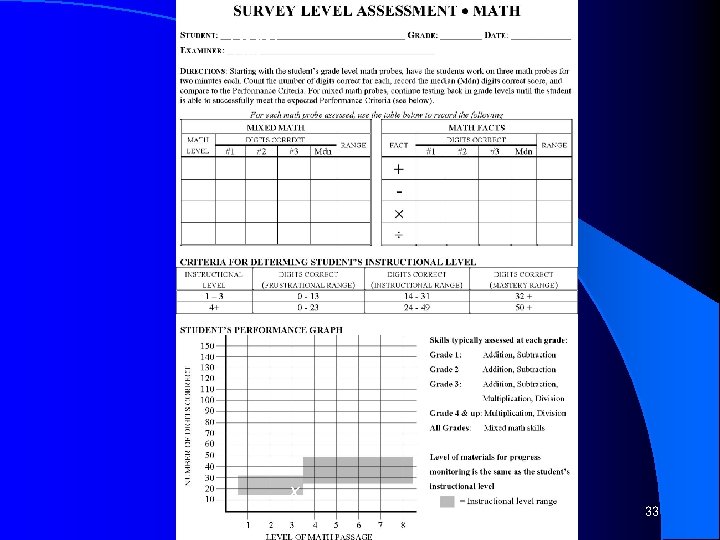
3 Roger You 8/3/05 3 22 16 16 16 I X 33
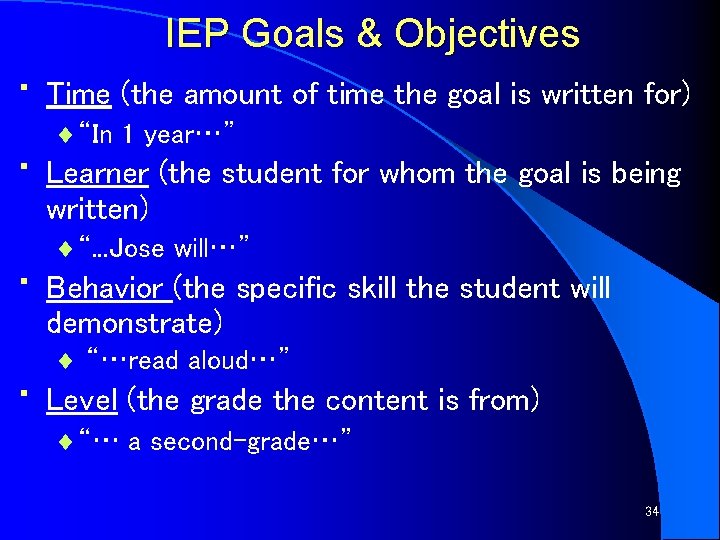
IEP Goals & Objectives • • Time (the amount of time the goal is written for) ¨ “In 1 year…” Learner (the student for whom the goal is being written) ¨ “. . . Jose will…” Behavior (the specific skill the student will demonstrate) ¨ “…read aloud…” Level (the grade the content is from) ¨ “… a second-grade…” 34
IEP Goals & Objectives (cont) • • • Content (what the student is learning about) ¨ “…reading…” Material (what the student is using) ¨ “…passage from ORF CBM progress-monitoring material…” Criteria (the expected level of performance, including time and accuracy) ¨ “…at 90 words read correctly in 1 minute with greater than 95% accuracy. ” 35
Math goals & objectives • • In 30 weeks, Larry will calculate addition and subtraction problems from second-grade mixedmath CBM progress-monitoring material at 45 correct digits in 2 minutes with greater than 95% accuracy. In 10 weeks, Larry will calculate addition and subtraction problems from second-grade mixedmath CBM progress-monitoring material at 20 CD in 2 minutes with greater than 95% accuracy. 36
Spelling CBM
Spelling CBM 1. Student(s) are given a blank sheet of 2. 3. lined paper Teacher dictates a spelling word every 10 seconds (grades 1 -3) every 7 seconds (grades 4 -8) Stop at the end of 2 minutes and count the number of correct letter sequences (CLS) 38
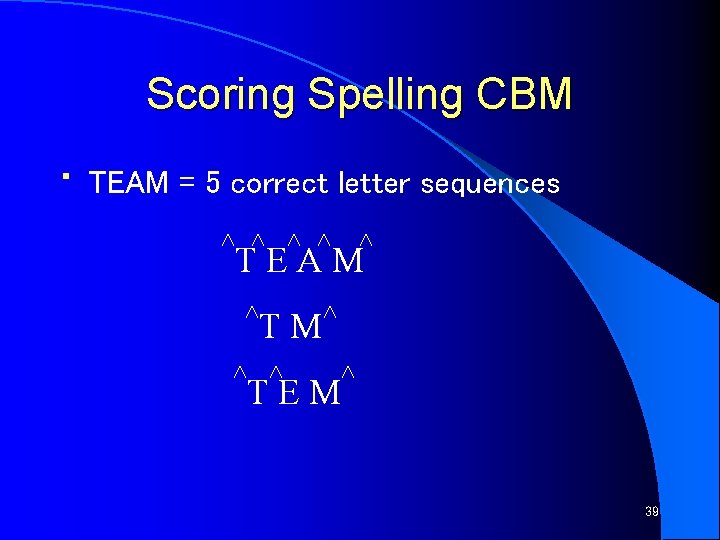
Scoring Spelling CBM • TEAM = 5 correct letter sequences TEAM TM TEM 39
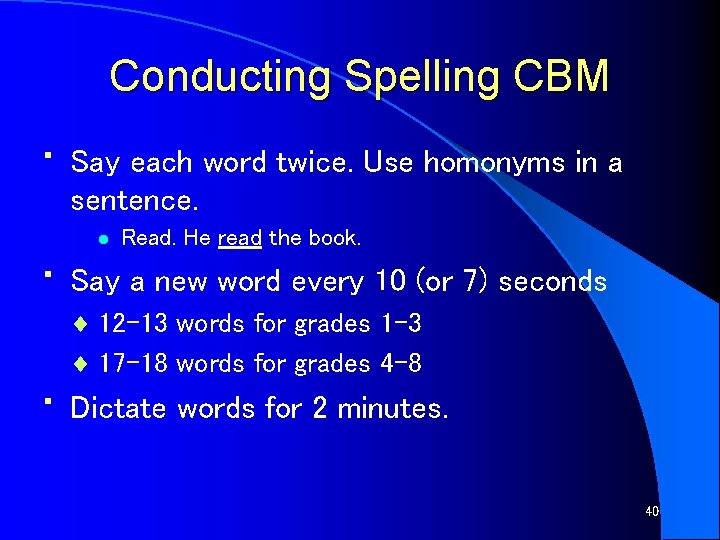
Conducting Spelling CBM • Say each word twice. Use homonyms in a sentence. l • • Read. He read the book. Say a new word every 10 (or 7) seconds ¨ 12 -13 words for grades 1 -3 ¨ 17 -18 words for grades 4 -8 Dictate words for 2 minutes. 40
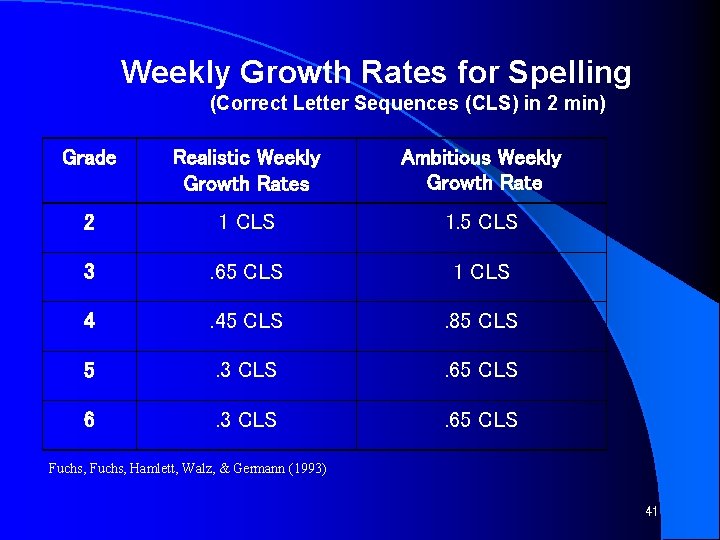
Weekly Growth Rates for Spelling (Correct Letter Sequences (CLS) in 2 min) Grade Realistic Weekly Growth Rates Ambitious Weekly Growth Rate 2 1 CLS 1. 5 CLS 3 . 65 CLS 1 CLS 4 . 45 CLS . 85 CLS 5 . 3 CLS . 65 CLS 6 . 3 CLS . 65 CLS Fuchs, Hamlett, Walz, & Germann (1993) 41
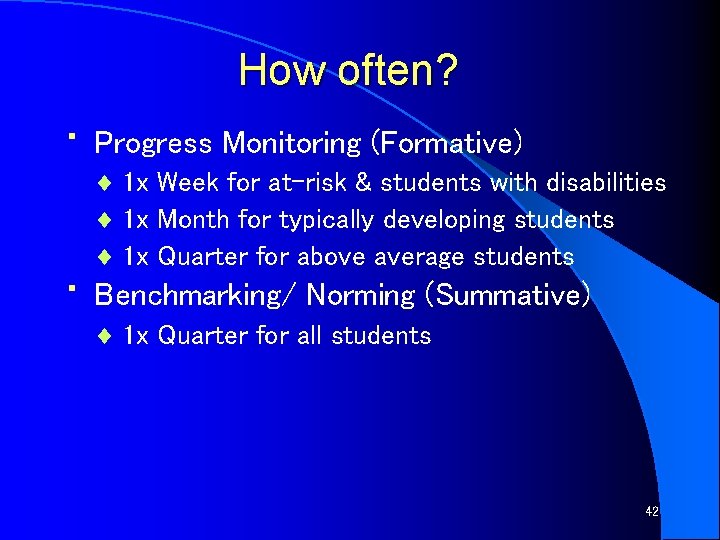
How often? • • Progress Monitoring (Formative) ¨ 1 x Week for at-risk & students with disabilities ¨ 1 x Month for typically developing students ¨ 1 x Quarter for above average students Benchmarking/ Norming (Summative) ¨ 1 x Quarter for all students 42
Spelling CBM Goals and Objectives • • In 30 weeks, Roberto will spell words from a fourth-grade spelling list from Spelling CBM progress-monitoring material at 70 correct letter sequences in 2 minutes with greater than 95% accuracy. In 10 weeks, Roberto will spell words from a fourth-grade spelling list from Spelling CBM progress-monitoring material at 25 correct letter sequences in 2 minutes with greater than 95% accuracy. 43

Written Expression CBM
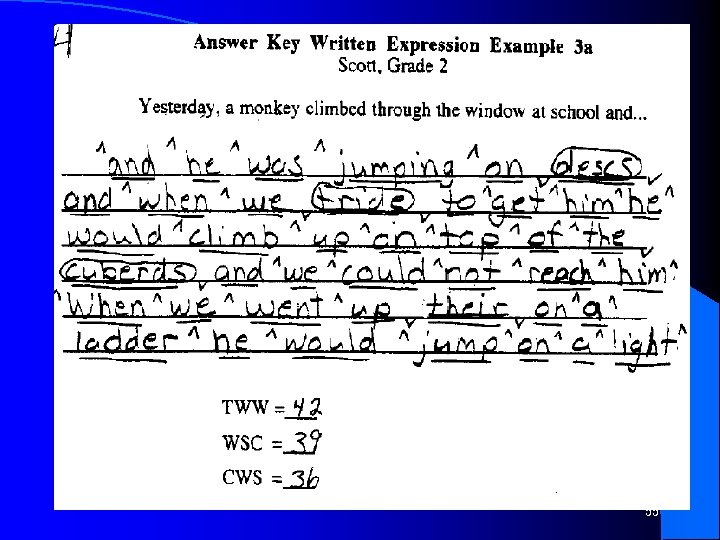
• • Curriculum-Based Measurement: Written Expression Provides an indicator of student performance in writing Three scoring methods ¨ Total Words Written (TWW) ¨ Words Spelled Correctly (WSC) ¨ Correct Writing Sequences (CWS) Can be group administered District or Classroom Norms 45
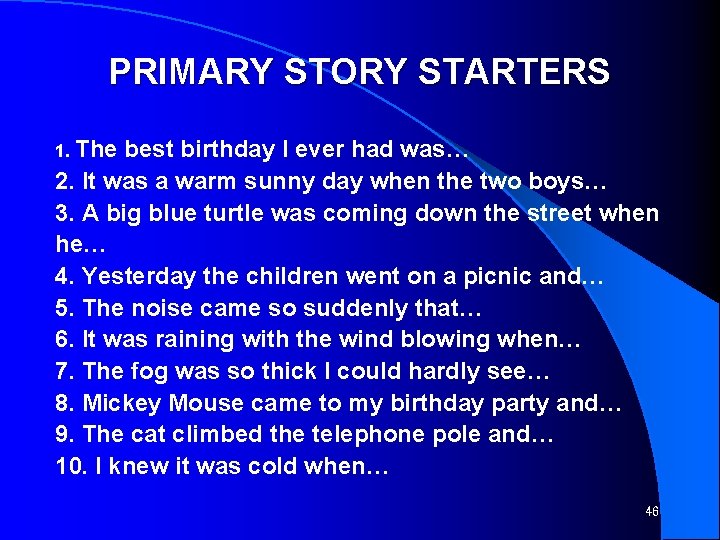
PRIMARY STORY STARTERS 1. The best birthday I ever had was… 2. It was a warm sunny day when the two boys… 3. A big blue turtle was coming down the street when he… 4. Yesterday the children went on a picnic and… 5. The noise came so suddenly that… 6. It was raining with the wind blowing when… 7. The fog was so thick I could hardly see… 8. Mickey Mouse came to my birthday party and… 9. The cat climbed the telephone pole and… 10. I knew it was cold when… 46
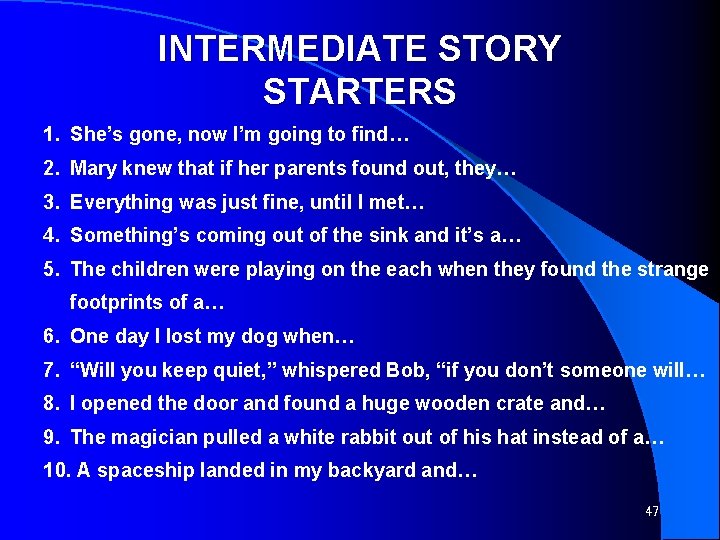
INTERMEDIATE STORY STARTERS 1. She’s gone, now I’m going to find… 2. Mary knew that if her parents found out, they… 3. Everything was just fine, until I met… 4. Something’s coming out of the sink and it’s a… 5. The children were playing on the each when they found the strange footprints of a… 6. One day I lost my dog when… 7. “Will you keep quiet, ” whispered Bob, “if you don’t someone will… 8. I opened the door and found a huge wooden crate and… 9. The magician pulled a white rabbit out of his hat instead of a… 10. A spaceship landed in my backyard and… 47
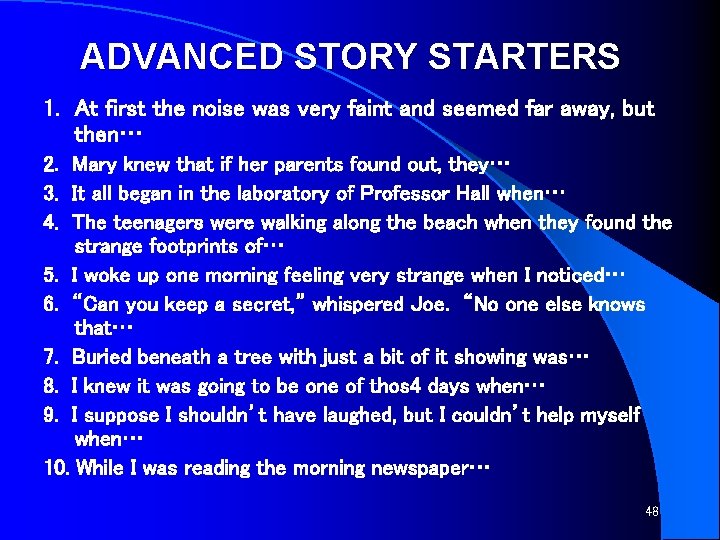
ADVANCED STORY STARTERS 1. At first the noise was very faint and seemed far away, but then… 2. Mary knew that if her parents found out, they… 3. It all began in the laboratory of Professor Hall when… 4. The teenagers were walking along the beach when they found the strange footprints of… 5. I woke up one morning feeling very strange when I noticed… 6. “Can you keep a secret, ” whispered Joe. “No one else knows that… 7. Buried beneath a tree with just a bit of it showing was… 8. I knew it was going to be one of thos 4 days when… 9. I suppose I shouldn’t have laughed, but I couldn’t help myself when… 10. While I was reading the morning newspaper… 48
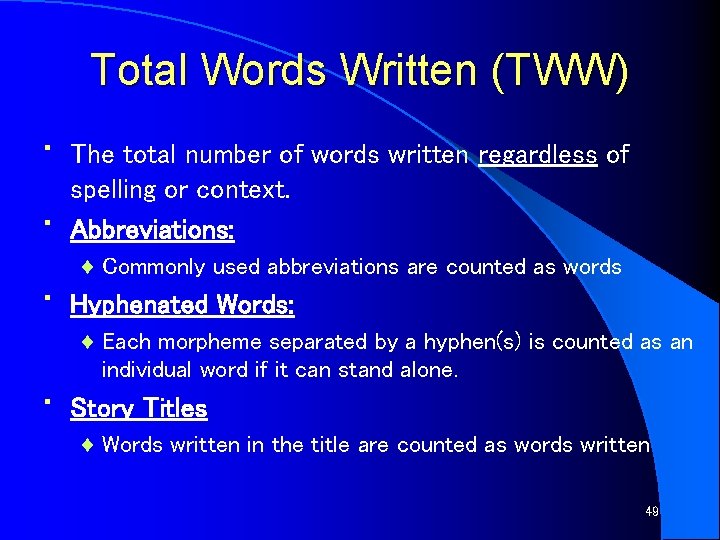
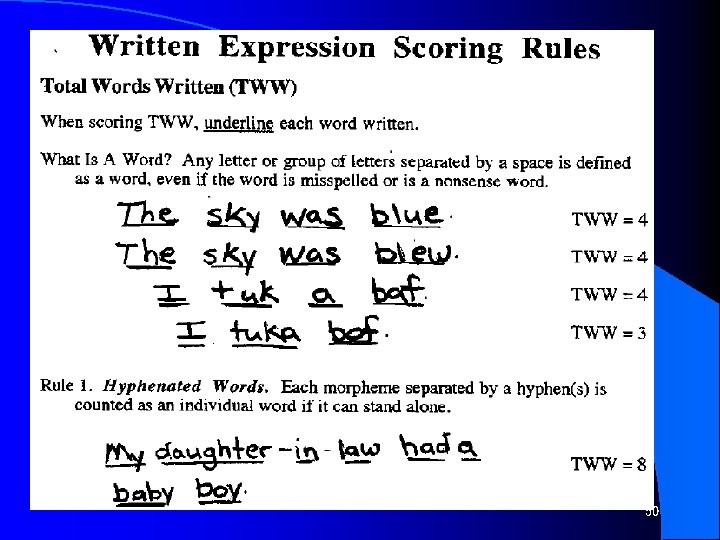
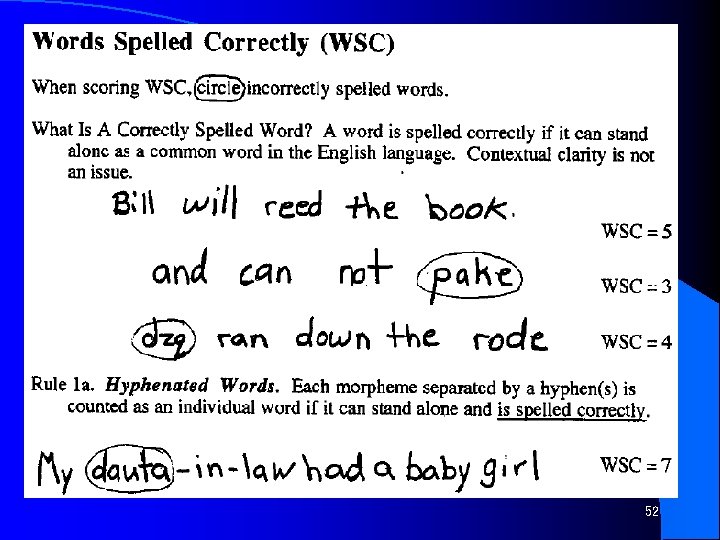
Total Words Written (TWW) • • The total number of words written regardless of spelling or context. Abbreviations: ¨ Commonly used abbreviations are counted as words Hyphenated Words: ¨ Each morpheme separated by a hyphen(s) is counted as an individual word if it can stand alone. Story Titles ¨ Words written in the title are counted as words written 49
50
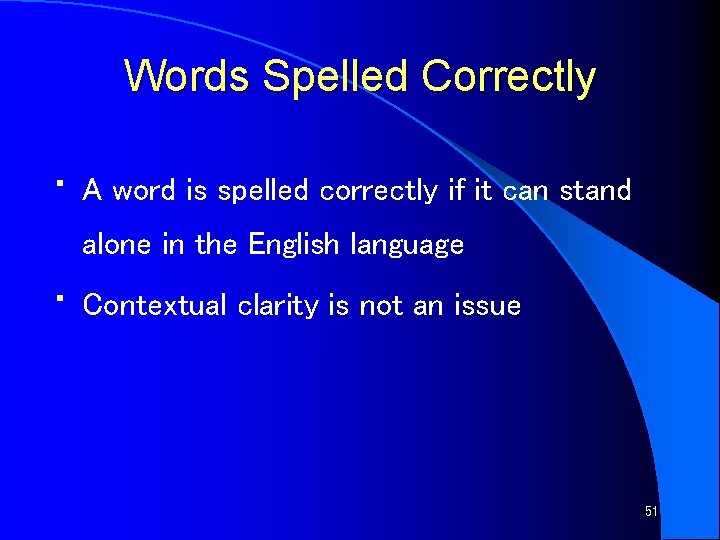
Words Spelled Correctly • A word is spelled correctly if it can stand alone in the English language • Contextual clarity is not an issue 51
52
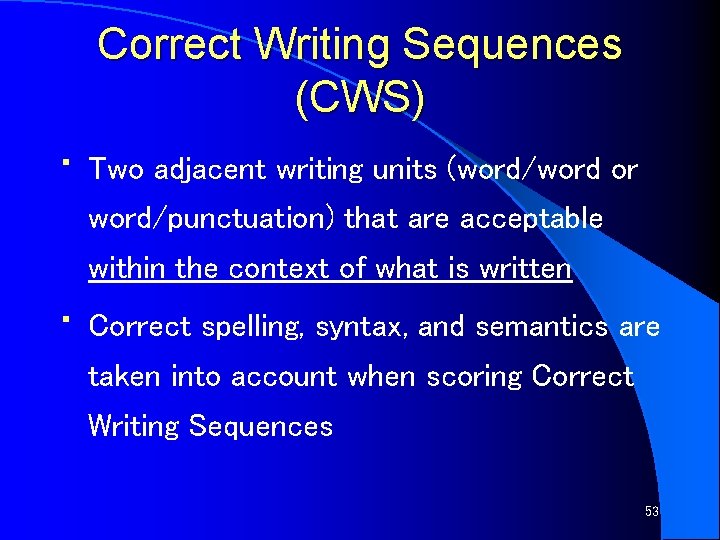
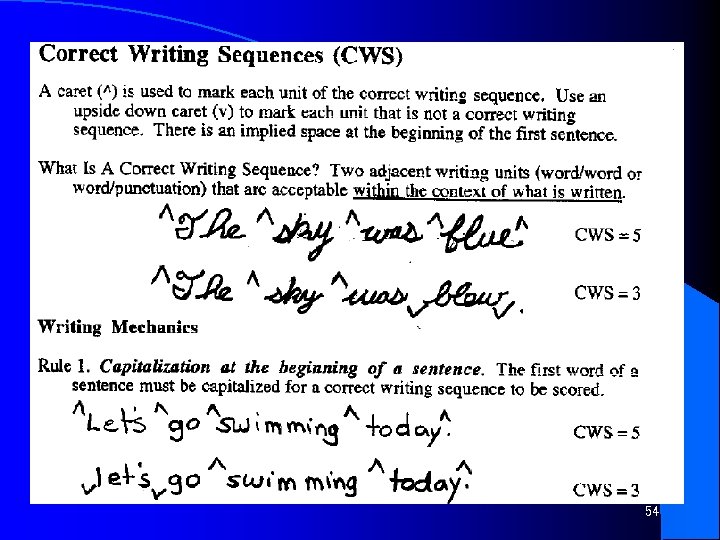
Correct Writing Sequences (CWS) • Two adjacent writing units (word/word or word/punctuation) that are acceptable within the context of what is written • Correct spelling, syntax, and semantics are taken into account when scoring Correct Writing Sequences 53
54
55
How often? • • Progress Monitoring (Formative) ¨ 1 x Week for at-risk & students with disabilities ¨ 1 x Month for typically developing students ¨ 1 x Quarter for above average students Benchmarking/ Norming (Summative) ¨ 1 x Quarter for all students 56
Written Expression IEP Goals and Objectives • • In 30 weeks, Jose will write from sixthgrade writing story starter CBM progressmonitoring material at 47 correct writing sequences in 3 minutes with greater than 95% accuracy. In 10 weeks, Jose will write from sixthgrade writing story starter CBM progressmonitoring material at 30 correct writing sequences in 3 minutes with greater than 95% accuracy. 57
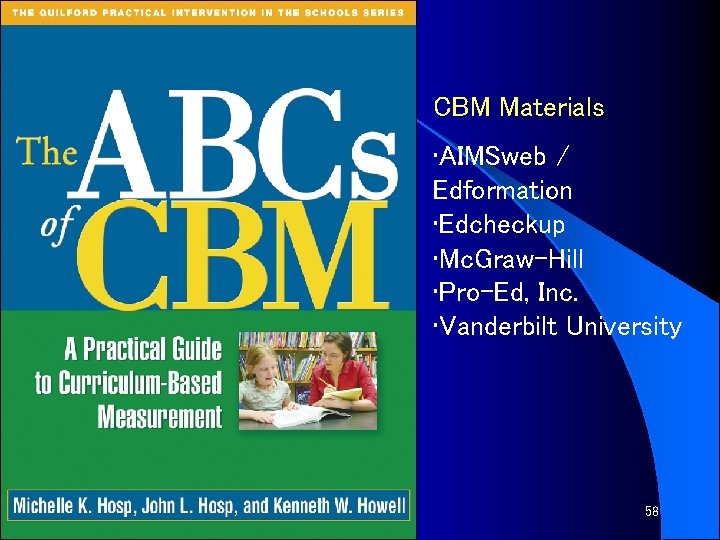
CBM Materials • AIMSweb / Edformation • Edcheckup • Mc. Graw-Hill • Pro-Ed, Inc. • Vanderbilt University 58
- Slides: 58