
The 7 Dimension Addiction Treatment Model A Holistic













- Slides: 41
The 7 Dimension Addiction Treatment Model A Holistic Multidimensional Public Health Approach and Recovery Measurement System for Health & Wellness James Slobodzien, Psy. D. , CSAC Greg Lippert, MA, CSAC, ICADC
For 1500 Years - We thought the Sun Revolved around the Earth! 225
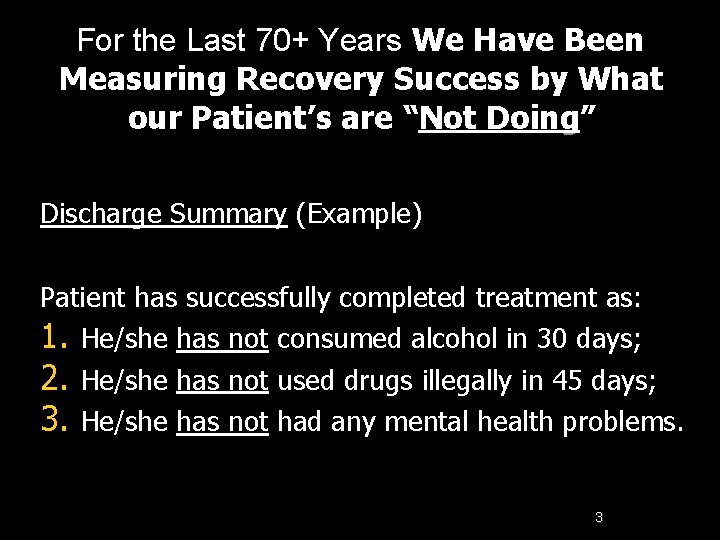
For the Last 70+ Years We Have Been Measuring Recovery Success by What our Patient’s are “Not Doing” Discharge Summary (Example) Patient has successfully completed treatment as: 1. He/she has not consumed alcohol in 30 days; 2. He/she has not used drugs illegally in 45 days; 3. He/she has not had any mental health problems. 3
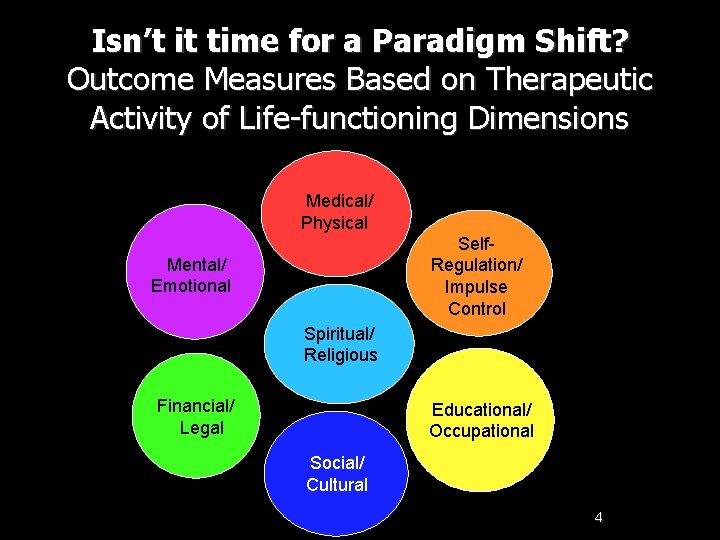
Isn’t it time for a Paradigm Shift? Outcome Measures Based on Therapeutic Activity of Life-functioning Dimensions Medical/ Physical Self. Regulation/ Impulse Control Mental/ Emotional Spiritual/ Religious Financial/ Legal Educational/ Occupational Social/ Cultural 4
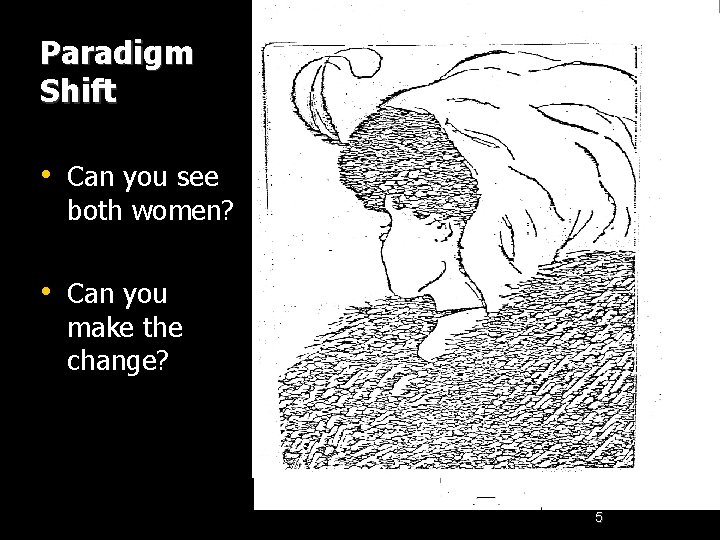
Paradigm Shift • Can you see both • Can you see • Can you make the both women? change? • Can you make the change? 5
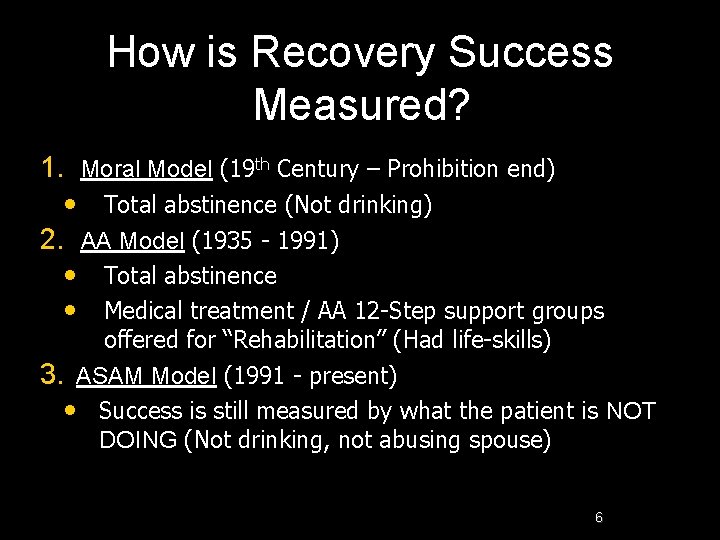
How is Recovery Success Measured? 1. Moral Model (19 th Century – Prohibition end) • Total abstinence (Not drinking) 2. AA Model (1935 - 1991) • Total abstinence • Medical treatment / AA 12 -Step support groups offered for “Rehabilitation” (Had life-skills) 3. ASAM Model (1991 - present) • Success is still measured by what the patient is NOT DOING (Not drinking, not abusing spouse) 6
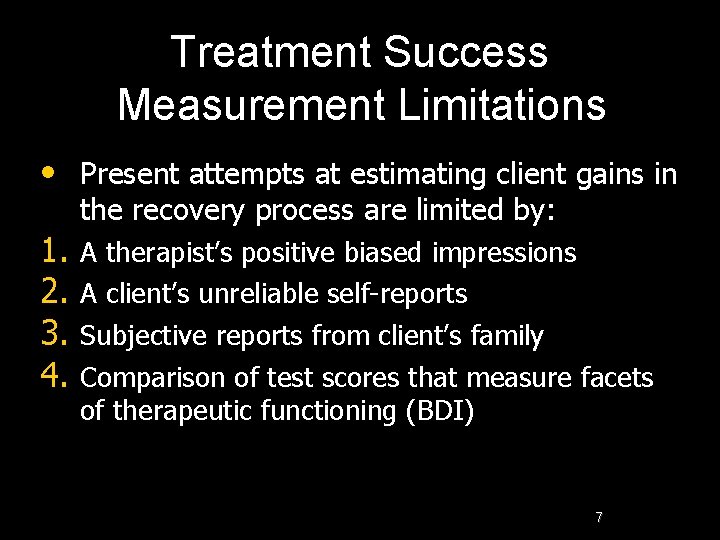
Treatment Success Measurement Limitations • Present attempts at estimating client gains in the recovery process are limited by: 1. 2. 3. 4. A therapist’s positive biased impressions A client’s unreliable self-reports Subjective reports from client’s family Comparison of test scores that measure facets of therapeutic functioning (BDI) 7
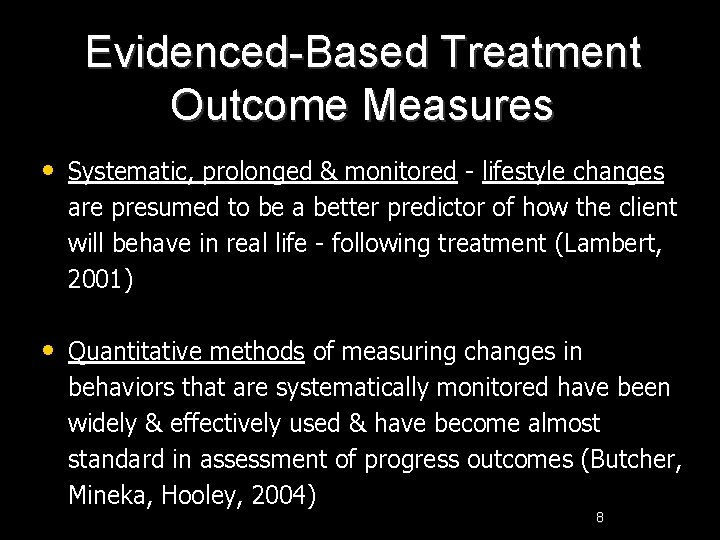
Evidenced-Based Treatment Outcome Measures • Systematic, prolonged & monitored - lifestyle changes are presumed to be a better predictor of how the client will behave in real life - following treatment (Lambert, 2001) • Quantitative methods of measuring changes in behaviors that are systematically monitored have been widely & effectively used & have become almost standard in assessment of progress outcomes (Butcher, Mineka, Hooley, 2004) 8
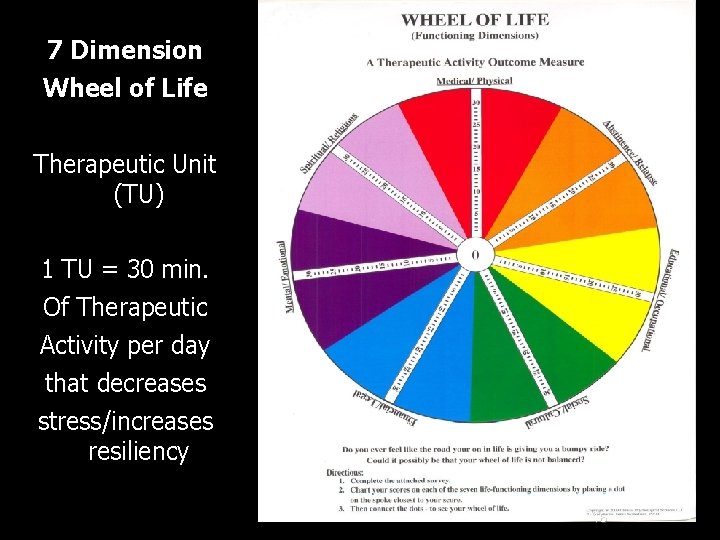
7 D Recovery Measurement System Outcome Measures Based on Therapeutic Activity Units Medical/ Physical Mental/ Emotional Self. Regulation/ Impulse Control Spiritual/ Religious Financial/ Legal Educational/ Occupational Social/ Cultural 9
7 Dimension Health & Wellness Our bodies & minds are interrelated & each of the following domains need to work in harmony with one another for optimal health & balance: 1. 2. 3. 4. 5. 6. 7. Medical/Physical Self-regulation/Impulse Control Educational/Occupational Social/Cultural Financial/Legal Mental/Emotional Spiritual/Religious 10
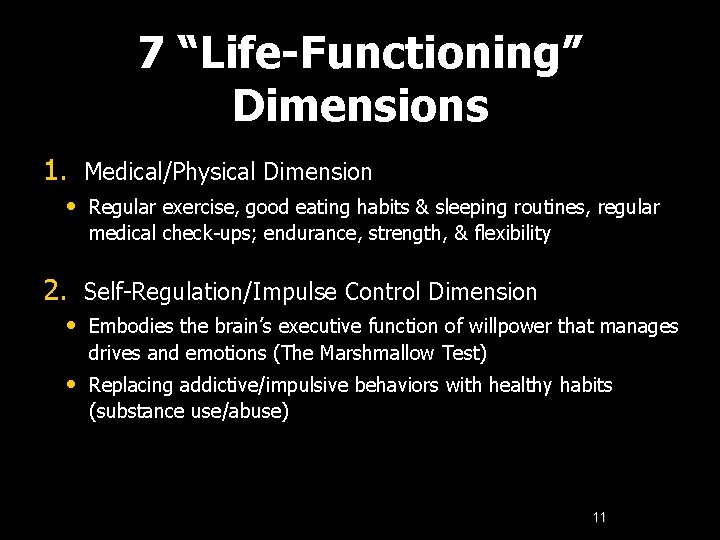
7 “Life-Functioning” Dimensions 1. Medical/Physical Dimension • Regular exercise, good eating habits & sleeping routines, regular medical check-ups; endurance, strength, & flexibility 2. Self-Regulation/Impulse Control Dimension • Embodies the brain’s executive function of willpower that manages drives and emotions (The Marshmallow Test) • Replacing addictive/impulsive behaviors with healthy habits (substance use/abuse) 11
7 “Life-Functioning” Dimensions 3. Educational/Occupational Dimension • Preparing for vocational gifts, skills, talents by making plans for • education, training & experiences & pursuing one’s career; Vocational satisfaction, balance of work & leisure 4. Social/Cultural Dimension • Developing/maintaining trusted, valued family interpersonal • relationships and friendships Fostering good communication including a comfortable exchange of ideas, views and experiences. Community welfare concerns 12
7 “Life-Functioning” Dimensions 5. Financial/Legal Dimension • Maintaining financial & legal obligations • Making wise decisions regarding personal finances 6. Mental/Emotional Dimension • Managing one’s thoughts & feelings appropriately • Stress management and relaxation, self-awareness and acceptance 7. Spiritual/Religious Dimension • Searching for meaning & purpose, values, hope, optimism, belief system 13
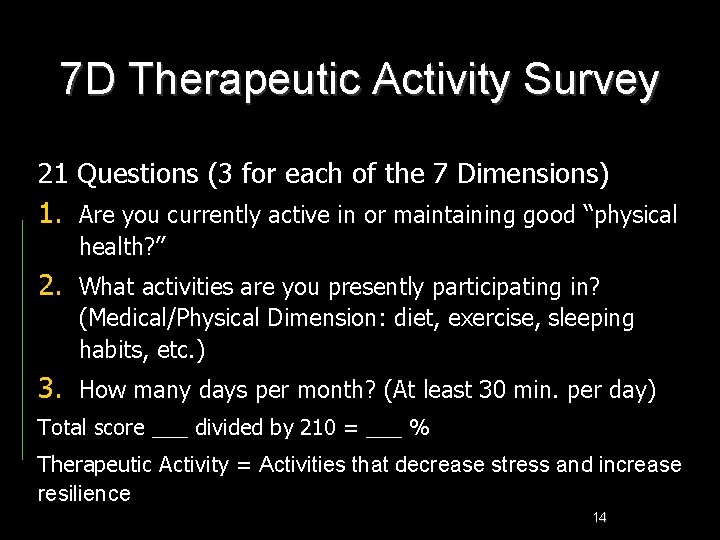
7 D Therapeutic Activity Survey 21 Questions (3 for each of the 7 Dimensions) 1. Are you currently active in or maintaining good “physical health? ” 2. What activities are you presently participating in? (Medical/Physical Dimension: diet, exercise, sleeping habits, etc. ) 3. How many days per month? (At least 30 min. per day) Total score ___ divided by 210 = ___ % Therapeutic Activity = Activities that decrease stress and increase resilience 14
7 Dimension Wheel of Life • Therapeutic Activity Units (TUs): plotted to motivate patients to develop & monitor a personalized Wellness Plan • A bird’s eye view of your life: 1. Helps you consider what’s off balance. 2. Gives you a vivid visual representation of your current life & motivates you to change it. 3. Provides a systematic approach for evaluating treatment progress & documenting outcome measures. 15
7 Dimension Wheel of Life Therapeutic Unit (TU) 1 TU = 30 min. Of Therapeutic Activity per day that decreases stress/increases resiliency 16
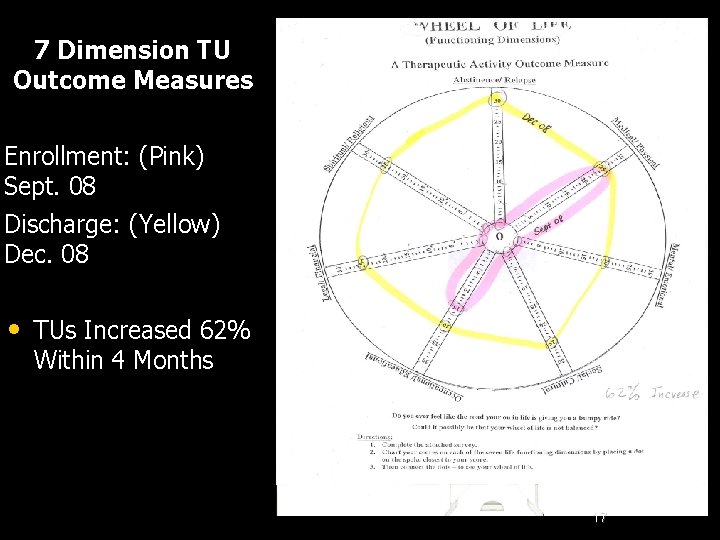
7 Dimension TU Outcome Measures Enrollment: (Pink) Sept. 08 Discharge: (Yellow) Dec. 08 • TUs Increased 62% Within 4 Months 17
7 Dimension Wellness Plan Based on the 7 Dimension Intervention Scores: 1. Health & Wellness Goals are set: (Example) a. Attain optimal physical health 2. Specific Objectives are committed to: a. I will exercise daily for 20 min. 3. Stages of Change (Contemplation, Preparation, Action, etc. ) and start/ completion dates are documented. a. Start date: _______Completion date: _____ 18
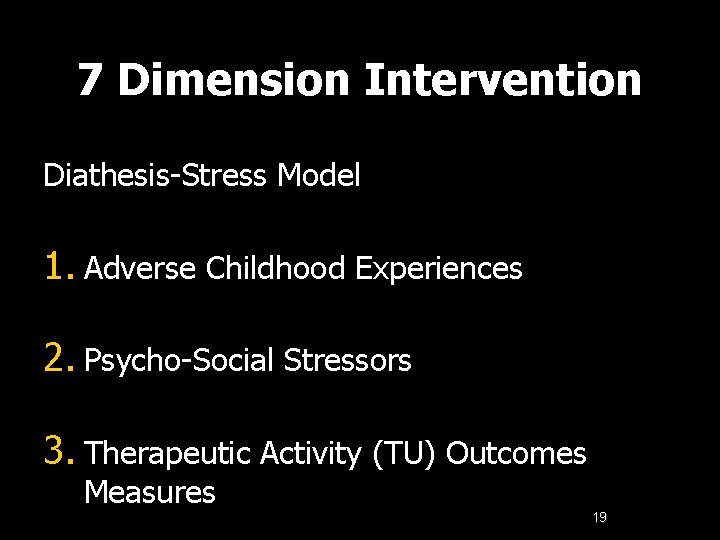
7 Dimension Intervention Diathesis-Stress Model 1. Adverse Childhood Experiences 2. Psycho-Social Stressors 3. Therapeutic Activity (TU) Outcomes Measures 19
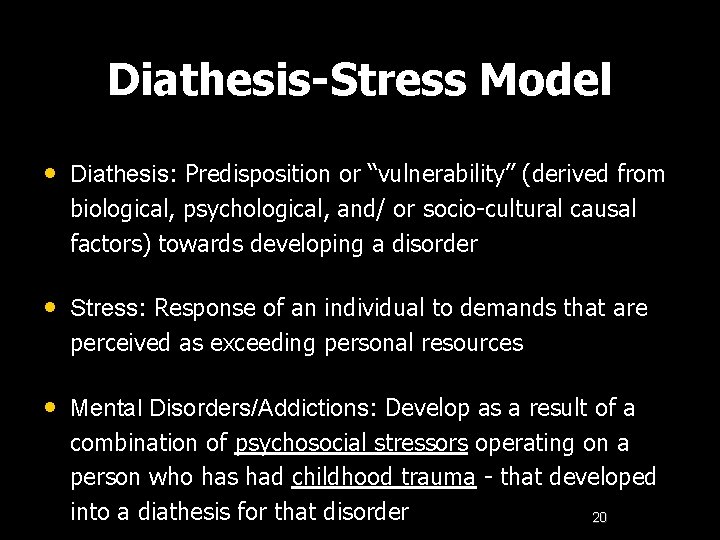
Diathesis-Stress Model • Diathesis: Predisposition or “vulnerability” (derived from biological, psychological, and/ or socio-cultural causal factors) towards developing a disorder • Stress: Response of an individual to demands that are perceived as exceeding personal resources • Mental Disorders/Addictions: Develop as a result of a combination of psychosocial stressors operating on a person who has had childhood trauma - that developed into a diathesis for that disorder 20
Adverse Childhood Experiences (ACE Study) • Conducted by: Centers for Disease Control & • • Prevention and Kaiser Permanente’s Health Appraisal Clinic Largest investigation ever conducted (Over 17, 000 subjects) Links between childhood maltreatment & laterlife health since 1984 Over 25 yrs. of evidence-based research Principle Investigator: V. J. Feletti, M. D. 21
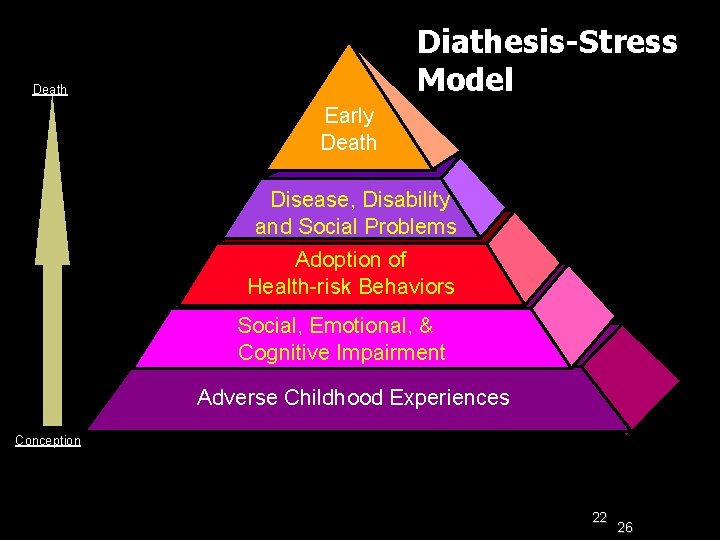
Diathesis-Stress Model Death Early Death Disease, Disability and Social Problems Adoption of Health-risk Behaviors Social, Emotional, & Cognitive Impairment Adverse Childhood Experiences Conception 22 26
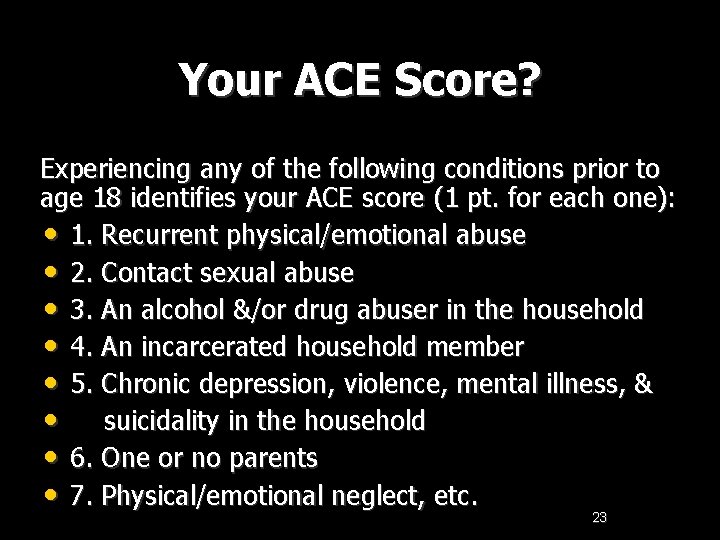
Your ACE Score? Experiencing any of the following conditions prior to age 18 identifies your ACE score (1 pt. for each one): • 1. Recurrent physical/emotional abuse • 2. Contact sexual abuse • 3. An alcohol &/or drug abuser in the household • 4. An incarcerated household member • 5. Chronic depression, violence, mental illness, & • suicidality in the household • 6. One or no parents • 7. Physical/emotional neglect, etc. 23
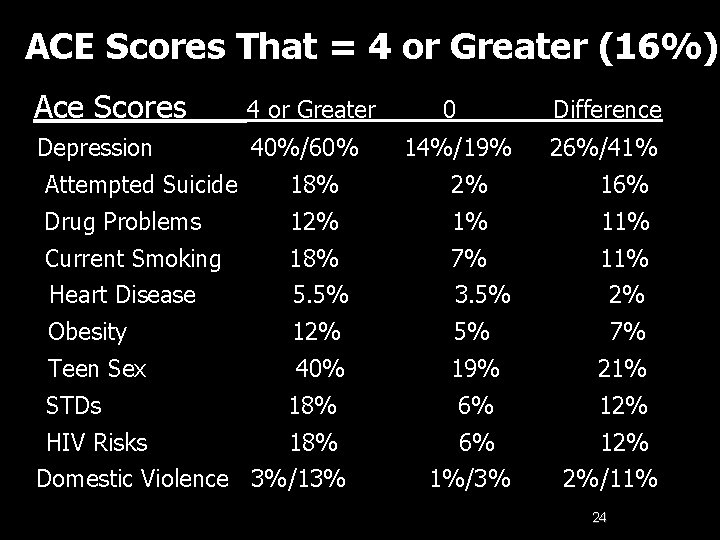
ACE Scores That = 4 or Greater (16%) Ace Scores 4 or Greater 0 Difference Depression 40%/60% 14%/19% 26%/41% Attempted Suicide 18% 2% 16% Drug Problems 12% 11% Current Smoking 18% 7% 11% Heart Disease 5. 5% 3. 5% 2% Obesity 12% 5% 7% Teen Sex 40% 19% 21% STDs 18% 6% 12% HIV Risks 18% 6% 12% Domestic Violence 3%/13% 1%/3% 2%/11% 24
ACE Summary • Adverse Childhood Experiences (ACES) are: 1. Common, 2. Destructive, 3. Have an effect that lasts a lifetime, 4. They increase medical care costs, disease, 5. and death 50 years later, They are the most important determinant of the health and well-being of our nation. 25
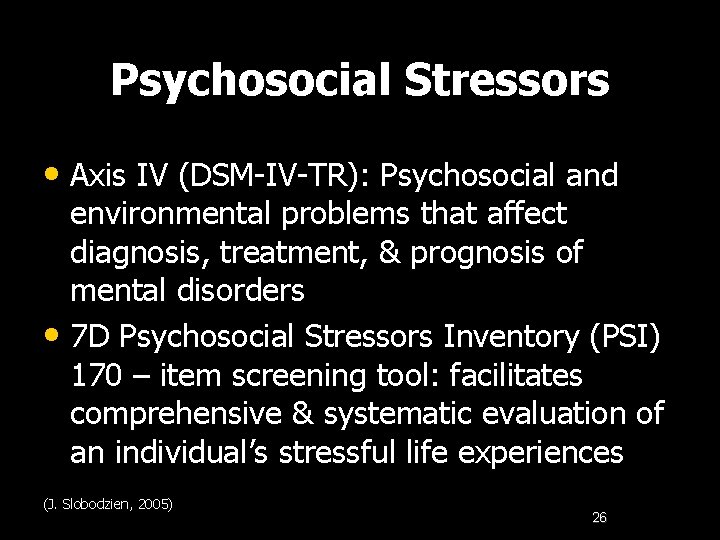
Psychosocial Stressors • Axis IV (DSM-IV-TR): Psychosocial and environmental problems that affect diagnosis, treatment, & prognosis of mental disorders • 7 D Psychosocial Stressors Inventory (PSI) 170 – item screening tool: facilitates comprehensive & systematic evaluation of an individual’s stressful life experiences (J. Slobodzien, 2005) 26
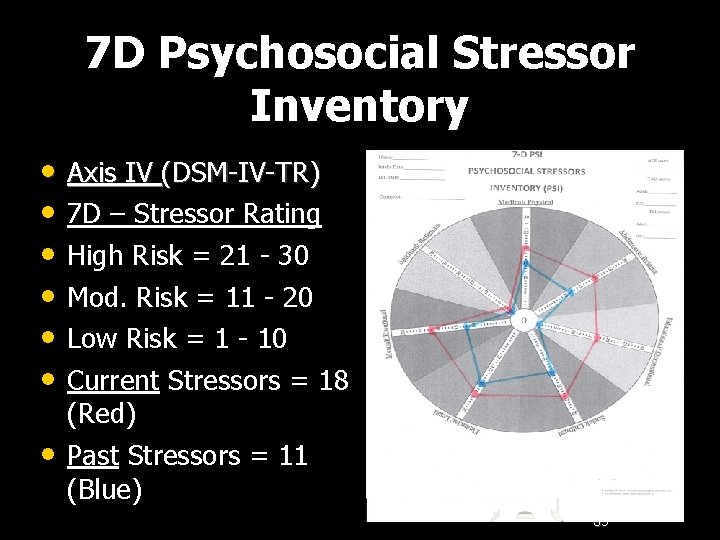
7 D Psychosocial Stressor Inventory • Axis IV (DSM-IV-TR) • 7 D – Stressor Rating • High Risk = 21 - 30 • Mod. Risk = 11 - 20 • Low Risk = 1 - 10 • Current Stressors = 18 • (Red) Past Stressors = 11 (Blue) 27 39
7 D Psychosocial Imaging • 7 D Combo Analysis 1. Ace Score 2. Stressors Score 3. Therapeutic Activities Score 28
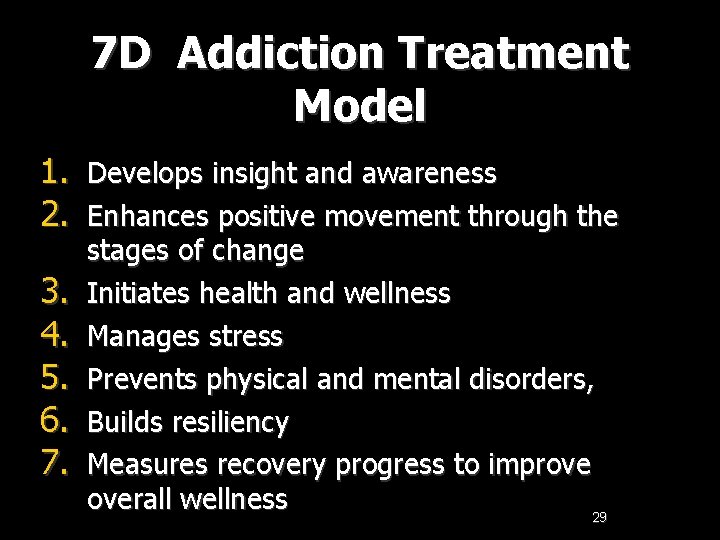
7 D Addiction Treatment Model 1. Develops insight and awareness 2. Enhances positive movement through the 3. 4. 5. 6. 7. stages of change Initiates health and wellness Manages stress Prevents physical and mental disorders, Builds resiliency Measures recovery progress to improve overall wellness 29
Want to Learn More? • Request a 7 D packet: drslobodzien@gmail. com • Resources: – Adverse Childhood Experiences – www. acestudy. org – The Addiction Severity Index at 25: Origins, Contributions, and Transitions. 30
The 7 Dimensions Model Applied to TEAP “Changing Trainees One Therapeutic Unit at a Time”
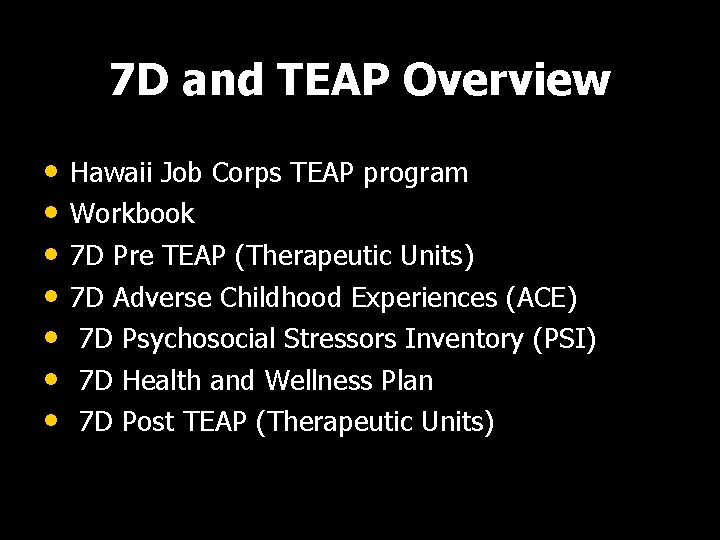
7 D and TEAP Overview • • Hawaii Job Corps TEAP program Workbook 7 D Pre TEAP (Therapeutic Units) 7 D Adverse Childhood Experiences (ACE) 7 D Psychosocial Stressors Inventory (PSI) 7 D Health and Wellness Plan 7 D Post TEAP (Therapeutic Units)
7 D Pre-Therapeutic Units • Score the Therapeutic Outcome Measurement • • Wheel (Pre survey) Answer all seven questions and plot the number of days per month per dimension Add up the number of days per month and divide by 210 to get % of functioning
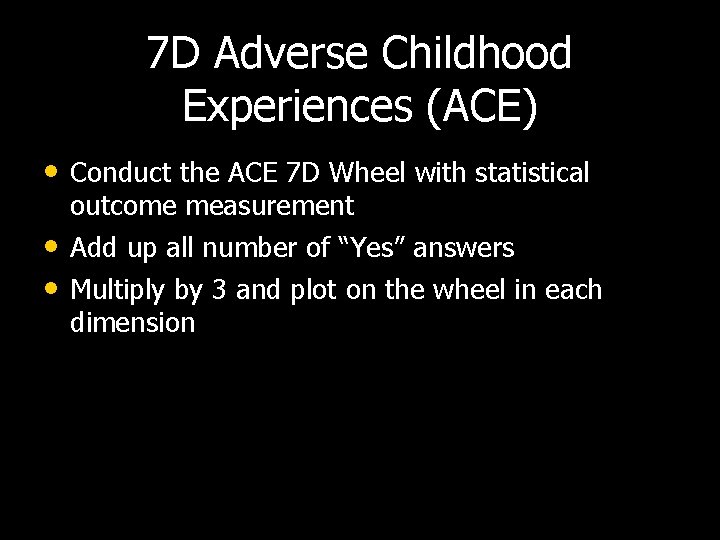
7 D Adverse Childhood Experiences (ACE) • Conduct the ACE 7 D Wheel with statistical • • outcome measurement Add up all number of “Yes” answers Multiply by 3 and plot on the wheel in each dimension
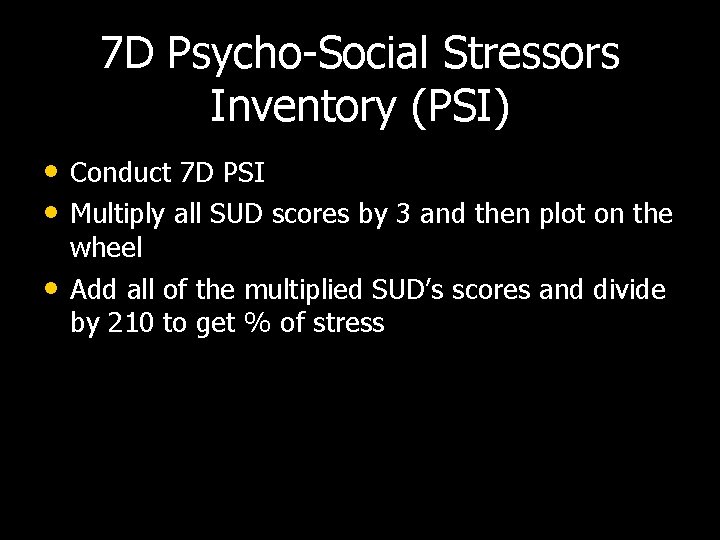
7 D Psycho-Social Stressors Inventory (PSI) • Conduct 7 D PSI • Multiply all SUD scores by 3 and then plot on the • wheel Add all of the multiplied SUD’s scores and divide by 210 to get % of stress
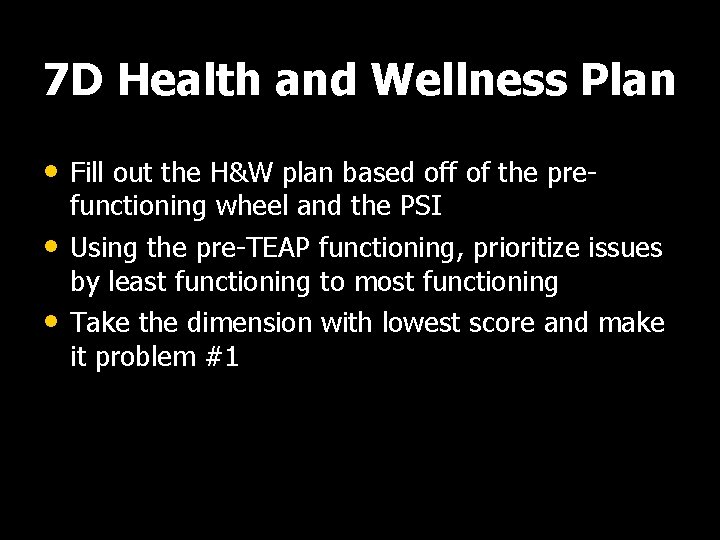
7 D Health and Wellness Plan • Fill out the H&W plan based off of the pre • • functioning wheel and the PSI Using the pre-TEAP functioning, prioritize issues by least functioning to most functioning Take the dimension with lowest score and make it problem #1
7 D Post-Therapeutic Units • Therapeutic Outcome Measurement Wheel • Post survey • Simply answer the initial 7 questions and plot the number of days on the wheel
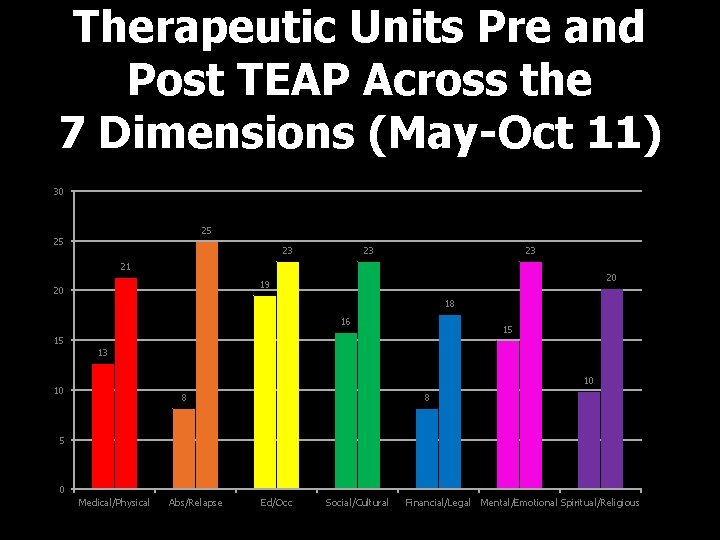
Therapeutic Units Pre and Post TEAP Across the 7 Dimensions (May-Oct 11) 30 25 25 23 23 23 21 20 19 20 18 16 15 15 13 10 10 8 8 5 0 Medical/Physical Abs/Relapse Ed/Occ Social/Cultural Financial/Legal Mental/Emotional Spiritual/Religious
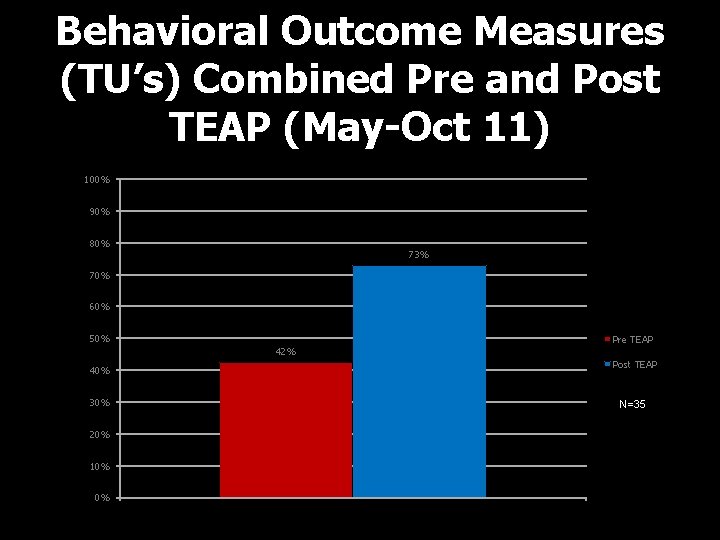
Behavioral Outcome Measures (TU’s) Combined Pre and Post TEAP (May-Oct 11) 100% 90% 80% 73% 70% 60% 50% Pre TEAP 42% Post TEAP 40% 30% N=35 Difference 20% 10% 0% 1
References • Slobodzien, J. (2009). The 7 - dimension intervention-A holistic diathesis-stress approach to stress management. Retrieved online from: http: //ezinearticles. com/? The 7 ---Dimension-Intervention---A-Holistic-Diathesis-Stress-Approach-to -Stress-Management&id=2808633
Questions? ?