
The 6 Simple Machines Inclined Plane Lever Screw
- Slides: 27
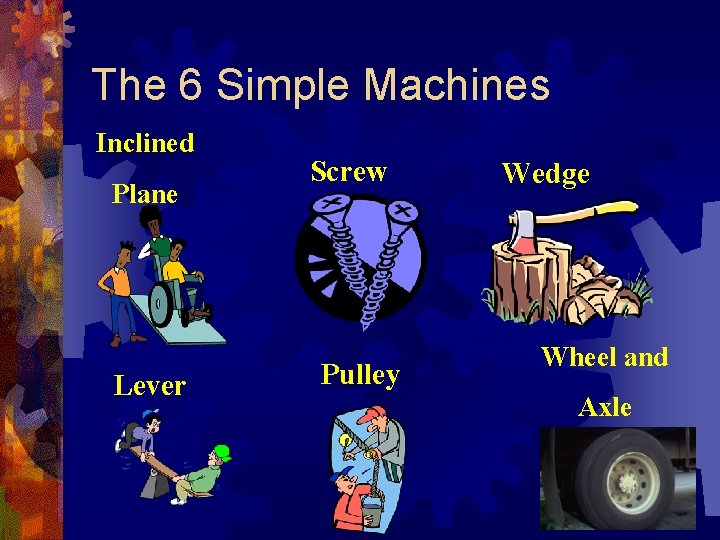
The 6 Simple Machines Inclined Plane Lever Screw Pulley Wedge Wheel and Axle
Machine – a tool that helps us do work Machines help us by: 1. Changing the amount of force on an object. 2. Changing the direction of the force.
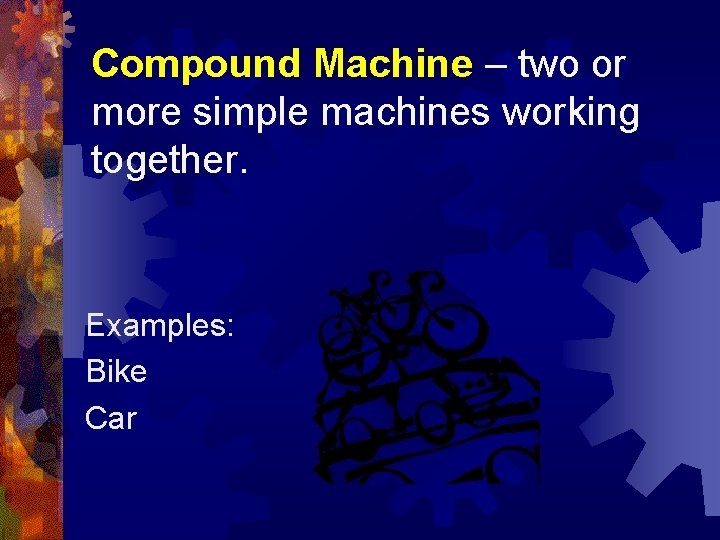
Compound Machine – two or more simple machines working together. Examples: Bike Car
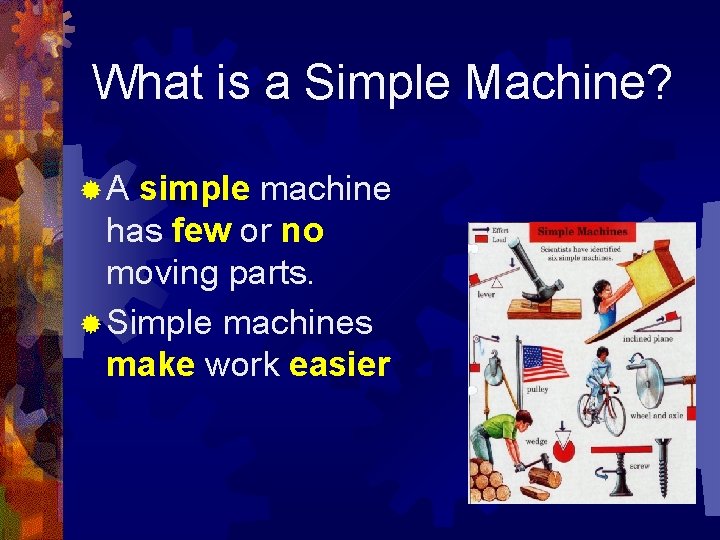
What is a Simple Machine? ®A simple machine has few or no moving parts. ® Simple machines make work easier
Definitions: Energy: Ability to do work Work: Force x Distance Force: A Push or a Pull
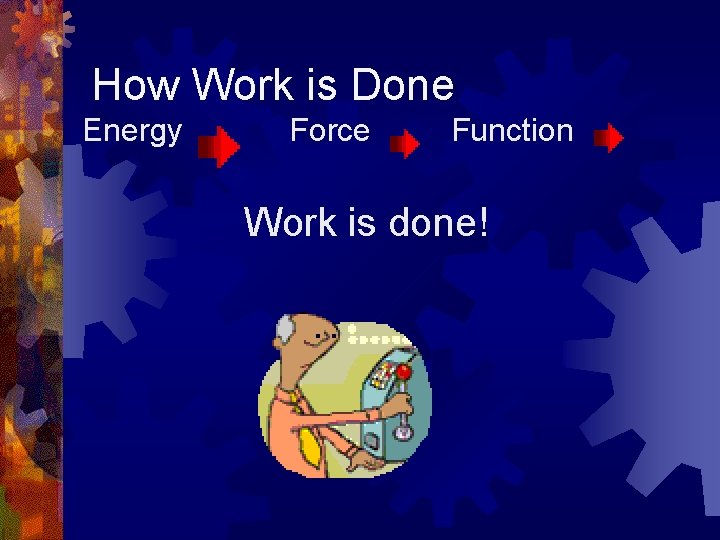
How Work is Done Energy Force Function Work is done!
Work input and output ® Work input is the amount of work done on a machine. ® Input force x input distance ® Work output is the amount of work done by a machine. ® Output force x output distance
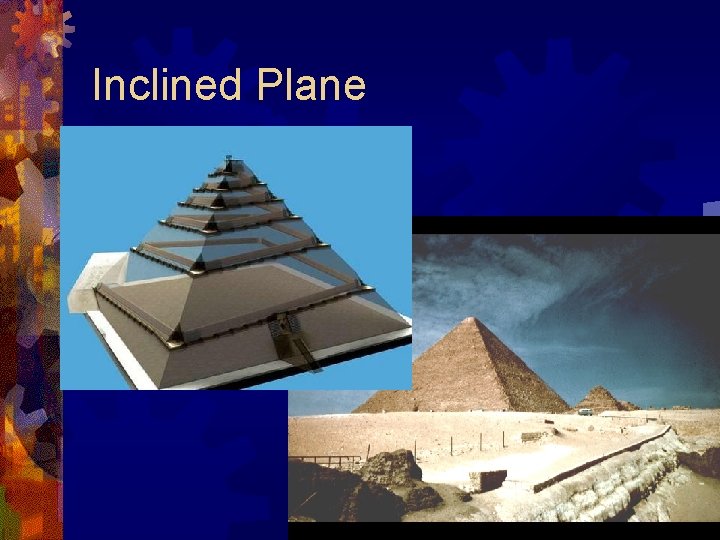
Inclined Plane
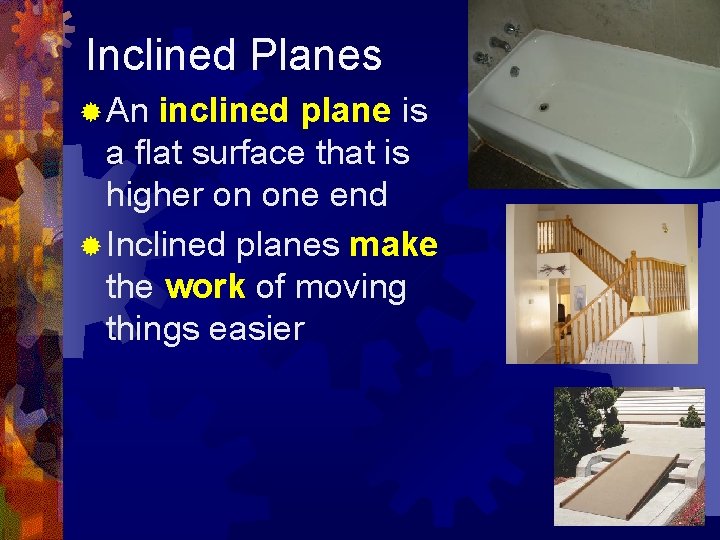
Inclined Planes ® An inclined plane is a flat surface that is higher on one end ® Inclined planes make the work of moving things easier
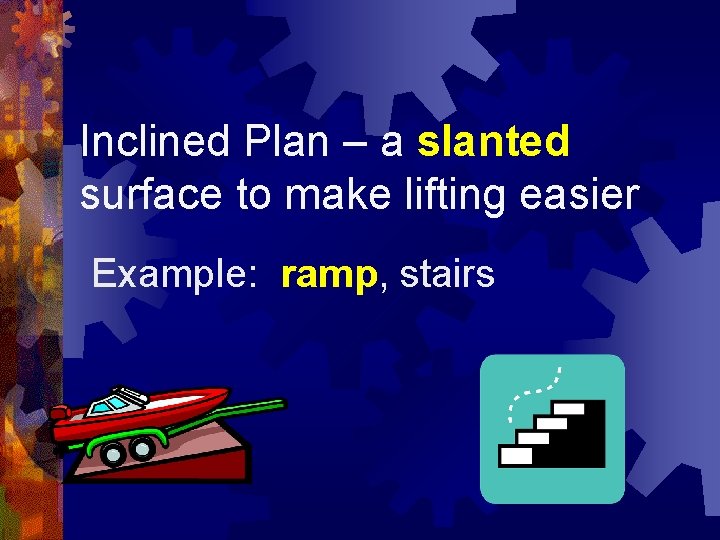
Inclined Plan – a slanted surface to make lifting easier Example: ramp, stairs
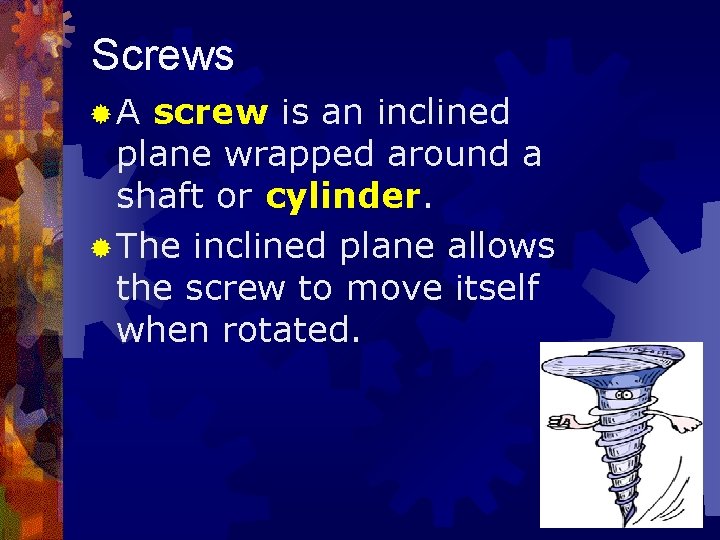
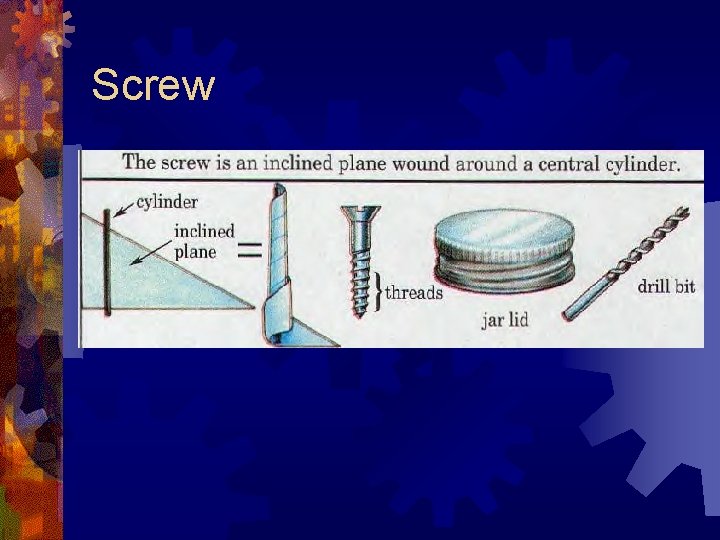
Screws ®A screw is an inclined plane wrapped around a shaft or cylinder. ® The inclined plane allows the screw to move itself when rotated.
Screw
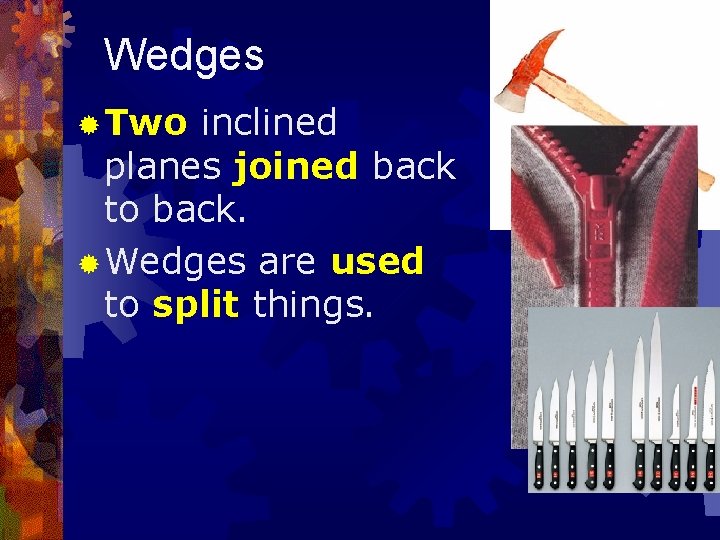
Wedges ® Two inclined planes joined back to back. ® Wedges are used to split things.
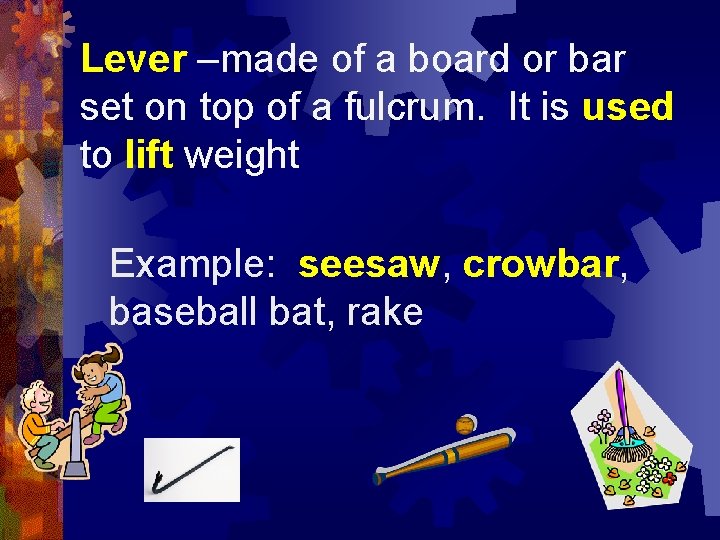
Lever –made of a board or bar set on top of a fulcrum. It is used to lift weight Example: seesaw, crowbar, baseball bat, rake
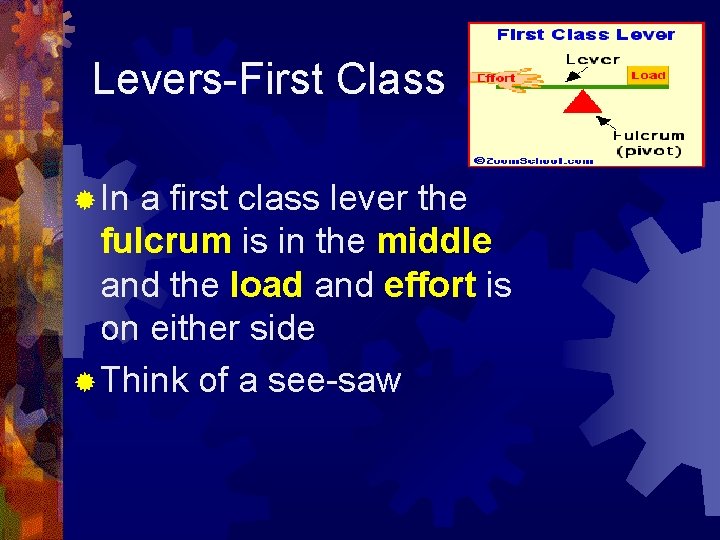
Levers-First Class ® In a first class lever the fulcrum is in the middle and the load and effort is on either side ® Think of a see-saw
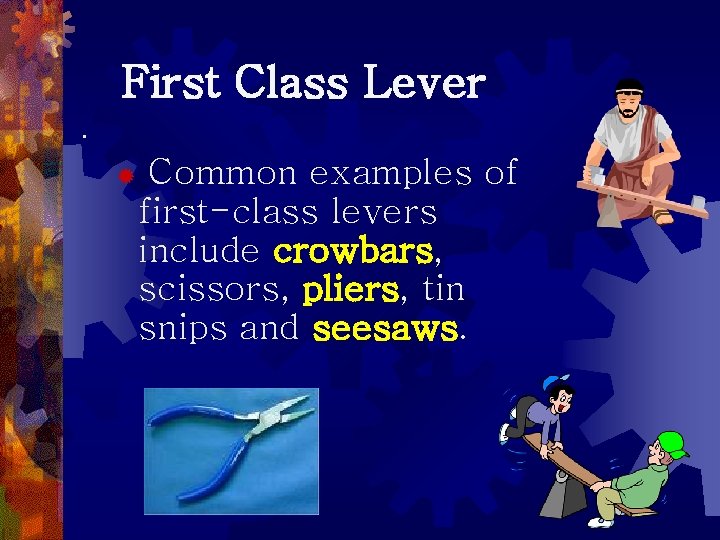
First Class Lever. ® Common examples of first-class levers include crowbars, scissors, pliers, tin snips and seesaws.
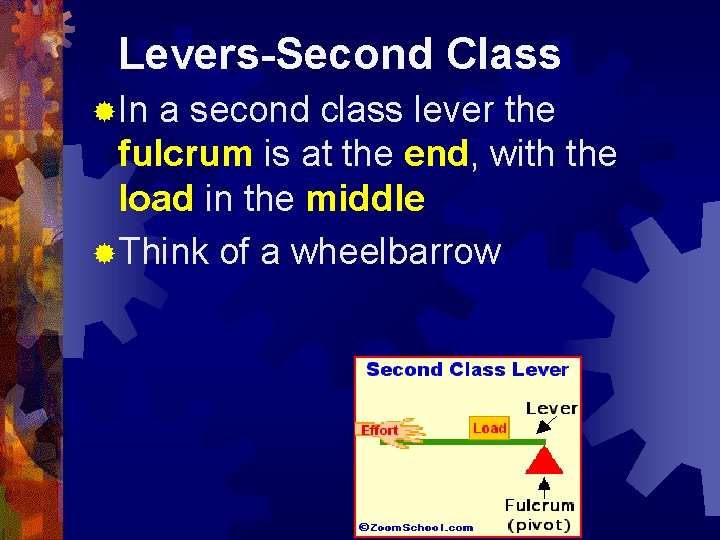
Levers-Second Class ®In a second class lever the fulcrum is at the end, with the load in the middle ®Think of a wheelbarrow
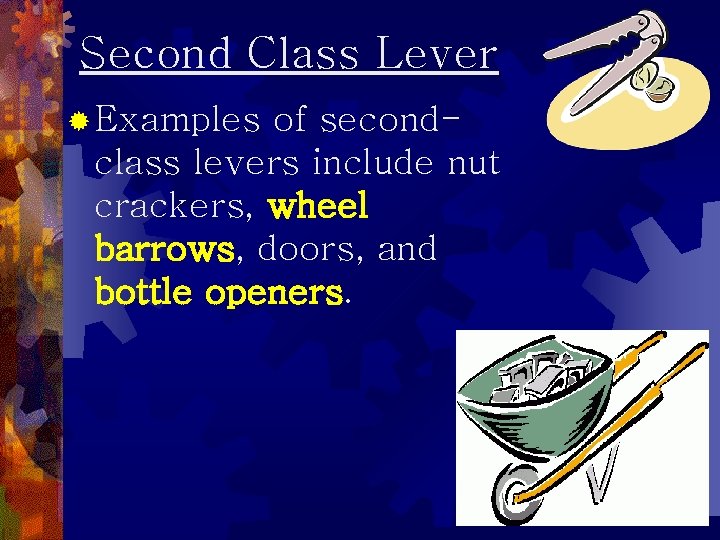
Second Class Lever ® Examples of secondclass levers include nut crackers, wheel barrows, doors, and bottle openers.
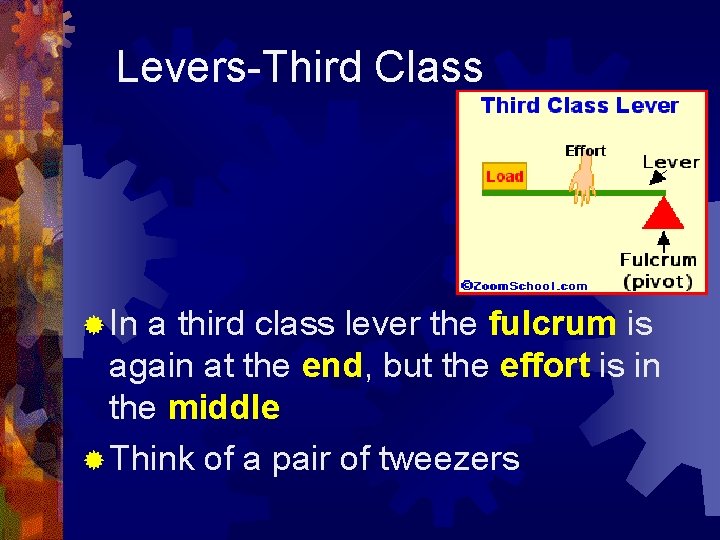
Levers-Third Class ® In a third class lever the fulcrum is again at the end, but the effort is in the middle ® Think of a pair of tweezers
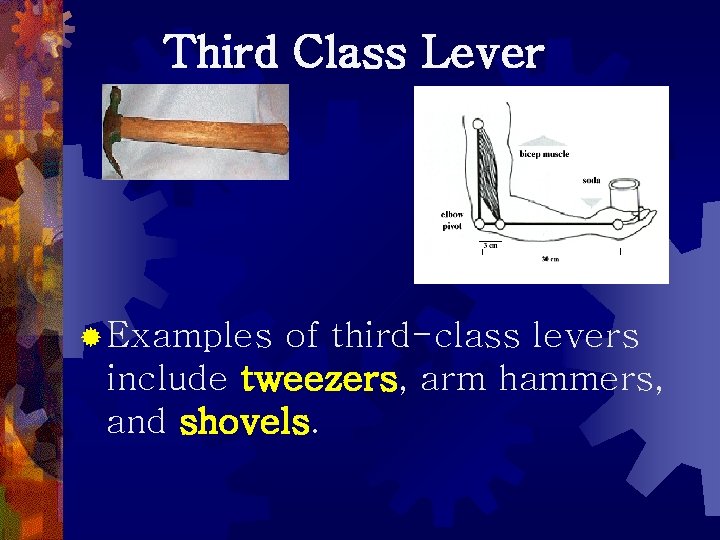
Third Class Lever ® Examples of third-class levers include tweezers, arm hammers, and shovels.
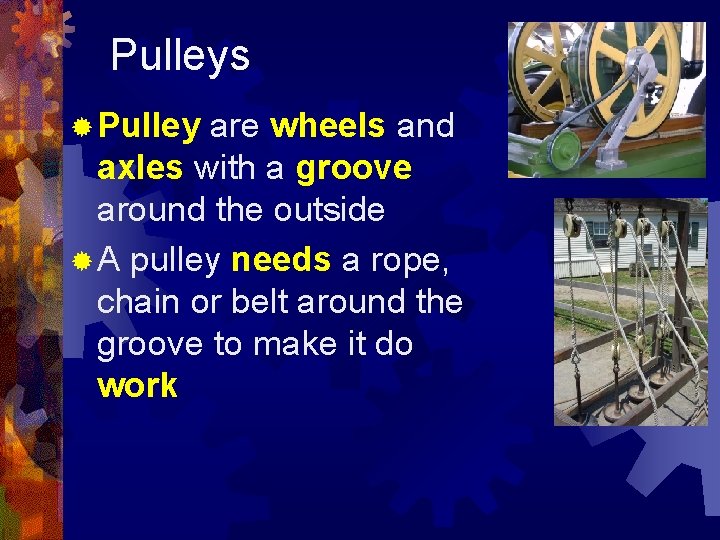
Pulleys ® Pulley are wheels and axles with a groove around the outside ® A pulley needs a rope, chain or belt around the groove to make it do work
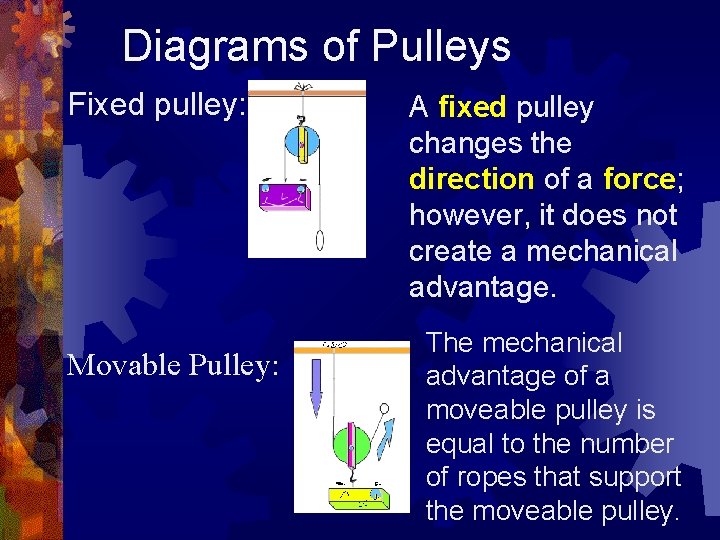
Diagrams of Pulleys Fixed pulley: Movable Pulley: A fixed pulley changes the direction of a force; however, it does not create a mechanical advantage. The mechanical advantage of a moveable pulley is equal to the number of ropes that support the moveable pulley.
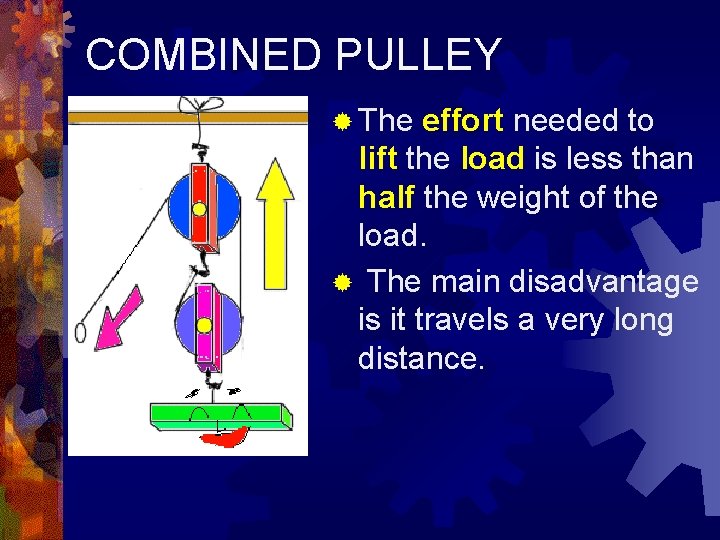
COMBINED PULLEY ® The effort needed to lift the load is less than half the weight of the load. ® The main disadvantage is it travels a very long distance.
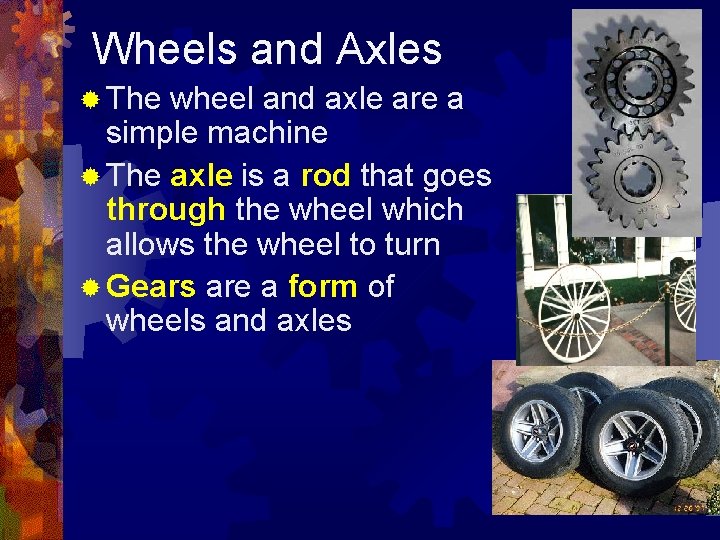
Wheels and Axles ® The wheel and axle are a simple machine ® The axle is a rod that goes through the wheel which allows the wheel to turn ® Gears are a form of wheels and axles
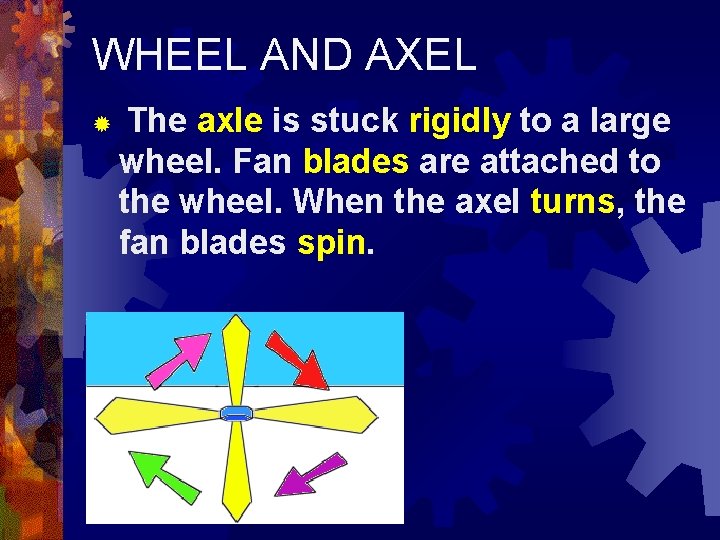
WHEEL AND AXEL ® The axle is stuck rigidly to a large wheel. Fan blades are attached to the wheel. When the axel turns, the fan blades spin.
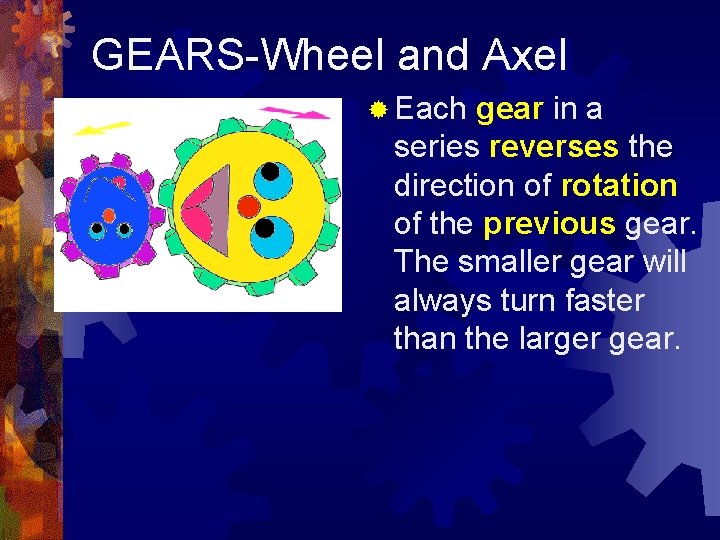
GEARS-Wheel and Axel ® Each gear in a series reverses the direction of rotation of the previous gear. The smaller gear will always turn faster than the larger gear.
Rube Goldberg Machines Rube Goldberg machines are examples of complex machines. ® All complex machines are made up of combinations of simple machines. ® Rube Goldberg machines are usually a complicated combination of simple machines. ® By studying the components of Rube Goldberg machines, we learn more about simple machines ®