
The 6 Kingdoms TaxonomyClassification Unit Taxonomic Key a
- Slides: 14
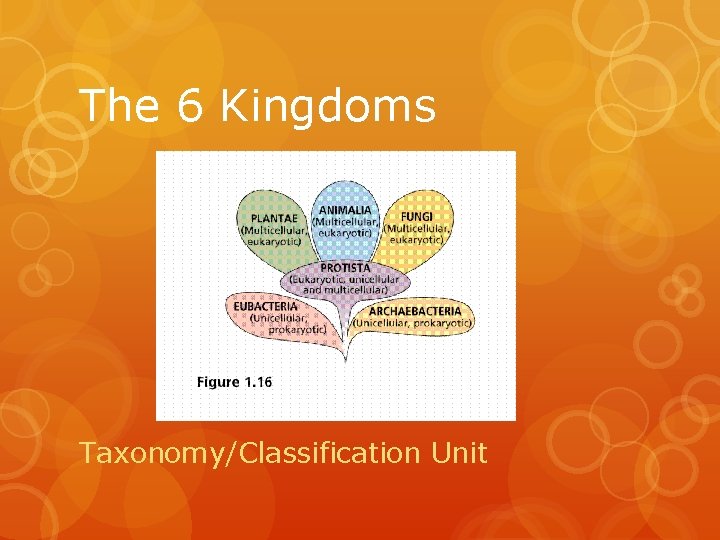
The 6 Kingdoms Taxonomy/Classification Unit
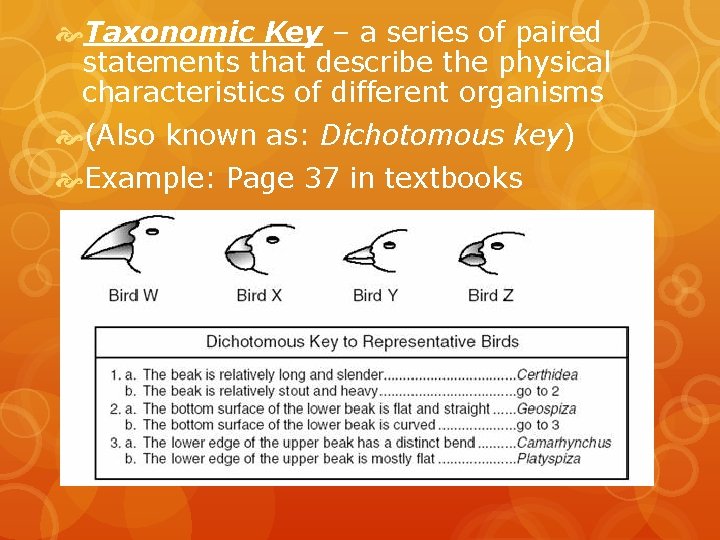
Taxonomic Key – a series of paired statements that describe the physical characteristics of different organisms (Also known as: Dichotomous key) Example: Page 37 in textbooks
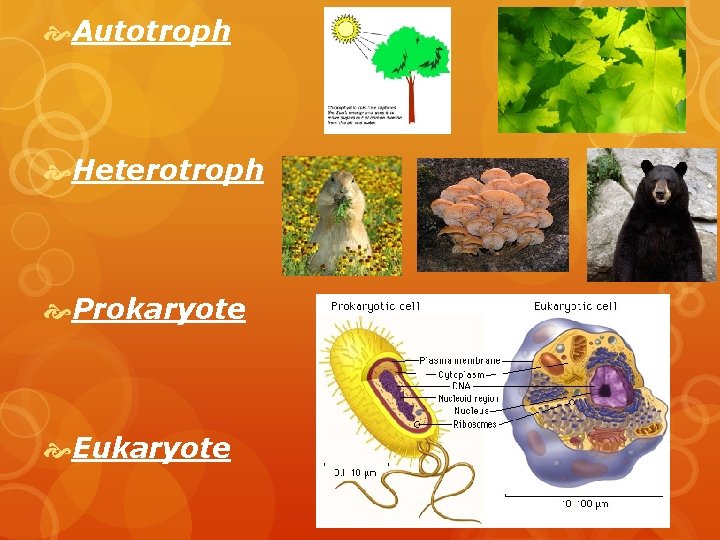
Organisms are placed into kingdoms based on their type of cells, their ability to make food, and the number of cells in their body Autotroph – organisms that can make it’s own food Heterotroph – can’t make it’s own food Prokaryote – organisms that do NOT have a nucleus Eukaryote – they DO have a nucleus (unicellular and multicellular)
Autotroph Heterotroph Prokaryote Eukaryote
Making the connection… 7 Levels of Classification 1) Kingdom 2) Phylum 3) Class 4) Order 5) Family 6) Genus 7) Species (SIX Kingdoms)
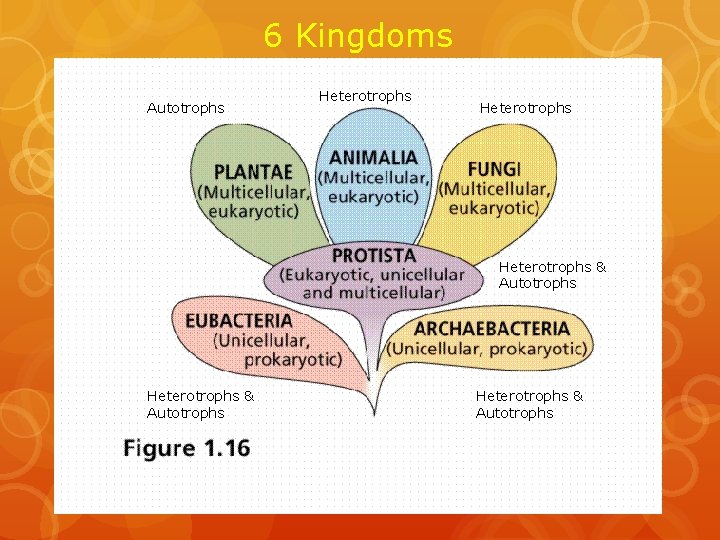
Six Kingdoms (Books: page 40) 1. Archaebacteria 2. Eubacteria 3. Protists 4. Fungi 5. Plants 6. Animals
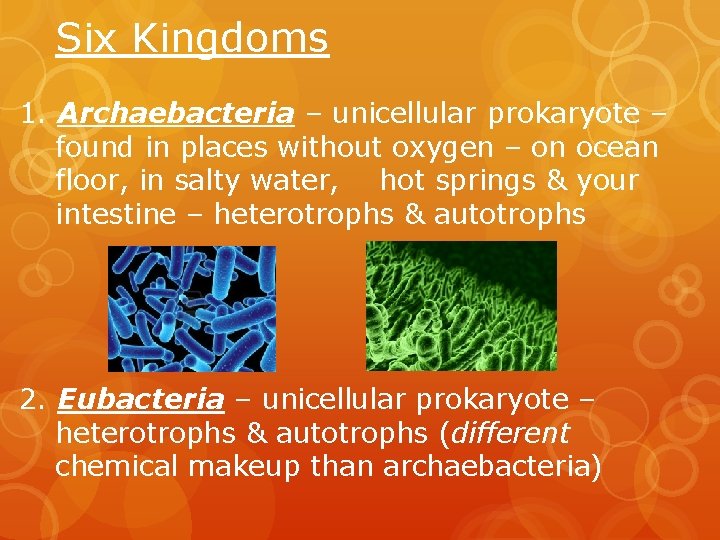
Six Kingdoms 1. Archaebacteria – unicellular prokaryote – found in places without oxygen – on ocean floor, in salty water, hot springs & your intestine – heterotrophs & autotrophs 2. Eubacteria – unicellular prokaryote – heterotrophs & autotrophs (different chemical makeup than archaebacteria)
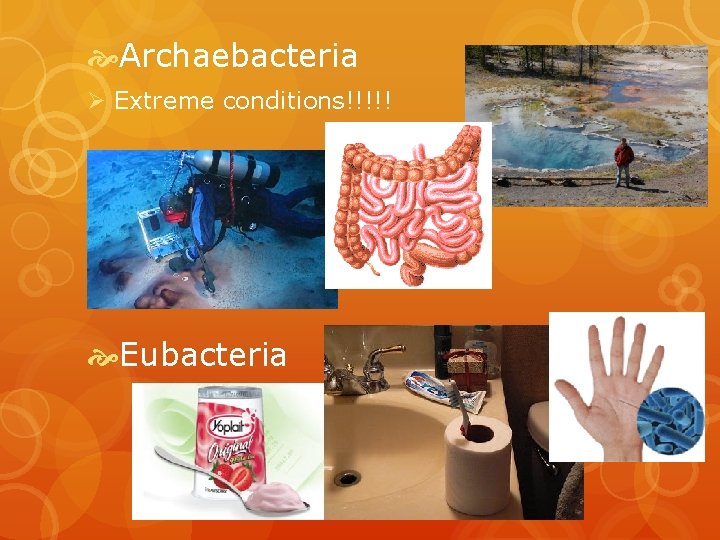
Archaebacteria Ø Extreme conditions!!!!! Eubacteria
Checkpoint! What are the similarities between archaebacteria and eubacteria? What is the difference between them?
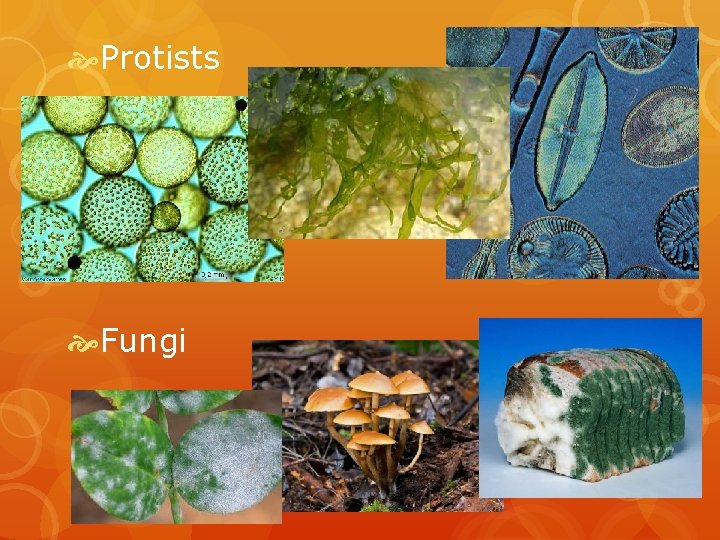
3. Protists – most are unicellular (seaweed is multicellular) & are eukaryotes – heterotrophs & autotrophs – “Odds and ends” kingdom 4. Fungi – multicellular eukaryotes (except yeast) – heterotrophs – mushrooms, molds, mildews
Protists Fungi
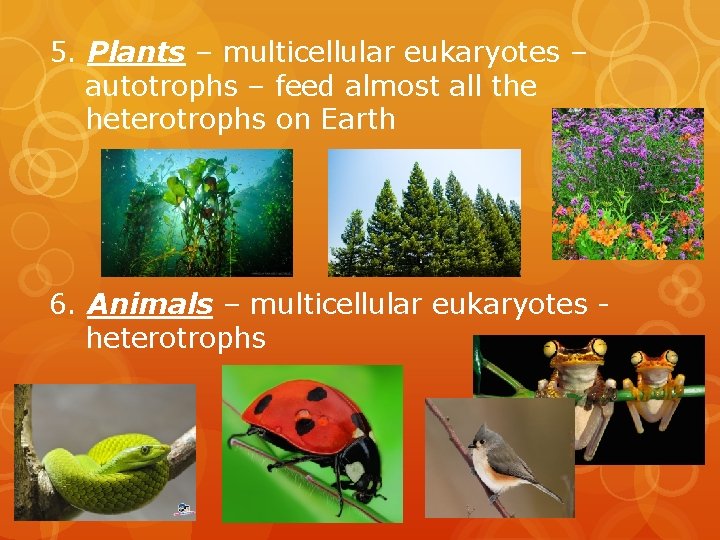
5. Plants – multicellular eukaryotes – autotrophs – feed almost all the heterotrophs on Earth 6. Animals – multicellular eukaryotes heterotrophs
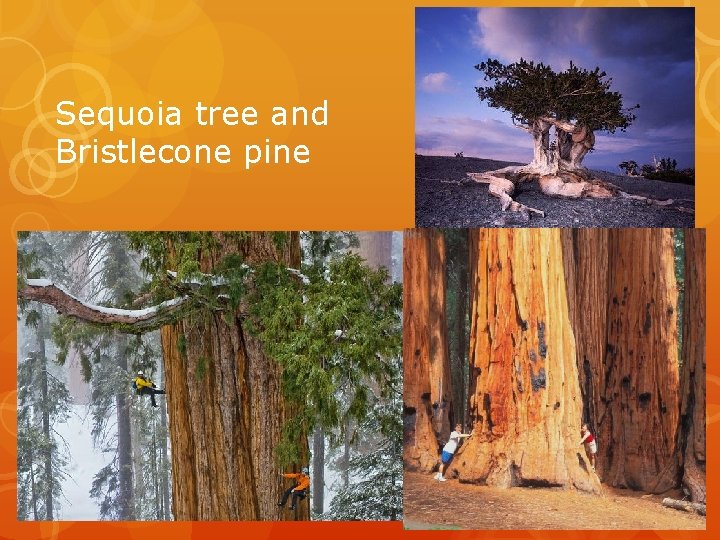
Sequoia tree and Bristlecone pine
6 Kingdoms Autotrophs Heterotrophs & Autotrophs Heterotrophs & Autotrophs