
THE 511 NEW TESTAMENT THEOLOGY CLASS VIII THEOLOGY
- Slides: 27
THE 511 NEW TESTAMENT THEOLOGY CLASS VIII: THEOLOGY OF JOHANNINE WRITINGS (GOSPEL & EPISTLES)
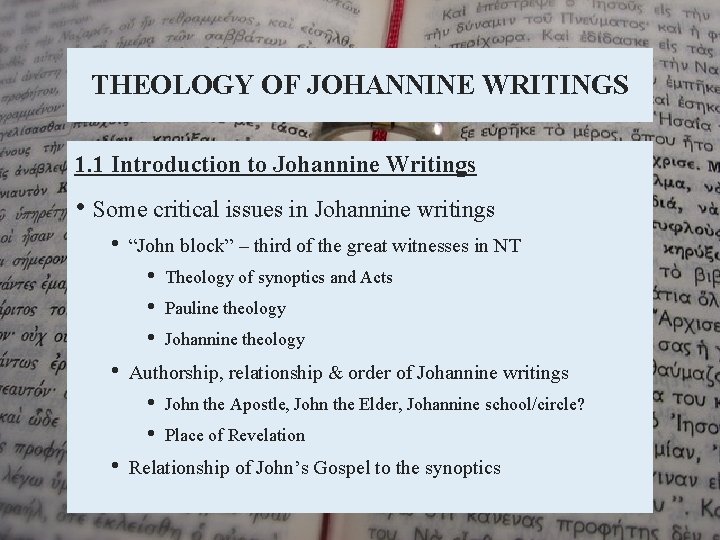
THEOLOGY OF JOHANNINE WRITINGS 1. 1 Introduction to Johannine Writings • Some critical issues in Johannine writings • “John block” – third of the great witnesses in NT • • Pauline theology Johannine theology Authorship, relationship & order of Johannine writings • • • Theology of synoptics and Acts John the Apostle, John the Elder, Johannine school/circle? Place of Revelation Relationship of John’s Gospel to the synoptics
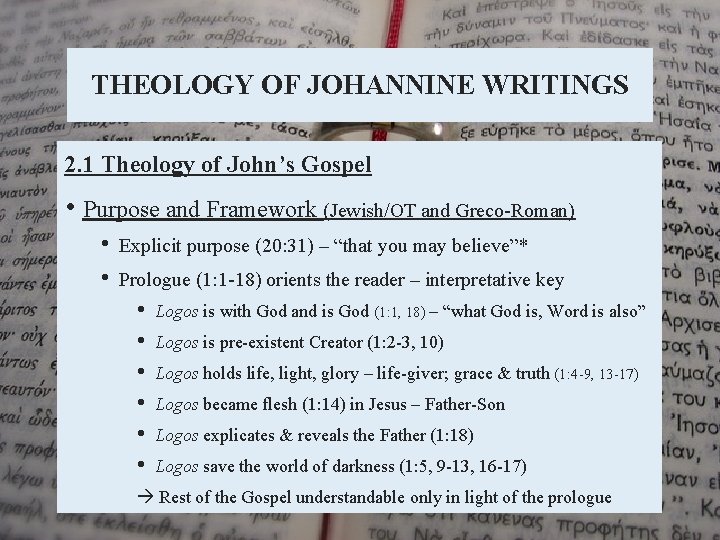
THEOLOGY OF JOHANNINE WRITINGS 2. 1 Theology of John’s Gospel • Purpose and Framework (Jewish/OT and Greco-Roman) • • Explicit purpose (20: 31) – “that you may believe”* Prologue (1: 1 -18) orients the reader – interpretative key • • • Logos is with God and is God (1: 1, 18) – “what God is, Word is also” Logos is pre-existent Creator (1: 2 -3, 10) Logos holds life, light, glory – life-giver; grace & truth (1: 4 -9, 13 -17) Logos became flesh (1: 14) in Jesus – Father-Son Logos explicates & reveals the Father (1: 18) Logos save the world of darkness (1: 5, 9 -13, 16 -17) Rest of the Gospel understandable only in light of the prologue
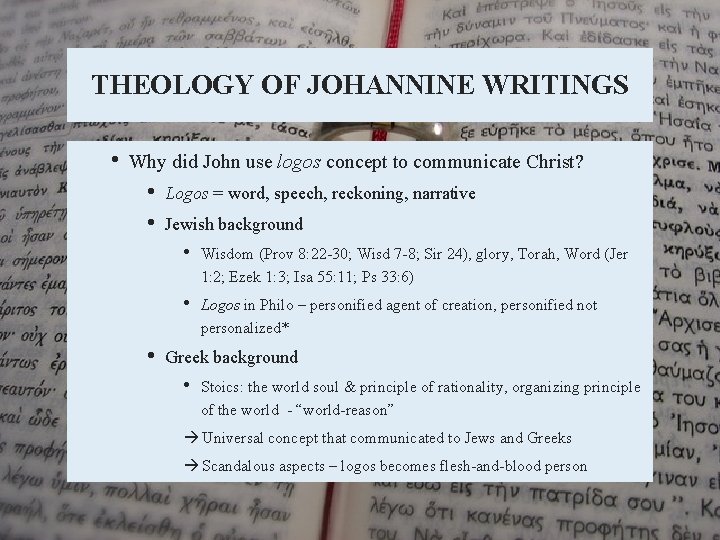
THEOLOGY OF JOHANNINE WRITINGS • Why did John use logos concept to communicate Christ? • • • Logos = word, speech, reckoning, narrative Jewish background • Wisdom (Prov 8: 22 -30; Wisd 7 -8; Sir 24), glory, Torah, Word (Jer 1: 2; Ezek 1: 3; Isa 55: 11; Ps 33: 6) • Logos in Philo – personified agent of creation, personified not personalized* Greek background • Stoics: the world soul & principle of rationality, organizing principle of the world - “world-reason” Universal concept that communicated to Jews and Greeks Scandalous aspects – logos becomes flesh-and-blood person
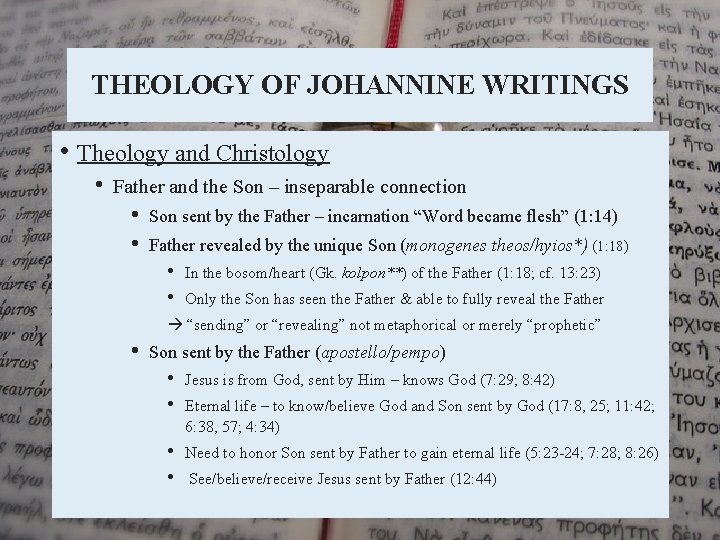
THEOLOGY OF JOHANNINE WRITINGS • Theology and Christology • Father and the Son – inseparable connection • • Son sent by the Father – incarnation “Word became flesh” (1: 14) Father revealed by the unique Son (monogenes theos/hyios*) (1: 18) • • In the bosom/heart (Gk. kolpon**) of the Father (1: 18; cf. 13: 23) Only the Son has seen the Father & able to fully reveal the Father “sending” or “revealing” not metaphorical or merely “prophetic” • Son sent by the Father (apostello/pempo) • • Jesus is from God, sent by Him – knows God (7: 29; 8: 42) • • Need to honor Son sent by Father to gain eternal life (5: 23 -24; 7: 28; 8: 26) Eternal life – to know/believe God and Son sent by God (17: 8, 25; 11: 42; 6: 38, 57; 4: 34) See/believe/receive Jesus sent by Father (12: 44)
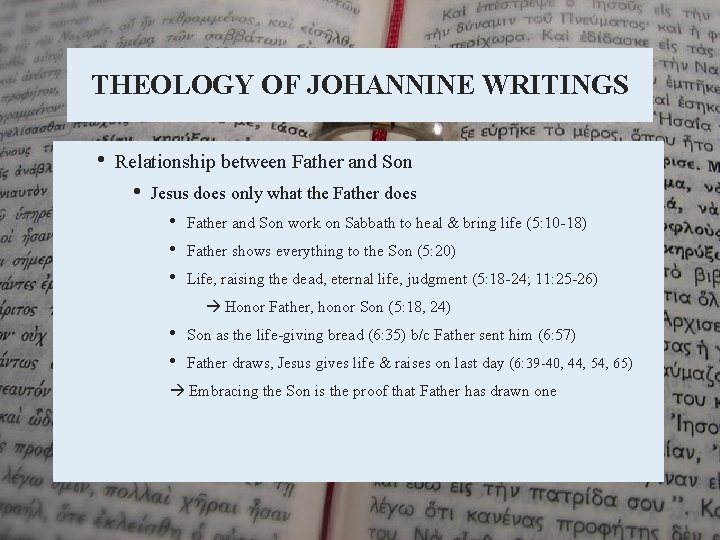
THEOLOGY OF JOHANNINE WRITINGS • Relationship between Father and Son • Jesus does only what the Father does • • • Father and Son work on Sabbath to heal & bring life (5: 10 -18) Father shows everything to the Son (5: 20) Life, raising the dead, eternal life, judgment (5: 18 -24; 11: 25 -26) Honor Father, honor Son (5: 18, 24) • • Son as the life-giving bread (6: 35) b/c Father sent him (6: 57) Father draws, Jesus gives life & raises on last day (6: 39 -40, 44, 54, 65) Embracing the Son is the proof that Father has drawn one
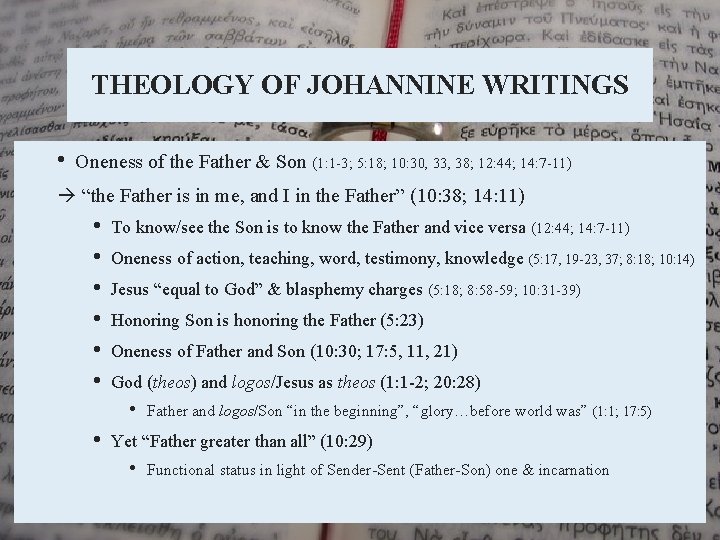
THEOLOGY OF JOHANNINE WRITINGS • Oneness of the Father & Son (1: 1 -3; 5: 18; 10: 30, 33, 38; 12: 44; 14: 7 -11) “the Father is in me, and I in the Father” (10: 38; 14: 11) • • • To know/see the Son is to know the Father and vice versa (12: 44; 14: 7 -11) Oneness of action, teaching, word, testimony, knowledge (5: 17, 19 -23, 37; 8: 18; 10: 14) Jesus “equal to God” & blasphemy charges (5: 18; 8: 58 -59; 10: 31 -39) Honoring Son is honoring the Father (5: 23) Oneness of Father and Son (10: 30; 17: 5, 11, 21) God (theos) and logos/Jesus as theos (1: 1 -2; 20: 28) • • Father and logos/Son “in the beginning”, “glory…before world was” (1: 1; 17: 5) Yet “Father greater than all” (10: 29) • Functional status in light of Sender-Sent (Father-Son) one & incarnation
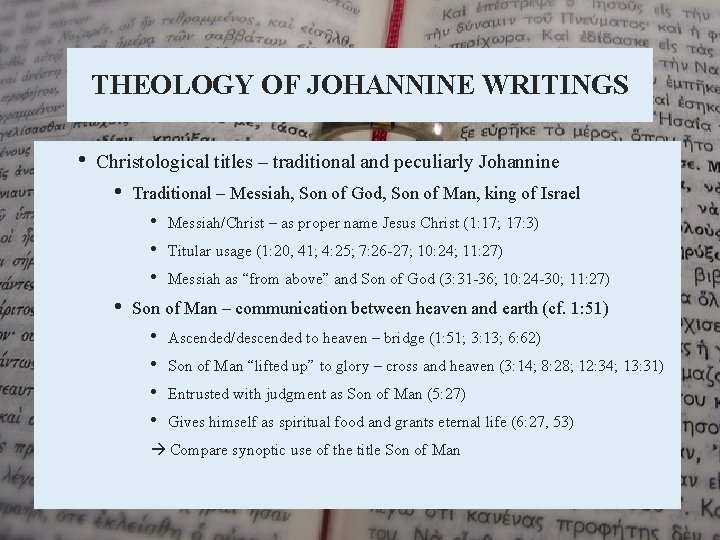
THEOLOGY OF JOHANNINE WRITINGS • Christological titles – traditional and peculiarly Johannine • Traditional – Messiah, Son of God, Son of Man, king of Israel • • Messiah/Christ – as proper name Jesus Christ (1: 17; 17: 3) Titular usage (1: 20, 41; 4: 25; 7: 26 -27; 10: 24; 11: 27) Messiah as “from above” and Son of God (3: 31 -36; 10: 24 -30; 11: 27) Son of Man – communication between heaven and earth (cf. 1: 51) • • Ascended/descended to heaven – bridge (1: 51; 3: 13; 6: 62) Son of Man “lifted up” to glory – cross and heaven (3: 14; 8: 28; 12: 34; 13: 31) Entrusted with judgment as Son of Man (5: 27) Gives himself as spiritual food and grants eternal life (6: 27, 53) Compare synoptic use of the title Son of Man
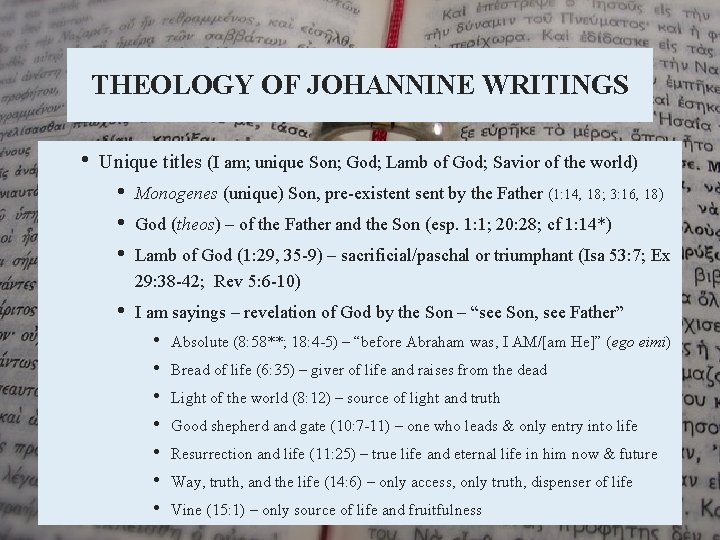
THEOLOGY OF JOHANNINE WRITINGS • Unique titles (I am; unique Son; God; Lamb of God; Savior of the world) • • • Monogenes (unique) Son, pre-existent sent by the Father (1: 14, 18; 3: 16, 18) • I am sayings – revelation of God by the Son – “see Son, see Father” God (theos) – of the Father and the Son (esp. 1: 1; 20: 28; cf 1: 14*) Lamb of God (1: 29, 35 -9) – sacrificial/paschal or triumphant (Isa 53: 7; Ex 29: 38 -42; Rev 5: 6 -10) • • Absolute (8: 58**; 18: 4 -5) – “before Abraham was, I AM/[am He]” (ego eimi) Bread of life (6: 35) – giver of life and raises from the dead Light of the world (8: 12) – source of light and truth Good shepherd and gate (10: 7 -11) – one who leads & only entry into life Resurrection and life (11: 25) – true life and eternal life in him now & future Way, truth, and the life (14: 6) – only access, only truth, dispenser of life Vine (15: 1) – only source of life and fruitfulness
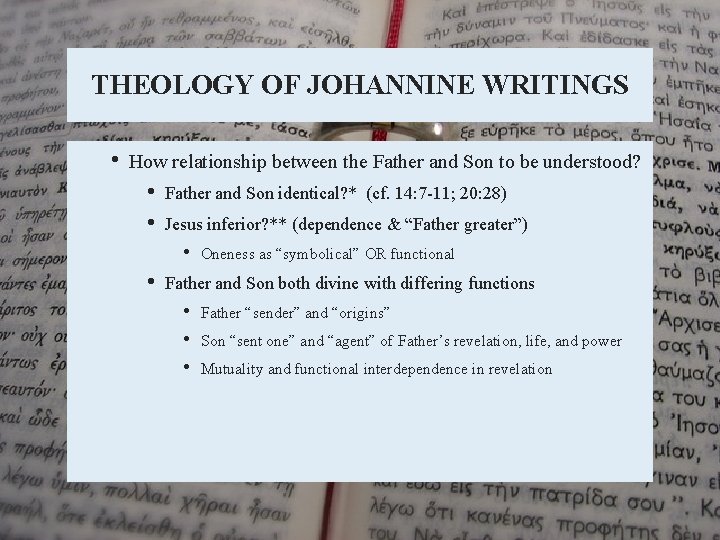
THEOLOGY OF JOHANNINE WRITINGS • How relationship between the Father and Son to be understood? • • Father and Son identical? * (cf. 14: 7 -11; 20: 28) Jesus inferior? ** (dependence & “Father greater”) • • Oneness as “symbolical” OR functional Father and Son both divine with differing functions • • • Father “sender” and “origins” Son “sent one” and “agent” of Father’s revelation, life, and power Mutuality and functional interdependence in revelation
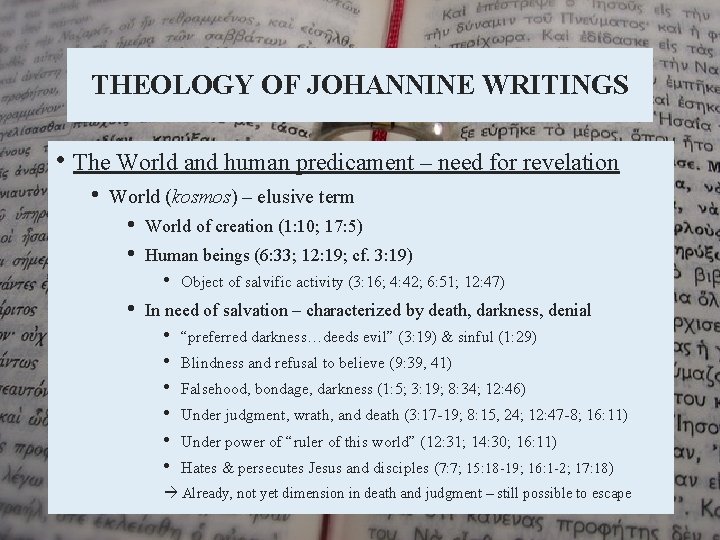
THEOLOGY OF JOHANNINE WRITINGS • The World and human predicament – need for revelation • World (kosmos) – elusive term • • World of creation (1: 10; 17: 5) Human beings (6: 33; 12: 19; cf. 3: 19) • • Object of salvific activity (3: 16; 4: 42; 6: 51; 12: 47) In need of salvation – characterized by death, darkness, denial • • • “preferred darkness…deeds evil” (3: 19) & sinful (1: 29) Blindness and refusal to believe (9: 39, 41) Falsehood, bondage, darkness (1: 5; 3: 19; 8: 34; 12: 46) Under judgment, wrath, and death (3: 17 -19; 8: 15, 24; 12: 47 -8; 16: 11) Under power of “ruler of this world” (12: 31; 14: 30; 16: 11) Hates & persecutes Jesus and disciples (7: 7; 15: 18 -19; 16: 1 -2; 17: 18) Already, not yet dimension in death and judgment – still possible to escape
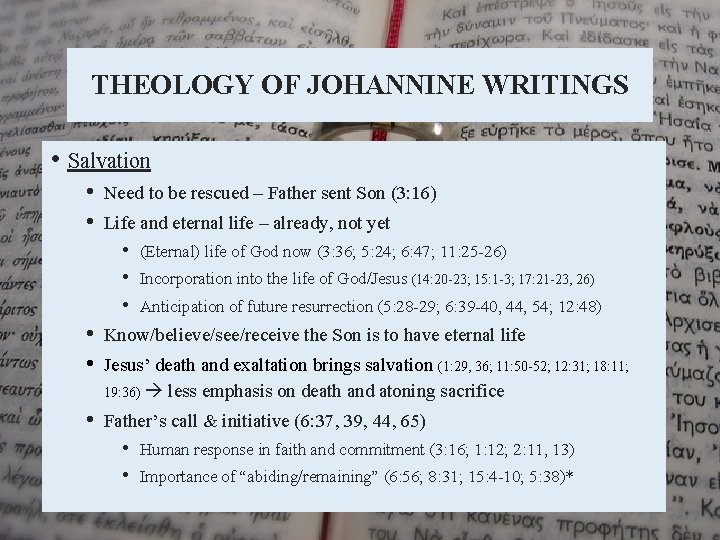
THEOLOGY OF JOHANNINE WRITINGS • Salvation • • Need to be rescued – Father sent Son (3: 16) Life and eternal life – already, not yet • • • (Eternal) life of God now (3: 36; 5: 24; 6: 47; 11: 25 -26) Incorporation into the life of God/Jesus (14: 20 -23; 15: 1 -3; 17: 21 -23, 26) Anticipation of future resurrection (5: 28 -29; 6: 39 -40, 44, 54; 12: 48) • • Know/believe/see/receive the Son is to have eternal life • Father’s call & initiative (6: 37, 39, 44, 65) Jesus’ death and exaltation brings salvation (1: 29, 36; 11: 50 -52; 12: 31; 18: 11; 19: 36) less emphasis on death and atoning sacrifice • • Human response in faith and commitment (3: 16; 1: 12; 2: 11, 13) Importance of “abiding/remaining” (6: 56; 8: 31; 15: 4 -10; 5: 38)*
THEOLOGY OF JOHANNINE WRITINGS • Holy Spirit • • Importance of the coming Spirit (3: 5; 4: 10, 14, 24; 6: 63; 7: 37 -39; 20: 22) Parakletos (helper, advocate, comforter) as “second” Jesus • • • Sent by the Father and (through) Jesus (14: 15 -17, 25 -26; 16: 7 -15) Spirit of truth, abides forever – mutual in-dwelling (14: 15 -17) Teaches, reminds disciples (14: 25 -26) Testifies about Jesus (15: 26 -27) Sustains disciples by convicting the world of sin (16: 7 -11) Guide into all truth, declares future, glorifies Jesus (16: 12 -15) Continues the work of Jesus in and through the disciples
THEOLOGY OF JOHANNINE WRITINGS • Discipleship and God’s people • • John the Baptist and Jesus’ disciples (1: 35 -37) Jesus chose but Father gave them to him (6: 70; 13: 18; 15: 16; 17: 6 -9) • Post-resurrection understanding (2: 22; 12: 16) • • Revelation and special teachings (13 -17) • • • One is Devil, some leave (6: 66, 68, 70) World hates disciples (15: 16, 19) Live in the world but not belong to it (17: 11, 14, 17) Mutual in-dwelling – Father, Son, disciples (14: 20; 15: 1 -3; 17: 11, 21 -23) • • Vine and branches – Father prunes to bring fruit (15: 1 -9) Unity of Father-Son(-Sprit) incorporates disciples into God-life through believing/abiding in Jesus Christ – unity of Father-Son-disciples Unity of believers testifies to the world “that You sent Me” (17: 21)
THEOLOGY OF JOHANNINE WRITINGS • Commitment to Jesus – love & obedience (14: 31; 15: 7 -9) • • Based on Father’s love to Son and the world (3: 16; 15: 7 -9) Abiding, loving, obeying, fruit, Father’s glory Love as new commandment – intensity of mutual love (13: 34 -35; 15: 13) Mission of the disciples – “Father sent me…I send you” (17: 18; 20: 21) • • • Sent into the world to testify – missionary community Encounter opposition, persecution & response (15: 18; 16: 1 -4; 1: 11; 12: 32) Spirit will help and testify about Jesus along with disciples (15: 26 -27) • • Spirit’s role to abide, teach, remind, guide disciples (14 -16) Spirit convicts the world of sin, judgment, righteousness (16: 7 -11)
THEOLOGY OF JOHANNINE WRITINGS • People of God – salvation-historical continuity & hostility of “Jews” • Salvation-historical continuity • • Scripture testifies of Jesus – Abraham, Moses, Isaiah (1: 46; 5: 46; 8: 56; 12: 41) Salvation “of Jews” (4: 9, 22) – Jesus & 12 as Jews • • Jesus attends Jewish festivals and dies as King of the Jews (19: 14, 19) Hostility of “the Jews” & distance from Judaism • • • Festival of the “Jews” (2: 13; 5: 1; 6: 4; 7: 2; 11: 55; 19: 42) Expulsion from synagogue of Christ-confessors (9: 22; 12: 42; 16: 2) Jesus as the perfection of Jewish feasts and Law (1: 17) • • Passover – Jesus as bread of life, not like manna (6: 1 -71, esp. 58) Tabernacles – living water & light; cf. water and light in the feast (8: 12; 7: 37 -39)
THEOLOGY OF JOHANNINE WRITINGS • • Dedication – Jesus as the sanctified one, not altar of the Temple (10: 22 -39) Jesus gives life (works) on Sabbath, just like God (5: 9 -18) True worship – Spirit and truth, not the Temple (4: 20 -24) “The Jews” – elusive concept, though most negative term • • • Neutral – comfort Martha (11: 19, 31 -33, 45) Positive – “salvation…of the Jews” (4: 9, 22) Negative – concrete expression of the world’s opposition to Jesus • • Pharisees & leaders as “Jews” (9: 13, 16, 22; 1: 19, 21; 18: 14) “Jews” persecute & “seek to kill” Jesus (5: 16, 18) Complain, refuse to believe & seek human glory (5: 39 -43; 6: 41 -2, 52) Accuse Jesus of being demonic and Samaritan – “of the Devil” (8: 31 -58) Characteristic of unbelief and opposition to Jesus Terrible history of effects per anti-semitism (8: 44)
THEOLOGY OF JOHANNINE WRITINGS • Eschatology • Jesus and salvation – fulfillment of OT (1: 46; 2: 17, 22; 5: 39, 46 -7; 6: 45; 12: 14 -16, 37 -41; 13: 18; 15: 25; 17: 12; 19: 24, 28, 36 -7; 20: 9) • Future judgment (5: 25 -29; 6: 39 -40, 44, 54; 11: 24; 12: 48) • • Jesus comes to his people (14: 3; 17: 24) (Eternal) life now (3: 36; 4: 23; 5: 23 -24; 6: 47; 11: 25; 16: 32) Realized eschatology the focus Futuristic eschatology – future resurrection acknowledged but not elaborated
THEOLOGY OF JOHANNINE WRITINGS 2. 2 Theology of John’s epistles • Situation and relationship to the Gospel • Group of believers left the community • • • Denied Christ came into flesh – Christ’s true humanity denied Claim perfection but “hate brothers” Possible order of the letters • • • 1 John the main letter/teaching 2 John the cover letter – not to offer hospitality to secessionists 3 John written a bit later – counter Diotrephes’ refusal to offer hospitality John’s community members
THEOLOGY OF JOHANNINE WRITINGS • Koinonia with God • Split of the community and uncertainty of who is right (2: 2) • • True witness: Word of life – seen, heard, touched (1: 1 -4) • • Denial of Jesus’ true humanity Truth passed on by authentic witnesses Koinonia w/ Father and Son and one another (1: 1 -4) • • • Forgiveness; conquered evil; abide in truth (1: 8 -9; 2: 12 -14) Light, love, eternal life (1: 5; 2: 9 -10; 3: 11, 14; 4: 8) Abide in what you heard, abide in Father and Son (4: 14) • • Casts out fear, conquer world (2: 24; 5: 4) Anointing of the Spirit teaches (2: 20, 27)
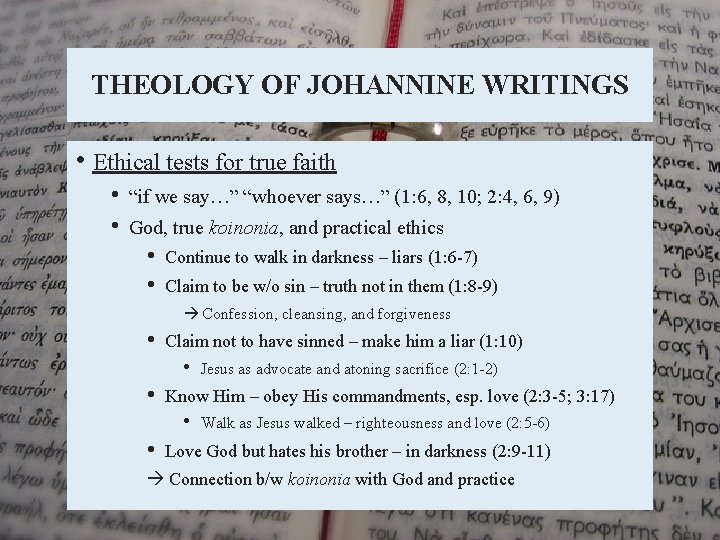
THEOLOGY OF JOHANNINE WRITINGS • Ethical tests for true faith • • “if we say…” “whoever says…” (1: 6, 8, 10; 2: 4, 6, 9) God, true koinonia, and practical ethics • • Continue to walk in darkness – liars (1: 6 -7) Claim to be w/o sin – truth not in them (1: 8 -9) Confession, cleansing, and forgiveness • Claim not to have sinned – make him a liar (1: 10) • • Know Him – obey His commandments, esp. love (2: 3 -5; 3: 17) • • Jesus as advocate and atoning sacrifice (2: 1 -2) Walk as Jesus walked – righteousness and love (2: 5 -6) Love God but hates his brother – in darkness (2: 9 -11) Connection b/w koinonia with God and practice
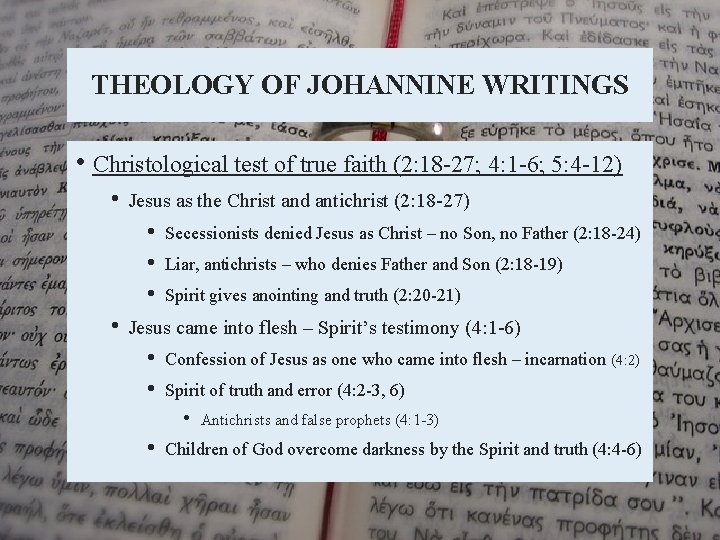
THEOLOGY OF JOHANNINE WRITINGS • Christological test of true faith (2: 18 -27; 4: 1 -6; 5: 4 -12) • Jesus as the Christ and antichrist (2: 18 -27) • • Secessionists denied Jesus as Christ – no Son, no Father (2: 18 -24) Liar, antichrists – who denies Father and Son (2: 18 -19) Spirit gives anointing and truth (2: 20 -21) Jesus came into flesh – Spirit’s testimony (4: 1 -6) • • Confession of Jesus as one who came into flesh – incarnation (4: 2) Spirit of truth and error (4: 2 -3, 6) • • Antichrists and false prophets (4: 1 -3) Children of God overcome darkness by the Spirit and truth (4: 4 -6)
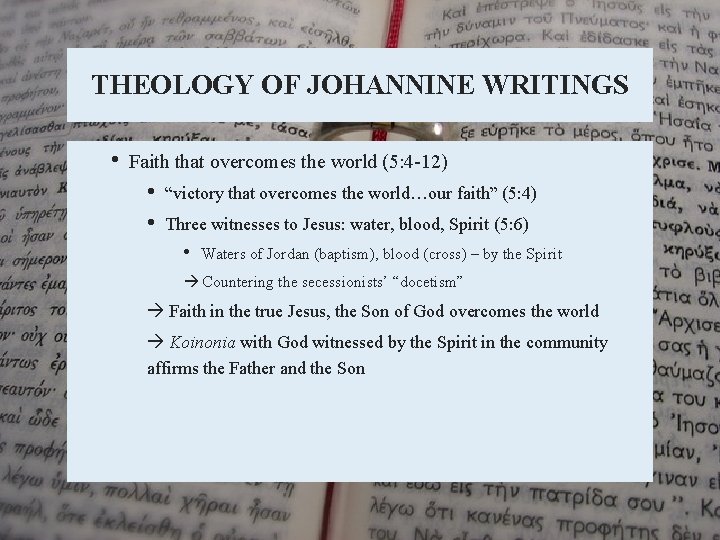
THEOLOGY OF JOHANNINE WRITINGS • Faith that overcomes the world (5: 4 -12) • • “victory that overcomes the world…our faith” (5: 4) Three witnesses to Jesus: water, blood, Spirit (5: 6) • Waters of Jordan (baptism), blood (cross) – by the Spirit Countering the secessionists’ “docetism” Faith in the true Jesus, the Son of God overcomes the world Koinonia with God witnessed by the Spirit in the community affirms the Father and the Son
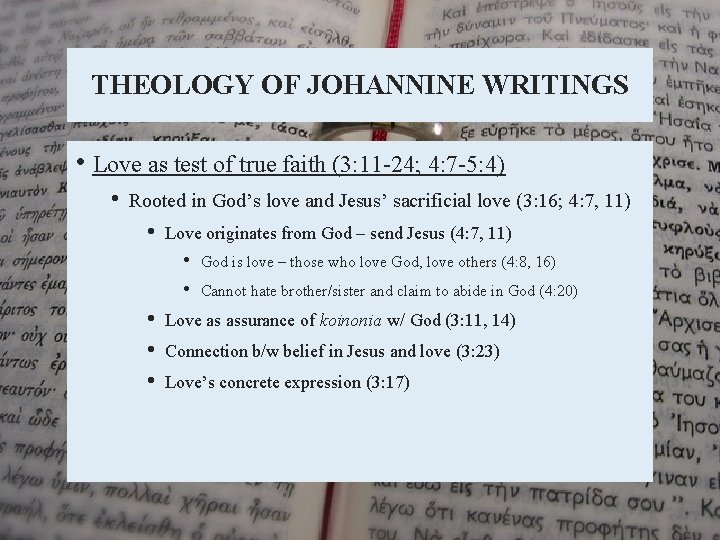
THEOLOGY OF JOHANNINE WRITINGS • Love as test of true faith (3: 11 -24; 4: 7 -5: 4) • Rooted in God’s love and Jesus’ sacrificial love (3: 16; 4: 7, 11) • Love originates from God – send Jesus (4: 7, 11) • • • God is love – those who love God, love others (4: 8, 16) Cannot hate brother/sister and claim to abide in God (4: 20) Love as assurance of koinonia w/ God (3: 11, 14) Connection b/w belief in Jesus and love (3: 23) Love’s concrete expression (3: 17)
THEOLOGY OF JOHANNINE WRITINGS • Sin and Perfection as tests of true faith • Paradoxical doctrine of sinlessness 8 If we say that we have no sin, we are deceiving ourselves and the truth is not in us (1: 8, 10; 2: 1 -2; 5: 16 -17) No one who abides in Him sins; no one who sins has seen Him or knows Him. (3: 6, 9 a; 5: 18) • Believers commit sin, yet cannot commit sin? • • Probably secessionist claimed perfection “Sin that leads to death” – apostasy of the secessionists?
THEOLOGY OF JOHANNINE WRITINGS • Some attempts solutions • • • Two different writers wrote 1 John Directed to two different groups of adversaries For special/elite Christians OR specific types of sins Continuous sin, not isolated acts Already, not yet tension – true progression in holiness • • • Expressed in absolute language characteristic of John’s writings Distinction b/w light and darkness does not know compromise John acknowledges sin in Christian life, yet affirms need forgiveness (except 5: 16) and progress in Christian life Paradoxical tension not easily solved per logic
THEOLOGY OF JOHANNINE WRITINGS • c • F