
The 5 Regions of the United States Chapter

- Slides: 42
The 5 Regions of the United States Chapter 11 6 th Grade Social Studies
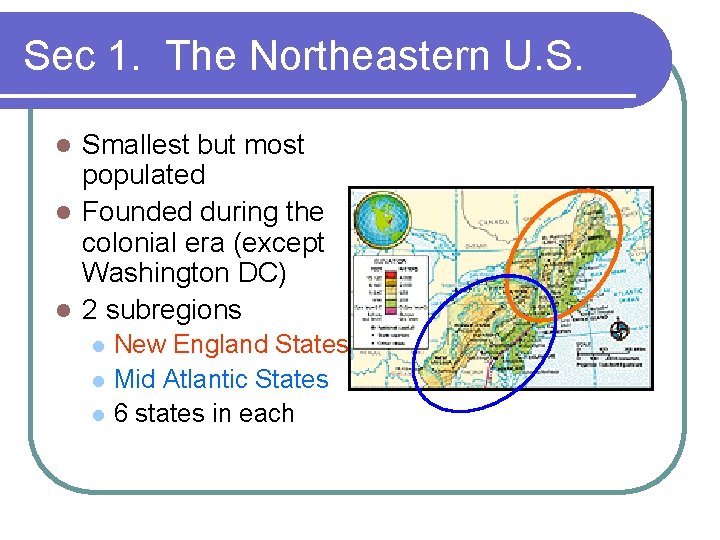
Sec 1. The Northeastern U. S. Smallest but most populated l Founded during the colonial era (except Washington DC) l 2 subregions l l New England States Mid Atlantic States 6 states in each
Guess the States / Abbreviations l New England l l l CT ME MA NH RI VT l Mid Atlantic l l l Delaware Maryland New Jersey New York Pennsylvania West Virginia
Megalopolis l String of cities that have grown together (in this case, along the Atlantic coast) l N. Y. City, Philadelphia, Baltimore, Washington D. C. , and Boston 40 million people l Grew because they were major seaports l
Question? l Why do you think this region’s population grew to be so large? l (hint) Think about the forms of transportation that were used during colonial days. l They are all major seaports.
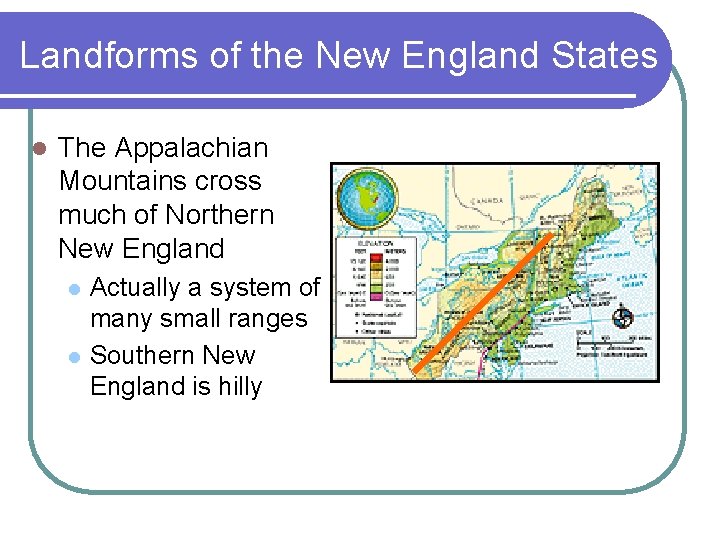
Landforms of the New England States l The Appalachian Mountains cross much of Northern New England l l Actually a system of many small ranges Southern New England is hilly
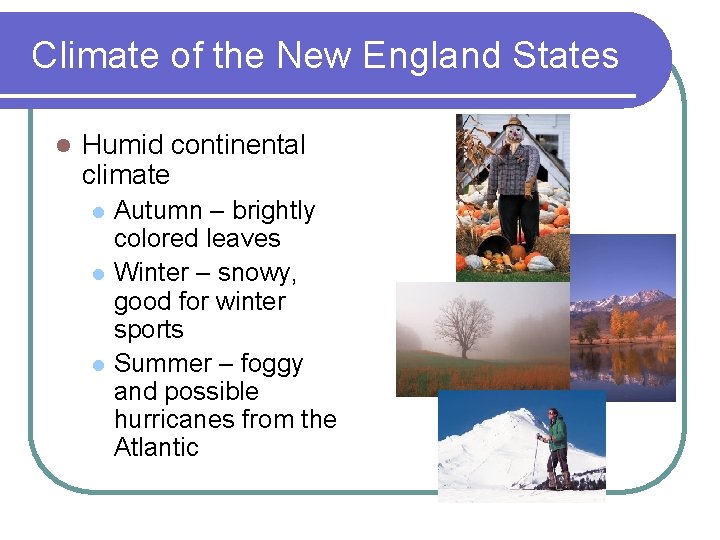
Climate of the New England States l Humid continental climate l l l Autumn – brightly colored leaves Winter – snowy, good for winter sports Summer – foggy and possible hurricanes from the Atlantic
History of the New England States l Pilgrims landed l New England was the center of the Revolutionary War
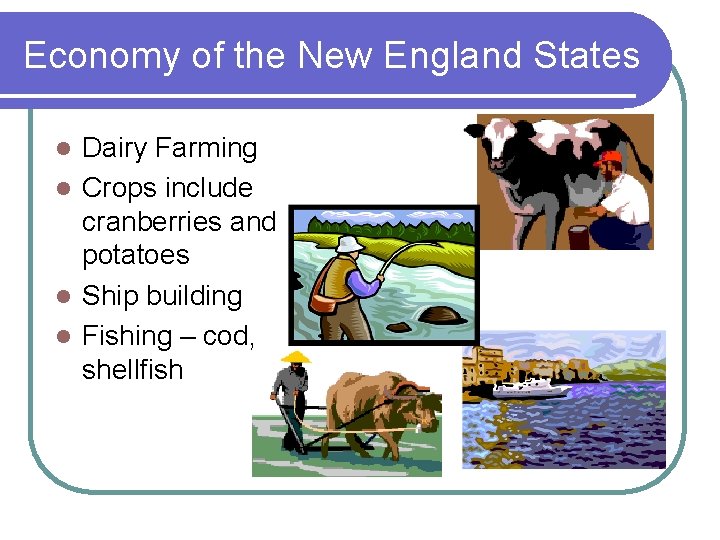
Economy of the New England States Dairy Farming l Crops include cranberries and potatoes l Ship building l Fishing – cod, shellfish l
Economy (cont. ) l Respected universities and colleges l l U. S. ’s first Industrial Area l l l Harvard and Yale Textile mills Shoe factories Today – many banks, investment and insurance companies
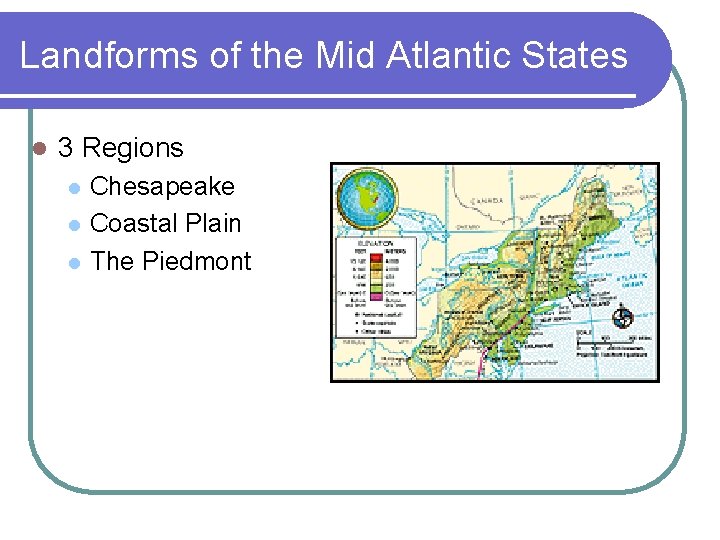
Landforms of the Mid Atlantic States l 3 Regions l l l Chesapeake Coastal Plain The Piedmont
Landforms of the Mid Atlantic States l 3 Landform Regions l Chesapeake l Fed by the Susquehanna River l l Largest Estuary Coastal Plains l l Stretches across the mid Atlantic states (except West Virginia) Does not rise much above sea level
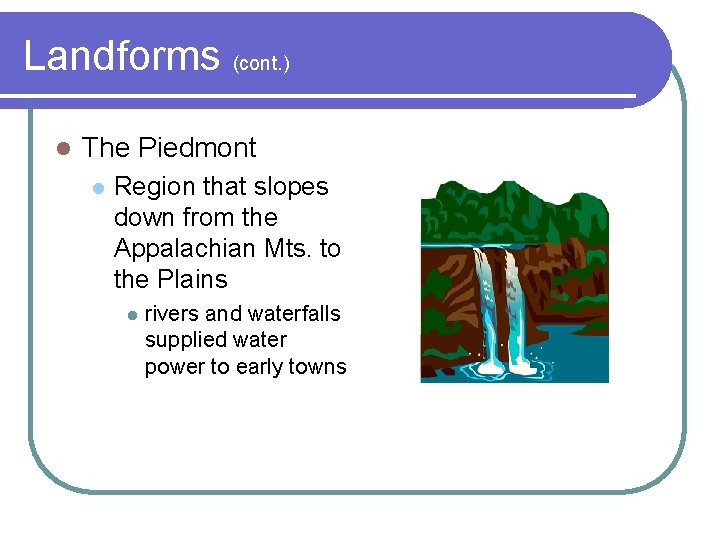
Landforms (cont. ) l The Piedmont l Region that slopes down from the Appalachian Mts. to the Plains l rivers and waterfalls supplied water power to early towns
Climate of the Mid Atlantic States 2 major types l North l l l Humid Continental South l Humid Subtropical Summers in both are hot and humid l Possible hurricanes l
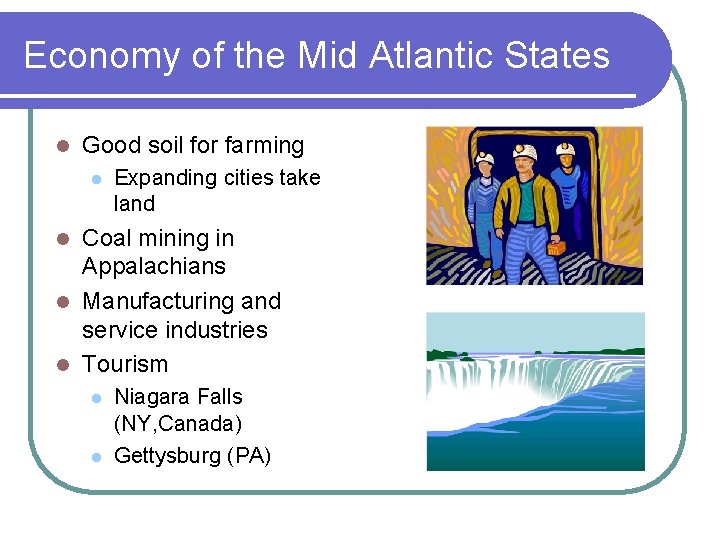
Economy of the Mid Atlantic States l Good soil for farming l Expanding cities take land Coal mining in Appalachians l Manufacturing and service industries l Tourism l l l Niagara Falls (NY, Canada) Gettysburg (PA)
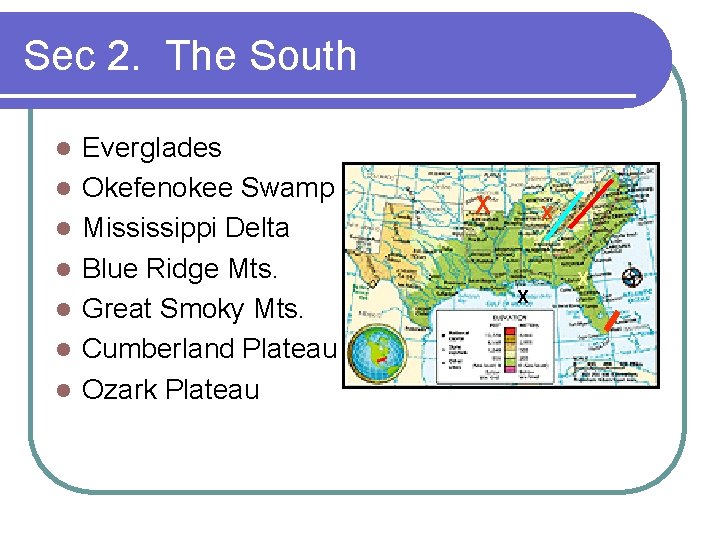
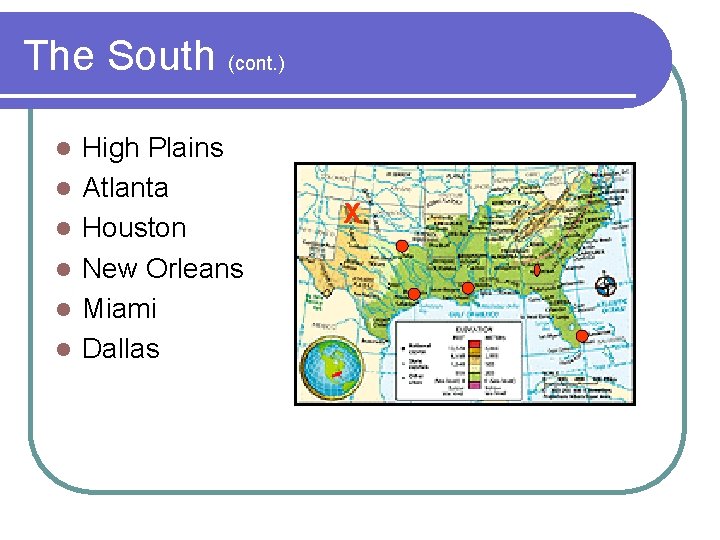
Sec 2. The South l l l l Everglades Okefenokee Swamp Mississippi Delta Blue Ridge Mts. Great Smoky Mts. Cumberland Plateau Ozark Plateau X X
The South (cont. ) l l l High Plains Atlanta Houston New Orleans Miami Dallas X
States of the Southern Region l 12 States l l l l Virginia N. Carolina S. Carolina Georgia Florida Alabama Mississippi l l l Tennessee Kentucky Arkansas Louisiana Texas (shares border with Mexico)
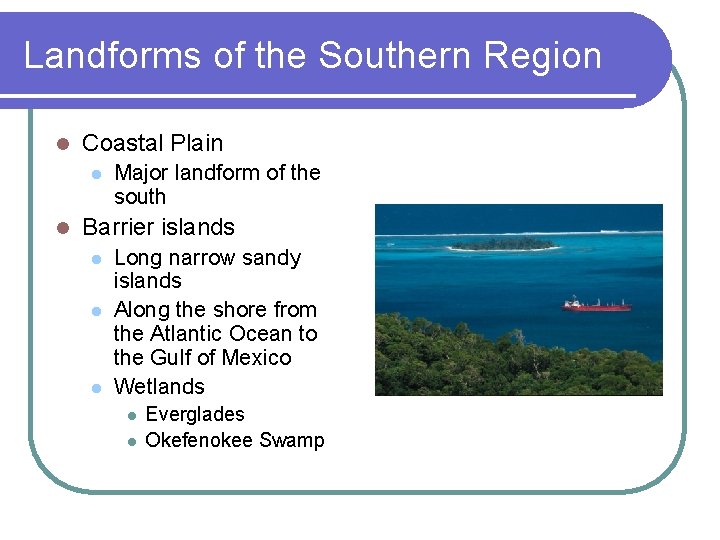
Landforms of the Southern Region l Coastal Plain l l Major landform of the south Barrier islands l l l Long narrow sandy islands Along the shore from the Atlantic Ocean to the Gulf of Mexico Wetlands l l Everglades Okefenokee Swamp
Landforms (cont. ) l Piedmont Inland from Coastal Plain l Rolling hills cover Carolinas and Georgia l l Appalachain Mts Blue Ridge l Great Smokey Mts. l Cumberland Plateau l
Landforms (cont. ) l Ozark Plateau Mainly in Arkansas l Rugged hilly region l Arkansas River l l Interior Plains Cover most of Kentucky and Tennessee l Eastern Texas l
Economy of the Southern U. S. l Major Cities l l l Agriculture l l Dallas-Fort Worth (4 th largest U. S. ) Atlanta Miami New Orleans Cotton, tobacco, citrus fruits Resources l Ocean life (coastal waters) l l Shrimp, oysters, other seafood Minerals l l Coal, sulfur, salt, oil (Texas, Louisiana) , natural gas Phosphates (used to make fertilizer)
Economy (cont. ) l Industry Textile factories (Piedmont) l Oil Refineries l l l Texas Gulf Coast, lower Mississippi River Computer, software, publishing co. l Austin, Texas l Tourism l Warm weather and beautiful beaches
Climate of the South l Humid Subtropical Climate l l l Texas has several climates l l l Mild winters = snowbirds Long, hot, humid summers Humid Subtropical Desert Highland 40”-60” of rain per year l Thunderstorms, tornadoes, hurricanes
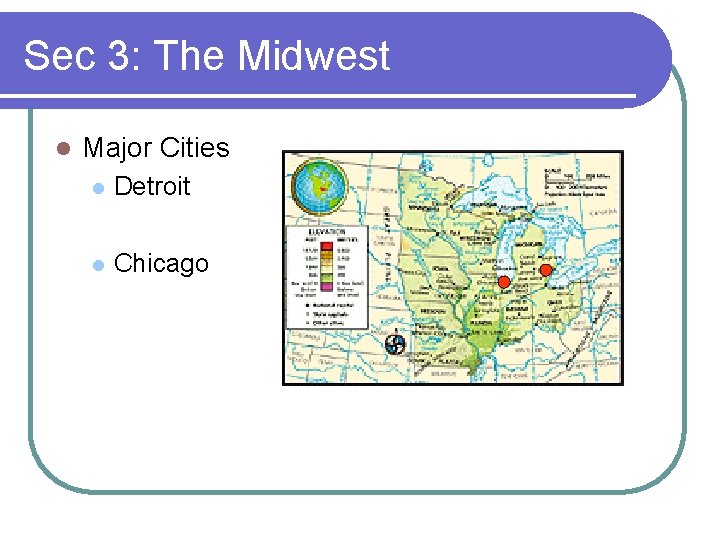
Sec 3: The Midwest l Major Cities l Detroit l Chicago
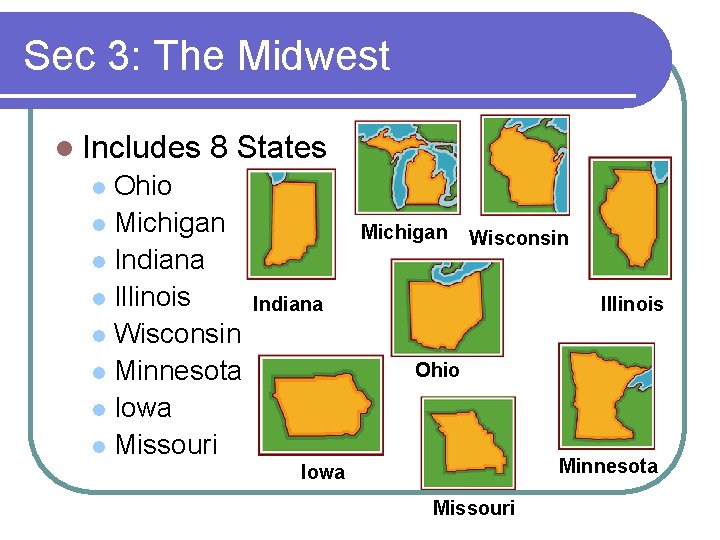
Sec 3: The Midwest l Includes 8 States Ohio l Michigan l Indiana l Illinois l Wisconsin l Minnesota l Iowa l Missouri l Michigan Wisconsin Indiana Illinois Ohio Minnesota Iowa Missouri
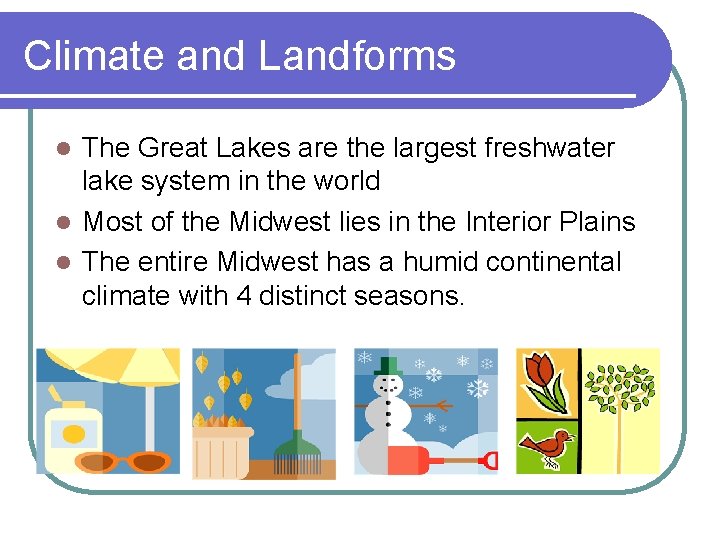
Climate and Landforms The Great Lakes are the largest freshwater lake system in the world l Most of the Midwest lies in the Interior Plains l The entire Midwest has a humid continental climate with 4 distinct seasons. l
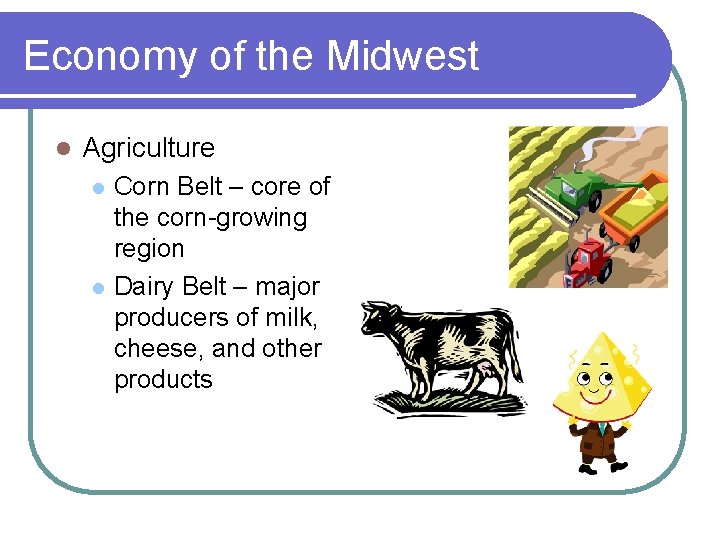
Economy of the Midwest l Agriculture l l Corn Belt – core of the corn-growing region Dairy Belt – major producers of milk, cheese, and other products
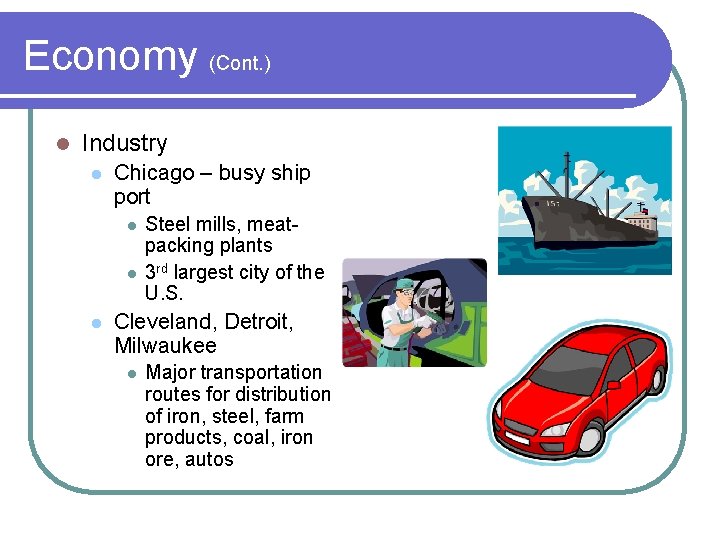
Economy (Cont. ) l Industry l Chicago – busy ship port l l l Steel mills, meatpacking plants 3 rd largest city of the U. S. Cleveland, Detroit, Milwaukee l Major transportation routes for distribution of iron, steel, farm products, coal, iron ore, autos
The Great Lakes (18: 05)
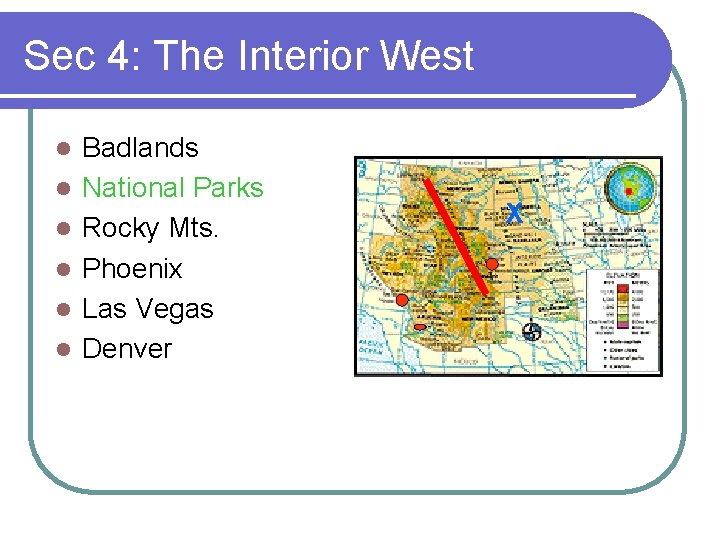
Sec 4: The Interior West l l l Badlands National Parks Rocky Mts. Phoenix Las Vegas Denver X
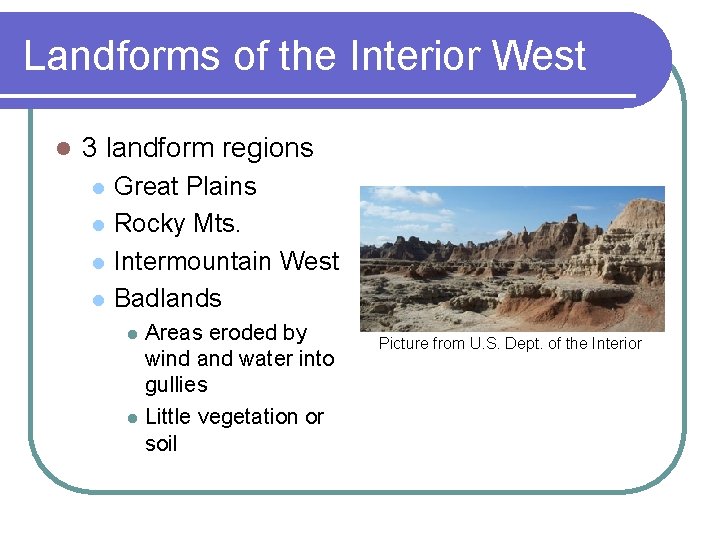
Landforms of the Interior West l 3 landform regions l l Great Plains Rocky Mts. Intermountain West Badlands l l Areas eroded by wind and water into gullies Little vegetation or soil Picture from U. S. Dept. of the Interior
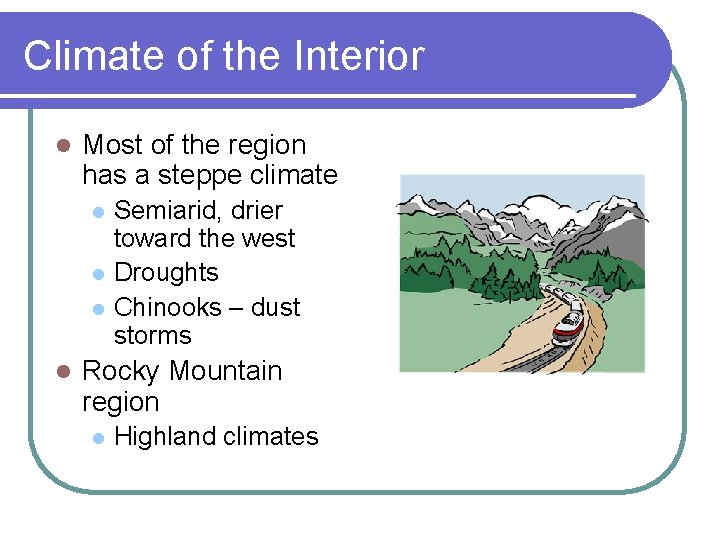
Climate of the Interior l Most of the region has a steppe climate l l Semiarid, drier toward the west Droughts Chinooks – dust storms Rocky Mountain region l Highland climates
Economy of the Interior l Ranching l and wheat farming Wheat Belt – stretches across the Dakotas, Montana, Nebraska, Kansas, Oklahoma, Colorado, and Texas l Center-pivot irrigation – sprinkler system on wheels l Mining and Industry – gold, silver, copper l Tourism – natural beauty
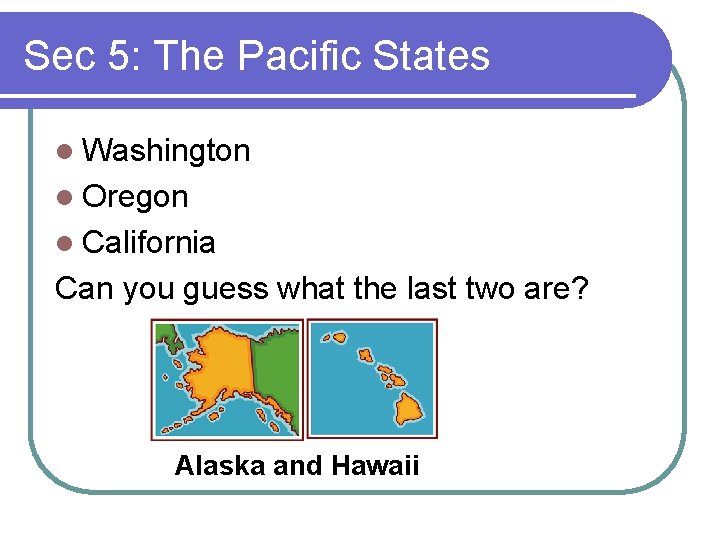
Sec 5: The Pacific States l Washington l Oregon l California Can you guess what the last two are? Alaska and Hawaii
Landforms of the Pacific States l California is divided into 4 landform regions Coast Ranges l Sierra Nevada l Central Valley l Desert basins and ranges l
Landforms l Washington and Oregon have 4 landform regions Coast Ranges l Puget Sound Lowland l Willamette Valley l Cascades – volcanic mt. range l
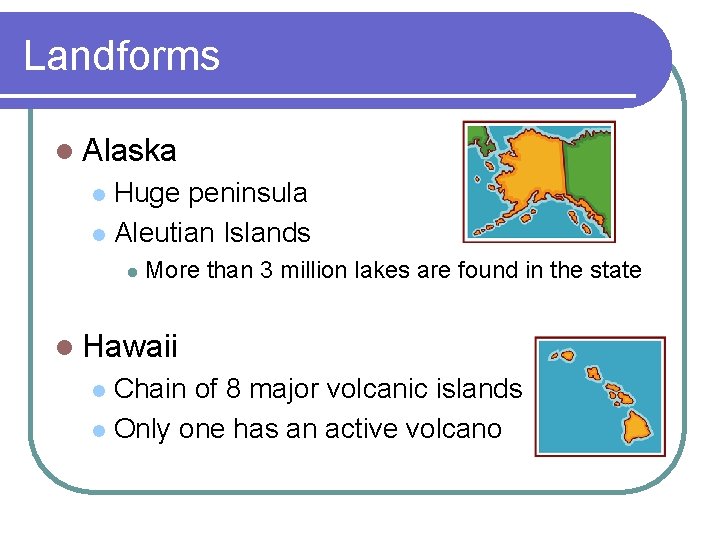
Landforms l Alaska Huge peninsula l Aleutian Islands l l More than 3 million lakes are found in the state l Hawaii Chain of 8 major volcanic islands l Only one has an active volcano l
Climate l California Marine west coast - along the coasts l Mediterranean – southern and central areas l Summers are dry with hot winds l l Oregon l and Washington Cascades divide into 2 climate zones West – marine west coast l East – drier desert and steppe climates l
Climates l Alaska Southern coast – marine west coast l Most of the state has a subarctic climate l Summers are short and dry l Winters long and severe l l Hawaii Coldest month average temp is 72* l Warmest month 81* l
Economy l California l Leading agricultural producer l l Cotton, nuts, vegetable, and fruit Leading industrial state l Aerospace, construction, entertainment, computers, software, and tourism l Oregon and Washington Forests and fish l Computer software l
Economy l Alaska l Economy based on oil, forests, and fish l Hawaii Natural beauty l Fertile volcanic soil – good for growing sugarcane, pineapples, and coffee l