
The 5 Cs of Film Composition Based on
The 5 C’s of Film: Composition Based on the book by Joseph V. Mascelli
What is Composition? • The arrangement of the parts in a work of art, usually according to the principles of design
Why is Composition Important to Film? A cameraperson composes whenever he/she positions a player, a piece of furniture, or a prop. Placement and movement of players within a setting should be planned to produce favourable audience reactions
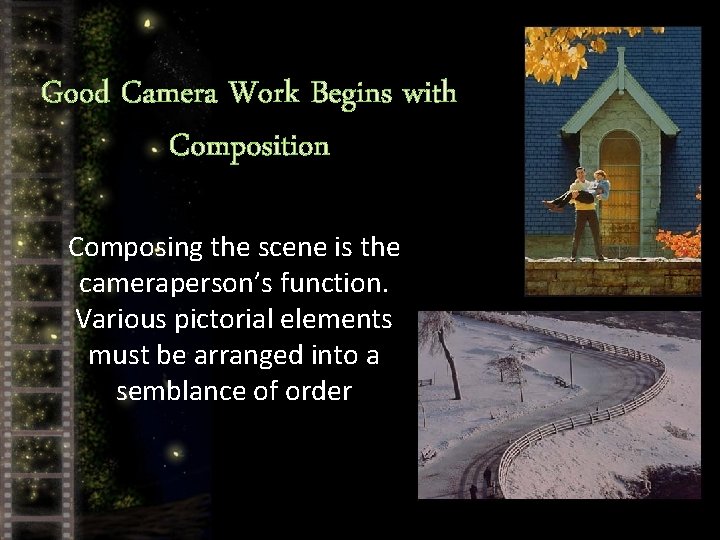
Good Camera Work Begins with Composition Composing the scene is the cameraperson’s function. Various pictorial elements must be arranged into a semblance of order
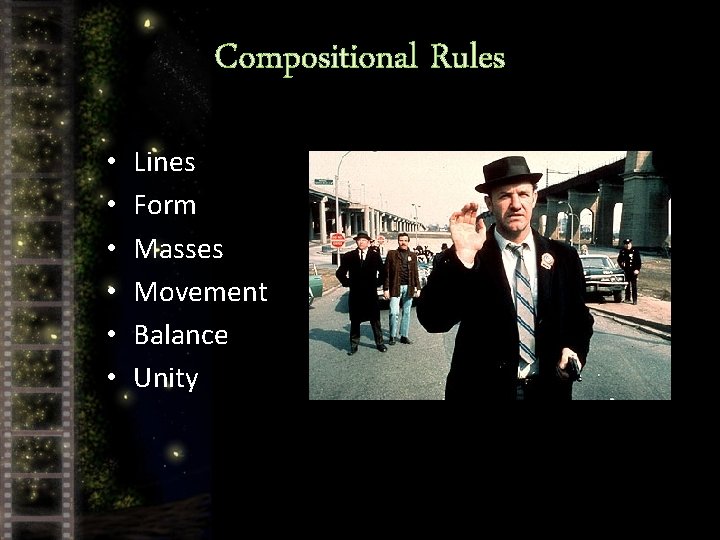
Compositional Rules • • • Lines Form Masses Movement Balance Unity
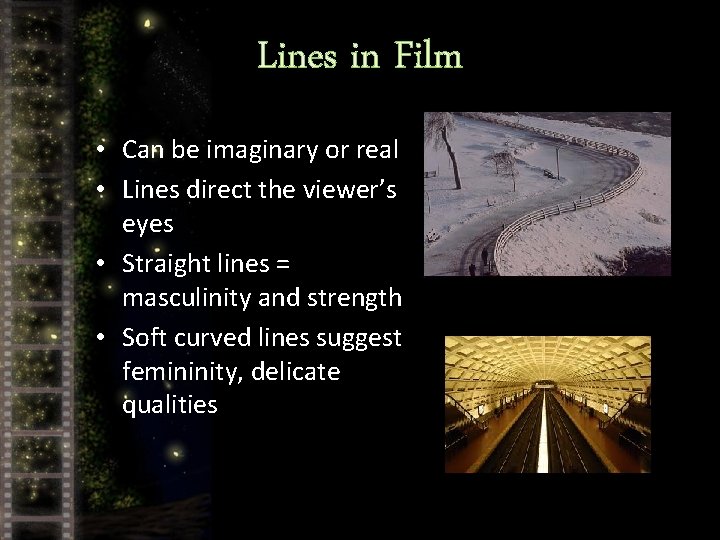
Lines in Film • Can be imaginary or real • Lines direct the viewer’s eyes • Straight lines = masculinity and strength • Soft curved lines suggest femininity, delicate qualities
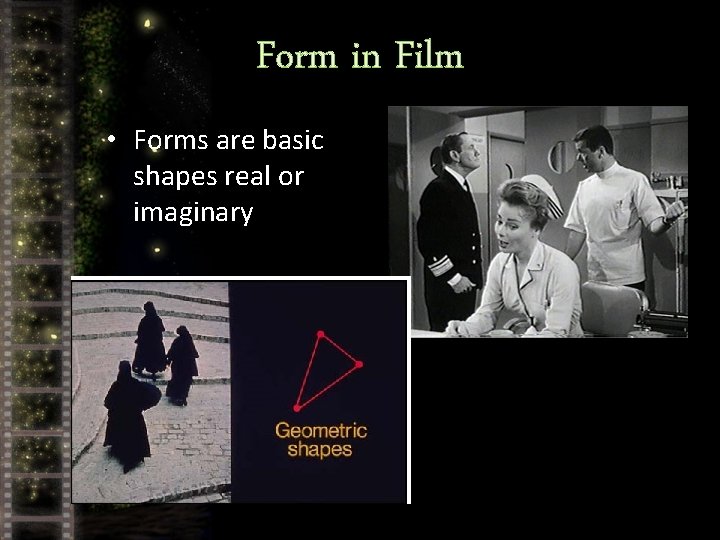
Form in Film • Forms are basic shapes real or imaginary
Masses in Film • Pictorial weight of an object • May be singularly or a group of objects • Capture attention through their pictorial weight
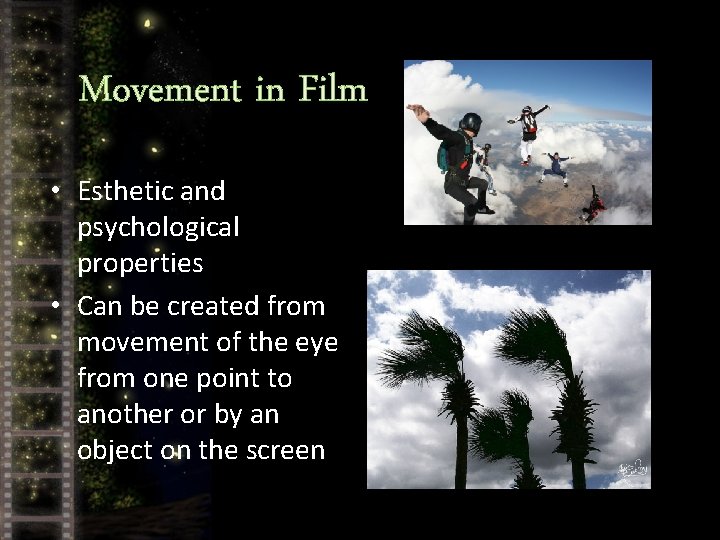
Movement in Film • Esthetic and psychological properties • Can be created from movement of the eye from one point to another or by an object on the screen
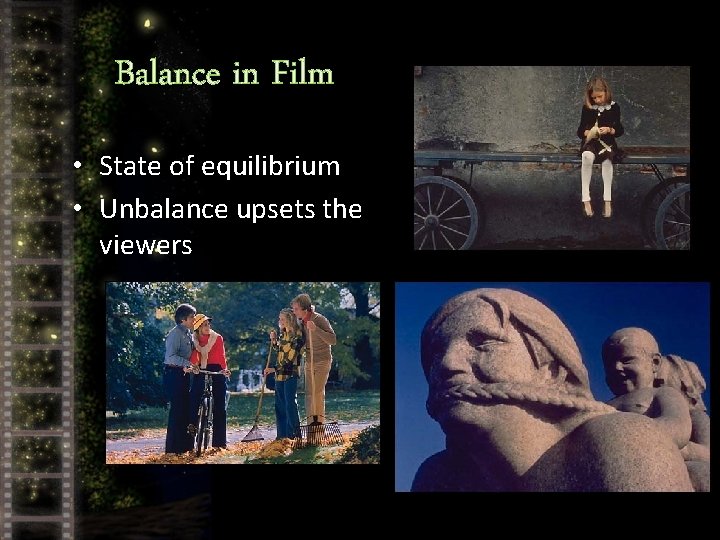
Balance in Film • State of equilibrium • Unbalance upsets the viewers
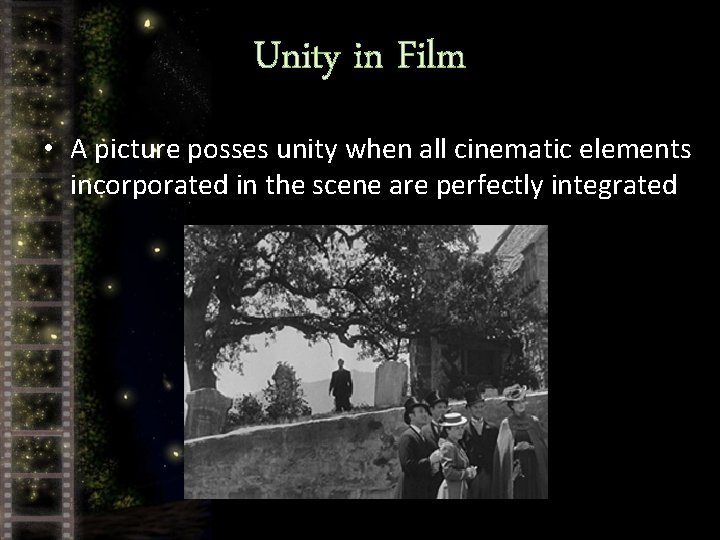
Unity in Film • A picture posses unity when all cinematic elements incorporated in the scene are perfectly integrated
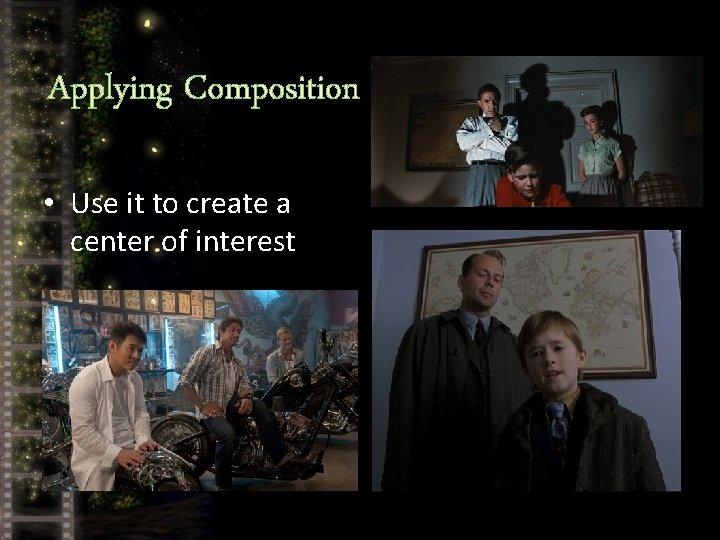
Applying Composition • Use it to create a center of interest
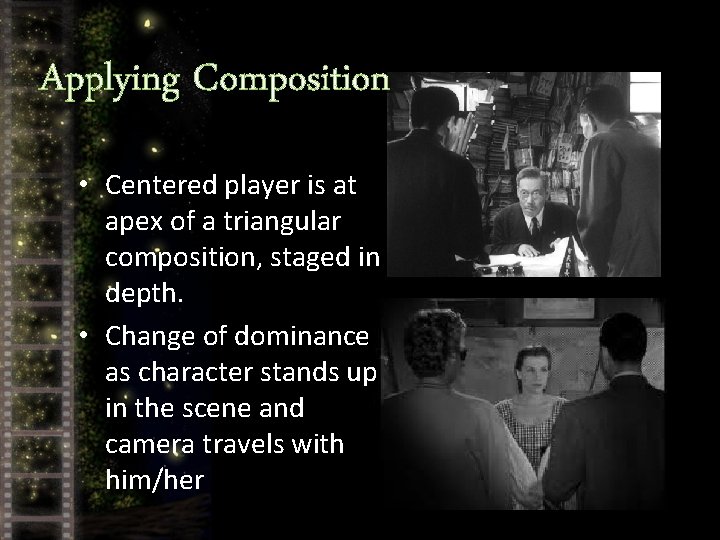
Applying Composition • Centered player is at apex of a triangular composition, staged in depth. • Change of dominance as character stands up in the scene and camera travels with him/her
- Slides: 13