
THE 4 H STUDY OF POSITIVE YOUTH DEVELOPMENT
- Slides: 29
THE 4 -H STUDY OF POSITIVE YOUTH DEVELOPMENT Jacqueline V. Lerner Boston College and Christina Theokas Institute for Applied Research in Youth Development Tufts University
Background and Significance
A New Perspective About Youth Scientists, practitioners, and educators agree: Ø Youth are resources to be developed; they are not problems to be managed. Ø This vision replaces the traditional deficit model of children and adolescents which is a model of disease and prevention. In the deficit view, people see children as broken or as destined to be broken and feel that they need to fix them or prevent these problems from occurring.
However: ØPrevention is not promotion ØProblem free is not prepared ØPrepared is not engaged
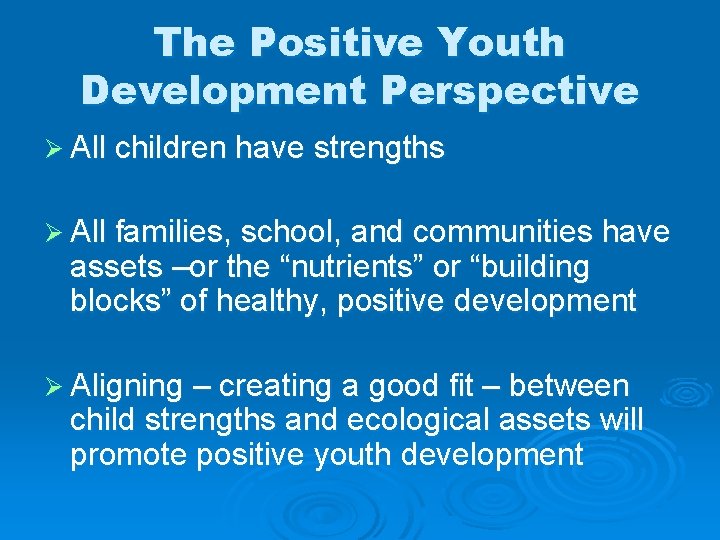
The Positive Youth Development Perspective Ø All children have strengths Ø All families, school, and communities have assets –or the “nutrients” or “building blocks” of healthy, positive development Ø Aligning – creating a good fit – between child strengths and ecological assets will promote positive youth development
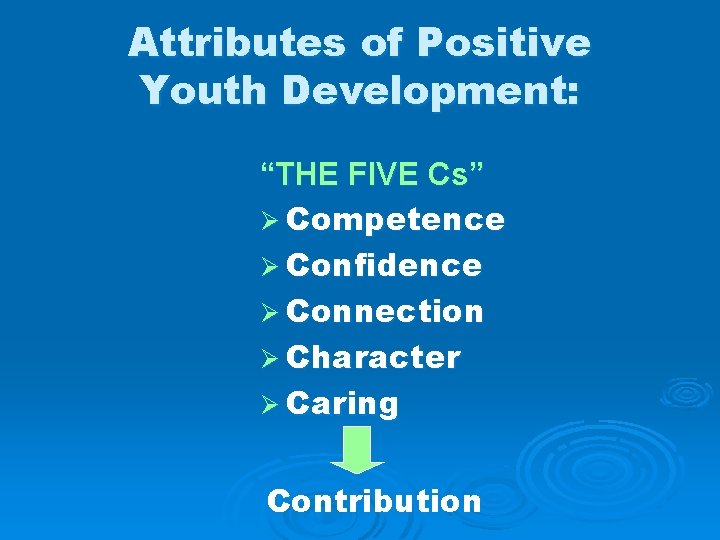
Attributes of Positive Youth Development: “THE FIVE Cs” Ø Competence Ø Confidence Ø Connection Ø Character Ø Caring Contribution
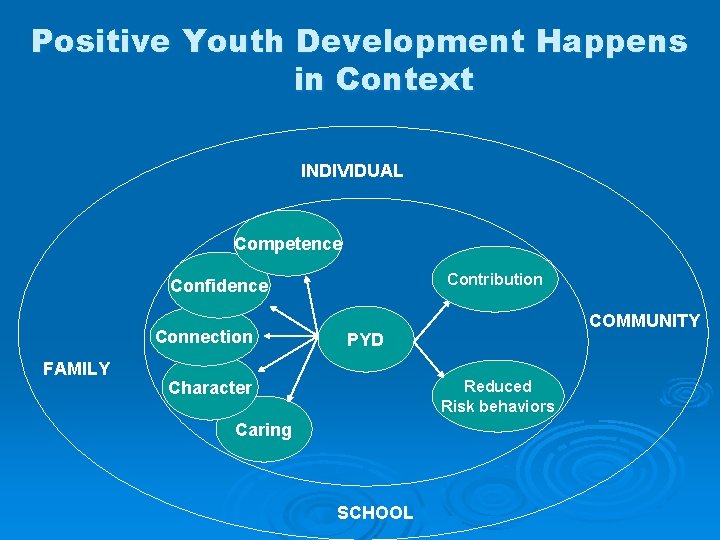
Positive Youth Development Happens in Context INDIVIDUAL Competence Contribution Confidence Connection FAMILY COMMUNITY PYD Character Reduced Risk behaviors Caring SCHOOL
One Community Asset for the Promotion of Positive Development: Effective Youth Serving Programs
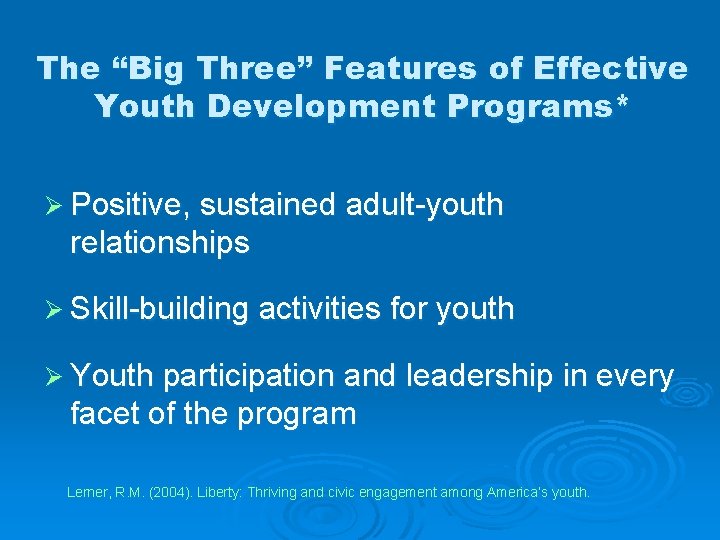
The “Big Three” Features of Effective Youth Development Programs* Ø Positive, sustained adult-youth relationships Ø Skill-building activities for youth Ø Youth participation and leadership in every facet of the program Lerner, R. M. (2004). Liberty: Thriving and civic engagement among America’s youth.
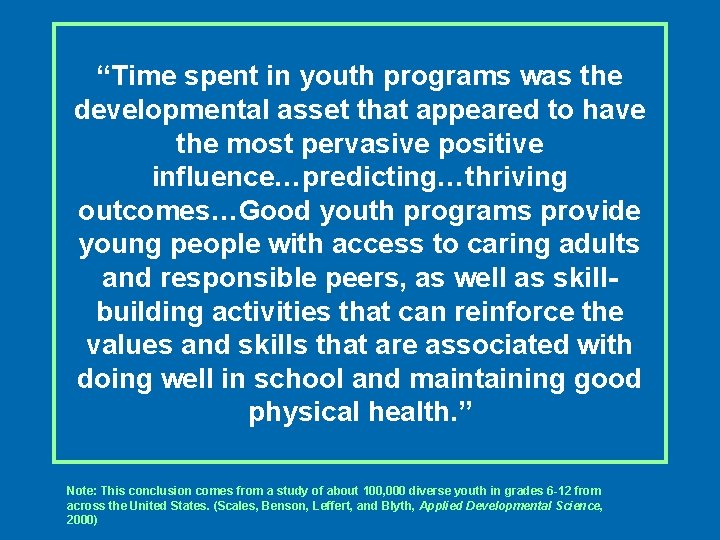
“Time spent in youth programs was the developmental asset that appeared to have the most pervasive positive influence…predicting…thriving outcomes…Good youth programs provide young people with access to caring adults and responsible peers, as well as skillbuilding activities that can reinforce the values and skills that are associated with doing well in school and maintaining good physical health. ” Note: This conclusion comes from a study of about 100, 000 diverse youth in grades 6 -12 from across the United States. (Scales, Benson, Leffert, and Blyth, Applied Developmental Science, 2000)
Research Design
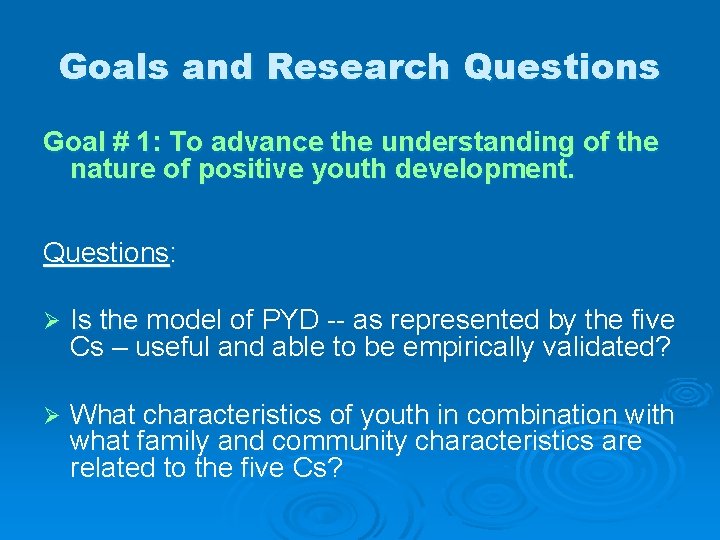
Goals and Research Questions Goal # 1: To advance the understanding of the nature of positive youth development. Questions: Ø Is the model of PYD -- as represented by the five Cs – useful and able to be empirically validated? Ø What characteristics of youth in combination with what family and community characteristics are related to the five Cs?
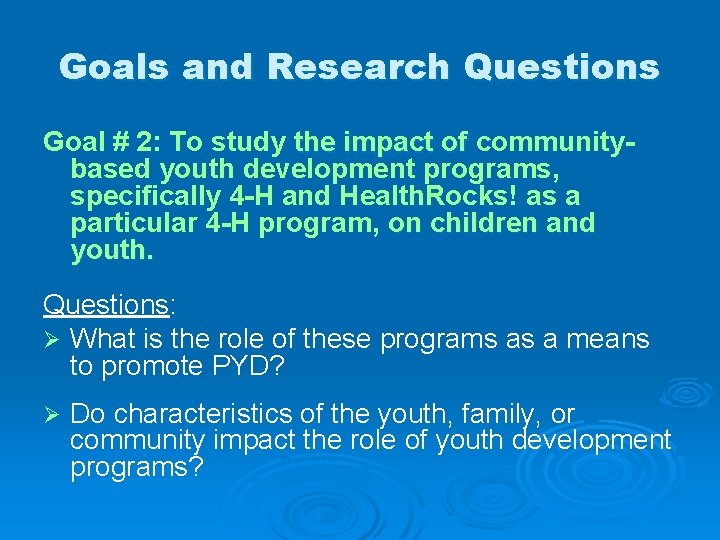
Goals and Research Questions Goal # 2: To study the impact of communitybased youth development programs, specifically 4 -H and Health. Rocks! as a particular 4 -H program, on children and youth. Questions: Ø What is the role of these programs as a means to promote PYD? Ø Do characteristics of the youth, family, or community impact the role of youth development programs?
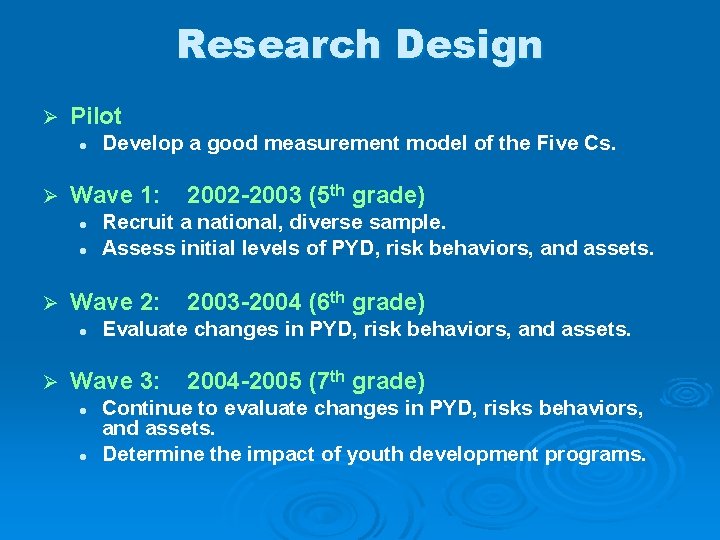
Research Design Ø Pilot l Ø Wave 1: l l Ø l 2003 -2004 (6 th grade) Evaluate changes in PYD, risk behaviors, and assets. Wave 3: l 2002 -2003 (5 th grade) Recruit a national, diverse sample. Assess initial levels of PYD, risk behaviors, and assets. Wave 2: l Ø Develop a good measurement model of the Five Cs. 2004 -2005 (7 th grade) Continue to evaluate changes in PYD, risks behaviors, and assets. Determine the impact of youth development programs.
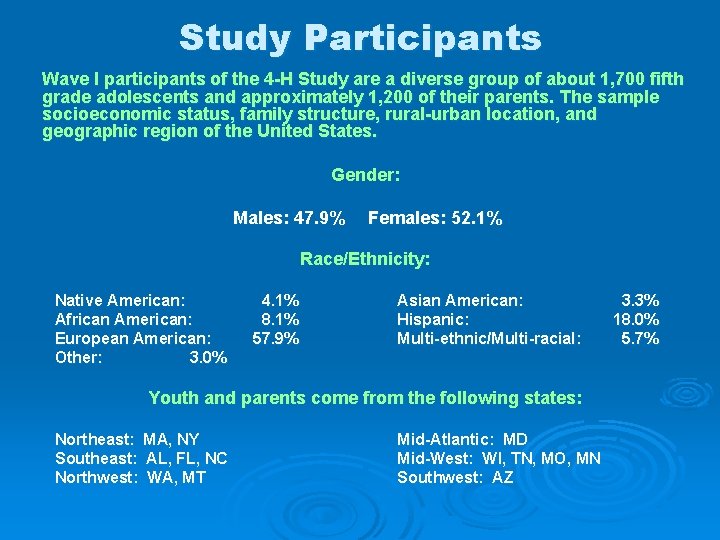
Study Participants Wave I participants of the 4 -H Study are a diverse group of about 1, 700 fifth grade adolescents and approximately 1, 200 of their parents. The sample socioeconomic status, family structure, rural-urban location, and geographic region of the United States. Gender: Males: 47. 9% Females: 52. 1% Race/Ethnicity: Native American: African American: European American: Other: 3. 0% 4. 1% 8. 1% 57. 9% Asian American: Hispanic: Multi-ethnic/Multi-racial: Youth and parents come from the following states: Northeast: MA, NY Southeast: AL, FL, NC Northwest: WA, MT Mid-Atlantic: MD Mid-West: WI, TN, MO, MN Southwest: AZ 3. 3% 18. 0% 5. 7%
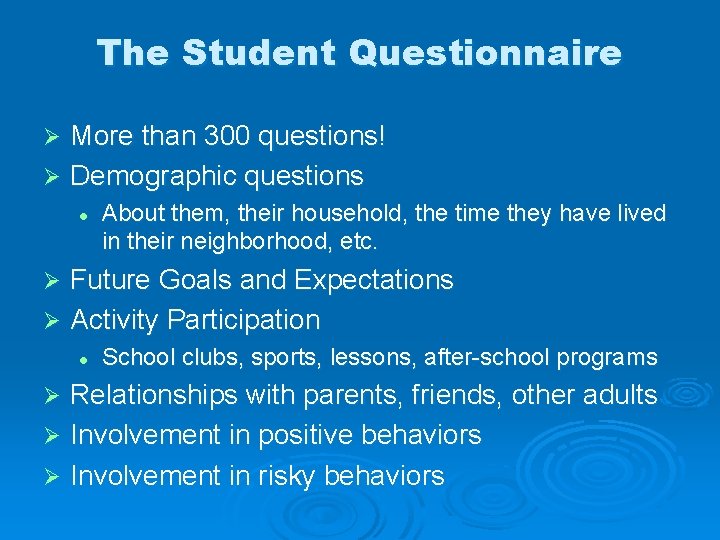
The Student Questionnaire More than 300 questions! Ø Demographic questions Ø l About them, their household, the time they have lived in their neighborhood, etc. Future Goals and Expectations Ø Activity Participation Ø l School clubs, sports, lessons, after-school programs Relationships with parents, friends, other adults Ø Involvement in positive behaviors Ø Involvement in risky behaviors Ø
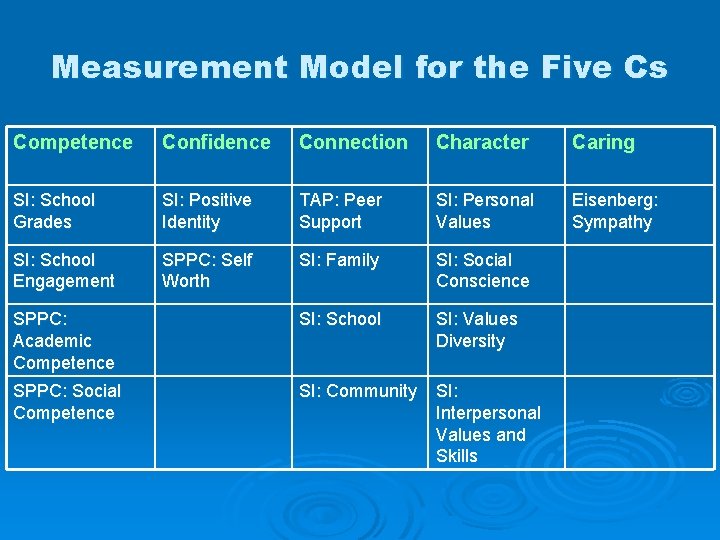
Measurement Model for the Five Cs Competence Confidence Connection Character Caring SI: School Grades SI: Positive Identity TAP: Peer Support SI: Personal Values Eisenberg: Sympathy SI: School Engagement SPPC: Self Worth SI: Family SI: Social Conscience SPPC: Academic Competence SI: School SI: Values Diversity SPPC: Social Competence SI: Community SI: Interpersonal Values and Skills
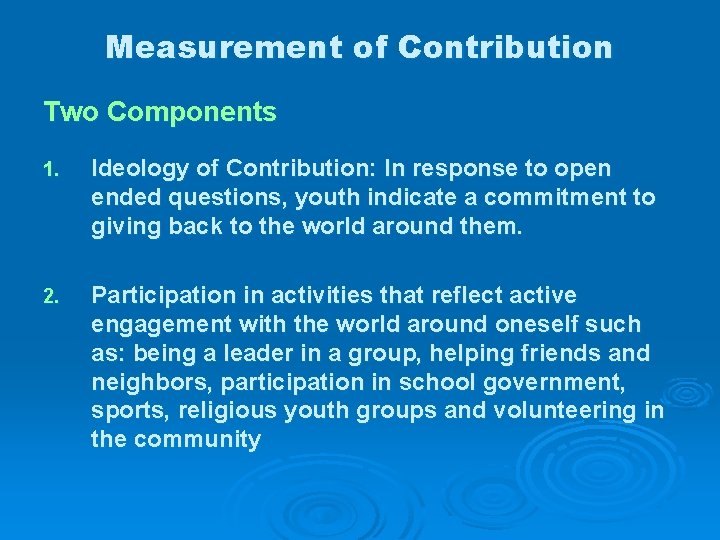
Measurement of Contribution Two Components 1. Ideology of Contribution: In response to open ended questions, youth indicate a commitment to giving back to the world around them. 2. Participation in activities that reflect active engagement with the world around oneself such as: being a leader in a group, helping friends and neighbors, participation in school government, sports, religious youth groups and volunteering in the community
Findings
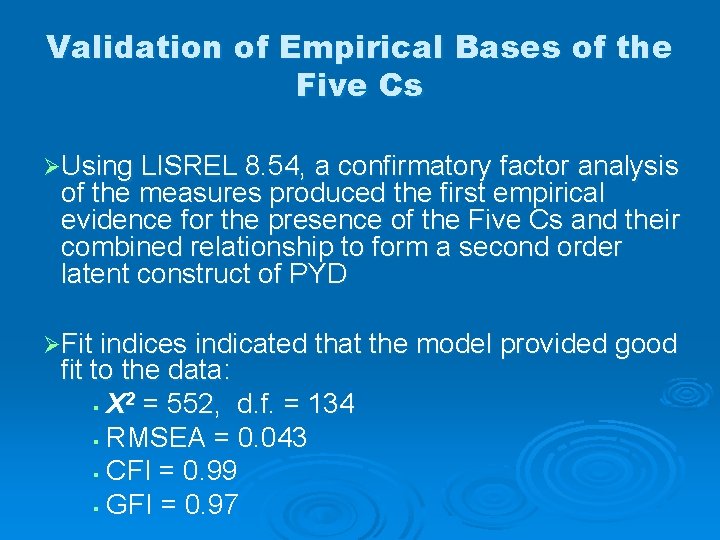
Validation of Empirical Bases of the Five Cs ØUsing LISREL 8. 54, a confirmatory factor analysis of the measures produced the first empirical evidence for the presence of the Five Cs and their combined relationship to form a second order latent construct of PYD ØFit indices indicated that the model provided good fit to the data: 2 § X = 552, d. f. = 134 § RMSEA = 0. 043 § CFI = 0. 99 § GFI = 0. 97
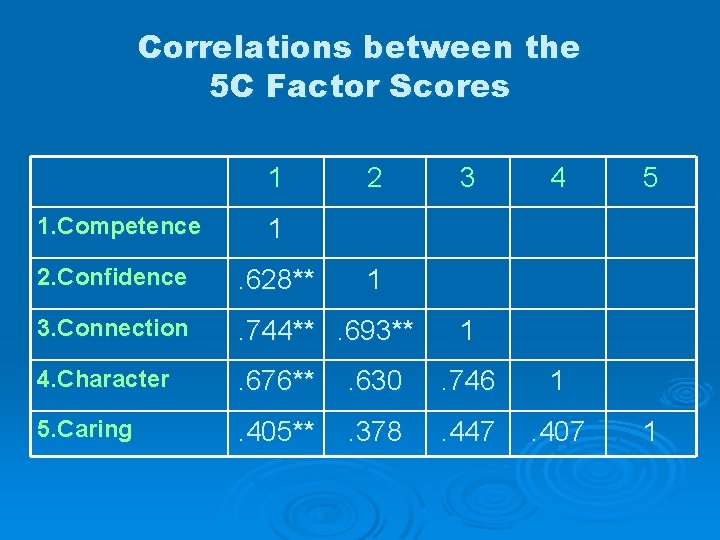
Correlations between the 5 C Factor Scores 1 2 3 4 1. Competence 1 2. Confidence . 628** 3. Connection . 744**. 693** 4. Character . 676** . 630 . 746 1 5. Caring . 405** . 378 . 447 . 407 5 1 1 1
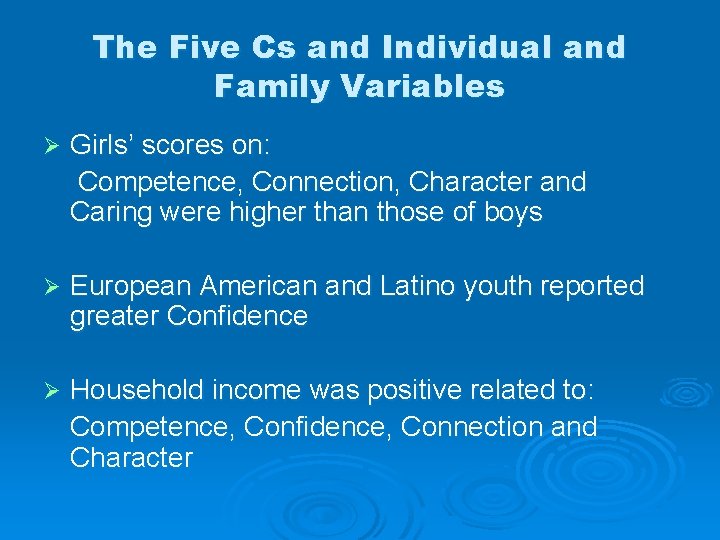
The Five Cs and Individual and Family Variables Ø Girls’ scores on: Competence, Connection, Character and Caring were higher than those of boys Ø European American and Latino youth reported greater Confidence Ø Household income was positive related to: Competence, Confidence, Connection and Character
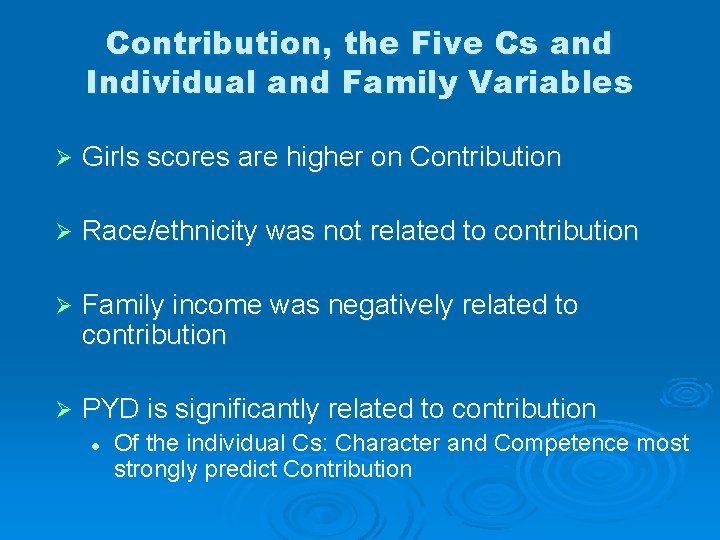
Contribution, the Five Cs and Individual and Family Variables Ø Girls scores are higher on Contribution Ø Race/ethnicity was not related to contribution Ø Family income was negatively related to contribution Ø PYD is significantly related to contribution l Of the individual Cs: Character and Competence most strongly predict Contribution
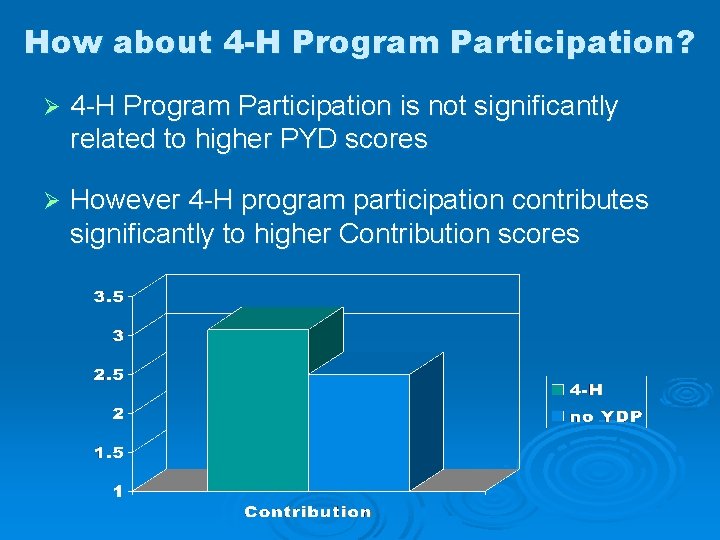
How about 4 -H Program Participation? Ø 4 -H Program Participation is not significantly related to higher PYD scores Ø However 4 -H program participation contributes significantly to higher Contribution scores
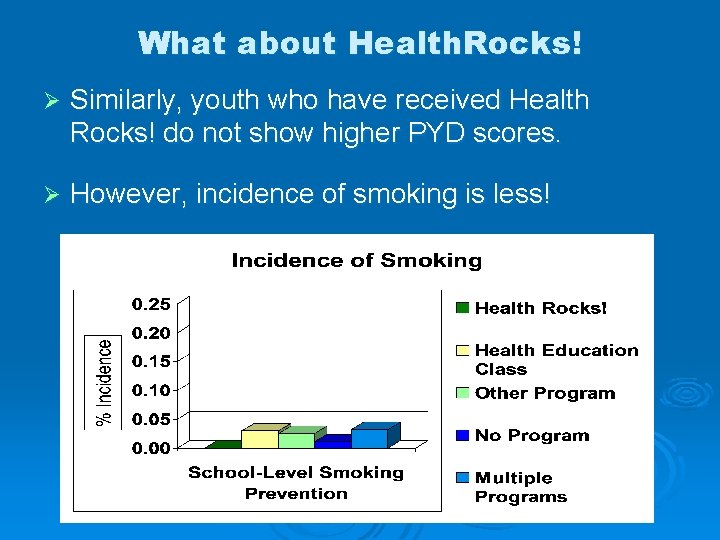
What about Health. Rocks! Ø Similarly, youth who have received Health Rocks! do not show higher PYD scores. Ø However, incidence of smoking is less!
THE KEY QUESTION: Does 4 -H promote positive development? Ø Point-in-time analyses (e. g. , analyses of wave 1 data) cannot answer this question Ø ONLY longitudinal analyses can answer this question Ø Therefore, what do the longitudinal data tell us about whether 4 -H and HR! protects and promotes?
4 -H Participation and PYD Others 4 -H Participants
Summary of Findings Ø The positive vision and vocabulary of youth practitioners and developmental researchers has been validated and can be empirically studied Ø 4 -H, even in very young youth, is having a positive impact on youth contribution to self, family, and community Ø HR! is associated with a low incidence of youth smoking
Future Steps Ø Examine developmental changes in the Five Cs; that is, what is the course of PYD through puberty and into the higher risk adolescent years? Ø Introduce additional contextual variables and diversity into the analyses to better understand what conditions promote positive development Ø Gain a more nuanced view of the relationship between 4 -H and HR!, PYD, and youth contributions, that is, how and in what ways does program participation help?