
The 4 Cs teaching framework CLIL METHODOLOGY In

- Slides: 11
The 4 Cs teaching framework
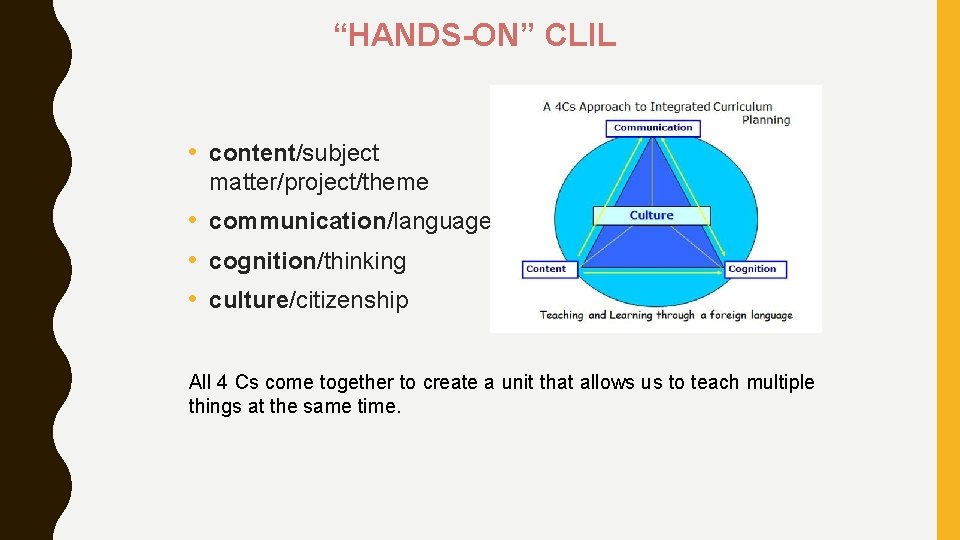
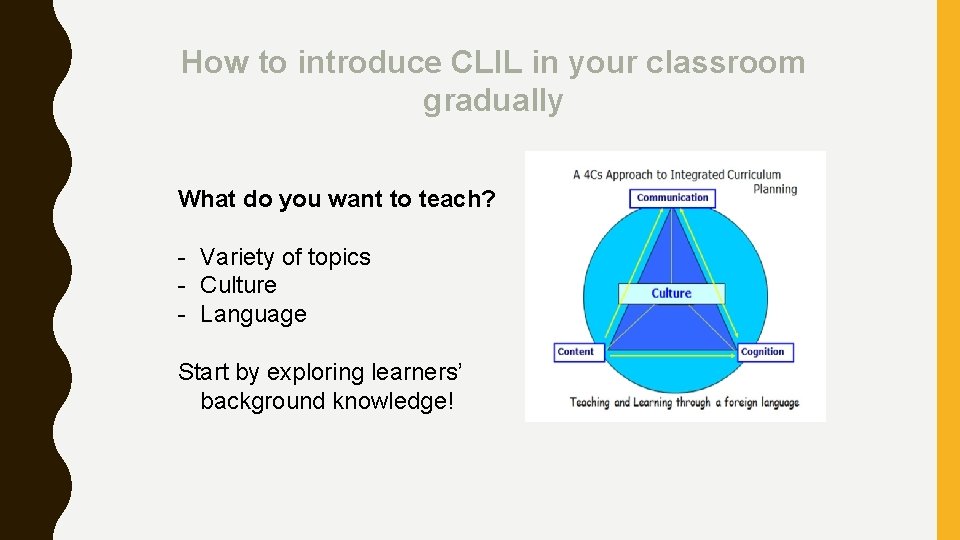
CLIL METHODOLOGY In CLIL methodology we talk about the 4 Cs of CLIL. It is something very simple to understand. It stands for: Content , Communication, Cognition and Culture: This means that we teach a certain content we decide (content) through practical communication, that is to say promoting that our students communicate using the language they know as much as possible (communication) , they process the knowledge they are acquiring and step by step will be able to use new language registers (cognition), and at the same time they learn about the culture of the country/ies where this language is spoken (culture).
CLIL METHODOLOGY CLIL methodology involves a wider view than the traditional way of language teaching, providing an authentic context for language learning. One of the principles that best summarises this methodology is the 4 Cs (Coyle, 2002): - Content: It presents knowledge and skills. - Communication: It develops language competence through use. - Cognition: It engages learners through higher-order thinking and knowledge processing. - Culture: It explores the links between language and cultural identity to strengthen interculturality. It can also mean the Culture of learning in the classroom.
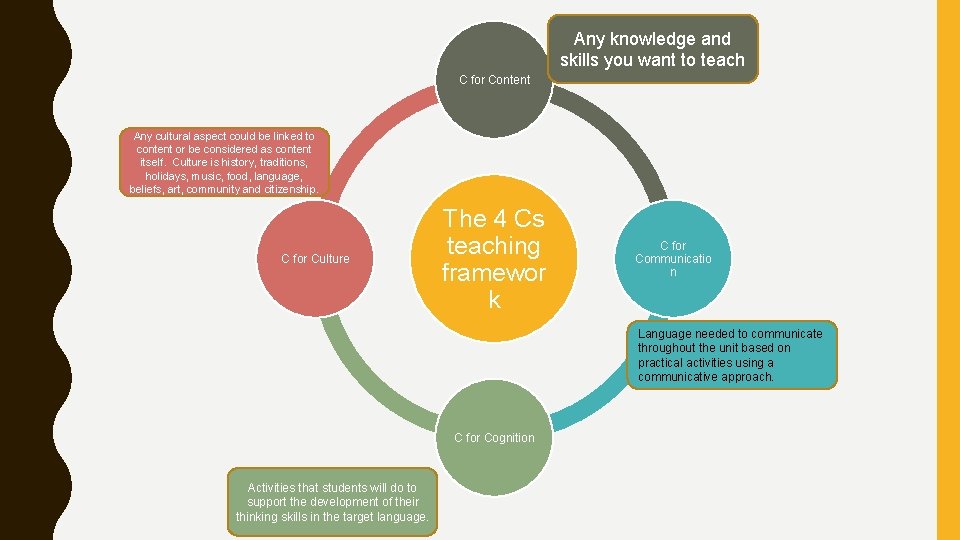
Any knowledge and skills you want to teach C for Content Any cultural aspect could be linked to content or be considered as content itself. Culture is history, traditions, holidays, music, food, language, beliefs, art, community and citizenship. C for Culture The 4 Cs teaching framewor k C for Communicatio n Language needed to communicate throughout the unit based on practical activities using a communicative approach. C for Cognition Activities that students will do to support the development of their thinking skills in the target language.
“HANDS-ON” CLIL • content/subject matter/project/theme • communication/language • cognition/thinking • culture/citizenship All 4 Cs come together to create a unit that allows us to teach multiple things at the same time.
How to introduce CLIL in your classroom gradually What do you want to teach? - Variety of topics - Culture - Language Start by exploring learners’ background knowledge!
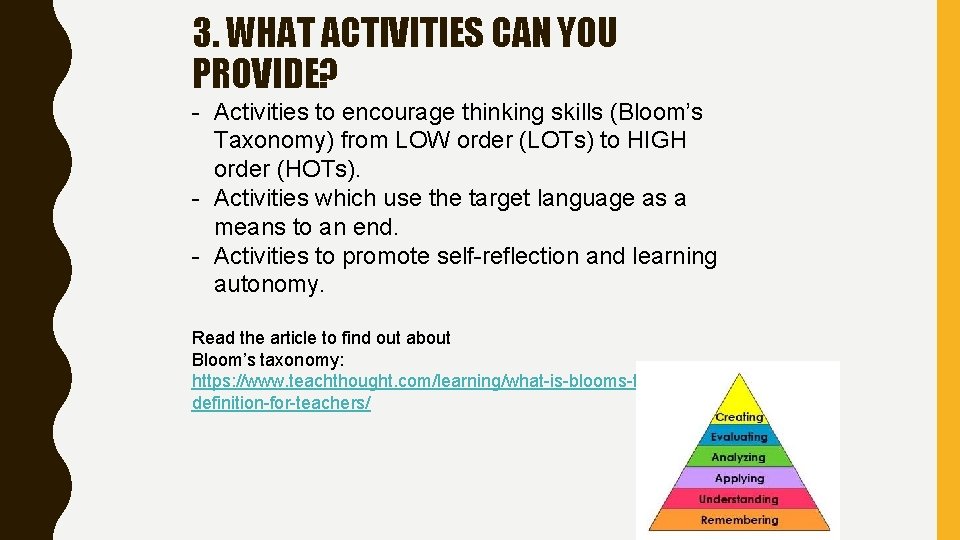
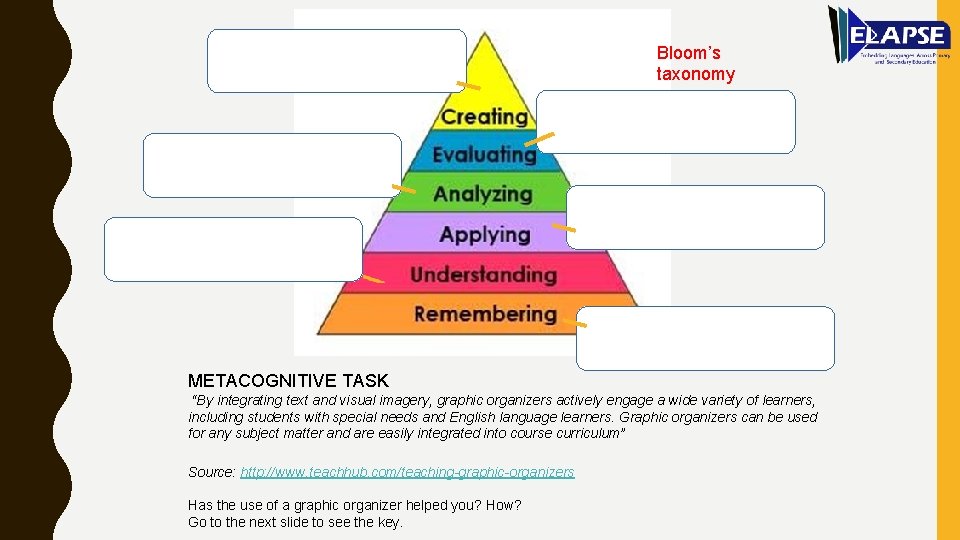
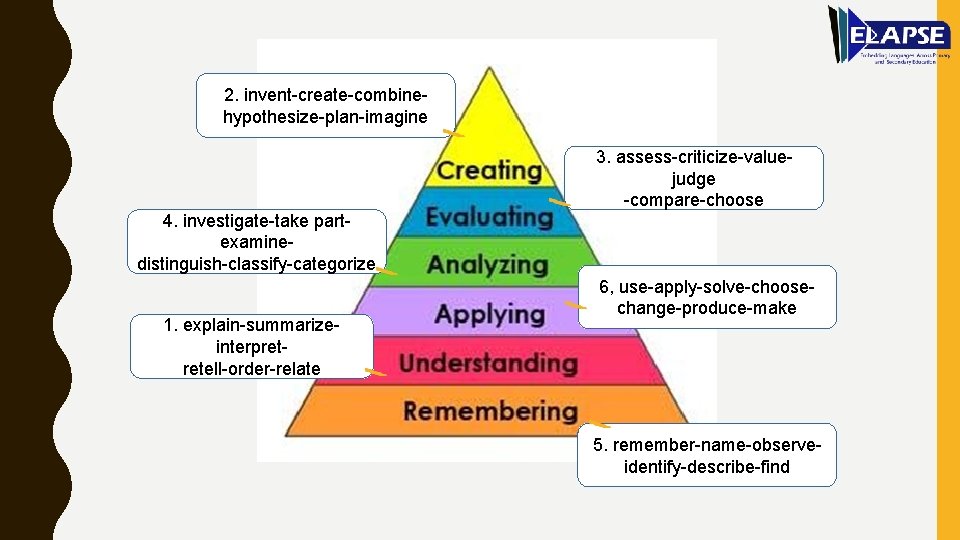
3. WHAT ACTIVITIES CAN YOU PROVIDE? - Activities to encourage thinking skills (Bloom’s Taxonomy) from LOW order (LOTs) to HIGH order (HOTs). - Activities which use the target language as a means to an end. - Activities to promote self-reflection and learning autonomy. Read the article to find out about Bloom’s taxonomy: https: //www. teachthought. com/learning/what-is-blooms-taxonomy-adefinition-for-teachers/
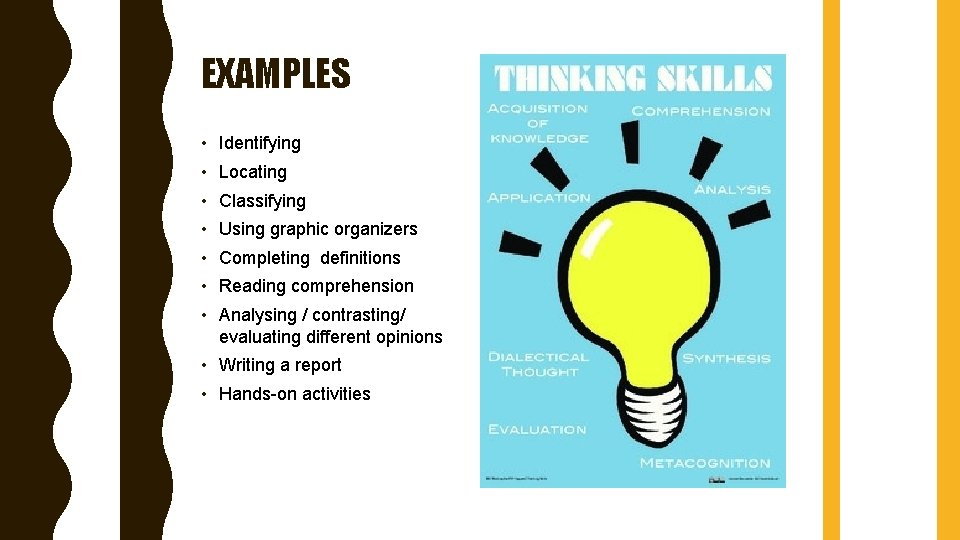
EXAMPLES • Identifying • Locating • Classifying • Using graphic organizers • Completing definitions • Reading comprehension • Analysing / contrasting/ evaluating different opinions • Writing a report • Hands-on activities
MATCHING ACTIVITY To raise awareness on the thinking skills involved in teaching, match the skills to the level of thinking, from LOW order to HIGH order thinking skills (LOTs and HOTs). Use the graphic organizer below: 1. explain-summarize-interpret-retell-order-relate 2. invent-create-combine-hypothesize-plan-imagine 3. assess-criticize-value-judge-compare-choose 4. investigate-take part-examine-distinguish-classify-categorize 5. remember-name-observe-identify-describe-find 6. use-apply-solve-choose-change-produce-make
Bloom’s taxonomy METACOGNITIVE TASK “By integrating text and visual imagery, graphic organizers actively engage a wide variety of learners, including students with special needs and English language learners. Graphic organizers can be used for any subject matter and are easily integrated into course curriculum” Source: http: //www. teachhub. com/teaching-graphic-organizers Has the use of a graphic organizer helped you? How? Go to the next slide to see the key.
2. invent-create-combinehypothesize-plan-imagine 3. assess-criticize-valuejudge -compare-choose 4. investigate-take partexaminedistinguish-classify-categorize 1. explain-summarizeinterpretretell-order-relate 6, use-apply-solve-choosechange-produce-make 5. remember-name-observeidentify-describe-find