
The 4 Cs Framework for CLIL Do Coyle




- Slides: 69
The 4 Cs Framework for CLIL Do Coyle University of Edinburgh - ECML
The Graz Group
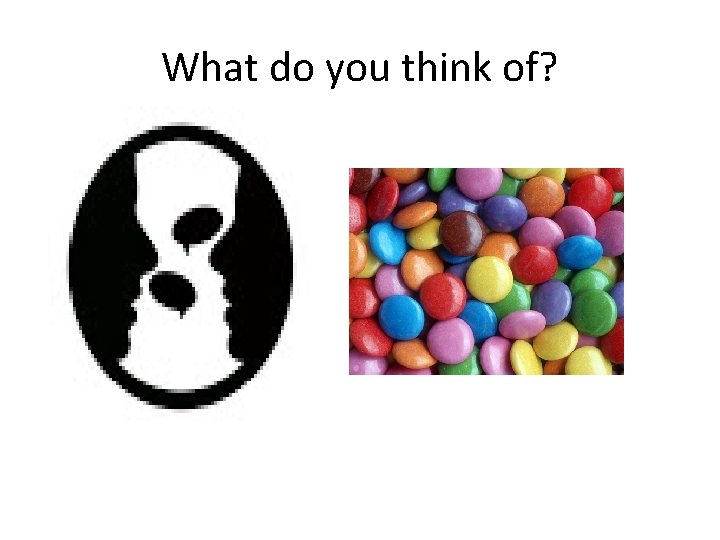
What do you think of?
Connecting…. content n communication cognitio culture Classroom practices with CLIL Pedagogies……
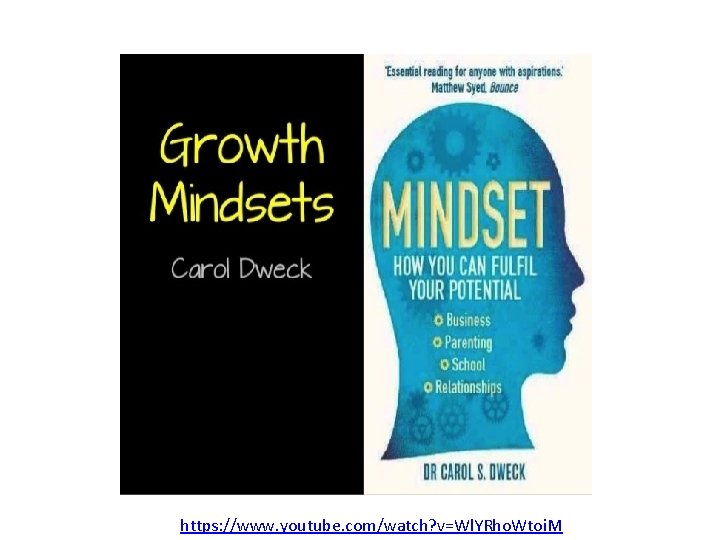
https: //www. youtube. com/watch? v=Wl. YRho. Wtoi. M
Working Document Proposal for Council of Europe Recommendations: A comprehensive approach to the teaching & learning of languages, May 2018
Recommendations: Language Aware Schools • To improve language competences • To broaden the scope of language as a learning tool e. g. CLIL • To address linguistic diversity in their pupil population e. g. CLIL the ‘leveler’ • To offer language-rich learning environments • To make languages visible https: //ec. europa. eu/education/sites/education/files/lang_swd_part_1_1_en_autre_document_travail_service_part 1_v 4. pdf
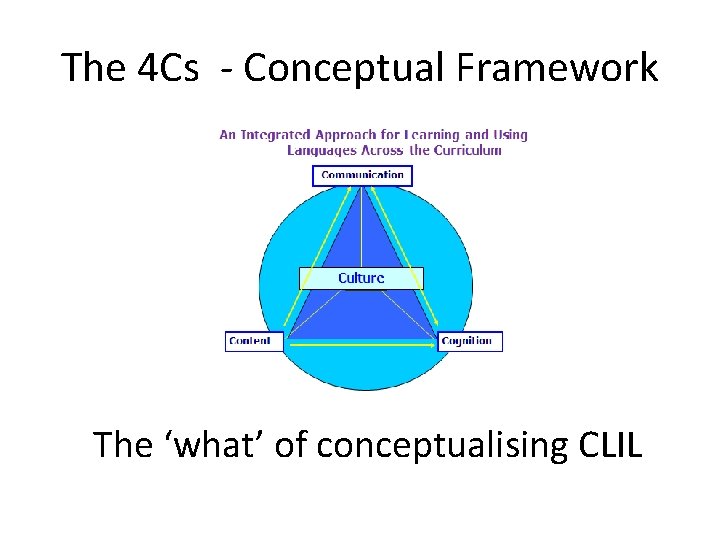
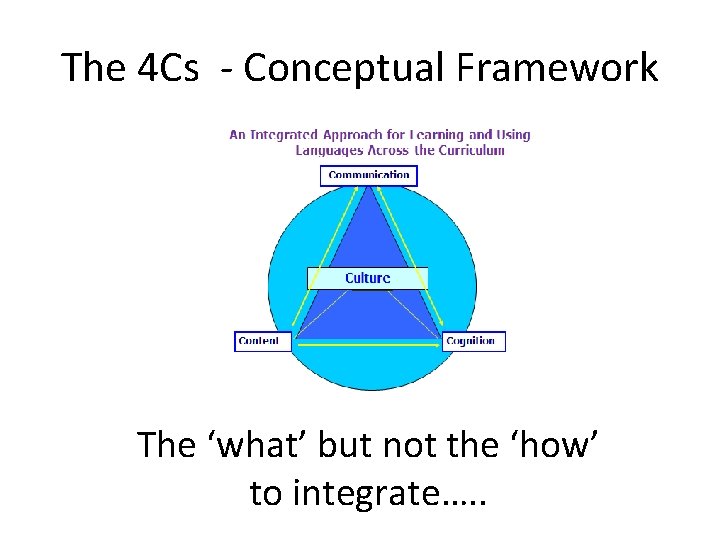
Revisiting the 4 Cs Framework The 4 Cs Framework is based on the principle that strengthening and deepening a learner’s conceptual understanding requires social, cultural, linguistic and cognitive processes. The components of the Framework are: Content Cognition Communication Culture
Content is…. . ……the focus of learning. It can be a subject discipline (e. g. Geography, History) or a theme /cross-disciplinary topic (e. g. global citizenship, sustainability) or related to other areas of the curriculum with an interdisciplinary focus (e. g. story telling) taught by any teacher (language or subject or generalist).
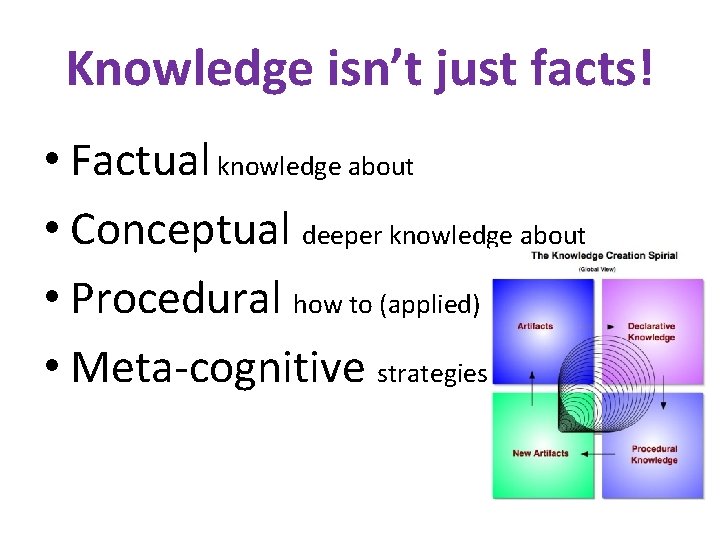
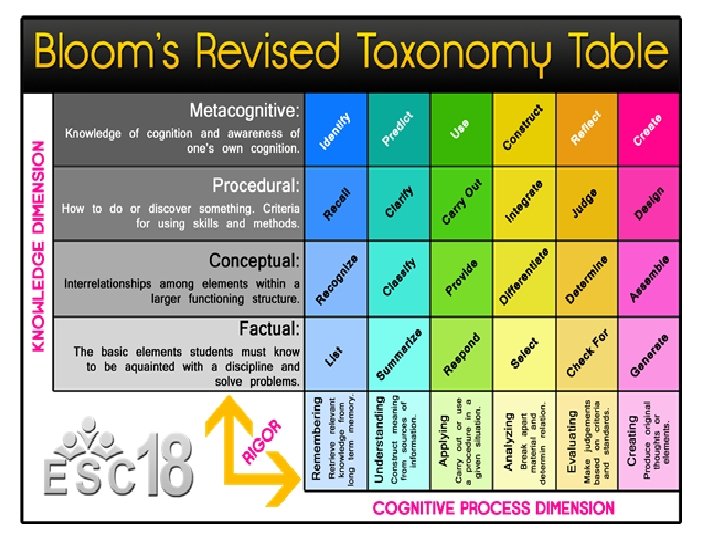
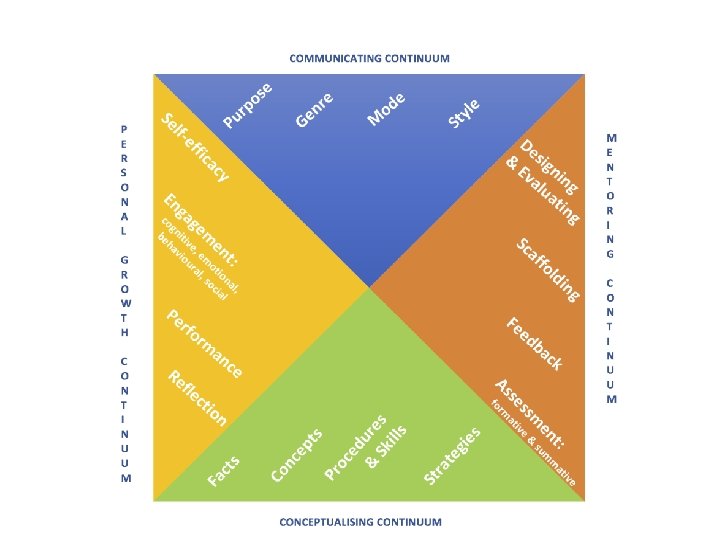
Knowledge isn’t just facts! • Factual knowledge about • Conceptual deeper knowledge about • Procedural how to (applied) • Meta-cognitive strategies
Knowledge Construction Thinking and knowledge construction require different kinds of language which do not automatically depend on grammatical knowledge and understanding. How learners articulate their knowledge and understanding will require learning and using language appropriately
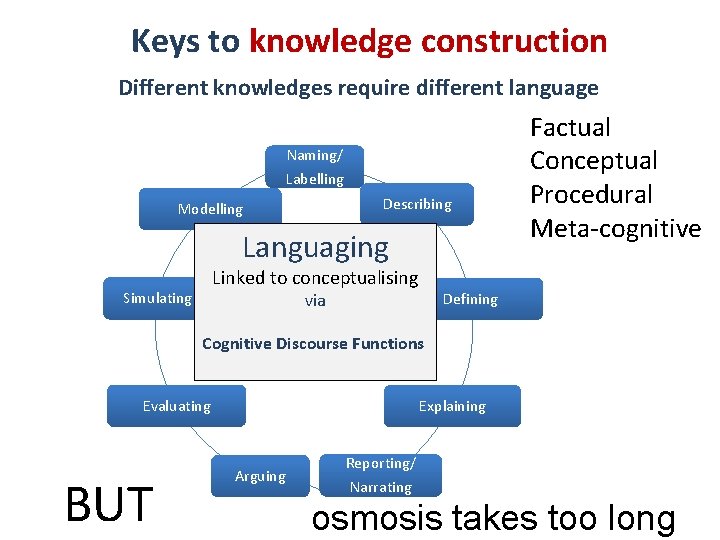
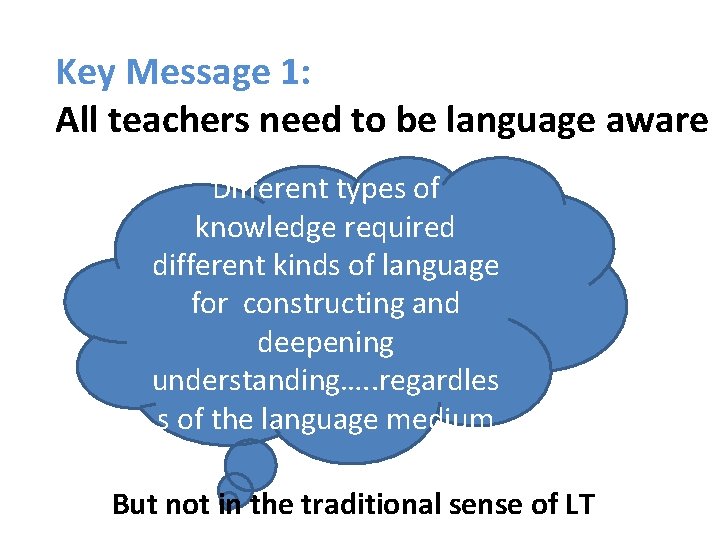
Different types of knowledge require different kinds of language for constructing and deepening understanding. .
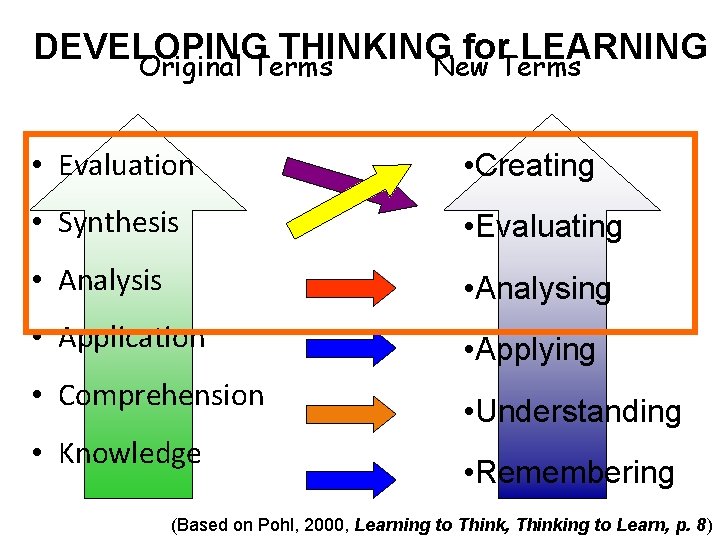
Cognition is…. . ……. . all about the processes involved in meaning-making and conceptualising such as: • using new and existing knowledge • engaging in problem-solving • using higher order thinking skills • being creative
DEVELOPING THINKING for LEARNING Original Terms New Terms • Evaluation • Creating • Synthesis • Evaluating • Analysis • Analysing • Application • Applying • Comprehension • Understanding • Knowledge • Remembering (Based on Pohl, 2000, Learning to Think, Thinking to Learn, p. 8)
Communication is…. . ……all about language needed to construct knowledge. It involves language learning (language progression, acquiring new language linked to learning) and language using (using language to express what is being learned).
Focus on Language We should not let ourselves be trapped inside a dichotomy between focus on form and focus on meaning, but rather focus on language. . . In practice it becomes impossible to separate form and function neatly in the interactional work that is being carried out (Van Lier 1996: 203)
Language Using Language Learning As teachers if we accept language is a learning tool as well as a communication tool then we have to re-conceptualise our classroom practices. . . to enable ‘discourse-rich’ environments Genesee 1994
Grammatical Correction We are not aware of any evidence or explicit and detailed claims that the correction of errors of grammatical form is a sufficient condition for the development of oral and written language as a medium of learning Mohan & Beckett (2003: 423)
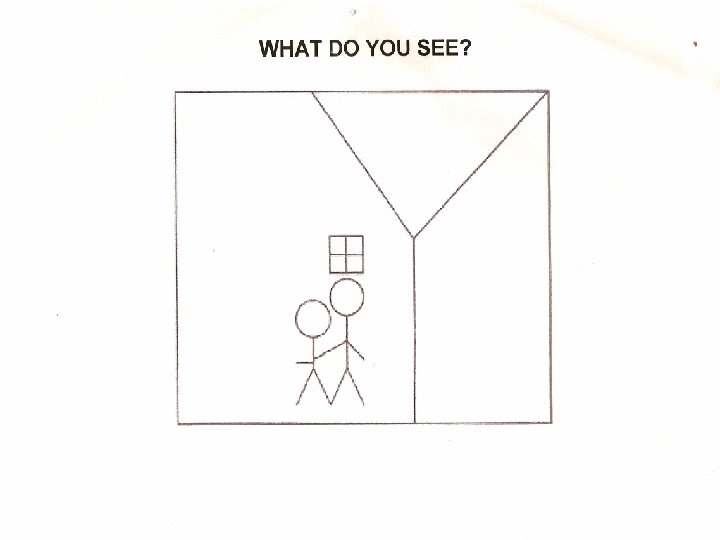
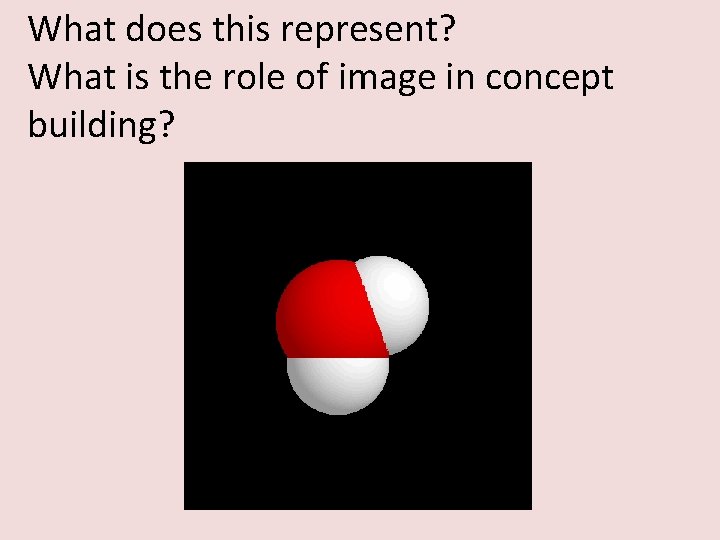
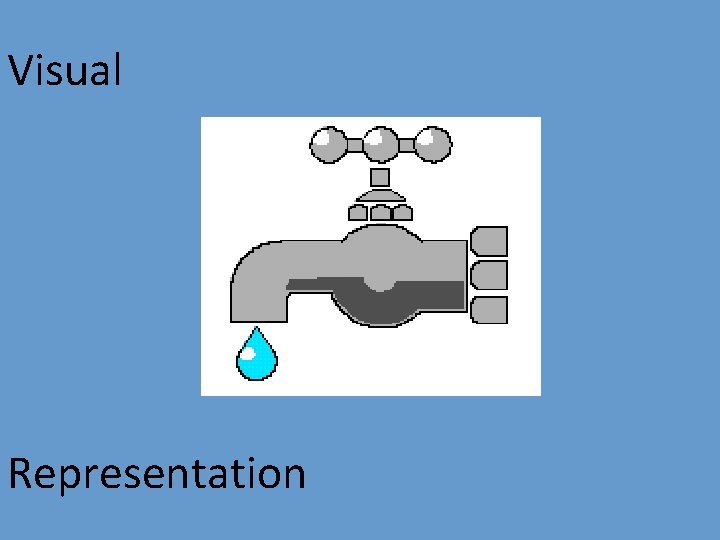
What does this represent? What is the role of image in concept building?
Visual Representation
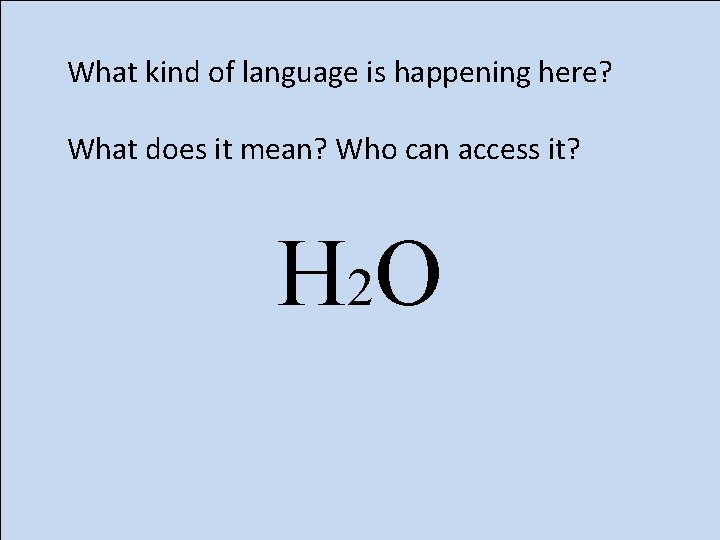
What kind of language is happening here? What does it mean? Who can access it? H 2 O
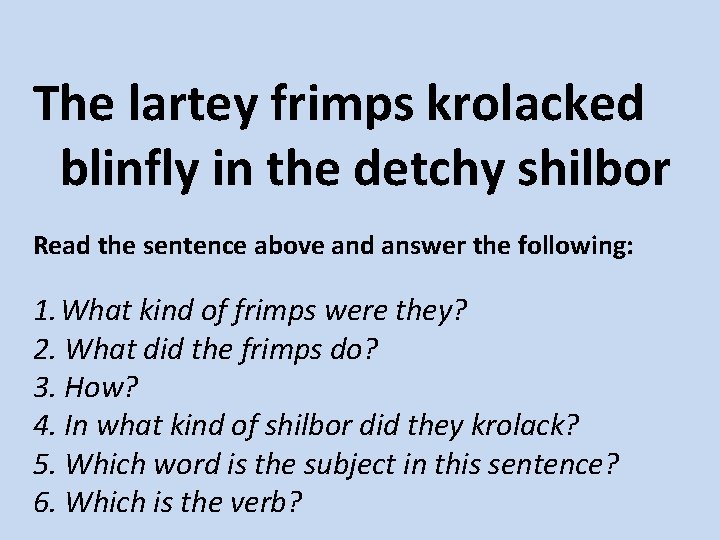
The lartey frimps krolacked blinfly in the detchy shilbor Read the sentence above and answer the following: 1. What kind of frimps were they? 2. What did the frimps do? 3. How? 4. In what kind of shilbor did they krolack? 5. Which word is the subject in this sentence? 6. Which is the verb?
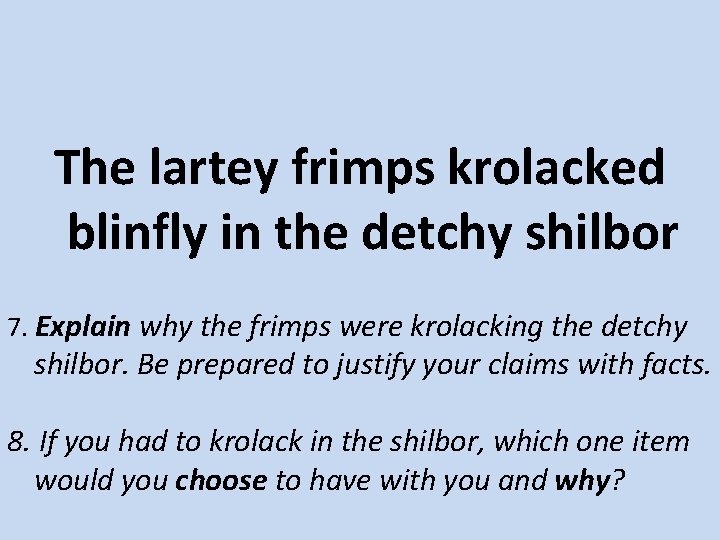
The lartey frimps krolacked blinfly in the detchy shilbor 7. Explain why the frimps were krolacking the detchy shilbor. Be prepared to justify your claims with facts. 8. If you had to krolack in the shilbor, which one item would you choose to have with you and why?
Focus on Language We should not let ourselves be trapped inside a dichotomy between focus on form and focus on meaning, but rather focus on language. . . In practice it becomes impossible to separate form and function neatly in the interactional work that is being carried out (Van Lier 1996: 203)
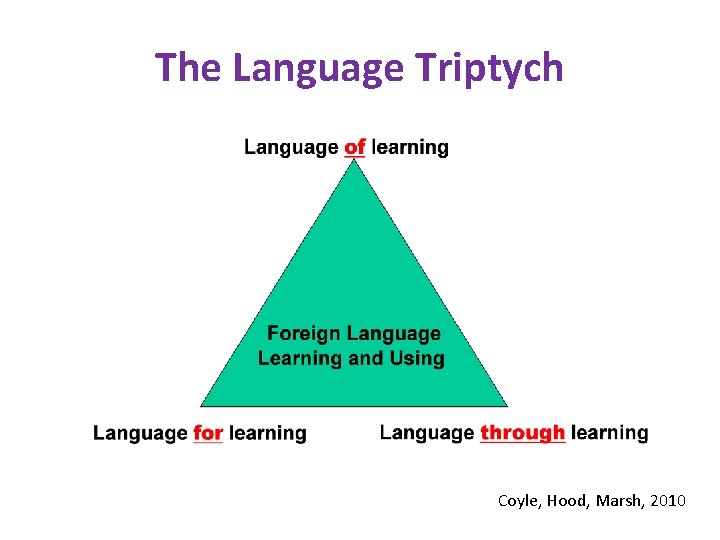
The Language Triptych Coyle, Hood, Marsh, 2010
To Language is a verb. . .
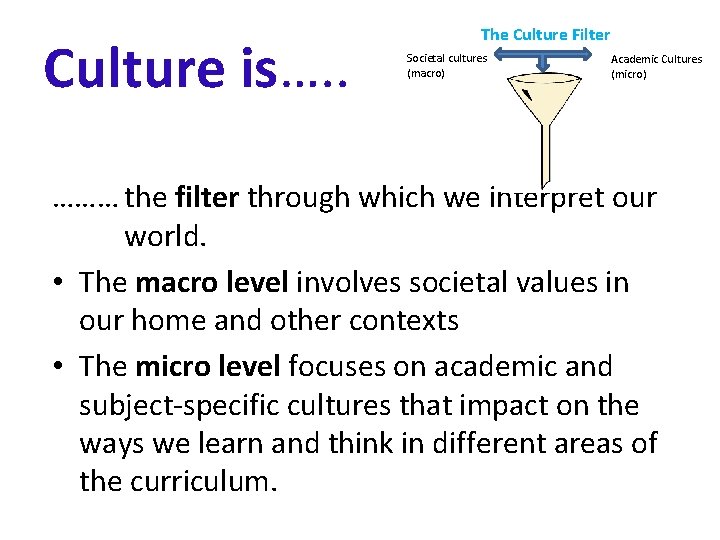
Culture is…. . The Culture Filter Societal cultures (macro) Academic Cultures (micro) ……… the filter through which we interpret our world. • The macro level involves societal values in our home and other contexts • The micro level focuses on academic and subject-specific cultures that impact on the ways we learn and think in different areas of the curriculum.
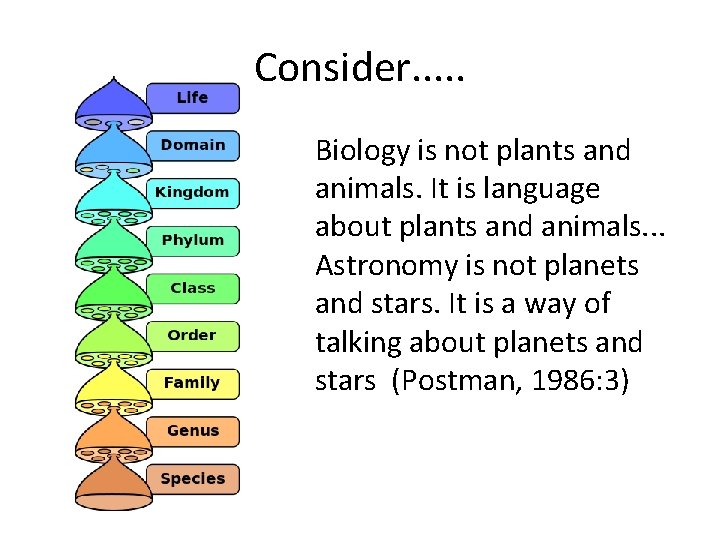
Consider. . . Biology is not plants and animals. It is language about plants and animals. . . Astronomy is not planets and stars. It is a way of talking about planets and stars (Postman, 1986: 3)
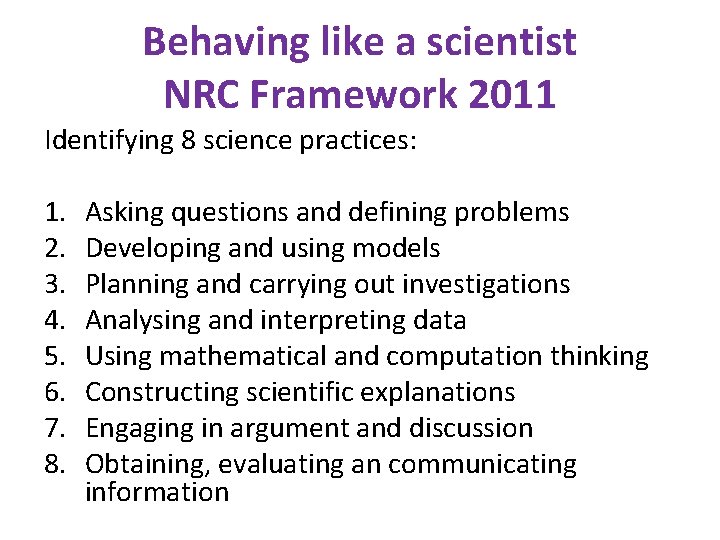
Behaving like a scientist NRC Framework 2011 Identifying 8 science practices: 1. 2. 3. 4. 5. 6. 7. 8. Asking questions and defining problems Developing and using models Planning and carrying out investigations Analysing and interpreting data Using mathematical and computation thinking Constructing scientific explanations Engaging in argument and discussion Obtaining, evaluating an communicating information
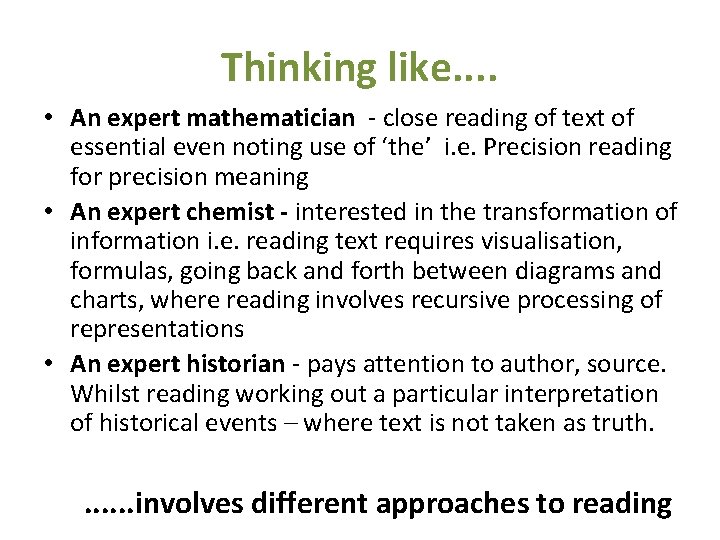
Thinking like. . • An expert mathematician - close reading of text of essential even noting use of ‘the’ i. e. Precision reading for precision meaning • An expert chemist - interested in the transformation of information i. e. reading text requires visualisation, formulas, going back and forth between diagrams and charts, where reading involves recursive processing of representations • An expert historian - pays attention to author, source. Whilst reading working out a particular interpretation of historical events – where text is not taken as truth. . . . involves different approaches to reading
Language, thinking and culture Culture is really an integral part of the interaction between language and thought. Cultural patterns, customs, and ways of life are expressed in language: culture specific world views are reflected in language. . . Language and culture interact so that world views among cultures differ, and that language used to express the world may be relative to that specific view Douglas Brown 1980
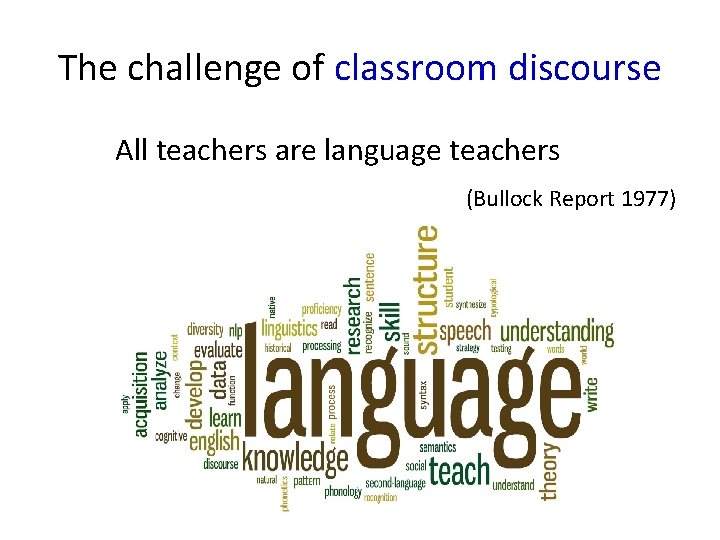
The challenge of classroom discourse All teachers are language teachers (Bullock Report 1977)
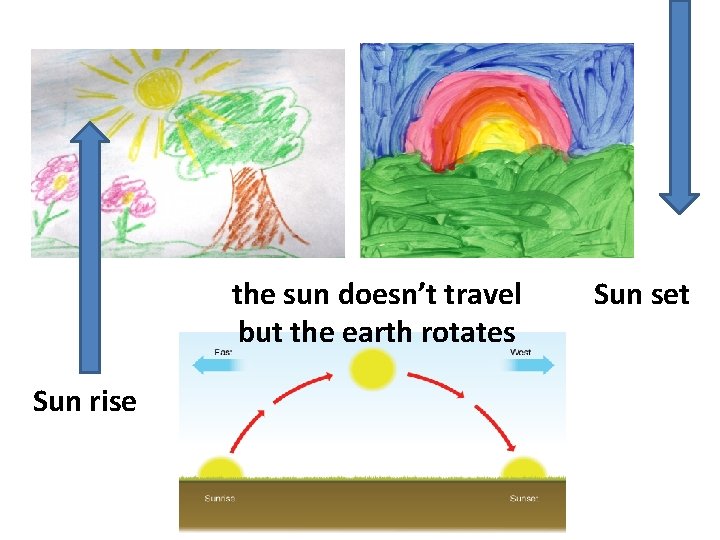
Language is never neutral. . .
the sun doesn’t travel but the earth rotates Sun rise Sun set
Academic Language is nobody’s mother tongue
4 Cs for (Subject) Literacies Meaning-making involves knowing (content) and deeper thinking (cognition) language, explained or demonstrated (communication) in ways which are culturally appropriate according to subject/topic specific discourse (culture). These processes are all about developing subject literacies.
The 4 Cs - Conceptual Framework The ‘what’ of conceptualising CLIL
So what are the challenges for us as CLIL teachers?
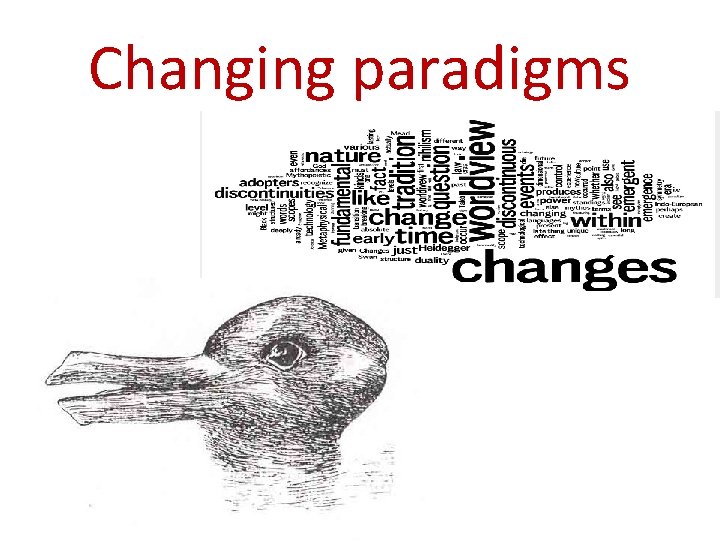
Changing paradigms
The 4 Cs - Conceptual Framework The ‘what’ but not the ‘how’ to integrate…. .
Big Questions
Pedagogic Tools
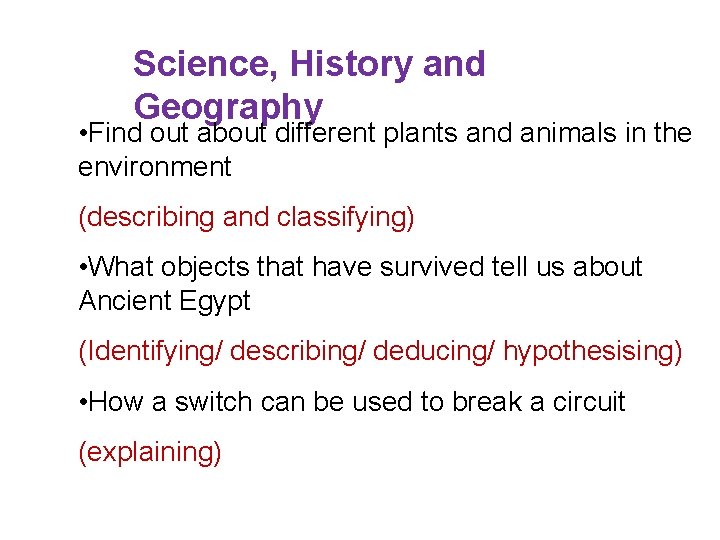
Science, History and Geography Find out about different plants and animals in the environment • Find out about different plants and animals in the Identify light sources environment What • objects thatlight havesources survived tell us about Ancient Egypt Identify How a switch can be used to break a circuit • What objects that have survived tell us about Ancient Find out what happened in the Great Fire of London Egypt Follow a route on a map • How a switch can be used to break a circuit Recognise how places compare with other places • Find out what happened in the Great Fire of London Use knowledge of liquids to decide how a mixture might be separated and interdependent • Follow a route on a map • Recognise how places compare with other places • Use knowledge of liquids to decide how a mixture might be separated and interdependent
Science, History and Geography • Find out about different plants and animals in the environment (describing and classifying) • What objects that have survived tell us about Ancient Egypt (Identifying/ describing/ deducing/ hypothesising) • How a switch can be used to break a circuit (explaining)
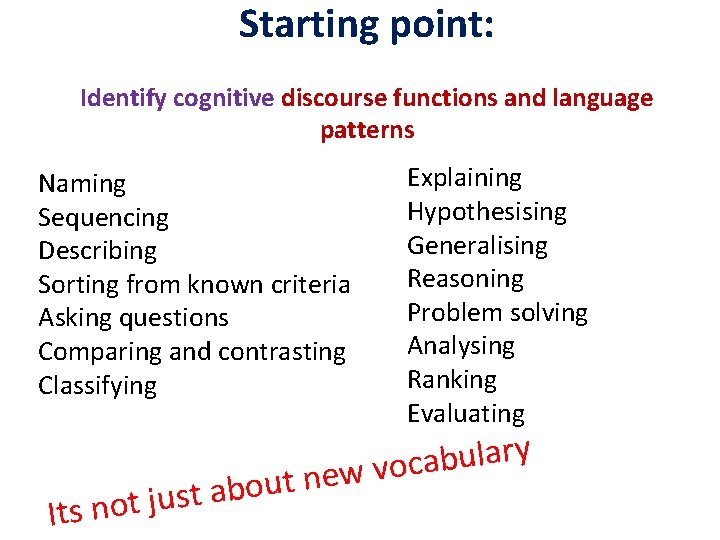
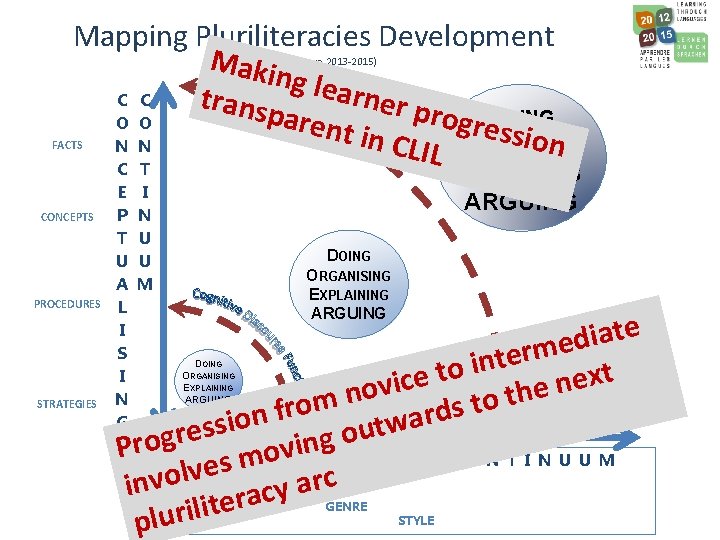
Starting point: Identify cognitive discourse functions and language patterns Naming Sequencing Describing Sorting from known criteria Asking questions Comparing and contrasting Classifying Explaining Hypothesising Generalising Reasoning Problem solving Analysing Ranking Evaluating y r a l u b a c o v w e n t u o b a t s u j t o n s It
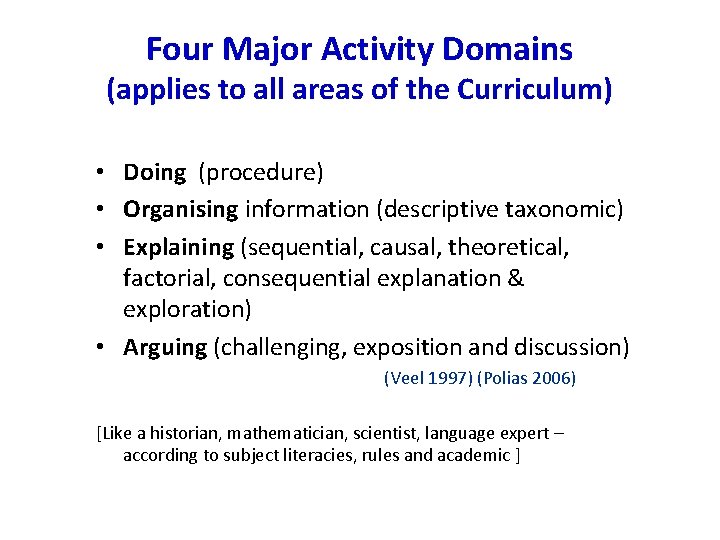
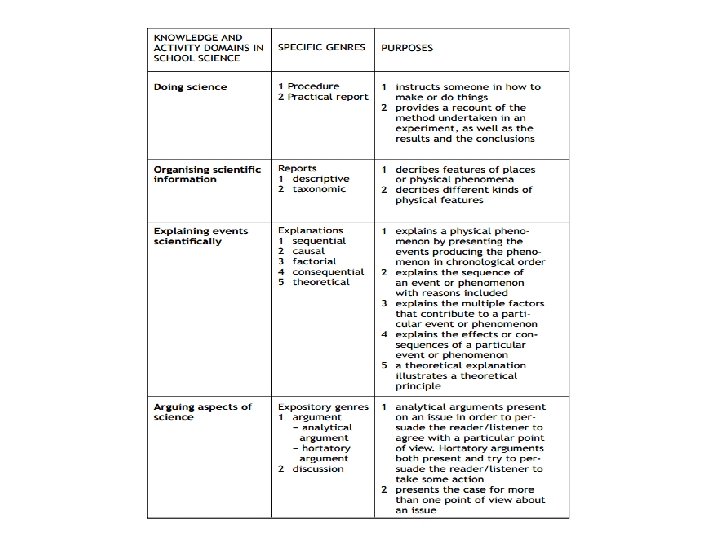
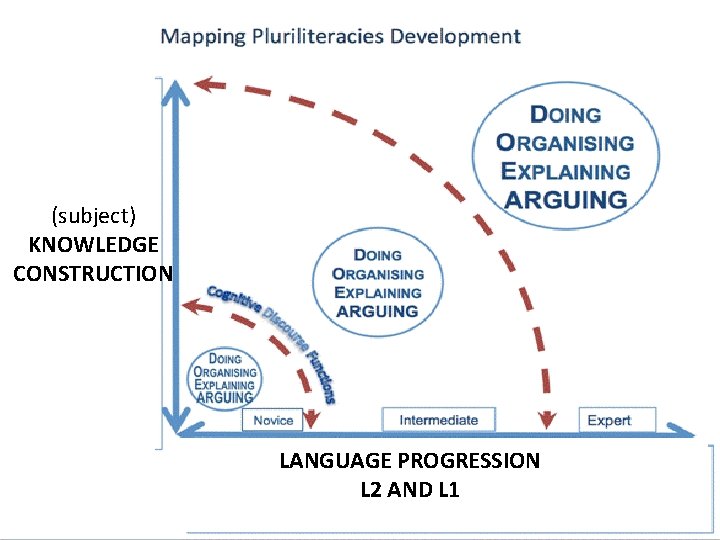
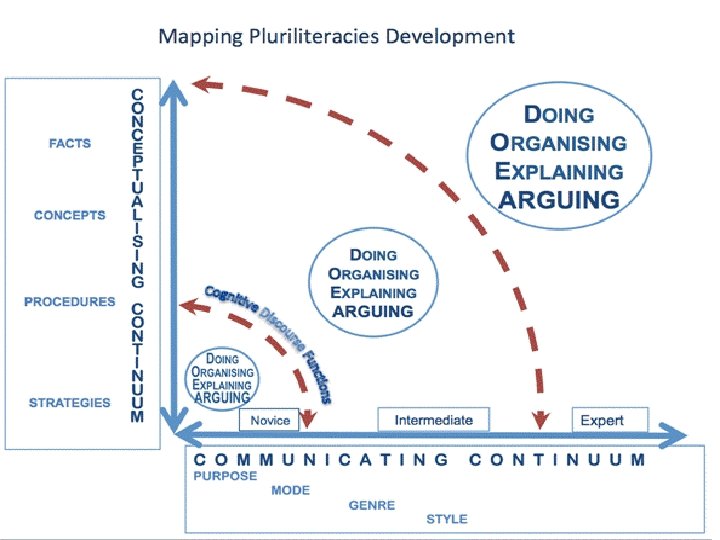
Four Major Activity Domains (applies to all areas of the Curriculum) • Doing (procedure) • Organising information (descriptive taxonomic) • Explaining (sequential, causal, theoretical, factorial, consequential explanation & exploration) • Arguing (challenging, exposition and discussion) (Veel 1997) (Polias 2006) [Like a historian, mathematician, scientist, language expert – according to subject literacies, rules and academic ]
Keys to knowledge construction Different knowledges require different language Naming/ Labelling Describing Modelling Languaging Linked to conceptualising Simulating Factual Conceptual Procedural Meta-cognitive Defining via Cognitive Discourse Functions Evaluating BUT Explaining Arguing Reporting/ Narrating osmosis takes too long
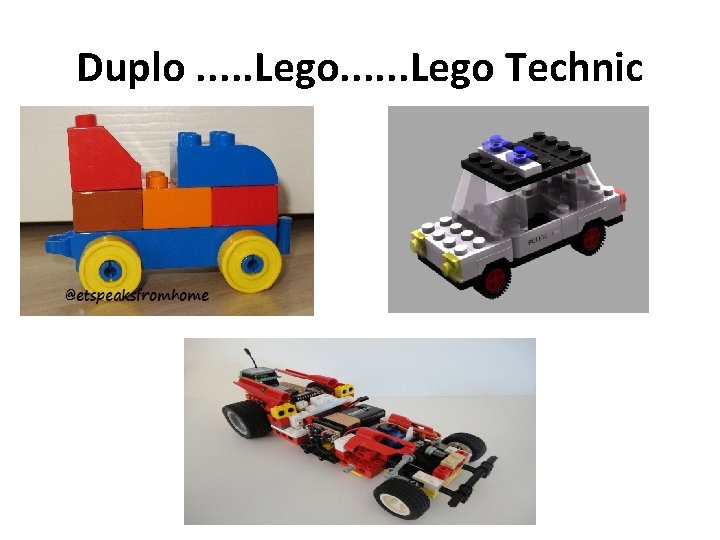
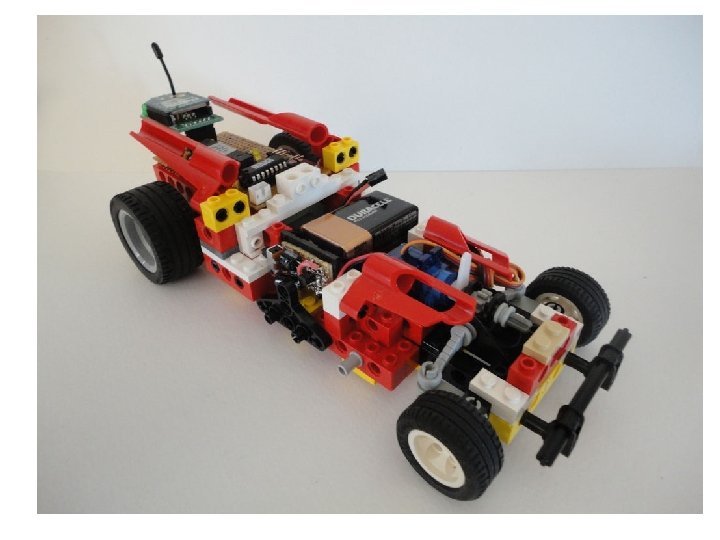
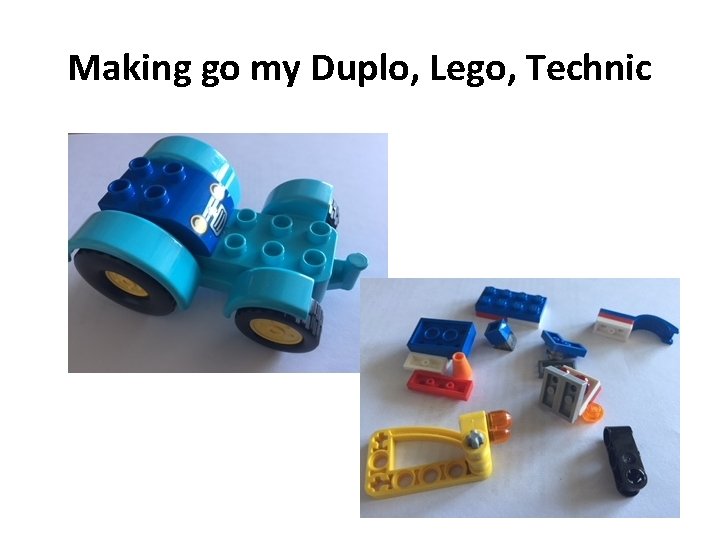
Duplo. . . Lego Technic
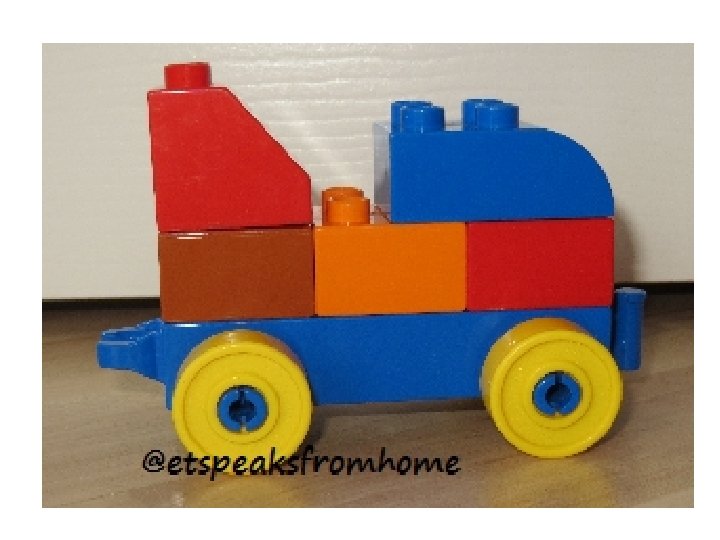
Duplo. . .
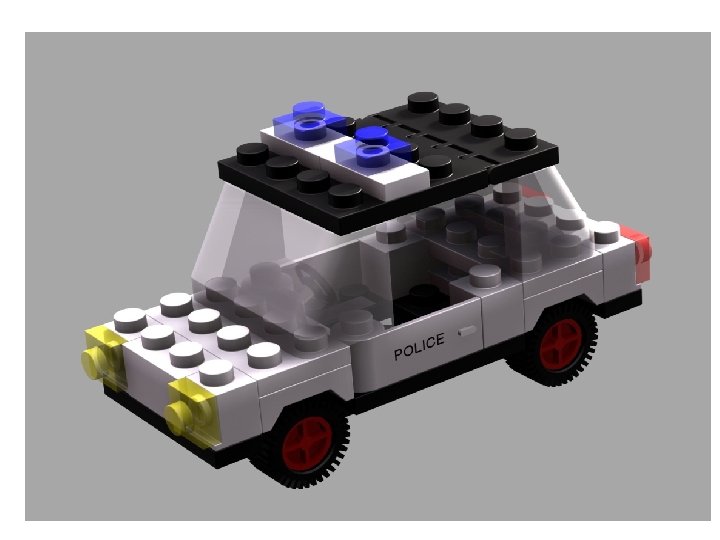
Lego
Making go my Duplo, Lego, Technic
(subject) KNOWLEDGE CONSTRUCTION LANGUAGE PROGRESSION L 2 AND L 1
Mapping Pluriliteracies Development Maki ng lea rner p C C trans paren rogre. DOING O O ssion t in C N N O RGANISING LIL C T (The Graz Group 2013 -2015) FACTS CONCEPTS PROCEDURES STRATEGIES E P T U A L I S I N G EXPLAINING ARGUING I N U U M DOING ORGANISING EXPLAINING ARGUING e t a i d e m r e t n i o t t x e e c i n v e o h n t o m t o s r f d r Intermediate Expert n a o i w s t s u e r o g g o n r i P C O s. M m Mo Uv. N I C A T I N G C O N T I N U U M e v l o c v r a in y c a r e t i l pluri DOING ORGANISING EXPLAINING ARGUING Novice PURPOSE MODE GENRE STYLE
Key Message 1: All teachers need to be language aware Different types of knowledge required different kinds of language for constructing and deepening understanding…. . regardles s of the language medium But not in the traditional sense of LT
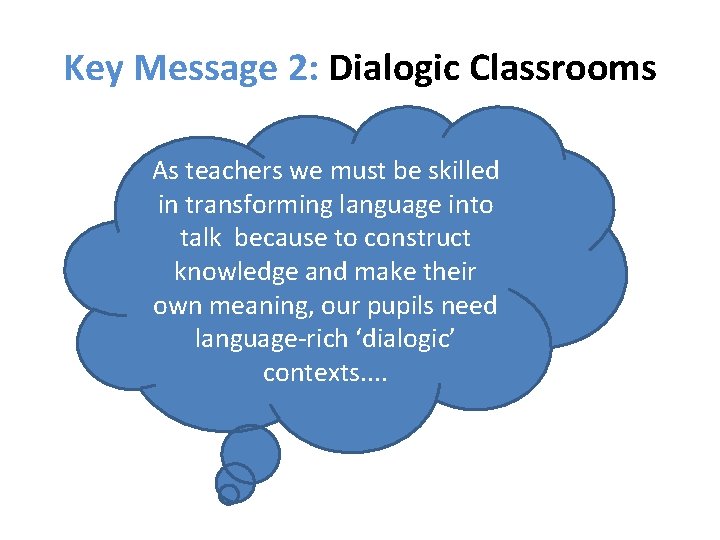
Key Message 2: Dialogic Classrooms As teachers we must be skilled in transforming language into talk because to construct knowledge and make their own meaning, our pupils need language-rich ‘dialogic’ contexts. .
Key Message 3: CLIL teacher responsibility To analyse the links between conceptual learning and the language needed so that we are aware and can make our learners aware. . through languaging and making our pedagogy relevant
Key Message 4: We can do it ! As connected educators self-help and determination via networking, professional learning communities – we can embrace new developments and find ways of applying these somehow because we care PS some time and support would also be handy!
Appreciation I should like to thank all the learners, innovative practitioners, classroom teachers, teacher educators and fellow researchers who have made future thinking possible through pioneering work in CLIL contexts. It has led to opportunities for understanding how better to nurture our future young pluriliterate citizens. Thank you all. You are making a big difference.
On behalf of the Graz Group, I should also like to thank the ECML and the Council of Europe for making our work possible by funding our meetings and workshops in Graz. do. coyle@abdn. ac. uk
do. coyle@ed. ac. uk