
The 35 mm Camera and Exposure Control The
- Slides: 19
The (35 mm) Camera and Exposure Control
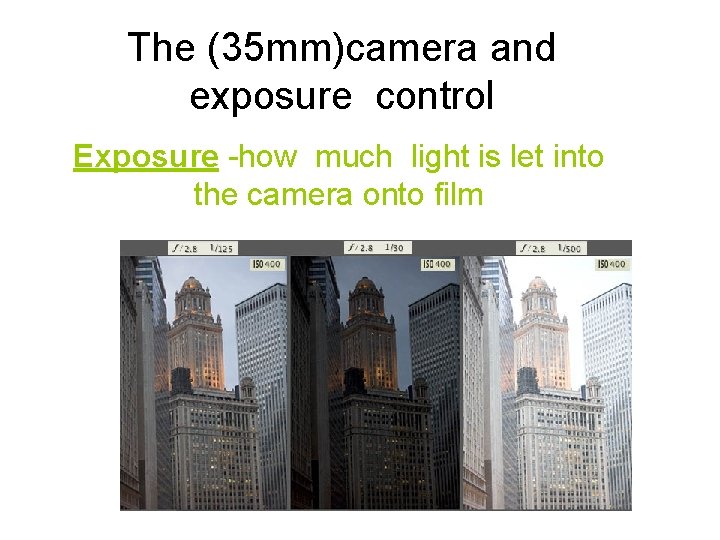
The (35 mm)camera and exposure control Exposure -how much light is let into the camera onto film
2 ways to control exposure • Aperture • Shutter speed
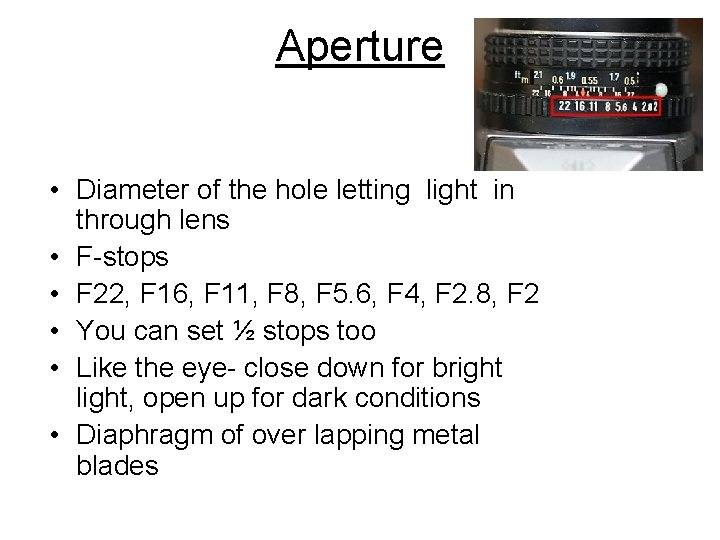
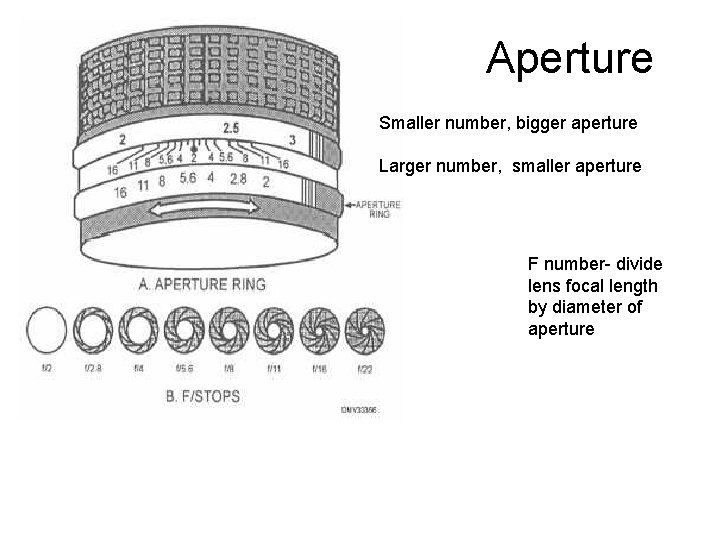
Aperture • Diameter of the hole letting light in through lens • F-stops • F 22, F 16, F 11, F 8, F 5. 6, F 4, F 2. 8, F 2 • You can set ½ stops too • Like the eye- close down for bright light, open up for dark conditions • Diaphragm of over lapping metal blades
Aperture Smaller number, bigger aperture Larger number, smaller aperture F number- divide lens focal length by diameter of aperture
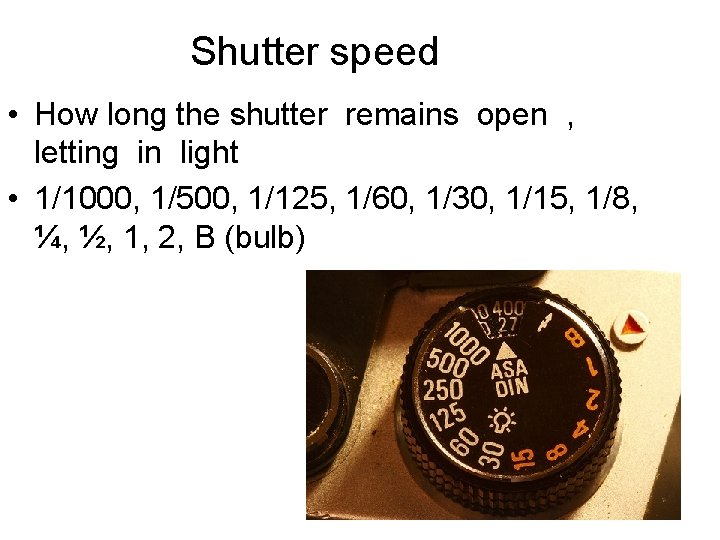
Shutter speed • How long the shutter remains open , letting in light • 1/1000, 1/500, 1/125, 1/60, 1/30, 1/15, 1/8, ¼, ½, 1, 2, B (bulb)
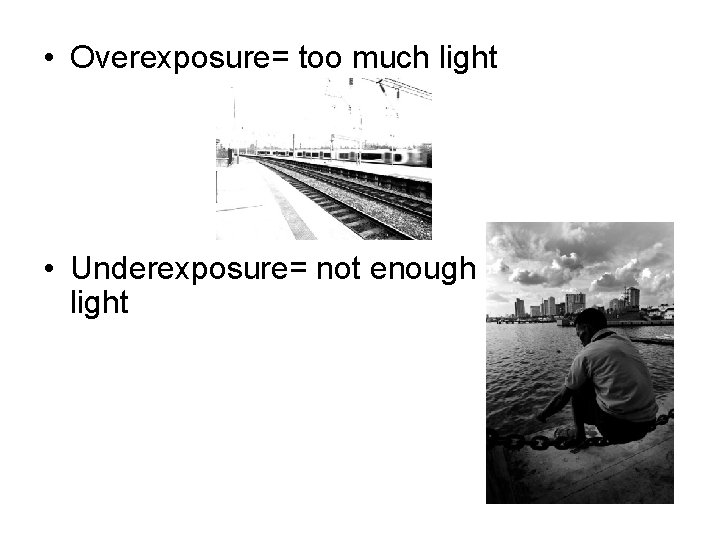
• Overexposure= too much light • Underexposure= not enough light
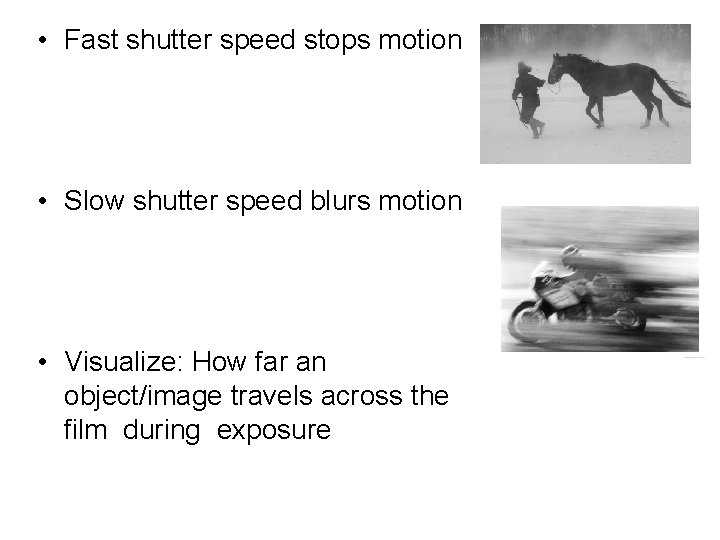
• Fast shutter speed stops motion • Slow shutter speed blurs motion • Visualize: How far an object/image travels across the film during exposure
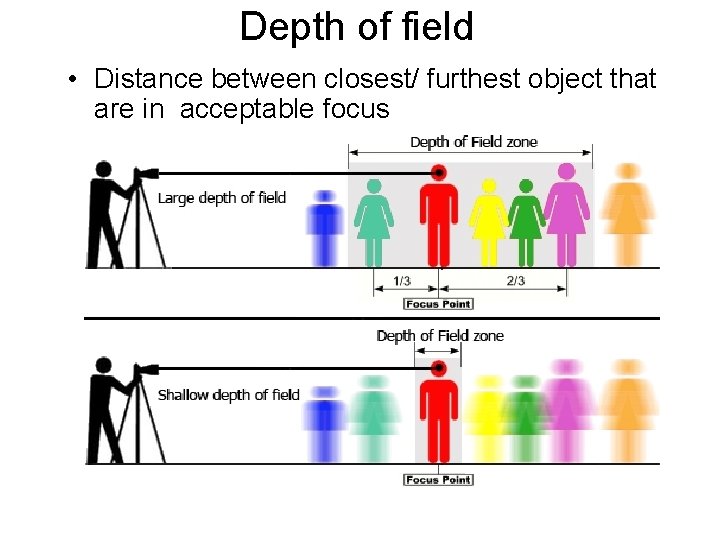
Depth of field • Distance between closest/ furthest object that are in acceptable focus
• Smaller aperture – greater depth of field • Larger aperture- shallow depth of field • Use depth of field to make objects stand out from blurred surroundings • Short focal length lens greater DOF
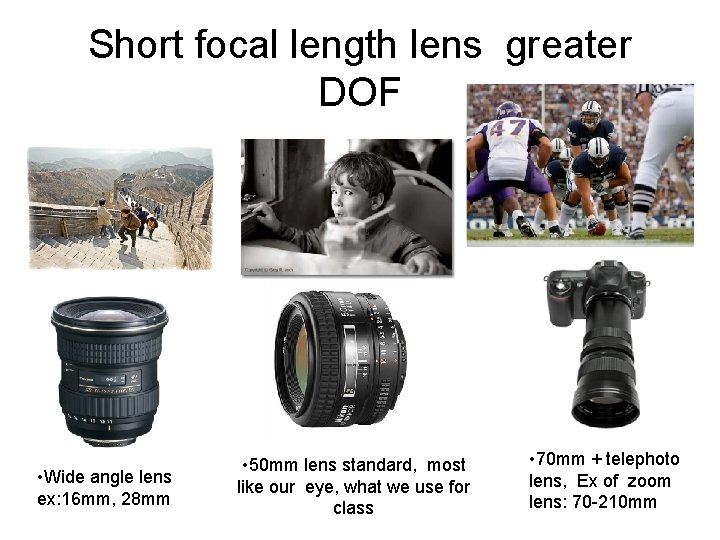
Short focal length lens greater DOF • Wide angle lens ex: 16 mm, 28 mm • 50 mm lens standard, most like our eye, what we use for class • 70 mm + telephoto lens, Ex of zoom lens: 70 -210 mm
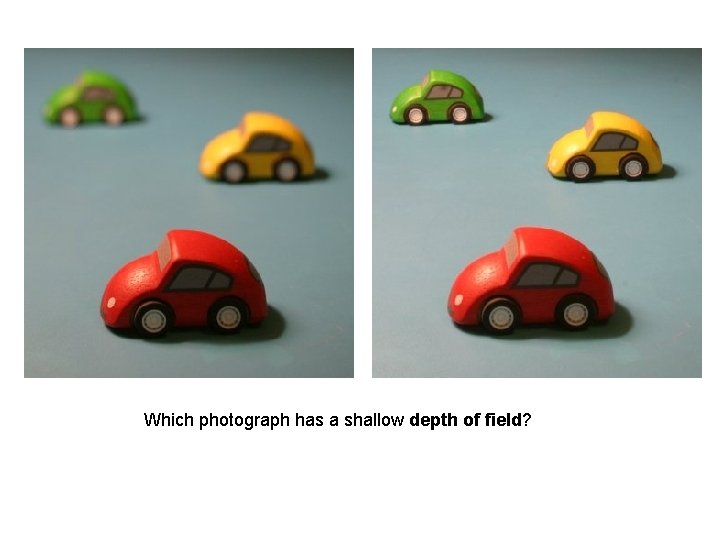
Which photograph has a shallow depth of field?
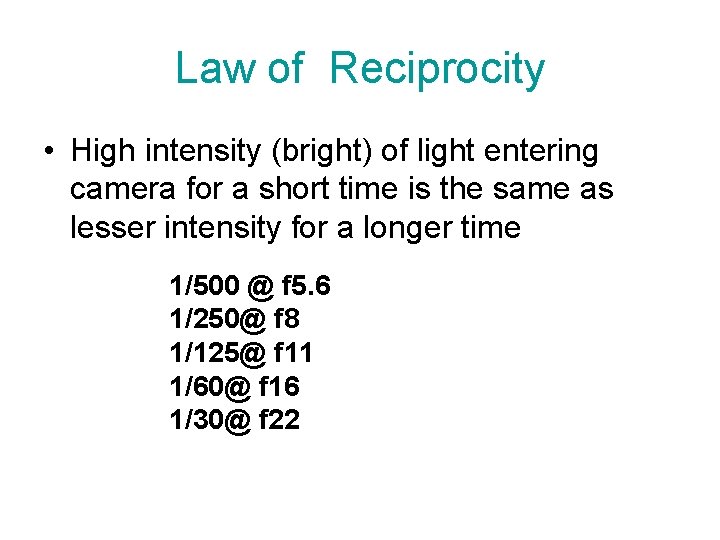
Law of Reciprocity • High intensity (bright) of light entering camera for a short time is the same as lesser intensity for a longer time 1/500 @ f 5. 6 1/250@ f 8 1/125@ f 11 1/60@ f 16 1/30@ f 22
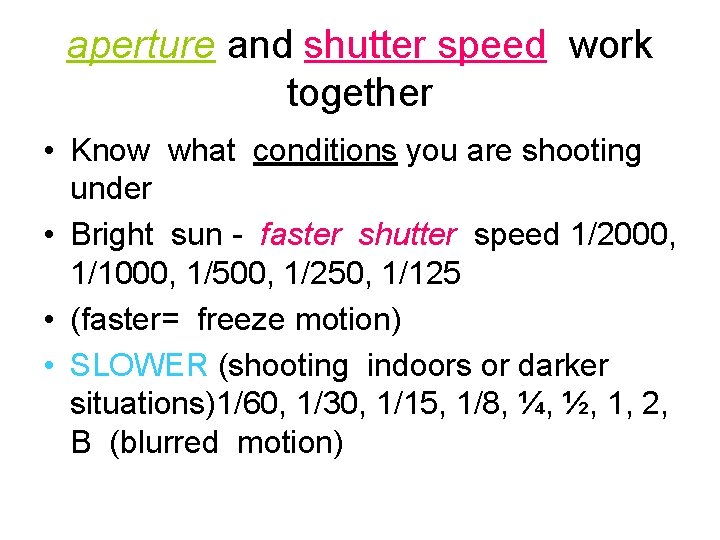
aperture and shutter speed work together • Know what conditions you are shooting under • Bright sun - faster shutter speed 1/2000, 1/1000, 1/500, 1/250, 1/125 • (faster= freeze motion) • SLOWER (shooting indoors or darker situations)1/60, 1/30, 1/15, 1/8, ¼, ½, 1, 2, B (blurred motion)
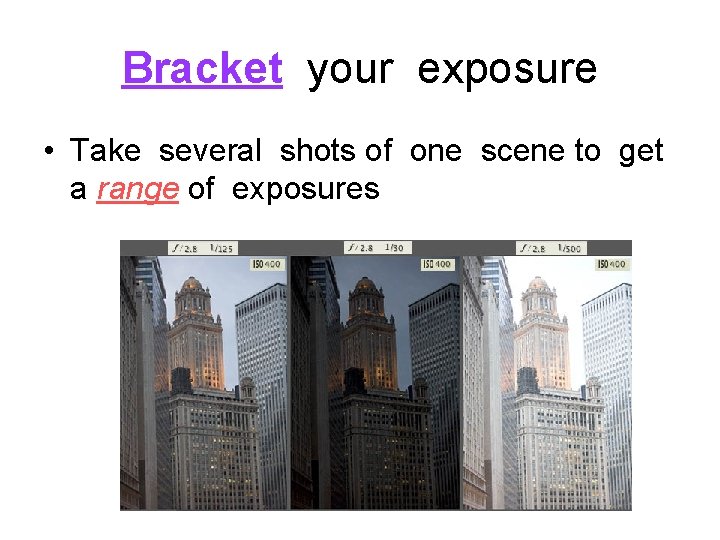
Bracket your exposure • Take several shots of one scene to get a range of exposures
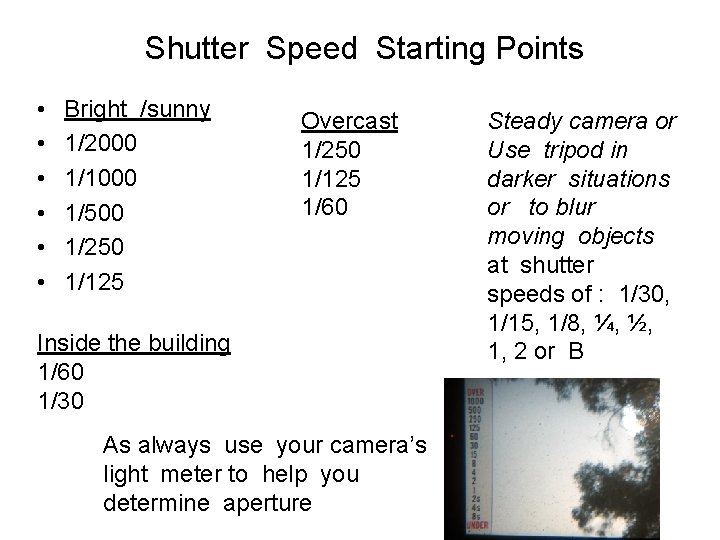
Shutter Speed Starting Points • • • Bright /sunny 1/2000 1/1000 1/500 1/250 1/125 Overcast 1/250 1/125 1/60 Inside the building 1/60 1/30 As always use your camera’s light meter to help you determine aperture Steady camera or Use tripod in darker situations or to blur moving objects at shutter speeds of : 1/30, 1/15, 1/8, ¼, ½, 1, 2 or B
Exposure guide ISO/ASA 400 • Bright/hazy sun on light sand or snow 1/500 at f 22 • Bright/hazy sun with distinct shadows 1/500 at f 16 • Week hazy sun , soft shadows 1/500 at f 11 • Cloudy bright, no shadows 1/500 at f 8 • Heavy overcast open shade 1/500 at f 5. 6 • Use f 8 for back lighted close-up subjects
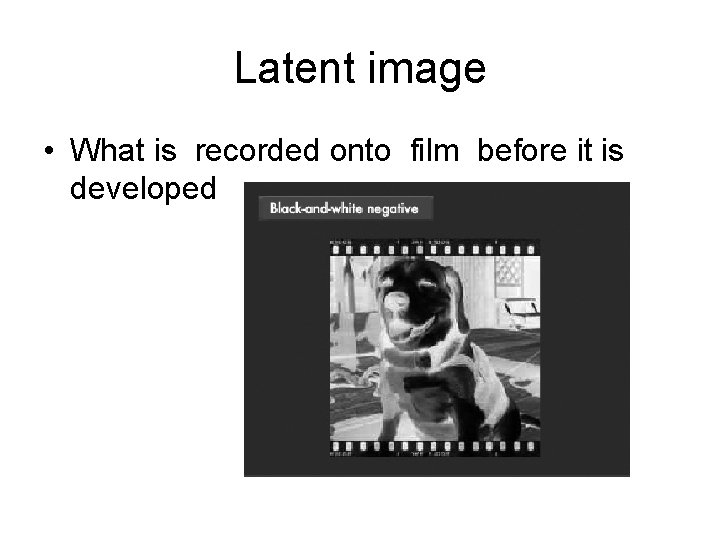
Latent image • What is recorded onto film before it is developed
Film speed • Measure of films sensitivity to light • It effects the exposure time needed to make a good negative • Fast –is very light sensitive For: dimly lit or moving objects • Slow- needs more light, bright scenes or long exposures