
The 3 Rs Reduce Reuse Recycle Households in
- Slides: 19
The 3 Rs: Reduce, Reuse, Recycle
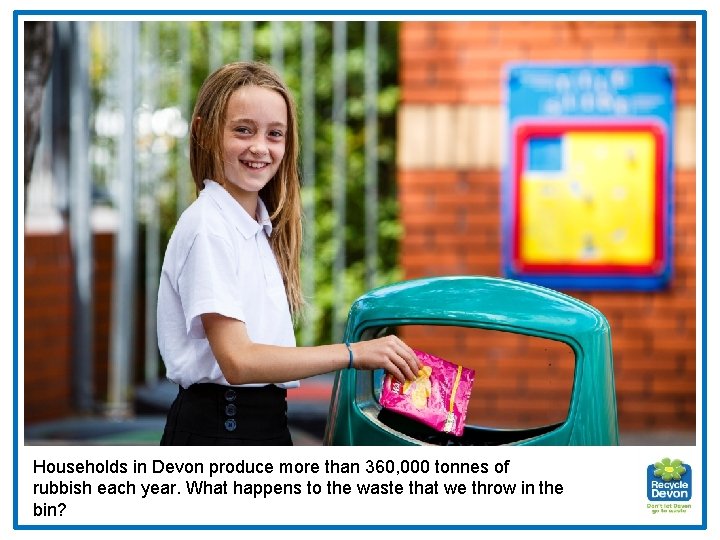
Households in Devon produce more than 360, 000 tonnes of rubbish each year. What happens to the waste that we throw in the bin?
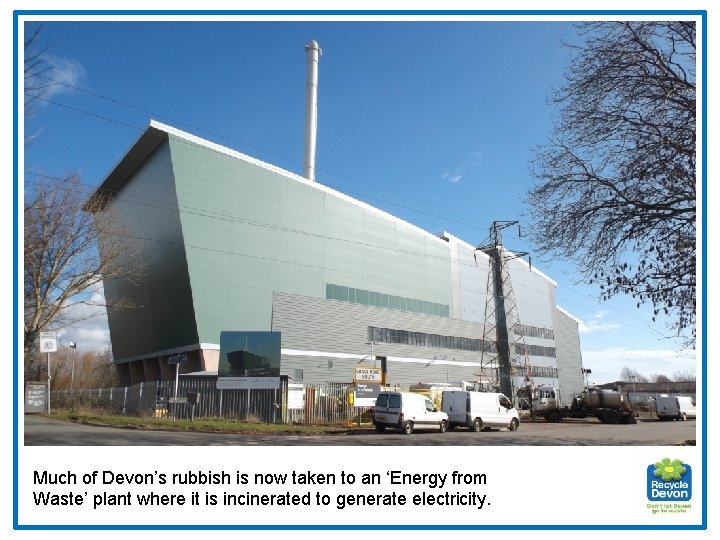
Much of Devon’s rubbish is now taken to an ‘Energy from Waste’ plant where it is incinerated to generate electricity.
Energy from Waste (Ef. W): facts and figures Rubbish is incinerated at 850 °C The generated electricity, and sometimes heat, can be used to power homes, schools and businesses Gases are cleaned and filtered to prevent pollution escaping into the atmosphere Strict laws ensure that Ef. W plants do not harm the environment
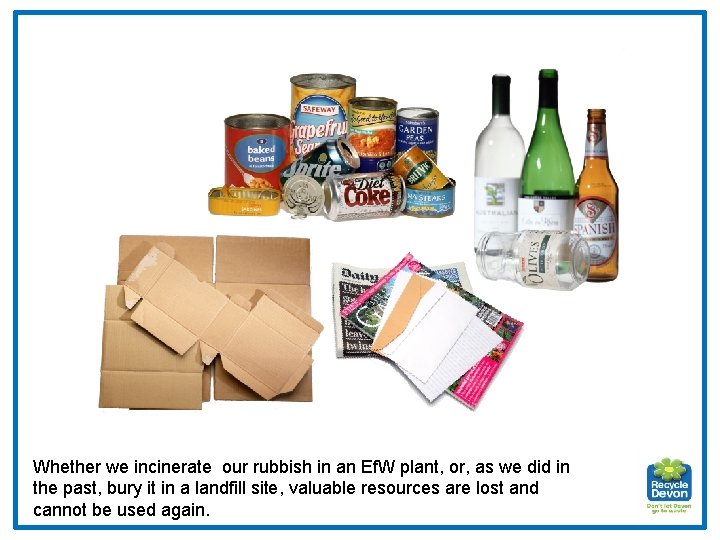
Whether we incinerate our rubbish in an Ef. W plant, or, as we did in the past, bury it in a landfill site, valuable resources are lost and cannot be used again.
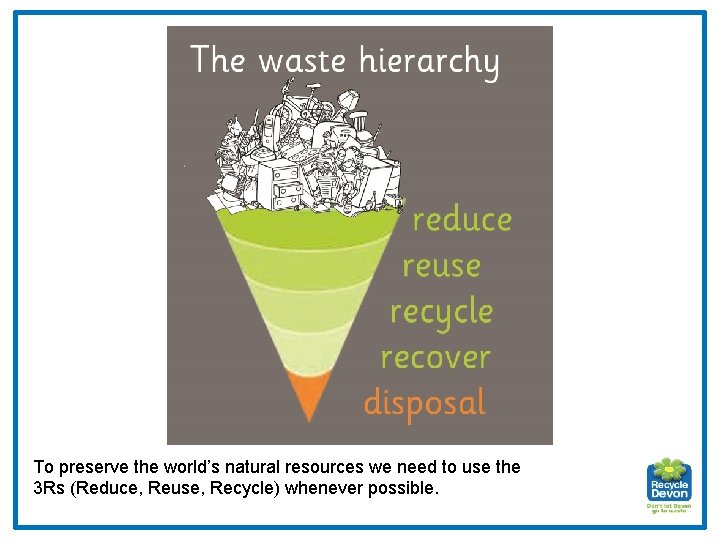
To preserve the world’s natural resources we need to use the 3 Rs (Reduce, Reuse, Recycle) whenever possible.
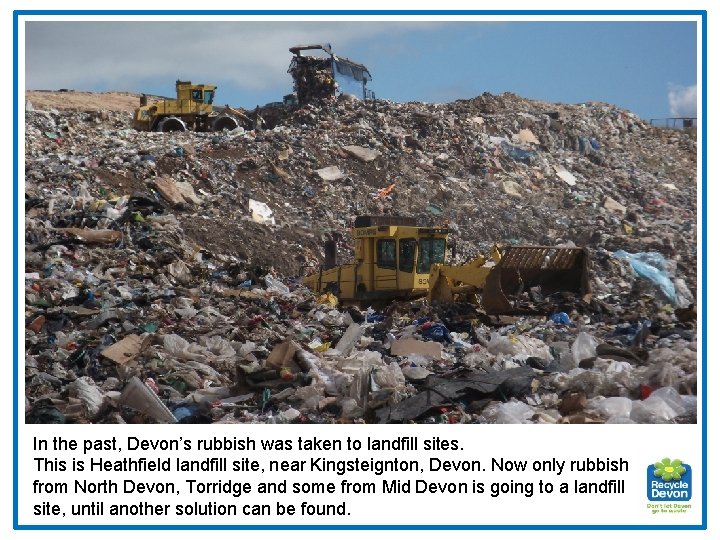
In the past, Devon’s rubbish was taken to landfill sites. This is Heathfield landfill site, near Kingsteignton, Devon. Now only rubbish from North Devon, Torridge and some from Mid Devon is going to a landfill site, until another solution can be found.
Heathfield landfill site: facts and figures The site opened in 1980 Its circumference is 2 miles / 3. 2 km 90 lorries dump rubbish in the landfill site each day The rubbish is up to 60 m deep
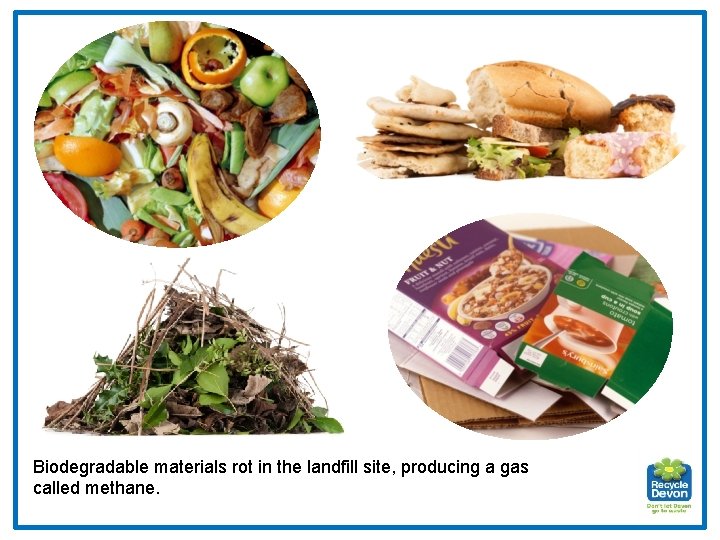
Biodegradable materials rot in the landfill site, producing a gas called methane.
Methane: facts and figures Methane is produced when materials rot anaerobically i. e. without oxygen It is a greenhouse gas, which is contributing to climate change Methane is flammable i. e. it burns Small power stations near landfill sites burn methane to produce electricity The power station at Heathfield landfill site produces enough electricity each year to power 8, 500 homes
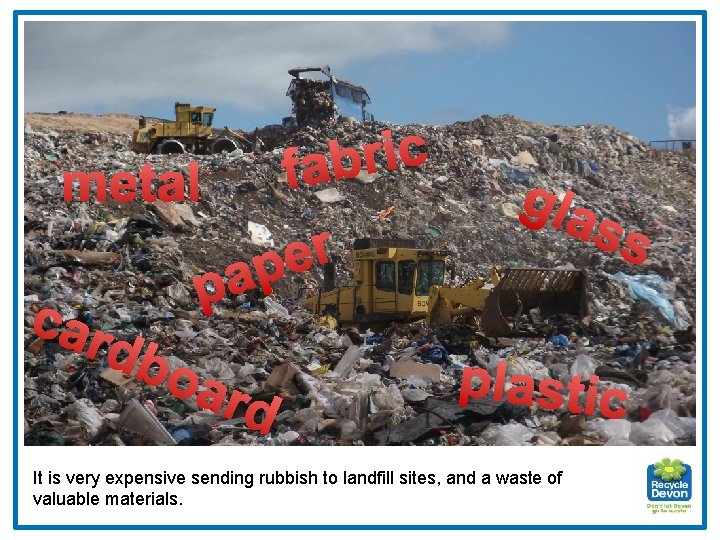
c i r fab metal car r e ap gla p dbo a rd ss plastic It is very expensive sending rubbish to landfill sites, and a waste of valuable materials.
Ways that you can Reduce Buy products with less packaging e. g. loose fruit and vegetables Buy less – don’t be tempted by special offers buy things you do not need or Use less e. g. one paper towel to dry your instead of three hands Avoid things that are used once and then away e. g. disposable plates and cups thrown
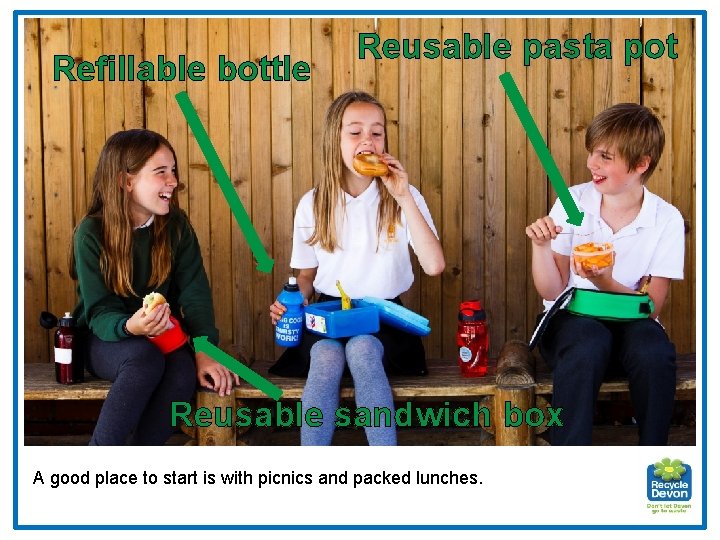
Refillable bottle Reusable pasta pot Reusable sandwich box A good place to start is with picnics and packed lunches.
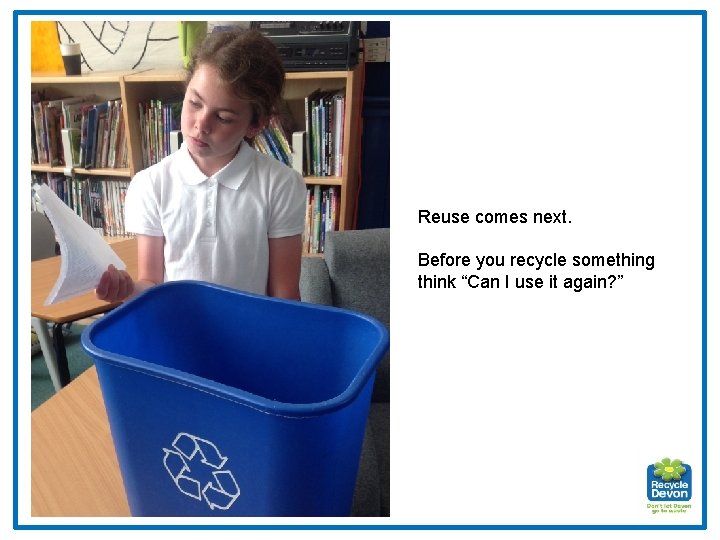
Reuse comes next. Before you recycle something think “Can I use it again? ”
Ways that you can Reuse Use a scrap paper drawer in the classroom so all paper is used on both sides Refill your drink bottle Take clothes that no longer fit to a charity or give them to friends or family shop, Take bags with you to the shops and use them over and over again Put leftover food in margarine or ice cream tubs, then store it in your fridge or freezer
Ways that you can Recycle Make sure every classroom and office in your school has a container for recycling paper Help at home by washing cans or plastic bottles before putting them in your recycling container Use a compost bin to recycle fruit and vegetable peels into compost Buy products made out of recycled materials e. g. toilet paper, kitchen roll
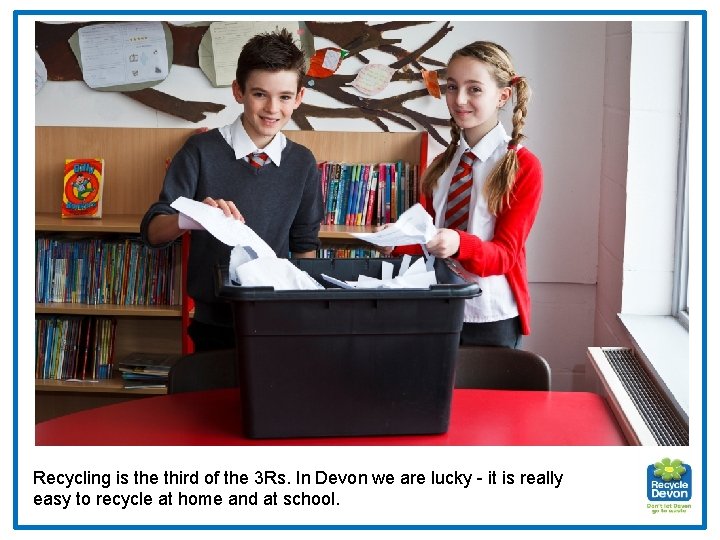
Recycling is the third of the 3 Rs. In Devon we are lucky - it is really easy to recycle at home and at school.
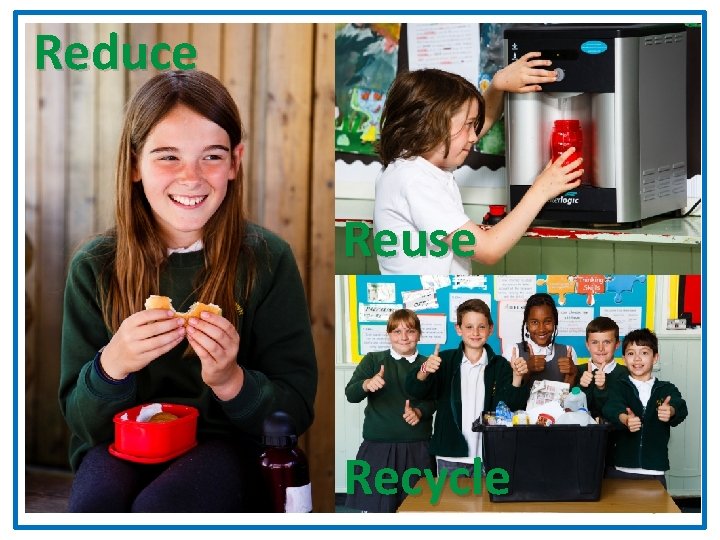
Reduce Reuse Recycle
This Power. Point is part of ‘What about Waste? ’, a Literacy teaching resource for Year 3/4 and Year 5/6. To download the full resource visit: zone. recycledevon. org/teachers This resource is available free of charge to Devon school teachers. ‘What about Waste? ’ was produced by Resource Futures as part of the Devon County Council Sustainability Education Programme. All facts and data used in this Power. Point were correct in March 2015.