
The 2016 Early Development Instrument Results EDI in
- Slides: 28
The 2016 Early Development Instrument Results
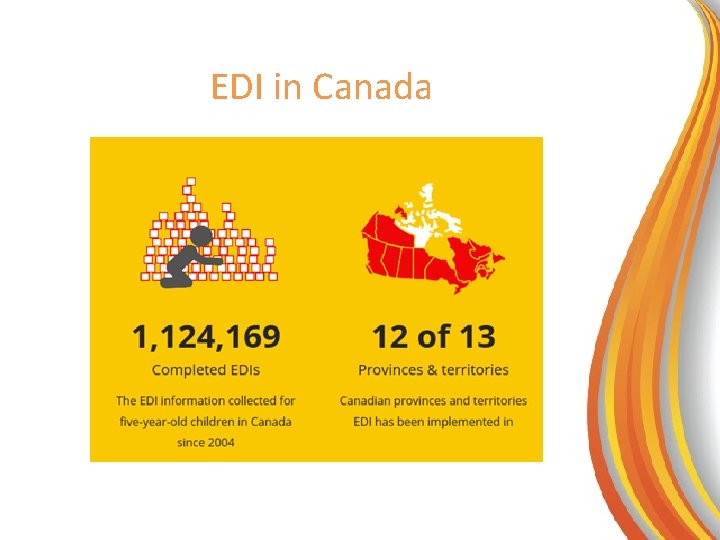
EDI in Canada
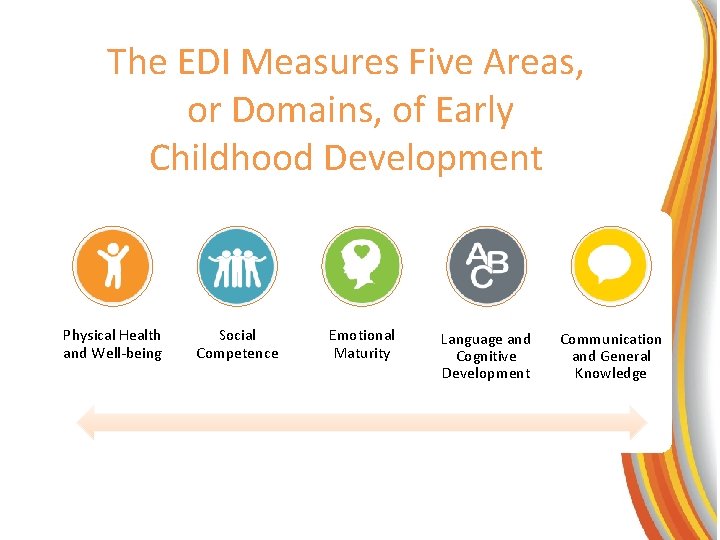
The EDI Measures Five Areas, or Domains, of Early Childhood Development Physical Health and Well-being Social Competence Emotional Maturity Language and Cognitive Development Communication and General Knowledge
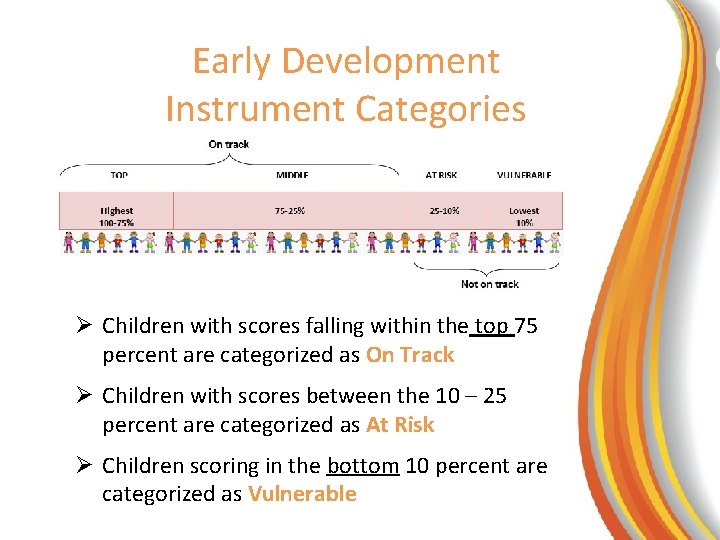
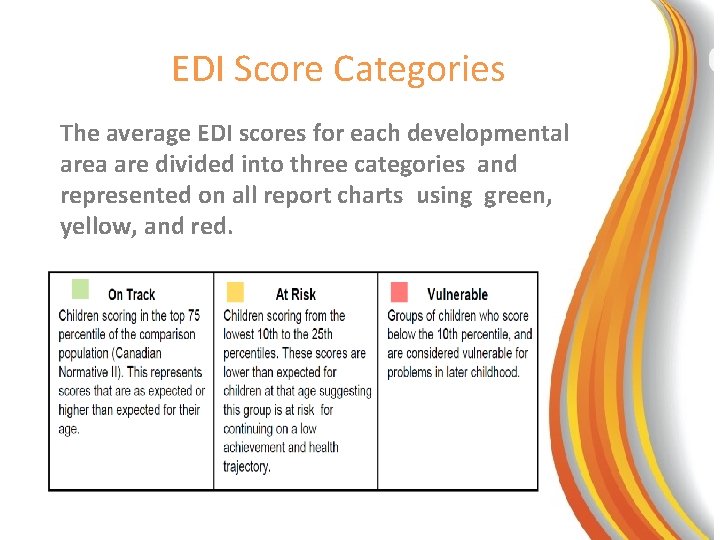
Early Development Instrument Categories Ø Children with scores falling within the top 75 percent are categorized as On Track Ø Children with scores between the 10 – 25 percent are categorized as At Risk Ø Children scoring in the bottom 10 percent are categorized as Vulnerable
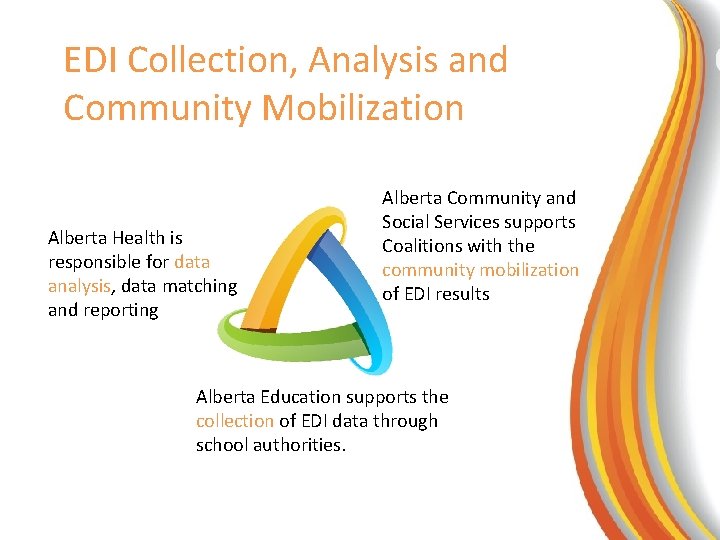
EDI Collection, Analysis and Community Mobilization Alberta Health is responsible for data analysis, data matching and reporting Alberta Community and Social Services supports Coalitions with the community mobilization of EDI results Alberta Education supports the collection of EDI data through school authorities.
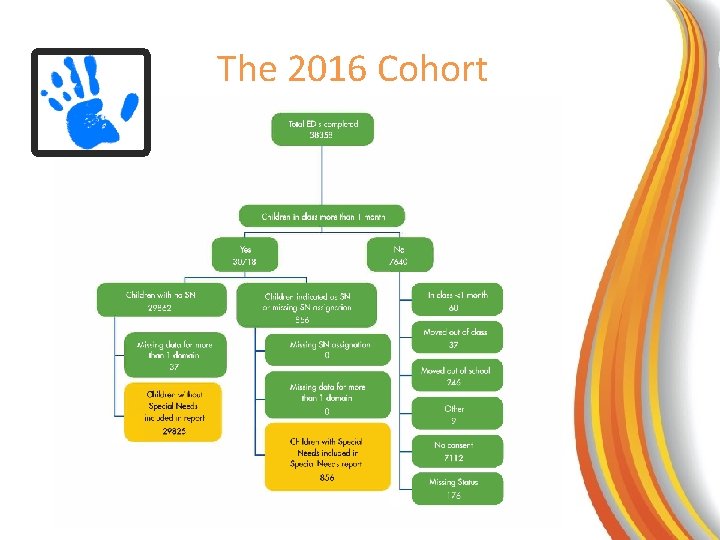
The 2016 Cohort
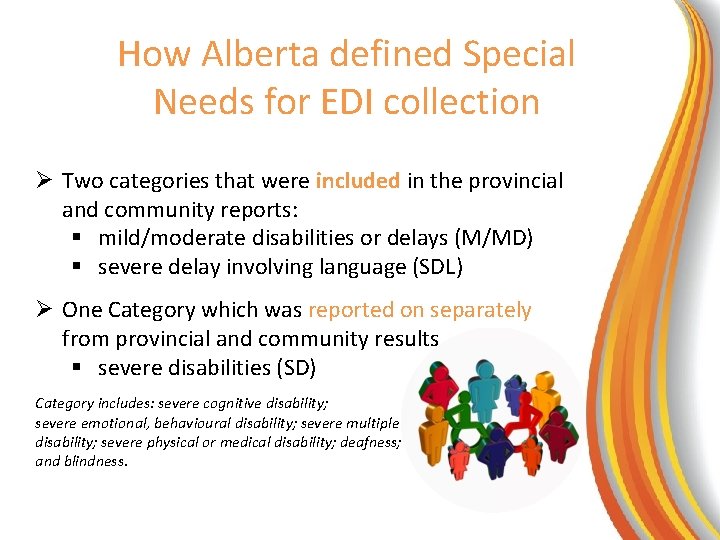
How Alberta defined Special Needs for EDI collection Ø Two categories that were included in the provincial and community reports: § mild/moderate disabilities or delays (M/MD) § severe delay involving language (SDL) Ø One Category which was reported on separately from provincial and community results. § severe disabilities (SD) Category includes: severe cognitive disability; severe emotional, behavioural disability; severe multiple disability; severe physical or medical disability; deafness; and blindness.
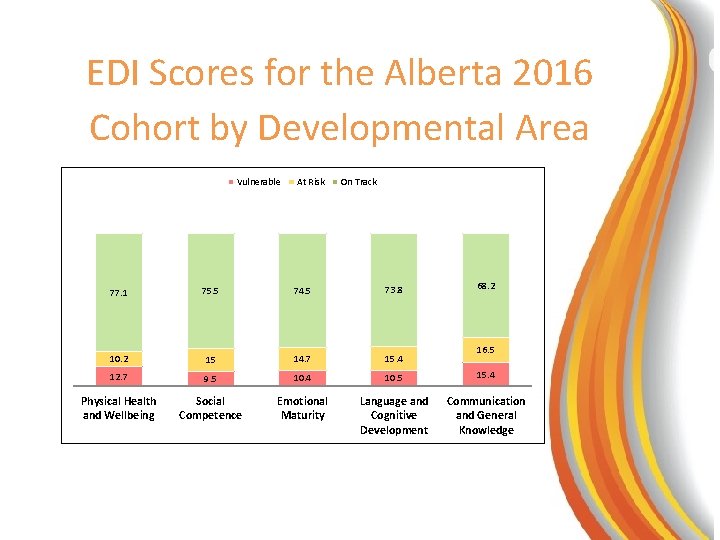
EDI Scores for the Alberta 2016 Cohort by Developmental Area Vulnerable At Risk On Track 68. 2 77. 1 75. 5 74. 5 73. 8 10. 2 15 14. 7 15. 4 12. 7 9. 5 10. 4 10. 5 15. 4 Physical Health and Wellbeing Social Competence Emotional Maturity Language and Cognitive Development Communication and General Knowledge 16. 5
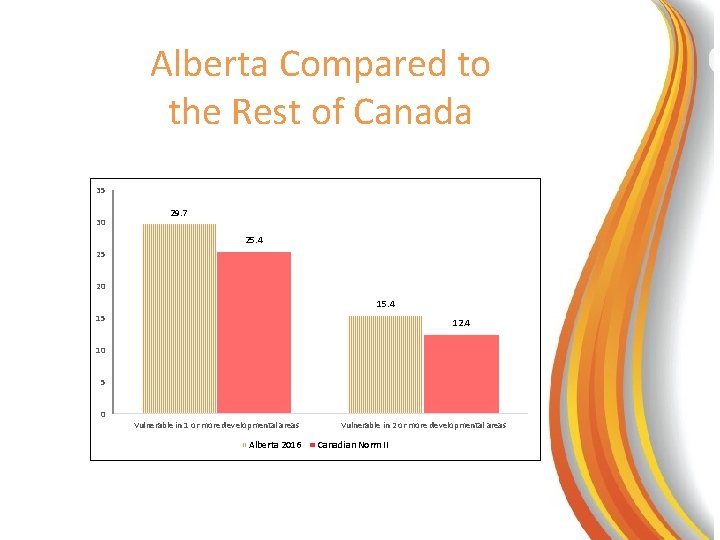
Alberta Compared to the Rest of Canada 35 30 29. 7 25. 4 25 20 15. 4 15 12. 4 10 5 0 Vulnerable in 1 or more developmental areas Alberta 2016 Vulnerable in 2 or more developmental areas Canadian Norm II
Northwest Peace Community Report
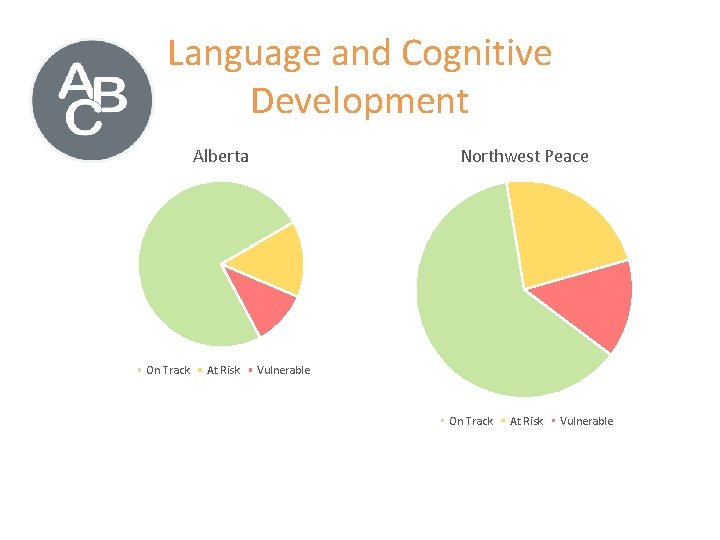
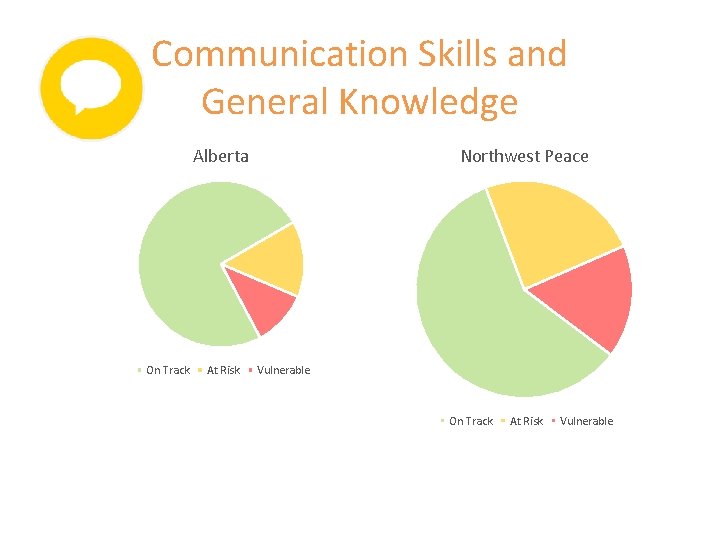
EDI Score Categories The average EDI scores for each developmental area are divided into three categories and represented on all report charts using green, yellow, and red.
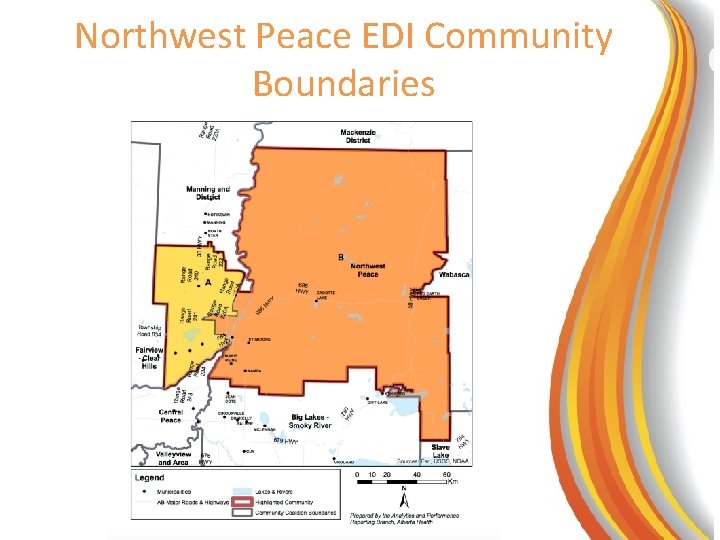
Northwest Peace EDI Community Boundaries
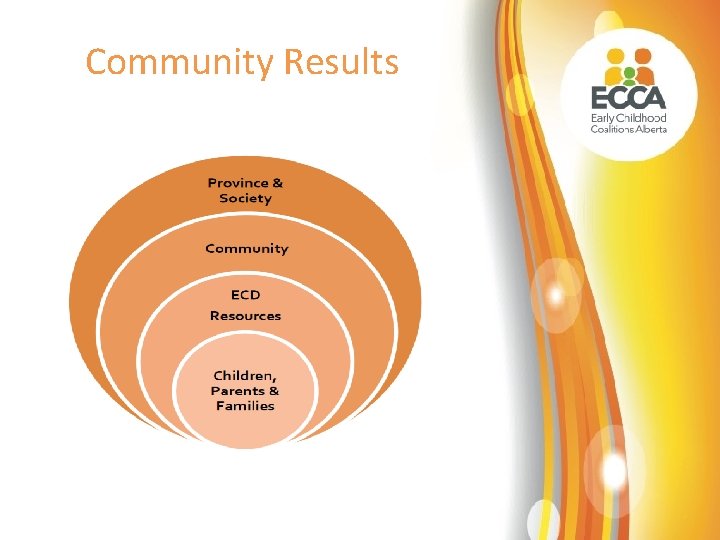
Community Results
The Community Role in Early Childhood Communities have a strong influence on children’s development in the early years. Ø Studies show that children tend to do better in supportive and connected communities that provide families access to high-quality supports and services. Ø Supportive community environments can help offset the effect of poverty, toxic stress and other risk factors that negatively influence development.
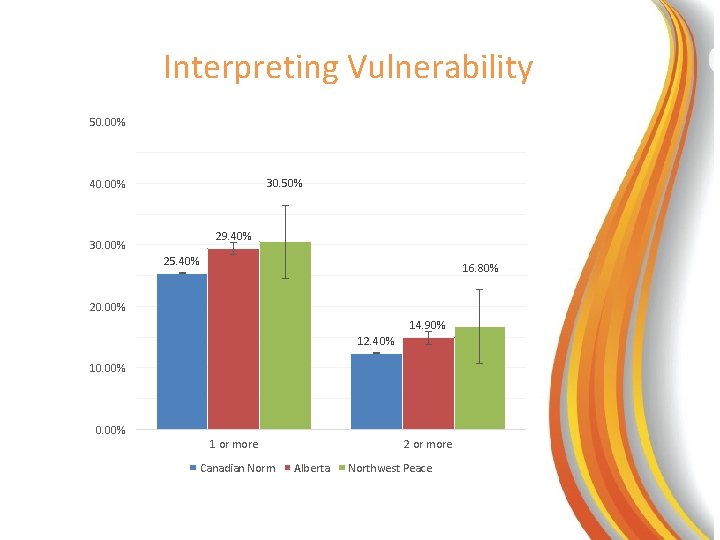
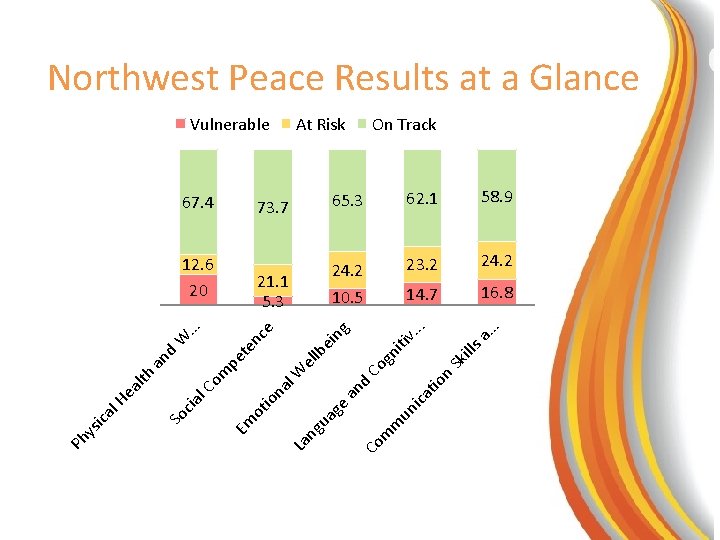
Vulnerability for the Northwest Peace 30. 5% of the Northwest Peace children for whom the EDI was completed were experiencing vulnerability in one or more areas of development. This does not include children with diagnosed severe disabilities.
Interpreting Vulnerability 50. 00% 30. 50% 40. 00% 29. 40% 30. 00% 25. 40% 16. 80% 20. 00% 14. 90% 12. 40% 10. 00% 1 or more Canadian Norm 2 or more Alberta Northwest Peace
Northwest Peace Results at a Glance Vulnerable 58. 9 21. 1 5. 3 24. 2 10. 5 23. 2 24. 2 14. 7 16. 8 ni ica tio n Sk Co g d m un an ge ua La ng ills a. . . tiv. ng ei lb el na l W io ot Em . . 62. 1 nc pe om cia l C So 65. 3 te d W an lth ea l H ys ica Ph 73. 7 e . . . 12. 6 20 On Track Co m 67. 4 At Risk
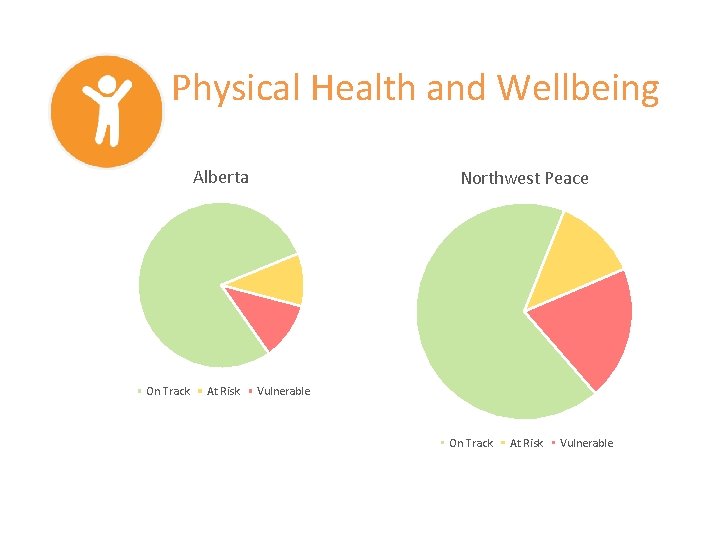
Physical Health and Wellbeing Alberta On Track At Risk Northwest Peace Vulnerable On Track At Risk Vulnerable
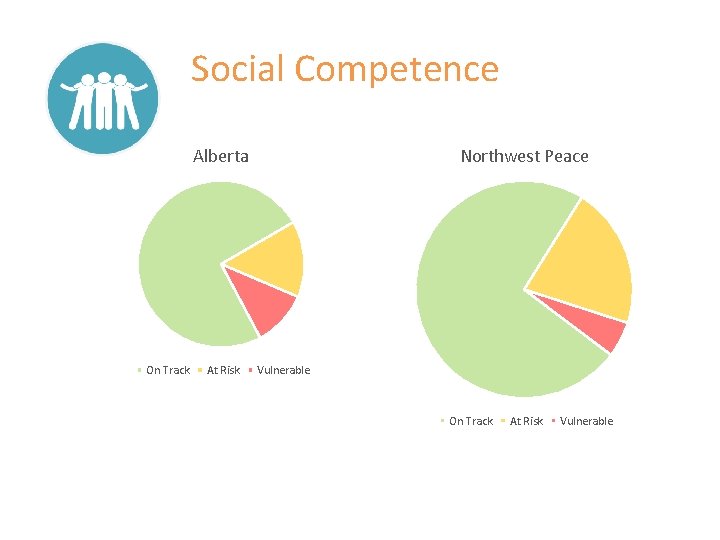
Social Competence Alberta On Track At Risk Northwest Peace Vulnerable On Track At Risk Vulnerable
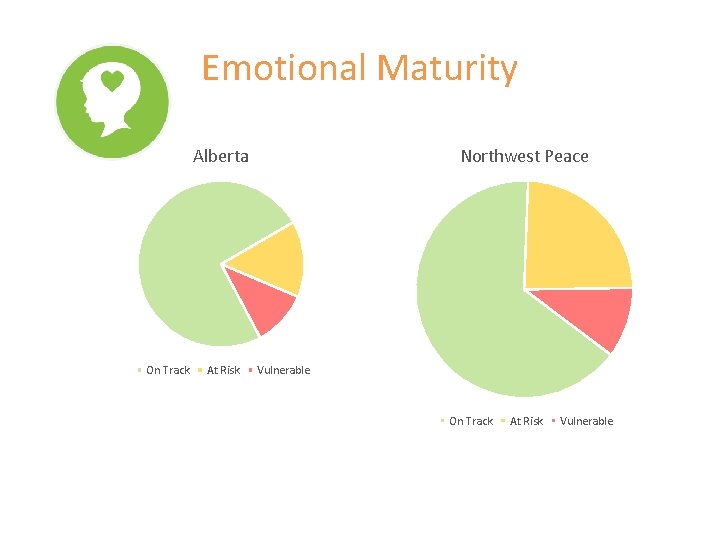
Emotional Maturity Alberta On Track At Risk Northwest Peace Vulnerable On Track At Risk Vulnerable
Language and Cognitive Development Alberta On Track At Risk Northwest Peace Vulnerable On Track At Risk Vulnerable
Communication Skills and General Knowledge Alberta On Track At Risk Northwest Peace Vulnerable On Track At Risk Vulnerable
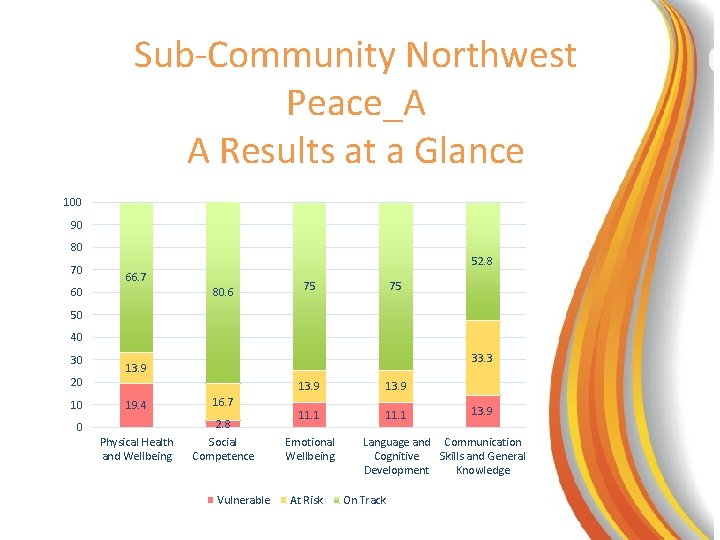
Sub-Community Northwest Peace_A A Results at a Glance 100 90 80 70 52. 8 66. 7 60 80. 6 75 75 50 40 30 20 10 33. 3 13. 9 19. 4 16. 7 Physical Health and Wellbeing 2. 8 Social Competence 0 Vulnerable 13. 9 11. 1 Emotional Wellbeing At Risk 13. 9 Language and Communication Cognitive Skills and General Development Knowledge On Track
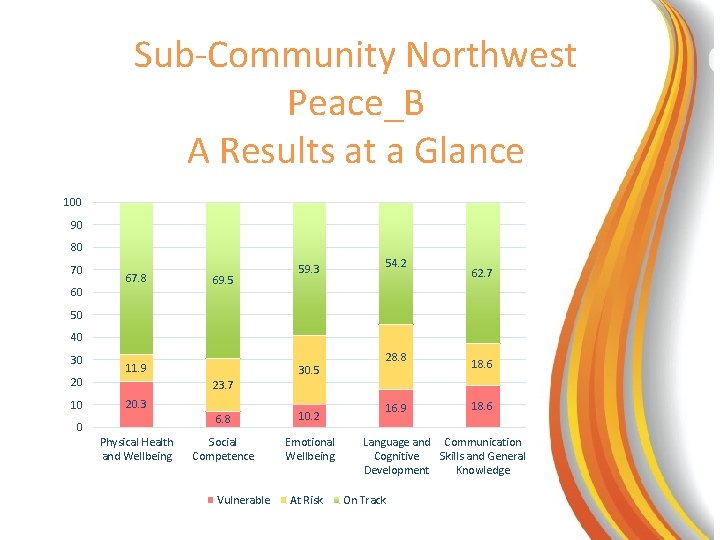
Sub-Community Northwest Peace_B A Results at a Glance 100 90 80 70 60 67. 8 69. 5 59. 3 54. 2 62. 7 50 40 30 20 10 11. 9 30. 5 28. 8 18. 6 23. 7 20. 3 0 Physical Health and Wellbeing 6. 8 10. 2 Social Competence Emotional Wellbeing Vulnerable At Risk 16. 9 18. 6 Language and Communication Cognitive Skills and General Development Knowledge On Track
Responding to Our Results: A community dialogue
Theory of Change The Northwest Peace Early Childhood Coalition works to create and sustain positive action with, and on behalf of, children (prenatal to 6 years) and families. Ø We engage and link with families, community members, Early Childhood Development (ECD) organizations and other stakeholders in our diverse communities. Coalitions communicate knowledge about ECD, its importance, and the need to support it. Ø We use ECD and community research, including the Early Development Instrument, to identify local strengths; opportunities; and needs to mobilize local resources. Ø We foster collaboration and build partnerships to improve the community’s capacity to support optimal early childhood development.
Developing a Response Community Action requires: Ø Shared commitment to improving outcomes. Ø Common understanding of what the results mean and possible factors. Ø Collaborative efforts from community. Ø A plan with clear steps, goals, and ways to measure progress.
Thank you For more information: www. peaceriver. ca/ecd abergeron@peaceriver. ca 780 -624 -1000