
The 20 th OPERATIONAL ENERGY ANALYSIS OF AN


- Slides: 13
The 20 th OPERATIONAL ENERGY ANALYSIS OF AN EDUCATIONAL BUILDING DESIGN; CASE STUDY COE AT UPI BANDUNG Aldissain Jurizat 1, Galuh K. Tedjawinata 2, Usep Surahman 1, Tjahyani Busono 1, Yadi Mulyadi 1, Wawan Setiawan 1 1 Universitas Pendidikan Indonesia, 2 Institut Teknologi Bandung aldissain@upi. edu International Conference on Sustainable Environment & Architecture Urban Retrofitting: Building, Cities and Communities in The Disruptive Era Presenter Affiliation: Organized By: Supported By:
INTRODUCTION & LITERATURE REVIEW BACKGROUND The global goal of this is to reduce the energy consumption for the building sector. The buildings consume about 40% of all energy consumption in the world (EECCHI, 2012). In Indonesia, this sector is responsible for 50% of total energy expenditure and more than 70% of overall electricity consumption (EECCHI, 2012). Of a large amount of energy use, the building sector contributes to 30% of Greenhouse Gas (GHG) emissions in Indonesia and projected. This research was conducted to evaluate educational buildings’ design products at the Indonesian University of Education by simulating energy use. This study aimed to determine the level of operational energy use based on the equipment, lighting, and room cooling used by the Co. E building. The results of this study are expected to be able to provide input on design products to be able to control operational energy use before the building is built. Organized By: Supported By: 2
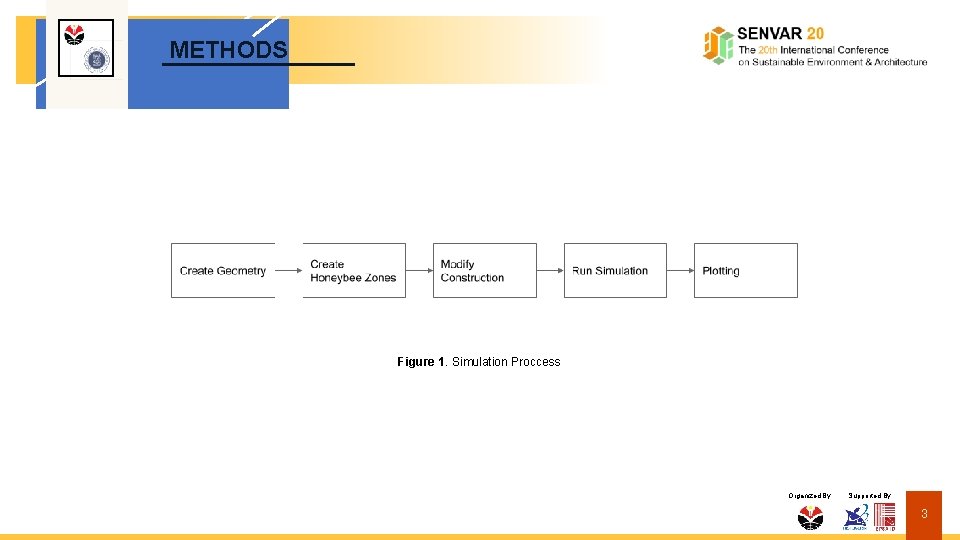
METHODS Figure 1. Simulation Proccess Organized By: Supported By: 3
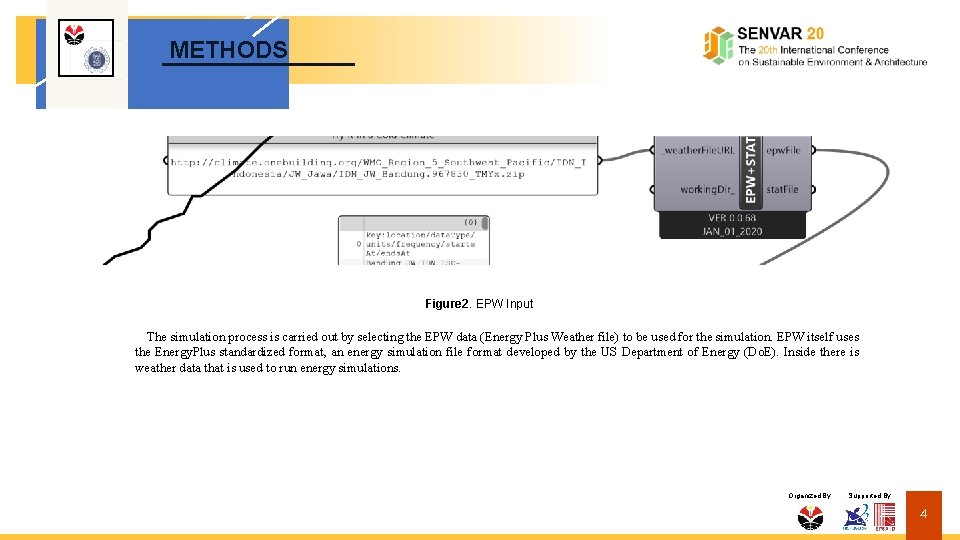
METHODS Figure 2. EPW Input The simulation process is carried out by selecting the EPW data (Energy Plus Weather file) to be used for the simulation. EPW itself uses the Energy. Plus standardized format, an energy simulation file format developed by the US Department of Energy (Do. E). Inside there is weather data that is used to run energy simulations. Organized By: Supported By: 4
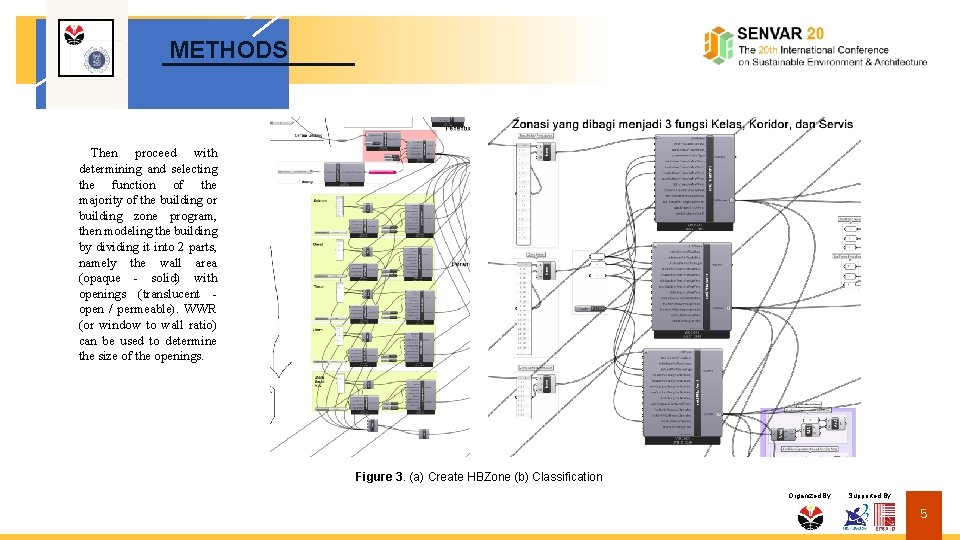
METHODS Then proceed with determining and selecting the function of the majority of the building or building zone program, then modeling the building by dividing it into 2 parts, namely the wall area (opaque - solid) with openings (translucent open / permeable). WWR (or window to wall ratio) can be used to determine the size of the openings. Figure 3. (a) Create HBZone (b) Classification Organized By: Supported By: 5
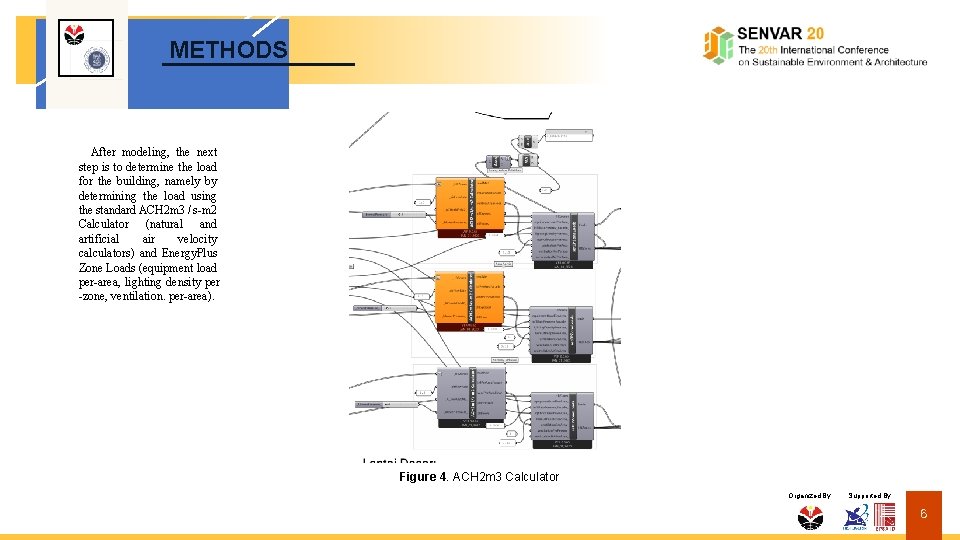
METHODS After modeling, the next step is to determine the load for the building, namely by determining the load using the standard ACH 2 m 3 / s-m 2 Calculator (natural and artificial air velocity calculators) and Energy. Plus Zone Loads (equipment load per-area, lighting density per -zone, ventilation. per-area). Figure 4. ACH 2 m 3 Calculator Organized By: Supported By: 6
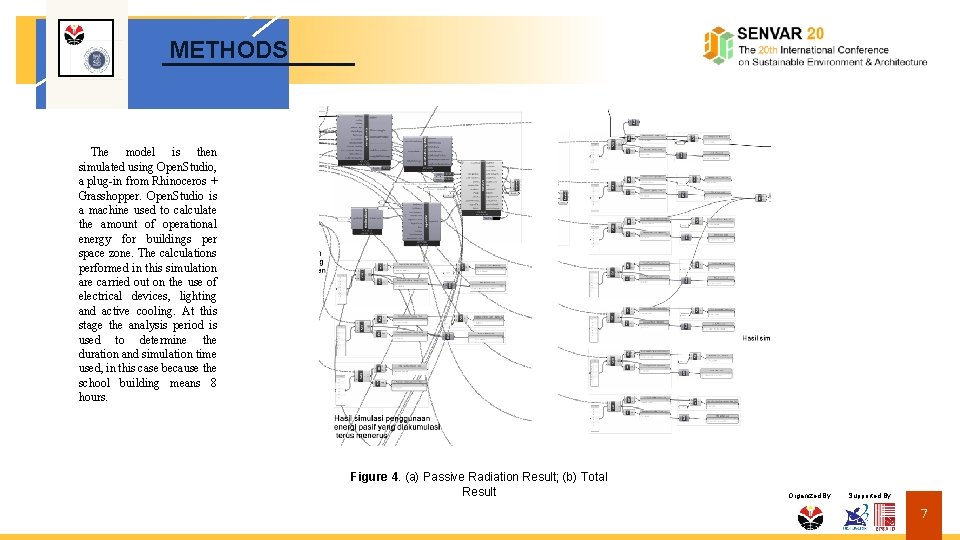
METHODS The model is then simulated using Open. Studio, a plug-in from Rhinoceros + Grasshopper. Open. Studio is a machine used to calculate the amount of operational energy for buildings per space zone. The calculations performed in this simulation are carried out on the use of electrical devices, lighting and active cooling. At this stage the analysis period is used to determine the duration and simulation time used, in this case because the school building means 8 hours. Figure 4. (a) Passive Radiation Result; (b) Total Result Organized By: Supported By: 7
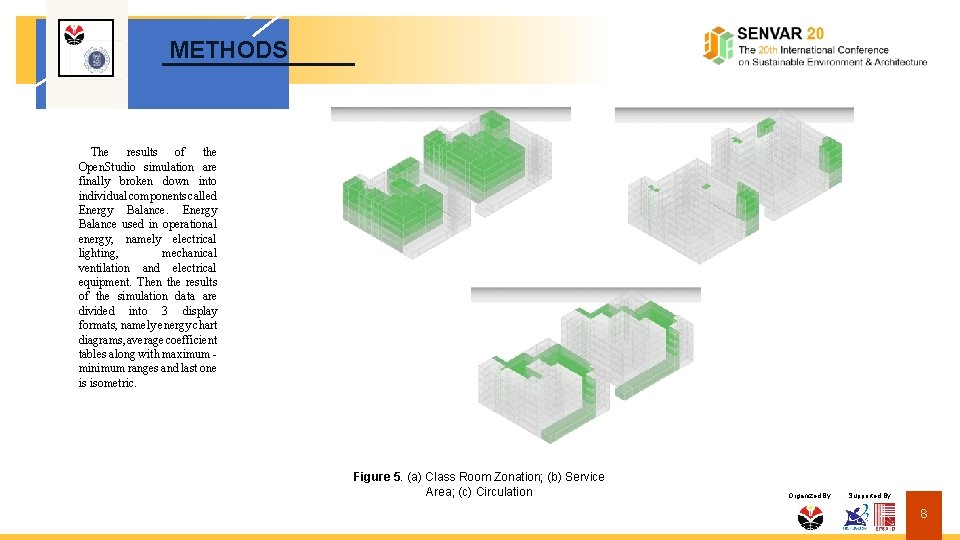
METHODS The results of the Open. Studio simulation are finally broken down into individual components called Energy Balance used in operational energy, namely electrical lighting, mechanical ventilation and electrical equipment. Then the results of the simulation data are divided into 3 display formats, namely energy chart diagrams, average coefficient tables along with maximum minimum ranges and last one is isometric. Figure 5. (a) Class Room Zonation; (b) Service Area; (c) Circulation Organized By: Supported By: 8
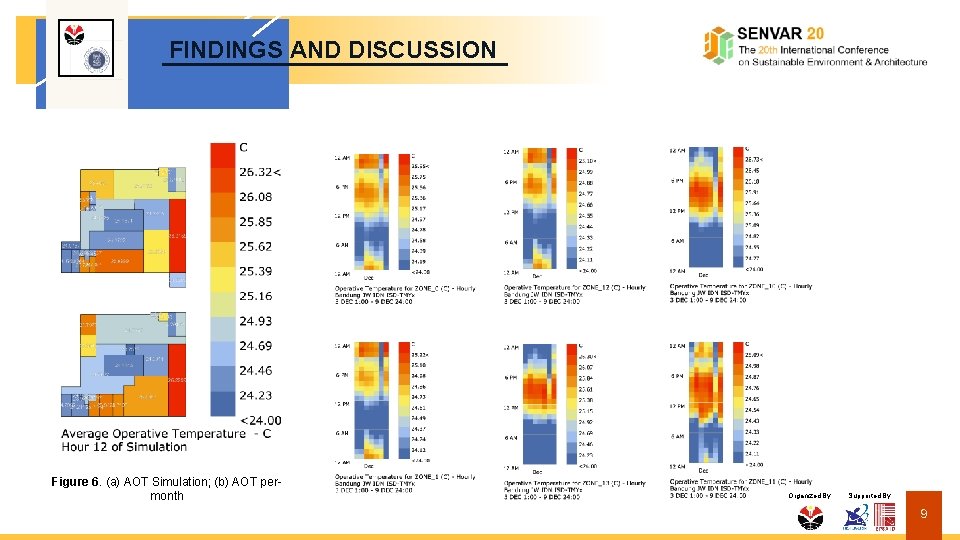
FINDINGS AND DISCUSSION Figure 6. (a) AOT Simulation; (b) AOT permonth Organized By: Supported By: 9
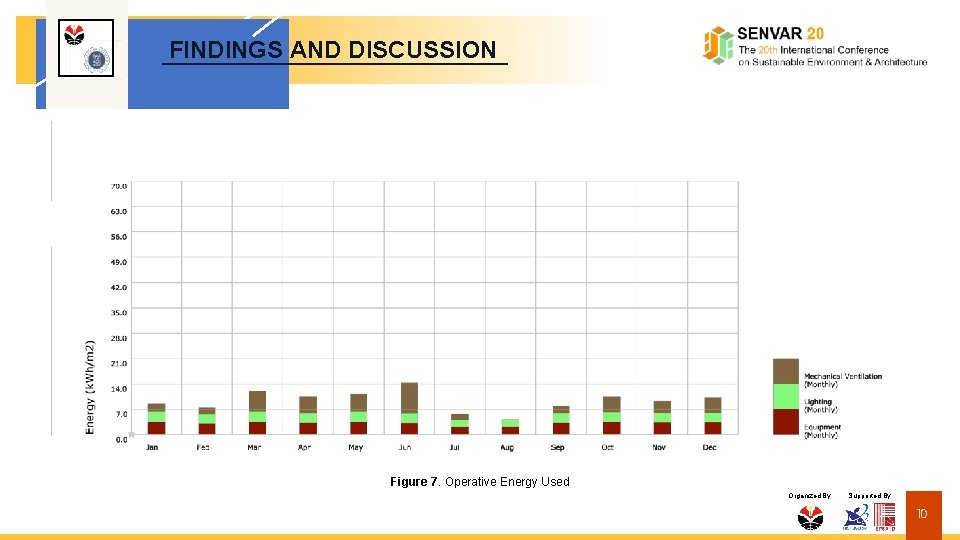
FINDINGS AND DISCUSSION Figure 7. Operative Energy Used Organized By: Supported By: 10
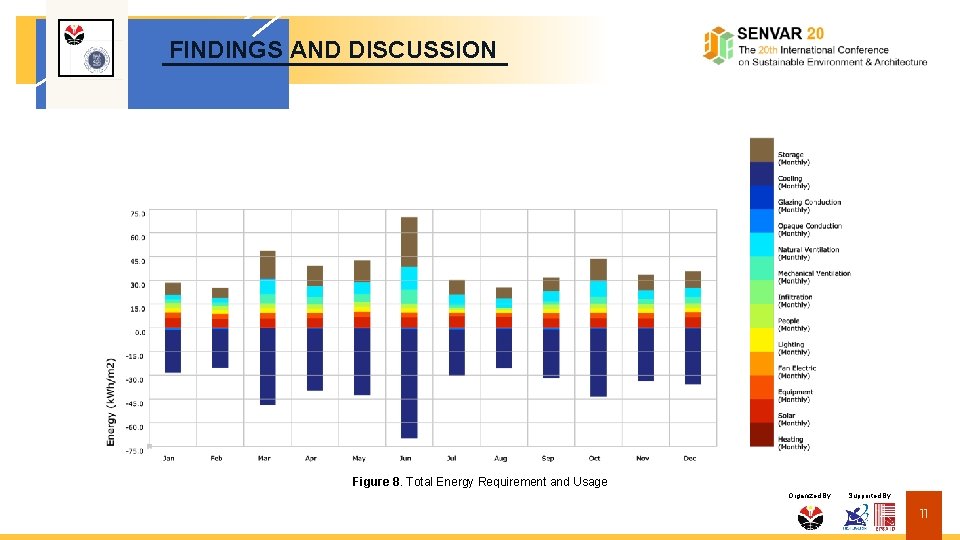
FINDINGS AND DISCUSSION Figure 8. Total Energy Requirement and Usage Organized By: Supported By: 11
CONCLUSIONS The simulation results of 320 k. Wh / m 2 / year are obtained from the intensity of the use of equipment, lighting and air conditioning. This value is calculated for 24 hours of building operation during a year. If you look at the results listed in the table, the amount of energy used each month experiences a difference. The amount of energy used for equipment and lighting was almost stable from January to December. This is because the sun shines all day of the year, making the use of electricity for lighting almost stable. The use of this lighting device has a different space zone. The highest energy use occurs in June, March and October and the lowest is February and August. With the highest requirements for mechanical ventilation reaching coeff to 1. 16 and the lowest for lighting went to coeff 0. 22 Organized By: Supported By: 12
The 20 th International Conference on Sustainable Environment & Architecture Thank You Presenter Affiliation: Organized By: Supported By: