
The 2 nd International Symposium VERA JOHANIDESBIOTECHNOLOGY IN
The 2 nd International Symposium “VERA JOHANIDES”BIOTECHNOLOGY IN CROATIA BY 2020 New approches in the development of antibiotics – The return of tetracyclines Hrvoje Petković1, 4 , Tadeja Lukezič1, Urška Lešnik 1, Ajda Podgoršek 1, Branko Jenko 1, Jaka Horvat 1, Tomaž Polak 2, Krešimir Gjuračić1, Martin Šala 3, Luis Martinez-Martinez 4, Paul Herron 5, Iain S. Hunter 5, Gregor Kosec 1, Štefan Fujs 1 1 Acies Bio, Ltd. , Ljubljana Slovenia; 2 University of Ljubljana, 2 Biotechnical Faculty, Ljubljana, Slovenia; 3 National Institute of Chemistry, Ljubljana, Slovenia; 4 AGL Grupo, IBBTEC, Universidad de Cantabria, CSIC, SODERCAN, Santander, Spain; 5 Strathclyde Institute of Pharmacy and Biomedical Sciences, University of Strathclyde, Glasgow, UK.
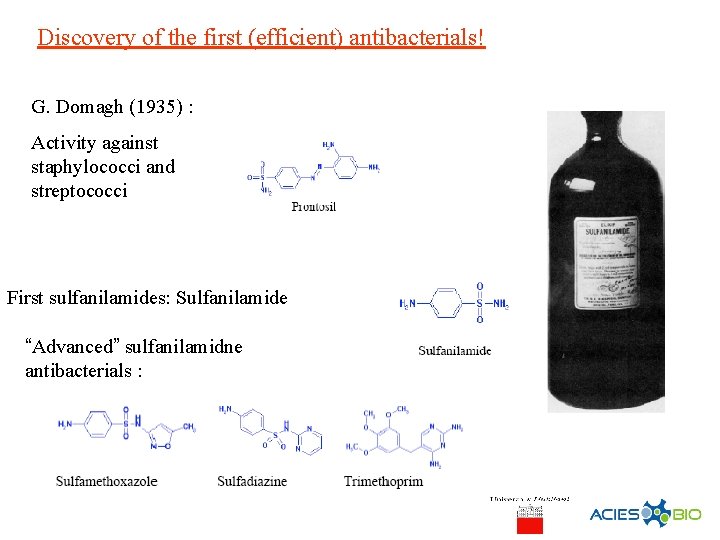
Discovery of the first (efficient) antibacterials! G. Domagh (1935) : Activity against staphylococci and streptococci First sulfanilamides: Sulfanilamide “Advanced” sulfanilamidne antibacterials :
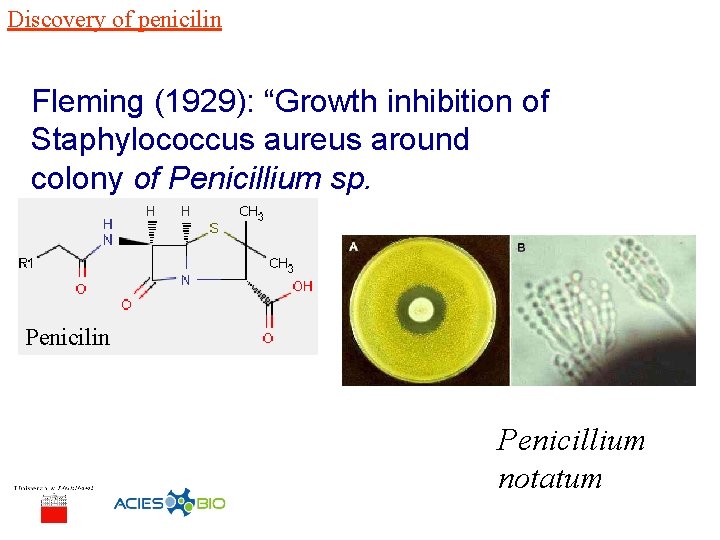
Discovery of penicilin Fleming (1929): “Growth inhibition of Staphylococcus aureus around colony of Penicillium sp. Penicilin Penicillium notatum
New classes of antibacterials J. Nat. Prod. , 70 (3), 461 -477, 2007
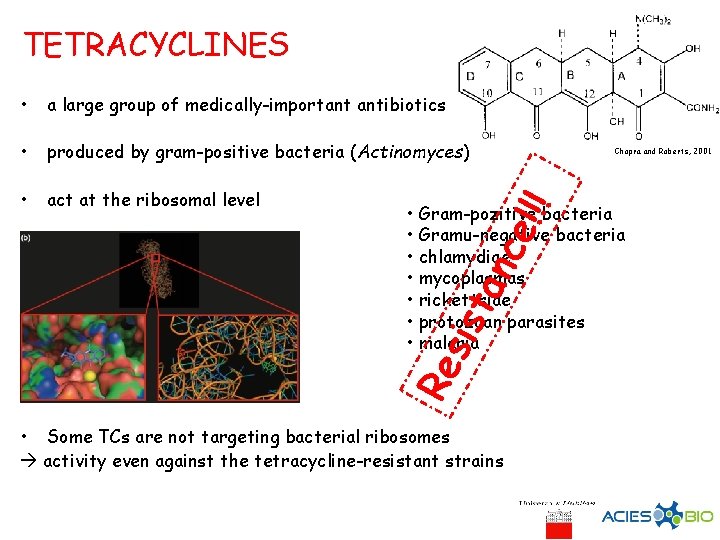
TETRACYCLINES • a large group of medically-important antibiotics • produced by gram-positive bacteria (Actinomyces) • act at the ribosomal level Chopra and Roberts, 2001 Re sis tan ce !!! • Gram-pozitive bacteria • Gramu-negative bacteria • chlamydiae • mycoplasmas • rickettsiae • protozoan parasites • malaria • Some TCs are not targeting bacterial ribosomes activity even against the tetracycline-resistant strains
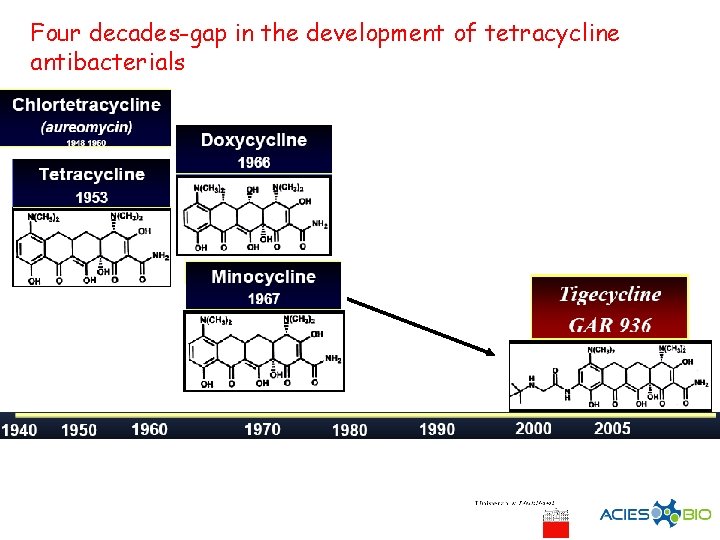
Four decades-gap in the development of tetracycline antibacterials
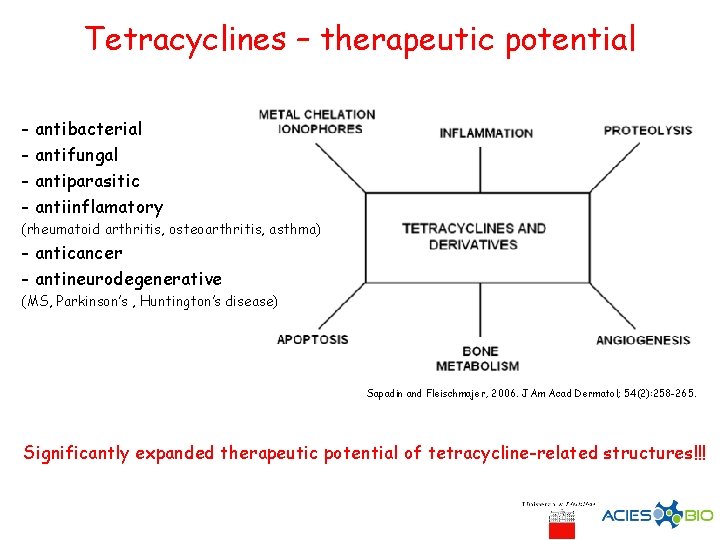
Tetracyclines – therapeutic potential - antibacterial - antifungal - antiparasitic - antiinflamatory (rheumatoid arthritis, osteoarthritis, asthma) - anticancer - antineurodegenerative (MS, Parkinson’s , Huntington’s disease) Sapadin and Fleischmajer, 2006. J Am Acad Dermatol; 54(2): 258 -265. Significantly expanded therapeutic potential of tetracycline-related structures!!!
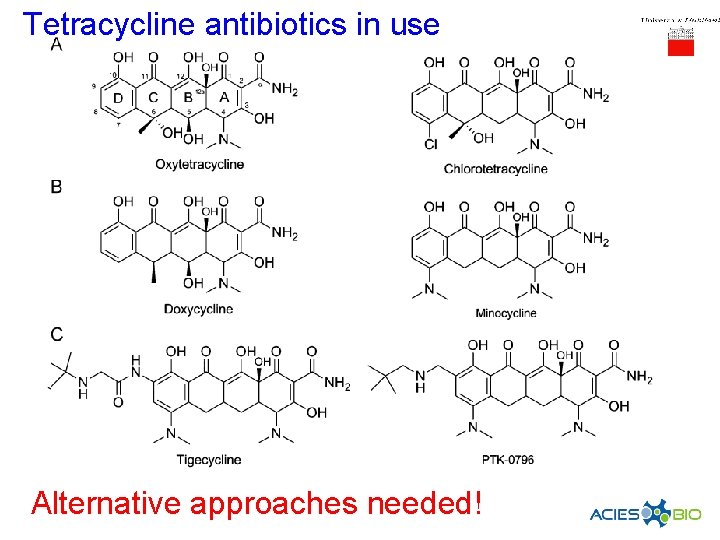
Tetracycline antibiotics in use Alternative approaches needed!
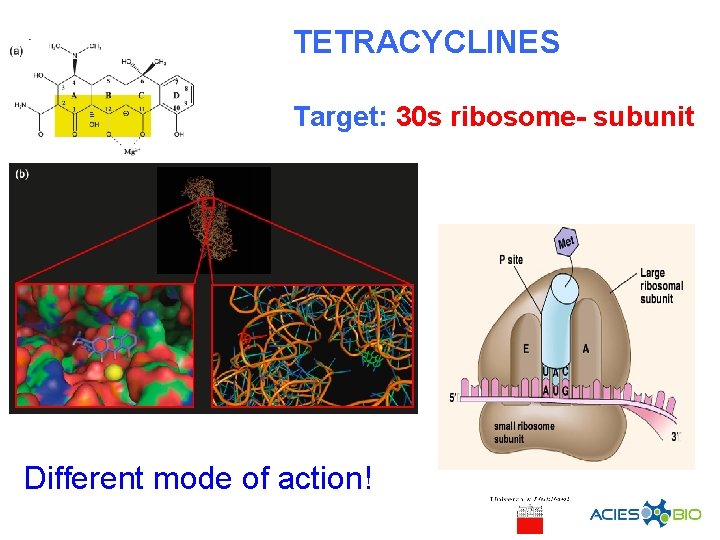
TETRACYCLINES Target: 30 s ribosome- subunit Different mode of action!
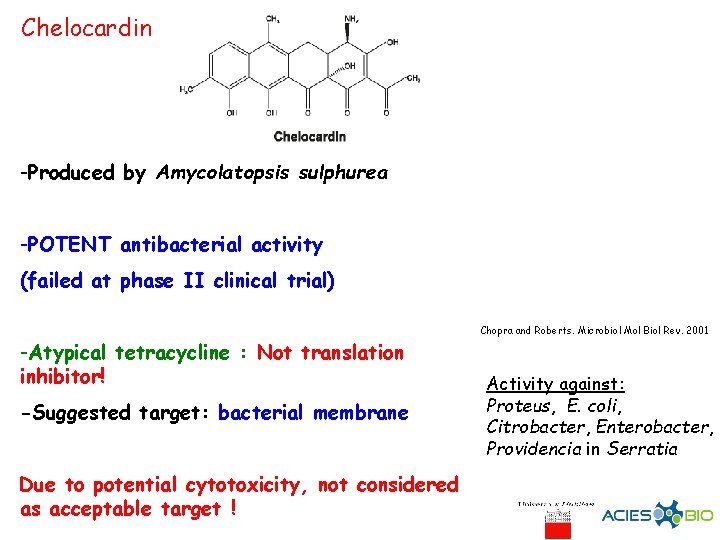
Chelocardin -Produced by Amycolatopsis sulphurea -POTENT antibacterial activity (failed at phase II clinical trial) -Atypical tetracycline : Not translation inhibitor! -Suggested target: bacterial membrane Due to potential cytotoxicity, not considered as acceptable target ! Chopra and Roberts. Microbiol Mol Biol Rev. 2001 Activity against: Proteus, E. coli, Citrobacter, Enterobacter, Providencia in Serratia
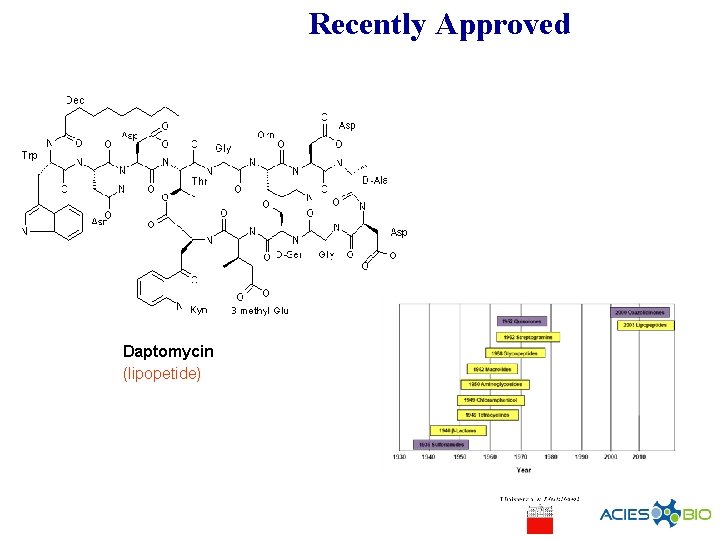
Recently Approved Daptomycin (lipopetide)
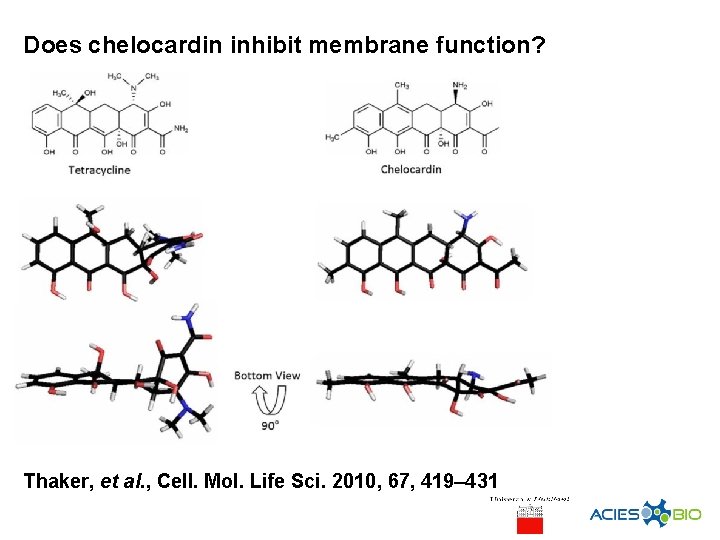
Does chelocardin inhibit membrane function? Thaker, et al. , Cell. Mol. Life Sci. 2010, 67, 419– 431
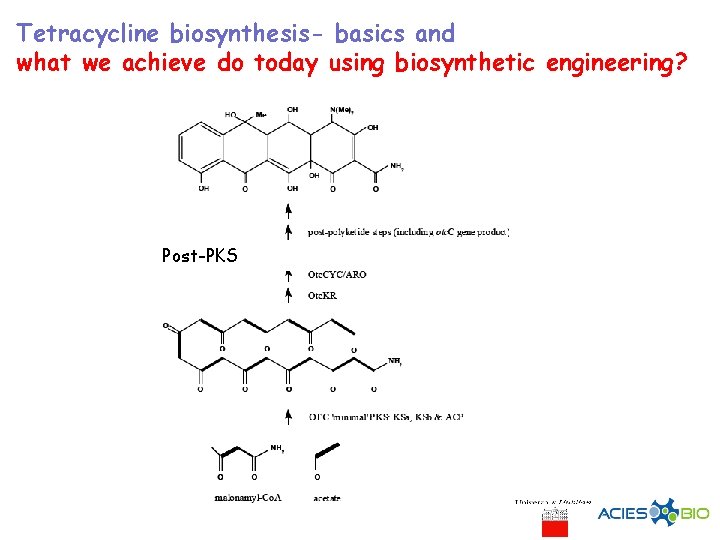
Tetracycline biosynthesis- basics and what we achieve do today using biosynthetic engineering? Post-PKS
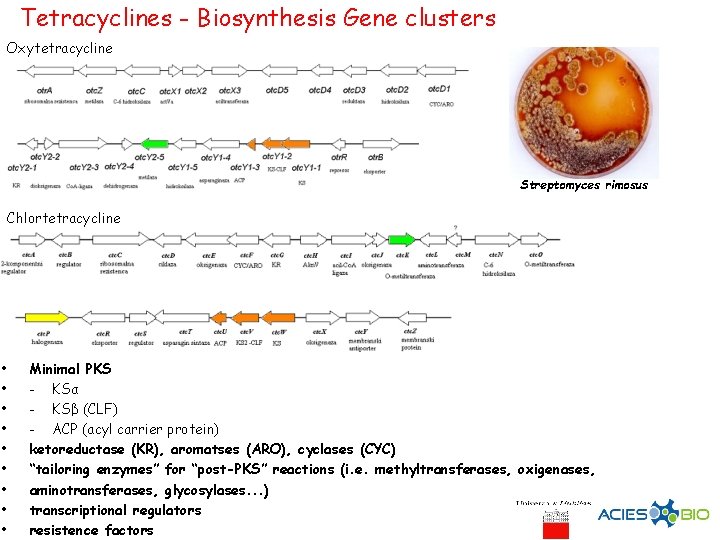
Tetracyclines - Biosynthesis Gene clusters Oxytetracycline Streptomyces rimosus Chlortetracycline • • • Minimal PKS - KSα - KSβ (CLF) - ACP (acyl carrier protein) ketoreductase (KR), aromatses (ARO), cyclases (CYC) “tailoring enzymes” for “post-PKS” reactions (i. e. methyltransferases, oxigenases, aminotransferases, glycosylases. . . ) transcriptional regulators resistence factors
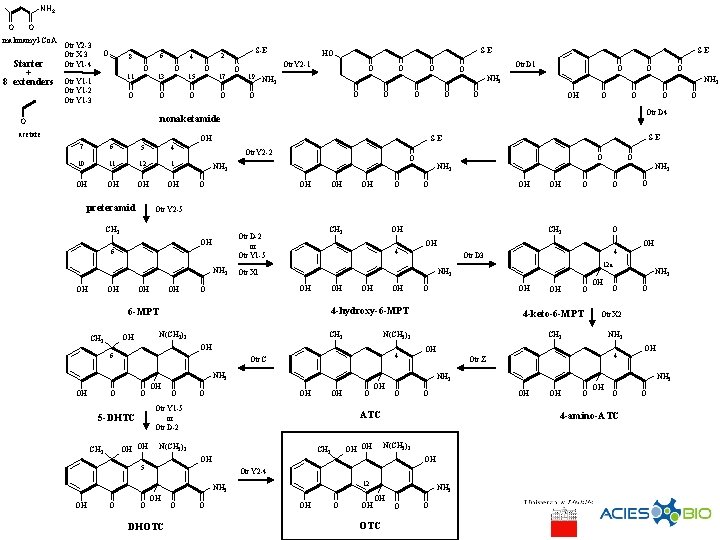
NH 2 O O malonamyl-Co. A Starter + 8 extenders Otc. Y 2 -3 Otc. X-3 Otc. Y 1 -4 O 6 8 11 Otc. Y 1 -2 Otc. Y 1 -3 O 13 O O S-E 2 4 15 17 O O O S-E HO Otc. Y 2 -1 19 O O O S-E Otc. D 1 O O O O NH 2 O O OH acetate Otc. D 4 OH 7 6 5 4 10 11 12 1 OH OH preteramid O OH OH OH CH 3 Otc. D-2 or Otc. Y 1 -5 NH 2 OH OH OH CH 3 O OH OH OH O OH DHOTC O O NH 2 OH 4 Otc. Z O O OH 12 O OH NH 2 OH OTC OH O 4 -amino-ATC OH OH NH 2 OH N(CH 3)2 OH OH CH 3 NH 2 Otc. X 2 CH 3 Otc. Y 2 -4 O O 4 -keto-6 -MPT ATC OH OH NH 2 N(CH 3)2 5 O OH N(CH 3)2 4 Otc. Y 1 -5 or Otc. D-2 5 -DHTC 12 a 4 -hydroxy-6 -MPT Otc. C O OH 4 Otc. D 3 NH 2 OH O 6 OH O O CH 3 Otc. X 1 OH CH 3 OH OH N(CH 3)2 OH O 4 6 -MPT OH O NH 2 Otc. Y 2 -5 OH CH 3 O O NH 2 6 OH S-E Otc. Y 2 -2 CH 3 OH O O nonaketamide O O NH 2 O O

. . . your R&D partner Thank you! ACIES BIO Ltd. Tehnoloski park 21 1000 Ljubljana Slovenia tel. : +386 59 075 990 fax: +386 59 075 994 www: http: //www. aciesbio. com e-mail: info@aciesbio. com
- Slides: 16