
The 1950 s The Baby Boom The end
The 1950 s
The Baby Boom • The end of WWII marked a population boom. Men were eager to come home, get jobs and start families. • More Money = More leisure time = more babies • People who had waited until the end of the war started to have families • 6. 7 million children born in Canada between 1946 and 1961 • Almost 1/3 of the population. In 1941, children under 5 made up 9% of the population. By 1951, 12%
The Vets and their Brides. • After the war, 1 million men returned home • The Canadian government passed special laws to re-integrate them into Canadian society • • • Given their old jobs back (with years of service counted for pension purposes) Vets and widows were given hiring preferences for government jobs Help with farm purchases Help with small business purchases Free tuition for anyone attending university or trade school Ease with mortgages • WAR BRIDES: 1 in 5 bachelor veterans returned from Europe with wives. Approximately 48000 women arrived in 1945 and 1946. (93% were British)
Immigration • Canada had a restrictive immigration policy since 1905 • Northern Europeans were preferred because it was assumed they would find it easier to adapt to Canadian lifestyle • Nearly 1 million war veterans returned to Canada with war brides • Canada accepted 165, 000 “displaced persons” (refugees) • Concentration camp survivors • Others uproots by the war • Most immigrants settled in cities • In the beginning, Canada preferred immigrants from Western Europe but the government soon realized immigrants create jobs and stimulate the economy. They began to change attitudes and open our doors to those from Eastern European countries. This was the beginning of our strong values of national multi-culturalism.
The Baby Boom: Impact • The change in the demographics had (and continues to have) a huge impact on Canadian society • During the 1950 s, Canada was transformed into a youth-centered society • Production of toys, clothes, and basic needs were all made for kids and babies • The demand for new school and teachers increased sharply • Every time the Baby Boomers enter a new age bracket, that bracket becomes the of social and economic decision-making in Canada. • 1960 s (all the boomers enter University thus, universities expanded) • Currently…Where are the boomers? What impact is that/will that have on Canadian Society?
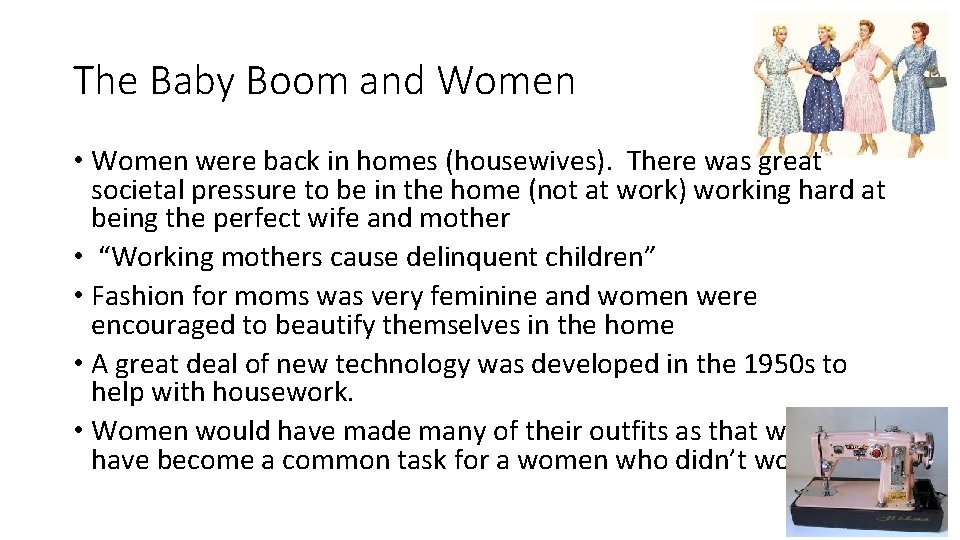
The Baby Boom and Women • Women were back in homes (housewives). There was great societal pressure to be in the home (not at work) working hard at being the perfect wife and mother • “Working mothers cause delinquent children” • Fashion for moms was very feminine and women were encouraged to beautify themselves in the home • A great deal of new technology was developed in the 1950 s to help with housework. • Women would have made many of their outfits as that would have become a common task for a women who didn’t work.
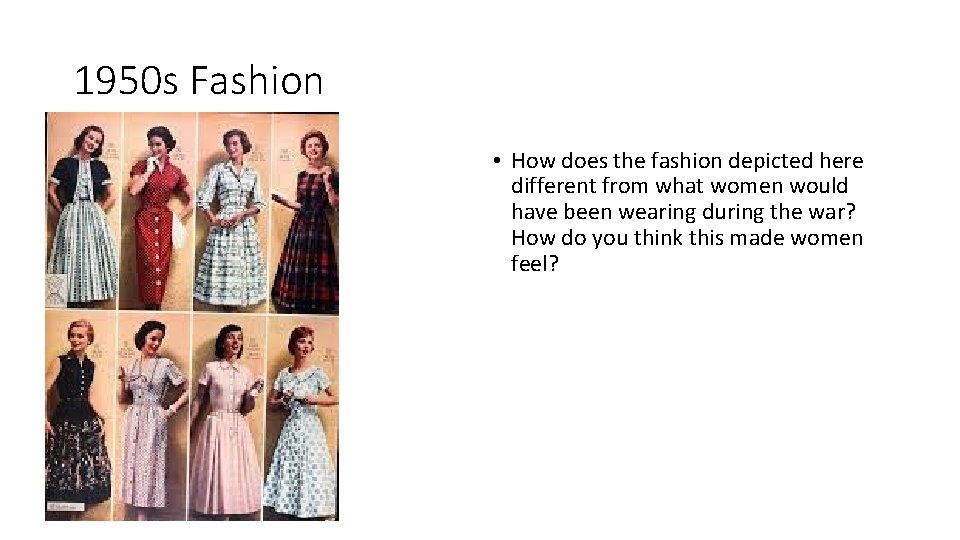
1950 s Fashion • How does the fashion depicted here different from what women would have been wearing during the war? How do you think this made women feel?
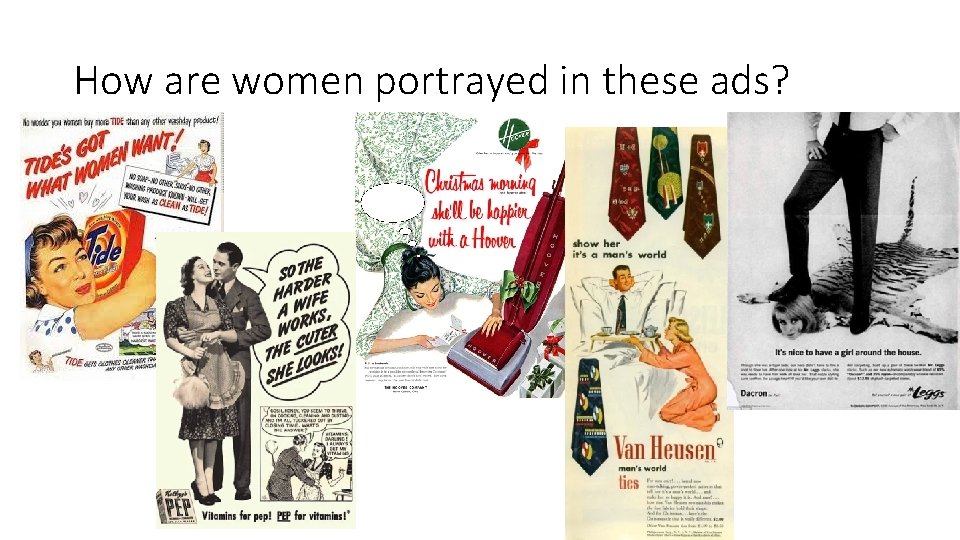
How are women portrayed in these ads?
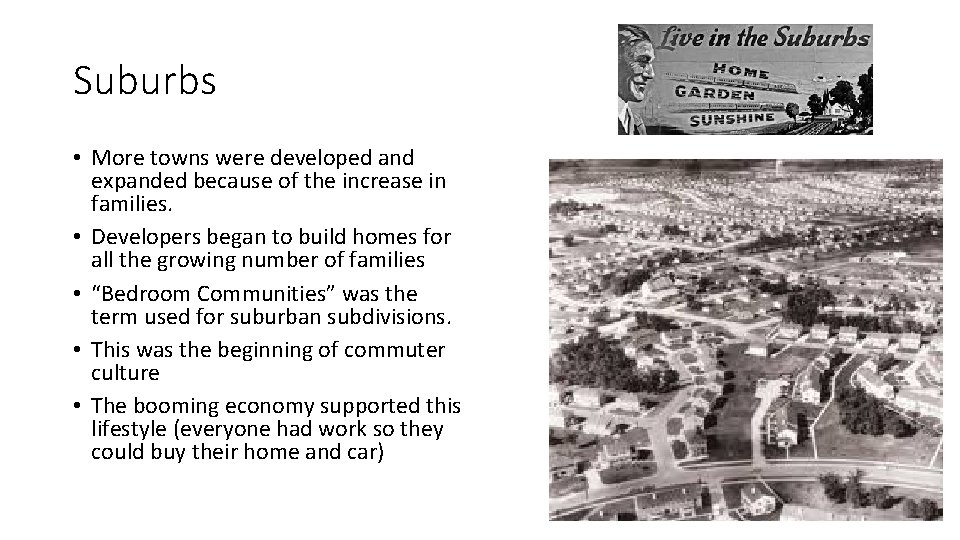
Suburbs • More towns were developed and expanded because of the increase in families. • Developers began to build homes for all the growing number of families • “Bedroom Communities” was the term used for suburban subdivisions. • This was the beginning of commuter culture • The booming economy supported this lifestyle (everyone had work so they could buy their home and car)
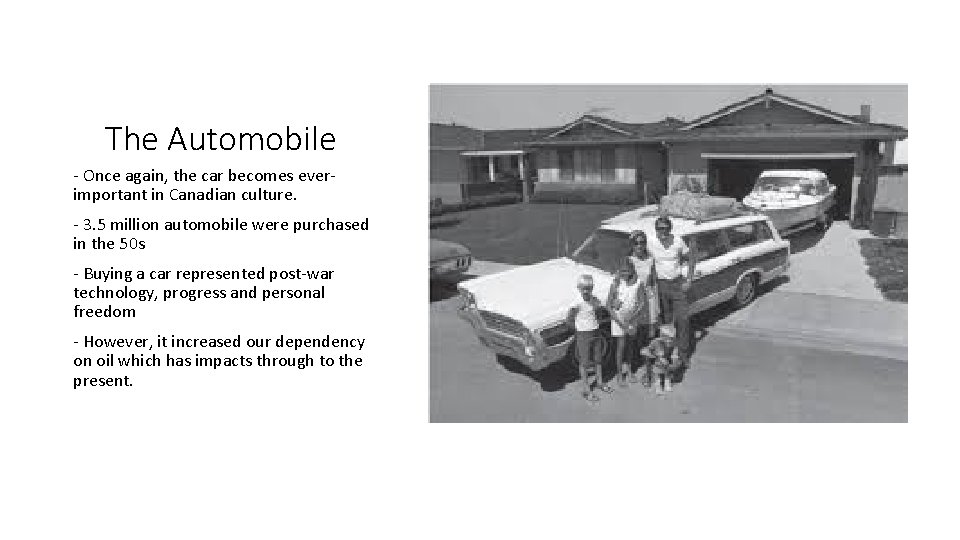
The Automobile - Once again, the car becomes everimportant in Canadian culture. - 3. 5 million automobile were purchased in the 50 s - Buying a car represented post-war technology, progress and personal freedom - However, it increased our dependency on oil which has impacts through to the present.

Some important Canadian issues (before we continue with the fun stuff)…
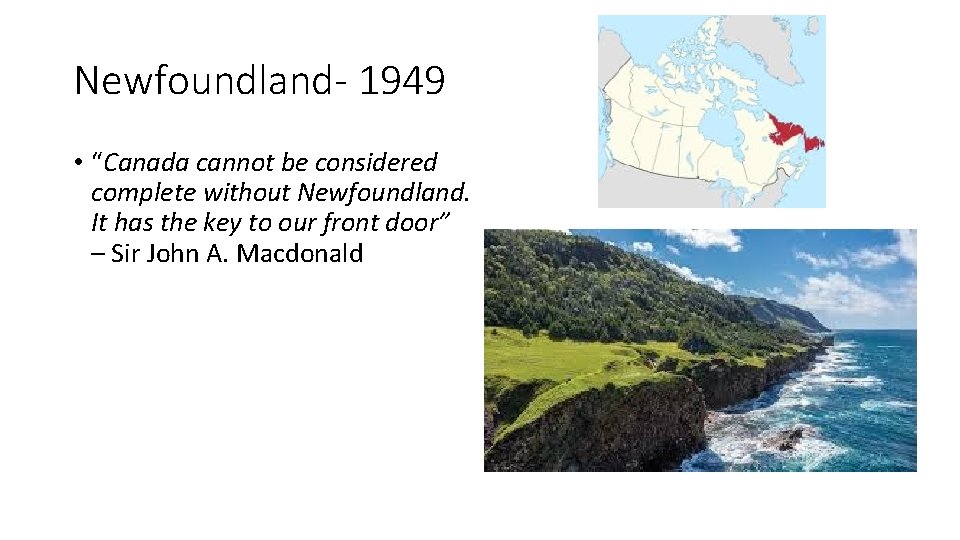
Newfoundland- 1949 • “Canada cannot be considered complete without Newfoundland. It has the key to our front door” – Sir John A. Macdonald
Newfoundland, 1949 • For centuries, Newfoundland Labrador remained isolated from mainland Canada, adapting instead, to a marine life and developing their own culture and dialect. They remained loyal to Britain until 1949 • The Great Depression was very hard on Newfoundland. The average family income during the 30 s was $150. 00 a year!! • The government borrowed a lot of money to compensate and was unable to pay back interest on the loans. Newfoundland was bankrupt • During the war, Newfoundland held a strategic location for the allies: refueling stations, convoy headquarters, airports, military bases were all built and brought much needed money to the economy. • After the war, Britain was also experiencing financial trouble and wanted its colonies to become more selfsufficient. • The decision was put to a referendum: three options: Stay independent, stay with Britain, or join Canada • Results: 52% Join and 48% stay independent. • On March 31, 1949, Newfoundland Labrador become Canada’s 10 th province.
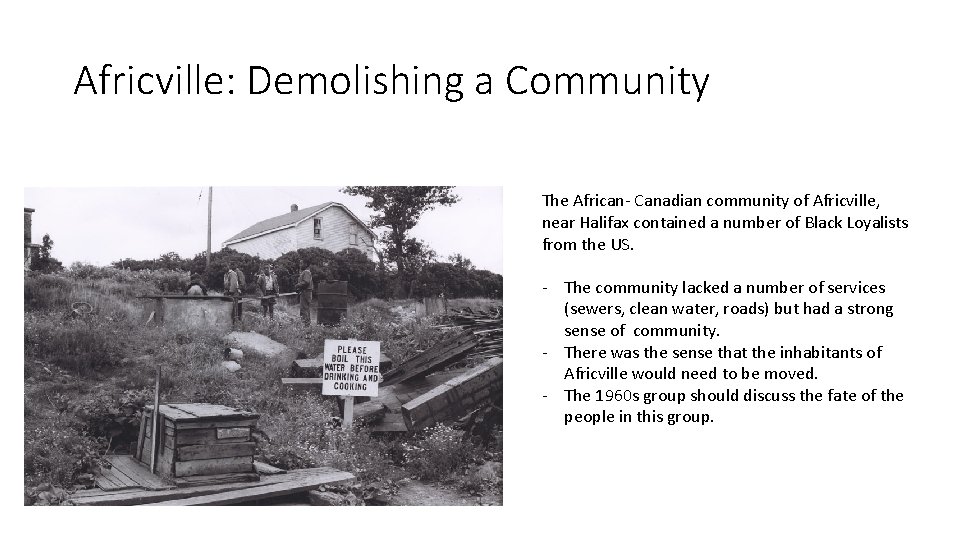
Africville: Demolishing a Community The African- Canadian community of Africville, near Halifax contained a number of Black Loyalists from the US. - The community lacked a number of services (sewers, clean water, roads) but had a strong sense of community. - There was the sense that the inhabitants of Africville would need to be moved. - The 1960 s group should discuss the fate of the people in this group.
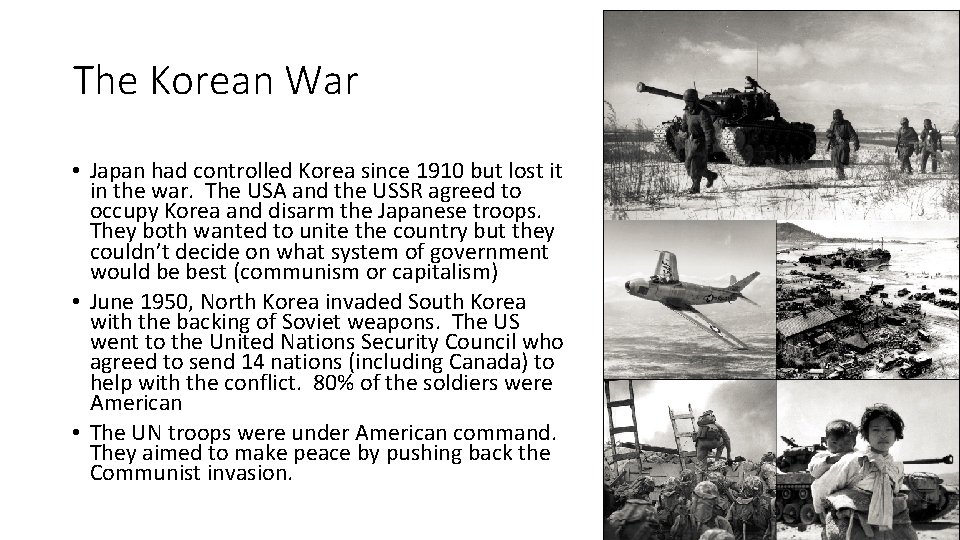
The Korean War • Japan had controlled Korea since 1910 but lost it in the war. The USA and the USSR agreed to occupy Korea and disarm the Japanese troops. They both wanted to unite the country but they couldn’t decide on what system of government would be best (communism or capitalism) • June 1950, North Korea invaded South Korea with the backing of Soviet weapons. The US went to the United Nations Security Council who agreed to send 14 nations (including Canada) to help with the conflict. 80% of the soldiers were American • The UN troops were under American command. They aimed to make peace by pushing back the Communist invasion.
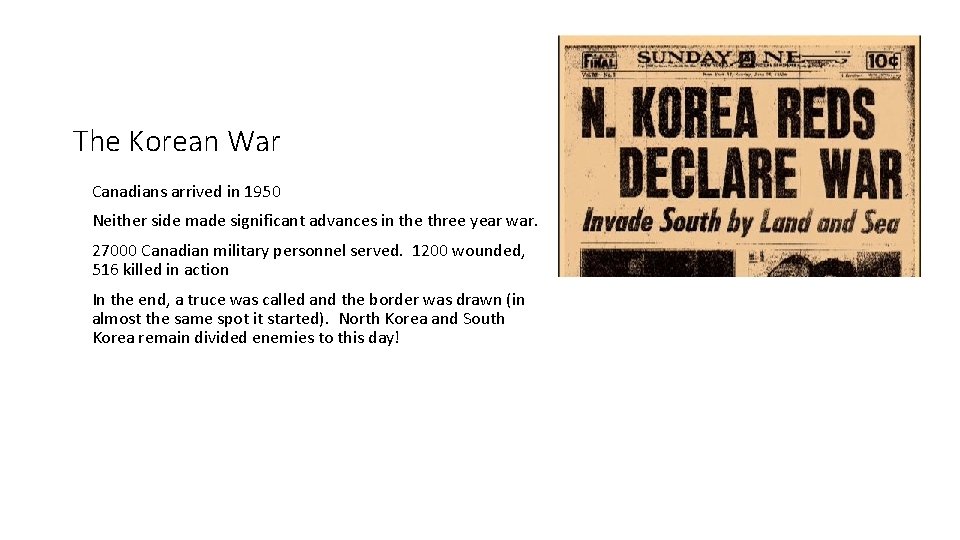
The Korean War Canadians arrived in 1950 Neither side made significant advances in the three year war. 27000 Canadian military personnel served. 1200 wounded, 516 killed in action In the end, a truce was called and the border was drawn (in almost the same spot it started). North Korea and South Korea remain divided enemies to this day!
New Technologies • WWII research lead to many new technologies • Jet Planes, Electrical appliances, Televisions, Radar • The idea that you can buy happiness: Conspicuous Consumption or buying for status began • https: //www. google. com/culturalinstitute/beta/exhibit/g. Qua. Etll
The Canadian Economy • Plenty of jobs and therefore, lots of money to spend • Factories, Forestry, Mining, New Hydro electric plants were employing plenty of Canadians • Hydro-Electric Power brought electricity to farms and rural areas • Prairie farmers were prosperous because wheat was selling internationally again.
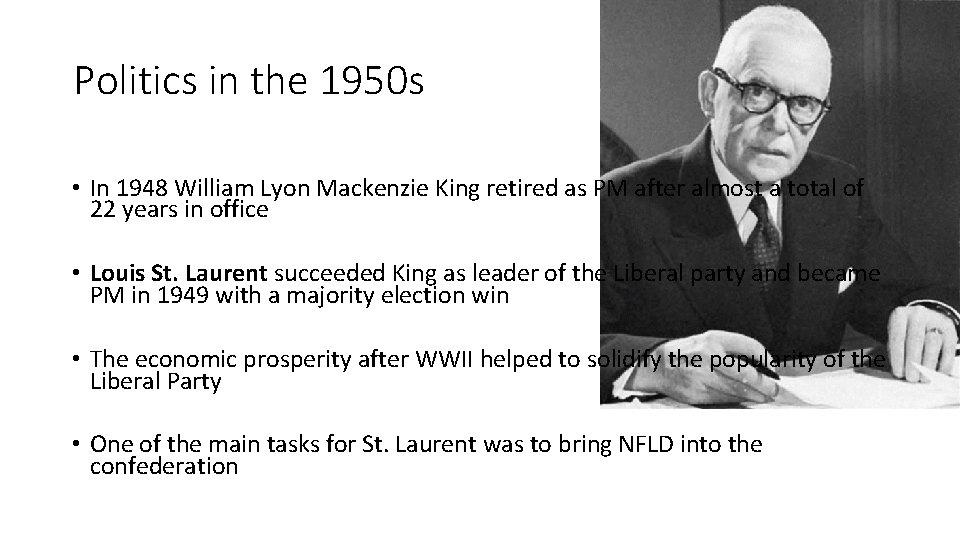
Politics in the 1950 s • In 1948 William Lyon Mackenzie King retired as PM after almost a total of 22 years in office • Louis St. Laurent succeeded King as leader of the Liberal party and became PM in 1949 with a majority election win • The economic prosperity after WWII helped to solidify the popularity of the Liberal Party • One of the main tasks for St. Laurent was to bring NFLD into the confederation
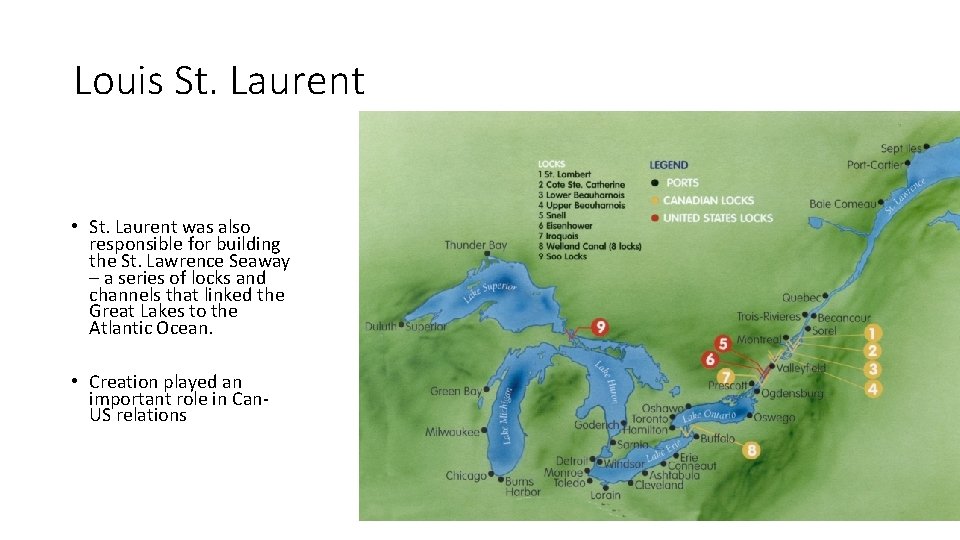
Louis St. Laurent • St. Laurent was also responsible for building the St. Lawrence Seaway – a series of locks and channels that linked the Great Lakes to the Atlantic Ocean. • Creation played an important role in Can. US relations
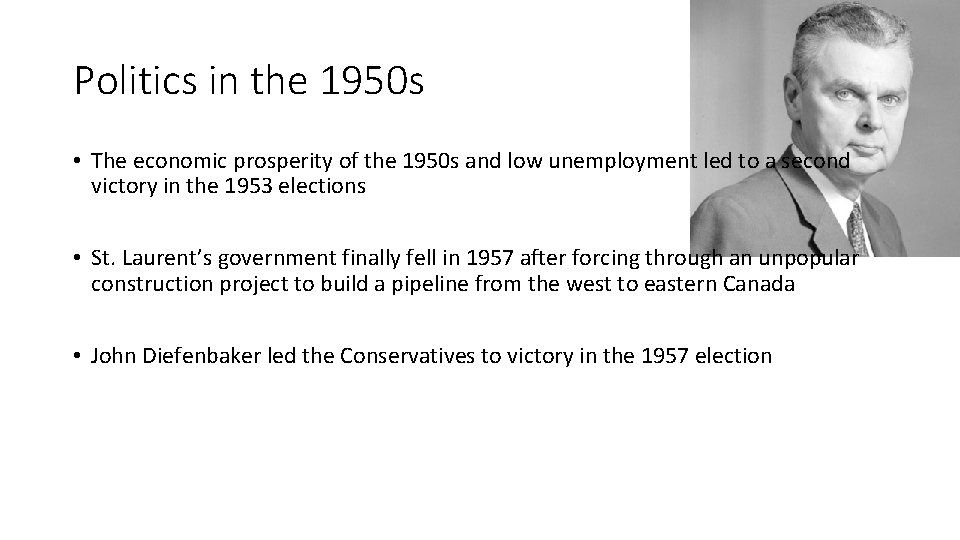
Politics in the 1950 s • The economic prosperity of the 1950 s and low unemployment led to a second victory in the 1953 elections • St. Laurent’s government finally fell in 1957 after forcing through an unpopular construction project to build a pipeline from the west to eastern Canada • John Diefenbaker led the Conservatives to victory in the 1957 election
- Slides: 22