
The 1920s Overview 1920s Learning Unit Mrs Deming

- Slides: 12
The 1920’s Overview 1920’s Learning Unit Mrs. Deming
1920’s ¡ The decade of the 1920’s stands out as a time of rapid change in American society. l l l l Women’s roles changed Americans were on the move Mass media changed the way we communicated The Jazz Age Cultural conflicts between groups caused tension People struggled with religious beliefs Racial tensions continued…
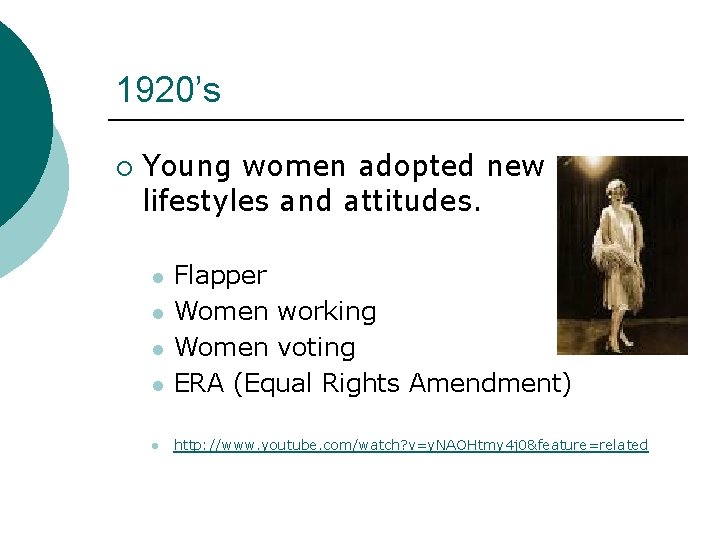
1920’s ¡ Young women adopted new lifestyles and attitudes. l Flapper Women working Women voting ERA (Equal Rights Amendment) l http: //www. youtube. com/watch? v=y. NAOHtmy 4 j 0&feature=related l l l
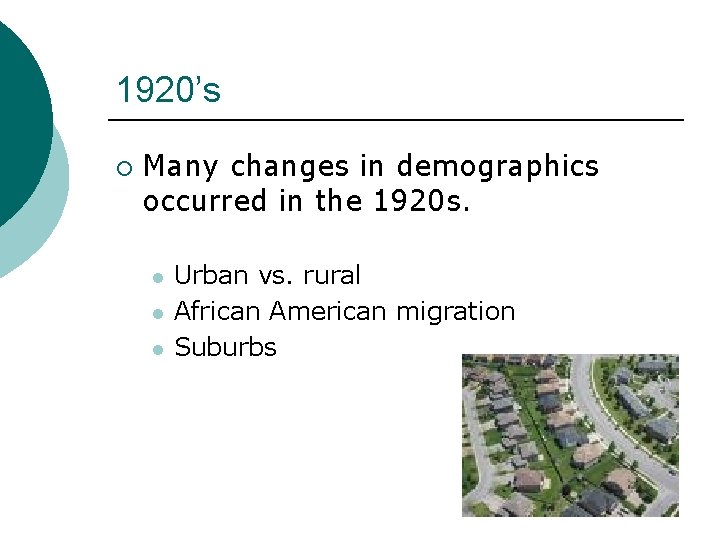
1920’s ¡ Many changes in demographics occurred in the 1920 s. l l l Urban vs. rural African American migration Suburbs
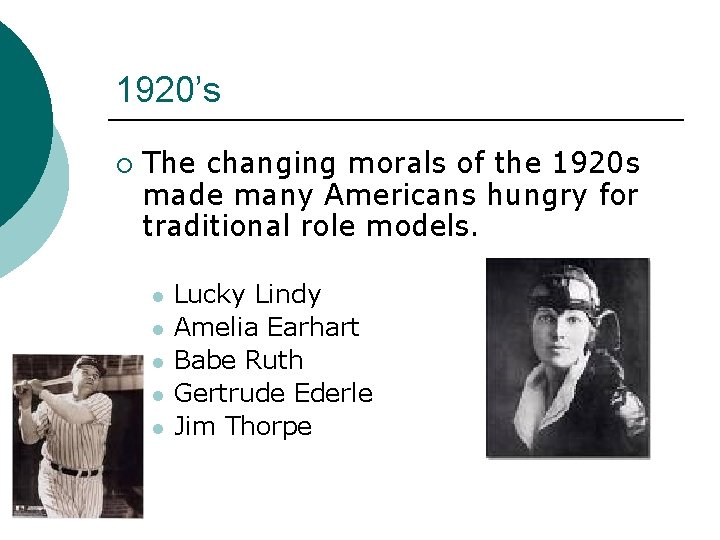
1920’s ¡ The changing morals of the 1920 s made many Americans hungry for traditional role models. l l l Lucky Lindy Amelia Earhart Babe Ruth Gertrude Ederle Jim Thorpe
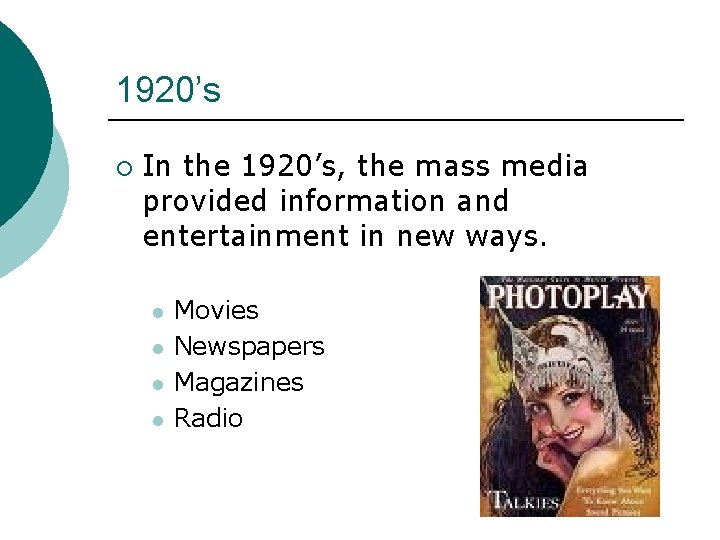
1920’s ¡ In the 1920’s, the mass media provided information and entertainment in new ways. l l Movies Newspapers Magazines Radio
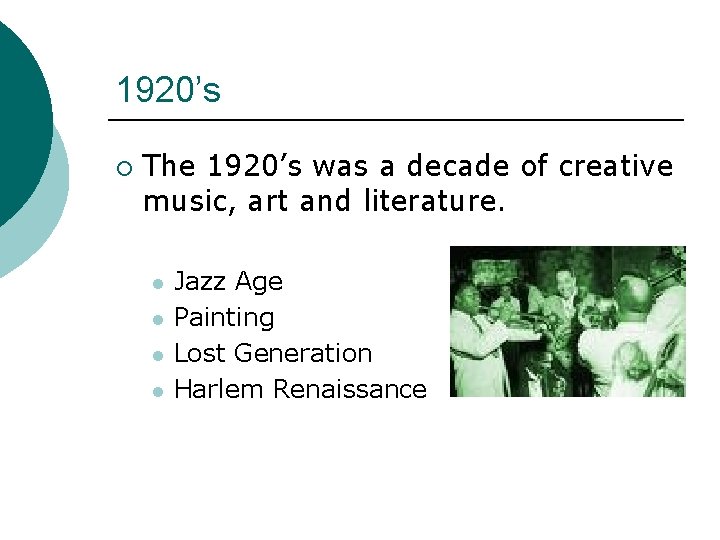
1920’s ¡ The 1920’s was a decade of creative music, art and literature. l l Jazz Age Painting Lost Generation Harlem Renaissance
1920’s ¡ Rapid social change during the 1920’s caused conflicts among people with differing beliefs and values. l l Prohibition—bootlegging, speakeasies Organized crime—Al Capone Religion—Scopes Monkey Trial, Fundamentalism Racial tensions—violence against African Americans, KKK, Marcus Garvey
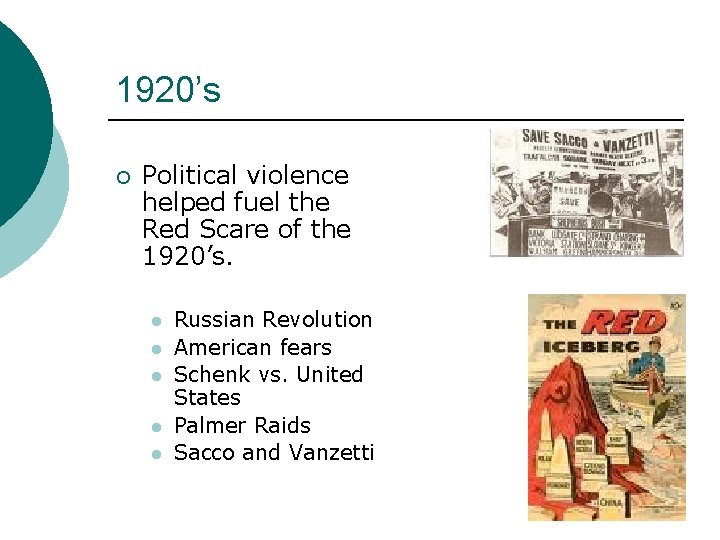
1920’s ¡ Political violence helped fuel the Red Scare of the 1920’s. l l l Russian Revolution American fears Schenk vs. United States Palmer Raids Sacco and Vanzetti
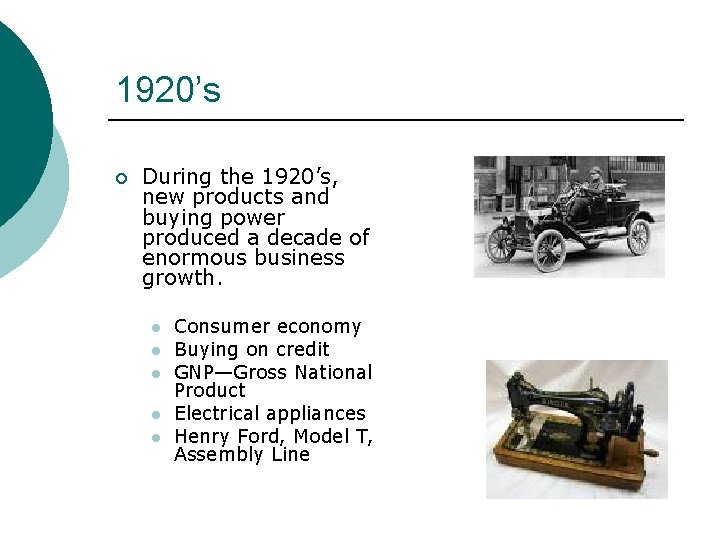
1920’s ¡ During the 1920’s, new products and buying power produced a decade of enormous business growth. l l l Consumer economy Buying on credit GNP—Gross National Product Electrical appliances Henry Ford, Model T, Assembly Line
1920’s ¡ During the 1920’s, rising wealth and a booming stock market gave Americans a false sense of faith in the economy. l l “Wonderful Prosperity” Danger signs—uneven prosperity, personal debt, supply & demand, farm prices