
The 1740 s The Great Awakening PRESENTATION BY
The 1740 s: The Great Awakening PRESENTATION BY CLAY WARD AND ETHAN RICHARDS
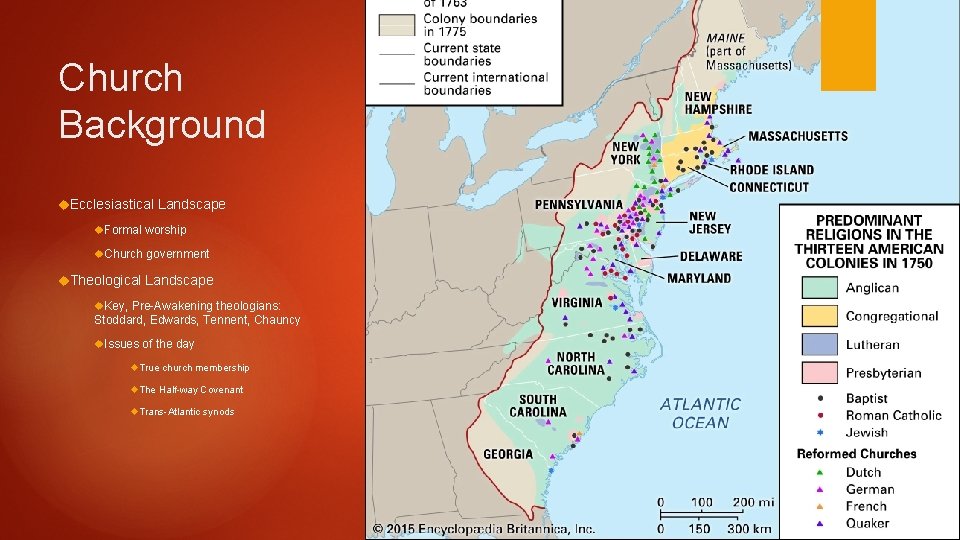
Church Background Ecclesiastical Landscape Formal worship Church government Theological Landscape Key, Pre-Awakening theologians: Stoddard, Edwards, Tennent, Chauncy Issues of the day True church membership The Half-way Covenant Trans-Atlantic synods
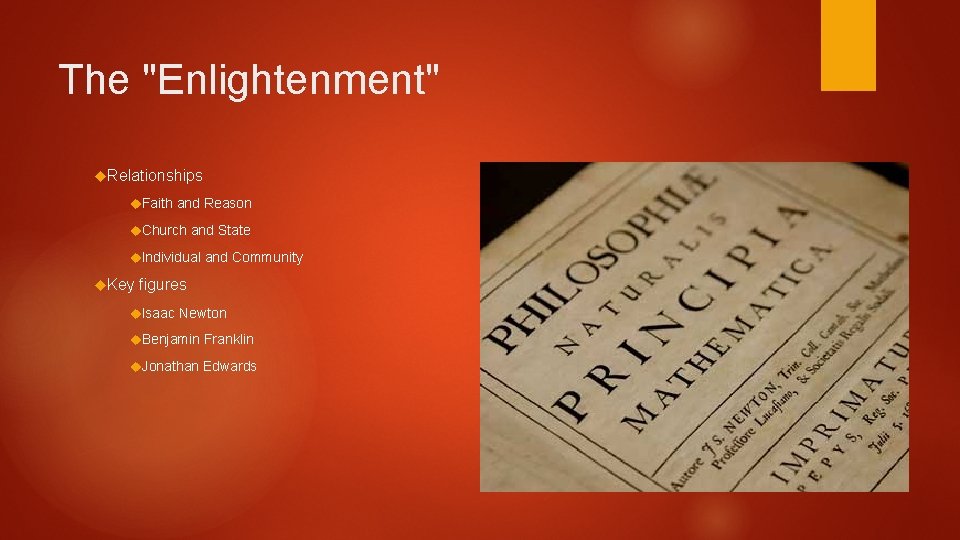
The "Enlightenment" Relationships Faith and Reason Church and State Individual and Community Key figures Isaac Newton Benjamin Franklin Jonathan Edwards
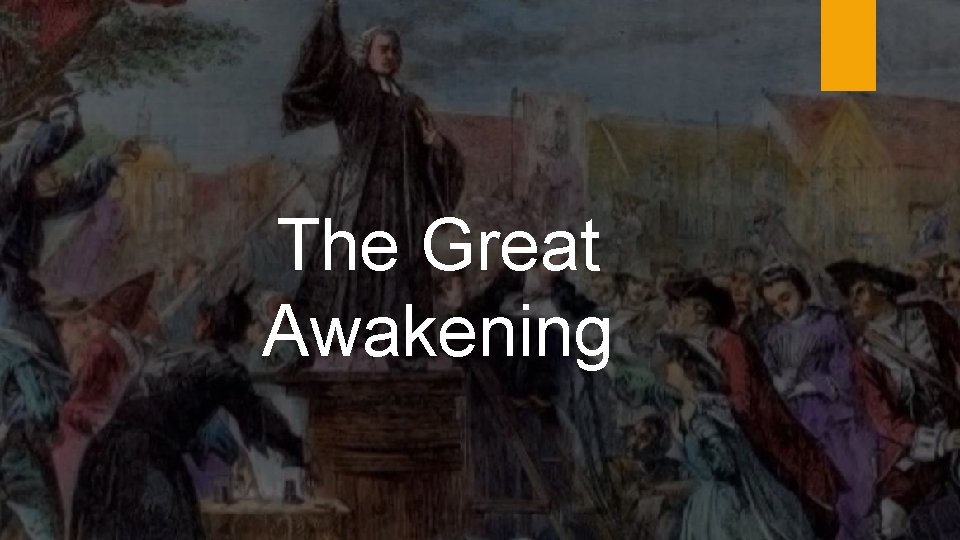
The Great Awakening
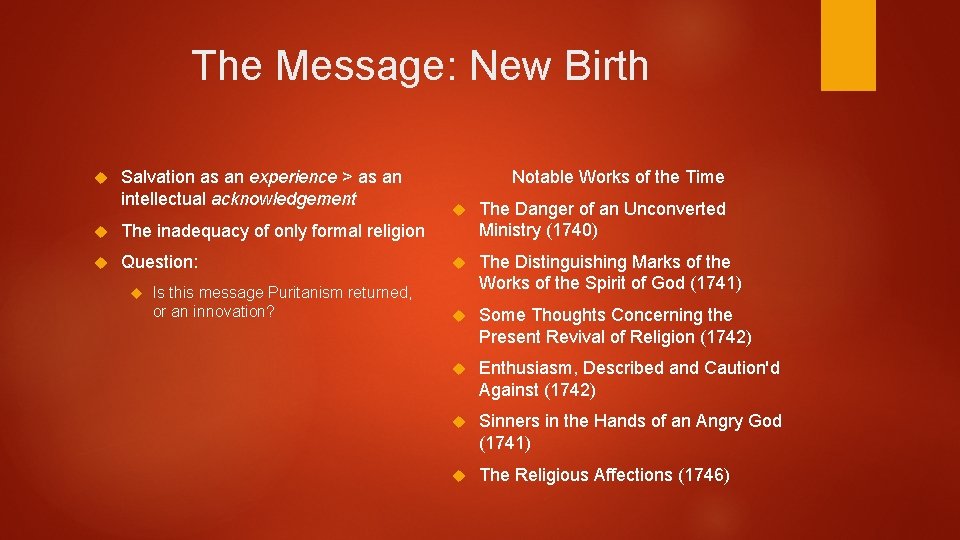
The Message: New Birth Salvation as an experience > as an intellectual acknowledgement The inadequacy of only formal religion Question: Is this message Puritanism returned, or an innovation? Notable Works of the Time The Danger of an Unconverted Ministry (1740) The Distinguishing Marks of the Works of the Spirit of God (1741) Some Thoughts Concerning the Present Revival of Religion (1742) Enthusiasm, Described and Caution'd Against (1742) Sinners in the Hands of an Angry God (1741) The Religious Affections (1746)
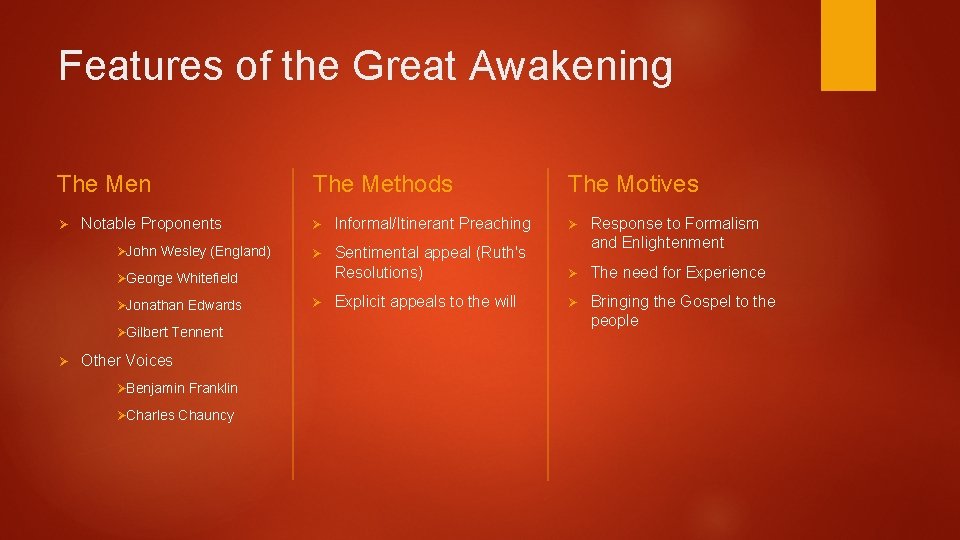
Features of the Great Awakening The Men Ø Notable Proponents ØJohn Wesley (England) The Methods Ø Informal/Itinerant Preaching Ø Ø Sentimental appeal (Ruth's Resolutions) Response to Formalism and Enlightenment Ø The need for Experience Explicit appeals to the will Ø Bringing the Gospel to the people ØGeorge Whitefield ØJonathan Edwards ØGilbert Tennent Ø Other Voices ØBenjamin Franklin ØCharles Chauncy The Motives Ø
Consequences of the Awakening
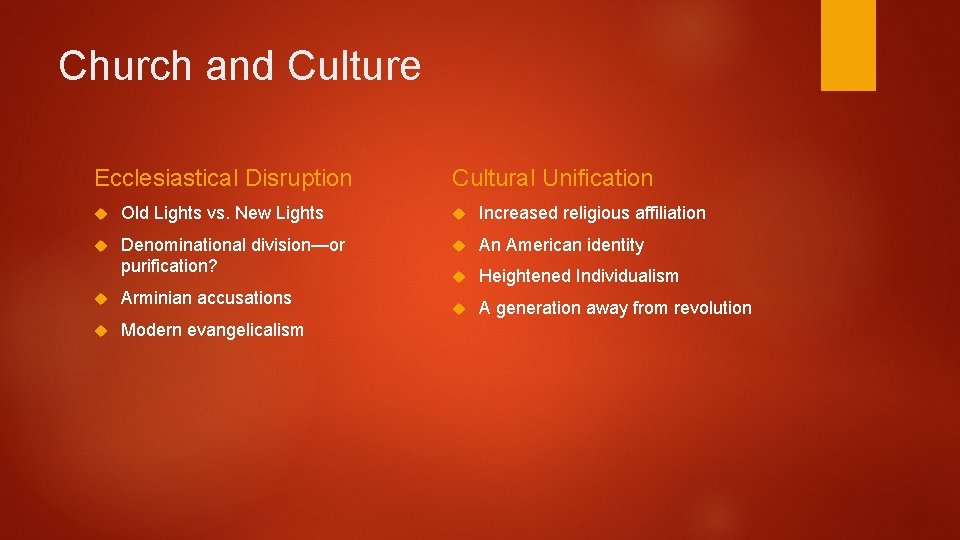
Church and Culture Ecclesiastical Disruption Cultural Unification Old Lights vs. New Lights Increased religious affiliation Denominational division—or purification? An American identity Heightened Individualism A generation away from revolution Arminian accusations Modern evangelicalism
Other Happenings Handel's Messiah (1741) Jacobite Rebellion in Scotland (1745) Pennsylvania Ministerium (1748) English control of Ohio territory (1749)
- Slides: 9