
THE 1115 BEHAVIORAL HEALTH DEMONSTRATION WAIVER THE PROGRESS
THE 1115 BEHAVIORAL HEALTH DEMONSTRATION WAIVER THE PROGRESS IS REAL !
ACHIEVEMENTS TO DATE • The Populations that we are targeting under the State’s application to CMS for an 1115 Behavioral Health Demonstration Waiver are defined and being refined as we move forward. • The work with the State’s Medicaid claims data and applying/working with the Data in the Drive tool that Milliman created for Alaska has taken more time that anticipated, as we are having to understand how we need to present our requests to Milliman, the actuarial firm working with DHSS on this complex project. 2
THE STEPS TO ESTABLISH BUDGET NEUTRALITY • A successful 1115 Demonstration waiver requires DHSS to establish – by the end of the five year period of the demonstration project – the cost neutrality of all of the program and service changes being recommended to the State’s present behavioral health system of care. • That calculation of cost neutrality is a complex strategy that consists of around 60% straight math (using the actuarial data from Milliman) and 40% timing of the application and negotiation with CMS. • It also means we need to be clear in our waiver application to CMS that we are seeking authority to introduce Medicaid services and options – and impose participation or exclude participation – that are not otherwise available under existing CMS rules or Alaska’s own State Medicaid Plan. 3
ONE EXAMPLE OF WHERE WE WANT TO APPLY THE WAIVER: THE IMD EXCLUSION • As you all know, we have been planning since the beginning of this process, to use the 1115 to seek a waiver from the IMD exclusion, which limits SUD residential programs who seek to bill Medicaid to 16 or less beds. • Yesterday (9/12/17), during an all day in-person meeting with two of the Milliman consultants, we learned that recent CMS changes have dictated that DHSS will need to file a separate 1115 Waiver application focused specifically on our request to waive the IMD exclusion in Alaska, filing a SUD waiver in tandem with the BH 1115 Waiver application. 4
ONE EXAMPLE OF WHERE WE WANT TO APPLY THE WAIVER: THE IMD EXCLUSION • The other part of seeking a waiver of the IMD exclusion applies to Alaska Psychiatric Institute (API). • API is also subject to the IMD exclusion, and despite having adopted Medicaid Expansion, Alaska cannot bill Medicaid for the adults eligible for Medicaid that are admitted to API. Instead, the State receives an annual DSH (Disproportionate Share Hospital) payment, a type of Medicaid, to support the operations of API, our only public psychiatric hospital. Over 40% of API’s budget comes from federal DSH funds. The DSH funds also help the state support the mental health treatment units at Bartlett Regional and Fairbanks Memorial Hospital, and the operations of the Providence Psychiatric Emergency Department in Anchorage. • DHSS is going to seek permission to remove the IMD exclusion from API and, further, to seek credit, as it were, during the 1115 cost neutrality calculations, for the fact that annually, for many years now, Alaska has underutilized the DSH funds to which the State was entitled, under-claiming by almost 50% each year. 5
HERE ARE THE QUESTIONS WE ARE ANSWERING TO ESTABLISH THE PROJECT’S COSTS: • What populations are we proposing to include in the 1115 Behavioral Health Demonstration waiver? • What target populations will be affected by the new benefits/programs being proposed? • What are the scope of the services to be covered? • How much will each new waivered service cost? • Remember: the 1115 waiver will create a pool of persons with behavioral health needs that we have specifically targeted because of what our claims data has shown us, and if a child or adult or family meets the Medicaid eligibility criteria set by this proposed 1115 waiver, then the range of benefits created and identified for this new 1115 insurance program will be available to these BH clients on enrollment. 6
HERE’S WHAT HAS GONE INTO DETERMINING HOW MUCH EACH NEW SERVICE WILL COST: • First, we have determined whether any of these services are presently provided in the State, but outside the Alaska’s Medicaid program (and whether we can move to include them in the waiver). • Then we have identified – of the target populations we are proposing to include – which populations will be able to access what new services. • Then we need to identify the estimated “take up” rate from the target population (I will explain “take up” shortly). • Next we need to be able to estimate the utilization per day/week/month/year of those who access each of the services identified in the waiver. • And, finally, we need to propose/set the cost-per-unit (select the rate) that Alaska is estimating for each service. 7

WHAT IS THE “TAKE UP” RATE? • This is a very interesting and important but somewhat difficult rate to calculate/estimate. Indeed we are still struggling with this issue and it was, in fact, the subject of a significant part of our meeting with the Milliman consultants yesterday. • Think of this a declension or a reverse pyramid: • Medicaid Population (i. e. , all Alaskan’s eligible for Medicaid) • Target Population (of all those eligible for Medicaid, what are the specific populations – the Medicaid Eligibility Groups (MEGs) – that the 1115 is “targeting” for services under the BH demonstration waiver) • The “Benefit Take Up” rate is the rate or estimated number of Medicaideligible persons within EACH Target Population that are actually expected to access each of the services being proposed by the waiver for the population, i. e. , the number of those that are expected to “take up” or utilize each individual service identified for that particular MEG. • So, out of possible 100% utilization of a particular service by a particular population, what is the expected take up rate of that service: 50%? , 75%? , etc. 8
WHAT IS THE “TAKE UP” RATE? • A good example: the 1115’s requirement for use of a brief, universal evidenced-based screening of all persons, regardless of setting (PC, BH, Health Fairs, etc. ) for behavioral health symptoms to assist in identifying and intervention with the child, the family, or the individual adult with potential BH needs. Since this is requirement, the take up rate is 100% and it will be budgeted at that percentage. • If the screening indicates there would be value in further assessment, the referral for the assessment will not have a 100% take up rate, although the ASO would work very hard to help that family or child or single adult get a follow-up appointment for that assessment. We are estimating an 80% take up rate for that service. • I believe we had a break through yesterday and the remaining work on this aspect of the cost calculations can now be completed by the Department and provided to Milliman within the next two weeks. • With this work successfully completed, the application will be well on its way to completion; indeed, we may have the cost neutrality computations completed by the first week in October. 9
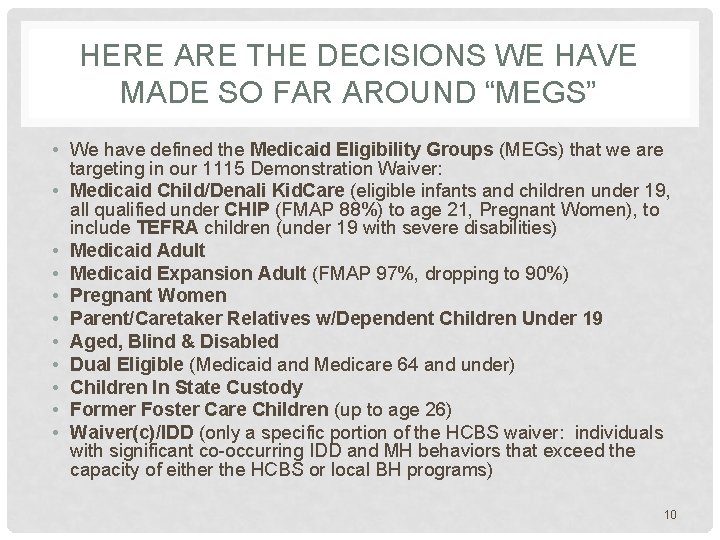
HERE ARE THE DECISIONS WE HAVE MADE SO FAR AROUND “MEGS” • We have defined the Medicaid Eligibility Groups (MEGs) that we are targeting in our 1115 Demonstration Waiver: • Medicaid Child/Denali Kid. Care (eligible infants and children under 19, all qualified under CHIP (FMAP 88%) to age 21, Pregnant Women), to include TEFRA children (under 19 with severe disabilities) • Medicaid Adult • Medicaid Expansion Adult (FMAP 97%, dropping to 90%) • Pregnant Women • Parent/Caretaker Relatives w/Dependent Children Under 19 • Aged, Blind & Disabled • Dual Eligible (Medicaid and Medicare 64 and under) • Children In State Custody • Former Foster Care Children (up to age 26) • Waiver(c)/IDD (only a specific portion of the HCBS waiver: individuals with significant co-occurring IDD and MH behaviors that exceed the capacity of either the HCBS or local BH programs) 10
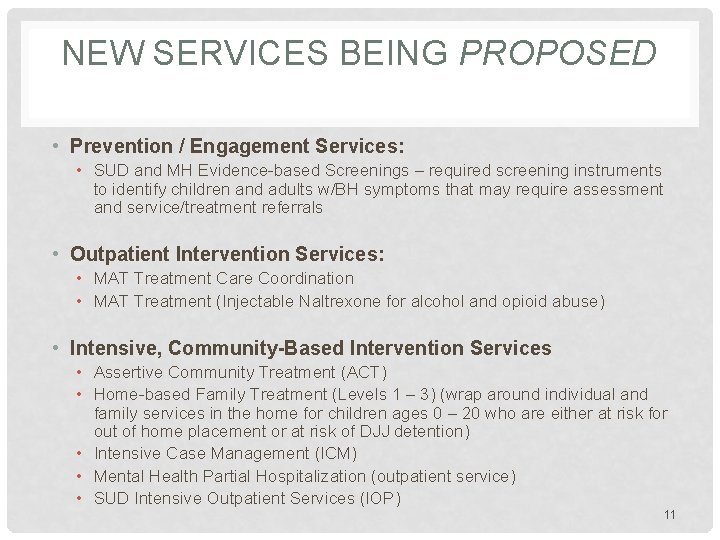
NEW SERVICES BEING PROPOSED • Prevention / Engagement Services: • SUD and MH Evidence-based Screenings – required screening instruments to identify children and adults w/BH symptoms that may require assessment and service/treatment referrals • Outpatient Intervention Services: • MAT Treatment Care Coordination • MAT Treatment (Injectable Naltrexone for alcohol and opioid abuse) • Intensive, Community-Based Intervention Services • Assertive Community Treatment (ACT) • Home-based Family Treatment (Levels 1 – 3) (wrap around individual and family services in the home for children ages 0 – 20 who are either at risk for out of home placement or at risk of DJJ detention) • Intensive Case Management (ICM) • Mental Health Partial Hospitalization (outpatient service) • SUD Intensive Outpatient Services (IOP) 11
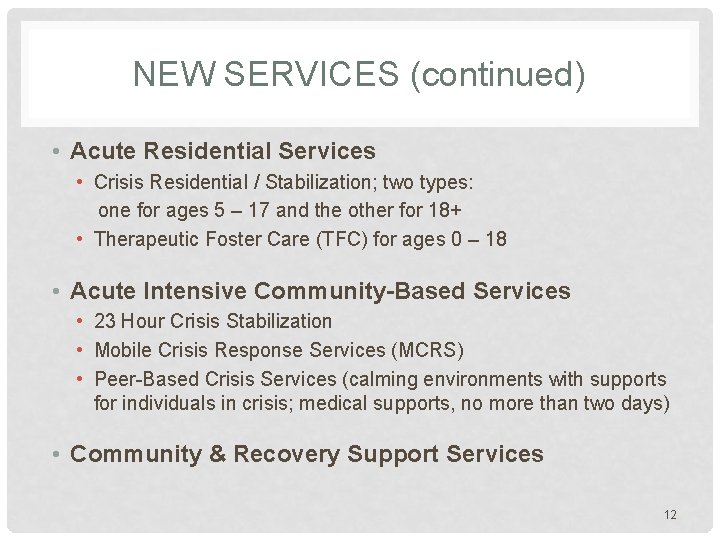
NEW SERVICES (continued) • Acute Residential Services • Crisis Residential / Stabilization; two types: one for ages 5 – 17 and the other for 18+ • Therapeutic Foster Care (TFC) for ages 0 – 18 • Acute Intensive Community-Based Services • 23 Hour Crisis Stabilization • Mobile Crisis Response Services (MCRS) • Peer-Based Crisis Services (calming environments with supports for individuals in crisis; medical supports, no more than two days) • Community & Recovery Support Services 12
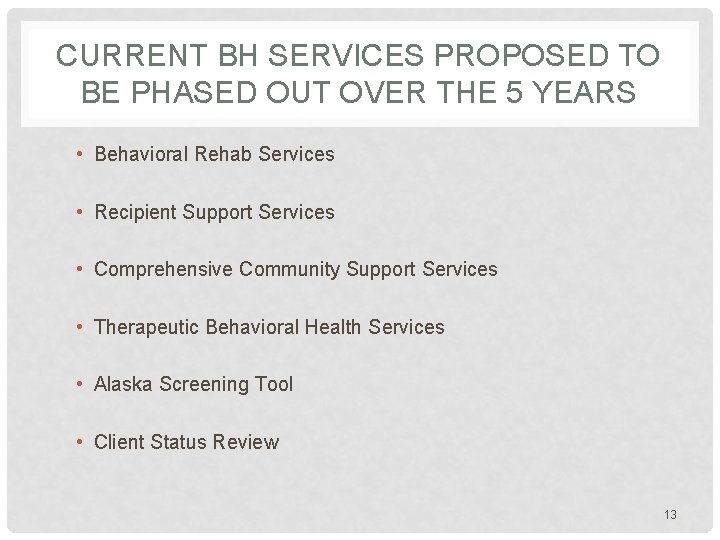
CURRENT BH SERVICES PROPOSED TO BE PHASED OUT OVER THE 5 YEARS • Behavioral Rehab Services • Recipient Support Services • Comprehensive Community Support Services • Therapeutic Behavioral Health Services • Alaska Screening Tool • Client Status Review 13
GENERAL RATIONALE FOR NEW SERVICES: • The benefits for all five target populations are designed to decrease use of inpatient hospital, hospital emergency room, and residential services by conducting universal screenings; intervening early, when symptoms are first identified; utilizing sub-acute, community-based step-up/step-down clinical services as alternatives to residential and inpatient services; and developing community-based supports to maintain recovery, health, and wellness. 14
GENERAL RATIONALE FOR NEW SERVICES (continued): • The major focus of the proposed benefit package for Children and Adolescents (primarily Target Populations 1(A), 1(B), & 1(C) is developing community-/regional-based infrastructures to keep children/adolescents in a home environment to the maximum extent possible. • As the intensity of service need increases from Population 1(A)to 1(C), the level of care required also increases, from totally community-based services for Populations 1(A) and 1(B) to residential services for Population 1(C). • Community-based services designed to maintain children/adolescents in their communities include: Homebased Family Treatment, In-School Behavioral Health services, Mental Health partial hospitalization services, Therapeutic Foster Care services, and Community and Recovery Support Services. 15
GENERAL RATIONALE FOR NEW SERVICES (continued): • Crisis services—designed to intervene as early as possible with non-residential services—include mobile crisis response and 23 -hour crisis observation services. If necessary, crisis residential stabilization services are included in the benefit, as well as peer-based residential crisis services for up to 2 days. • The clinical and support elements of Home-based Family Treatment services are the result of considerable research across several evidence-based, evidence-informed in-home family interventions including: • • • Homebuilders (Washington State) Child. First PARTNERS Wrap. Around Milwaukee Connecticut syllabus of evidence-based practices relating to family engagement and family therapy 16
GENERAL RATIONALE FOR NEW SERVICES (continued): • The major focus of the proposed benefit package for Adults (Populations 2 & 3) is on developing the community- / regionally-based service infrastructure to allow treatment to occur in communities where people live. • Crisis services include mobile crisis response, 23 -hour crisis observation, crisis residential stabilization, & peer-based crisis services. Community-based, sub-acute services—including ACT Teams; ambulatory withdrawal management (formerly detox); intensive case management; intensive outpatient Substance Use Disorder (SUD) treatment; MH partial hospitalization; and outpatient Medication-Assisted Treatment (MAT) – these are all designed to allow treatment and recovery based on clinical need. 17
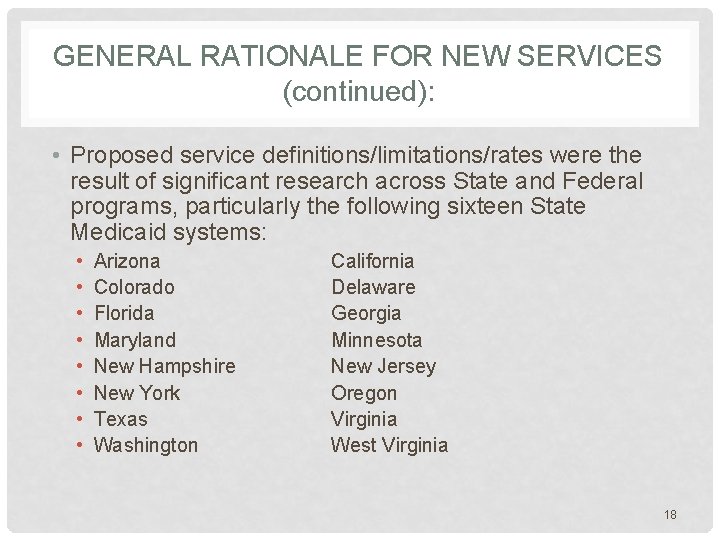
GENERAL RATIONALE FOR NEW SERVICES (continued): • Proposed service definitions/limitations/rates were the result of significant research across State and Federal programs, particularly the following sixteen State Medicaid systems: • • Arizona Colorado Florida Maryland New Hampshire New York Texas Washington California Delaware Georgia Minnesota New Jersey Oregon Virginia West Virginia 18
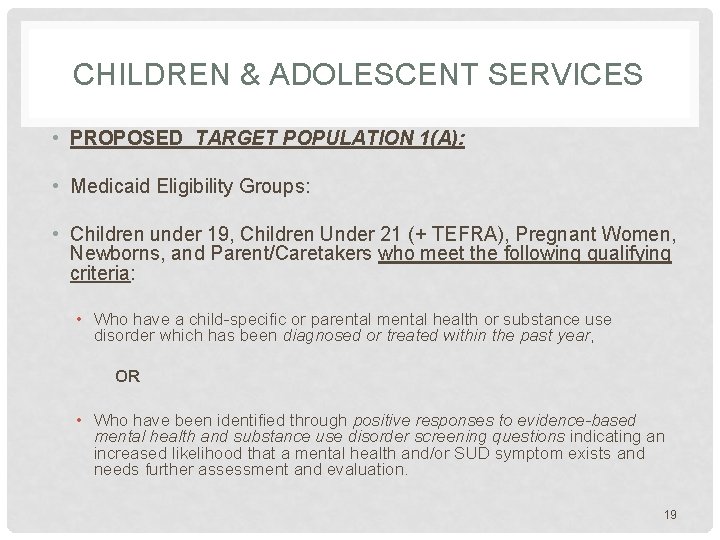
CHILDREN & ADOLESCENT SERVICES • PROPOSED TARGET POPULATION 1(A): • Medicaid Eligibility Groups: • Children under 19, Children Under 21 (+ TEFRA), Pregnant Women, Newborns, and Parent/Caretakers who meet the following qualifying criteria: • Who have a child-specific or parental mental health or substance use disorder which has been diagnosed or treated within the past year, OR • Who have been identified through positive responses to evidence-based mental health and substance use disorder screening questions indicating an increased likelihood that a mental health and/or SUD symptom exists and needs further assessment and evaluation. 19
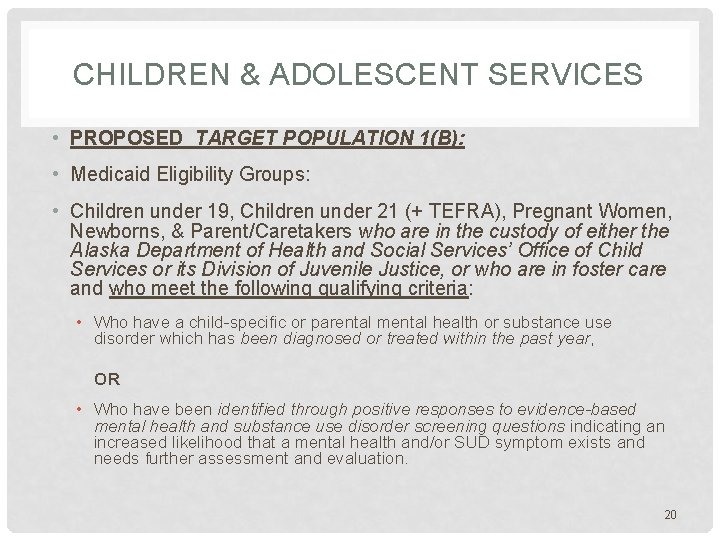
CHILDREN & ADOLESCENT SERVICES • PROPOSED TARGET POPULATION 1(B): • Medicaid Eligibility Groups: • Children under 19, Children under 21 (+ TEFRA), Pregnant Women, Newborns, & Parent/Caretakers who are in the custody of either the Alaska Department of Health and Social Services’ Office of Child Services or its Division of Juvenile Justice, or who are in foster care and who meet the following qualifying criteria: • Who have a child-specific or parental mental health or substance use disorder which has been diagnosed or treated within the past year, OR • Who have been identified through positive responses to evidence-based mental health and substance use disorder screening questions indicating an increased likelihood that a mental health and/or SUD symptom exists and needs further assessment and evaluation. 20
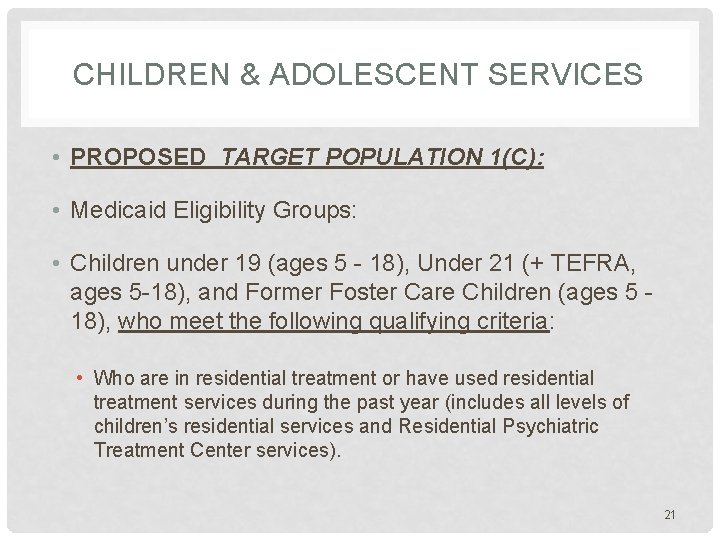
CHILDREN & ADOLESCENT SERVICES • PROPOSED TARGET POPULATION 1(C): • Medicaid Eligibility Groups: • Children under 19 (ages 5 - 18), Under 21 (+ TEFRA, ages 5 -18), and Former Foster Care Children (ages 5 18), who meet the following qualifying criteria: • Who are in residential treatment or have used residential treatment services during the past year (includes all levels of children’s residential services and Residential Psychiatric Treatment Center services). 21
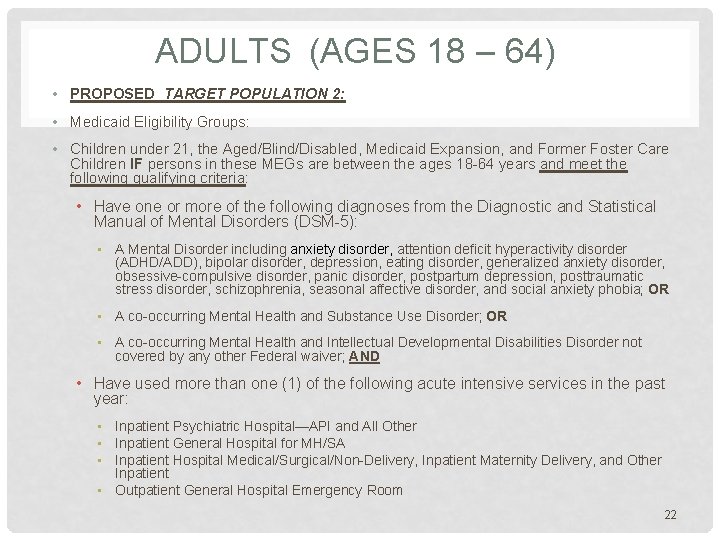
ADULTS (AGES 18 – 64) • PROPOSED TARGET POPULATION 2: • Medicaid Eligibility Groups: • Children under 21, the Aged/Blind/Disabled, Medicaid Expansion, and Former Foster Care Children IF persons in these MEGs are between the ages 18 -64 years and meet the following qualifying criteria: • Have one or more of the following diagnoses from the Diagnostic and Statistical Manual of Mental Disorders (DSM-5): • A Mental Disorder including anxiety disorder, attention deficit hyperactivity disorder (ADHD/ADD), bipolar disorder, depression, eating disorder, generalized anxiety disorder, obsessive-compulsive disorder, panic disorder, postpartum depression, posttraumatic stress disorder, schizophrenia, seasonal affective disorder, and social anxiety phobia; OR • A co-occurring Mental Health and Substance Use Disorder; OR • A co-occurring Mental Health and Intellectual Developmental Disabilities Disorder not covered by any other Federal waiver; AND • Have used more than one (1) of the following acute intensive services in the past year: • Inpatient Psychiatric Hospital—API and All Other • Inpatient General Hospital for MH/SA • Inpatient Hospital Medical/Surgical/Non-Delivery, Inpatient Maternity Delivery, and Other Inpatient • Outpatient General Hospital Emergency Room 22
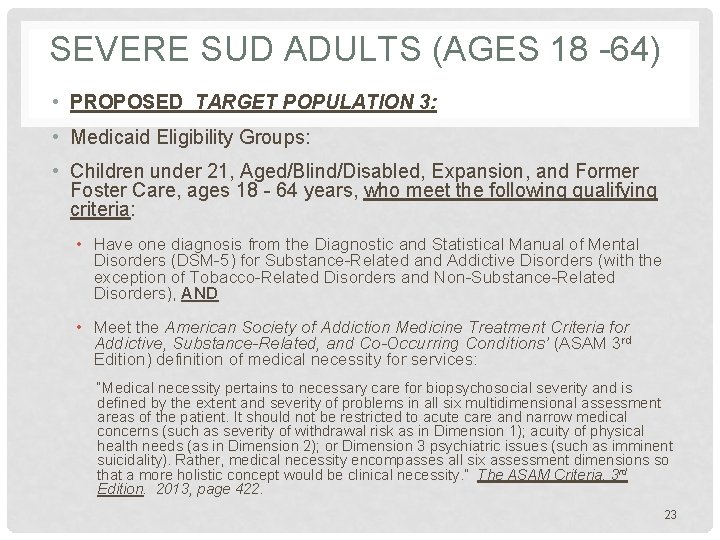
SEVERE SUD ADULTS (AGES 18 -64) • PROPOSED TARGET POPULATION 3: • Medicaid Eligibility Groups: • Children under 21, Aged/Blind/Disabled, Expansion, and Former Foster Care, ages 18 - 64 years, who meet the following qualifying criteria: • Have one diagnosis from the Diagnostic and Statistical Manual of Mental Disorders (DSM-5) for Substance-Related and Addictive Disorders (with the exception of Tobacco-Related Disorders and Non-Substance-Related Disorders), AND • Meet the American Society of Addiction Medicine Treatment Criteria for Addictive, Substance-Related, and Co-Occurring Conditions’ (ASAM 3 rd Edition) definition of medical necessity for services: “Medical necessity pertains to necessary care for biopsychosocial severity and is defined by the extent and severity of problems in all six multidimensional assessment areas of the patient. It should not be restricted to acute care and narrow medical concerns (such as severity of withdrawal risk as in Dimension 1); acuity of physical health needs (as in Dimension 2); or Dimension 3 psychiatric issues (such as imminent suicidality). Rather, medical necessity encompasses all six assessment dimensions so that a more holistic concept would be clinical necessity. ” The ASAM Criteria, 3 rd Edition. 2013, page 422. 23
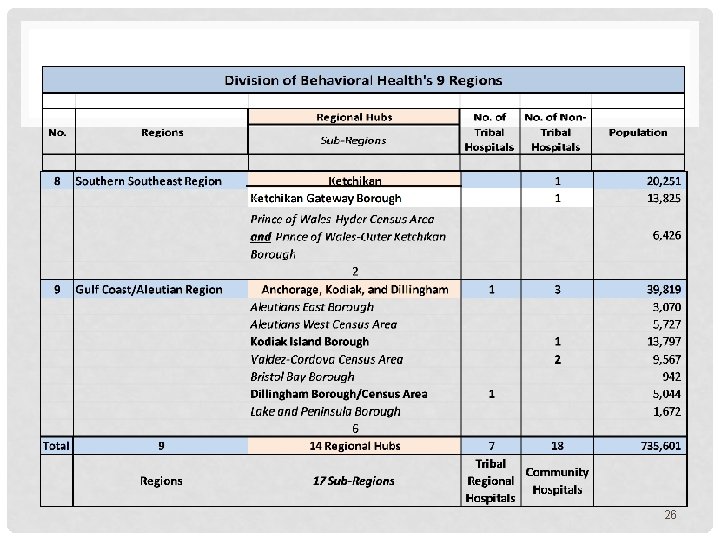
1115 WAIVER - 9 REGIONS PROPOSED 24
25
26
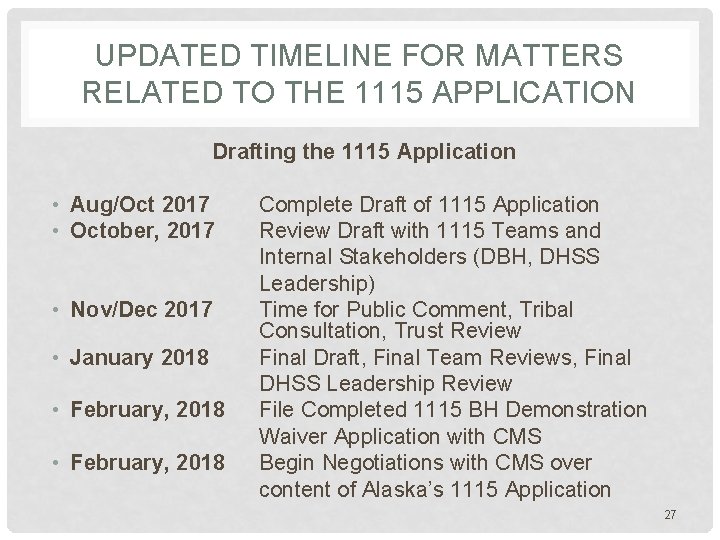
UPDATED TIMELINE FOR MATTERS RELATED TO THE 1115 APPLICATION Drafting the 1115 Application • Aug/Oct 2017 • October, 2017 • Nov/Dec 2017 • January 2018 • February, 2018 Complete Draft of 1115 Application Review Draft with 1115 Teams and Internal Stakeholders (DBH, DHSS Leadership) Time for Public Comment, Tribal Consultation, Trust Review Final Draft, Final Team Reviews, Final DHSS Leadership Review File Completed 1115 BH Demonstration Waiver Application with CMS Begin Negotiations with CMS over content of Alaska’s 1115 Application 27
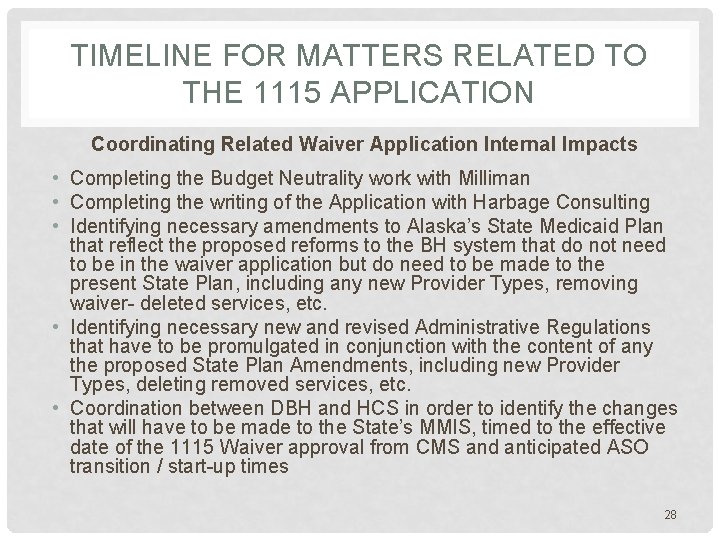
TIMELINE FOR MATTERS RELATED TO THE 1115 APPLICATION Coordinating Related Waiver Application Internal Impacts • Completing the Budget Neutrality work with Milliman • Completing the writing of the Application with Harbage Consulting • Identifying necessary amendments to Alaska’s State Medicaid Plan that reflect the proposed reforms to the BH system that do not need to be in the waiver application but do need to be made to the present State Plan, including any new Provider Types, removing waiver- deleted services, etc. • Identifying necessary new and revised Administrative Regulations that have to be promulgated in conjunction with the content of any the proposed State Plan Amendments, including new Provider Types, deleting removed services, etc. • Coordination between DBH and HCS in order to identify the changes that will have to be made to the State’s MMIS, timed to the effective date of the 1115 Waiver approval from CMS and anticipated ASO transition / start-up times 28
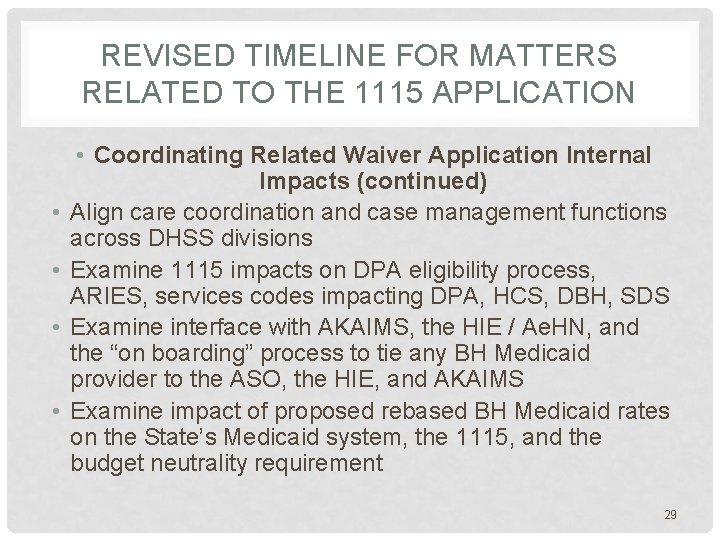
REVISED TIMELINE FOR MATTERS RELATED TO THE 1115 APPLICATION • • • Coordinating Related Waiver Application Internal Impacts (continued) Align care coordination and case management functions across DHSS divisions Examine 1115 impacts on DPA eligibility process, ARIES, services codes impacting DPA, HCS, DBH, SDS Examine interface with AKAIMS, the HIE / Ae. HN, and the “on boarding” process to tie any BH Medicaid provider to the ASO, the HIE, and AKAIMS Examine impact of proposed rebased BH Medicaid rates on the State’s Medicaid system, the 1115, and the budget neutrality requirement 29
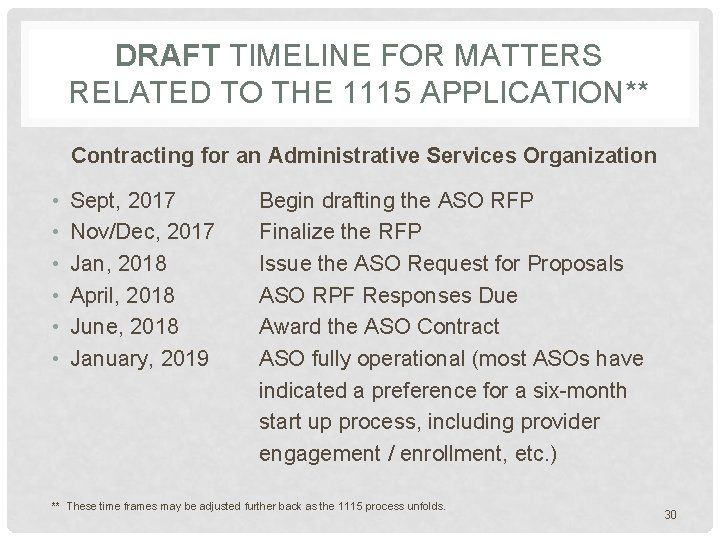
DRAFT TIMELINE FOR MATTERS RELATED TO THE 1115 APPLICATION** Contracting for an Administrative Services Organization • • • Sept, 2017 Nov/Dec, 2017 Jan, 2018 April, 2018 June, 2018 January, 2019 Begin drafting the ASO RFP Finalize the RFP Issue the ASO Request for Proposals ASO RPF Responses Due Award the ASO Contract ASO fully operational (most ASOs have indicated a preference for a six-month start up process, including provider engagement / enrollment, etc. ) ** These time frames may be adjusted further back as the 1115 process unfolds. 30
QUESTIONS? HAPPY TO TRY AND ANSWER THEM! • And THANKS! • Randall P. Burns, MS • Director • Division of Behavioral Health • Department of Health and Social Services • State of Alaska randall. burns@alaska. gov • 907 -269 -5948 31
- Slides: 31