
THE 10 MINUTE LESSON KEEPING OUR MINILESSONS MINI
- Slides: 14
THE 10 MINUTE LESSON: KEEPING OUR MINILESSONS MINI
Writing Workshop Structure 45 -60 minutes Minilesson (10 minutes) Independent writing/teacher conferring with individuals and small groups (30 -40 minutes) Mid-workshop interruption (1 minutes) Share (5 -10 minutes)
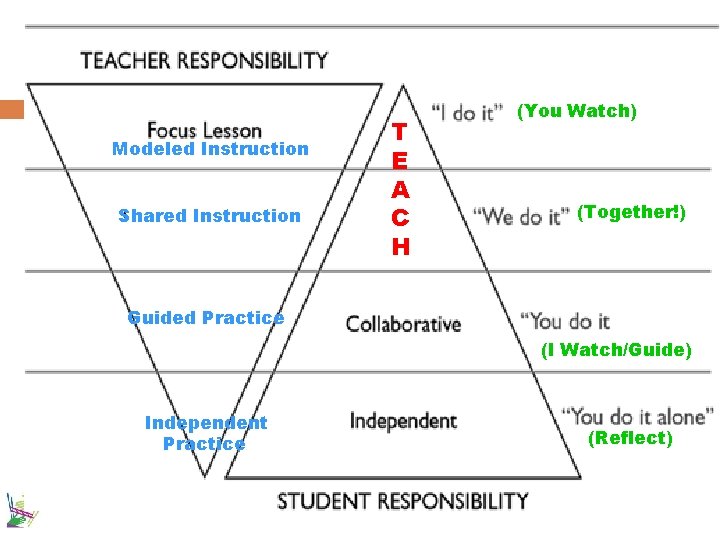
Workshop Model Follows Gradual Release of Responsibility Model (Pearson & Gallagher, 1983) Sometimes known by teacher and student roles (see next slide) The minilesson encompasses the first two phases of the gradual release model (I do, you watch; We do it together) the rest of the workshop (student writing with teacher conferring and the sharing session) facilitate the other two phases of the model.
Modeled Instruction Shared Instruction T E A C H (You Watch) (Together!) Guided Practice (I Watch/Guide) Independent Practice (Reflect)
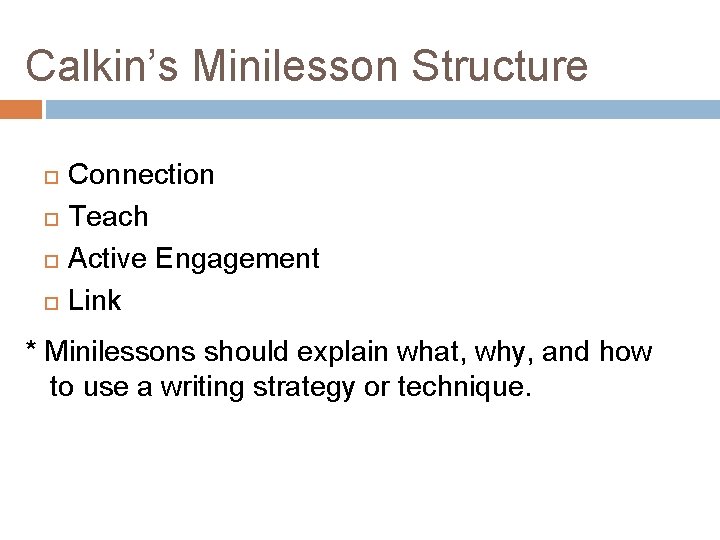
Calkin’s Minilesson Structure Connection Teach Active Engagement Link * Minilessons should explain what, why, and how to use a writing strategy or technique.
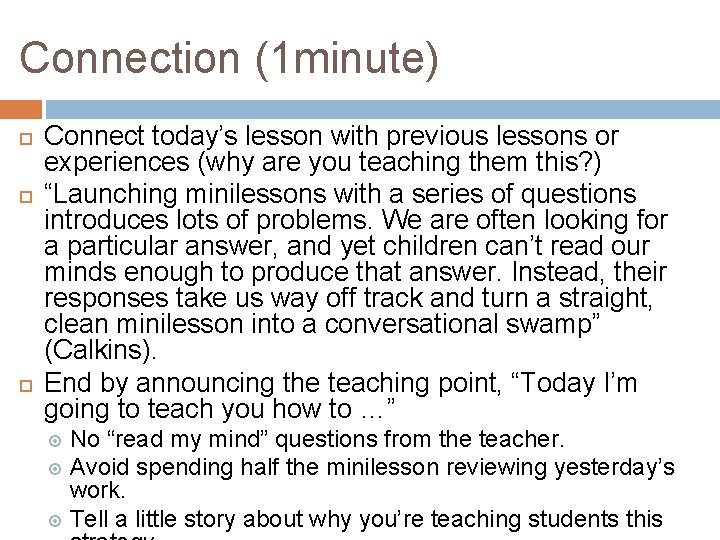
Connection (1 minute) Connect today’s lesson with previous lessons or experiences (why are you teaching them this? ) “Launching minilessons with a series of questions introduces lots of problems. We are often looking for a particular answer, and yet children can’t read our minds enough to produce that answer. Instead, their responses take us way off track and turn a straight, clean minilesson into a conversational swamp” (Calkins). End by announcing the teaching point, “Today I’m going to teach you how to …” No “read my mind” questions from the teacher. Avoid spending half the minilesson reviewing yesterday’s work. Tell a little story about why you’re teaching students this
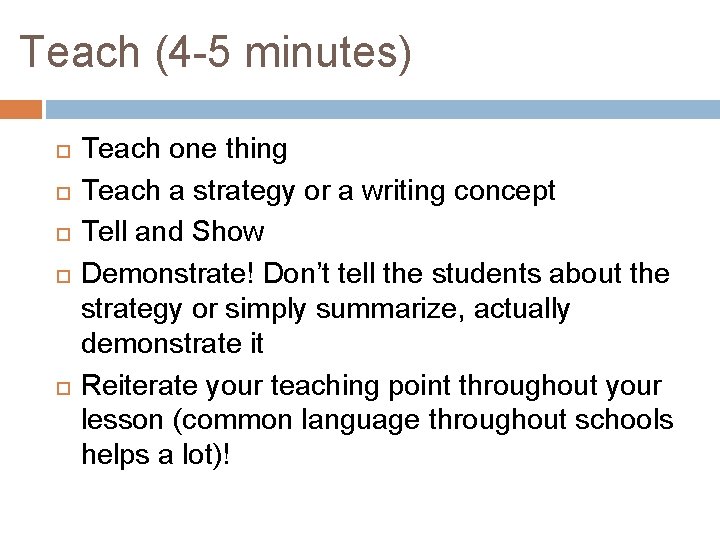
Teach (4 -5 minutes) Teach one thing Teach a strategy or a writing concept Tell and Show Demonstrate! Don’t tell the students about the strategy or simply summarize, actually demonstrate it Reiterate your teaching point throughout your lesson (common language throughout schools helps a lot)!
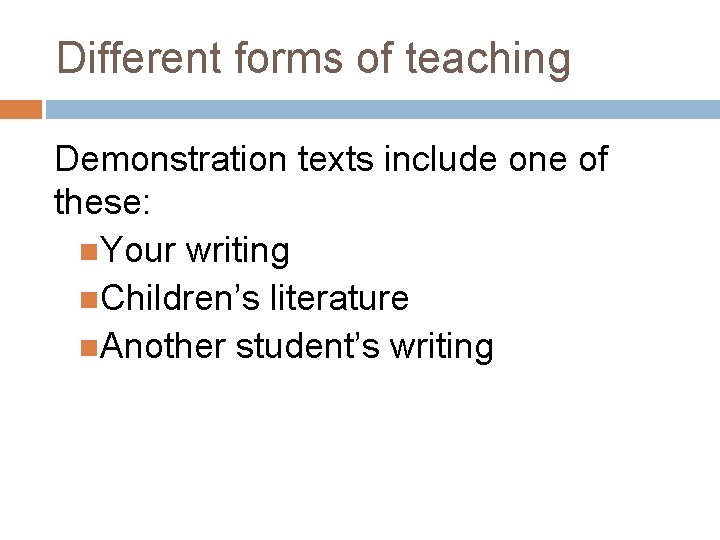
Different forms of teaching Demonstration texts include one of these: Your writing Children’s literature Another student’s writing
Active Engagement (4 -5 minutes) Get students started on the carpet “The fact that we, as teachers, say something has very little to do with whether our children learn it. Telling them is not teaching. If we want our minilessons to stand a chance of making a lasting impression on our students, it’s wise to nudge students to ‘have a go’ or to ‘try it on’ as they sit together at the carpet” (Calkins). Students give it a go
Ways to Structure the Active Engagement Students try things out in their own writing Students help the teacher Students help another child in the class
Link 30 seconds to One Minute Recap what you just taught students “So today and every day… Ask who will commit to using what you taught in that period Ask for a show of hands Promise to make them famous during the share
Video Observations Look for the structure of the minilesson What do you notice about this teacher? What strikes you? What is new or different? What will you try tomorrow?
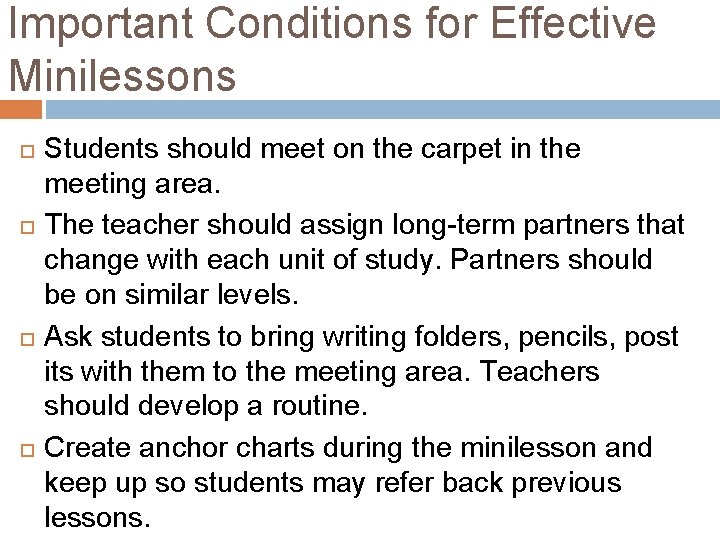
Important Conditions for Effective Minilessons Students should meet on the carpet in the meeting area. The teacher should assign long-term partners that change with each unit of study. Partners should be on similar levels. Ask students to bring writing folders, pencils, post its with them to the meeting area. Teachers should develop a routine. Create anchor charts during the minilesson and keep up so students may refer back previous lessons.
References Calkins, L. (2003). The nuts and bolts of teaching writing. Portsmouth, NH: Heinemann. Anderson, C. (2000). How’s it going? Portsmouth, NH: Heinemann.