
THE 1 92 0 S BEGINNING OF UNIT
THE 1 92 0 S BEGINNING OF UNIT 3 – CHAPTER 11 14 WORDS
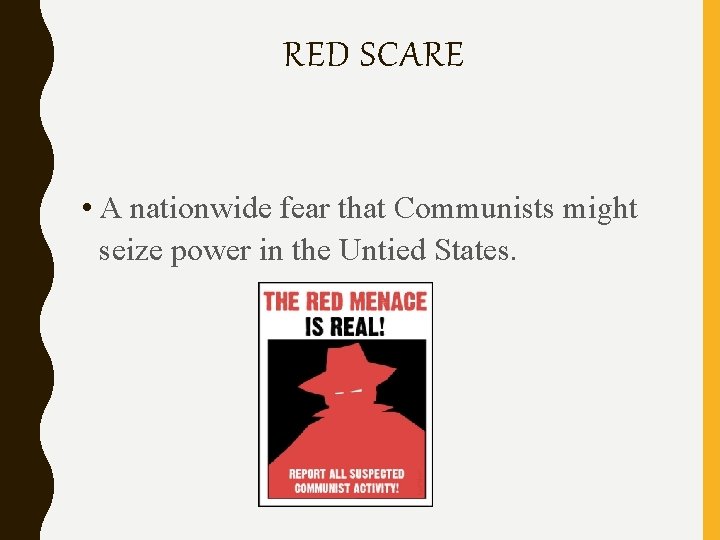
RED SCARE • A nationwide fear that Communists might seize power in the Untied States.
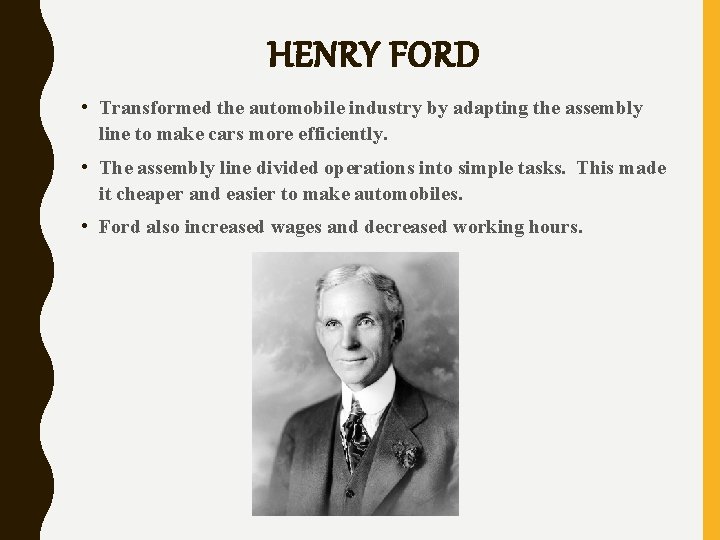
HENRY FORD • Transformed the automobile industry by adapting the assembly line to make cars more efficiently. • The assembly line divided operations into simple tasks. This made it cheaper and easier to make automobiles. • Ford also increased wages and decreased working hours.
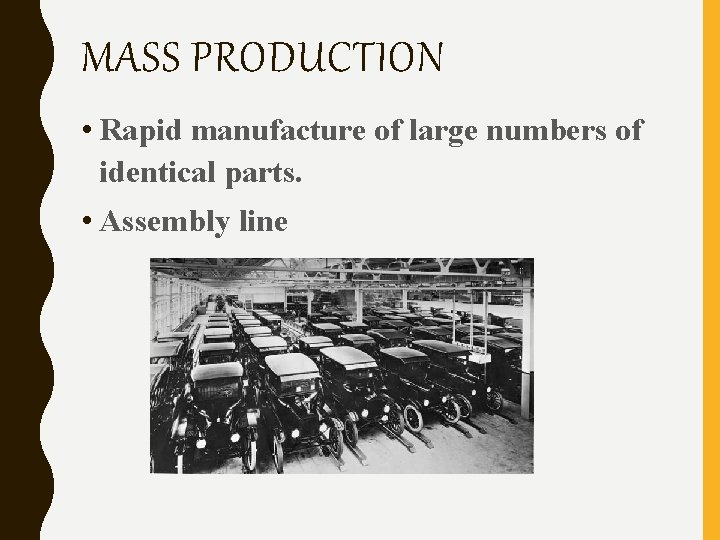
MASS PRODUCTION • Rapid manufacture of large numbers of identical parts. • Assembly line

INSTALLMENT BUYING • Buying on credit • Consumer makes a small down payment and then pays off the rest of the debt in monthly payments.
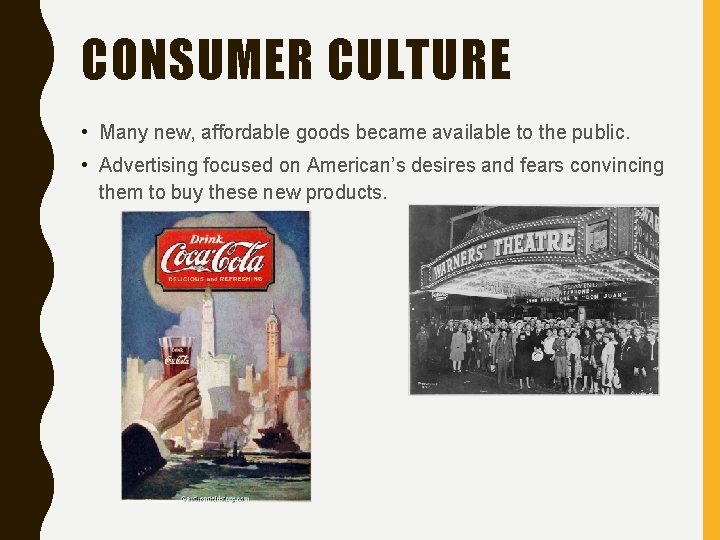
CONSUMER CULTURE • Many new, affordable goods became available to the public. • Advertising focused on American’s desires and fears convincing them to buy these new products.
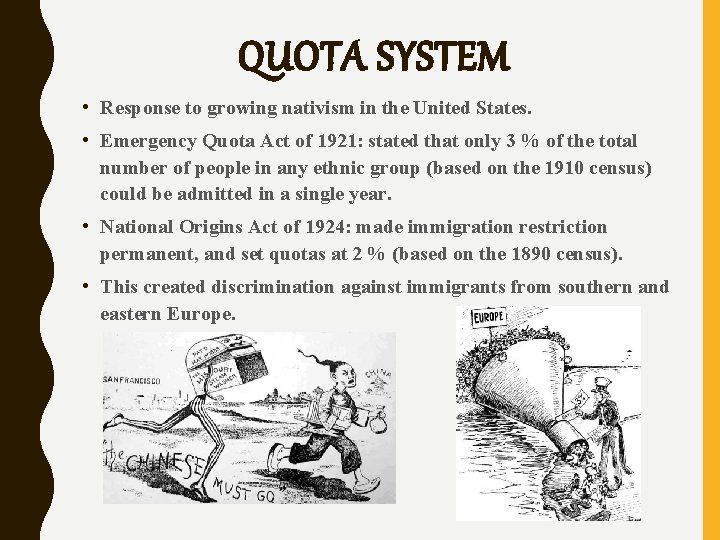
QUOTA SYSTEM • Response to growing nativism in the United States. • Emergency Quota Act of 1921: stated that only 3 % of the total number of people in any ethnic group (based on the 1910 census) could be admitted in a single year. • National Origins Act of 1924: made immigration restriction permanent, and set quotas at 2 % (based on the 1890 census). • This created discrimination against immigrants from southern and eastern Europe.
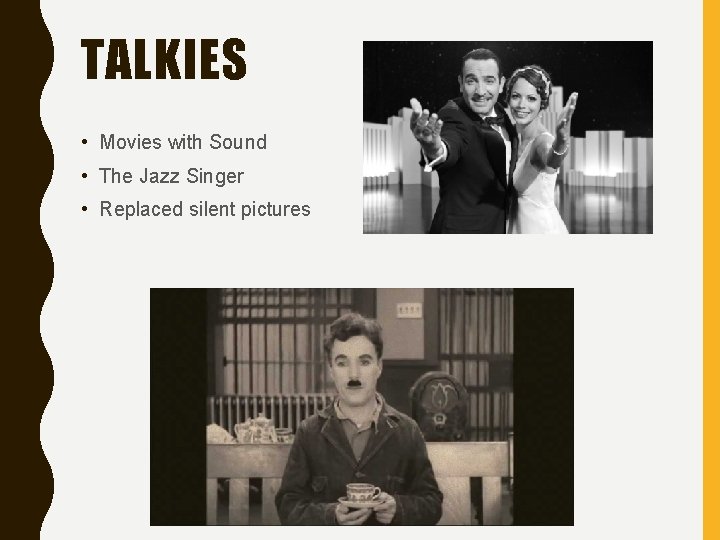
TALKIES • Movies with Sound • The Jazz Singer • Replaced silent pictures
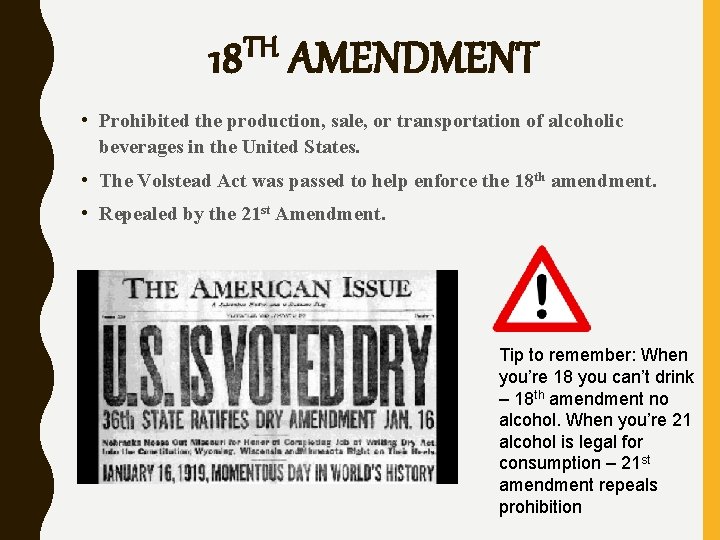
18 TH AMENDMENT • Prohibited the production, sale, or transportation of alcoholic beverages in the United States. • The Volstead Act was passed to help enforce the 18 th amendment. • Repealed by the 21 st Amendment. Tip to remember: When you’re 18 you can’t drink – 18 th amendment no alcohol. When you’re 21 alcohol is legal for consumption – 21 st amendment repeals prohibition
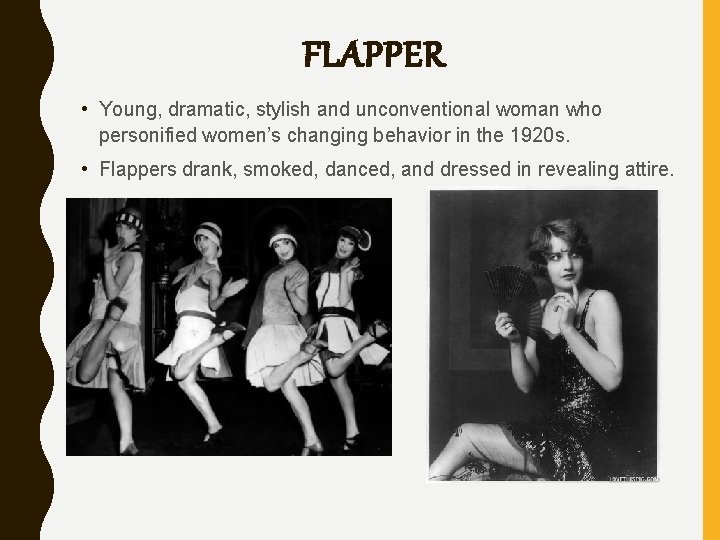
FLAPPER • Young, dramatic, stylish and unconventional woman who personified women’s changing behavior in the 1920 s. • Flappers drank, smoked, danced, and dressed in revealing attire.
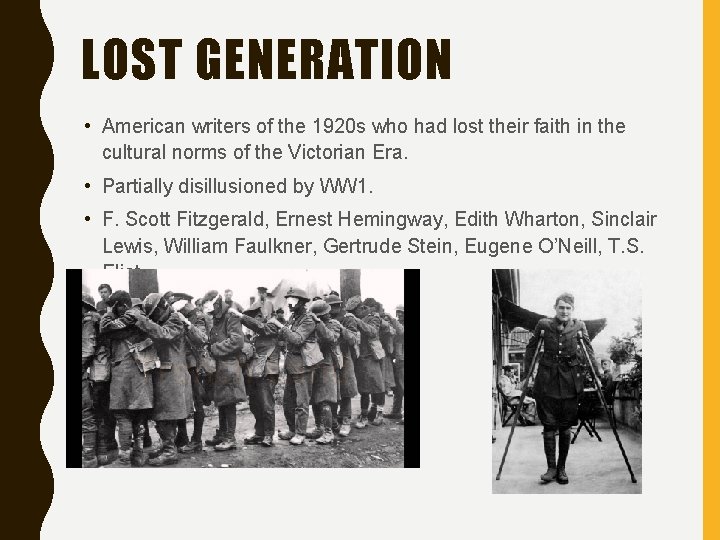
LOST GENERATION • American writers of the 1920 s who had lost their faith in the cultural norms of the Victorian Era. • Partially disillusioned by WW 1. • F. Scott Fitzgerald, Ernest Hemingway, Edith Wharton, Sinclair Lewis, William Faulkner, Gertrude Stein, Eugene O’Neill, T. S. Eliot.
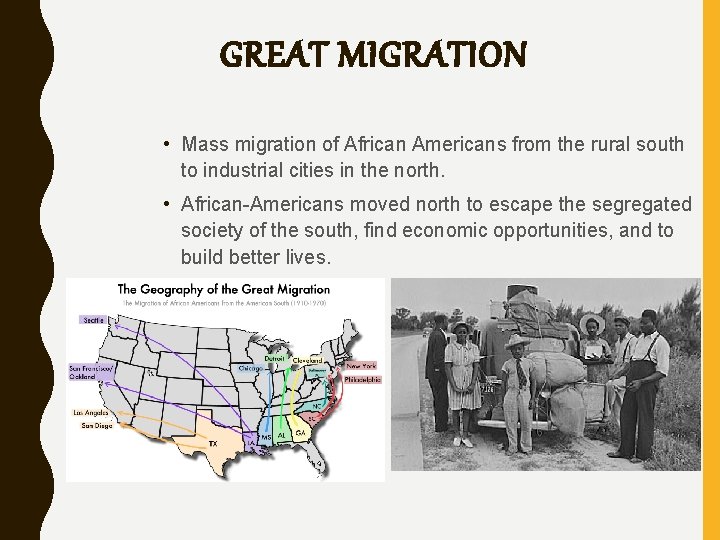
GREAT MIGRATION • Mass migration of African Americans from the rural south to industrial cities in the north. • African-Americans moved north to escape the segregated society of the south, find economic opportunities, and to build better lives.
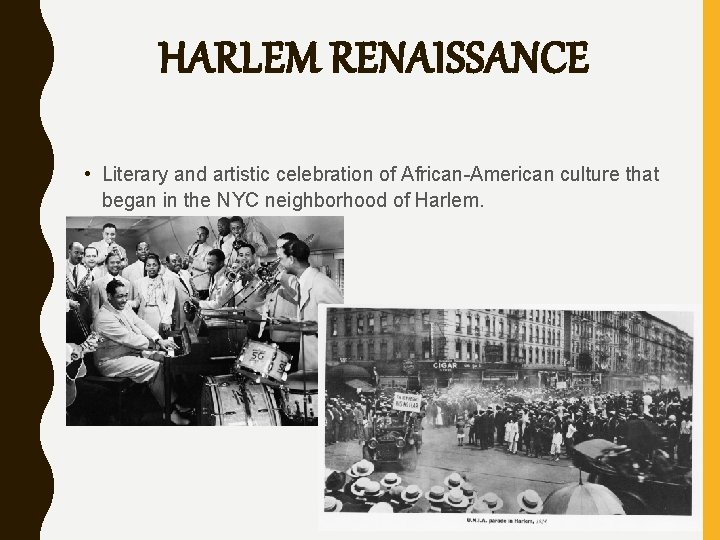
HARLEM RENAISSANCE • Literary and artistic celebration of African-American culture that began in the NYC neighborhood of Harlem.
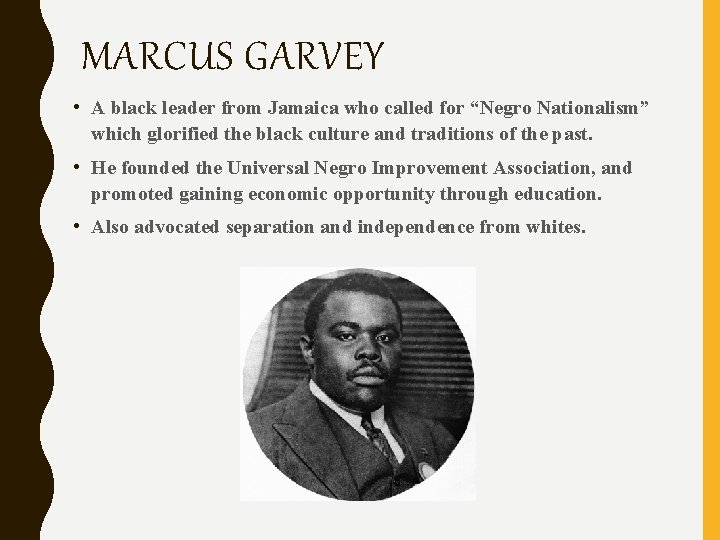
MARCUS GARVEY • A black leader from Jamaica who called for “Negro Nationalism” which glorified the black culture and traditions of the past. • He founded the Universal Negro Improvement Association, and promoted gaining economic opportunity through education. • Also advocated separation and independence from whites.
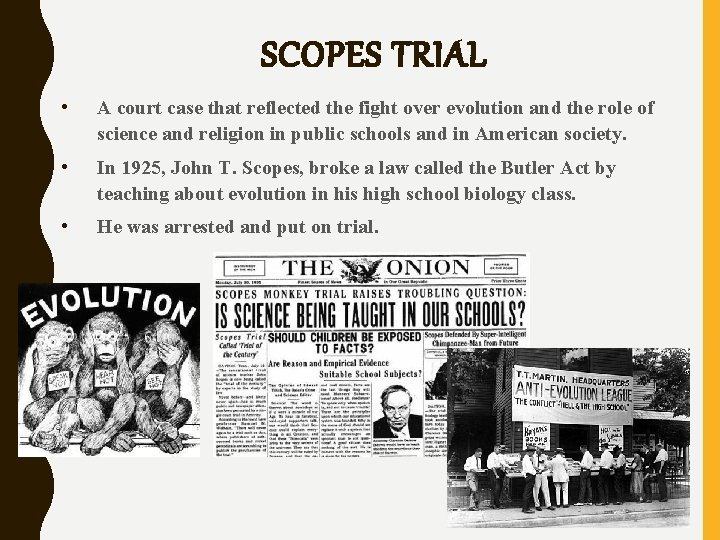
SCOPES TRIAL • A court case that reflected the fight over evolution and the role of science and religion in public schools and in American society. • In 1925, John T. Scopes, broke a law called the Butler Act by teaching about evolution in his high school biology class. • He was arrested and put on trial.
- Slides: 15