
THAT MONKEY DOESNT BELONG TO YOU Dont Take
THAT MONKEY DOESN’T BELONG TO YOU! Don’t Take On The Move If The Move Isn’t Yours
LET’S BE CLEAR The SPF/SIG has a number of pieces to it Although the Strategic Prevention Framework is a collaborative process as coordinators you will be the ones responsible for the completion of the steps The purpose of this training is to help you find ways to make decision-making a collaborative
LET’S BE CLEAR The goal of the training is to give you tolls to expand the capacity of your project by engaging your partners in meaningful ways. It is not the intent of this training to have any of you supervise others or make others responsible for the project.
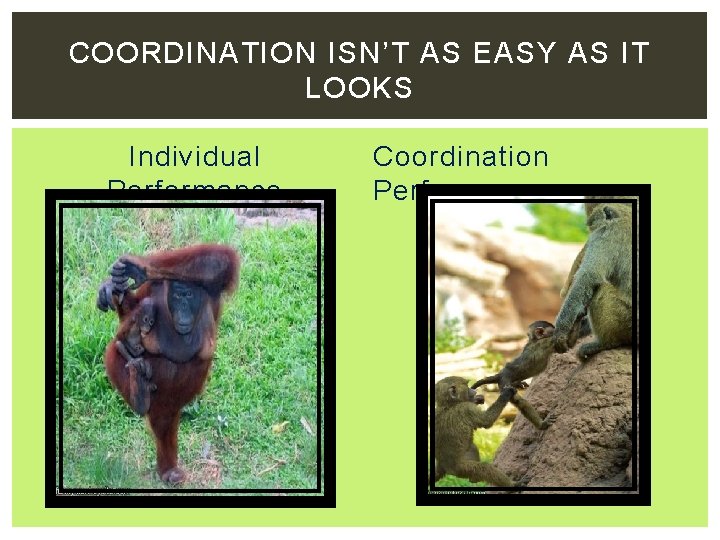
COORDINATION ISN’T AS EASY AS IT LOOKS Individual Performance Coordination Performance
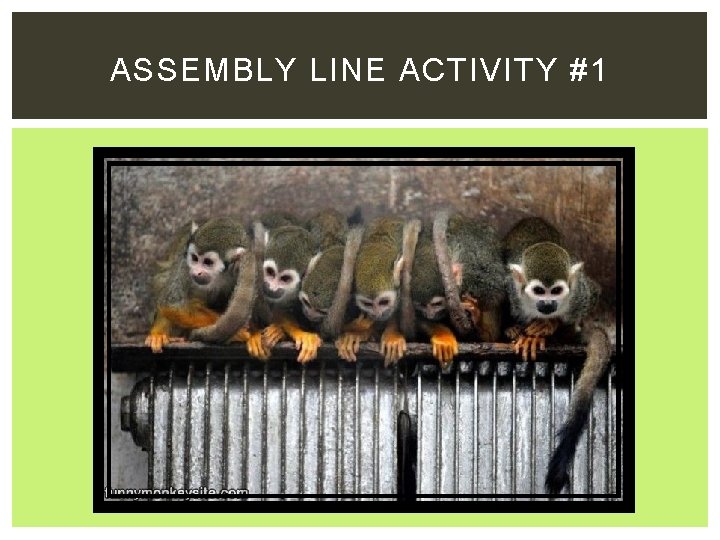
ASSEMBLY LINE ACTIVITY #1
QUESTION Why do coordinators run out of time while stakeholders run out of work?

THE PROBLEM IS…. . MONKEYS The Problem is…MONKEY S
A MONKEY IS THE NEXT MOVE
REMEMBER: For Every Monkey There Are Two Parties Involved: One To Work It And One To Oversee It

All The Monkeys Together Make Your Successful Project. Who Do You Want To Share In That Success?

When You Pick Up A Monkey That Someone Else Could Handle, You Give The Message That You WANT The Monkeys!

When You Pick Up A Monkey That Someone Else Could Handle, You Give The Message That Other’s Are Not Capable
When You Pick Up A Monkey That Someone Else Could Handle, You Give The Message That You Need To Rescue The Monkey From It’s Current Keeper
WHAT MONKEYS CAN LEAD TO Decline in output Decline in performance Decline in morale
I’VE GOT MONKEYS…NOW WHAT

ONCKEN’S RULES OF MONKEY MANAGEMENT Description: The “next moves” are… Owners: The monkey is assigned to a person Insurance Policies: The risk is covered Monkey Feeding and Checkups: The time and place
LET’S MANAGE SOME MONKEYS
REMEMBER The Monkey is NOT the problem or the project! It is simply the next move.
DESCRIPTION Rule 1 means: The parties involved shall not part company until the appropriate “next moves” have been described.

DESCRIPTION Examples would be: Complete Community Readiness Surveys with… Invite three people to the next meeting Give this matter further thought
LET’S PRACTICE What is your project or problem? What Monkeys can you think of that need to be done MONKEY WALK
OWNERS Rule 2 means: The dialogue between the parties involved must not end until ownership of each monkey is assigned to a person.
OWNERS Your Goal Share The Responsibility For Monkeys With Your Stakeholders Only Work the Monkeys That No One Else Is Qualified or Eligible to Handle
OWNERS It Is Not Easy! It Takes…. Discipline Skills
OWNERS Discipline Pitfalls ONE The work I am asking others to do is what I used to do and I can do it quicker and better.
OWNERS Discipline Pitfalls TWO It is easier to do the work myself than to deal with getting the assigned person to do it
REMEMBER The Best Way to Develop Responsibility In People Is To Give Them Responsibility

Anti-Straddle Reflex WE’VE NEVER GOT A PROBLEM! I HAVE A PROBLEM OR YOU HAVE A PROBLEM

INSURANCE POLICY Monkey Insurance Policies: 1. Recommend, Then Act 2. Act, Then Advise

FEEDING AND CHECK-UPS Rule 4 Means: The dialogue between the parties involved must not end until the monkey has a checkup appointment
FEEDING AND CHECK-UPS Check-ups are important because: Lower your anxiety Increases our partners competence through capacity building Coaching increases the odds
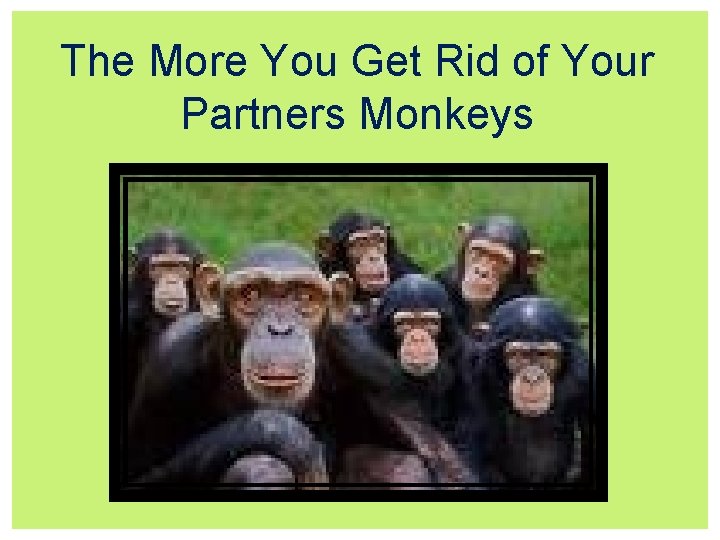
The More You Get Rid of Your Partners Monkeys

The More Time You Have For Your Partners
QUESTIONS?

LESLIE MUSSMANN DIRECTOR OF PREVENTION ASAC SPF/SIG CAPACITY COACH lmussmann@asac. us The One Minute Manager Meets the Monkey Kenneth Blanchar d
- Slides: 35