
Thank you for the midterm feedback http cs
Thank you for the midterm feedback! http: //cs 273 a. stanford. edu [Bejerano Fall 09/10] 1
Lecture 12 Cis-Regulation Cellular Signaling http: //cs 273 a. stanford. edu [Bejerano Fall 09/10] 2
Big Picture Context We are surveying the functional classes of elements encoded by the human genome. We have previously discussed: • Protein coding genes • Repetitive sequences • Non coding RNAs Today we’ll cover the last (known : ) large class of functional elements. http: //cs 273 a. stanford. edu [Bejerano Fall 09/10] 3
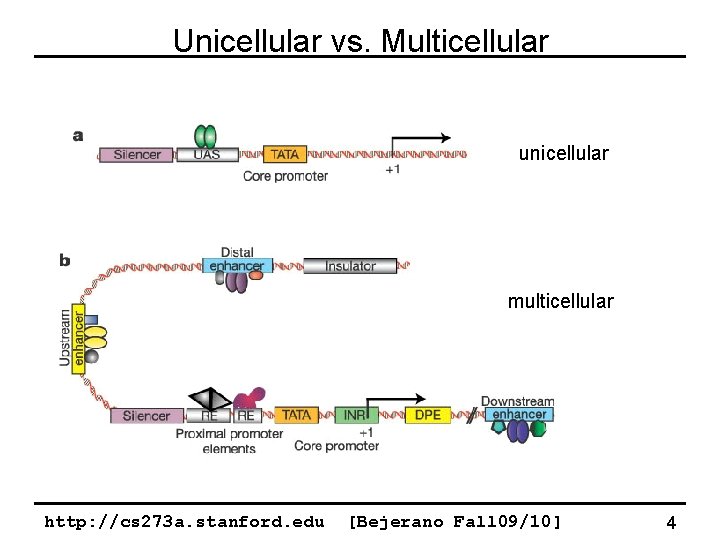
Unicellular vs. Multicellular unicellular multicellular http: //cs 273 a. stanford. edu [Bejerano Fall 09/10] 4
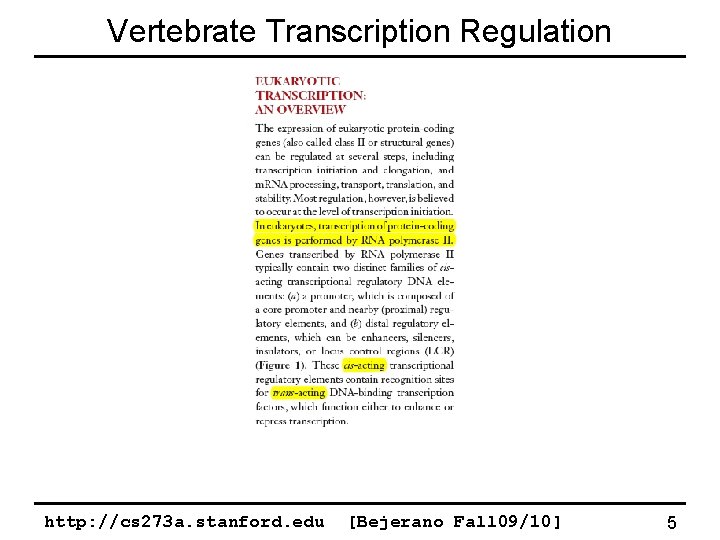
Vertebrate Transcription Regulation http: //cs 273 a. stanford. edu [Bejerano Fall 09/10] 5
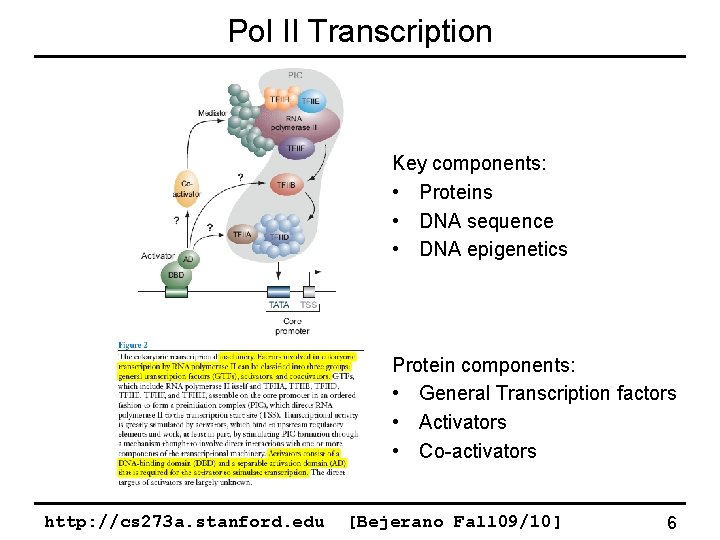
Pol II Transcription Key components: • Proteins • DNA sequence • DNA epigenetics Protein components: • General Transcription factors • Activators • Co-activators http: //cs 273 a. stanford. edu [Bejerano Fall 09/10] 6
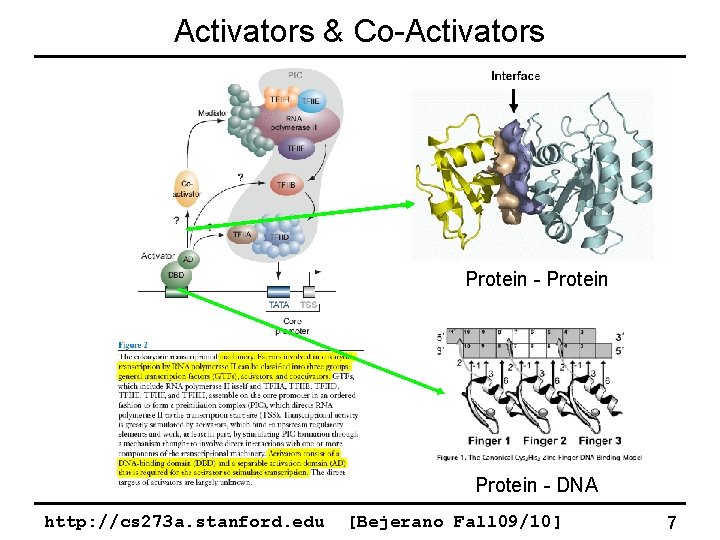
Activators & Co-Activators Protein - DNA http: //cs 273 a. stanford. edu [Bejerano Fall 09/10] 7

The Core Promoter http: //cs 273 a. stanford. edu [Bejerano Fall 09/10] 8
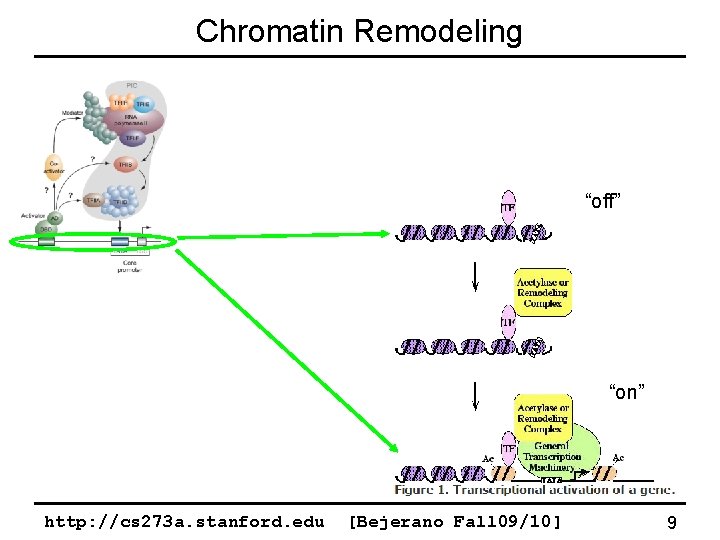
Chromatin Remodeling “off” “on” http: //cs 273 a. stanford. edu [Bejerano Fall 09/10] 9
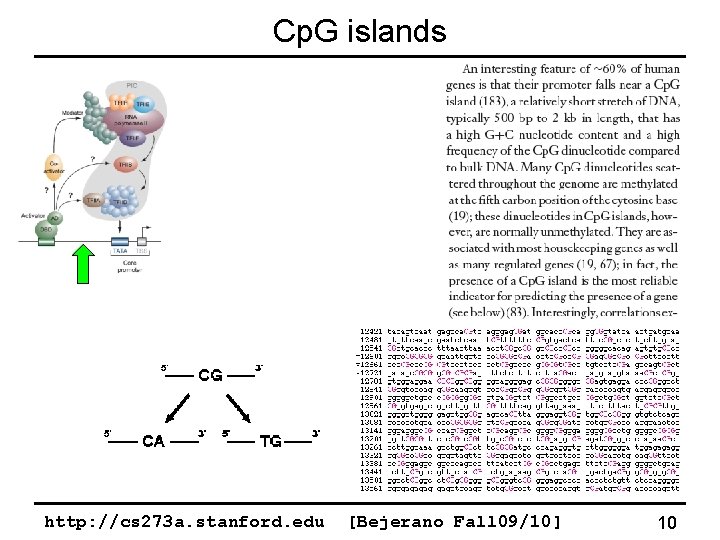
Cp. G islands http: //cs 273 a. stanford. edu [Bejerano Fall 09/10] 10
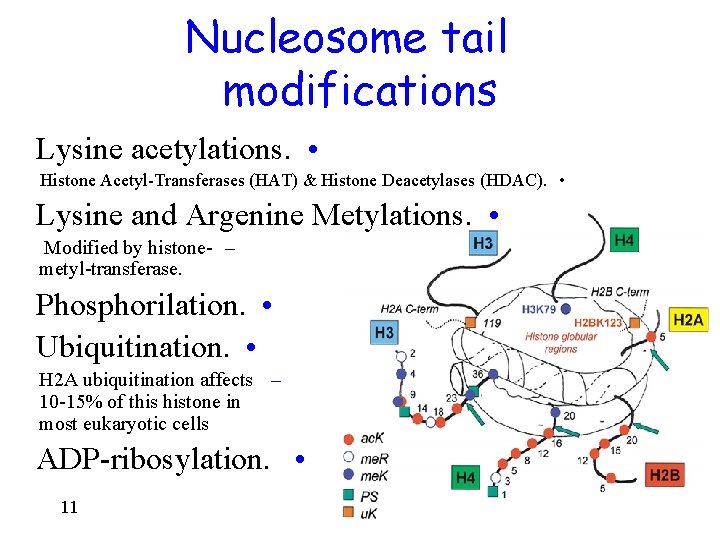
Nucleosome tail modifications Lysine acetylations. • Histone Acetyl-Transferases (HAT) & Histone Deacetylases (HDAC). • Lysine and Argenine Metylations. • Modified by histone- – metyl-transferase. Phosphorilation. • Ubiquitination. • H 2 A ubiquitination affects – 10 -15% of this histone in most eukaryotic cells ADP-ribosylation. • 11
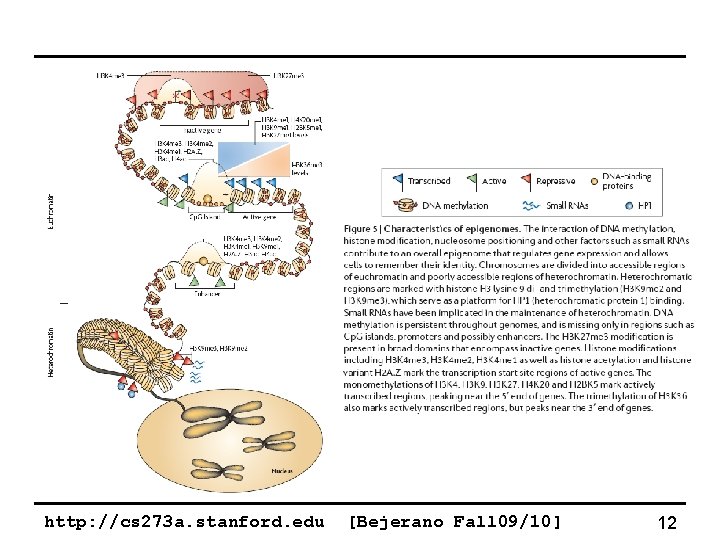
http: //cs 273 a. stanford. edu [Bejerano Fall 09/10] 12
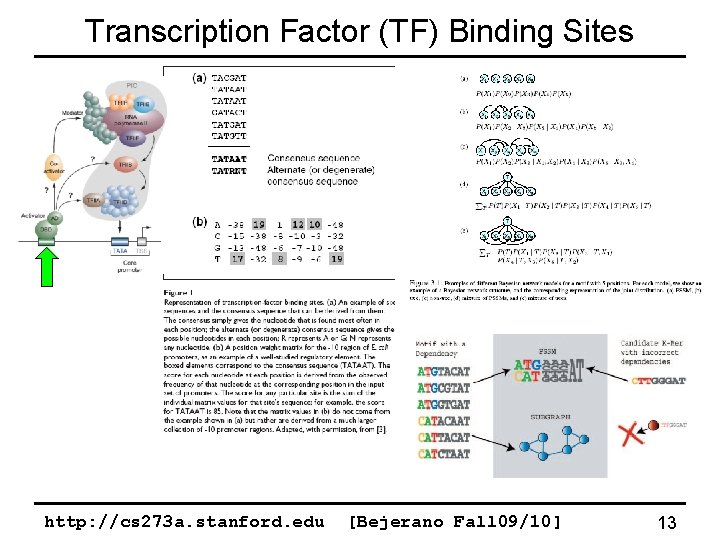
Transcription Factor (TF) Binding Sites http: //cs 273 a. stanford. edu [Bejerano Fall 09/10] 13
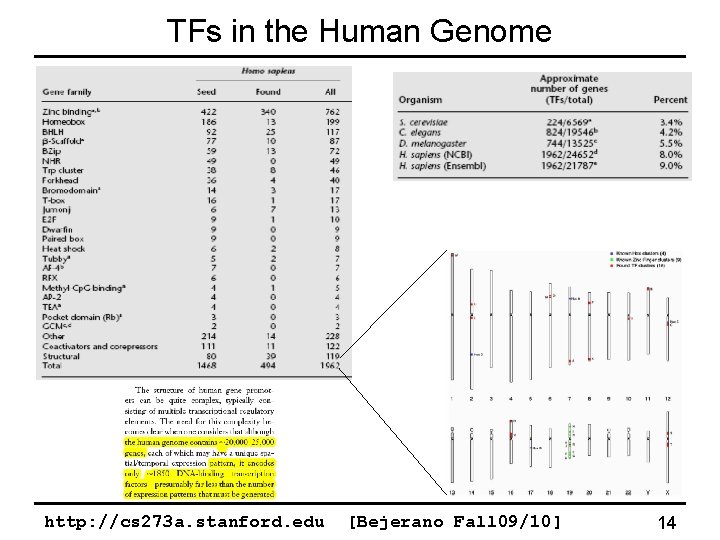
TFs in the Human Genome http: //cs 273 a. stanford. edu [Bejerano Fall 09/10] 14
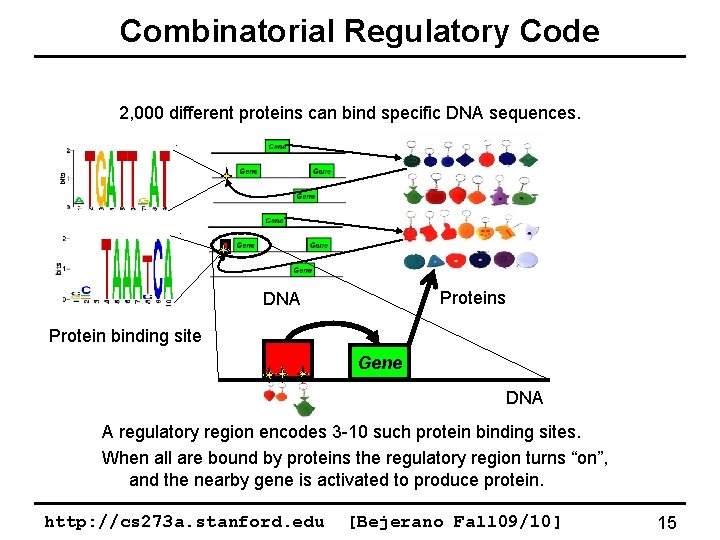
Combinatorial Regulatory Code 2, 000 different proteins can bind specific DNA sequences. Proteins DNA Protein binding site Gene DNA A regulatory region encodes 3 -10 such protein binding sites. When all are bound by proteins the regulatory region turns “on”, and the nearby gene is activated to produce protein. http: //cs 273 a. stanford. edu [Bejerano Fall 09/10] 15
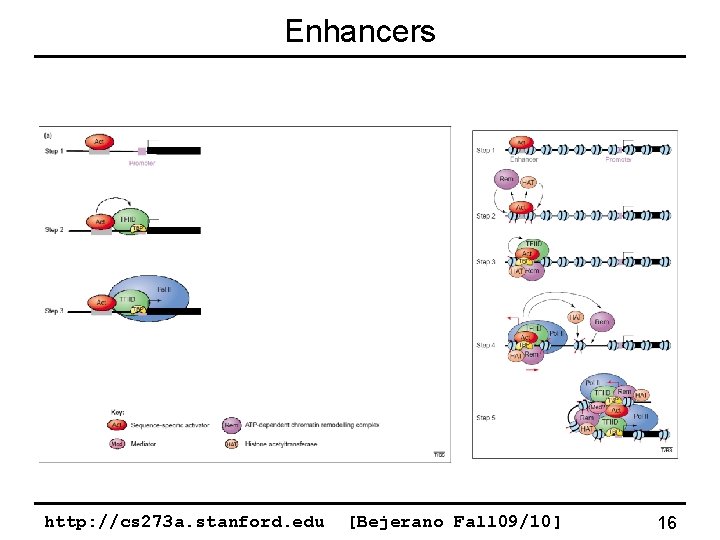
Enhancers http: //cs 273 a. stanford. edu [Bejerano Fall 09/10] 16
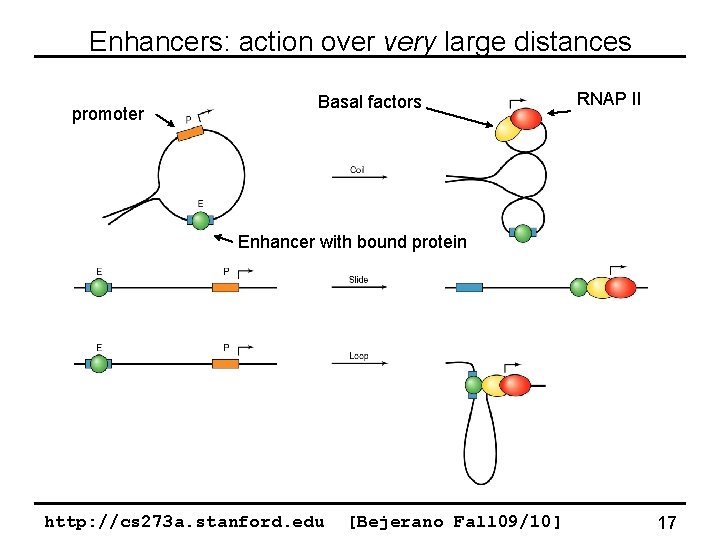
Enhancers: action over very large distances promoter Basal factors RNAP II Enhancer with bound protein http: //cs 273 a. stanford. edu [Bejerano Fall 09/10] 17
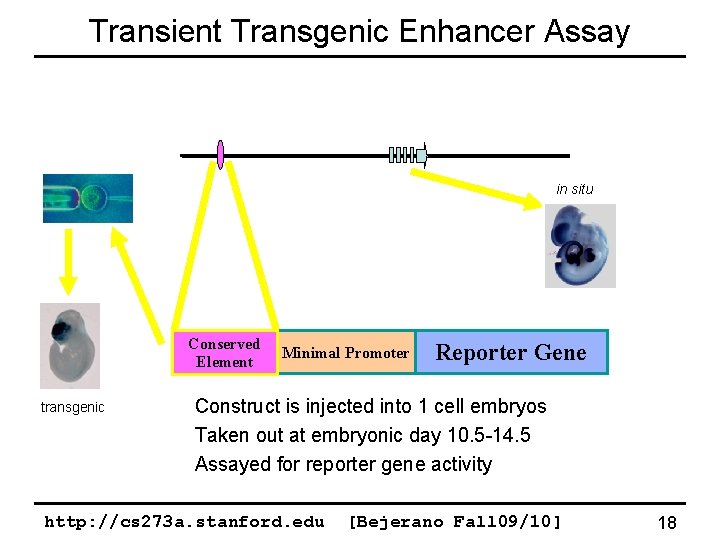
Transient Transgenic Enhancer Assay in situ Conserved Element transgenic Minimal Promoter Reporter Gene Construct is injected into 1 cell embryos Taken out at embryonic day 10. 5 -14. 5 Assayed for reporter gene activity http: //cs 273 a. stanford. edu [Bejerano Fall 09/10] 18
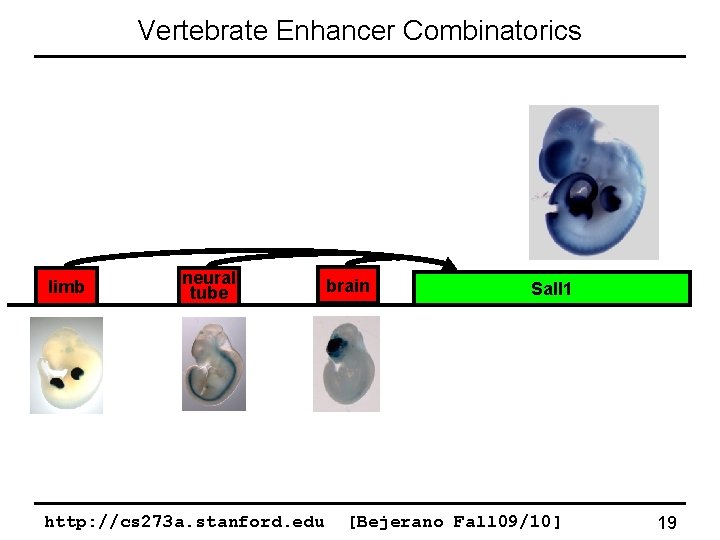
Vertebrate Enhancer Combinatorics limb neural tube http: //cs 273 a. stanford. edu brain Sall 1 [Bejerano Fall 09/10] 19
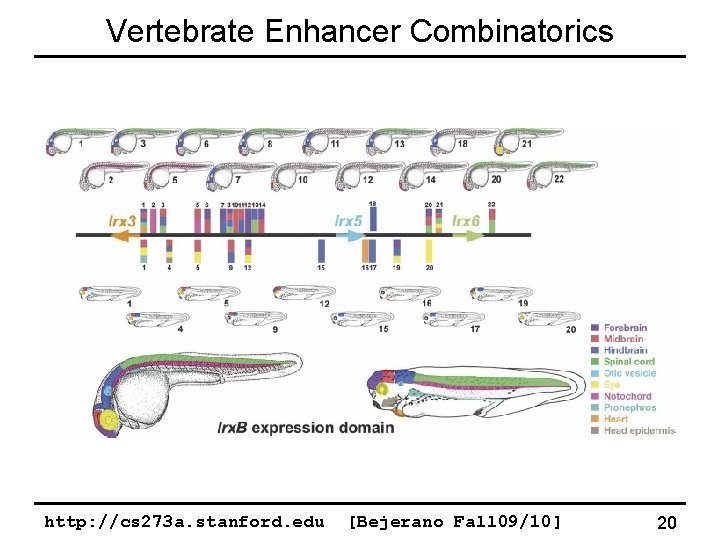
Vertebrate Enhancer Combinatorics http: //cs 273 a. stanford. edu [Bejerano Fall 09/10] 20
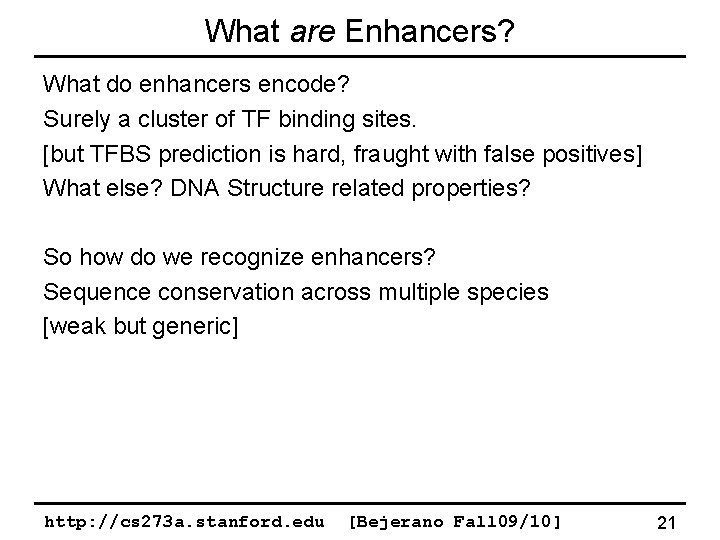
What are Enhancers? What do enhancers encode? Surely a cluster of TF binding sites. [but TFBS prediction is hard, fraught with false positives] What else? DNA Structure related properties? So how do we recognize enhancers? Sequence conservation across multiple species [weak but generic] http: //cs 273 a. stanford. edu [Bejerano Fall 09/10] 21
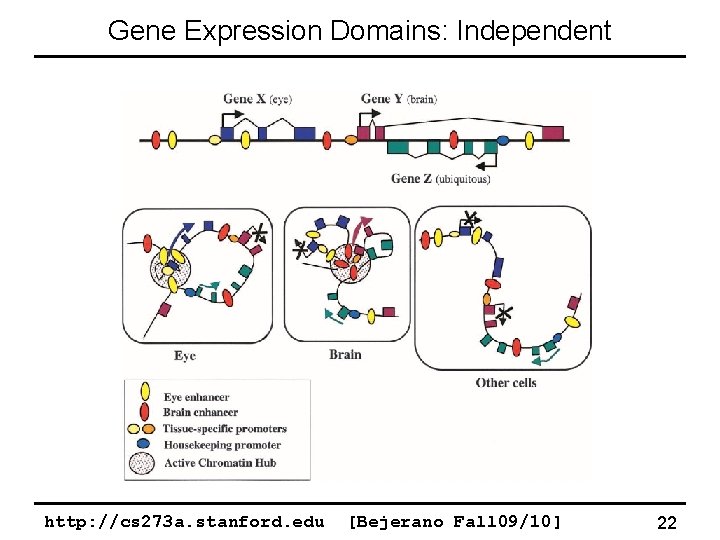
Gene Expression Domains: Independent http: //cs 273 a. stanford. edu [Bejerano Fall 09/10] 22
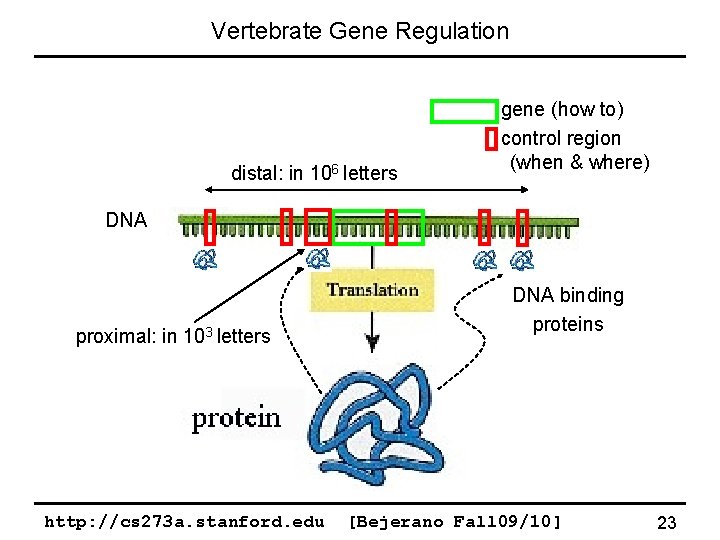
Vertebrate Gene Regulation distal: in 106 letters gene (how to) control region (when & where) DNA proximal: in 103 letters http: //cs 273 a. stanford. edu DNA binding proteins [Bejerano Fall 09/10] 23
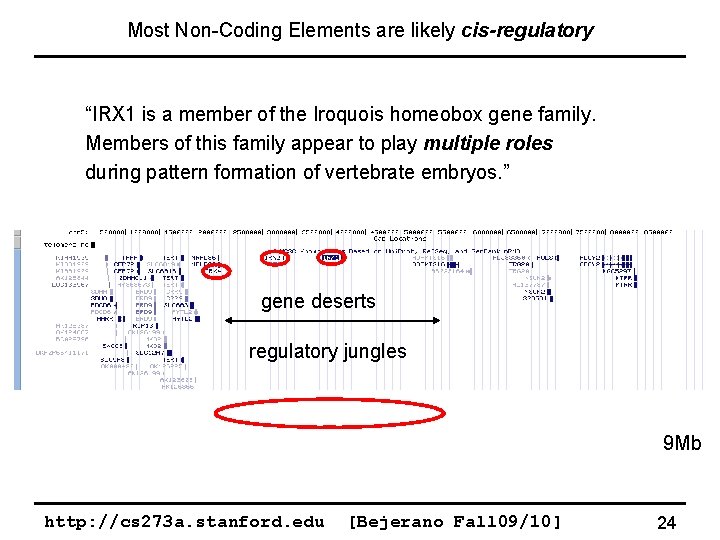
Most Non-Coding Elements are likely cis-regulatory “IRX 1 is a member of the Iroquois homeobox gene family. Members of this family appear to play multiple roles during pattern formation of vertebrate embryos. ” gene deserts regulatory jungles 9 Mb http: //cs 273 a. stanford. edu [Bejerano Fall 09/10] 24
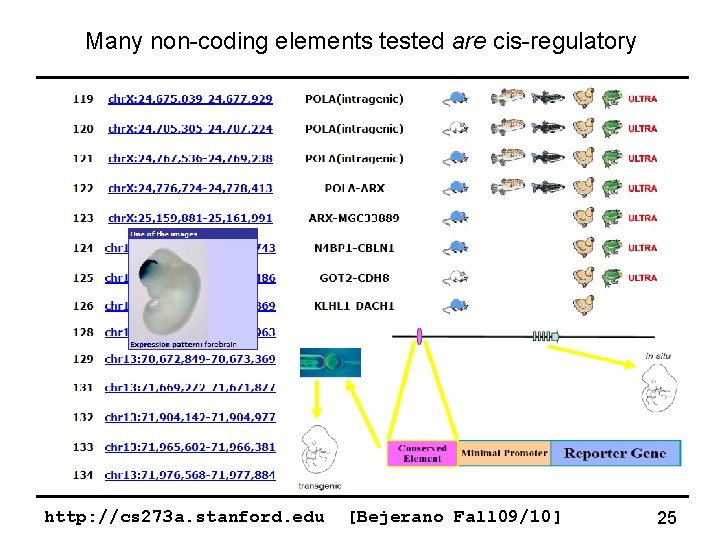
Many non-coding elements tested are cis-regulatory http: //cs 273 a. stanford. edu [Bejerano Fall 09/10] 25
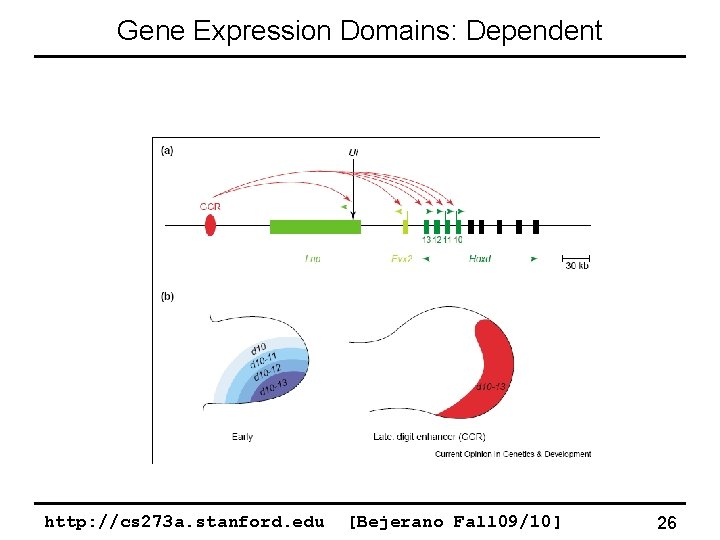
Gene Expression Domains: Dependent http: //cs 273 a. stanford. edu [Bejerano Fall 09/10] 26
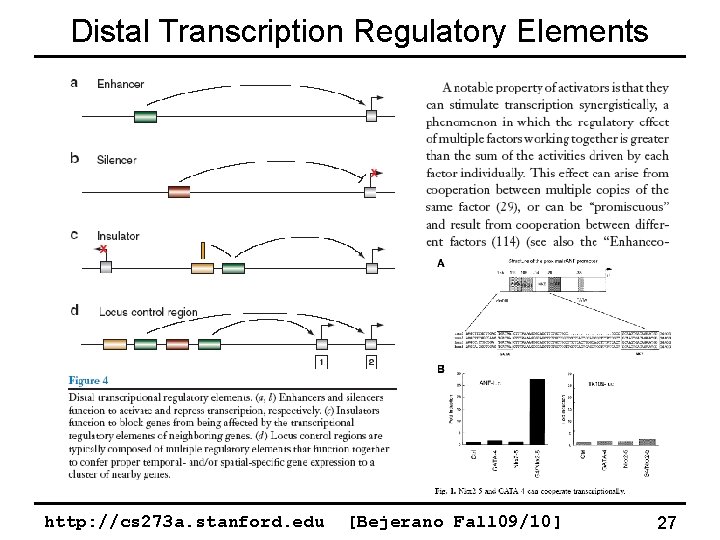
Distal Transcription Regulatory Elements http: //cs 273 a. stanford. edu [Bejerano Fall 09/10] 27
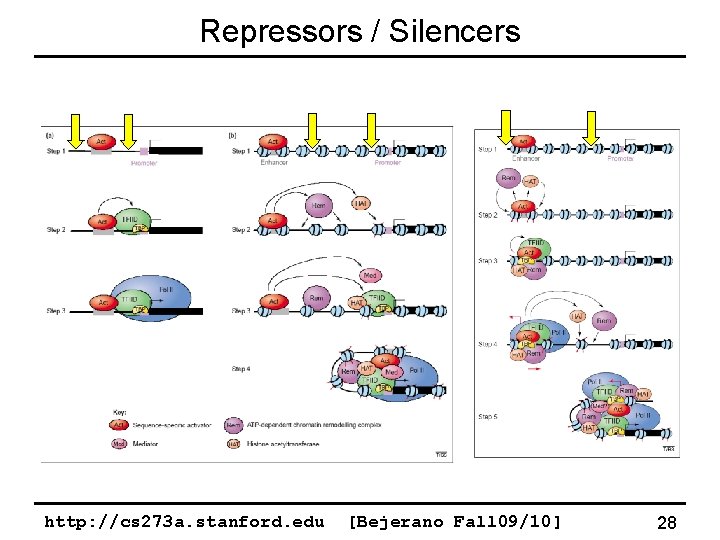
Repressors / Silencers http: //cs 273 a. stanford. edu [Bejerano Fall 09/10] 28
s r What are Enhancers? o s s e pr Re ors encode? s s e r What do enhancers p e r Surely a cluster of TF binding sites. [but TFBS prediction is hard, fraught with false positives] What else? DNA Structure related properties? ors s s e r So how do we recognize enhancers? p re Sequence conservation across multiple species [weak but generic] Verifying repressors is trickier [loss vs. gain of function]. How do you predict an enhancer from a repressor? Duh. . . http: //cs 273 a. stanford. edu [Bejerano Fall 09/10] 29
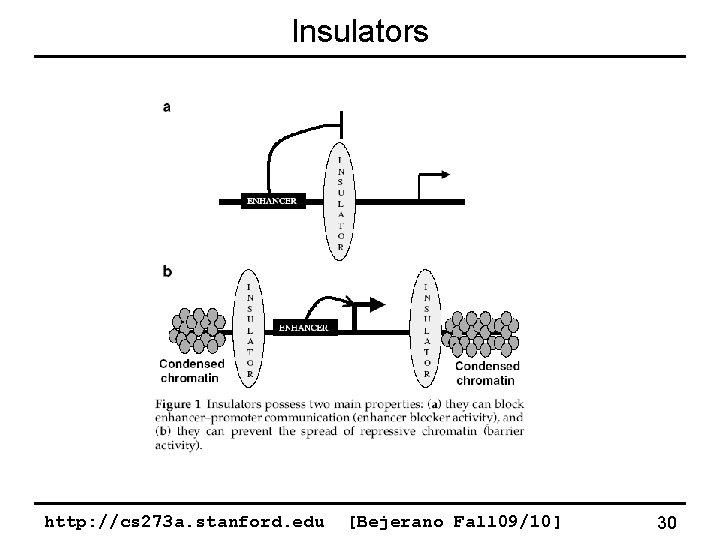
Insulators http: //cs 273 a. stanford. edu [Bejerano Fall 09/10] 30
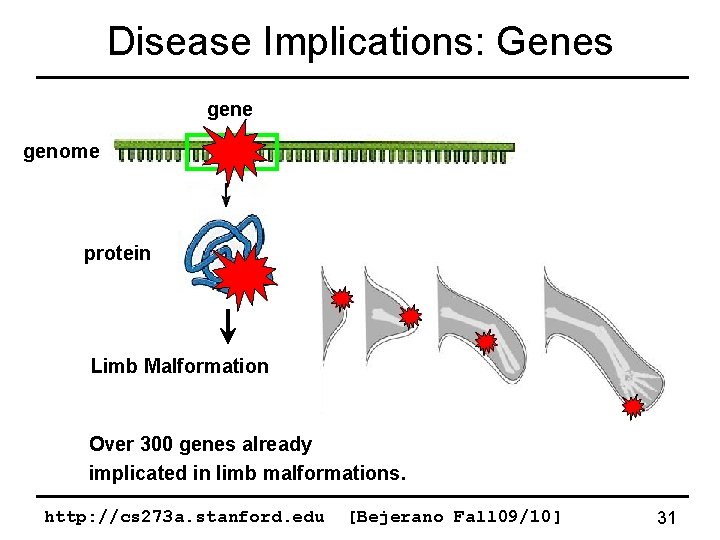
Disease Implications: Genes gene genome protein Limb Malformation Over 300 genes already implicated in limb malformations. http: //cs 273 a. stanford. edu [Bejerano Fall 09/10] 31
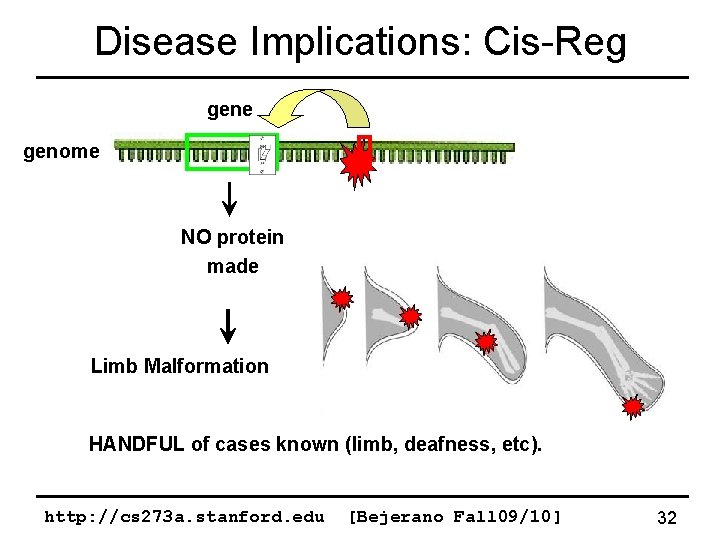
Disease Implications: Cis-Reg gene genome NO protein made Limb Malformation HANDFUL of cases known (limb, deafness, etc). http: //cs 273 a. stanford. edu [Bejerano Fall 09/10] 32
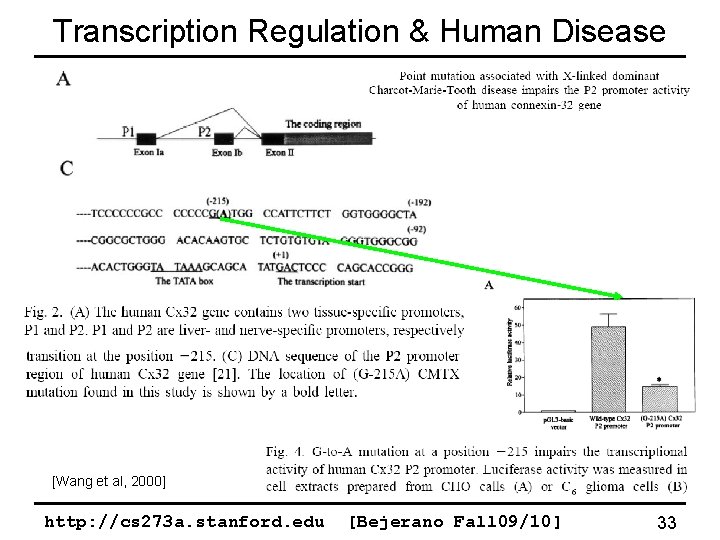
Transcription Regulation & Human Disease [Wang et al, 2000] http: //cs 273 a. stanford. edu [Bejerano Fall 09/10] 33
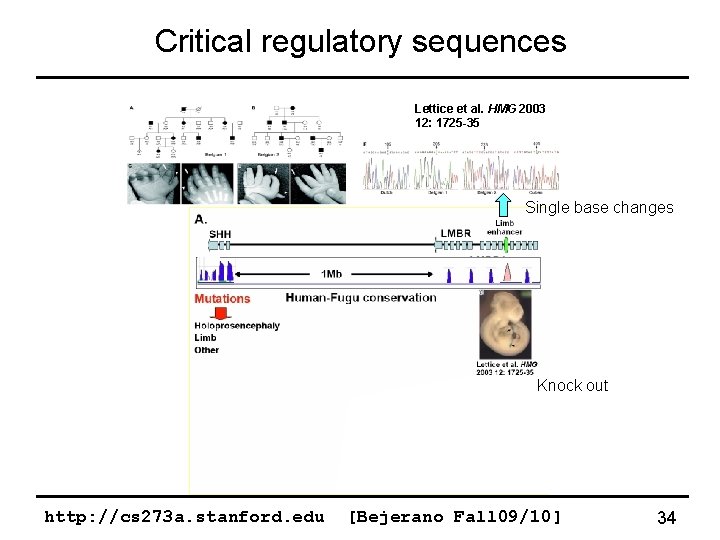
Critical regulatory sequences Lettice et al. HMG 2003 12: 1725 -35 Single base changes Knock out http: //cs 273 a. stanford. edu [Bejerano Fall 09/10] 34
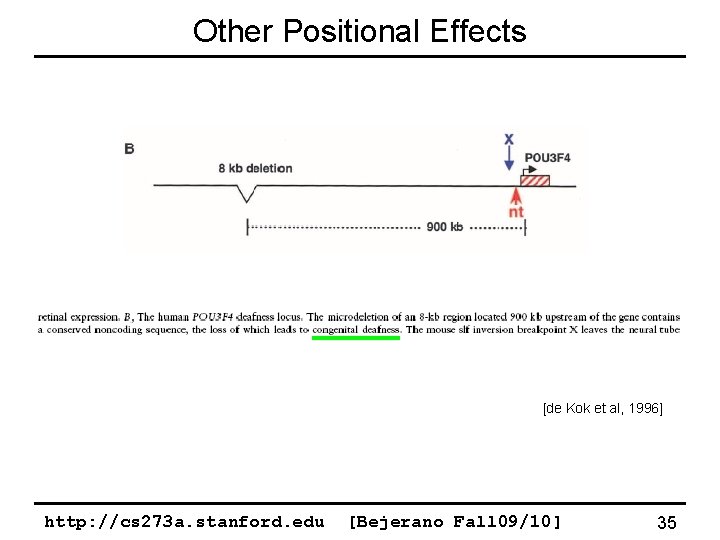
Other Positional Effects [de Kok et al, 1996] http: //cs 273 a. stanford. edu [Bejerano Fall 09/10] 35
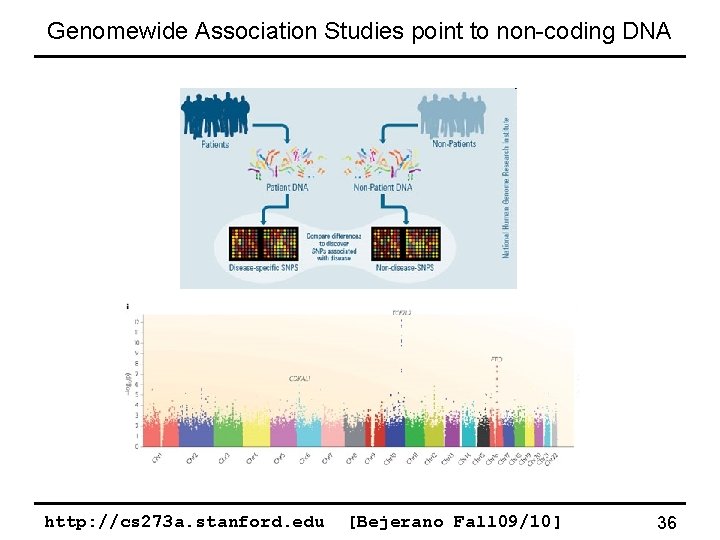
Genomewide Association Studies point to non-coding DNA http: //cs 273 a. stanford. edu [Bejerano Fall 09/10] 36
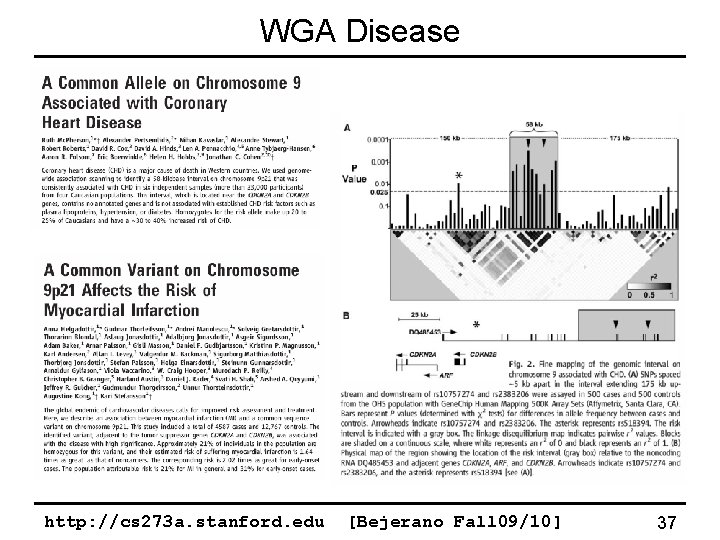
WGA Disease http: //cs 273 a. stanford. edu [Bejerano Fall 09/10] 37
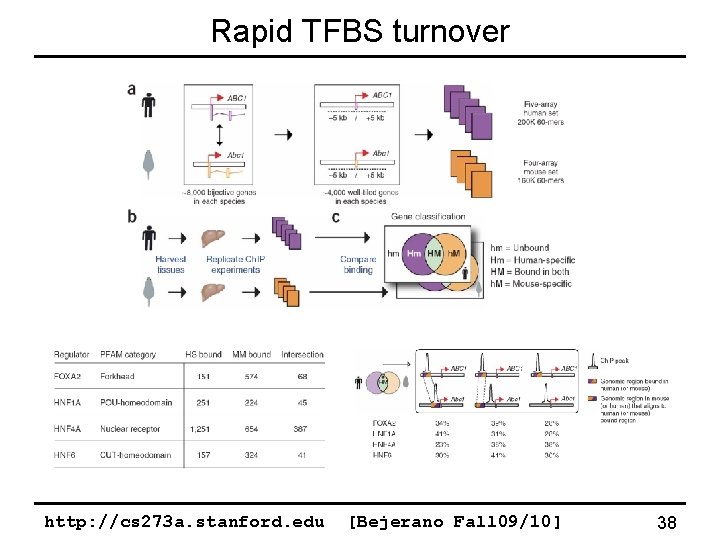
Rapid TFBS turnover http: //cs 273 a. stanford. edu [Bejerano Fall 09/10] 38
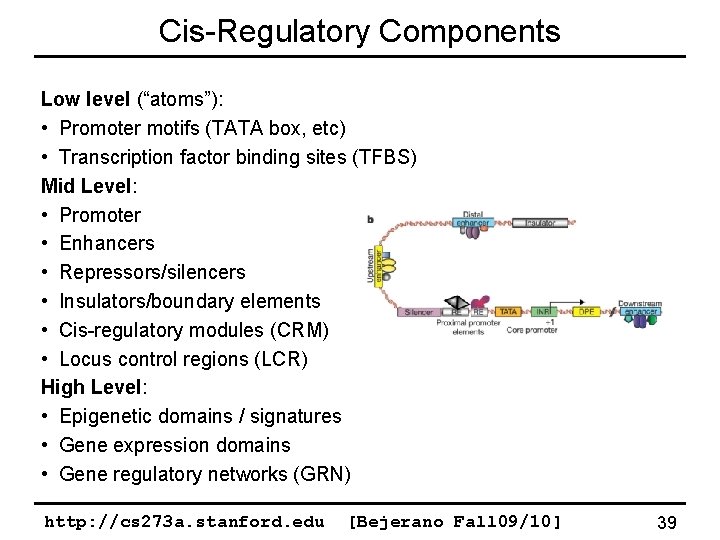
Cis-Regulatory Components Low level (“atoms”): • Promoter motifs (TATA box, etc) • Transcription factor binding sites (TFBS) Mid Level: • Promoter • Enhancers • Repressors/silencers • Insulators/boundary elements • Cis-regulatory modules (CRM) • Locus control regions (LCR) High Level: • Epigenetic domains / signatures • Gene expression domains • Gene regulatory networks (GRN) http: //cs 273 a. stanford. edu [Bejerano Fall 09/10] 39
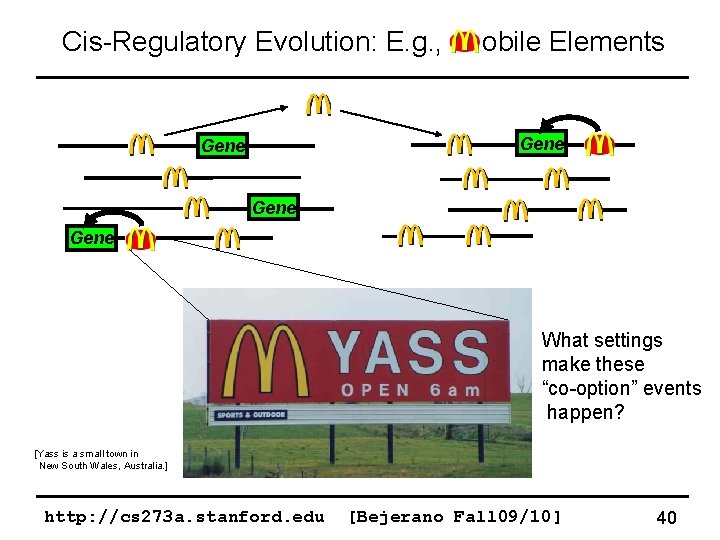
Cis-Regulatory Evolution: E. g. , obile Elements Gene What settings make these “co-option” events happen? [Yass is a small town in New South Wales, Australia. ] http: //cs 273 a. stanford. edu [Bejerano Fall 09/10] 40
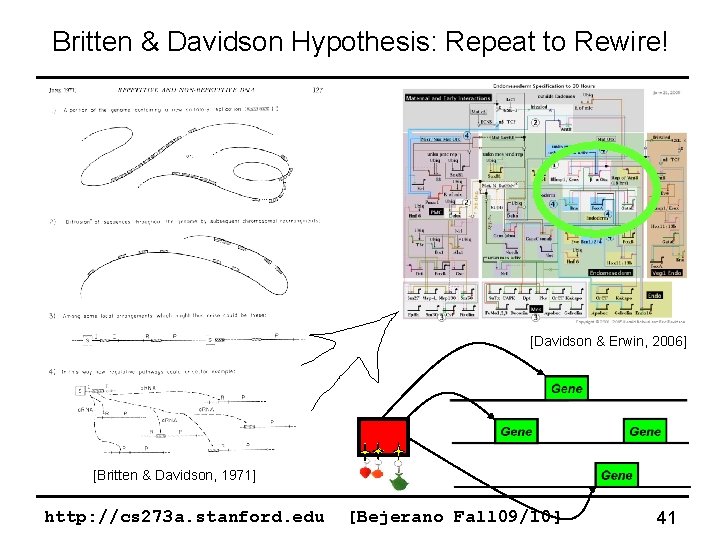
Britten & Davidson Hypothesis: Repeat to Rewire! [Davidson & Erwin, 2006] [Britten & Davidson, 1971] http: //cs 273 a. stanford. edu [Bejerano Fall 09/10] 41
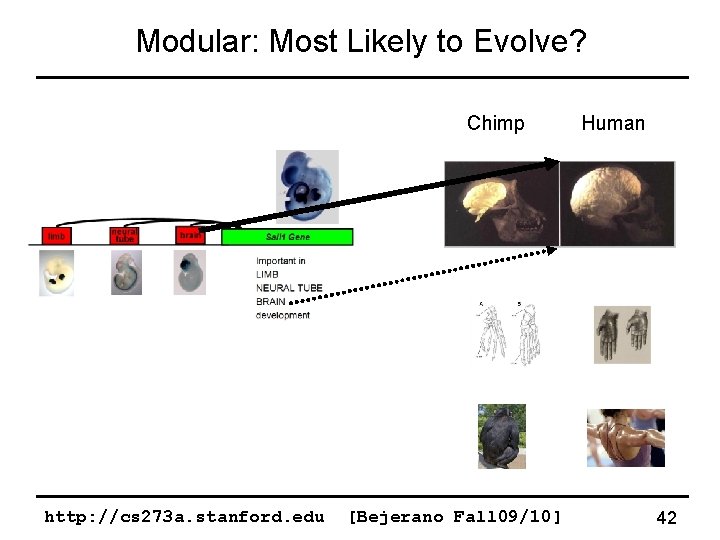
Modular: Most Likely to Evolve? Chimp http: //cs 273 a. stanford. edu [Bejerano Fall 09/10] Human 42
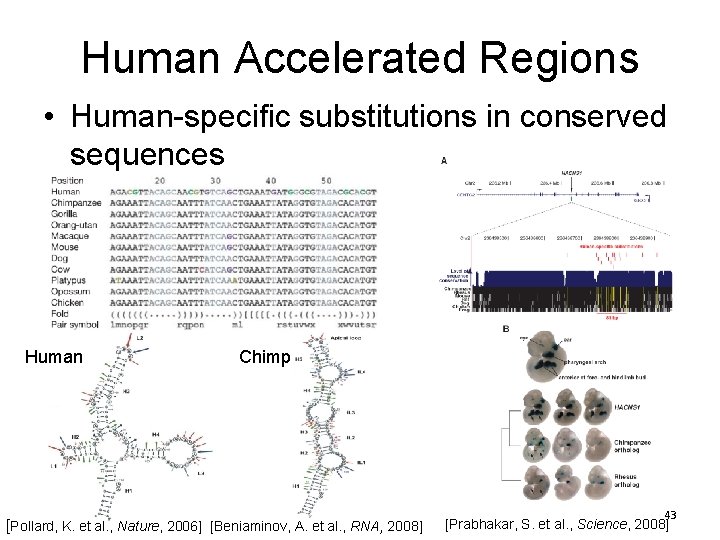
Human Accelerated Regions • Human-specific substitutions in conserved sequences Human [Pollard, K. et al. , Nature, 2006] Chimp [Beniaminov, A. et al. , RNA, 2008] 43 [Prabhakar, S. et al. , Science, 2008]
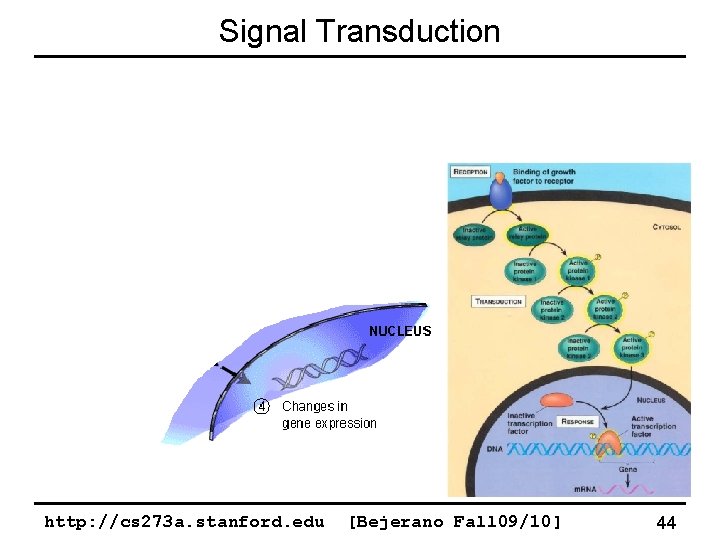
Signal Transduction http: //cs 273 a. stanford. edu [Bejerano Fall 09/10] 44
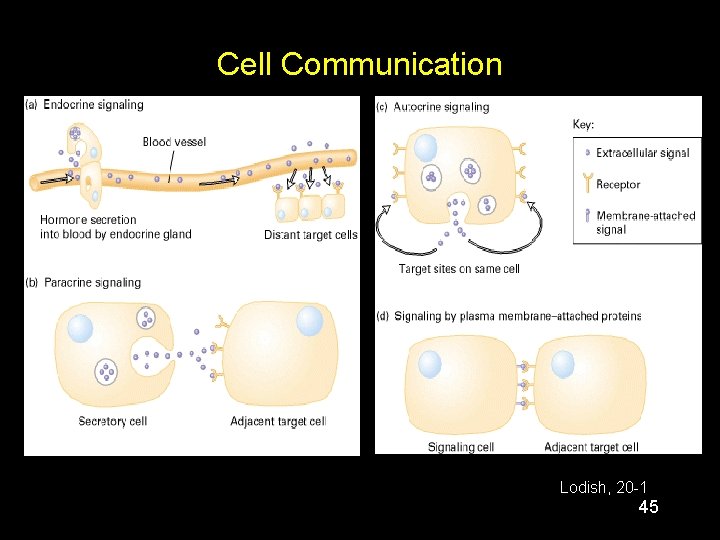
Cell Communication Lodish, 20 -1 45

Wnt and Hedgehog signaling Jacob & Lum Science 2007 46
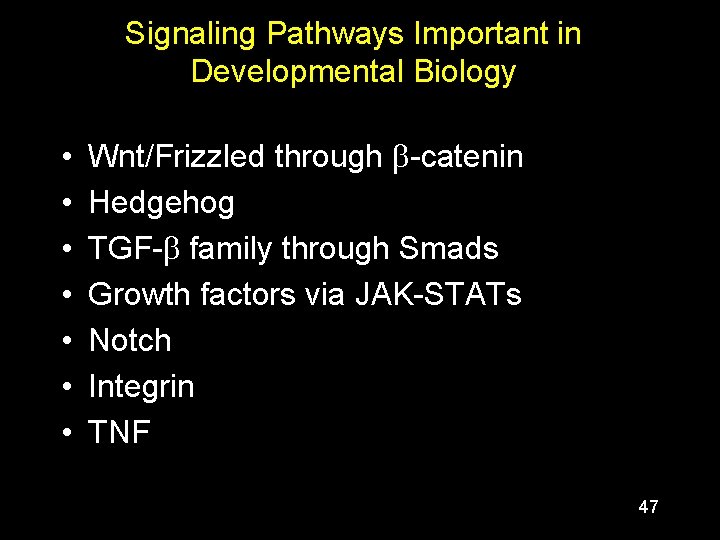
Signaling Pathways Important in Developmental Biology • • Wnt/Frizzled through b-catenin Hedgehog TGF-b family through Smads Growth factors via JAK-STATs Notch Integrin TNF 47
- Slides: 47