
Thailand Standards TMC WFME BME Standards 2017 Criteria
Thailand Standards TMC. WFME. BME. Standards (2017) พงษศกด วรรณไกรโรจน Criteria Training and SAR Writing Workshop อาคารหอพกพฒนาคณาจารย 20 -24 พฤศจกายน 2560

Basic Medical Education WFME Global Standards for Quality Improvement of Medical Education 9 Areas with 35 Sub-areas Areas: Broad components in the structure, process and outcome of medical education Sub-areas: specific aspects of an area, corresponding to performance indicators Annotations: To clarify, amplify or exemplify expressions in the standards

WFME Standards: Two levels Basic standards: ◦ The standards that MUST be met by every medical school ◦ Expressed by MUST Standards for Quality Development: ◦ The standards that are in accordance with the International consensus about best practice for medical schools ◦ Expressed by SHOULD The 2015 Revision: Total 106 Basic Standards and 90 Quality Development Standards
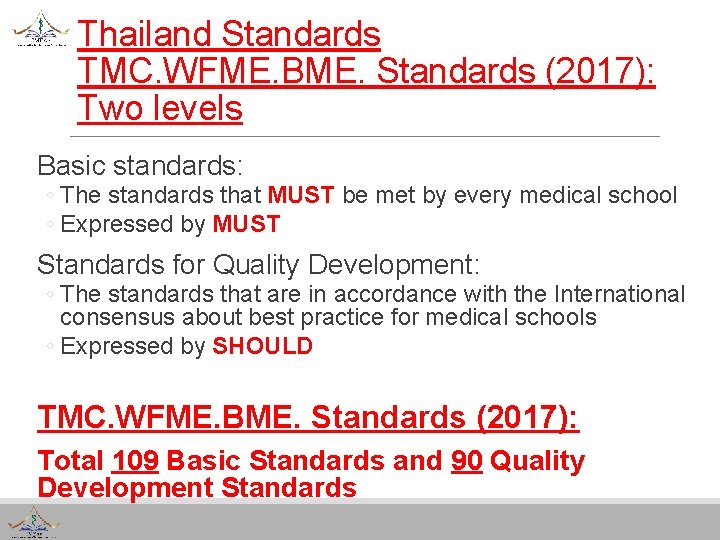
Thailand Standards TMC. WFME. BME. Standards (2017): Two levels Basic standards: ◦ The standards that MUST be met by every medical school ◦ Expressed by MUST Standards for Quality Development: ◦ The standards that are in accordance with the International consensus about best practice for medical schools ◦ Expressed by SHOULD TMC. WFME. BME. Standards (2017): Total 109 Basic Standards and 90 Quality Development Standards
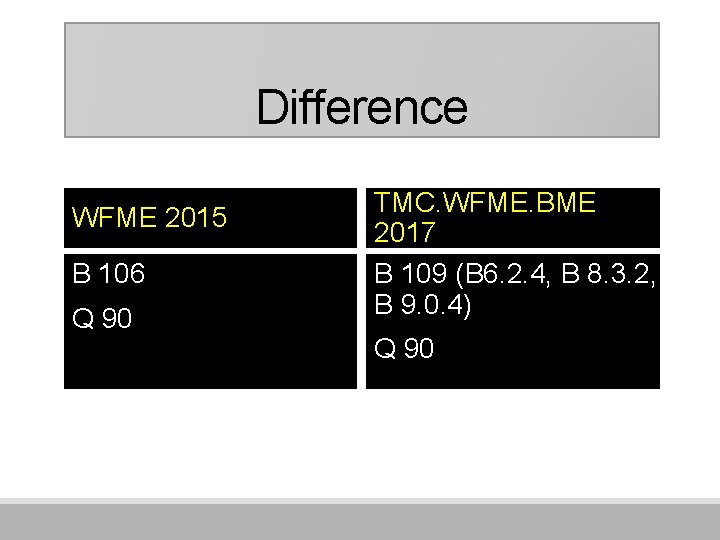
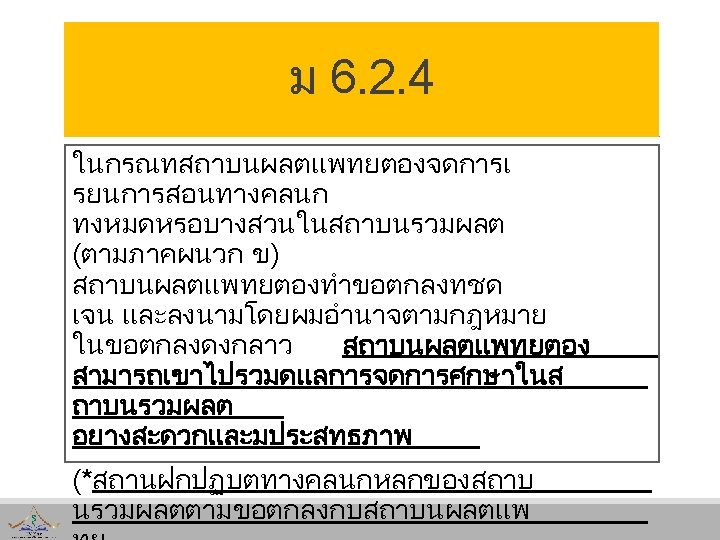
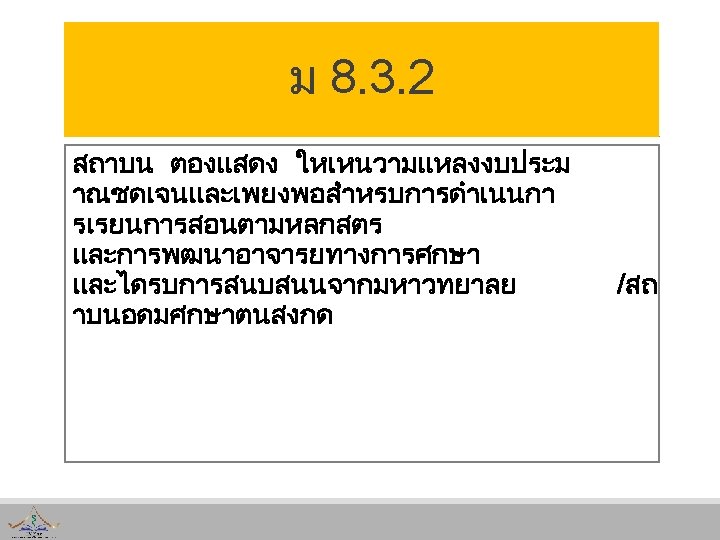
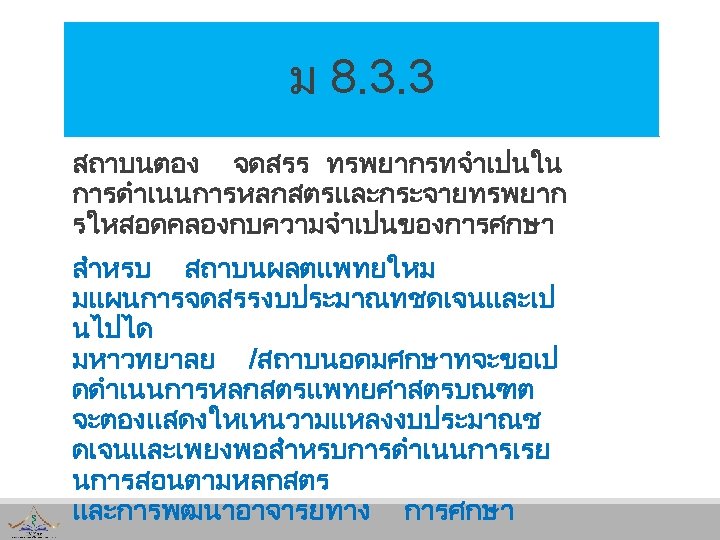
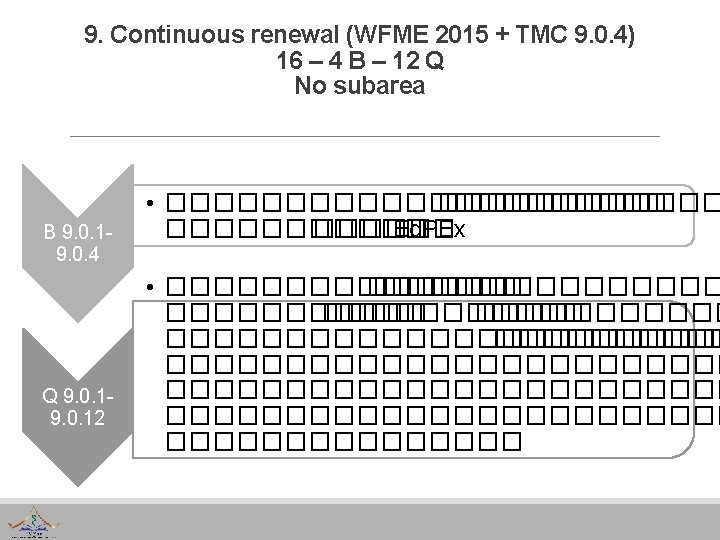
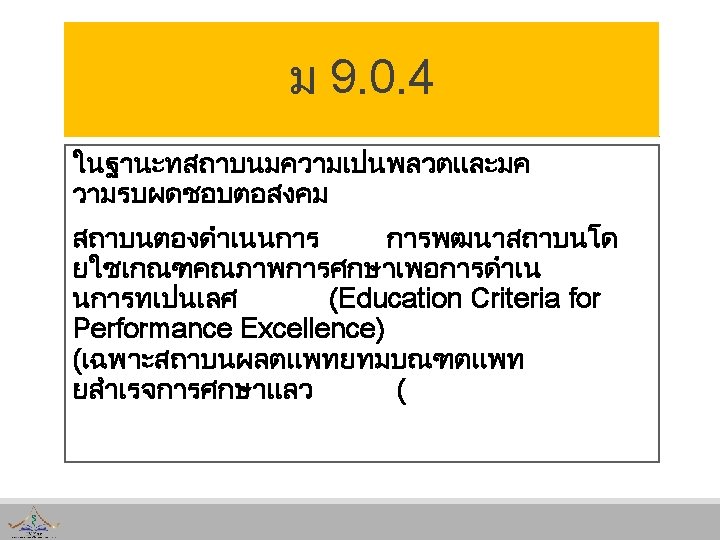
Difference WFME 2015 B 106 Q 90 TMC. WFME. BME 2017 B 109 (B 6. 2. 4, B 8. 3. 2, B 9. 0. 4) Q 90
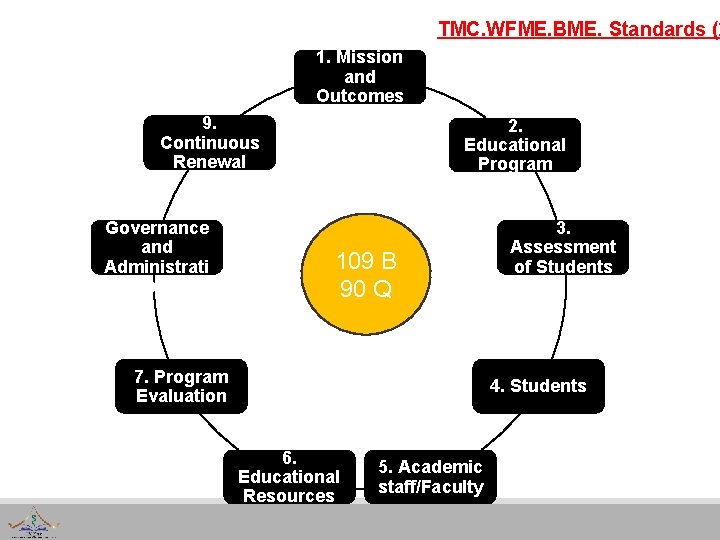
TMC. WFME. BME. Standards (2 1. Mission and Outcomes 9. Continuous Renewal 8. Governance and Administrati on 2. Educational Program 109 B 90 Q 7. Program Evaluation 3. Assessment of Students 4. Students 6. Educational Resources 5. Academic staff/Faculty
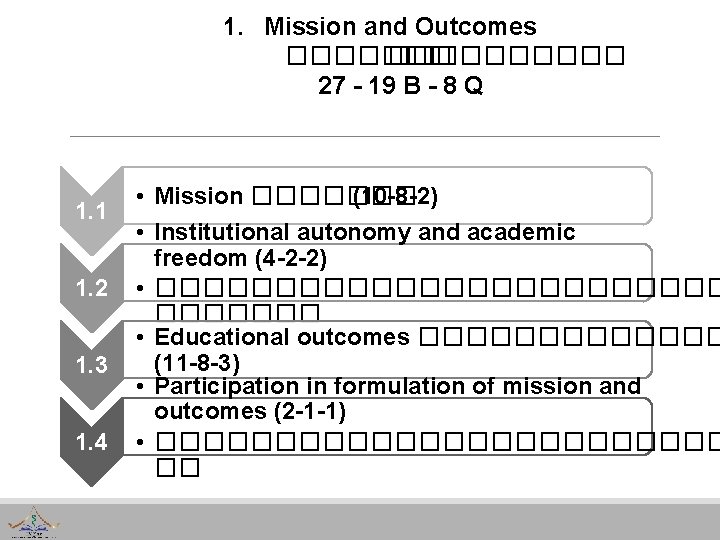
1. Mission and Outcomes ���������� 27 - 19 B - 8 Q 1. 1 1. 2 1. 3 1. 4 • Mission ������� (10 -8 -2) • Institutional autonomy and academic freedom (4 -2 -2) • ������������ • Educational outcomes ������� (11 -8 -3) • Participation in formulation of mission and outcomes (2 -1 -1) • ������������ ��
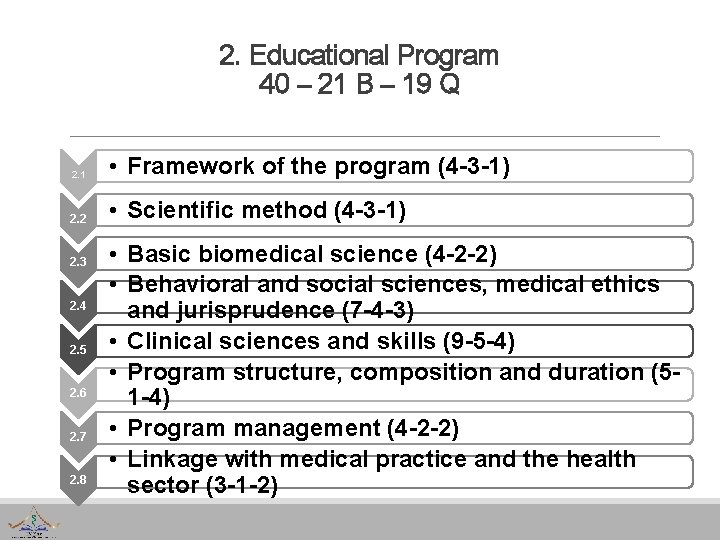
2. Educational Program 40 – 21 B – 19 Q 2. 1 • Framework of the program (4 -3 -1) 2. 2 • Scientific method (4 -3 -1) 2. 3 2. 4 2. 5 2. 6 2. 7 2. 8 • Basic biomedical science (4 -2 -2) • Behavioral and social sciences, medical ethics and jurisprudence (7 -4 -3) • Clinical sciences and skills (9 -5 -4) • Program structure, composition and duration (51 -4) • Program management (4 -2 -2) • Linkage with medical practice and the health sector (3 -1 -2)
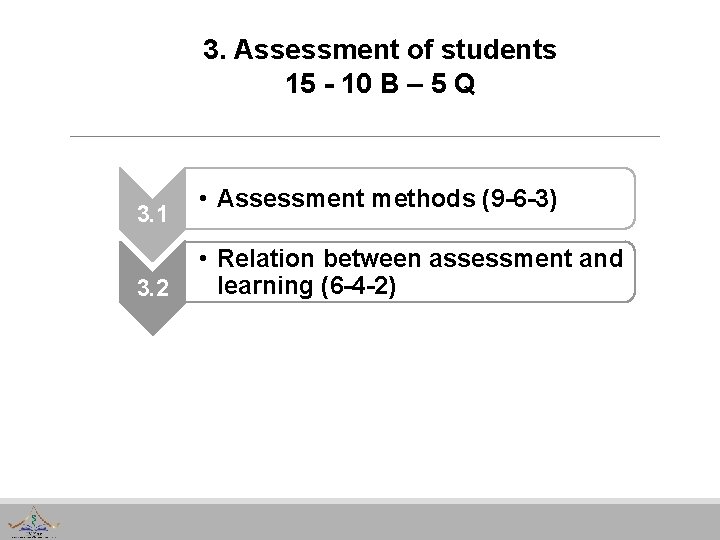
3. Assessment of students 15 - 10 B – 5 Q 3. 1 3. 2 • Assessment methods (9 -6 -3) • Relation between assessment and learning (6 -4 -2)
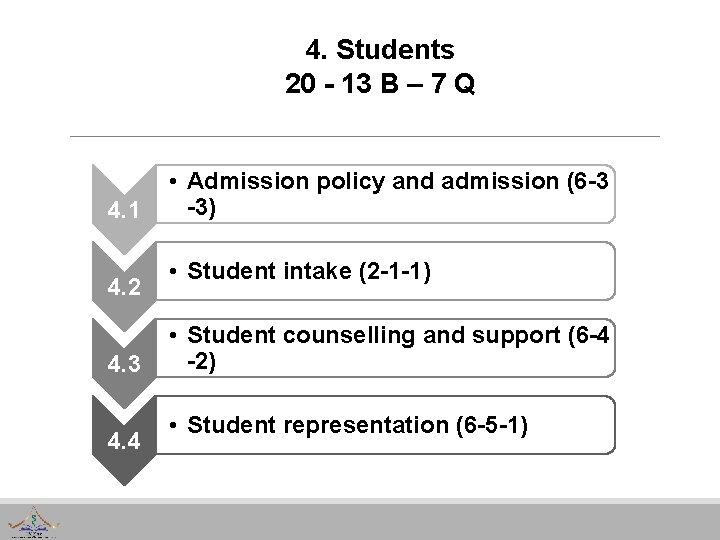
4. Students 20 - 13 B – 7 Q 4. 1 4. 2 4. 3 4. 4 • Admission policy and admission (6 -3 -3) • Student intake (2 -1 -1) • Student counselling and support (6 -4 -2) • Student representation (6 -5 -1)
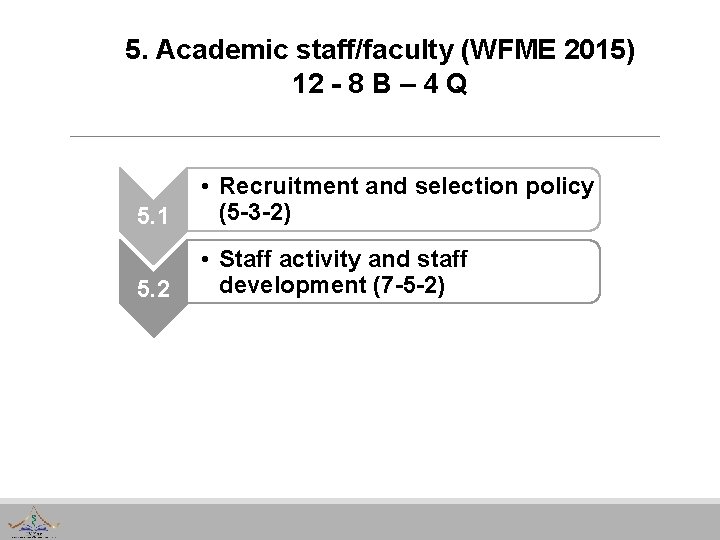
5. Academic staff/faculty (WFME 2015) 12 - 8 B – 4 Q 5. 1 • Recruitment and selection policy (5 -3 -2) 5. 2 • Staff activity and staff development (7 -5 -2)
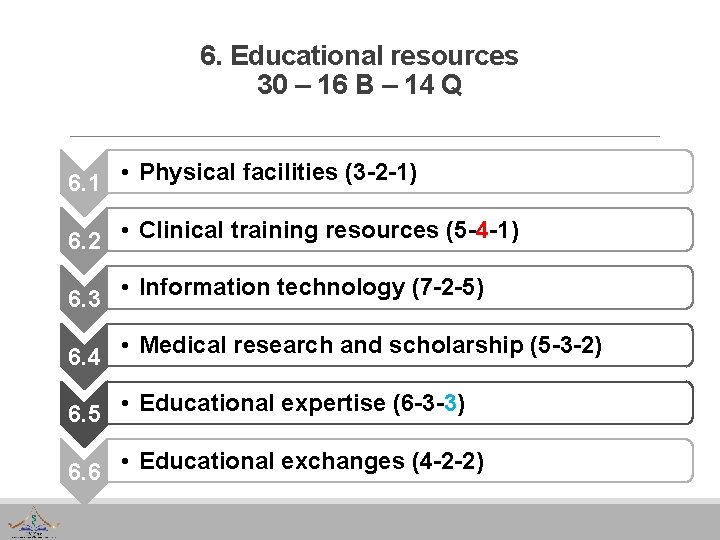
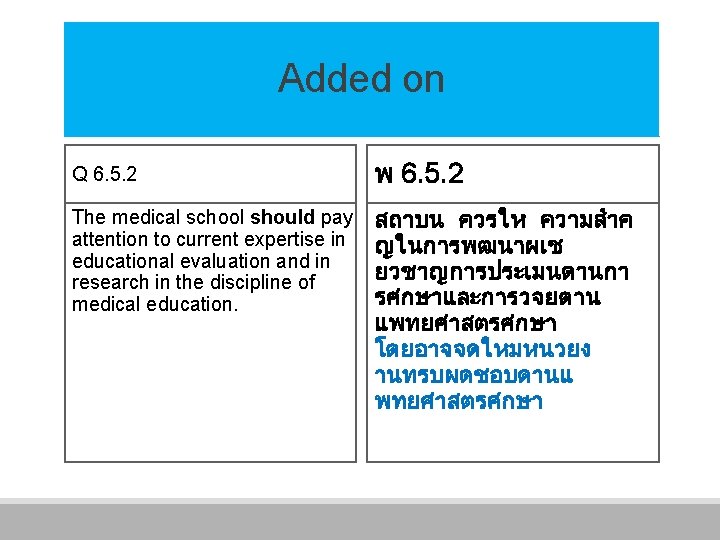
6. Educational resources 30 – 16 B – 14 Q 6. 1 • Physical facilities (3 -2 -1) 6. 2 • Clinical training resources (5 -4 -1) 6. 3 • Information technology (7 -2 -5) 6. 4 • Medical research and scholarship (5 -3 -2) 6. 5 • Educational expertise (6 -3 -3) 6. 6 • Educational exchanges (4 -2 -2)
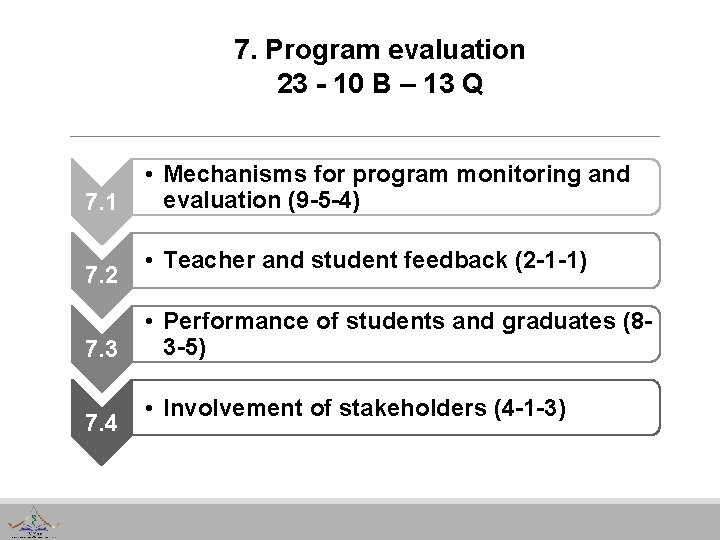
7. Program evaluation 23 - 10 B – 13 Q 7. 1 7. 2 7. 3 7. 4 • Mechanisms for program monitoring and evaluation (9 -5 -4) • Teacher and student feedback (2 -1 -1) • Performance of students and graduates (83 -5) • Involvement of stakeholders (4 -1 -3)
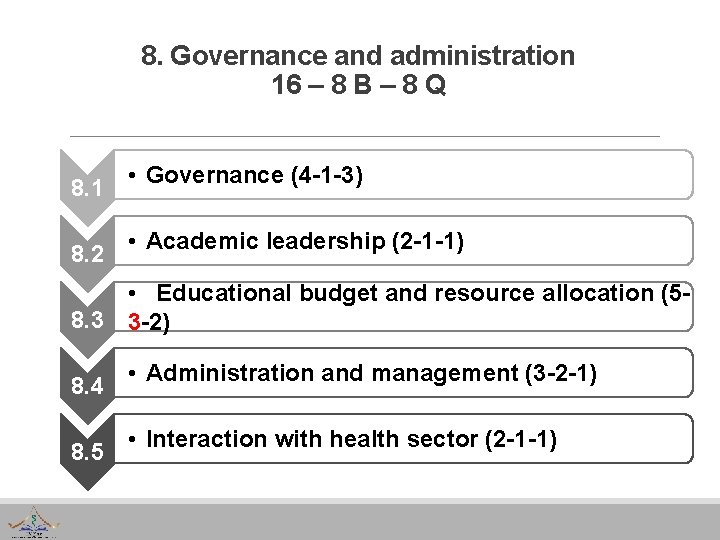
8. Governance and administration 16 – 8 B – 8 Q 8. 1 8. 2 • Governance (4 -1 -3) • Academic leadership (2 -1 -1) • Educational budget and resource allocation (58. 3 3 -2) 8. 4 8. 5 • Administration and management (3 -2 -1) • Interaction with health sector (2 -1 -1)

Q&A
- Slides: 22