
th th 18 AND 19 CENTURY THEATRE Sentimentalism

- Slides: 48
th th 18 AND 19 CENTURY THEATRE: Sentimentalism, Romanticism and Melodrama
l Many people objected to the disreputable antics of the Restoration plays l They disliked: crudeness, sexual comment and innuendo, lack of morals l Partly as a reaction, new types of plays were written and performed l These new plays were Sentimental dramas, aimed at being the opposite of the bawdy Restoration plays
Sentimentalism l Sentimentalism relates to feelings or emotions l Sentimental drama aimed at touching the feelings of the audience deeply l Successful sentimental plays made audience members sympathise, feel sorry for characters in the play, and created emotional reactions l Audience members might cry or feel worried anxious
l Plots and acting aimed at invoking sympathy l Stories usually had happy endings l Plots could involve comedy or tragedy l There were often many terrible events before the happy, or tragic ending l Good people were always rewarded l The bad were left dead or despairing
l Sentimental plays created a magical world with incredible twists of fate l However much the good characters suffered they were rewarded in the end, and lived happily ever after l The stories were not believable l But they were entertaining and escapist
l The plays worked on the audience members’ emotions l The theatre gave people the opportunity to express their emotions freely in a safe and accepting environment l Sentimental plays were very popular especially with middle class people
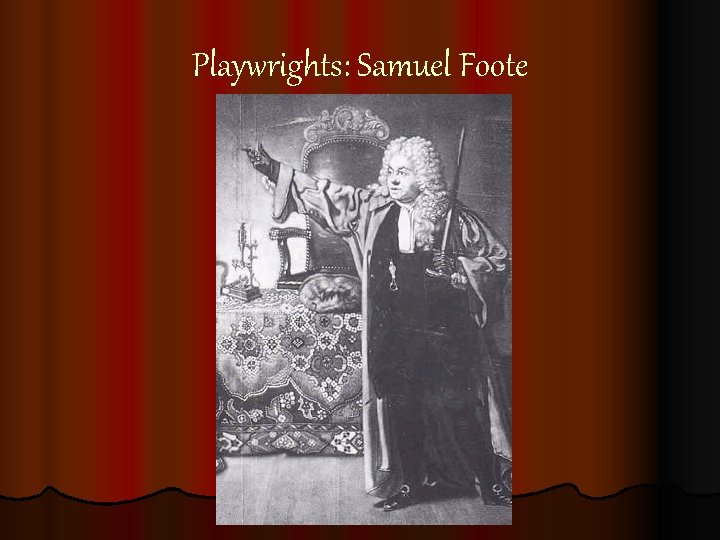
Playwrights: Samuel Foote
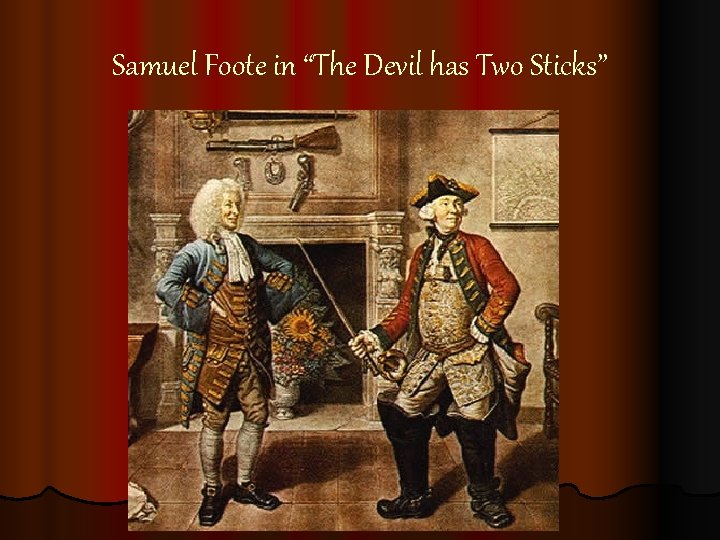
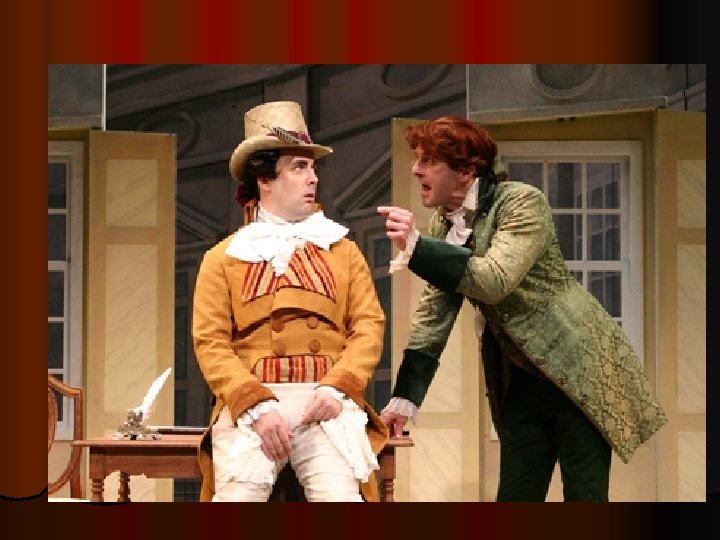
Samuel Foote in “The Devil has Two Sticks”
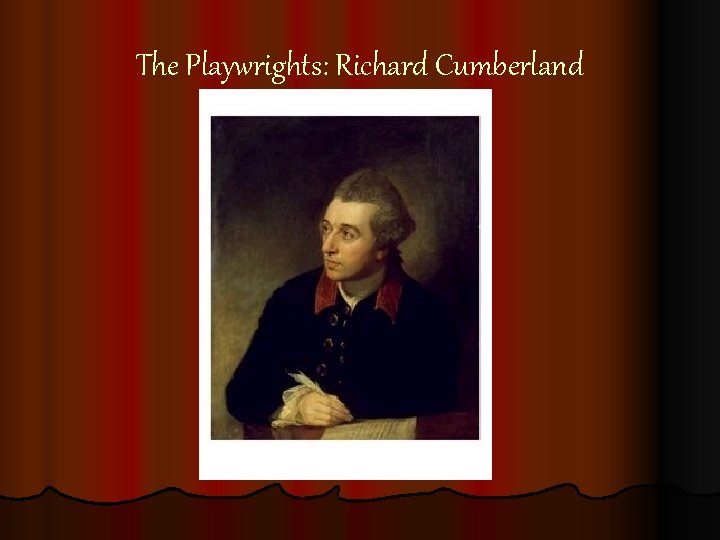
The Playwrights: Richard Cumberland
Some of Cumberland’s Plays l Favourite theme: virtue in distress or danger l The Fashionable Lover l The Brothers l The West-Indian l He wrote more than 35 plays, mostly sentimentalist in style.
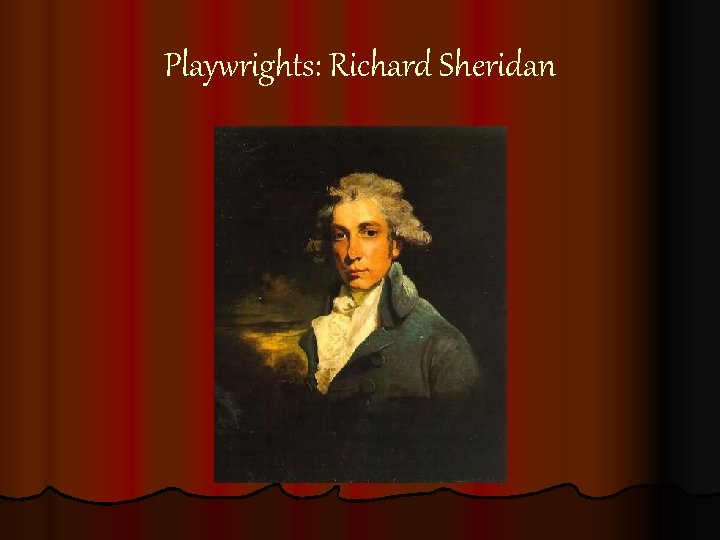
Playwrights: Richard Sheridan
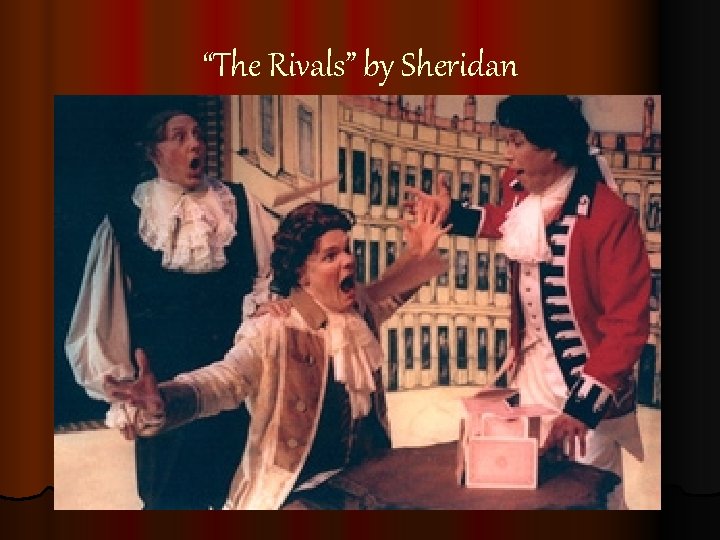
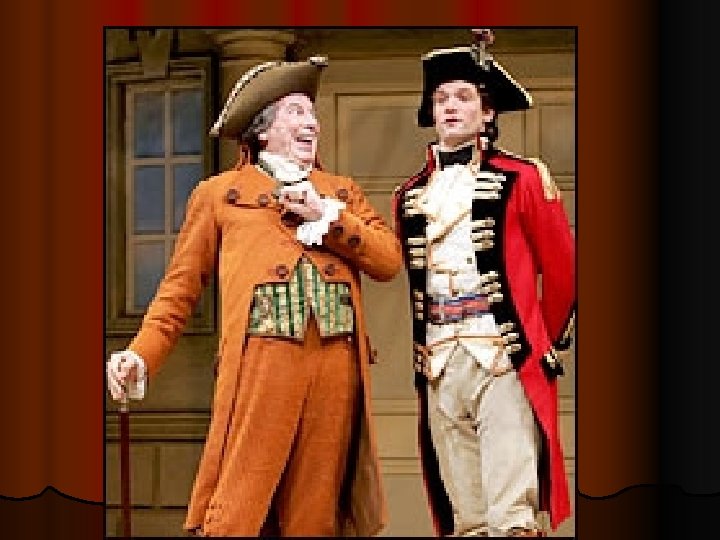
“The Rivals” by Sheridan
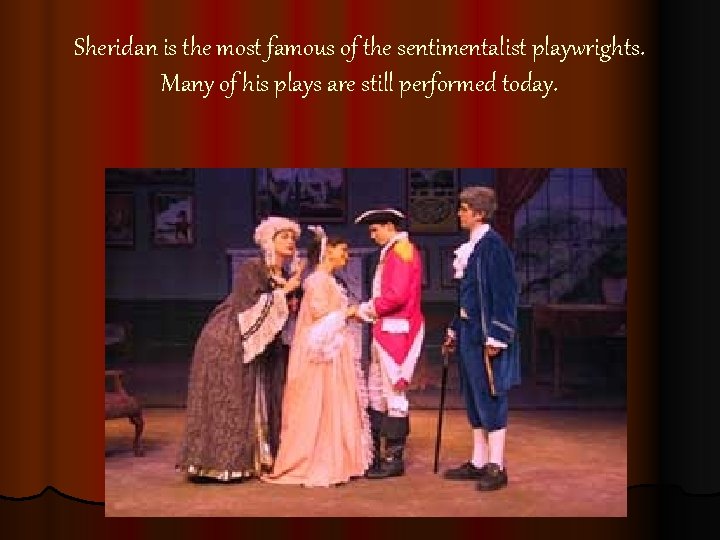
Sheridan is the most famous of the sentimentalist playwrights. Many of his plays are still performed today.
Melodrama l By 1800, Sentimentalism gave way to Melodrama l Melodramas were still sentimental but they developed a distinct style of their own l Melodramas used the same plots as Sentimental plays l They were filled with suspense
l Melodramas were very emotional l Again good characters were rewarded and the bad were punished
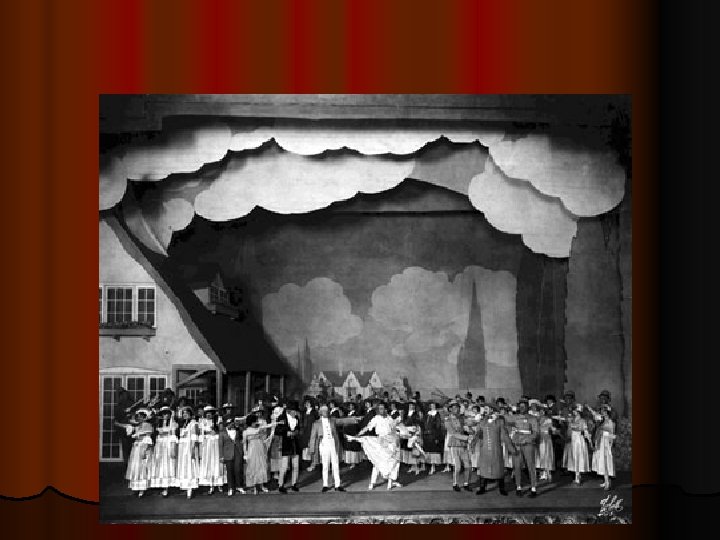
Stagecraft l Special FX l Big, colourful scenes l Excited the audiences as they were new and unusual l Music: songs, musical background l Orchestra was essential in Melodrama
l Action on stage was gripping and exciting l Large audiences of middle class and lower class l Audiences were often rough and loud, interrupting during the play
Characteristics of Melodramas l Musical score l Sound FX l Spectacular effects and scenery l An evil villain l An innocent, good, victim heroine l The good guy/hero
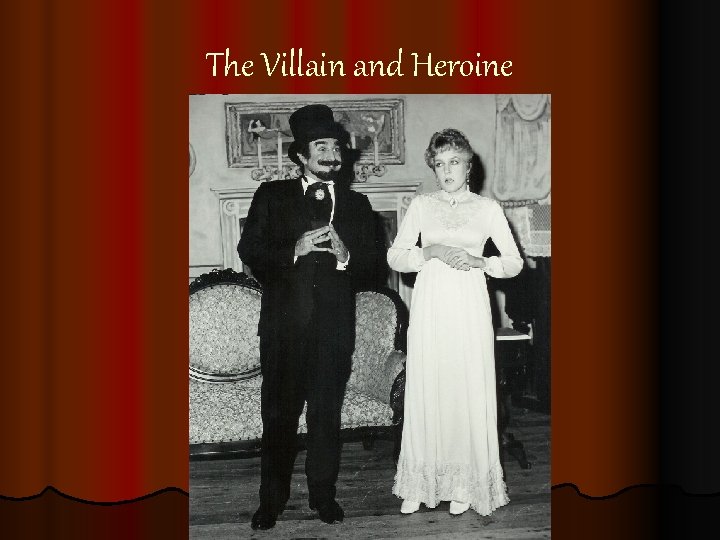
The Villain and Heroine
More Characteristics l A narrator l Disguises l Deception l Humour l Scenes that build up suspense l Last minute rescues
l l Melodramas were so popular they were churned out in large numbers Few were considered to be high quality Audiences wanted spectacle and action ‘Incredible’ feats were performed on stage, including erupting volcanoes and horse races! (These were possible due to the invention of electrical motors) l Scenery could be painted on cloth and electronically moved behind the actors to suggest movement
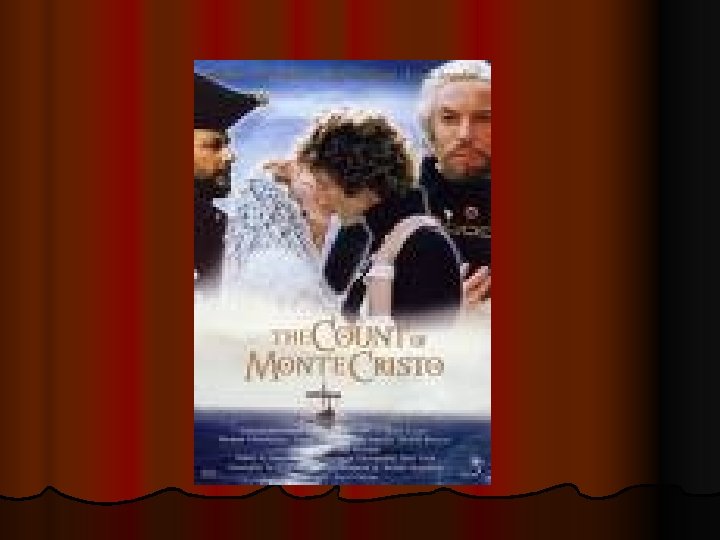
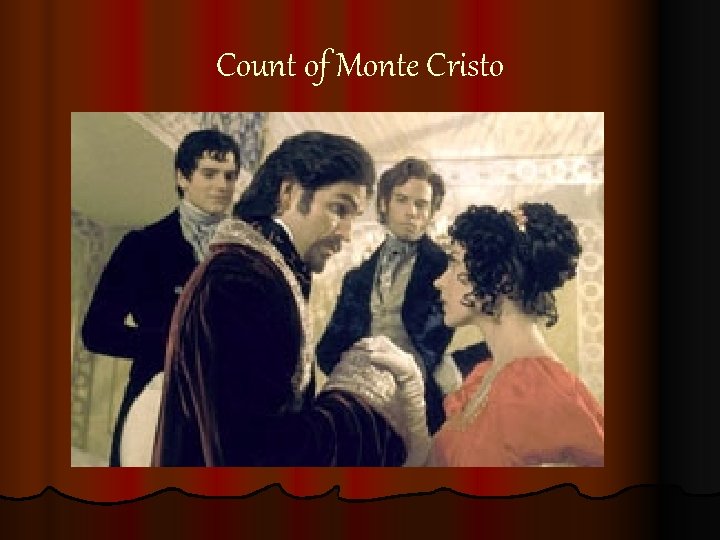
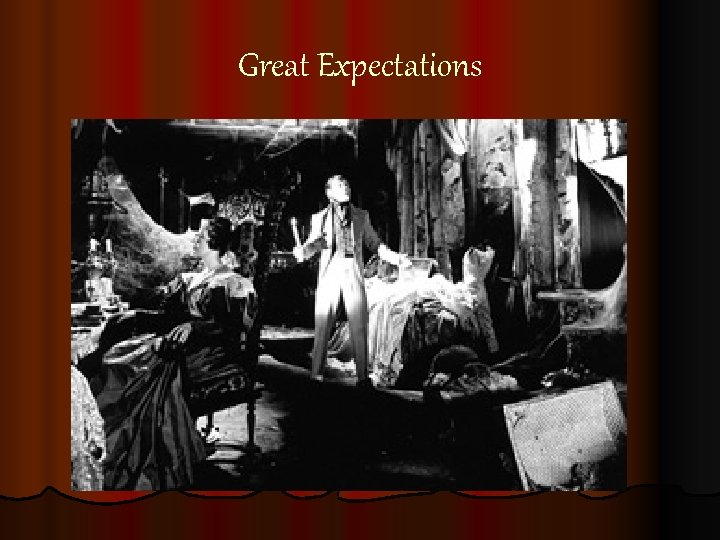
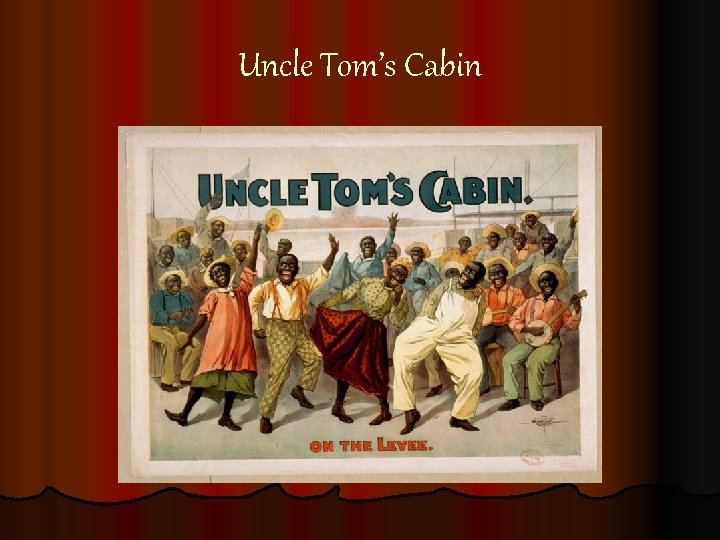
The Stories l Popular stories and novels were adapted for the stage l These included such stories as: l Count of Monte Cristo l Uncle Tom’s Cabin l The works of Charles Dickens
Count of Monte Cristo
Great Expectations
Uncle Tom’s Cabin
Lighting l Lighting played a major role in the success of melodrama l The invention of gas allowed for much more efficent and safer lighting l Candles and oil lighting were dangerous and now a thing of the past l Lighting could now be easily controlled l Lighting could be dimmed and brightened for special FX
Romanticism l Romantic theatre started in Germany l The playwright Goethe combined Greek Tragedy with Shakespearean theatre
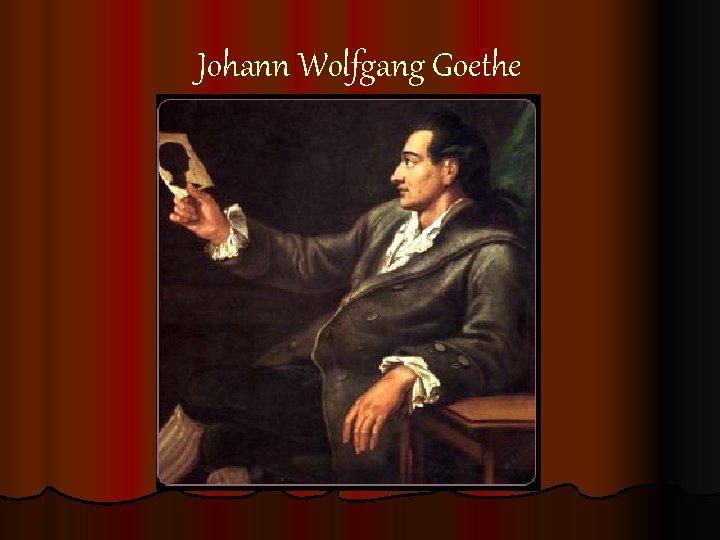
Johann Wolfgang Goethe
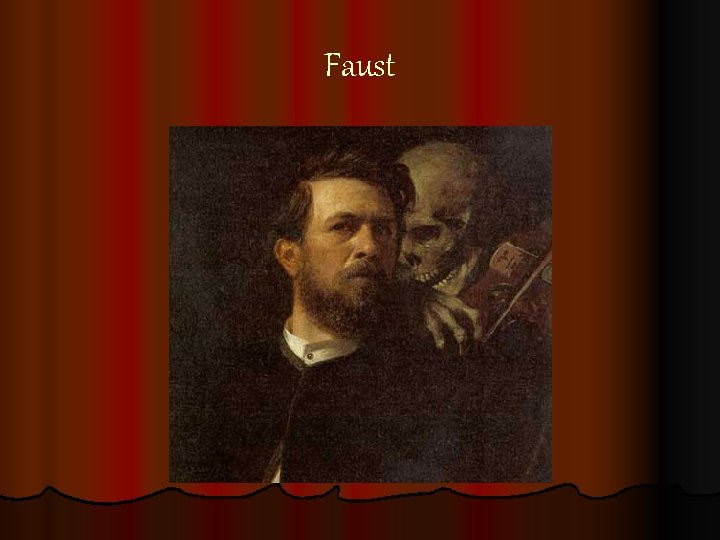
Most Famous Plays l “Faust” l Tale of the bored and rebellious academic who sells his soul to the devil in return for a life of extreme human experience. l “Stella” l Love and the Countess causing two suicides as lovers are spurned
Faust
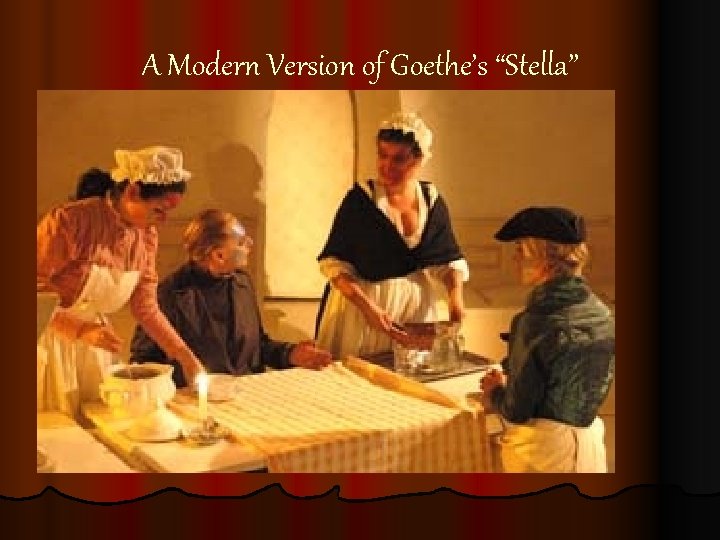
l “Stella” l Love and the Countess causing two suicides as lovers are spurned
A Modern Version of Goethe’s “Stella”
l Romantic theatre had nothing to do with love and romance in particular l It was a description for a movement, or style of art, music or drama l Romantics lived deeply l They were influenced by ancient classics l They often combined all the arts
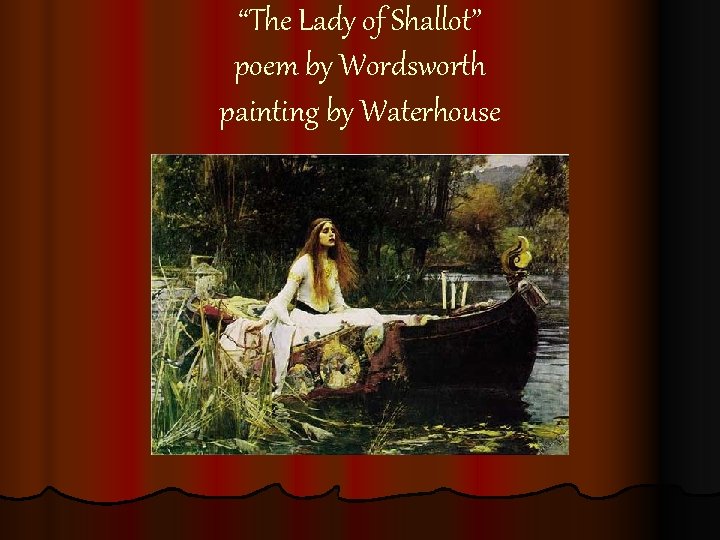
l Romantic artists would paint popular poems l Musicians would write a musical score based a play l Romantics valued: 1. Emotions 2. Ideals 3. Freedom They emphasised the role of the arts to inspire people
“The Lady of Shallot” poem by Wordsworth painting by Waterhouse
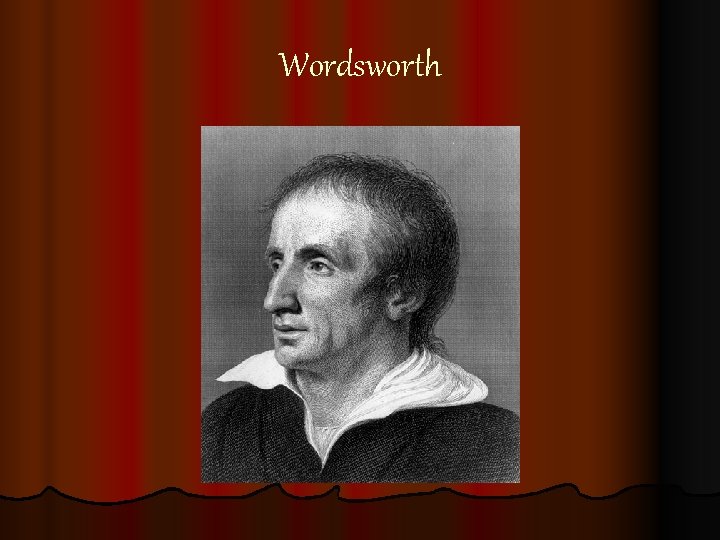
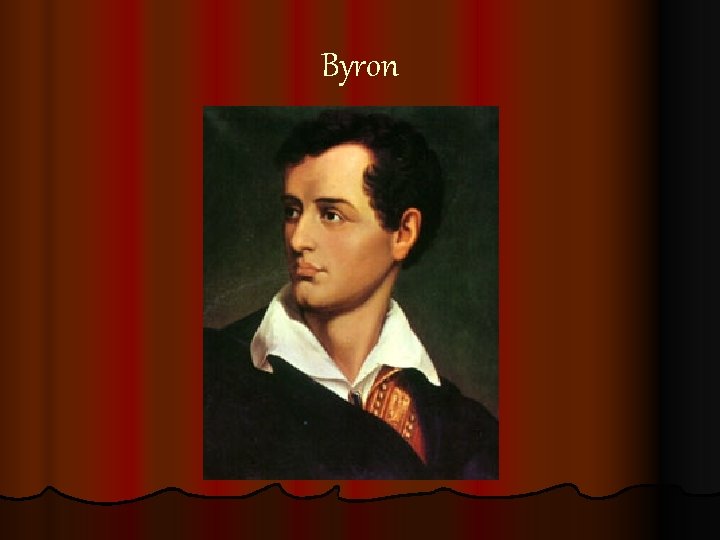
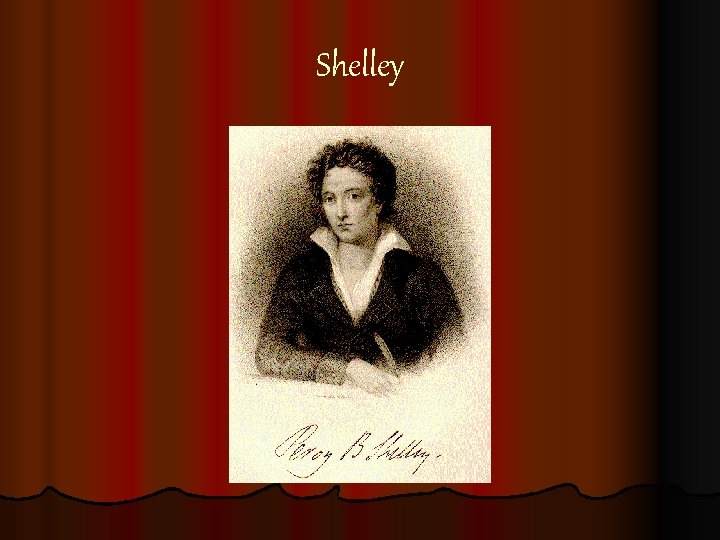
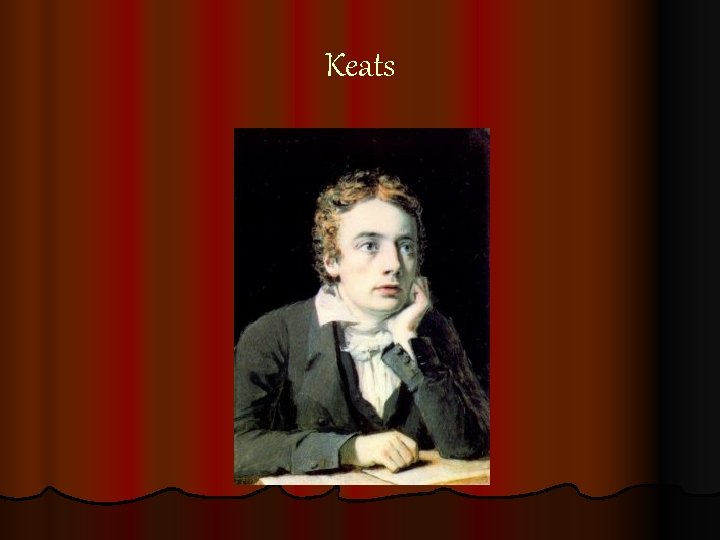
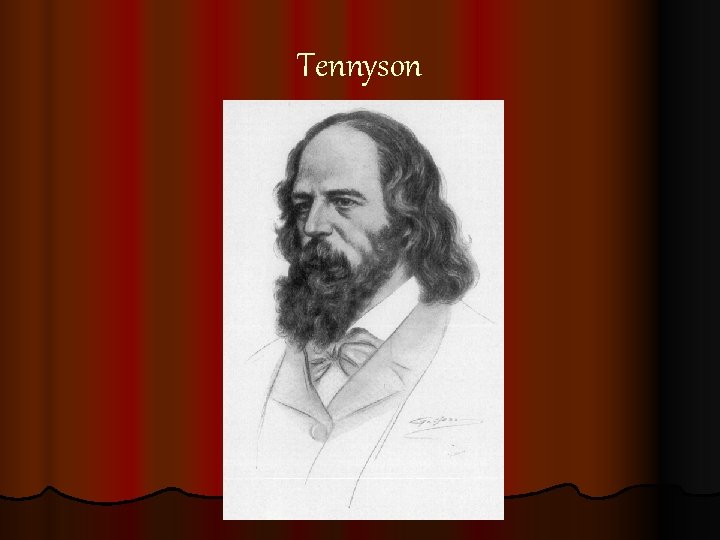
l Romantic poets were adored l Wordsworth l Byron l Shelley l Keats l Tennyson They lived with heart and passion. The Romantics valued imagination and spirituality
Wordsworth
Byron
Shelley
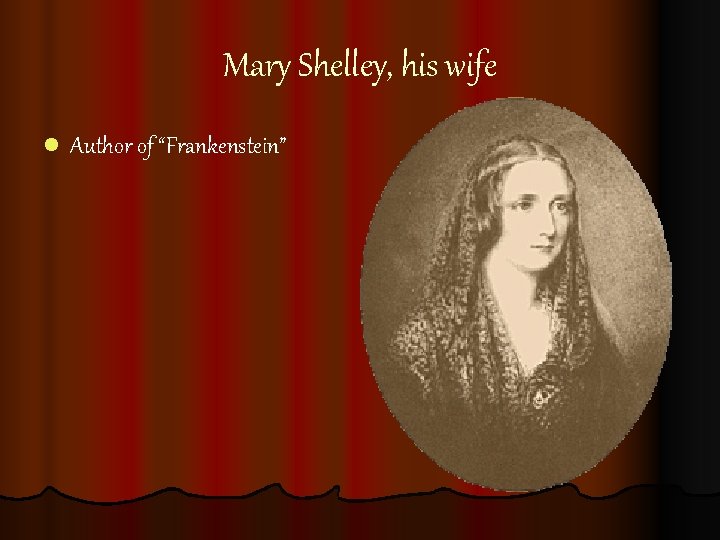
Mary Shelley, his wife l Author of “Frankenstein”
Keats
Tennyson
l Acting in romantic plays was: poetic, flowing, very emotional and dramatic l Today’s audiences would probably find Sentimental, Melodramatic and Romantic plays too exaggerated and emotional to take seriously