
th Ireland in the 20 Century 3 rd






- Slides: 47
th Ireland in the 20 Century 3 rd Year History
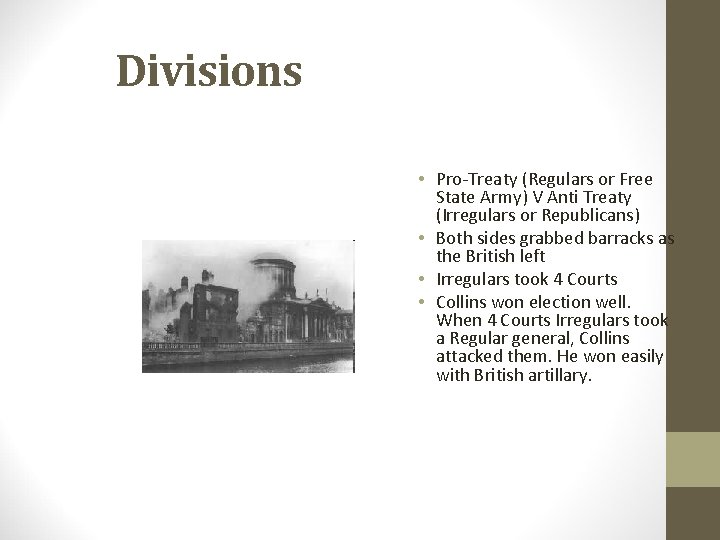
Divisions • Pro-Treaty (Regulars or Free State Army) V Anti Treaty (Irregulars or Republicans) • Both sides grabbed barracks as the British left • Irregulars took 4 Courts • Collins won election well. When 4 Courts Irregulars took a Regular general, Collins attacked them. He won easily with British artillary.
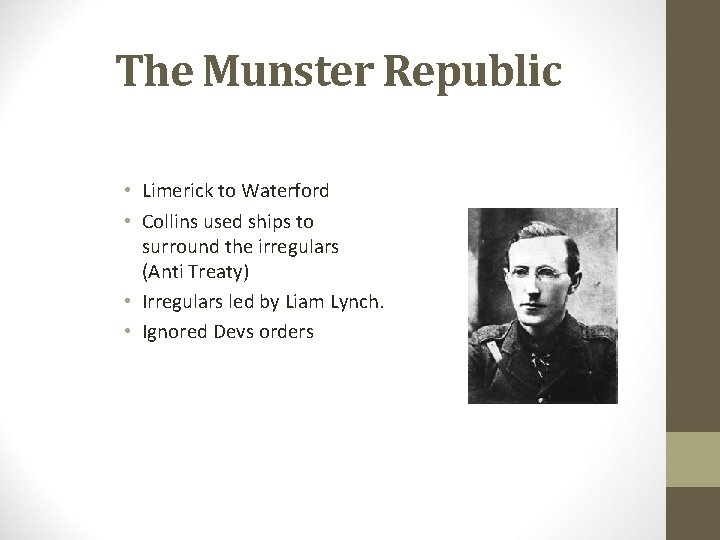
The Munster Republic • Limerick to Waterford • Collins used ships to surround the irregulars (Anti Treaty) • Irregulars led by Liam Lynch. • Ignored Devs orders
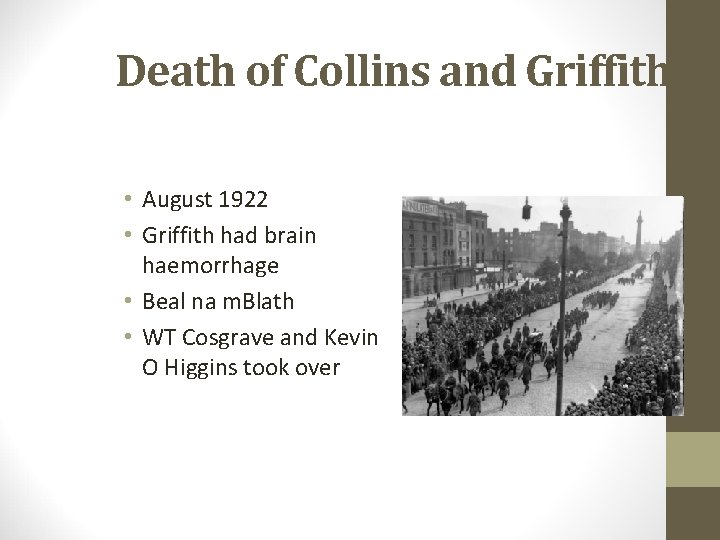
Death of Collins and Griffith • August 1922 • Griffith had brain haemorrhage • Beal na m. Blath • WT Cosgrave and Kevin O Higgins took over
Guerilla Warfare • • • Did not work well because: Free State had support of most people They knew the land as well Great brutality on both sides April 1923 Liam Lynch killed. Frank Aiken and De. V called a ceasefire
Results • • Death and destruction Lost leaders Bitterness Political Parties (Fine Gael + Fianna Fail have roots in civil war
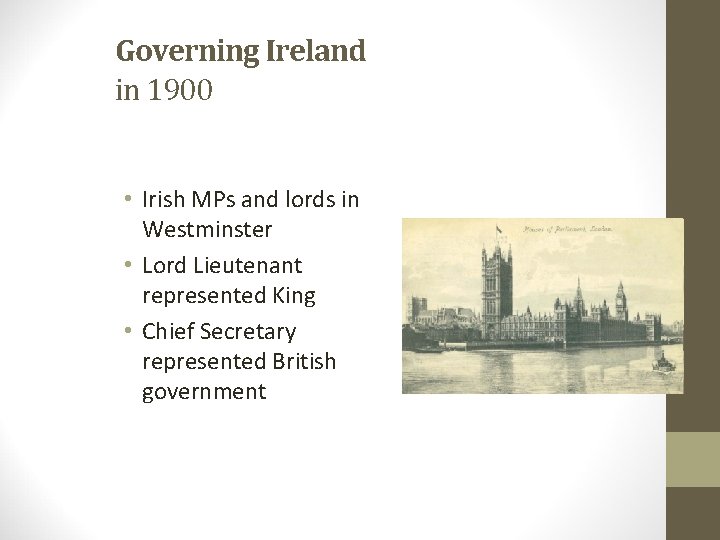
Governing Ireland in 1900 • Irish MPs and lords in Westminster • Lord Lieutenant represented King • Chief Secretary represented British government
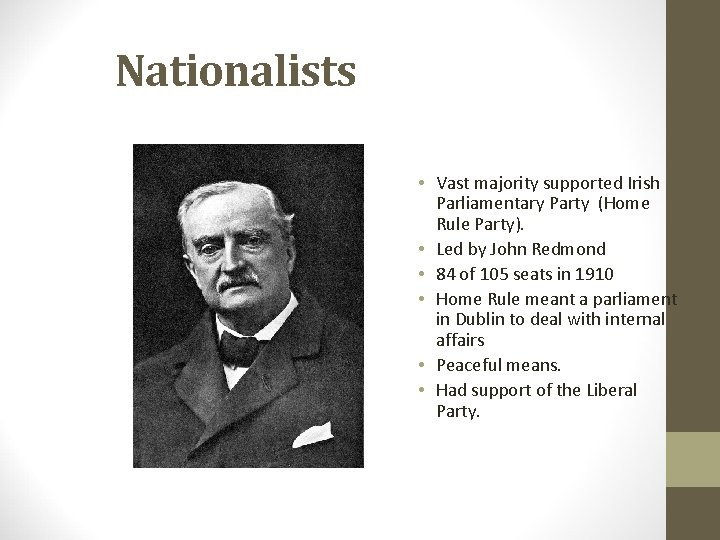
Nationalists • Vast majority supported Irish Parliamentary Party (Home Rule Party). • Led by John Redmond • 84 of 105 seats in 1910 • Home Rule meant a parliament in Dublin to deal with internal affairs • Peaceful means. • Had support of the Liberal Party.
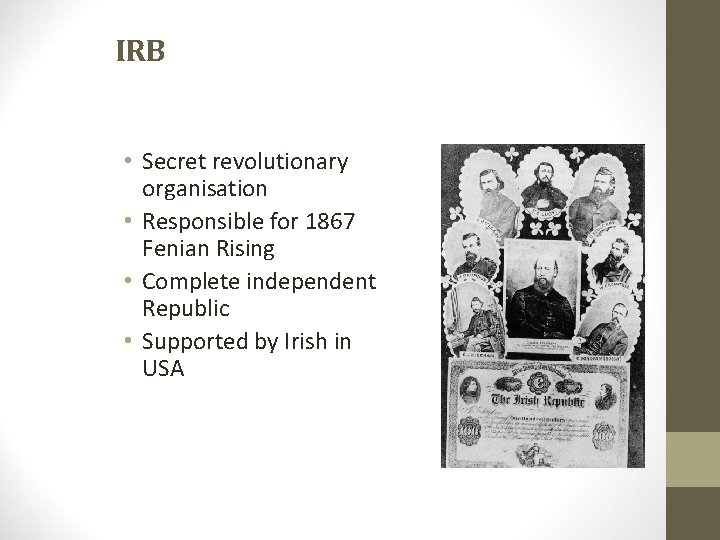
IRB • Secret revolutionary organisation • Responsible for 1867 Fenian Rising • Complete independent Republic • Supported by Irish in USA
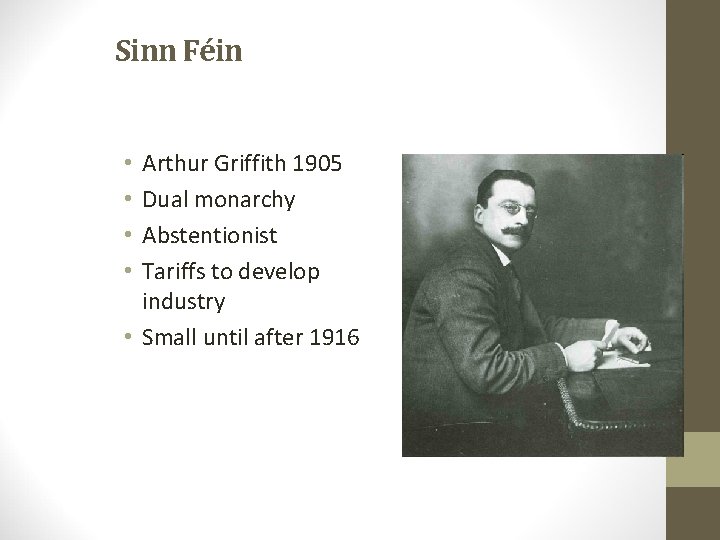
Sinn Féin Arthur Griffith 1905 Dual monarchy Abstentionist Tariffs to develop industry • Small until after 1916 • •
Unionists • Wanted to stay in UK. No HR. 3 reasons • Felt British • Home rule = Rome rule • Fear of losing trade links • Carson and Craig • Supported by Conservatives (Empire would fall apart)
Labour Movement • Poor state of workers in Ireland • James Larkin from Liverpool set up ITGWU • William Martin Murphy and Employers Federation = Lockout • Police, government and Catholic Church supported employers. • After 5 months workers defeated • ITGWU did not die
Cultural Nationalism and the Emergence of New Movements • GAA • Gaelic League • Irish Literary Revival
The Home Rule Bill • 1910 the Liberal government needed the support of the Home Rule Party (84 seats) • 1911 Liberals passed The Parliament Act. House of Lords could only delay bills for 2 years. • 1912 Third Home Rule Bill became law. • 1914 WW 1 broke out. • 1916 the Irish didn’t want Home Rule
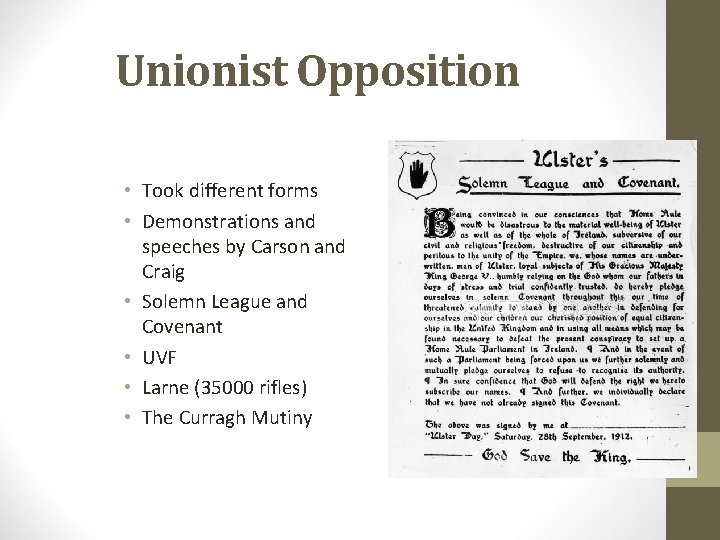
Unionist Opposition • Took different forms • Demonstrations and speeches by Carson and Craig • Solemn League and Covenant • UVF • Larne (35000 rifles) • The Curragh Mutiny
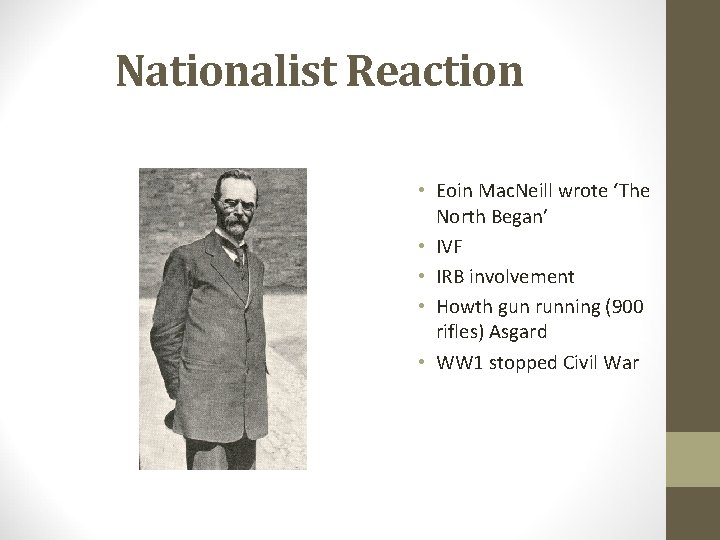
Nationalist Reaction • Eoin Mac. Neill wrote ‘The North Began’ • IVF • IRB involvement • Howth gun running (900 rifles) Asgard • WW 1 stopped Civil War
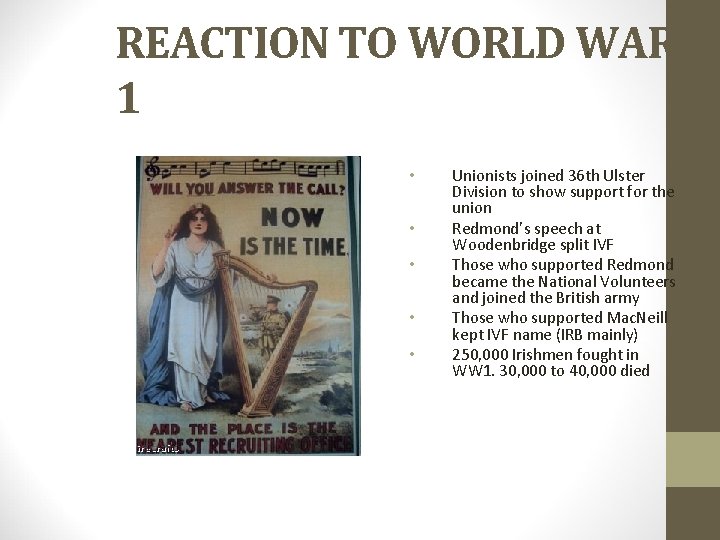
REACTION TO WORLD WAR 1 • • • Unionists joined 36 th Ulster Division to show support for the union Redmond’s speech at Woodenbridge split IVF Those who supported Redmond became the National Volunteers and joined the British army Those who supported Mac. Neill kept IVF name (IRB mainly) 250, 000 Irishmen fought in WW 1. 30, 000 to 40, 000 died
THE 1916 RISING
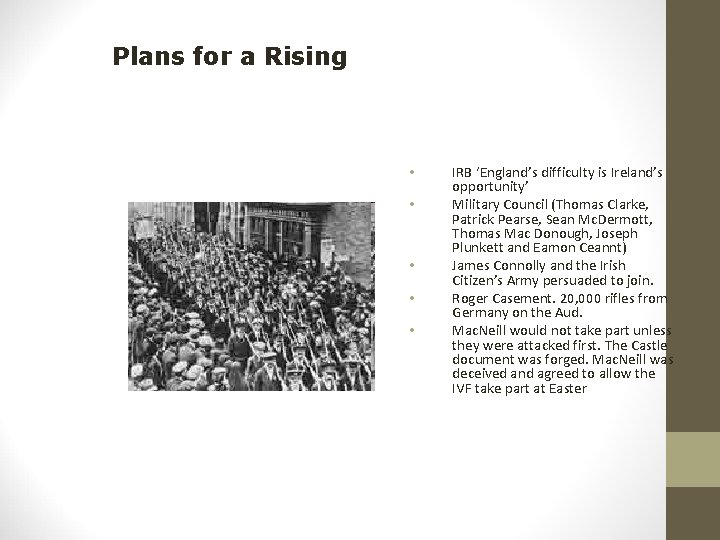
Plans for a Rising • • • IRB ‘England’s difficulty is Ireland’s opportunity’ Military Council (Thomas Clarke, Patrick Pearse, Sean Mc. Dermott, Thomas Mac Donough, Joseph Plunkett and Eamon Ceannt) James Connolly and the Irish Citizen’s Army persuaded to join. Roger Casement. 20, 000 rifles from Germany on the Aud. Mac. Neill would not take part unless they were attacked first. The Castle document was forged. Mac. Neill was deceived and agreed to allow the IVF take part at Easter
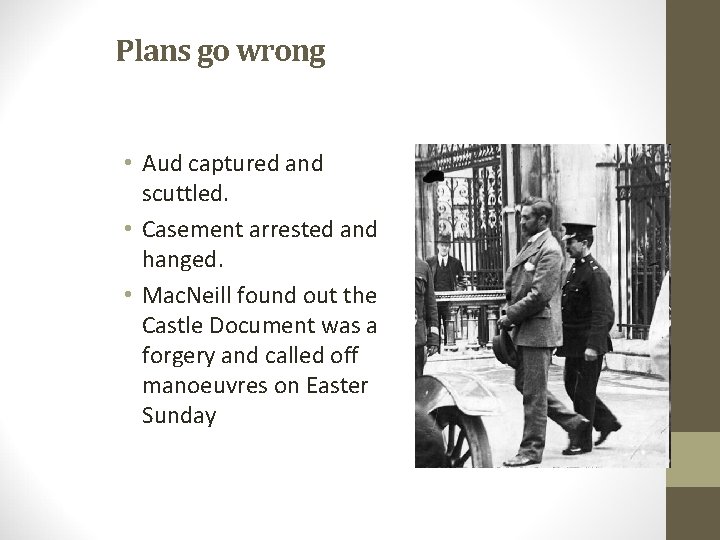
Plans go wrong • Aud captured and scuttled. • Casement arrested and hanged. • Mac. Neill found out the Castle Document was a forgery and called off manoeuvres on Easter Sunday
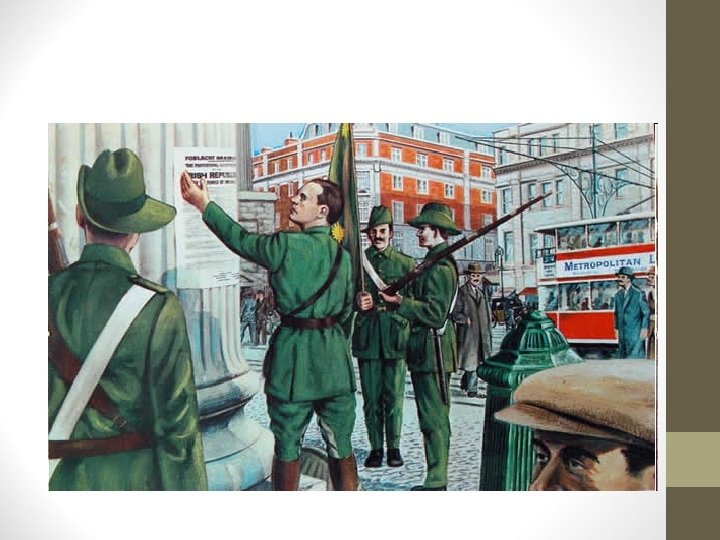
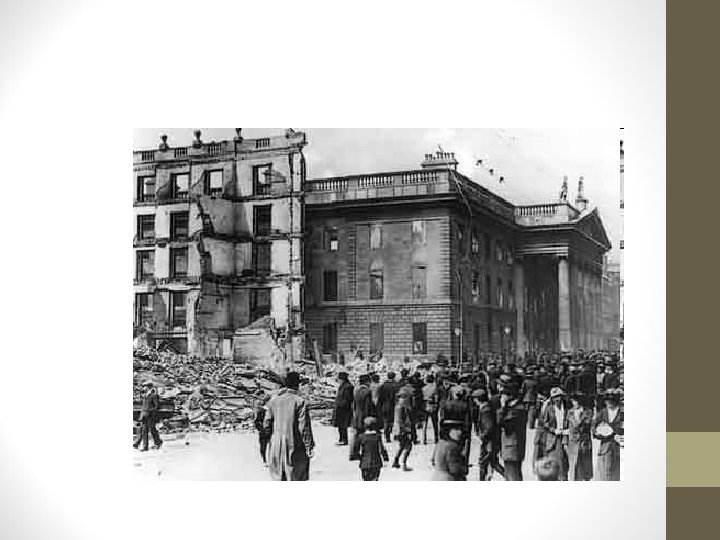
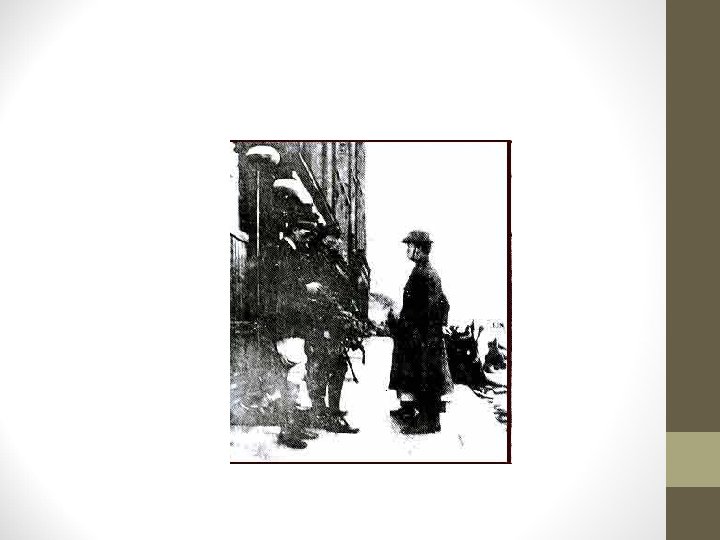
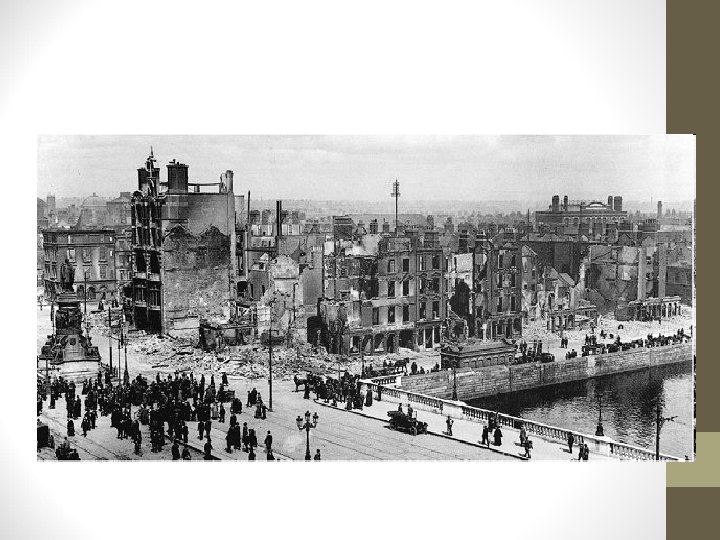
The Rising goes ahead • • Military Council decided to go ahead on Easter Monday. Rising confined to Dublin and bound for military failure Pearse and the Proclamation 1500 rebels took key buildings in the city (GPO, Boland’s Mills, Jacob’s Factory, The Four Courts) Failure to take Dublin Castle a big mistake. British reinforcements from the Curragh and England. The Helga shelled the GPO Saturday, unconditional surrender
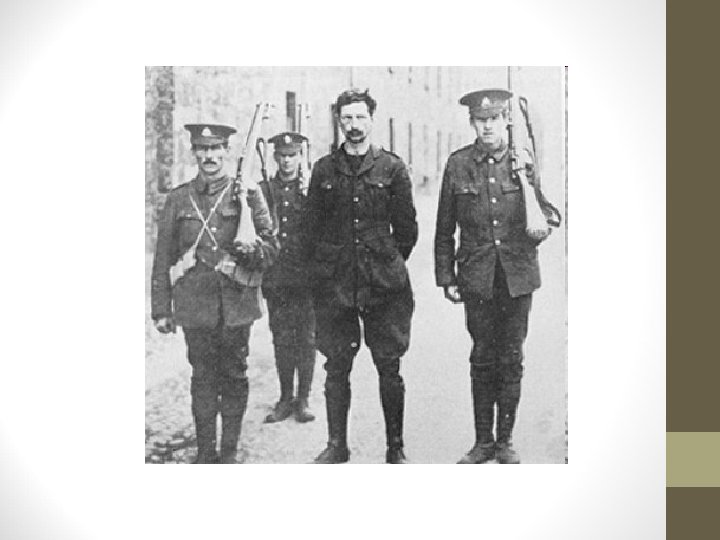
The Results of the Rising 1. 2. 3. 4. 500 killed, more injured, much damage Dubliners angry with rebels Martial law (2000 interned) 90 sentenced to death. 15 executed in Kilmainham Jail. Irish minds were changed. Home Rule finished. 5. Sinn Féin got blamed and became popular. It changed its aim to an Irish Republic. De. Valera became its leader.
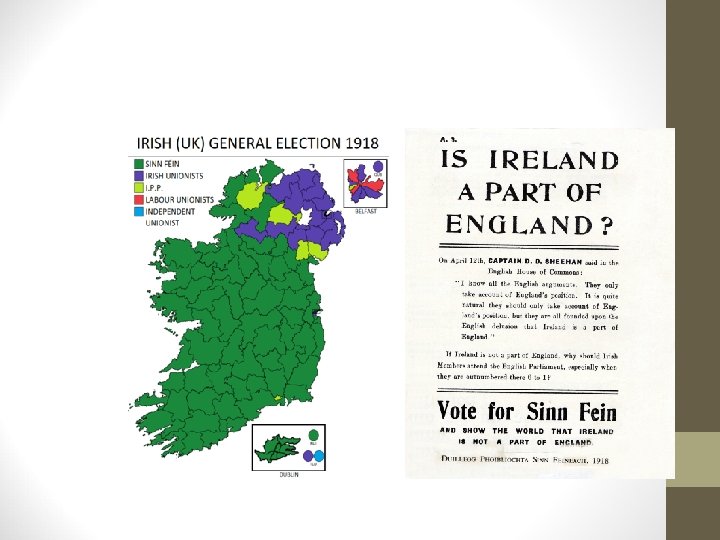
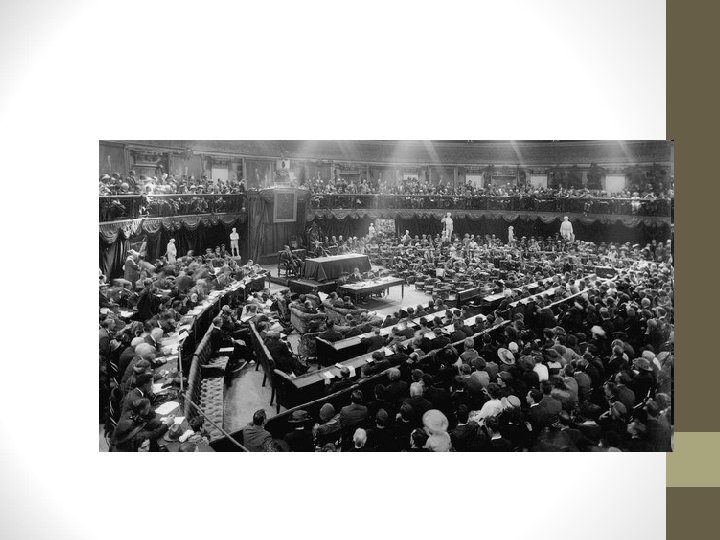
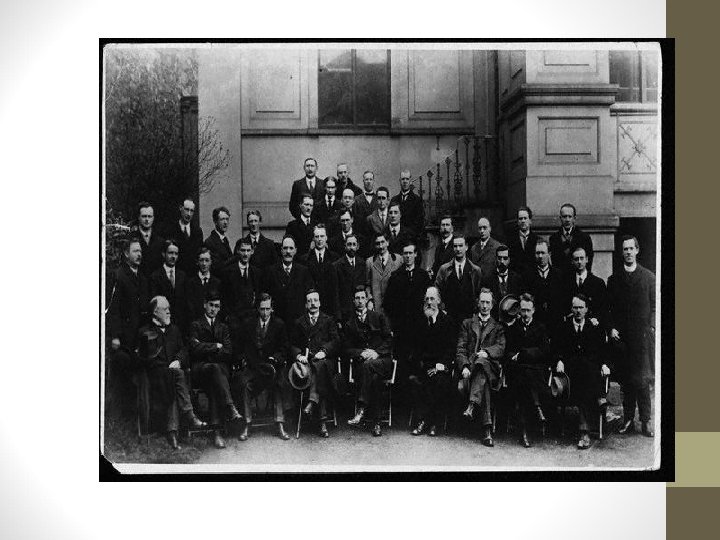
• The Conscription Crisis • Compulsory military service further boosted Sinn Fein’s popularity • The 1918 General Election • 73 seats for Sinn Fein • Called their MPs Teachtaí Dála and refused to take seats. • 1919 Dáil Éireann set up.
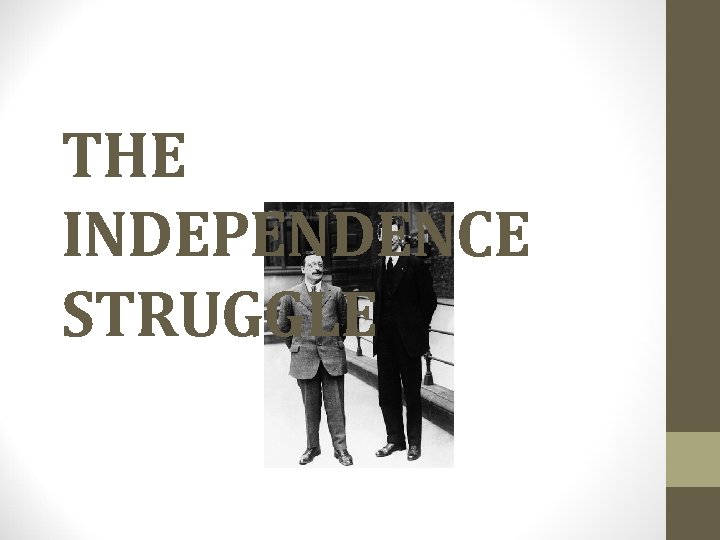
THE INDEPENDENCE STRUGGLE
Sinn Féin and the First Dail • • • 1919 Mansion House 27 TDs only, jail or on the run First meeting issued: Declaration of Independence A message to the Free Nations of the World A programme to improve living and working conditions
Sinn Féin and the First Dail • At a later meeting De. Valera (rescued) elected president • Collins was Minister for Finance; Markieviec (labour), Griffith (home affairs and vice-president) • The Dail: • Got control of Local gov. • Set up their own courts • Got loans
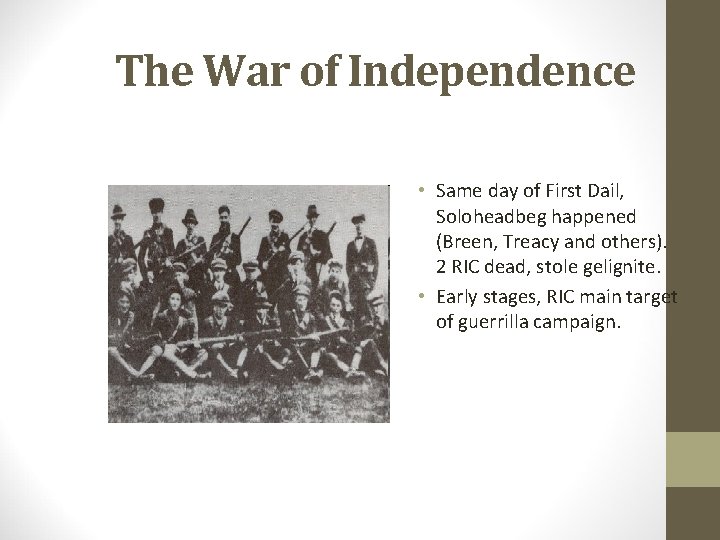
The War of Independence • Same day of First Dail, Soloheadbeg happened (Breen, Treacy and others). 2 RIC dead, stole gelignite. • Early stages, RIC main target of guerrilla campaign.
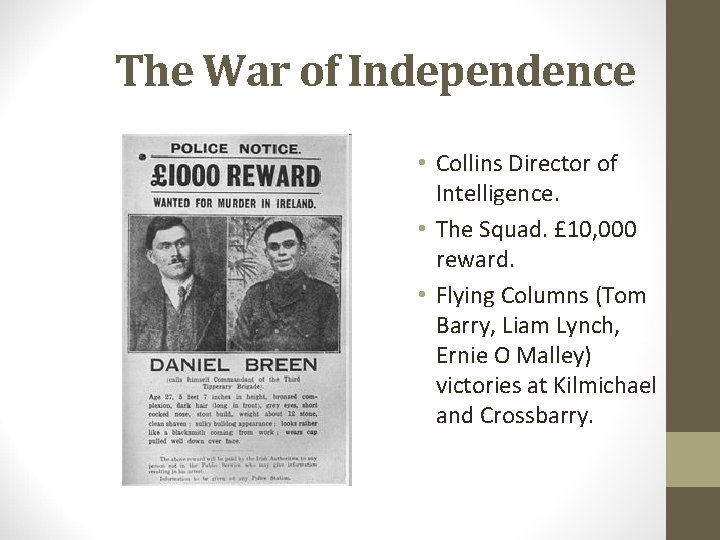
The War of Independence • Collins Director of Intelligence. • The Squad. £ 10, 000 reward. • Flying Columns (Tom Barry, Liam Lynch, Ernie O Malley) victories at Kilmichael and Crossbarry.
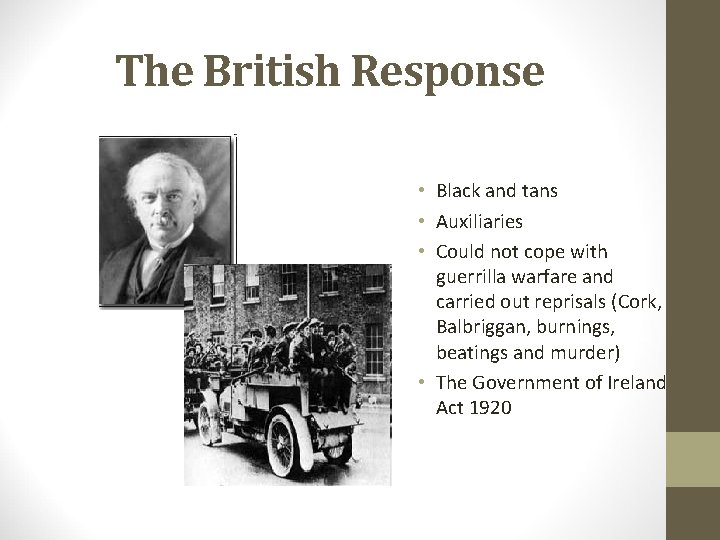
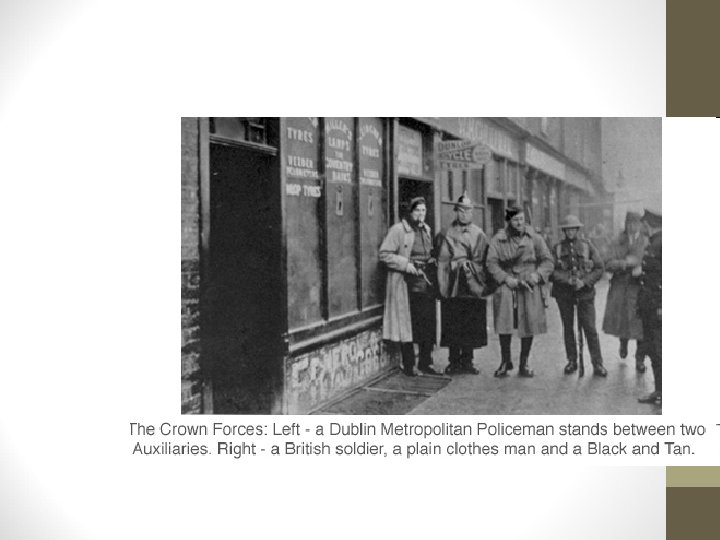
The British Response • Black and tans • Auxiliaries • Could not cope with guerrilla warfare and carried out reprisals (Cork, Balbriggan, burnings, beatings and murder) • The Government of Ireland Act 1920
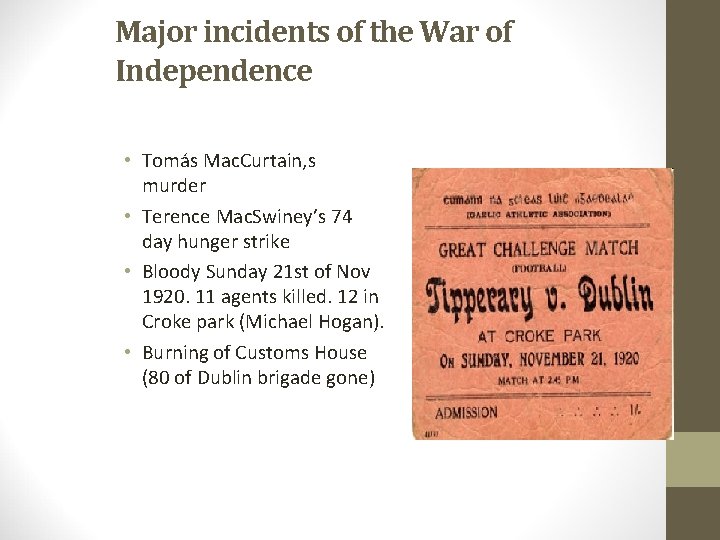
Major incidents of the War of Independence • Tomás Mac. Curtain, s murder • Terence Mac. Swiney’s 74 day hunger strike • Bloody Sunday 21 st of Nov 1920. 11 agents killed. 12 in Croke park (Michael Hogan). • Burning of Customs House (80 of Dublin brigade gone)
Peace • • People wanted peace. IRA out of ammo and short of men. Bad publicity for British Gov. Costing a lot of money De. Valera and Lloyd George agreed a ceasefire.
THE IRISH CIVIL WAR
Divisions • Pro-Treaty (Regulars or Free State Army) V Anti Treaty (Irregulars or Republicans) • Both sides grabbed barracks as the British left • Irregulars took 4 Courts • Collins won election well. • When 4 Courts Irregulars took a Regular general, Collins attacked them. • He won easily with British artillary.
• • The Munster Republic Limerick to Waterford Collins used ships to surround Irregulars Death of Collins and Griffith August 1922 Griffith had brain haemorrhage Beal na m. Blath Collins shot WT Cosgrave and Kevin O Higgins took over
Guerilla Warfare • Did not work well because: • • • Free State had support of most people They knew the land as well Great brutality on both sides April 1923 Liam Lynch killed. Frank Aiken and De. V called a ceasefire
Results • • Death and destruction Lost leaders Bitterness Political Parties (FF, FG and Sinn Fein all have roots in Civil war)