
th 7 Tuesday July 2020 WALT understand the

- Slides: 23
th 7 Tuesday July 2020 WALT: understand the key aspects of physical and human geography. WILF: I can describe physical geography such as: volcanoes, earthquakes etc. I can describe the human geography such as: fair trade and distribution of natural resources. Key Vocabulary: world, countries, physical geography, human geography,
Starter: What is physical and human geography? Define Physical geography. Can you give any examples? Define Human geography. Can you give any examples?
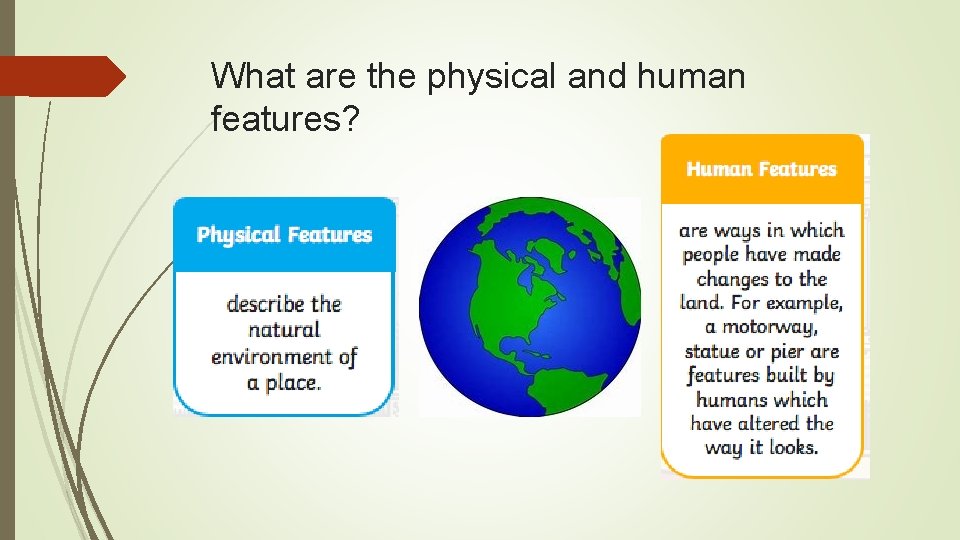
What are the physical and human features?
Now lets focus on a physical geography. In today’s lesson, we will be looking at the main features of volcanoes from around the world ( part one)
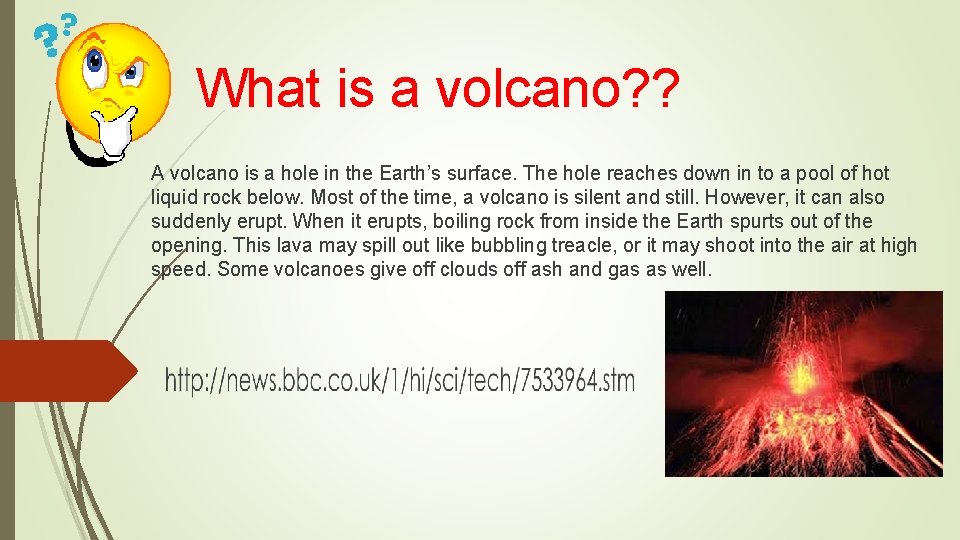
What is a volcano? ? A volcano is a hole in the Earth’s surface. The hole reaches down in to a pool of hot liquid rock below. Most of the time, a volcano is silent and still. However, it can also suddenly erupt. When it erupts, boiling rock from inside the Earth spurts out of the opening. This lava may spill out like bubbling treacle, or it may shoot into the air at high speed. Some volcanoes give off clouds off ash and gas as well.
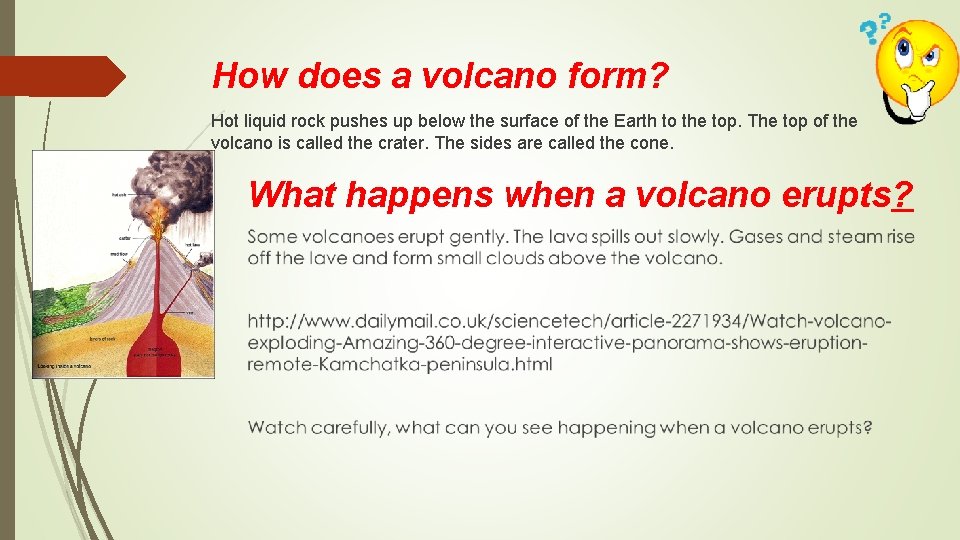
How does a volcano form? Hot liquid rock pushes up below the surface of the Earth to the top. The top of the volcano is called the crater. The sides are called the cone. What happens when a volcano erupts?
When a volcano erupts you can expect: Lava Broken rocks Ash
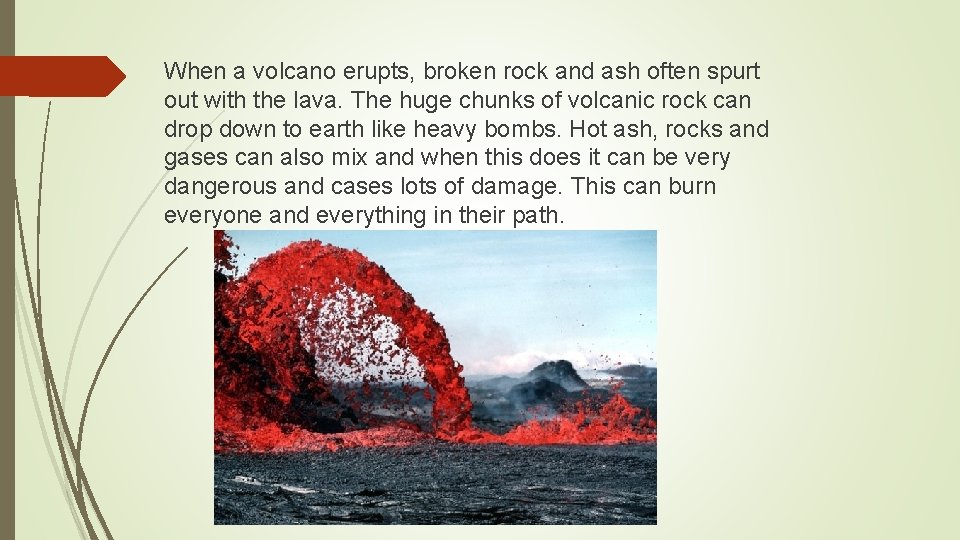
When a volcano erupts, broken rock and ash often spurt out with the lava. The huge chunks of volcanic rock can drop down to earth like heavy bombs. Hot ash, rocks and gases can also mix and when this does it can be very dangerous and cases lots of damage. This can burn everyone and everything in their path.
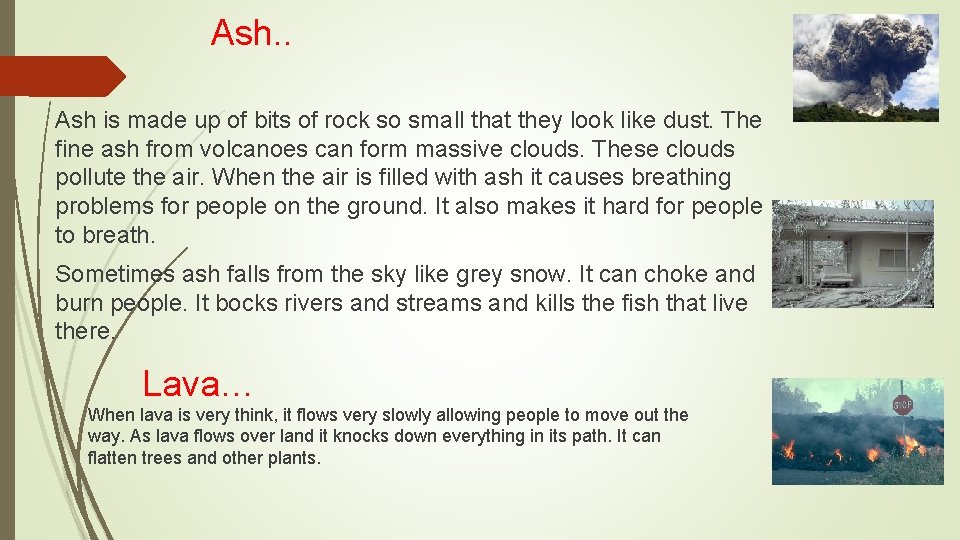
Ash. . Ash is made up of bits of rock so small that they look like dust. The fine ash from volcanoes can form massive clouds. These clouds pollute the air. When the air is filled with ash it causes breathing problems for people on the ground. It also makes it hard for people to breath. Sometimes ash falls from the sky like grey snow. It can choke and burn people. It bocks rivers and streams and kills the fish that live there. Lava… When lava is very think, it flows very slowly allowing people to move out the way. As lava flows over land it knocks down everything in its path. It can flatten trees and other plants.
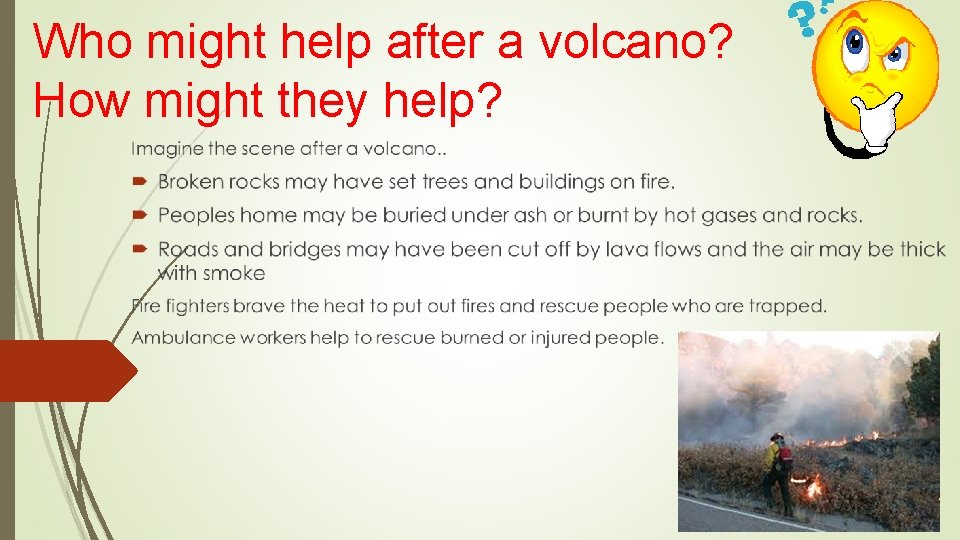
Who might help after a volcano? How might they help?
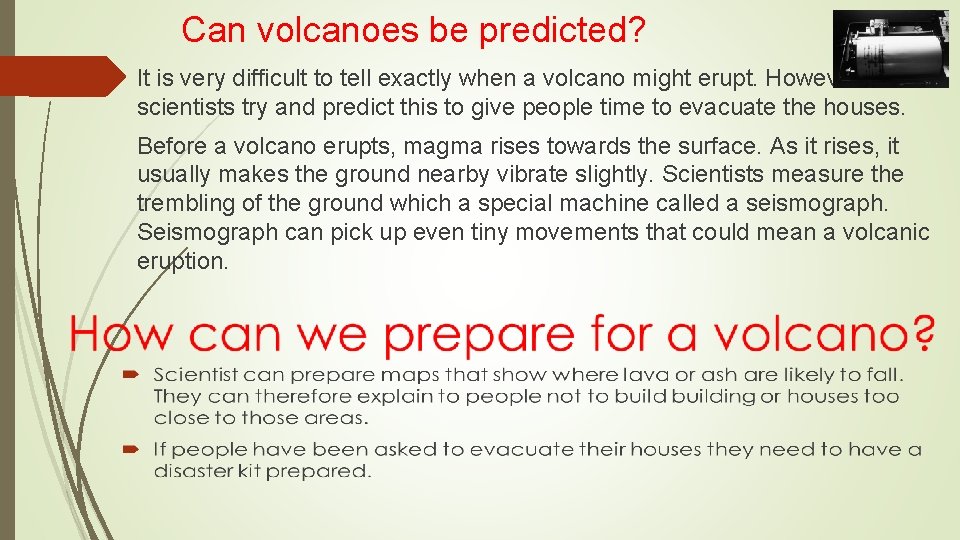
Can volcanoes be predicted? It is very difficult to tell exactly when a volcano might erupt. However scientists try and predict this to give people time to evacuate the houses. Before a volcano erupts, magma rises towards the surface. As it rises, it usually makes the ground nearby vibrate slightly. Scientists measure the trembling of the ground which a special machine called a seismograph. Seismograph can pick up even tiny movements that could mean a volcanic eruption.
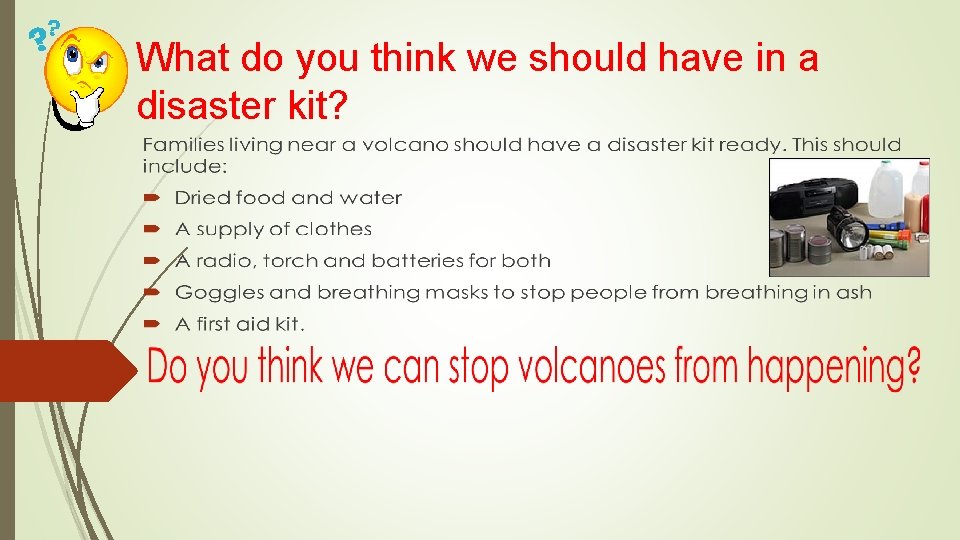
What do you think we should have in a disaster kit?
Can we stop volcanoes from happening?
Task 1: Design a informative poster telling people what they should include in their disaster kit and why those things are all necessary?
Now lets focus on a human geography. For the second half of this lesson we will be learning about fair trade.
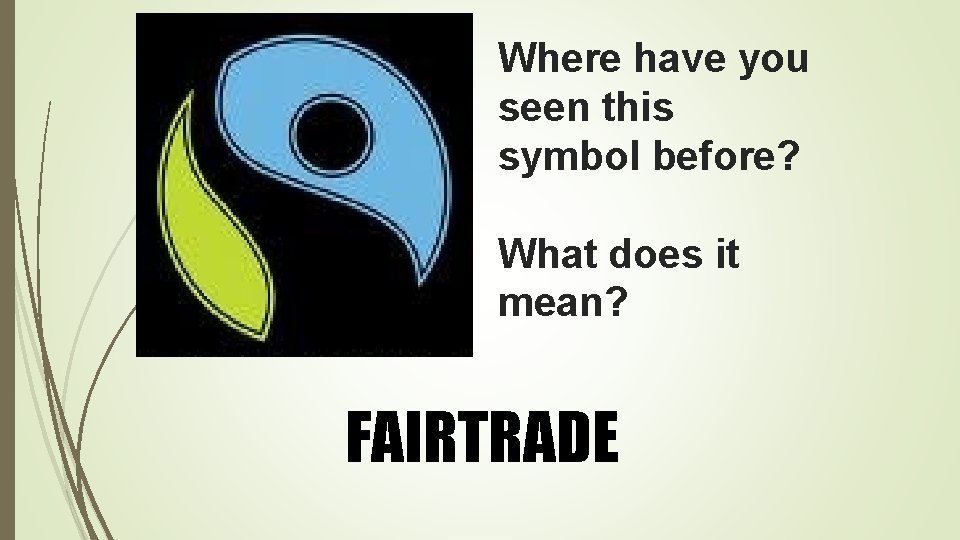
Where have you seen this symbol before? What does it mean? FAIRTRADE
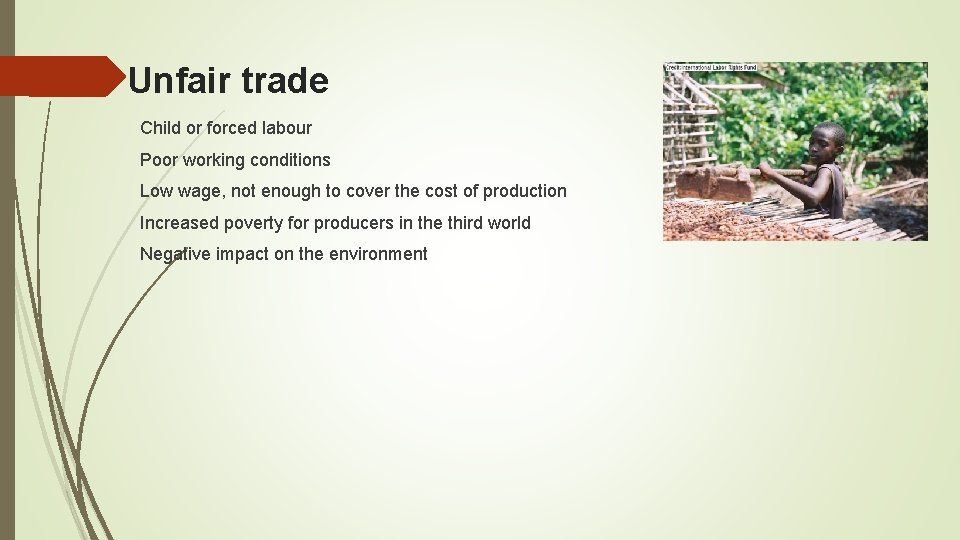
Unfair trade Child or forced labour Poor working conditions Low wage, not enough to cover the cost of production Increased poverty for producers in the third world Negative impact on the environment
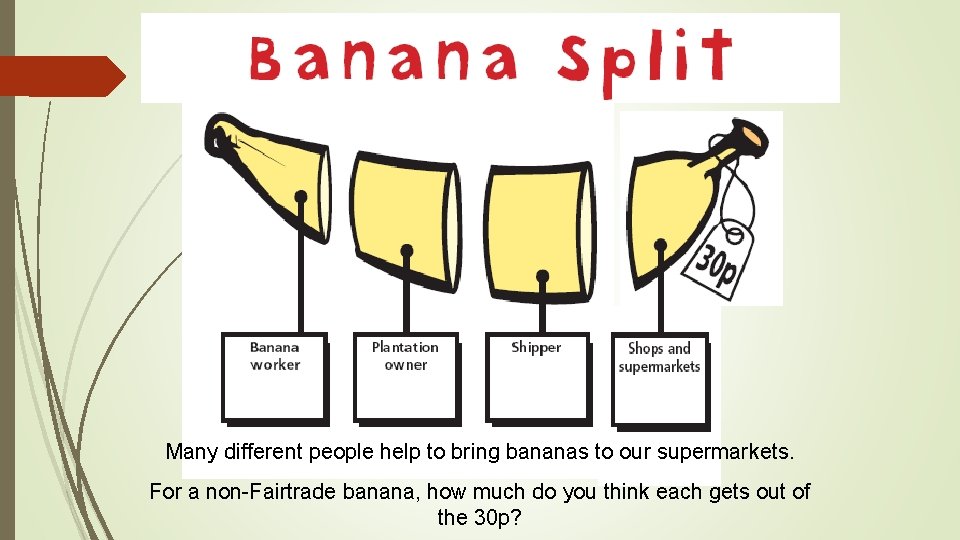
Many different people help to bring bananas to our supermarkets. For a non-Fairtrade banana, how much do you think each gets out of the 30 p?
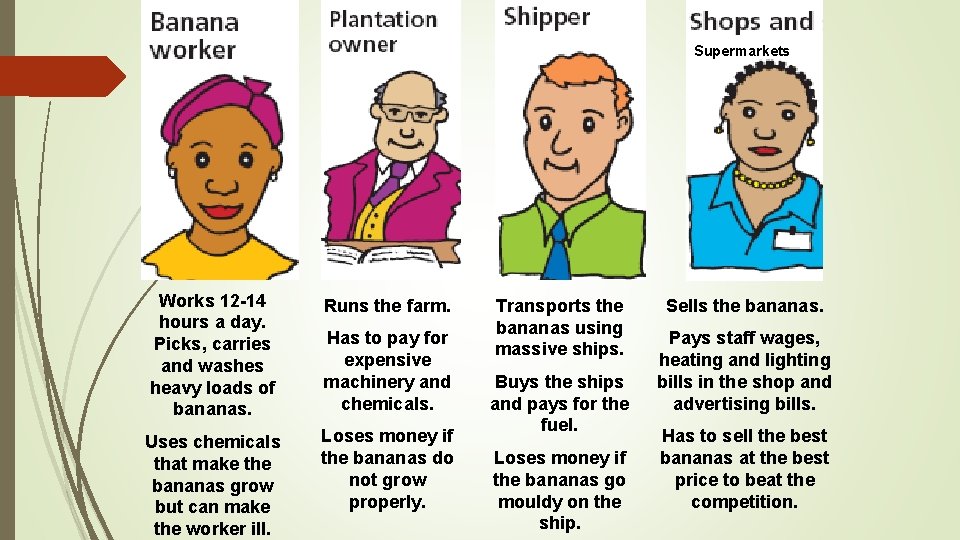
Supermarkets Works 12 -14 hours a day. Picks, carries and washes heavy loads of bananas. Uses chemicals that make the bananas grow but can make the worker ill. Runs the farm. Has to pay for expensive machinery and chemicals. Loses money if the bananas do not grow properly. Transports the bananas using massive ships. Buys the ships and pays for the fuel. Loses money if the bananas go mouldy on the ship. Sells the bananas. Pays staff wages, heating and lighting bills in the shop and advertising bills. Has to sell the best bananas at the best price to beat the competition.
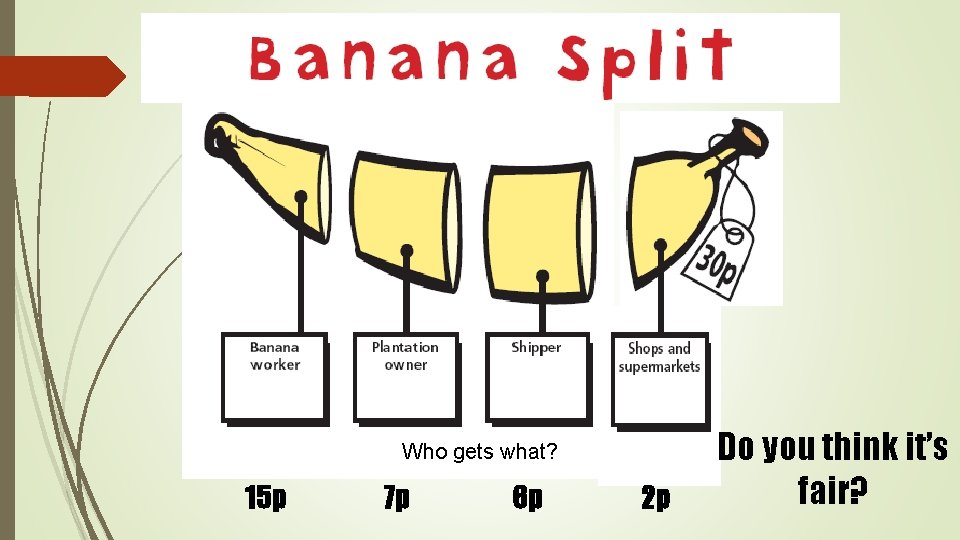
Who gets what? 15 p 7 p 6 p 2 p Do you think it’s fair?
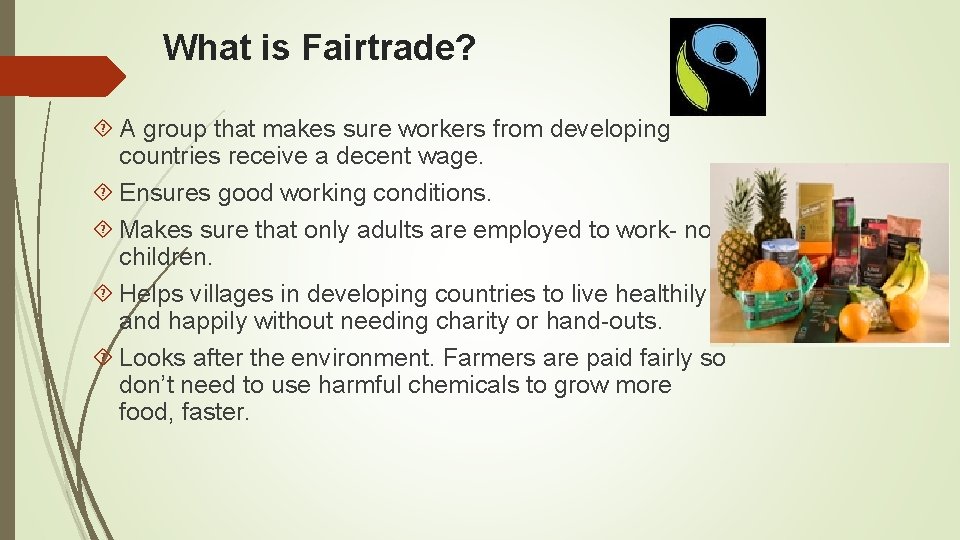
What is Fairtrade? A group that makes sure workers from developing countries receive a decent wage. Ensures good working conditions. Makes sure that only adults are employed to work- not children. Helps villages in developing countries to live healthily and happily without needing charity or hand-outs. Looks after the environment. Farmers are paid fairly so don’t need to use harmful chemicals to grow more food, faster.
Fairtrade • Fairtrade products are usually more expensive than non. Fairtrade. • This is to make sure that everyone is paid a good wage for the work they do. Do you think it is worth it?
Task 2: Design a leaflet telling people the importance of fair trade. Challenge 1: Illustrate using pictures to write using bullet points : what is fair trade and why it is important. Challenge 2 and 3: Illustrate using details and images to write in paragraphs about what is fair trade and why it is important, proving examples. Can you think of any other examples of human geography? Remember to write in full sentences, provide drawings