
TH 19 LATE CENTURY THEATRE Realism And Naturalism
- Slides: 35
TH 19 LATE CENTURY THEATRE Realism And Naturalism
• Towards the end of the nineteenth century, audiences grew tired of the exaggerated forms of Romanticism and Melodrama • There was a movement towards the opposite – realism and naturalism • Audiences wanted to see real life characters in real life situations portrayed on stage
Realism • Scientific and technological breakthroughs were changing the world • More emphasis was placed on seeing reality in a scientific, factual manner • The Romantics based their ideals on the emotional and spiritual • The Realists emphasised ideas and proof, especially through observation
• Psychology and psychiatry – the study of human behaviour was gaining recognition • People were starting to seek scientific answers to questions about what motivates our actions, or why we do things • Realism can be traced back to 1850 • By 1850 people began to study the influence of the environment on the person (including family background, work, culture, etc)
Playwrights • More interested in observing people • Wrote plays focusing on characters • Wrote plays focusing on contemporary society – or the real world • Playwrights believed they could change the world for the better if they could draw attention to the injustices of life
The Plays • No longer dealt with dramatised myths or historical events • New plays dealt with harsh realities of life • Represented on stage the problems in the world at the time
Plays were about: • Poverty • Homelessness • Prostitution • Other contemporary problems Some audience members were shocked. They preferred escapism and happily ever after melodramas.
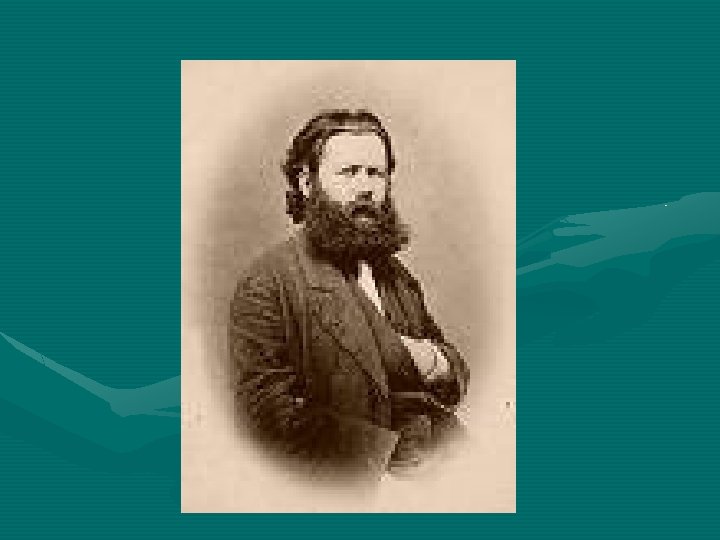
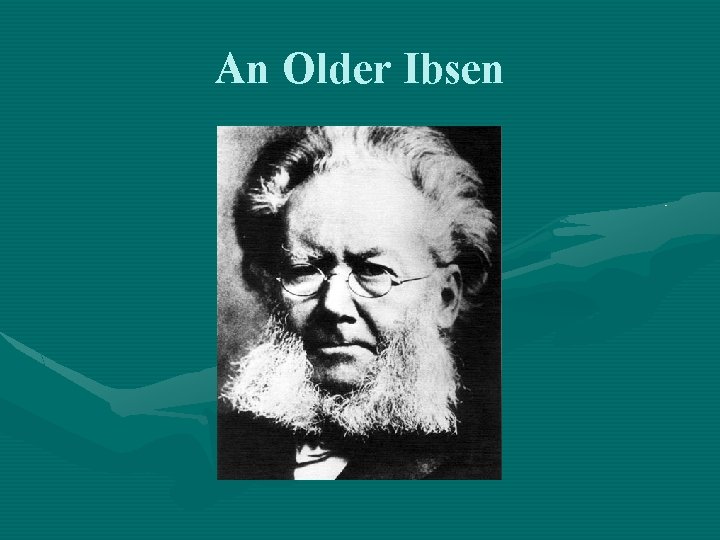
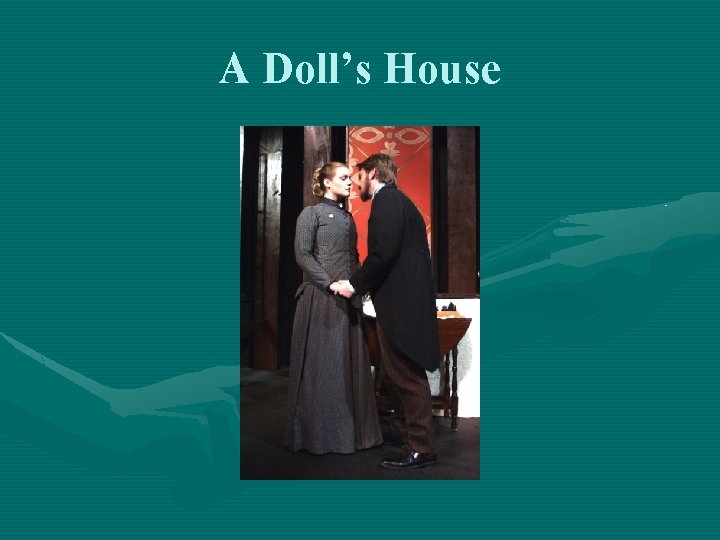
Henrick Ibsen • • 1828 – 1906 Norwegian playwright Best represents realism in drama Ibsen’s plays had a profound effect on the future of theatre His plays were controversial No happy endings Sometimes bad things happen to good people and vice versa
An Older Ibsen
Ibsen’s Plays • Themes – divorce, unhappiness, diseases, role of women, depression, social problems • Characters were complex • Characters faced deep frustrations and struggles • Plays offered insights into the human mind and heart that were real and genuine, rather than what society wanted to hear
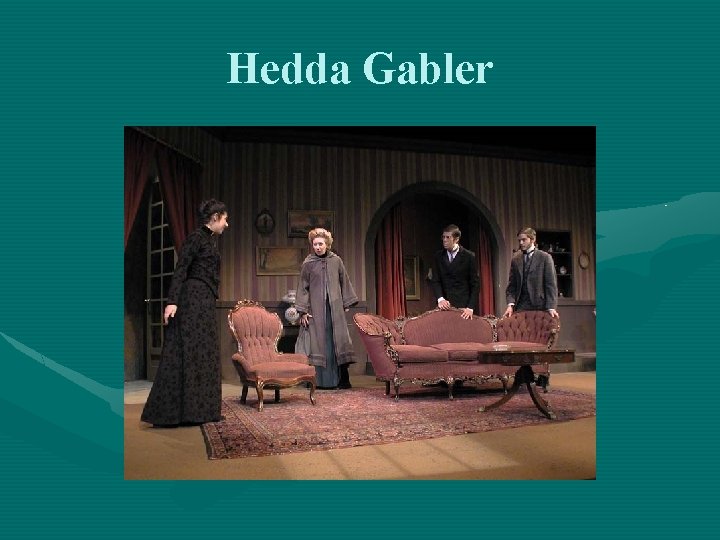
Ibsen’s Most Famous Plays • A Doll’s House • Hedda Gabler • Ghosts
Hedda Gabler
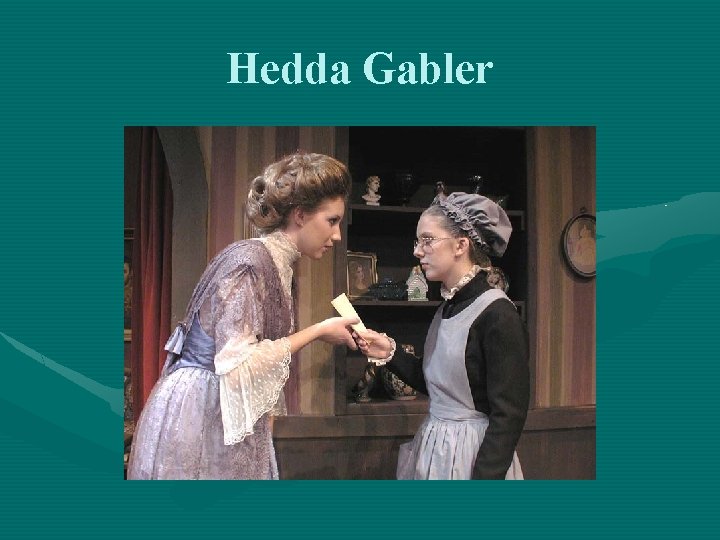
Hedda Gabler
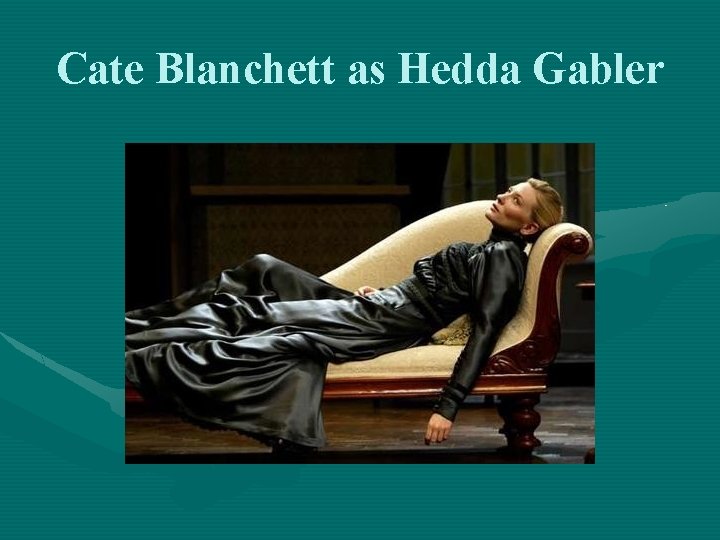
Cate Blanchett as Hedda Gabler
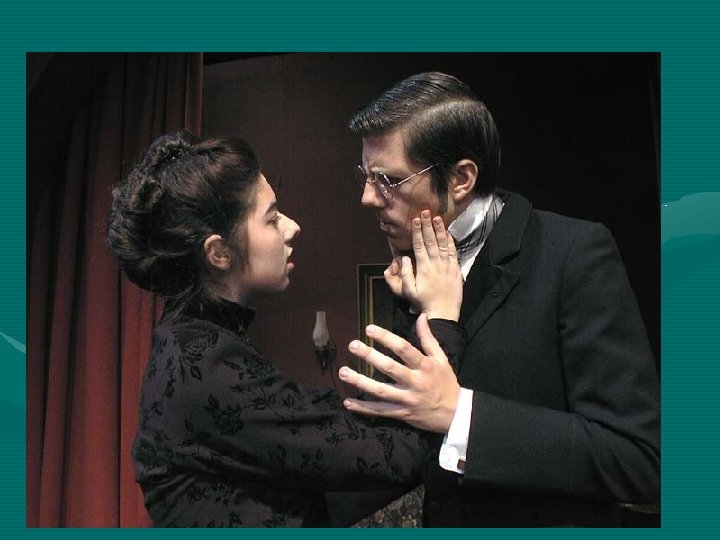
Acting in Ibsen’s Plays • Given the nature of his plays, the style of acting had to change drastically from the previous melodramatic style • Characters in Ibsen’s plays spoke realistic dialogue, and all action on stage was believable
A Doll’s House
Naturalism of ‘A Slice of Life’ • Naturalism started in 1870 s • Followers of Naturalism believed that realism did not go far enough • Playwright, Emile Zola (1840 – 1902), believed that a play on stage should be exactly as life of stage • The audience should see ‘a slice of life’
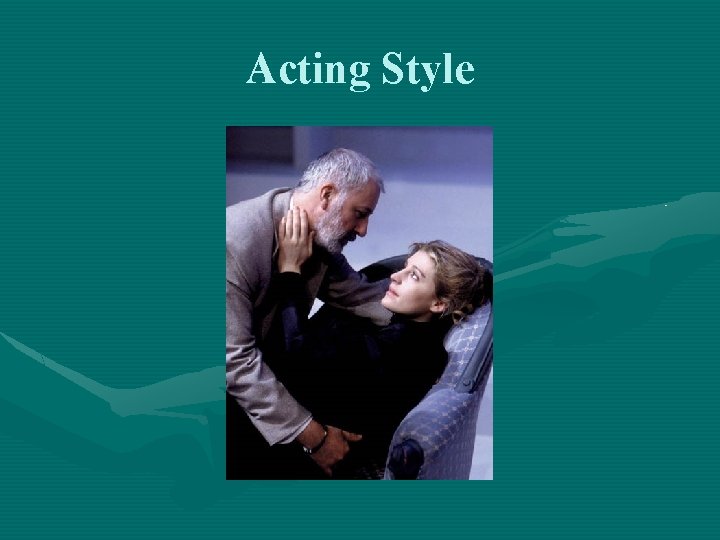
Naturalistic acting style • Acting became more life like • Storylines did not need to be fully developed because the audience was just seeing into real life episodes
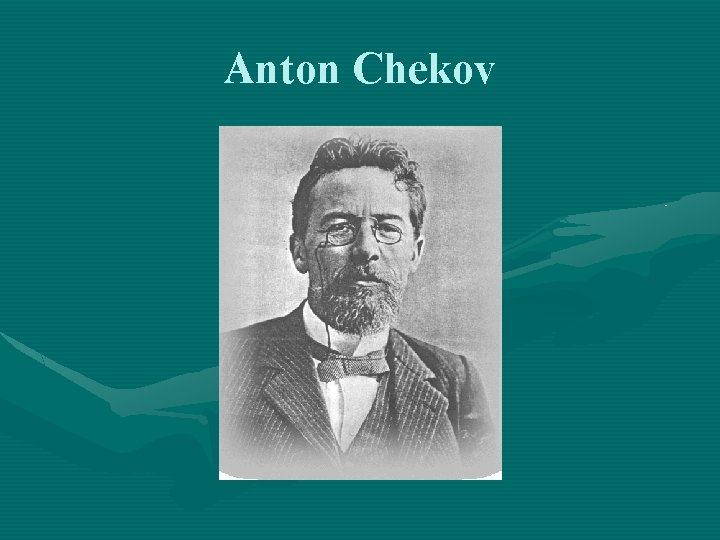
Famous naturalistic Playwrights • Henri Becque • August Strindberg • Maxim Gorky • Anton Checkov
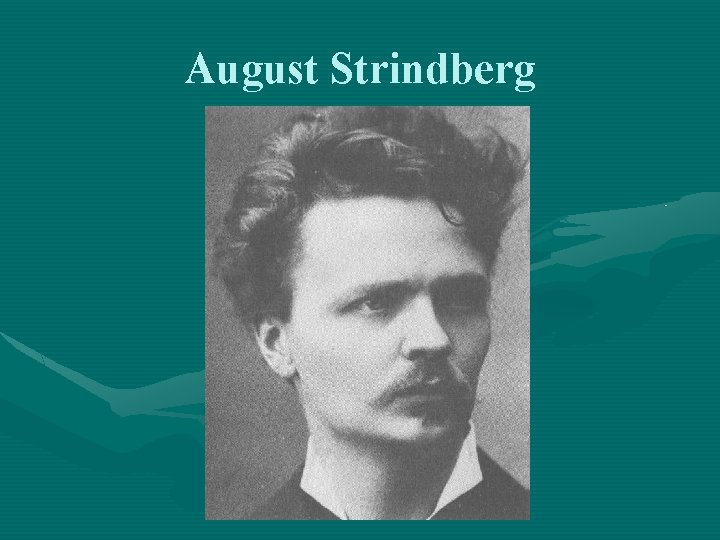
August Strindberg
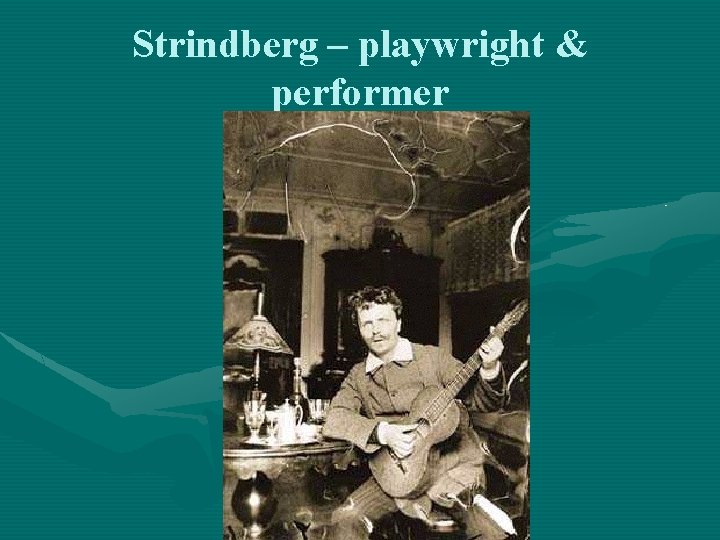
Strindberg – playwright & performer
Stagecraft • Naturalistic plays created a need for a new breed of actors, designers and directors • Many individual practitioners set out to do their own thing • Andre Antoine founded Theatre Libre in Paris • He led the way in acting and staging these plays
• Gordon Craig and Vsevolold Meyerhold created new styles of staging and lighting design • Europe was swept by pockets of small but innovative theatrical activity • In Russia, a collaboration between a director and theatre company would profoundly influence modern theatre and acting
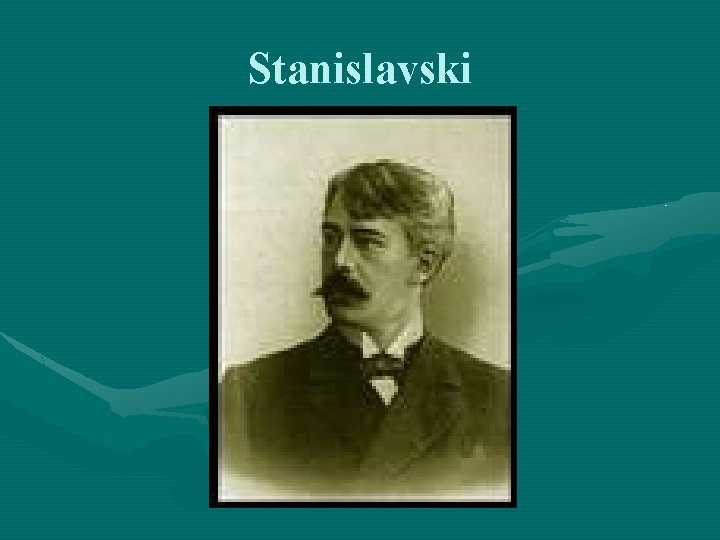
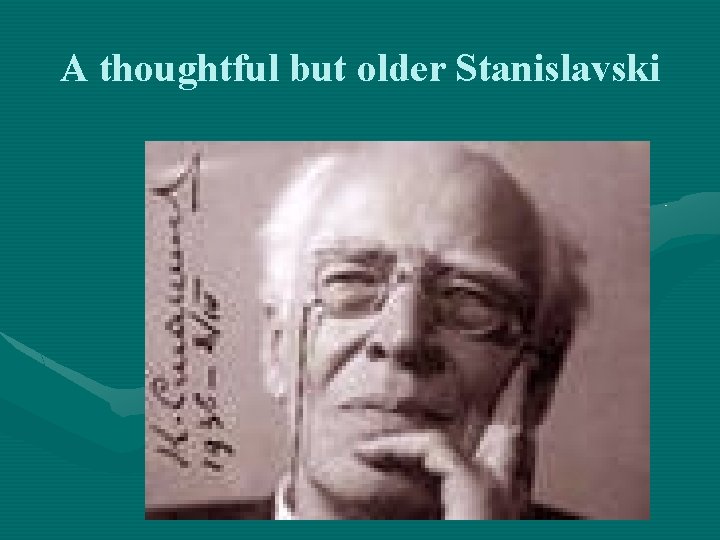
Konstantin Stanislavski • Was director of the Moscow Art Theatre • Developed an acting method with his partner, Vladimir Nemirovich-Danchenko • This method acting system enabled actors to more fully enter the world of the characters they were playing on stage • The emphasis was on a totally believable performance
Stanislavski
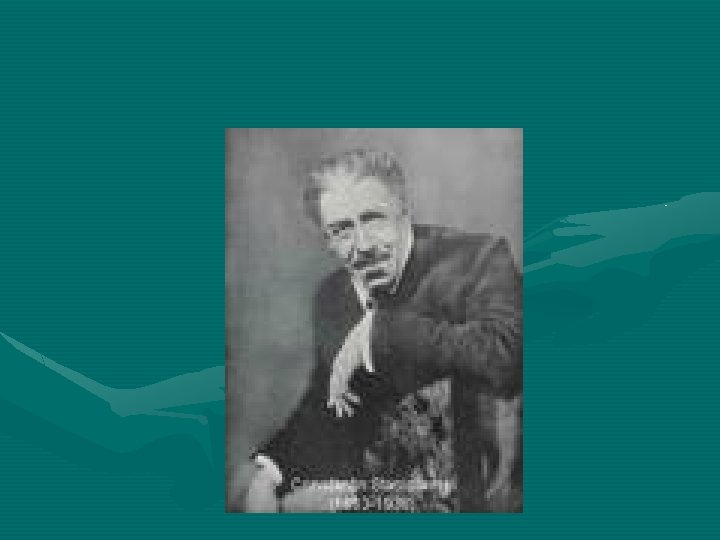
A thoughtful but older Stanislavski
• Speech and movement had to be as life like as possible • The way to understand character was through: research, observation, and empathizing with the character
• Empathy meant imagining as fully as possible what it would be like to be in the character’s shoes • In the past actors had performed in a stereotyped, rigid manner • Stanislavski’s system recognised that every individual is unique and worth understanding
Acting Style
Anton Chekov
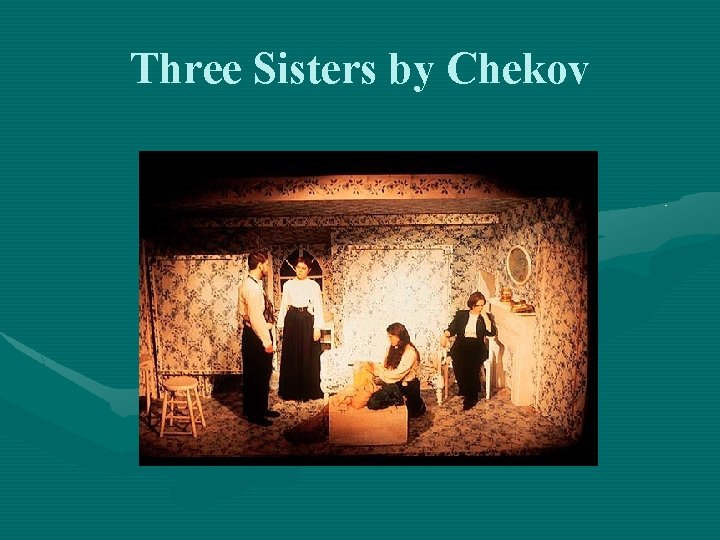
Three Sisters by Chekov
And so we see the birth of the common actor training system known as Method Acting.