
th 12 Grade Course Vocabulary Introduction to Terms
th 12 Grade Course Vocabulary Introduction to Terms
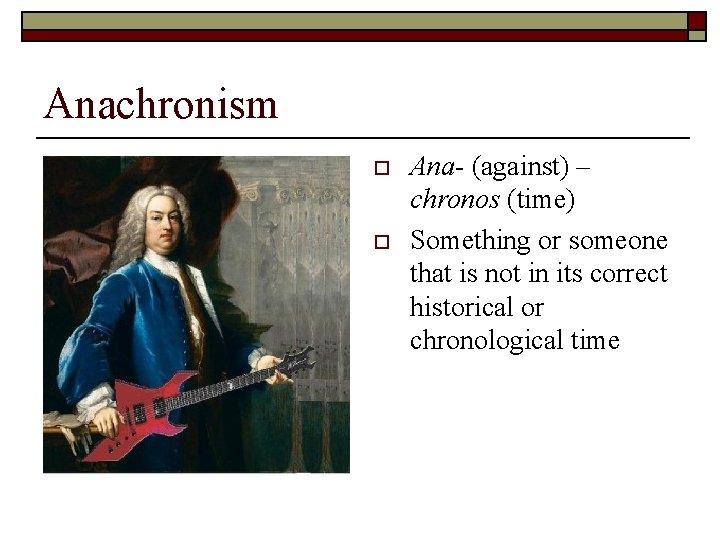
Anachronism o o Ana- (against) – chronos (time) Something or someone that is not in its correct historical or chronological time
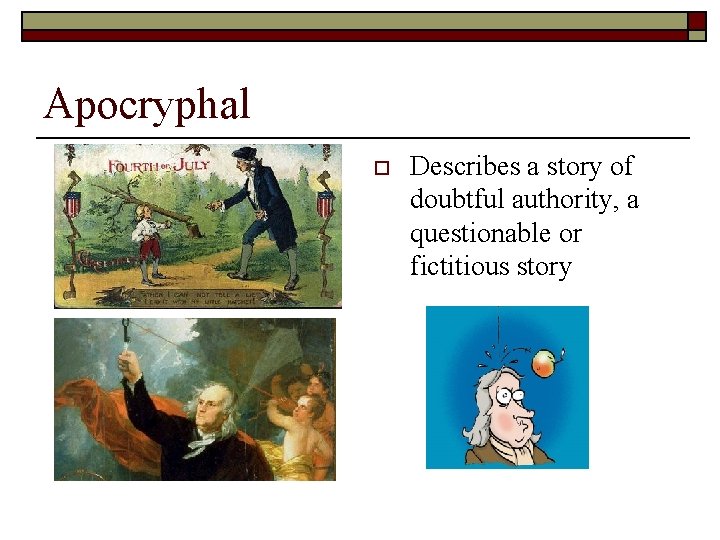
Apocryphal o Describes a story of doubtful authority, a questionable or fictitious story
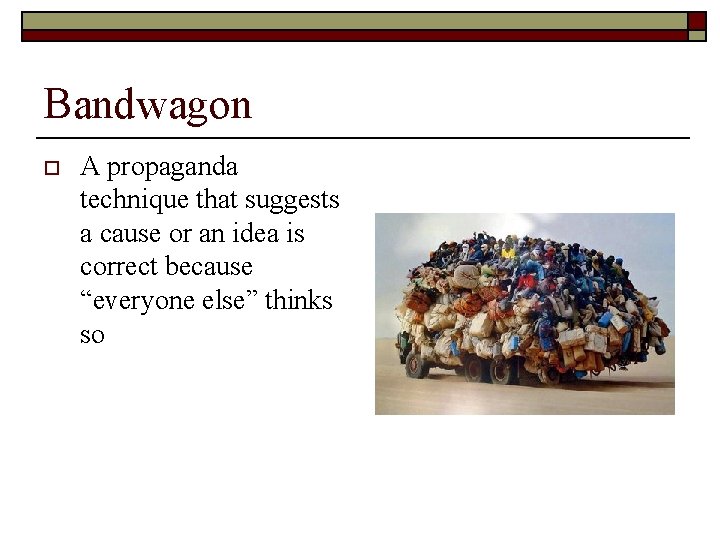
Bandwagon o A propaganda technique that suggests a cause or an idea is correct because “everyone else” thinks so

Broad Generalization o o A claim that a statement is true or not true about all members of a group or class of people Examples: n n Brunette-haired people are more intelligent than blondes. People over the age of 65 are bad drivers.

Colloquialism o o An informal use of spoken or written language, slang Examples: n n pop vs. soda vs. coke as names for soft drinks wasted, tanked, loaded, trashed, buzzed, sloshed, smashed, etc. for describing someone as under the influence of alcohol
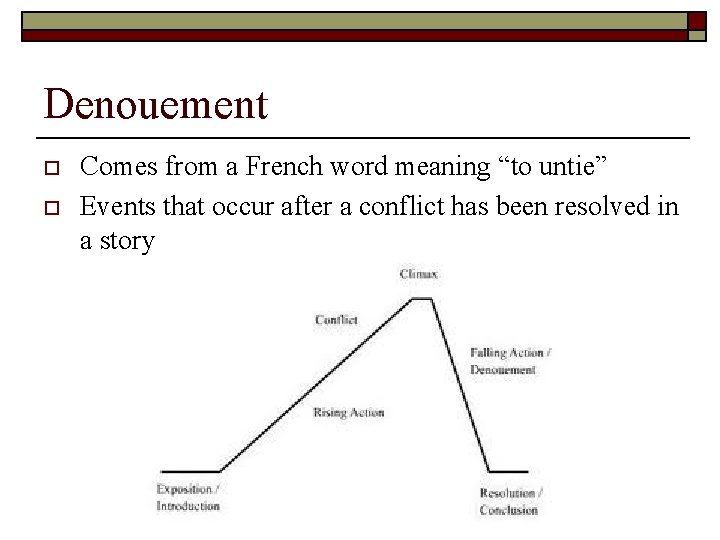
Denouement o o Comes from a French word meaning “to untie” Events that occur after a conflict has been resolved in a story
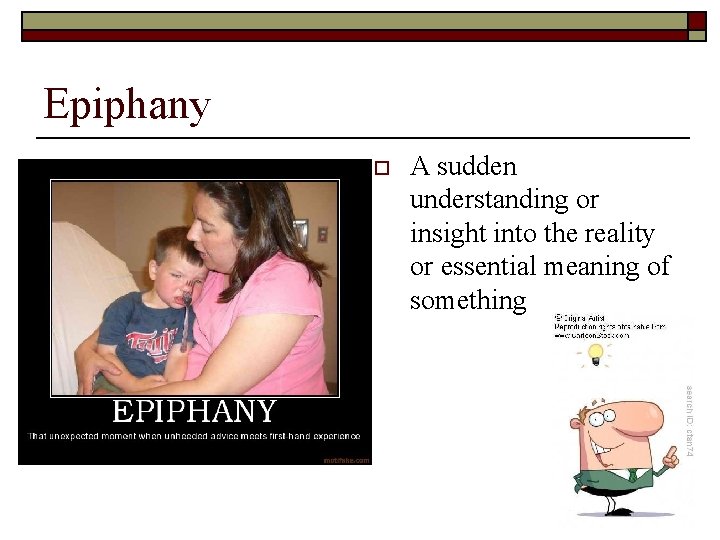
Epiphany o A sudden understanding or insight into the reality or essential meaning of something
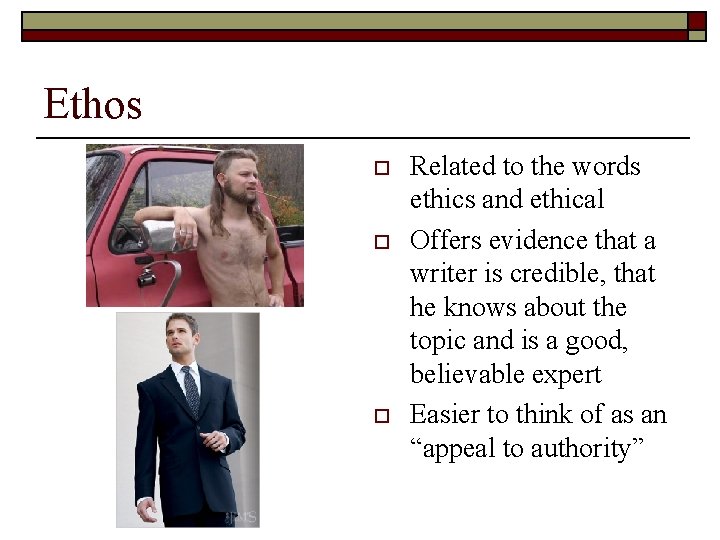
Ethos o o o Related to the words ethics and ethical Offers evidence that a writer is credible, that he knows about the topic and is a good, believable expert Easier to think of as an “appeal to authority”
Explication o o o Derives from a word meaning “to unfold” or “to explain” Offers an explanation or interpretation of a literary selection Perhaps the easiest memory trick: Explication = Explanation
Euphemism o o o The substitution of a mild or positive word for one that is thought to be more effective It’s a politically correct way of avoiding saying the obvious Examples: n n Concentration camp Toilet => bathroom => restroom Someone who is dead has passed on, passed away, checked out, bit the big one, kicked the bucket, bitten the dust, bought the farm, cashed in their chips, or croaked. Once dead that person is sleeping the big sleep, taking a dirt nap, pushing up daises or six feet under.
Logical fallacy o o o A fallacy is something that is false Demonstrates a flaw in reasoning Examples: n n Cutting people is a crime. Surgeons cut people. Therefore, surgeons are criminals. The law of gravity has held true every day in the past. Therefore, the law of gravity will hold true tomorrow.
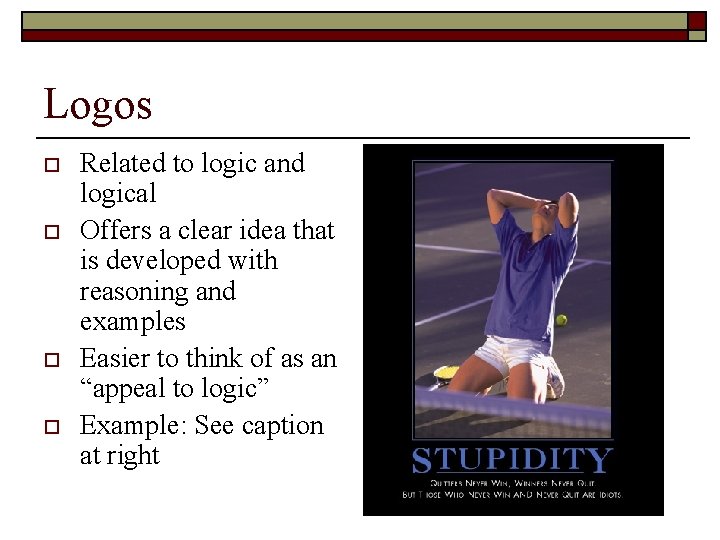
Logos o o Related to logic and logical Offers a clear idea that is developed with reasoning and examples Easier to think of as an “appeal to logic” Example: See caption at right
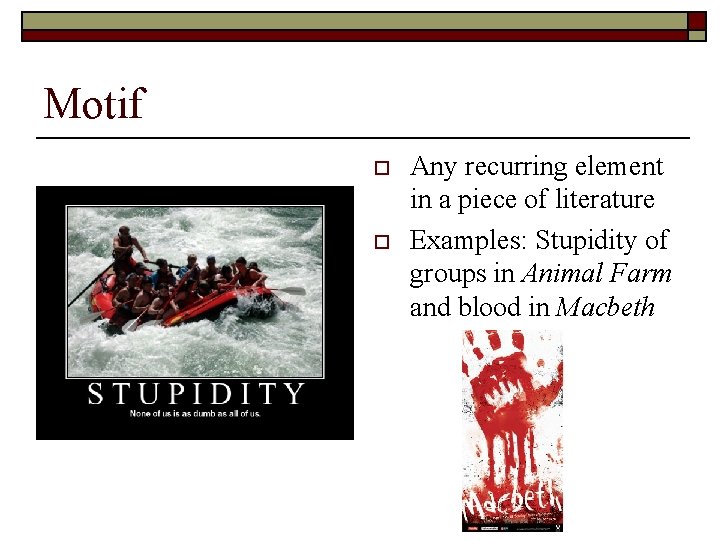
Motif o o Any recurring element in a piece of literature Examples: Stupidity of groups in Animal Farm and blood in Macbeth
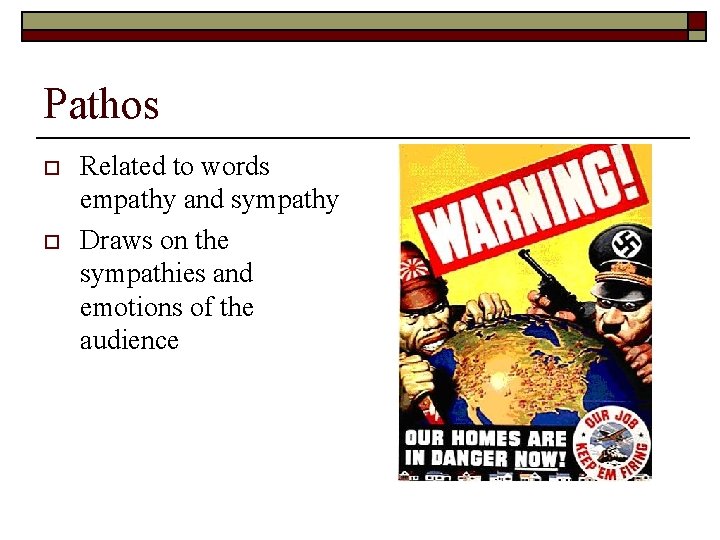
Pathos o o Related to words empathy and sympathy Draws on the sympathies and emotions of the audience
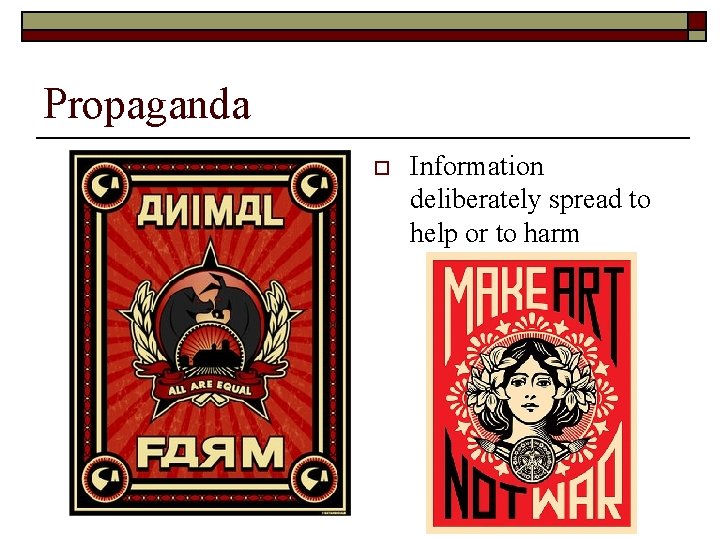
Propaganda o Information deliberately spread to help or to harm
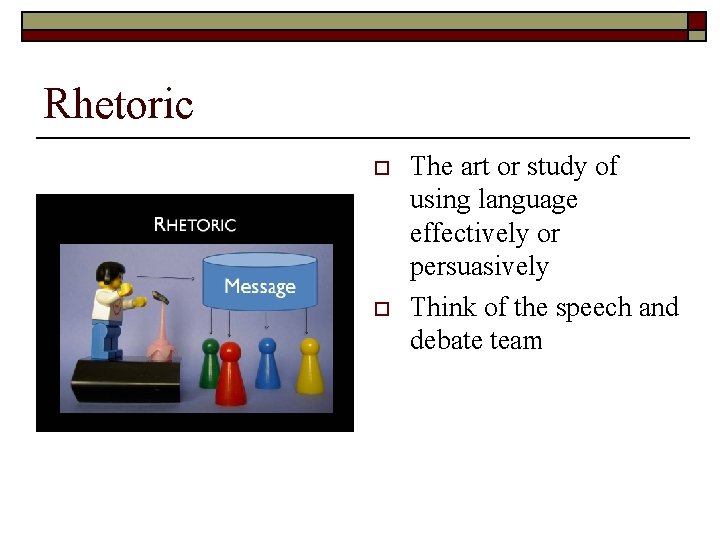
Rhetoric o o The art or study of using language effectively or persuasively Think of the speech and debate team
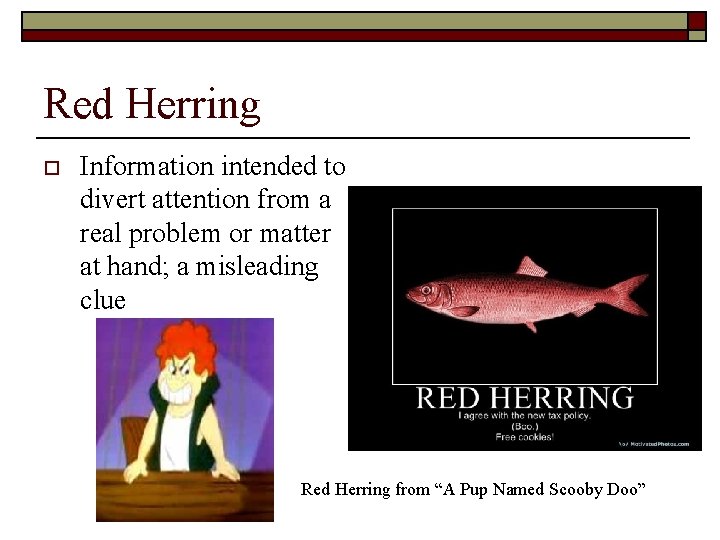
Red Herring o Information intended to divert attention from a real problem or matter at hand; a misleading clue Red Herring from “A Pup Named Scooby Doo”
Slanted, loaded language o o The use of words that have a particular, strong association Examples: n n Fair Language: “You have asked for my views on the man named Mr. Smithers. He has been a valued employee here for years. If you can find a position for him in the management sector of your company, I will be pleased. ” Loaded Language: “You have asked for my views on that creature named Smithers. He has been a clinging nuisance here for ages. If you can find a crevice for him in the woodwork of your sweatshop, I will be relieved. ”
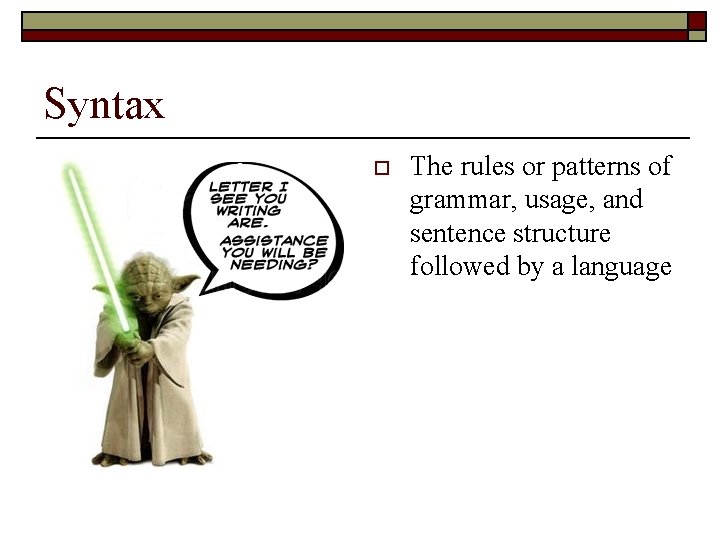
Syntax o The rules or patterns of grammar, usage, and sentence structure followed by a language
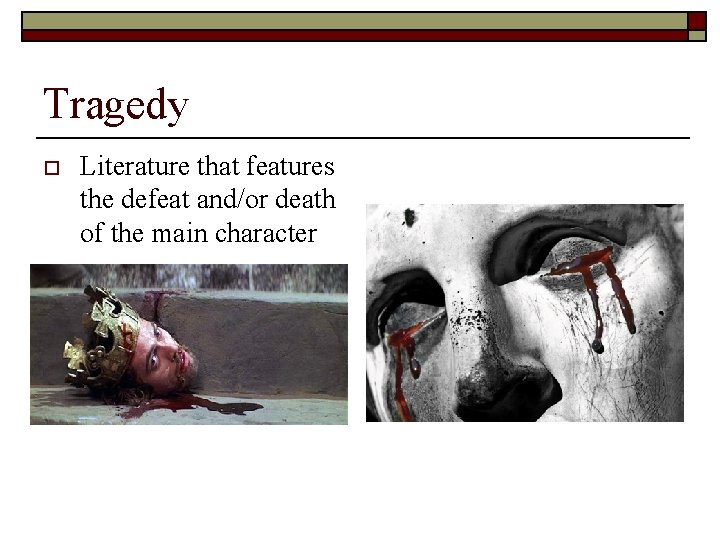
Tragedy o Literature that features the defeat and/or death of the main character
- Slides: 21