
Textile materials are made in three main stages
- Slides: 16
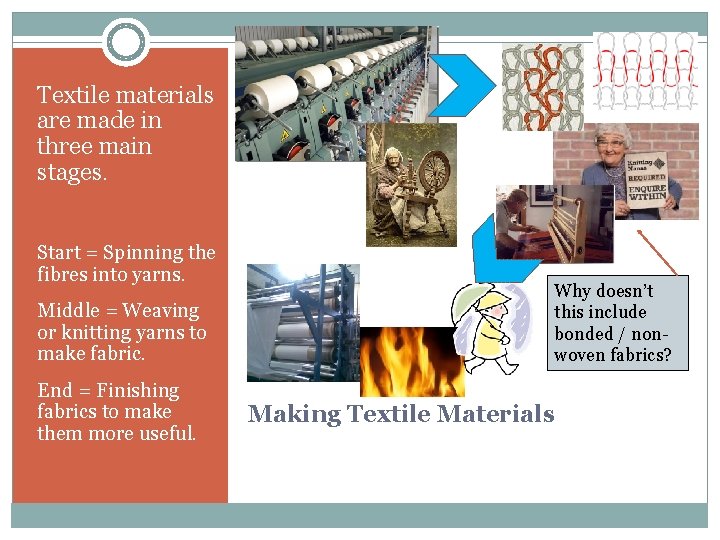
Textile materials are made in three main stages. Start = Spinning the fibres into yarns. Middle = Weaving or knitting yarns to make fabric. End = Finishing fabrics to make them more useful. Why doesn’t this include bonded / nonwoven fabrics? Making Textile Materials
Making Textile Materials
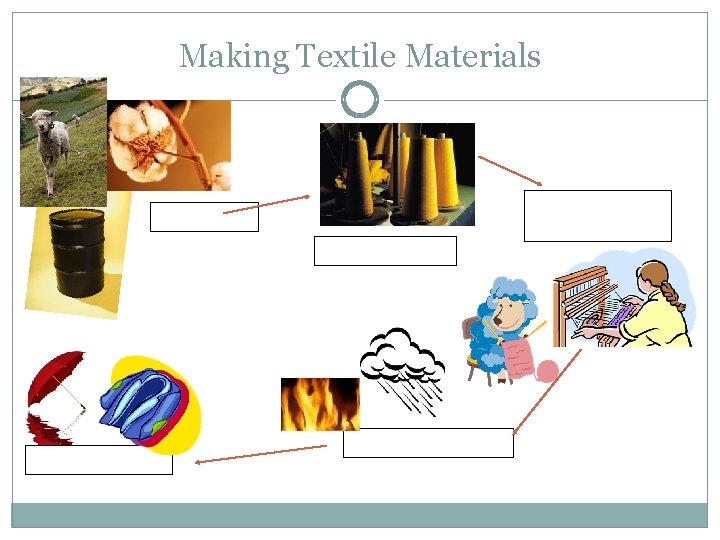
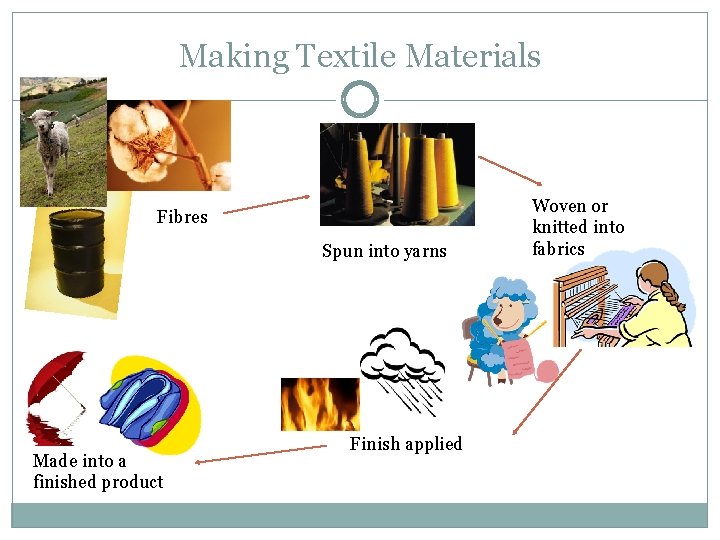
Making Textile Materials Fibres Spun into yarns Made into a finished product Finish applied Woven or knitted into fabrics
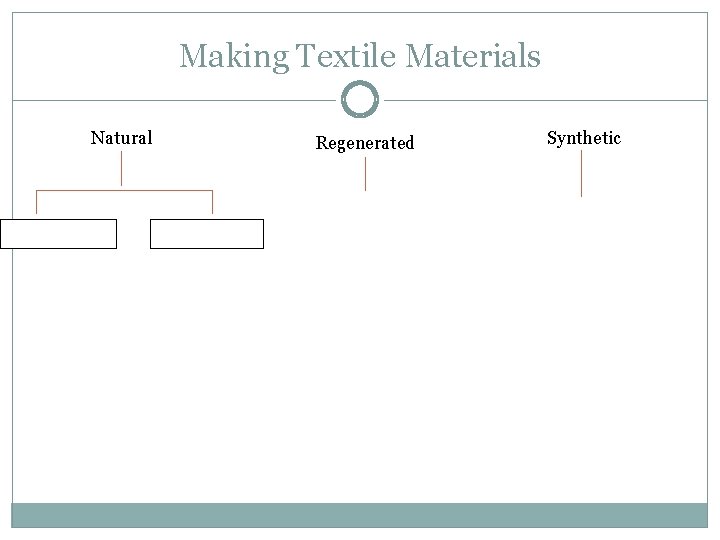
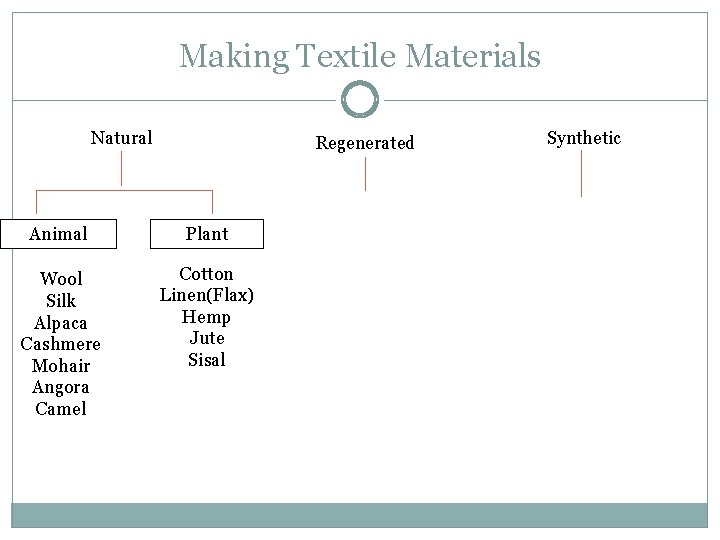
Making Textile Materials Natural Regenerated Synthetic
Making Textile Materials Natural Regenerated Animal Plant Wool Silk Alpaca Cashmere Mohair Angora Camel Cotton Linen(Flax) Hemp Jute Sisal Synthetic
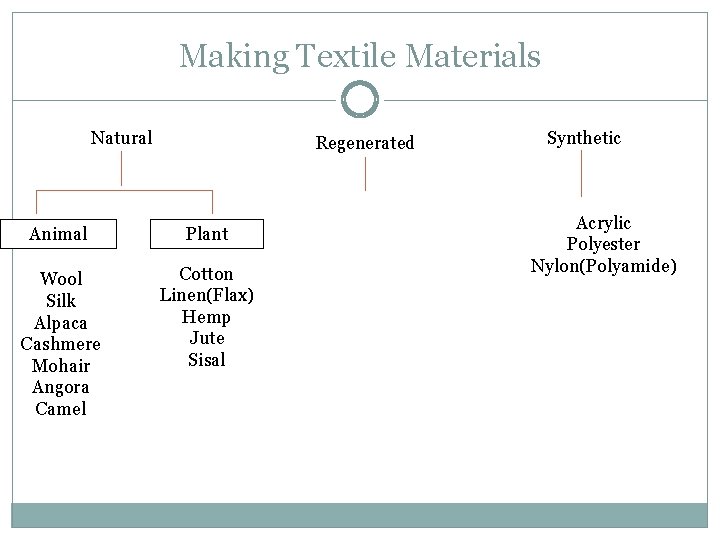
Making Textile Materials Natural Regenerated Animal Plant Wool Silk Alpaca Cashmere Mohair Angora Camel Cotton Linen(Flax) Hemp Jute Sisal Synthetic Acrylic Polyester Nylon(Polyamide)
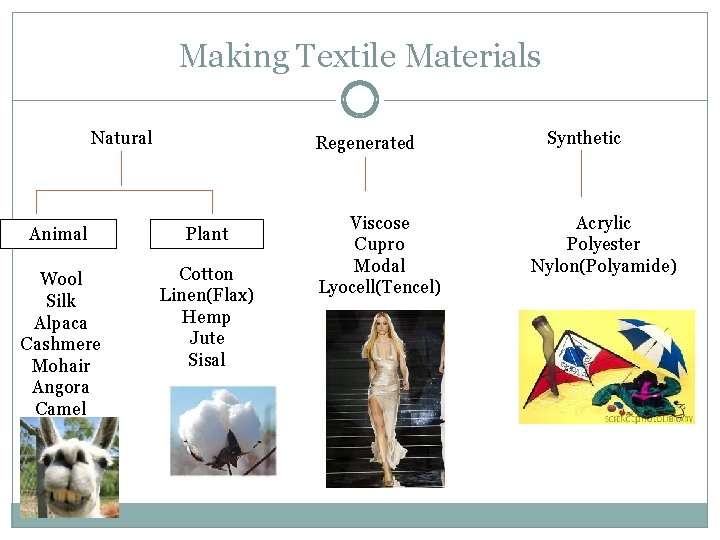
Making Textile Materials Natural Regenerated Animal Plant Wool Silk Alpaca Cashmere Mohair Angora Camel Cotton Linen(Flax) Hemp Jute Sisal Viscose Cupro Modal Lyocell(Tencel) Synthetic Acrylic Polyester Nylon(Polyamide)
Making Textile Materials
Making Textile Materials Cotton Emblem Properties – § Poor Insulators §Stronger when wet than dry §Able to hold moisture well §Hardwearing
Making Textile Materials Linen seal Cotton Emblem Properties – §Poor insulators §Highly absorbent §Hard wearing §Crease easily §Poor elasticity § Poor Insulators §Stronger when wet than dry §Able to hold moisture well §Hardwearing §Poor elasticity
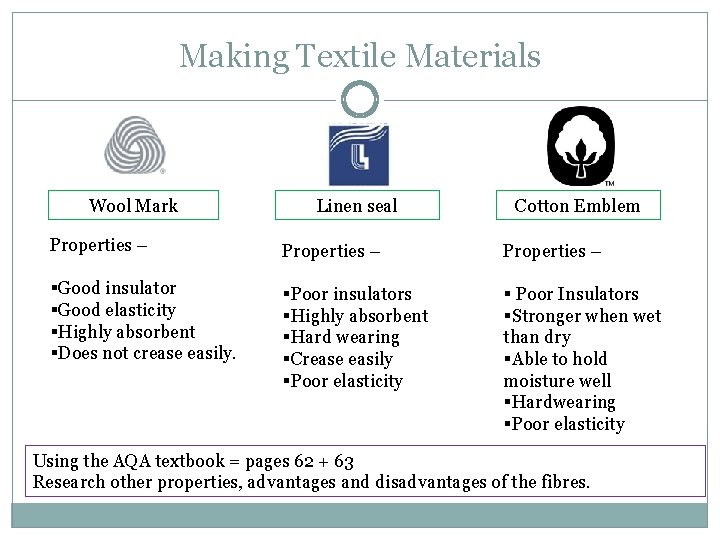
Making Textile Materials Wool Mark Linen seal Cotton Emblem Properties – §Good insulator §Good elasticity §Highly absorbent §Does not crease easily. §Poor insulators §Highly absorbent §Hard wearing §Crease easily §Poor elasticity § Poor Insulators §Stronger when wet than dry §Able to hold moisture well §Hardwearing §Poor elasticity Using the AQA textbook = pages 62 + 63 Research other properties, advantages and disadvantages of the fibres.
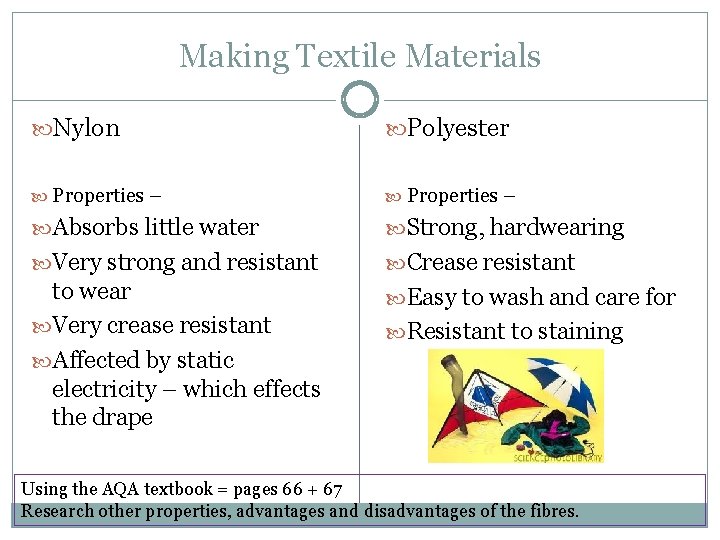
Making Textile Materials Nylon Polyester Properties – Absorbs little water Strong, hardwearing Very strong and resistant Crease resistant to wear Very crease resistant Affected by static electricity – which effects the drape Easy to wash and care for Resistant to staining Using the AQA textbook = pages 66 + 67 Research other properties, advantages and disadvantages of the fibres.
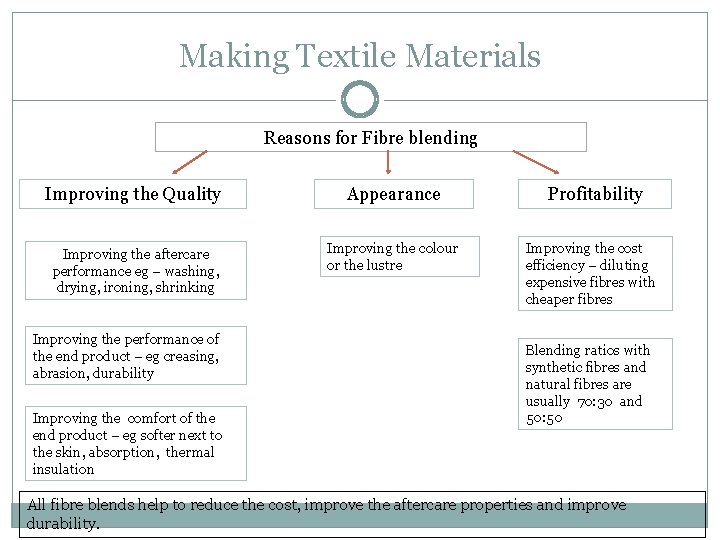
Making Textile Materials Reasons for Fibre blending Improving the Quality Appearance Improving the aftercare performance eg – washing, drying, ironing, shrinking Improving the colour or the lustre Improving the performance of the end product – eg creasing, abrasion, durability Improving the comfort of the end product – eg softer next to the skin, absorption, thermal insulation Profitability Improving the cost efficiency – diluting expensive fibres with cheaper fibres Blending ratios with synthetic fibres and natural fibres are usually 70: 30 and 50: 50 All fibre blends help to reduce the cost, improve the aftercare properties and improve durability.
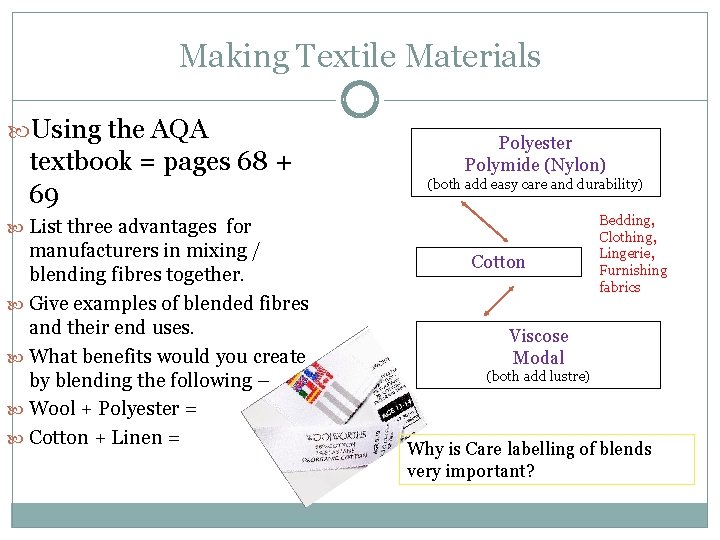
Making Textile Materials Using the AQA textbook = pages 68 + 69 Polyester Polymide (Nylon) (both add easy care and durability) List three advantages for manufacturers in mixing / blending fibres together. Give examples of blended fibres and their end uses. What benefits would you create by blending the following – Wool + Polyester = Cotton + Linen = Cotton Bedding, Clothing, Lingerie, Furnishing fabrics Viscose Modal (both add lustre) Why is Care labelling of blends very important?
Making Textile Materials
Making Textile Materials