
Textile Arts and Craft that use plant animal
- Slides: 15
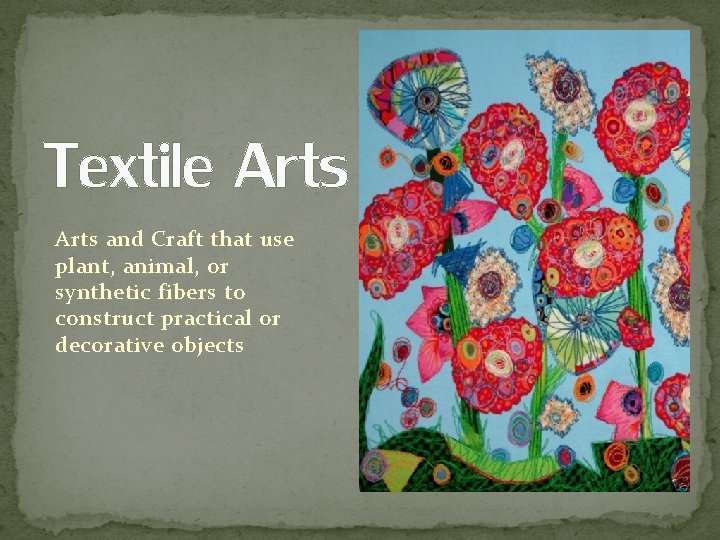
Textile Arts and Craft that use plant, animal, or synthetic fibers to construct practical or decorative objects
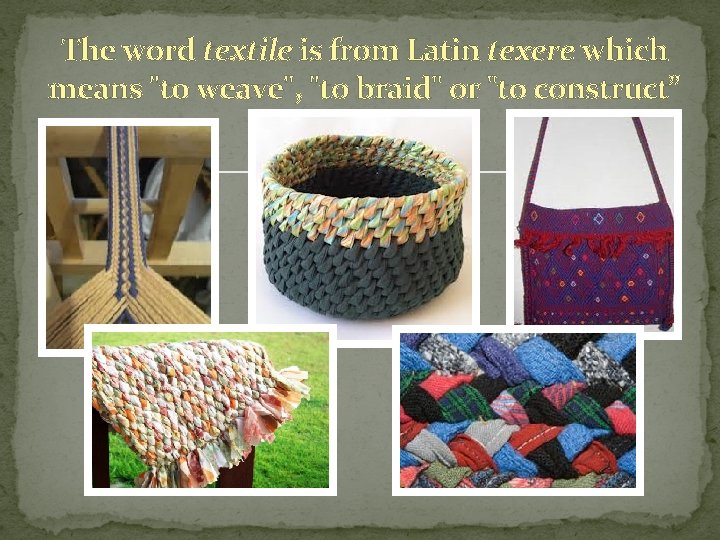
The word textile is from Latin texere which means "to weave", "to braid" or "to construct”
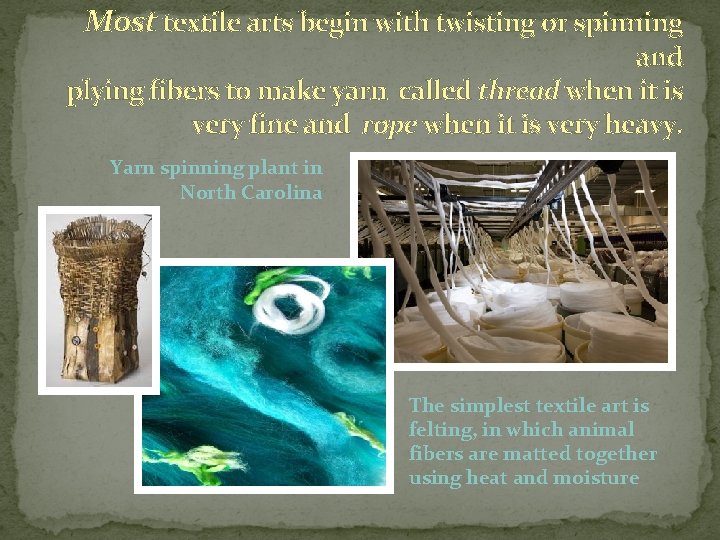
Most textile arts begin with twisting or spinning and plying fibers to make yarn called thread when it is very fine and rope when it is very heavy. Yarn spinning plant in North Carolina The simplest textile art is felting, in which animal fibers are matted together using heat and moisture
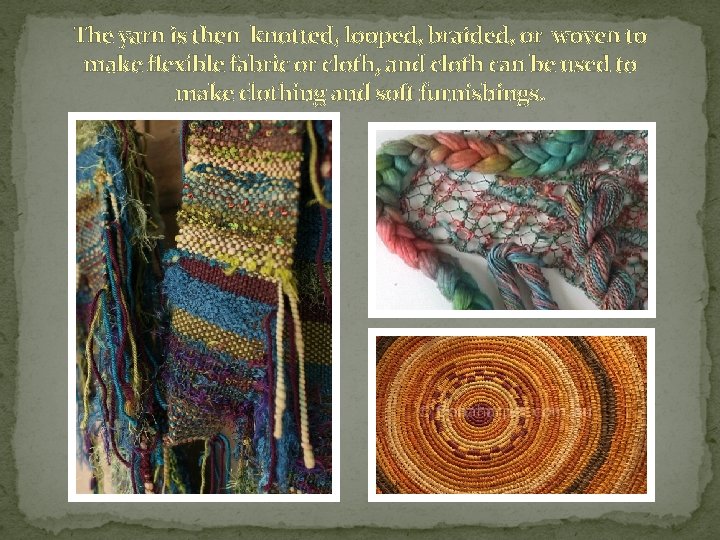
The yarn is then knotted, looped, braided, or woven to make flexible fabric or cloth, and cloth can be used to make clothing and soft furnishings.
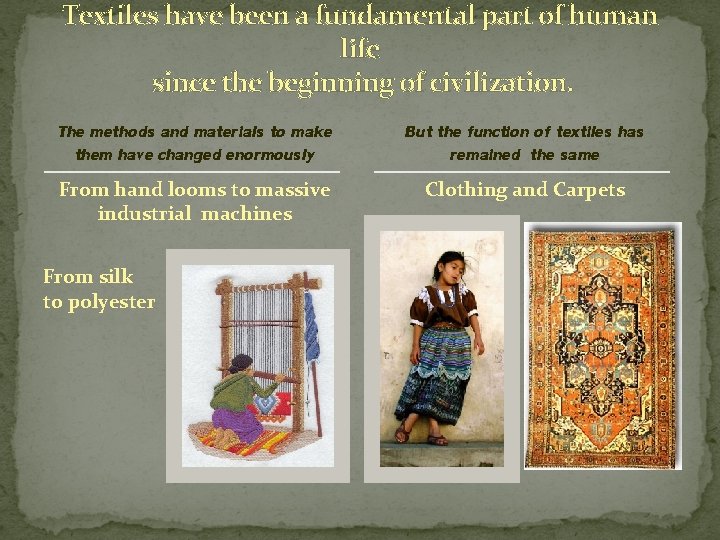
Textiles have been a fundamental part of human life since the beginning of civilization. The methods and materials to make them have changed enormously But the function of textiles has remained the same From hand looms to massive industrial machines Clothing and Carpets From silk to polyester
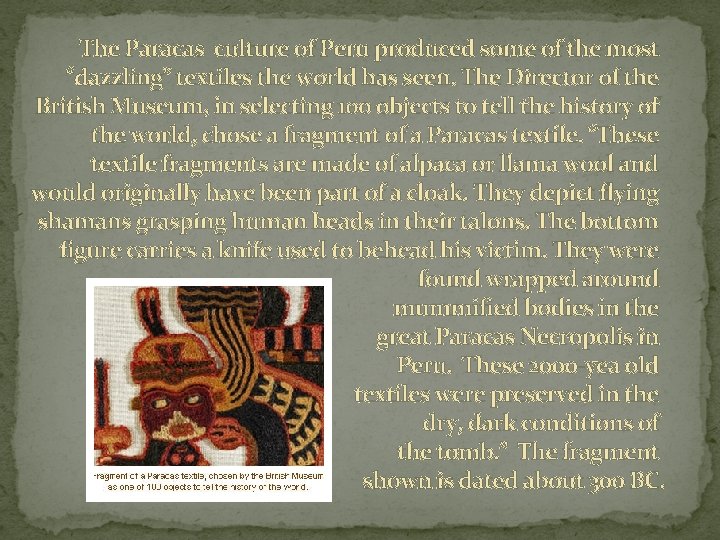
The Paracas culture of Peru produced some of the most “dazzling” textiles the world has seen. The Director of the British Museum, in selecting 100 objects to tell the history of the world, chose a fragment of a Paracas textile. “These textile fragments are made of alpaca or llama wool and would originally have been part of a cloak. They depict flying shamans grasping human heads in their talons. The bottom figure carries a knife used to behead his victim. They were found wrapped around mummified bodies in the great Paracas Necropolis in Peru. These 2000 -yea old textiles were preserved in the dry, dark conditions of the tomb. ” The fragment shown is dated about 300 BC.
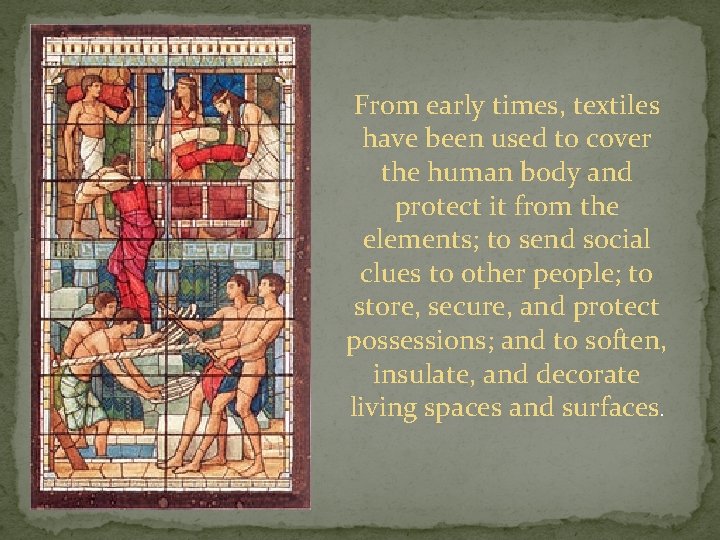
From early times, textiles have been used to cover the human body and protect it from the elements; to send social clues to other people; to store, secure, and protect possessions; and to soften, insulate, and decorate living spaces and surfaces.
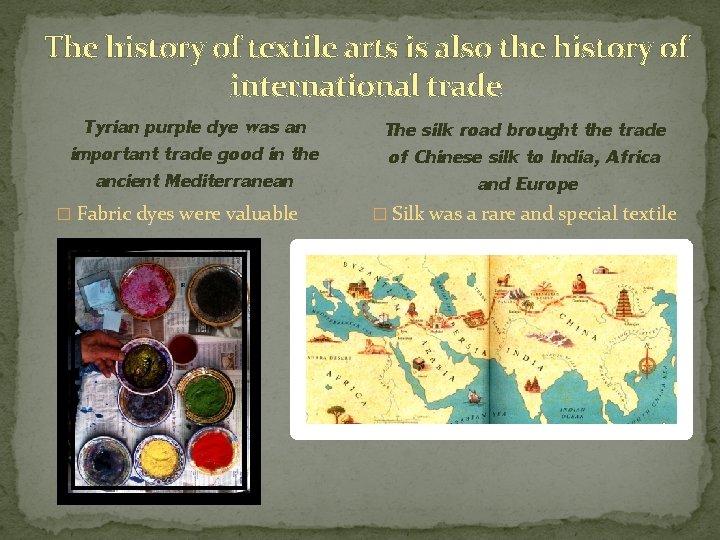
The history of textile arts is also the history of international trade Tyrian purple dye was an important trade good in the ancient Mediterranean � Fabric dyes were valuable The silk road brought the trade of Chinese silk to India, Africa and Europe � Silk was a rare and special textile
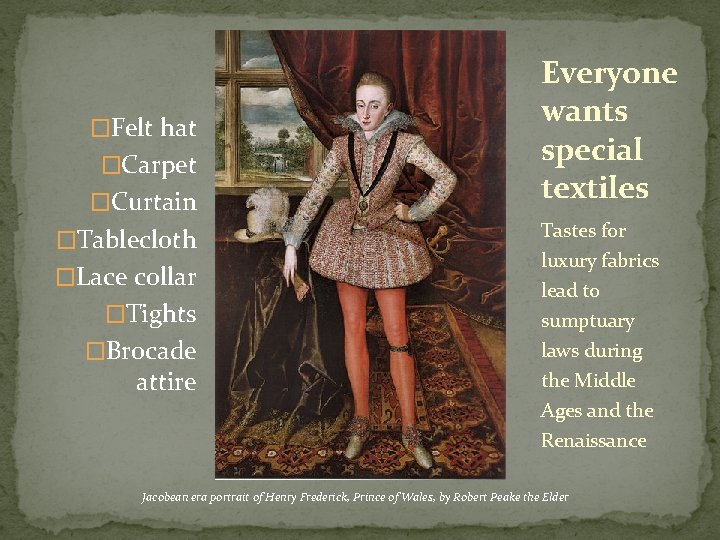
�Felt hat �Carpet �Curtain �Tablecloth �Lace collar �Tights �Brocade attire Everyone wants special textiles Tastes for luxury fabrics lead to sumptuary laws during the Middle Ages and the Renaissance Jacobean era portrait of Henry Frederick, Prince of Wales, by Robert Peake the Elder
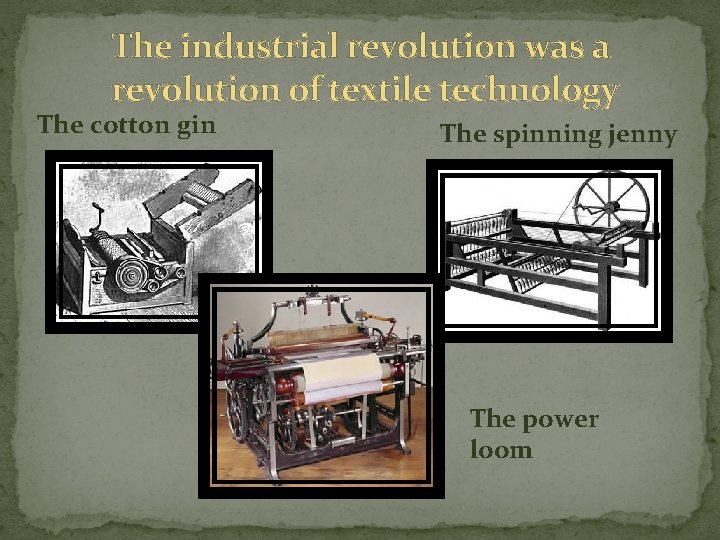
The industrial revolution was a revolution of textile technology The cotton gin The spinning jenny The power loom
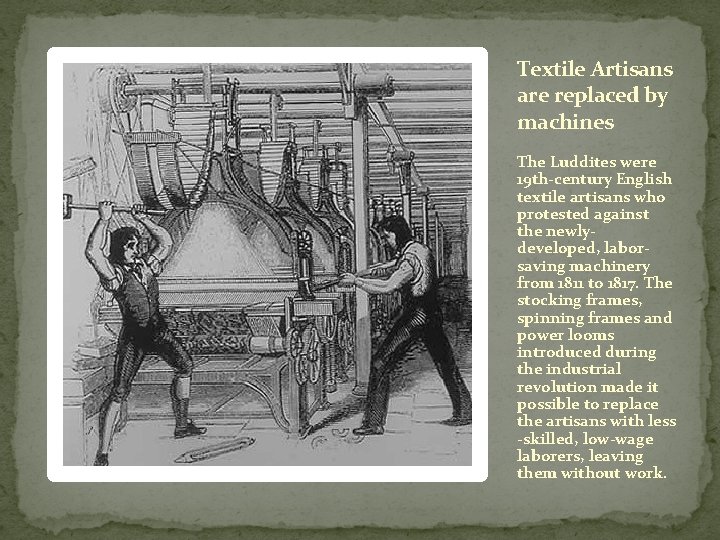
Textile Artisans are replaced by machines The Luddites were 19 th-century English textile artisans who protested against the newlydeveloped, laborsaving machinery from 1811 to 1817. The stocking frames, spinning frames and power looms introduced during the industrial revolution made it possible to replace the artisans with less -skilled, low-wage laborers, leaving them without work.
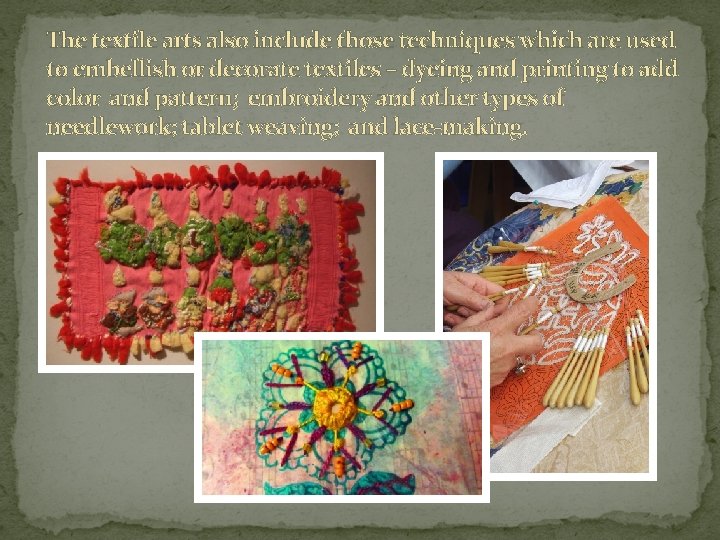
The textile arts also include those techniques which are used to embellish or decorate textiles – dyeing and printing to add color and pattern; embroidery and other types of needlework; tablet weaving; and lace-making.
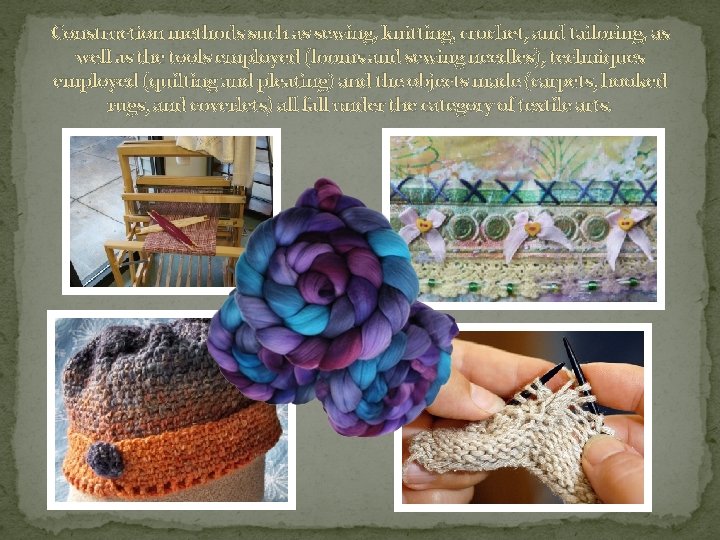
Construction methods such as sewing, knitting, crochet, and tailoring, as well as the tools employed (looms and sewing needles), techniques employed (quilting and pleating) and the objects made (carpets, hooked rugs, and coverlets) all fall under the category of textile arts.
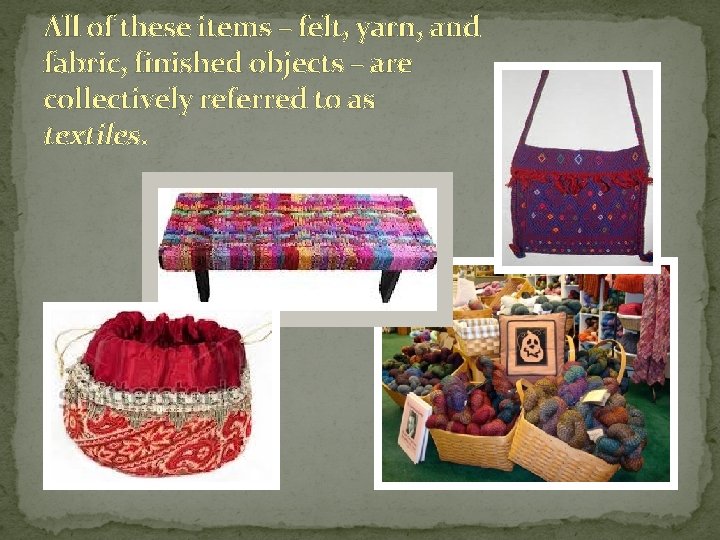
All of these items – felt, yarn, and fabric, finished objects – are collectively referred to as textiles.
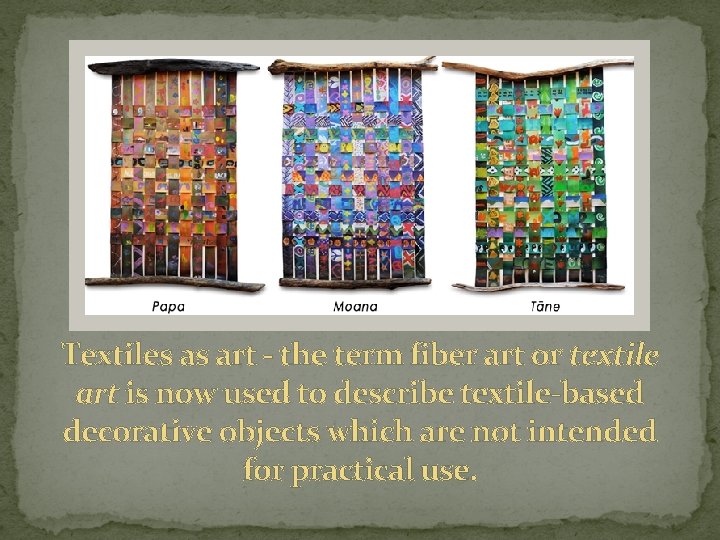
Textiles as art - the term fiber art or textile art is now used to describe textile-based decorative objects which are not intended for practical use.