
Text Mining for Biomedical Data Arzucan zgr Bilgisayar

Text Mining for Biomedical Data Arzucan Özgür Bilgisayar Mühendisliği Bölümü Boğaziçi Üniversitesi arzucan. ozgur@boun. edu. tr Karmaşık Sistemler ve Veri Bilimi Çalıştayı 04. 05. 2019
General Research Areas � Natural Language Processing � Text Mining � Bioinformatics 2
Biomedical Text Mining
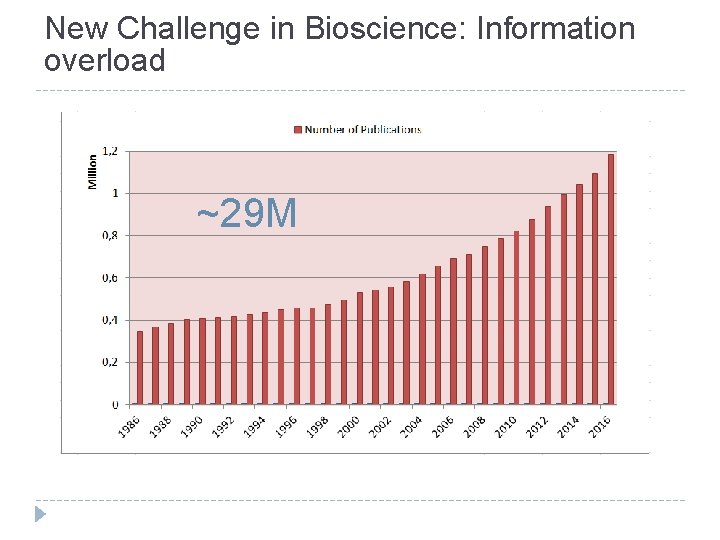
New Challenge in Bioscience: Information overload ~29 M
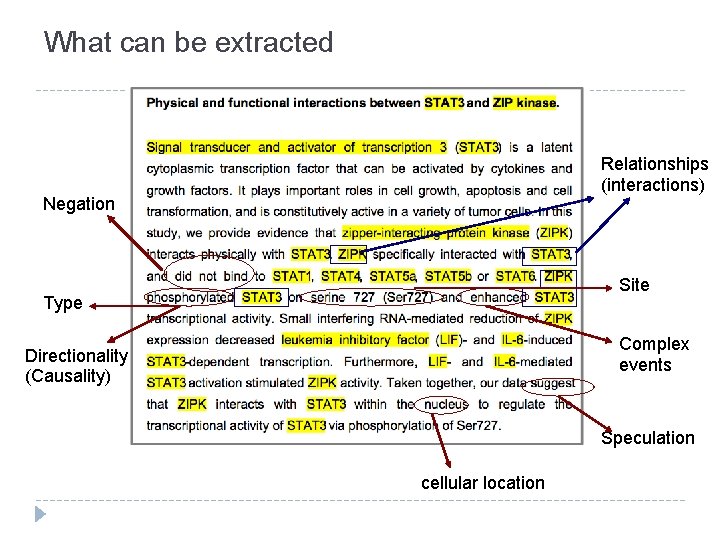
What can be extracted Relationships (interactions) Negation Site Type Complex events Directionality (Causality) Speculation cellular location
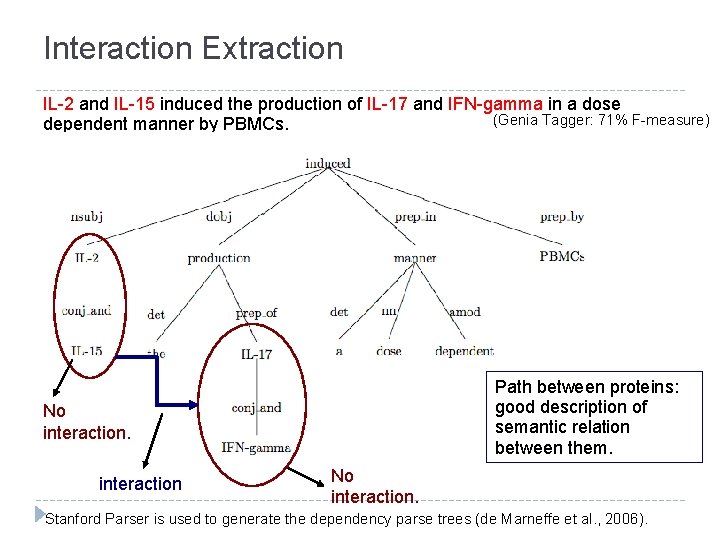
Interaction Extraction IL-2 and IL-15 induced the production of IL-17 and IFN-gamma in a dose (Genia Tagger: 71% F-measure) dependent manner by PBMCs. Path between proteins: good description of semantic relation between them. No interaction. Stanford Parser is used to generate the dependency parse trees (de Marneffe et al. , 2006).

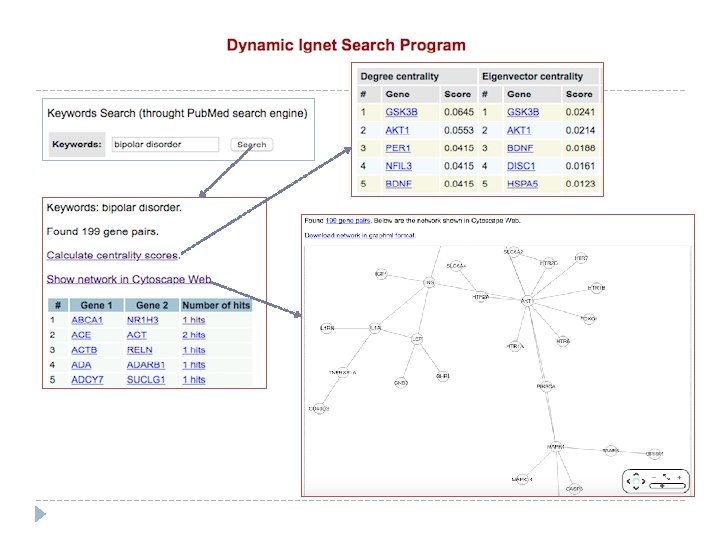
IGNET: Integrated Gene Network Arzucan Özgür, Junguk Hur, Zuoshuang Xiang, Edison Ong, Dragomir R. Radev, Yongqun He: Ignet: A Centrality and INO-based Web System for Analyzing and Visualizing Literature-mined Networks. ICBO/Bio. Creative 2016
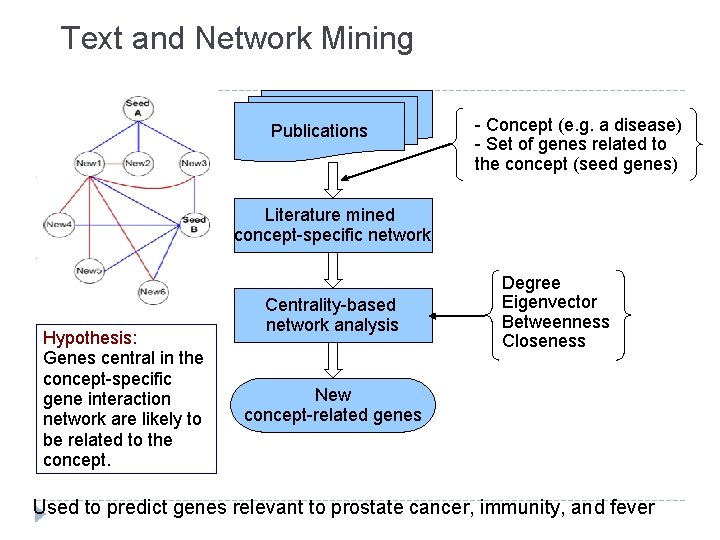
Text and Network Mining Publications - Concept (e. g. a disease) - Set of genes related to the concept (seed genes) Literature mined concept-specific network Hypothesis: Genes central in the concept-specific gene interaction network are likely to be related to the concept. Centrality-based network analysis Degree Eigenvector Betweenness Closeness New concept-related genes Used to predict genes relevant to prostate cancer, immunity, and fever

Predicting Prostate Cancer Genes 15 prostate cancer genes from OMIM Morbid Map used as Seed Genes A. Ozgur, T. Vu, G. Erkan, and D. R. Radev. Identifying gene-disease associations using centrality on a literature mined gene interaction network. Bioinformatics, Volume 24, Number 13, pp. i 277 -i 285, 2008.
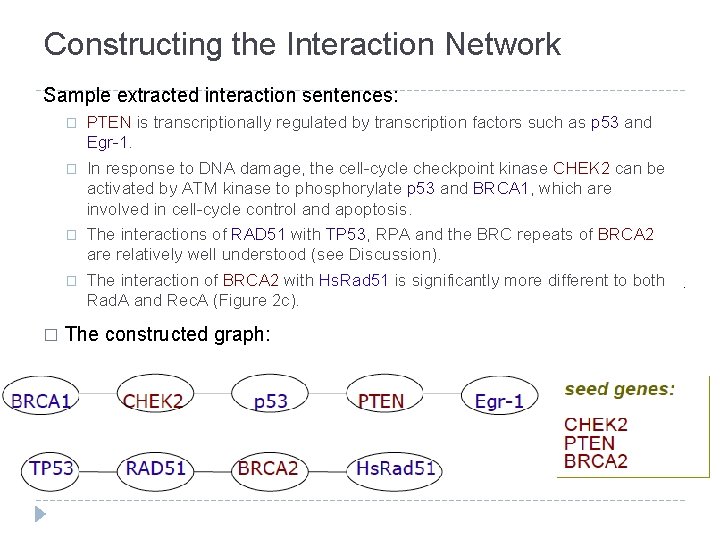
Constructing the Interaction Network Sample extracted interaction sentences: � � � PTEN is transcriptionally regulated by transcription factors such as p 53 and Egr-1. In response to DNA damage, the cell-cycle checkpoint kinase CHEK 2 can be activated by ATM kinase to phosphorylate p 53 and BRCA 1, which are involved in cell-cycle control and apoptosis. The interactions of RAD 51 with TP 53, RPA and the BRC repeats of BRCA 2 are relatively well understood (see Discussion). The interaction of BRCA 2 with Hs. Rad 51 is significantly more different to both Rad. A and Rec. A (Figure 2 c). The constructed graph:
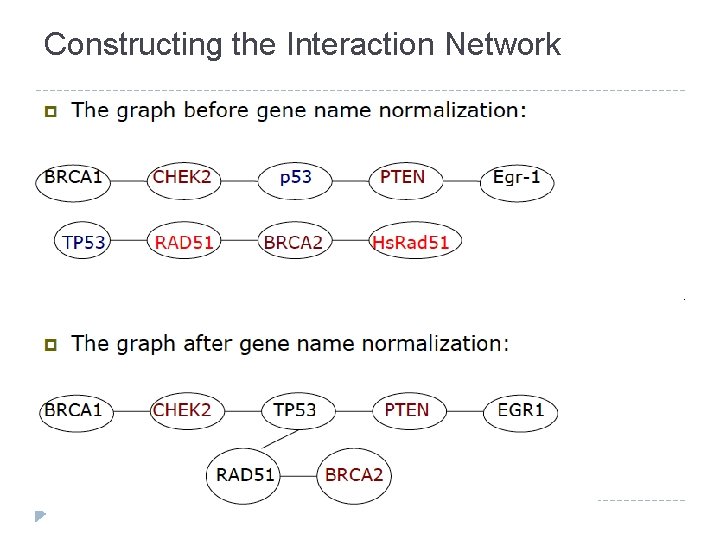
Constructing the Interaction Network
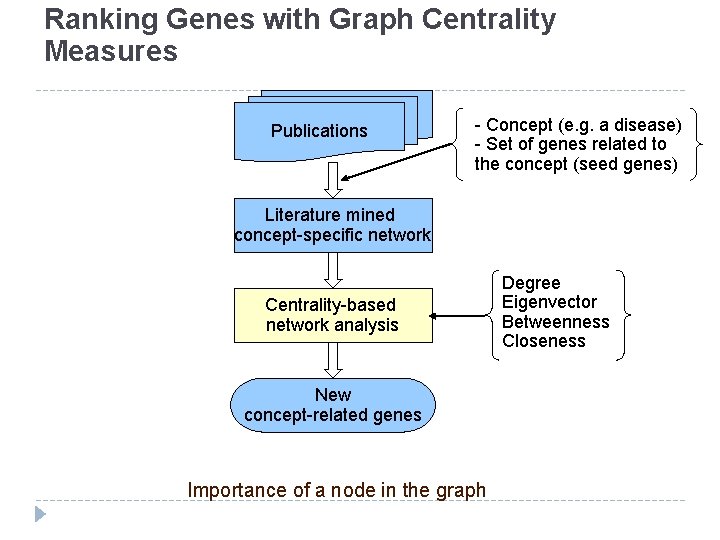
Ranking Genes with Graph Centrality Measures Publications - Concept (e. g. a disease) - Set of genes related to the concept (seed genes) Literature mined concept-specific network Centrality-based network analysis New concept-related genes Importance of a node in the graph Degree Eigenvector Betweenness Closeness
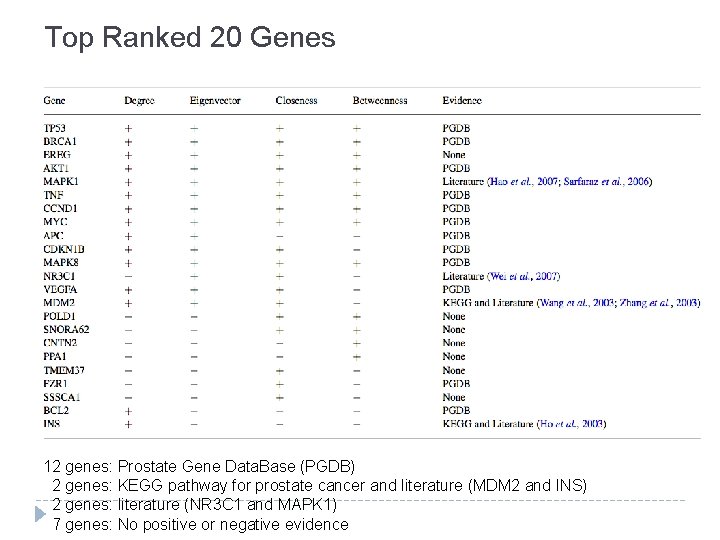
Top Ranked 20 Genes 12 genes: Prostate Gene Data. Base (PGDB) 2 genes: KEGG pathway for prostate cancer and literature (MDM 2 and INS) 2 genes: literature (NR 3 C 1 and MAPK 1) 7 genes: No positive or negative evidence
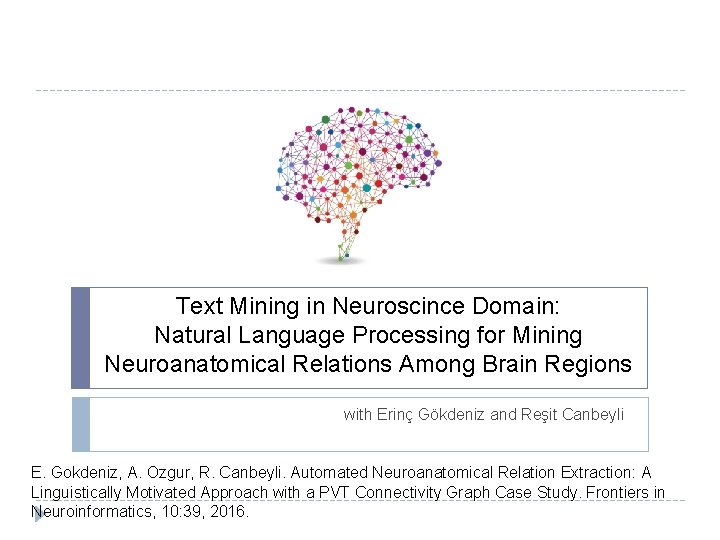
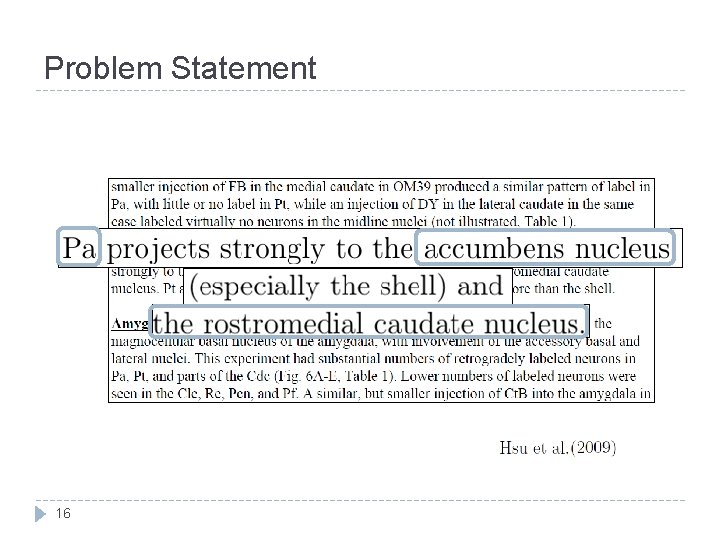
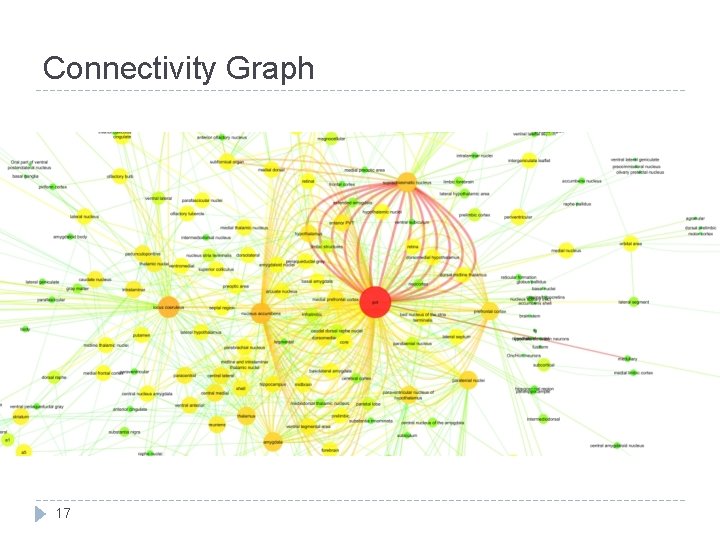
Text Mining in Neuroscince Domain: Natural Language Processing for Mining Neuroanatomical Relations Among Brain Regions with Erinç Gökdeniz and Reşit Canbeyli E. Gokdeniz, A. Ozgur, R. Canbeyli. Automated Neuroanatomical Relation Extraction: A Linguistically Motivated Approach with a PVT Connectivity Graph Case Study. Frontiers in Neuroinformatics, 10: 39, 2016.
Problem Statement 16
Connectivity Graph 17

How is PVT case study helpful? � PVT has strong connections with � SCN, nucleus accumbens, amygdaloid complex � extended amygdala incl. � bed nucleus of the stria terminalis � ventromedial prefrontal cortex �These structures involved in mood and depression �PVT involvement in depression is not directly addressed � Only, Zhu et al. (2011) suggests that PVT neurons might be engaged in acute depressive events 19

A chemical language based approach for drug-target interaction prediction with Hakime Öztürk and Elif Özkırımlı

Textual Representation of Ligands and Proteins CC 1(C(NC(S 1)C(C (=O)O)NC(=O)C(C 2=CC=CC=C 2)N)C( =O)O)C 21

� Define similarity measures based on SMILES strings. Use with machine learning algorithms. Hakime Ozturk, Elif Ozkirimli, Arzucan Ozgur. A comparative study of SMILES-based compound similarity functions for drug-target interaction prediction. BMC Bioinformatics, 17: 128, 2016. 22

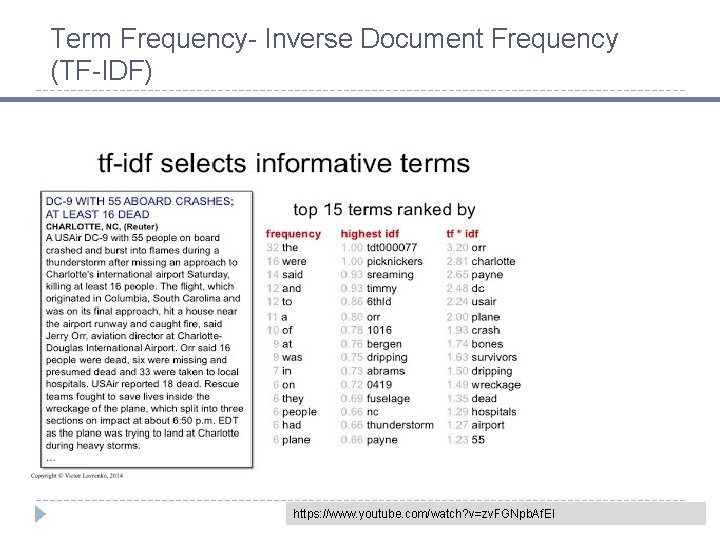
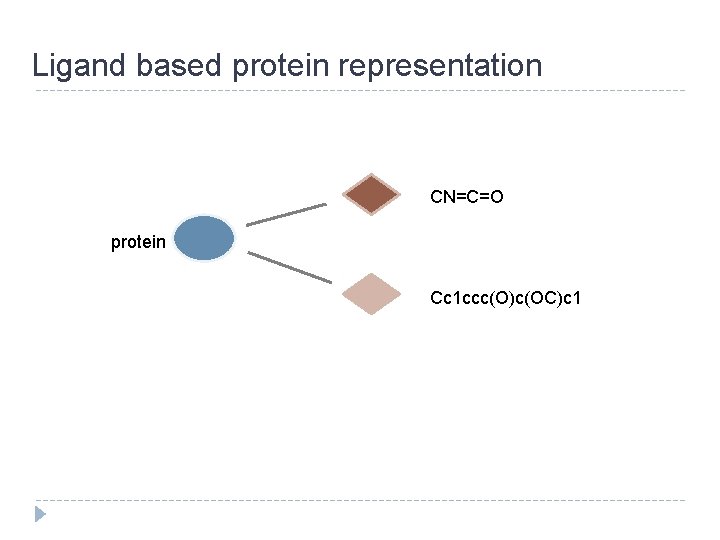
SMILES is text based – Text similarity methods can be applied. – We used two approches to represent proteins using their SMILES • TF-IDF based ligand representation • Distributed ligand representation
Term Frequency- Inverse Document Frequency (TF-IDF) https: //www. youtube. com/watch? v=zv. FGNpb. Af. EI

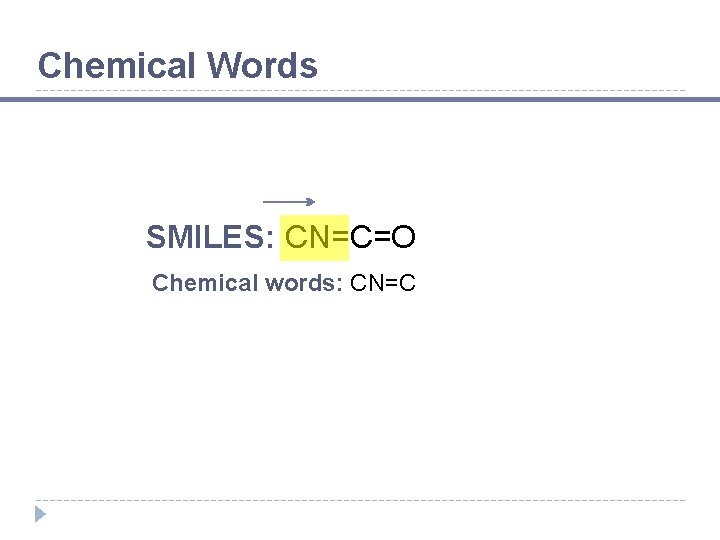
If we think of SMILES as a document? SMILES: CN=C=O Chemical words: ? ? ?
Chemical Words SMILES: CN=C=O Chemical words: CN=C
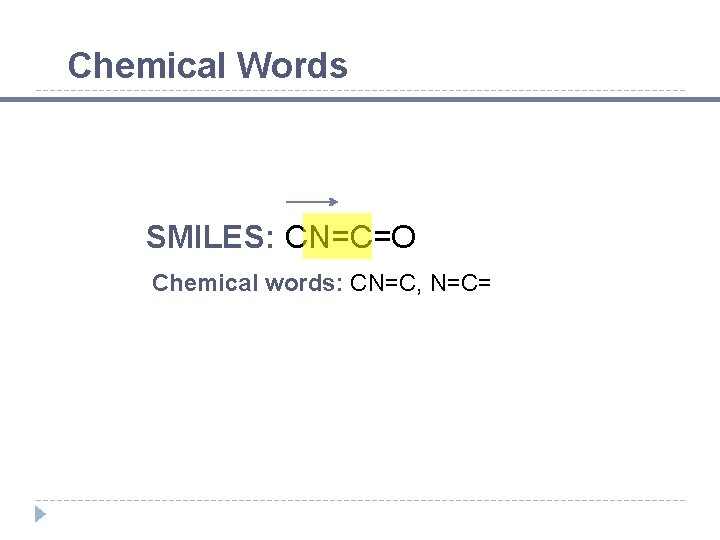
Chemical Words SMILES: CN=C=O Chemical words: CN=C, N=C=
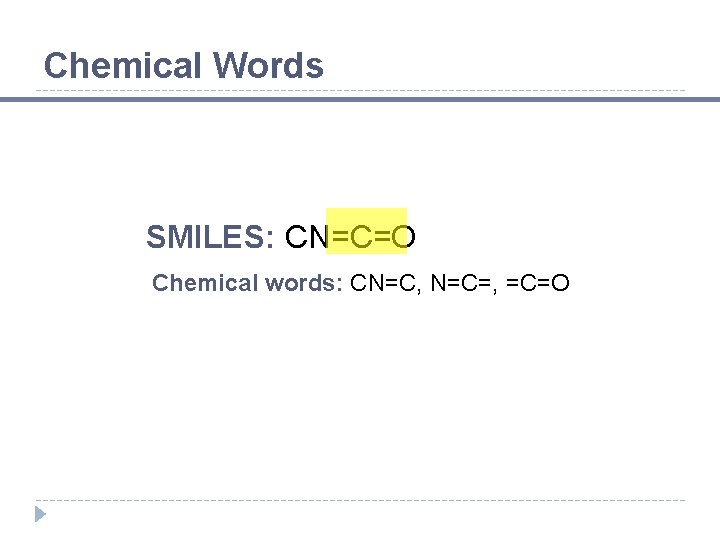
Chemical Words SMILES: CN=C=O Chemical words: CN=C, N=C=, =C=O
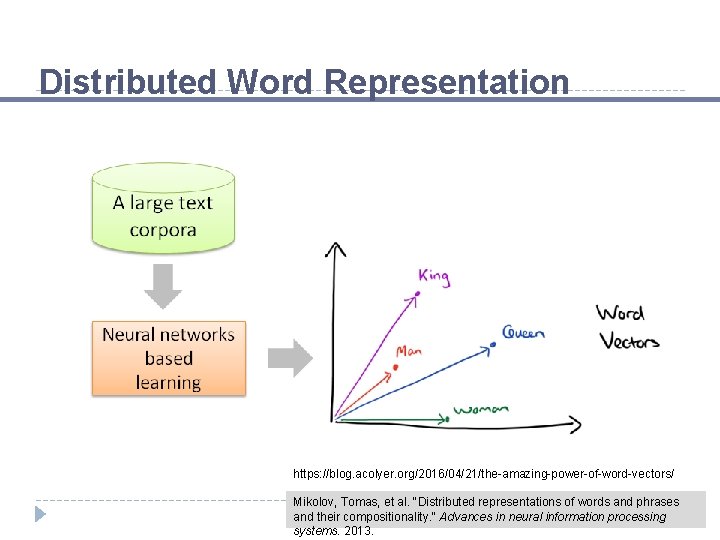
Distributed Word Representation https: //blog. acolyer. org/2016/04/21/the-amazing-power-of-word-vectors/ Mikolov, Tomas, et al. "Distributed representations of words and phrases and their compositionality. " Advances in neural information processing systems. 2013.
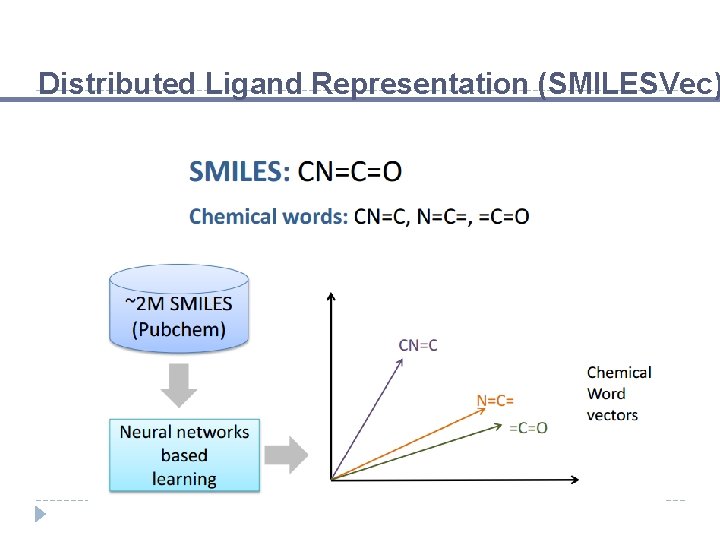
Distributed Ligand Representation (SMILESVec)
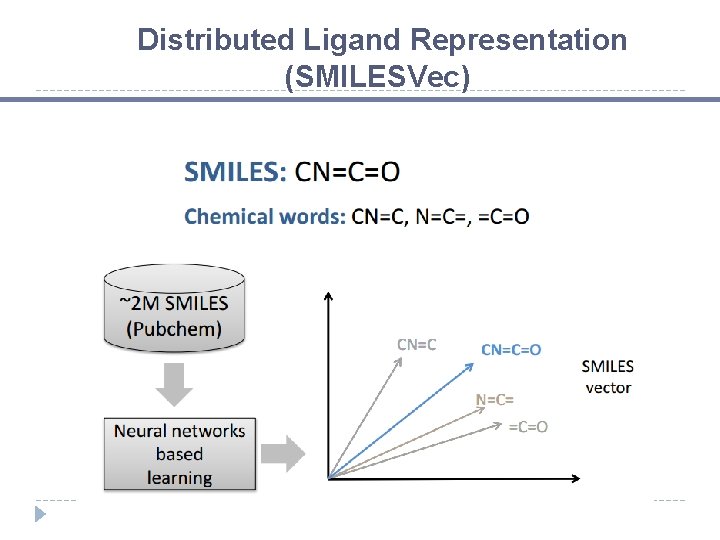
Distributed Ligand Representation (SMILESVec)
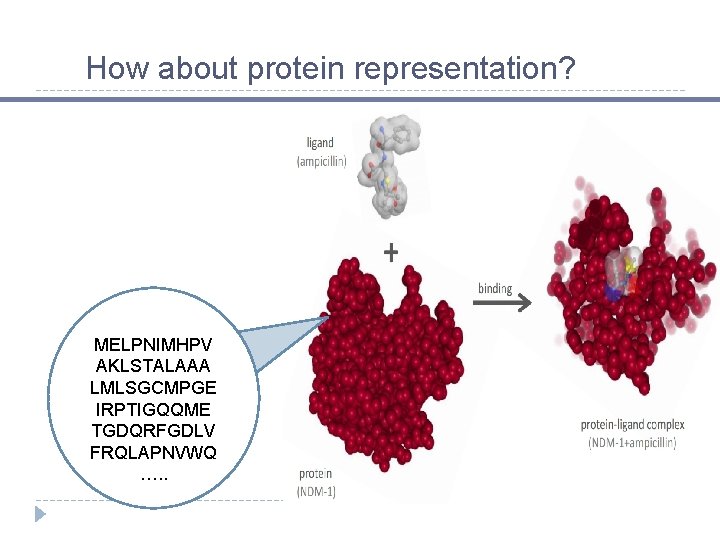
How about protein representation? MELPNIMHPV AKLSTALAAA LMLSGCMPGE IRPTIGQQME TGDQRFGDLV FRQLAPNVWQ …. .
Ligand based protein representation CN=C=O protein Cc 1 ccc(O)c(OC)c 1
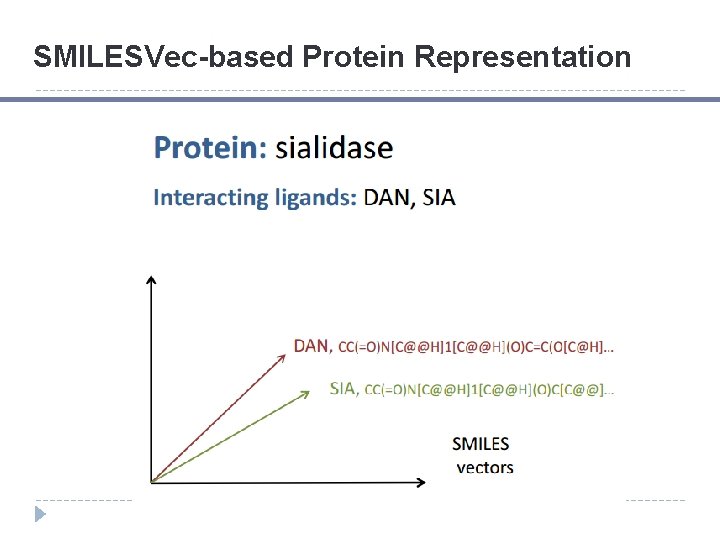
SMILESVec-based Protein Representation
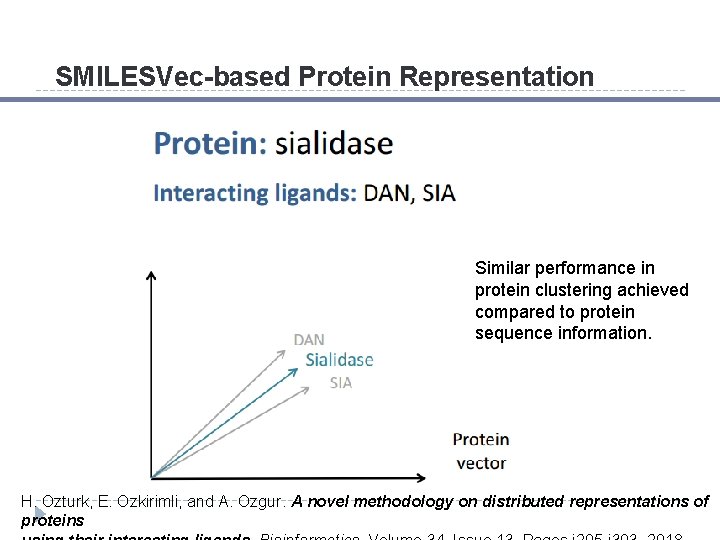
SMILESVec-based Protein Representation Similar performance in protein clustering achieved compared to protein sequence information. H. Ozturk, E. Ozkirimli, and A. Ozgur. A novel methodology on distributed representations of proteins

Thank you!
- Slides: 35