
Text Important Formulas Numbers Doctor notes Extra notes
§ § § Text. Important Formulas Numbers Doctor notes Extra notes and explanation 1 Lecture No. 22 “ Work hard in silence, Let the success make the noise”.

Spasticity and Increased Muscle Tone Objectives: 1 -Define spasticity and rigidity and hypertonia. 2 -Describe the neurophysiology of spasticity. 3 -Describe the causes of spasticity and rigidity. 2

Muscle tone ONLY IN MALES’ SLIDES � � Hypertonia refers to increased resistance to passive lengthening (passive stretch) of a muscle or muscles group. This may mean increased stiffness of the muscle. � Hypertonicity could be due to a neural drive problem such as 1) spasticity 2) rigidity. � Increased Gamma efferent discharge is the main cause of increased muscle tone. how? Resistance of a muscle to stretch is often referred to as its tone or tonus. � Muscle tone is static component of stretch reflex. It is a continuous mild muscle contraction that � A hypertonic muscle is one in which the resistance to stretch is high because of � Facilitatory supra spinal centers to gamma motor neurons. hyperactive stretch reflexes. 3 • ﻳﻌﻨﻲ ﻟﻤﺎ ﺍﺣﺮﻙ ﻳﺪ ﺍﻟﻤﺮﻳﺾ ﺭﺡ ﻳﺼﻴﺮ ﻓﻴﻪ ﻣﻘﺎﻭﻣﺔ ﻛﺄﻨﻲ ﺍﻓﺘﺢ ﺑﺎﺏ ﻭﺳﺒﺒﻬﺎ ﺍﺻﺎﺑﺔ ﻓﻲ ﺟﺰﺀ ﻣﻦ ﻣﺴﺎﺭ ﺍﻟﺘﻮﺻﻴﻞ ﻣﻦ ﺍﻻﻋﻠﻰ ﺍﻟﻰ ﺍﻻﺳﻔﻞ ONLY IN FEMALES’ SLIDES acts as background to actual movement.

Spasticity � As described by Lance (1980): “it is a motor disorder, characterised by increase in tonic stretch reflexes (muscle tone) with exaggerated tendon jerks, resulting from hyper -excitability of the dynamic stretch reflex as one component of the upper motor neurone (UMN) syndrome. ONLY IN MALES’ SLIDES • Spasticity is velocity dependent increased resistance to � the lower limb. ﻛﻠﻤﺎ ﺍﺯﻳﺪ ﺍﻟﺴﺮﻋﺔ ﺗﺰﻳﺪ ﺍﻟﻤﻘﺎﻭﻣﺔ ﻭﺗﻜﻮﻥ ﻣﻊ ﺣﺮﻛﺔ ﻭﺣﺪﺓ ﻳﻌﻨﻲ ﻣﺜﻼ ﻟﻤﺎ ﻧﺴﻮﻱ ﻓﻠﻴﻜﺸﻦ ﻧﻠﻘﻰ ﻣﻘﺎﻭﻣﺔ ﺑﺲ ﺍﻛﺴﺘﻨﺸﻦ ﻣﺎ ﻧﻠﻘﻰ ﻣﻘﺎﻭﻣﻪ � � There a number of clinical features that are with the speed of displacement of a joint. associated with spasticity: The faster you stretch the muscle the greater the � resistance. � Involvement of the corticospinal tract is often associated with UMNL and spasticity. passive movement (stretch) of the muscle due to abnormally high muscle tone (hypertonia) which varies Flexor spasticity in the upper limb & extensor spasticity in Spasticity is clearly neural in nature and is a associated hypereflexia, flexor spasticity in the upper limb & extensor spasticity in the lower limb. � UMN lesions Spasticity is of Clasp Knife Type* : describe with the – UMNL. a sudden release of tone after an initial hypertonia of Spasticity is usually uni- directional. selected joint movement 4 ﻣﺜﻞ ﻣﻌﻨﺎﻫﺎ ﻛﺴﺎﺭﺓ ﺍﻟﺒﻨﺪﻕ ﻳﻌﻨﻲ ﺗﻜﺴﺮﻳﻦ ﺍﻟﻘﺸﺮﻩ ﻓﻲ ﺍﻟﺒﺪﺍﻳﺔ ﺑﻌﺪﻳﻦ ﺗﺼﻴﺮ ﺍﻟﺤﺮﻛﺔ ﺍﺳﻬﻞ ، *ﻳﻌﻨﻲ ﻳﻜﻮﻥ ﻓﻴﻪ ﺻﻌﻮﺑﺔ ﻓﻲ ﺍﻟﺘﺤﺮﻳﻚ ﻓﻲ ﺑﺪﺍﻳﺔ ﺍﻟﺤﺮﻛﺔ ﺑﺲ ﺑﻌﺪﻳﻦ ﺗﺼﻴﺮ ﻃﺒﻴﻌﻴﻪ
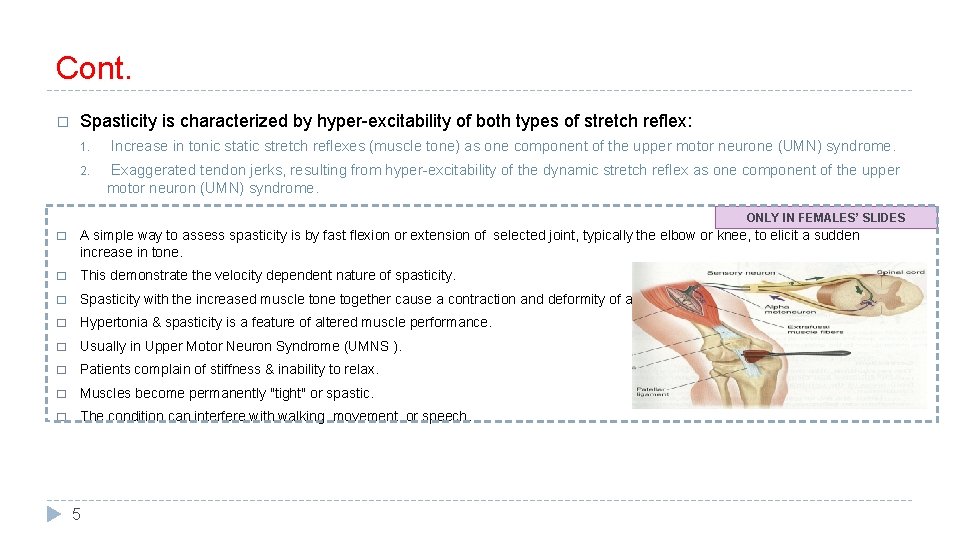
Cont. � Spasticity is characterized by hyper-excitability of both types of stretch reflex: 1. Increase in tonic static stretch reflexes (muscle tone) as one component of the upper motor neurone (UMN) syndrome. 2. Exaggerated tendon jerks, resulting from hyper-excitability of the dynamic stretch reflex as one component of the upper motor neuron (UMN) syndrome. ONLY IN FEMALES’ SLIDES � A simple way to assess spasticity is by fast flexion or extension of selected joint, typically the elbow or knee, to elicit a sudden increase in tone. � This demonstrate the velocity dependent nature of spasticity. � Spasticity with the increased muscle tone together cause a contraction and deformity of a limb. � Hypertonia & spasticity is a feature of altered muscle performance. � Usually in Upper Motor Neuron Syndrome (UMNS ). � Patients complain of stiffness & inability to relax. � Muscles become permanently "tight" or spastic. � The condition can interfere with walking, movement, or speech. 5
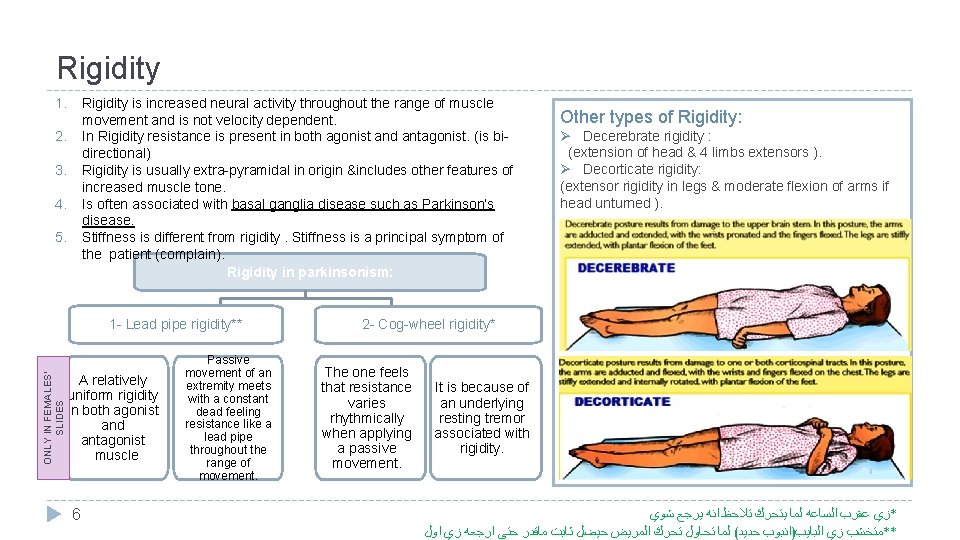
Rigidity 1. Rigidity is increased neural activity throughout the range of muscle movement and is not velocity dependent. In Rigidity resistance is present in both agonist and antagonist. (is bidirectional) Rigidity is usually extra-pyramidal in origin &includes other features of increased muscle tone. Is often associated with basal ganglia disease such as Parkinson’s disease. Stiffness is different from rigidity. Stiffness is a principal symptom of the patient (complain). Rigidity in parkinsonism: 2. 3. 4. 5. ONLY IN FEMALES’ SLIDES 1 - Lead pipe rigidity** A relatively uniform rigidity in both agonist and antagonist muscle 6 Passive movement of an extremity meets with a constant dead feeling resistance like a lead pipe throughout the range of movement. Other types of Rigidity: Ø Decerebrate rigidity : (extension of head & 4 limbs extensors ). Ø Decorticate rigidity: (extensor rigidity in legs & moderate flexion of arms if head unturned ). 2 - Cog-wheel rigidity* The one feels that resistance varies rhythmically when applying a passive movement. It is because of an underlying resting tremor associated with rigidity. *ﺯﻱ ﻋﻘﺮﺏ ﺍﻟﺴﺎﻋﻪ ﻟﻤﺎ ﻳﺘﺤﺮﻙ ﺗﻼﺣﻆ ﺍﻧﻪ ﻳﺮﺟﻊ ﺷﻮﻱ **ﻣﺘﺨﺸﺐ ﺯﻱ ﺍﻟﺒﺎﻳﺐ)ﺍﻧﺒﻮﺏ ﺣﺪﻳﺪ( ﻟﻤﺎ ﺗﺤﺎﻭﻝ ﺗﺤﺮﻙ ﺍﻟﻤﺮﻳﺾ ﺣﻴﻀﻞ ﺛﺎﺑﺖ ﻣﺎﻗﺪﺭ ﺣﺘﻰ ﺍﺭﺟﻌﻪ ﺯﻱ ﺍﻭﻝ

Features of UMN Syndrome • Weakness and decreased muscle control. • No remarkable muscle wasting , but disuse atrophy • from (loss of) descending inhibition from the brain of the • ﺍﻟﻌﻀﻼﺕ ﻣﻮﺟﻮﺩﻩ ﺑﺲ ﺻﻌﻮﺑﺔ ﺗﺤﺮﻳﻜﻬﺎ ﺍﺩﻯ ﺍﻟﻰ ﻗﻠﺔ ﺍﺳﺘﺨﺪﺍﻣﻬﺎ ﻓﻴﺼﻴﺮ ﻋﻨﺪﻧﺎ ﺍﺗﺮﻭﻓﻲ Higher Motor-inhibitory centers (medullary RF & basal ganglia) resulting in un-antagonized excitatory input • Spasticity & hypertonia, frequently called • “ clasp-knife spasticity ”= increased resistance at the begining of muscle stretch due to increased extensor muscle tone then a sudden collapse in resistance due to inhibition of extensor motor neurons by GTOs (golgi tendon organs)* from brain stem excitatory centers as (pontine RF+vestibular N) through Vestibulospinal & reticulospinal excitatory tracts to gamma motoneurones • Clonus Repetitive jerky motions (clonus), especially when limb moved & stretched suddenly. • Exaggerated tendon jerks • Extensor plantar reflex = Babinski sign ( dorsiflexion of the big toe and fanning out of the other toes ). • Absent abdominal reflexes. In UMN syndrome (lesion) the motor neurones are free causing hypertonia & spasticity of muscles. ONLY IN MALES’ SLIDES • This results in : (1) State of ongoing (unremitting) contraction of muscles (due to hyperactive gamma activity ) (2) decreased ability to control movement *ﻟﻤﺎ ﺍﺷﺪ ﻳﺪﻩ ﻭﻫﻲ ﺍﺻﻼ ﻫﺎﻳﺒﺮﺗﻮﻧﻴﻚ ﻓﺮﺡ ﺍﺯﻭﺩ ﺍﻟﺘﻨﺸﻦ ﻓﻴﺼﻴﺮ ﻋﻨﺪﻧﺎ ﺍﻧﻔﻴﺮﺱ ﺳﺘﺮﻳﺘﺶ ﺭﻳﻔﻠﻜﺲ 7 (3) increased resistance felt on passive stretch.
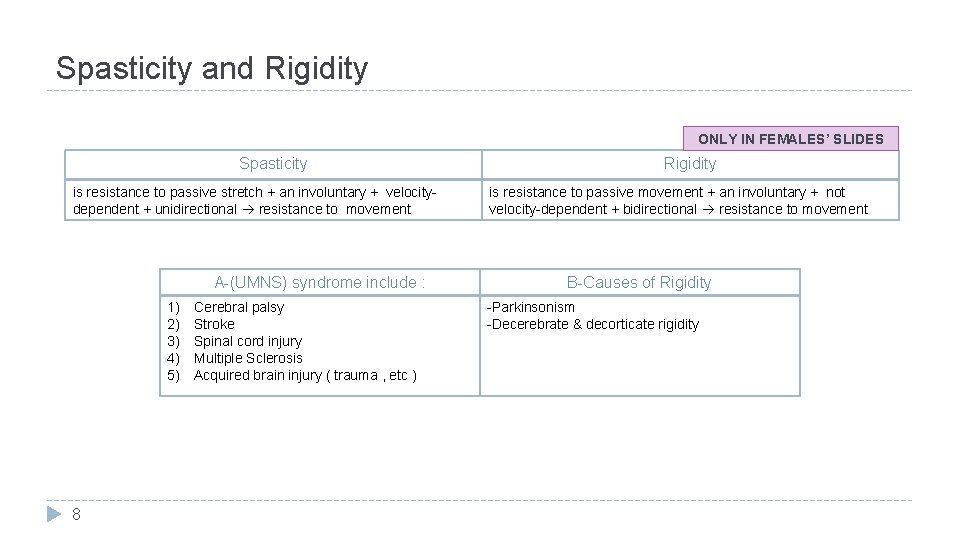
Spasticity and Rigidity ONLY IN FEMALES’ SLIDES Spasticity is resistance to passive stretch + an involuntary + velocitydependent + unidirectional resistance to movement A-(UMNS) syndrome include : 1) 2) 3) 4) 5) 8 Cerebral palsy Stroke Spinal cord injury Multiple Sclerosis Acquired brain injury ( trauma , etc ) Rigidity is resistance to passive movement + an involuntary + not velocity-dependent + bidirectional resistance to movement B-Causes of Rigidity -Parkinsonism -Decerebrate & decorticate rigidity
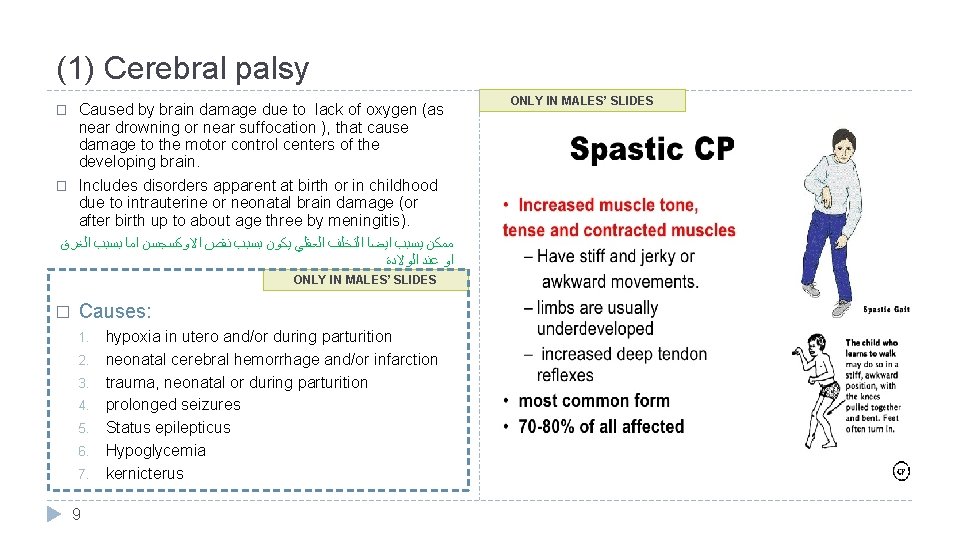
(1) Cerebral palsy Caused by brain damage due to lack of oxygen (as near drowning or near suffocation ), that cause damage to the motor control centers of the developing brain. � Includes disorders apparent at birth or in childhood due to intrauterine or neonatal brain damage (or after birth up to about age three by meningitis). ﻣﻤﻜﻦ ﻳﺴﺒﺐ ﺍﻳﻀﺎ ﺍﻟﺘﺨﻠﻒ ﺍﻟﻌﻘﻠﻲ ﻳﻜﻮﻥ ﺑﺴﺒﺐ ﻧﻘﺺ ﺍﻻﻭﻛﺴﺠﺴﻦ ﺍﻣﺎ ﺑﺴﺒﺐ ﺍﻟﻐﺮﻕ ﺍﻭ ﻋﻨﺪ ﺍﻟﻮﻻﺩﺓ � ONLY IN MALES’ SLIDES � Causes: 1. 2. 3. 4. 5. 6. 7. 9 hypoxia in utero and/or during parturition neonatal cerebral hemorrhage and/or infarction trauma, neonatal or during parturition prolonged seizures Status epilepticus Hypoglycemia kernicterus ONLY IN MALES’ SLIDES
(2) Multiple Sclerosis � Is an auto-immune demyelinating disease , in which the body's own immune system attacks and damages the myelin sheath of myelinated nerves mainly of brain , SC , and optic nerve. � Loss of myelin sheath (demyelination) prevents axons from saltatory conduction of action potentials causing muscle weakness& wasting. � Disease onset usually occurs in young adults, and it is more common in females. � The disease can attack any part of the CNS , and when it causes demyelination of descending motor tracts in the brainstem & spinal cord , the subject develops spasticity and other signs of UMNS. � The disease frequently remits and relapses because of remylination & restore of function and during acute attacks intravenous corticosteroids can improve symptoms. � During acute attacks intravenous corticosteroids can improve symptoms. 10
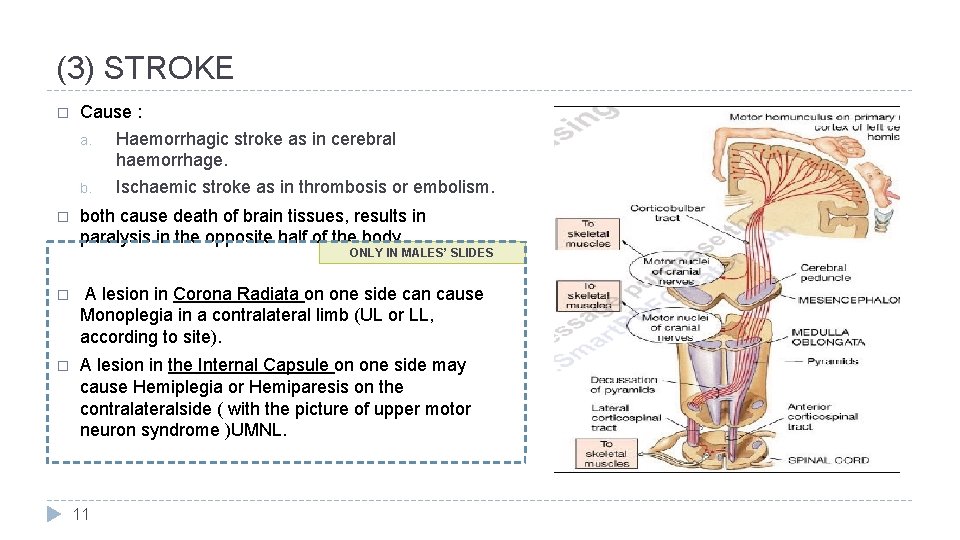
(3) STROKE � � Cause : a. Haemorrhagic stroke as in cerebral haemorrhage. b. Ischaemic stroke as in thrombosis or embolism. both cause death of brain tissues, results in paralysis in the opposite half of the body. ONLY IN MALES’ SLIDES � A lesion in Corona Radiata on one side can cause Monoplegia in a contralateral limb (UL or LL, according to site). � A lesion in the Internal Capsule on one side may cause Hemiplegia or Hemiparesis on the contralateralside ( with the picture of upper motor neuron syndrome )UMNL. 11
(4) Complete transection of spinal cord � Ex: following tumor or trauma � The higher the level of the section, the more serious are the consequences. � If the transection is in the upper cervical region immediate death follows, due to paralysis of all respiratory muscles. � In the lower cervical region below the 5 th cervical segment diaphragmatic respiration is still possible, but the patient suffers complete paralysis of all four limbs (quadriplegia). � Transection lower down in the thoracic region allows normal respiration but the patient ends up with paralysis of both lower limbs (paraplegia). ( )ﺍﻷﻄﺮﺍﻑ ﺍﻟﺴﻔﻠﻴﺔ ﻓﻘﻂ � Stages : a. spinal shock ( 2 -6 weeks ) b. recovery of reflex activity c. paraplegia in extension 12
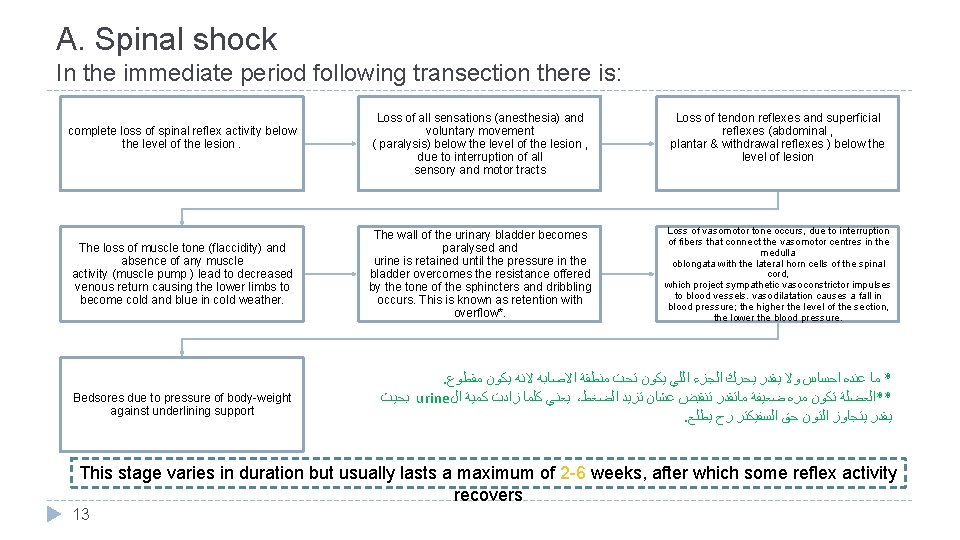
A. Spinal shock In the immediate period following transection there is: complete loss of spinal reflex activity below the level of the lesion. The loss of muscle tone (flaccidity) and absence of any muscle activity (muscle pump ) lead to decreased venous return causing the lower limbs to become cold and blue in cold weather. Bedsores due to pressure of body-weight against underlining support Loss of all sensations (anesthesia) and voluntary movement ( paralysis) below the level of the lesion , due to interruption of all sensory and motor tracts Loss of tendon reflexes and superficial reflexes (abdominal , plantar & withdrawal reflexes ) below the level of lesion The wall of the urinary bladder becomes paralysed and urine is retained until the pressure in the bladder overcomes the resistance offered by the tone of the sphincters and dribbling occurs. This is known as retention with overflow*. Loss of vasomotor tone occurs, due to interruption of fibers that connect the vasomotor centres in the medulla oblongata with the lateral horn cells of the spinal cord, which project sympathetic vasoconstrictor impulses to blood vessels. vasodilatation causes a fall in blood pressure; the higher the level of the section, the lower the blood pressure. . * ﻣﺎ ﻋﻨﺪﻩ ﺍﺣﺴﺎﺱ ﻭﻻ ﻳﻘﺪﺭ ﻳﺤﺮﻙ ﺍﻟﺠﺰﺀ ﺍﻟﻠﻲ ﻳﻜﻮﻥ ﺗﺤﺖ ﻣﻨﻄﻘﺔ ﺍﻻﺻﺎﺑﻪ ﻻﻧﻪ ﻳﻜﻮﻥ ﻣﻘﻄﻮﻉ ﺑﺤﻴﺚ urine ﻳﻌﻨﻲ ﻛﻠﻤﺎ ﺯﺍﺩﺕ ﻛﻤﻴﺔ ﺍﻝ ، **ﺍﻟﻌﻀﻠﺔ ﺗﻜﻮﻥ ﻣﺮﻩ ﺿﻌﻴﻔﺔ ﻣﺎﺗﻘﺪﺭ ﺗﻨﻘﺒﺾ ﻋﺸﺎﻥ ﺗﺰﻳﺪ ﺍﻟﻀﻐﻂ . ﻳﻘﺪﺭ ﻳﺘﺠﺎﻭﺯ ﺍﻟﺘﻮﻥ ﺣﻖ ﺍﻟﺴﻔﻴﻜﺘﺮ ﺭﺡ ﻳﻄﻠﻊ This stage varies in duration but usually lasts a maximum of 2 -6 weeks, after which some reflex activity recovers 13
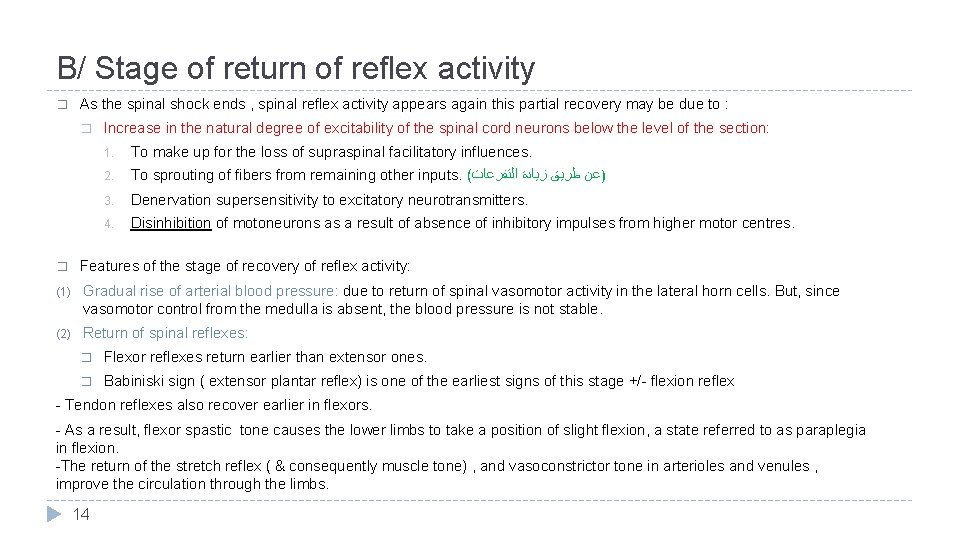
B/ Stage of return of reflex activity � As the spinal shock ends , spinal reflex activity appears again this partial recovery may be due to : � Increase in the natural degree of excitability of the spinal cord neurons below the level of the section: 1. To make up for the loss of supraspinal facilitatory influences. 2. To sprouting of fibers from remaining other inputs. ( )ﻋﻦ ﻃﺮﻳﻖ ﺯﻳﺎﺩﺓ ﺍﻟﺘﻔﺮﻋﺎﺕ 3. Denervation supersensitivity to excitatory neurotransmitters. 4. Disinhibition of motoneurons as a result of absence of inhibitory impulses from higher motor centres. � Features of the stage of recovery of reflex activity: (1) Gradual rise of arterial blood pressure: due to return of spinal vasomotor activity in the lateral horn cells. But, since vasomotor control from the medulla is absent, the blood pressure is not stable. (2) Return of spinal reflexes: � Flexor reflexes return earlier than extensor ones. � Babiniski sign ( extensor plantar reflex) is one of the earliest signs of this stage +/- flexion reflex - Tendon reflexes also recover earlier in flexors. - As a result, flexor spastic tone causes the lower limbs to take a position of slight flexion, a state referred to as paraplegia in flexion. -The return of the stretch reflex ( & consequently muscle tone) , and vasoconstrictor tone in arterioles and venules , improve the circulation through the limbs. 14
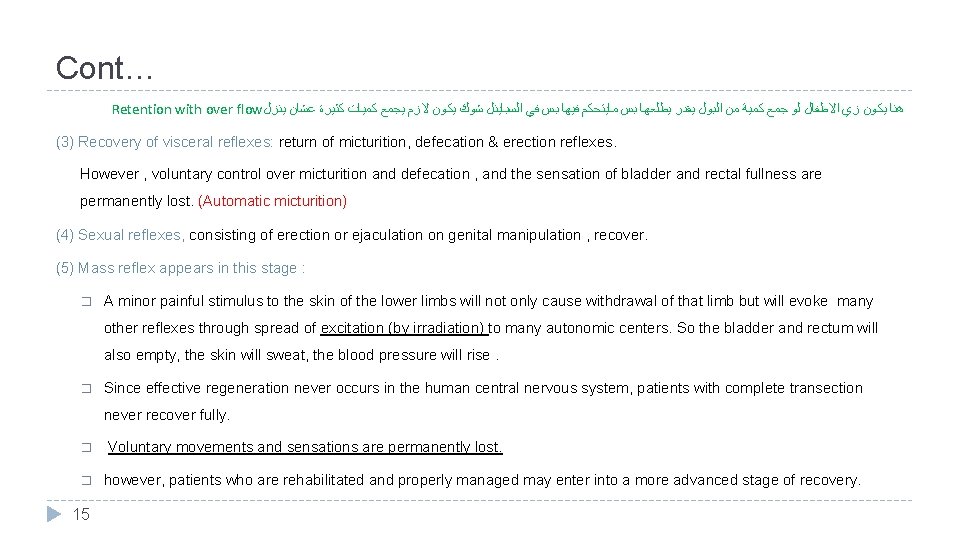
Cont… Retention with over flow ﻫﻨﺎ ﻳﻜﻮﻥ ﺯﻱ ﺍﻻﻃﻔﺎﻝ ﻟﻮ ﺟﻤﻊ ﻛﻤﻴﺔ ﻣﻦ ﺍﻟﺒﻮﻝ ﻳﻘﺪﺭ ﻳﻄﻠﻌﻬﺎ ﺑﺲ ﻣﺎﻳﺘﺤﻜﻢ ﻓﻴﻬﺎ ﺑﺲ ﻓﻲ ﺍﻟﺴﺒﺎﻳﻨﻞ ﺷﻮﻙ ﻳﻜﻮﻥ ﻻﺯﻡ ﻳﺠﻤﻊ ﻛﻤﻴﺎﺕ ﻛﺜﻴﺮﺓ ﻋﺸﺎﻥ ﻳﻨﺰﻝ (3) Recovery of visceral reflexes: return of micturition, defecation & erection reflexes. However , voluntary control over micturition and defecation , and the sensation of bladder and rectal fullness are permanently lost. (Automatic micturition) (4) Sexual reflexes, consisting of erection or ejaculation on genital manipulation , recover. (5) Mass reflex appears in this stage : � A minor painful stimulus to the skin of the lower limbs will not only cause withdrawal of that limb but will evoke many other reflexes through spread of excitation (by irradiation) to many autonomic centers. So the bladder and rectum will also empty, the skin will sweat, the blood pressure will rise. � Since effective regeneration never occurs in the human central nervous system, patients with complete transection never recover fully. � � 15 Voluntary movements and sensations are permanently lost. however, patients who are rehabilitated and properly managed may enter into a more advanced stage of recovery.
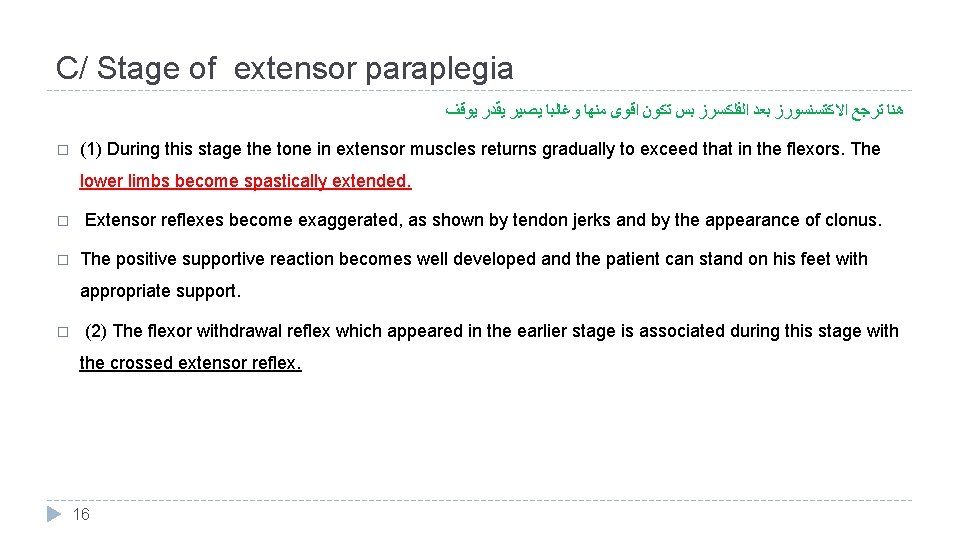
C/ Stage of extensor paraplegia ﻫﻨﺎ ﺗﺮﺟﻊ ﺍﻻﻛﺘﺴﻨﺴﻮﺭﺯ ﺑﻌﺪ ﺍﻟﻔﻠﻜﺴﺮﺯ ﺑﺲ ﺗﻜﻮﻥ ﺍﻗﻮﻯ ﻣﻨﻬﺎ ﻭﻏﺎﻟﺒﺎ ﻳﺼﻴﺮ ﻳﻘﺪﺭ ﻳﻮﻗﻒ � (1) During this stage the tone in extensor muscles returns gradually to exceed that in the flexors. The lower limbs become spastically extended. � � Extensor reflexes become exaggerated, as shown by tendon jerks and by the appearance of clonus. The positive supportive reaction becomes well developed and the patient can stand on his feet with appropriate support. � (2) The flexor withdrawal reflex which appeared in the earlier stage is associated during this stage with the crossed extensor reflex. 16
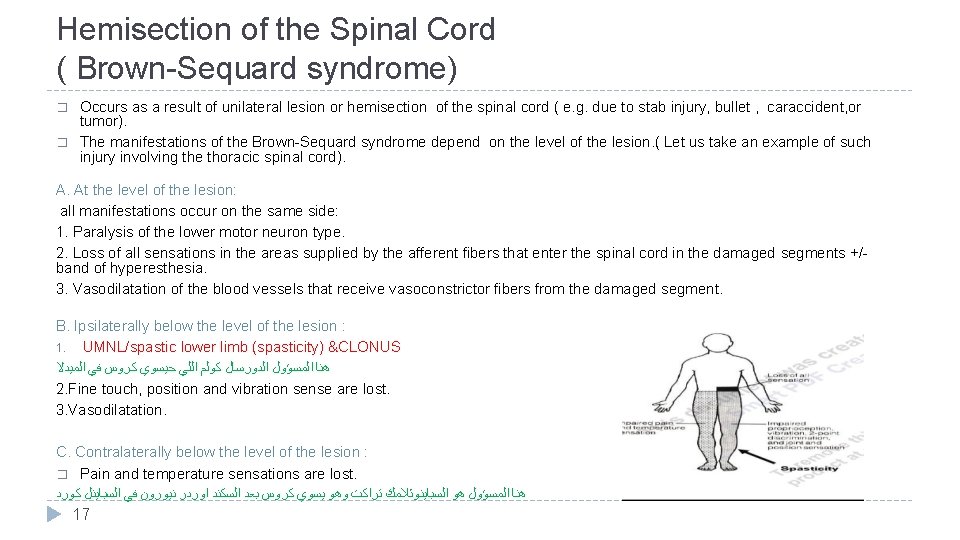
Hemisection of the Spinal Cord ( Brown-Sequard syndrome) � � Occurs as a result of unilateral lesion or hemisection of the spinal cord ( e. g. due to stab injury, bullet , caraccident, or tumor). The manifestations of the Brown-Sequard syndrome depend on the level of the lesion. ( Let us take an example of such injury involving the thoracic spinal cord). A. At the level of the lesion: all manifestations occur on the same side: 1. Paralysis of the lower motor neuron type. 2. Loss of all sensations in the areas supplied by the afferent fibers that enter the spinal cord in the damaged segments +/band of hyperesthesia. 3. Vasodilatation of the blood vessels that receive vasoconstrictor fibers from the damaged segment. B. Ipsilaterally below the level of the lesion : 1. UMNL/spastic lower limb (spasticity) &CLONUS ﻫﻨﺎ ﺍﻟﻤﺴﺆﻮﻝ ﺍﻟﺪﻭﺭﺳﺎﻝ ﻛﻮﻟﻢ ﺍﻟﻠﻲ ﺣﻴﺴﻮﻱ ﻛﺮﻭﺱ ﻓﻲ ﺍﻟﻤﻴﺪﻻ 2. Fine touch, position and vibration sense are lost. 3. Vasodilatation. C. Contralaterally below the level of the lesion : � Pain and temperature sensations are lost. ﻫﻨﺎ ﺍﻟﻤﺴﺆﻮﻝ ﻫﻮ ﺍﻟﺴﺒﺎﻳﻨﻮﺛﻼﻣﻚ ﺗﺮﺍﻛﺖ ﻭﻫﻮ ﻳﺴﻮﻱ ﻛﺮﻭﺱ ﺑﻌﺪ ﺍﻟﺴﻜﻨﺪ ﺍﻭﺭﺩﺭ ﻧﻴﻮﺭﻭﻥ ﻓﻲ ﺍﻟﺴﺒﺎﻳﻨﻞ ﻛﻮﺭﺩ 17
Thank you!. ﺍﻋﻤﻞ ﻭ ﺃﻨﺖ ﺗﻌﻠﻢ ﺃﻦ ﺍﻟﻠﻪ ﻻ ﻳﻀﻴﻊ ﺃﺠﺮ ﻣﻦ ﺃﺤﺴﻦ ﻋﻤﻼ ، ﺍﻋﻤﻞ ﻟﺘﻤﺴﺢ ﺩﻣﻌﺔ ، ﺍﻋﻤﻞ ﻟﺘﺮﺳﻢ ﺑﺴﻤﺔ The Physiology 436 Team: Females Members: Team Leaders: Lulwah Alshiha Laila Mathkour Mohammad Alayed Anwar Alajmi Lina alwakeel References: • • Females’ and Males’ slides. Guyton and Hall Textbook of Medical Physiology (Thirteenth Edition. ) 18 Contact us:
- Slides: 18