
Text Complexity Training September 30 2015 Text Complexity

Text Complexity Training September 30, 2015
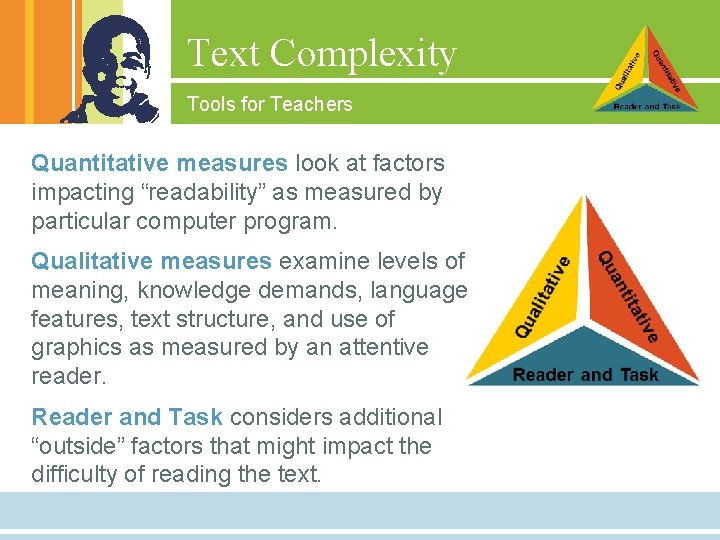
Text Complexity Tools for Teachers Quantitative measures look at factors impacting “readability” as measured by particular computer program. Qualitative measures examine levels of meaning, knowledge demands, language features, text structure, and use of graphics as measured by an attentive reader. Reader and Task considers additional “outside” factors that might impact the difficulty of reading the text.
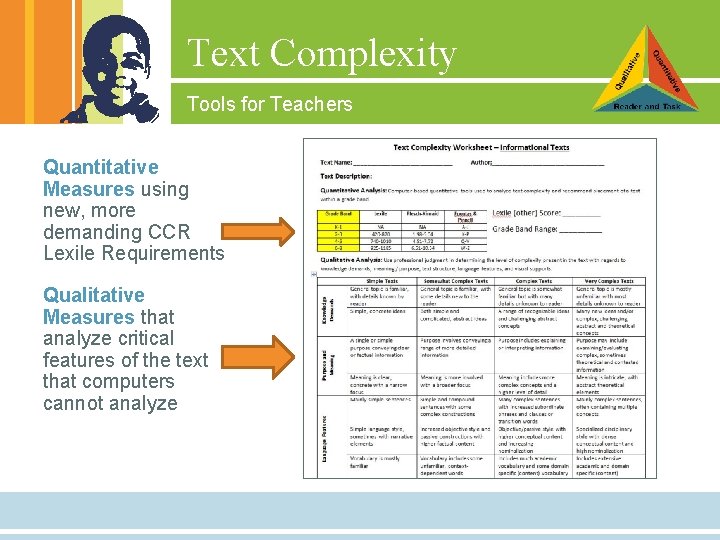
Text Complexity Tools for Teachers Quantitative Measures using new, more demanding CCR Lexile Requirements Qualitative Measures that analyze critical features of the text that computers cannot analyze
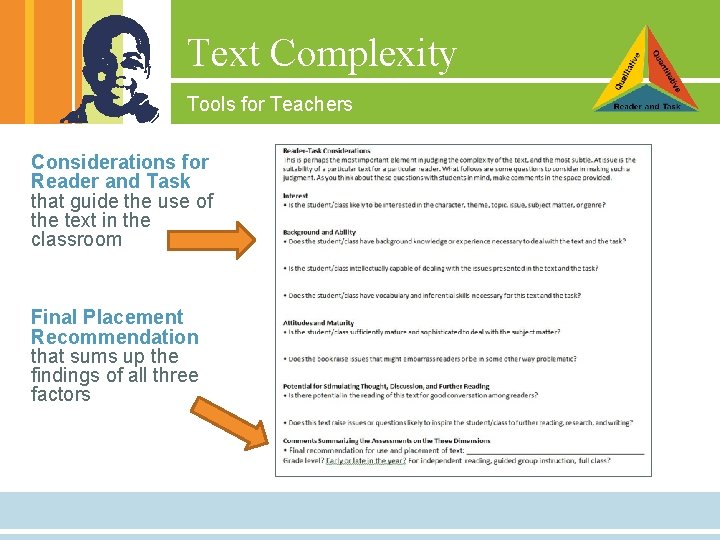
Text Complexity Tools for Teachers Considerations for Reader and Task that guide the use of the text in the classroom Final Placement Recommendation that sums up the findings of all three factors
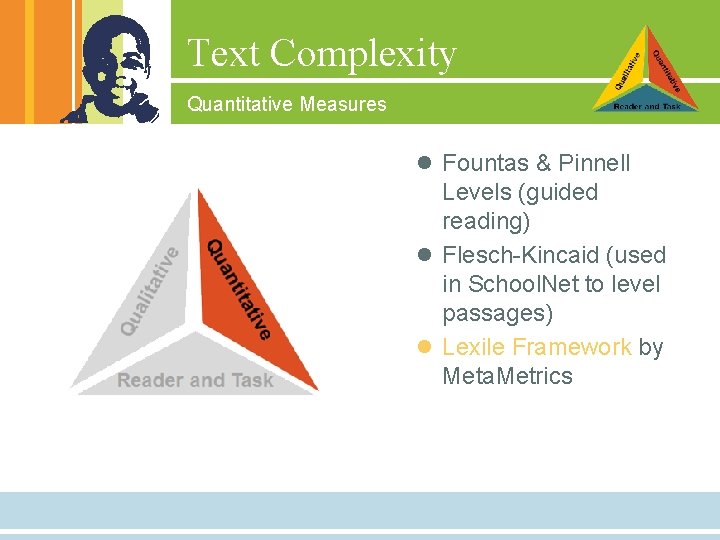
Text Complexity Quantitative Measures ● Fountas & Pinnell Levels (guided reading) ● Flesch-Kincaid (used in School. Net to level passages) ● Lexile Framework by Meta. Metrics
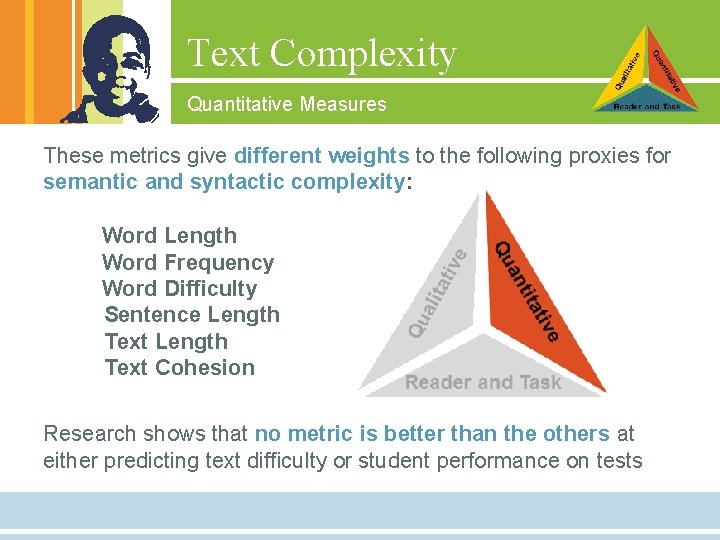
Text Complexity Quantitative Measures These metrics give different weights to the following proxies for semantic and syntactic complexity: Word Length Word Frequency Word Difficulty Sentence Length Text Cohesion Research shows that no metric is better than the others at either predicting text difficulty or student performance on tests
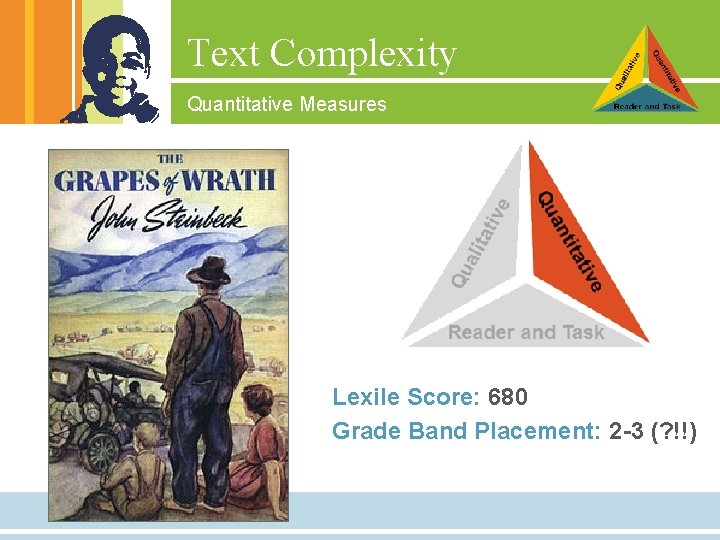
Text Complexity Quantitative Measures Lexile Score: 680 Grade Band Placement: 2 -3 (? !!)
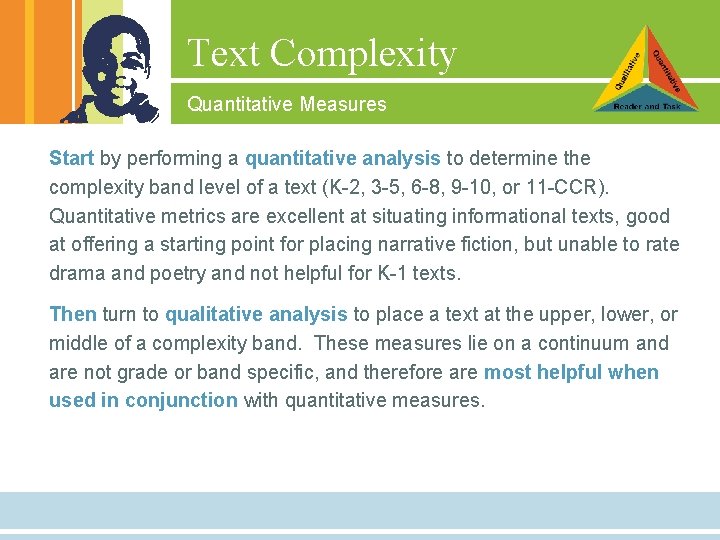
Text Complexity Quantitative Measures Start by performing a quantitative analysis to determine the complexity band level of a text (K-2, 3 -5, 6 -8, 9 -10, or 11 -CCR). Quantitative metrics are excellent at situating informational texts, good at offering a starting point for placing narrative fiction, but unable to rate drama and poetry and not helpful for K-1 texts. Then turn to qualitative analysis to place a text at the upper, lower, or middle of a complexity band. These measures lie on a continuum and are not grade or band specific, and therefore are most helpful when used in conjunction with quantitative measures.
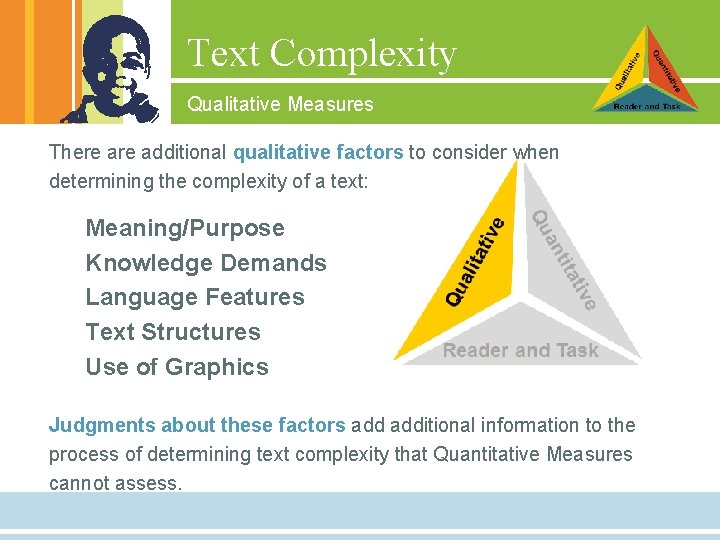
Text Complexity Qualitative Measures There additional qualitative factors to consider when determining the complexity of a text: Meaning/Purpose Knowledge Demands Language Features Text Structures Use of Graphics Judgments about these factors additional information to the process of determining text complexity that Quantitative Measures cannot assess.
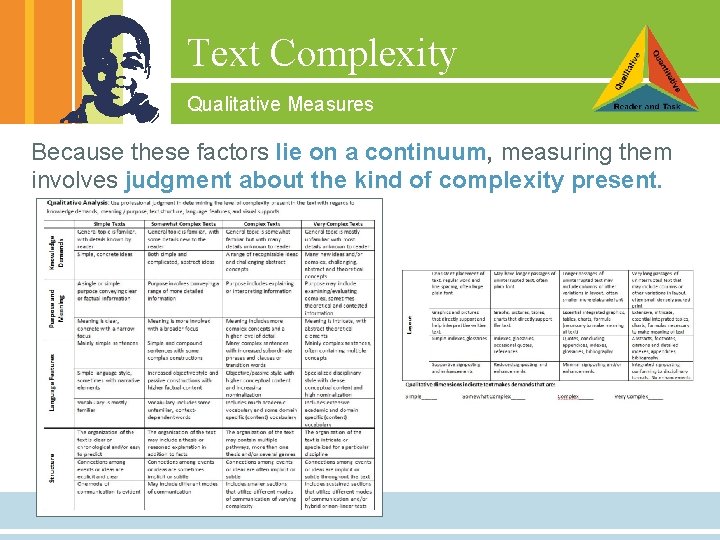
Text Complexity Qualitative Measures Because these factors lie on a continuum, measuring them involves judgment about the kind of complexity present.
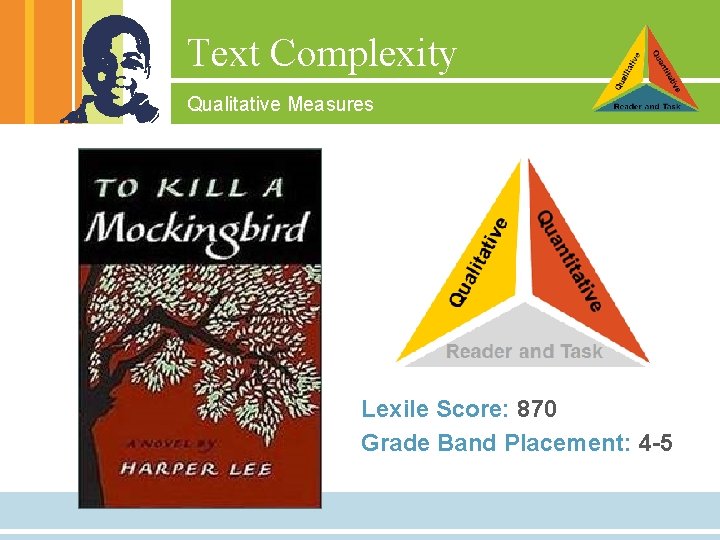
Text Complexity Qualitative Measures Lexile Score: 870 Grade Band Placement: 4 -5
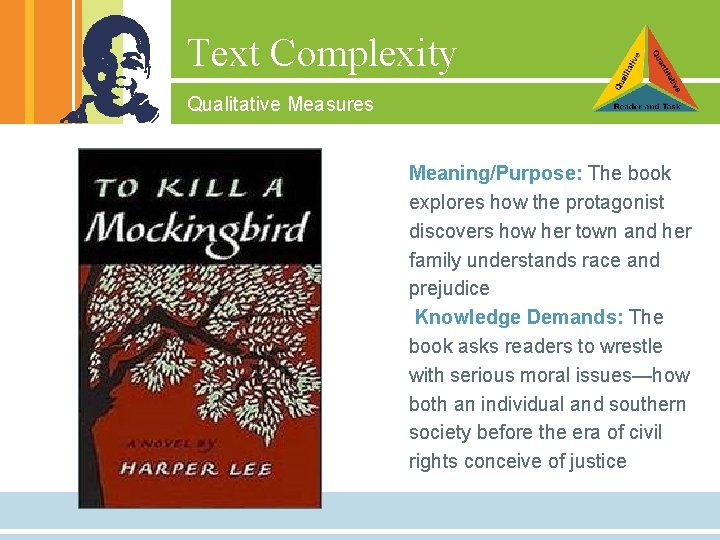
Text Complexity Qualitative Measures Meaning/Purpose: The book explores how the protagonist discovers how her town and her family understands race and prejudice Knowledge Demands: The book asks readers to wrestle with serious moral issues—how both an individual and southern society before the era of civil rights conceive of justice
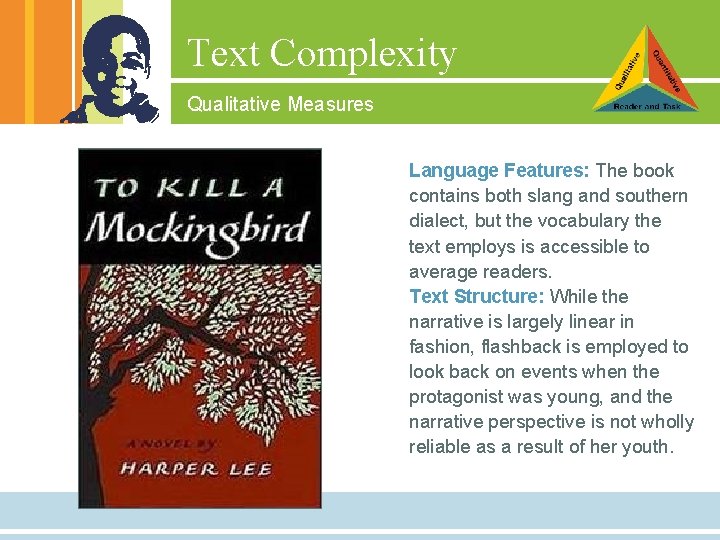
Text Complexity Qualitative Measures Language Features: The book contains both slang and southern dialect, but the vocabulary the text employs is accessible to average readers. Text Structure: While the narrative is largely linear in fashion, flashback is employed to look back on events when the protagonist was young, and the narrative perspective is not wholly reliable as a result of her youth.
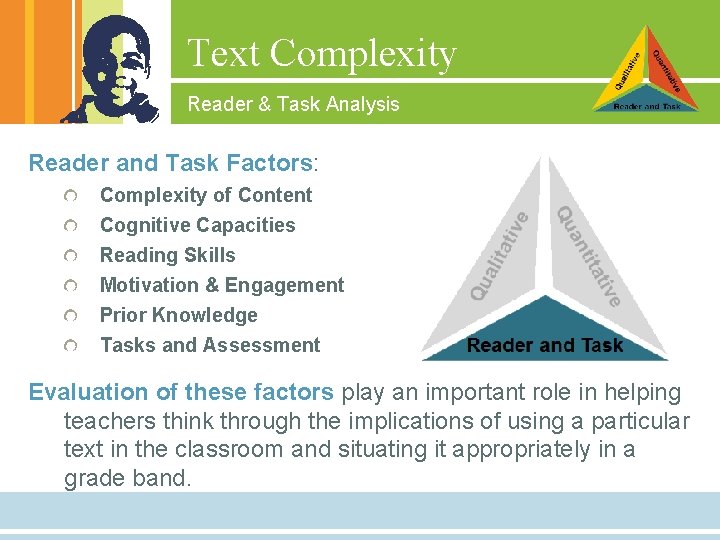
Text Complexity Reader & Task Analysis Reader and Task Factors: Complexity of Content Cognitive Capacities Reading Skills Motivation & Engagement Prior Knowledge Tasks and Assessment Evaluation of these factors play an important role in helping teachers think through the implications of using a particular text in the classroom and situating it appropriately in a grade band.
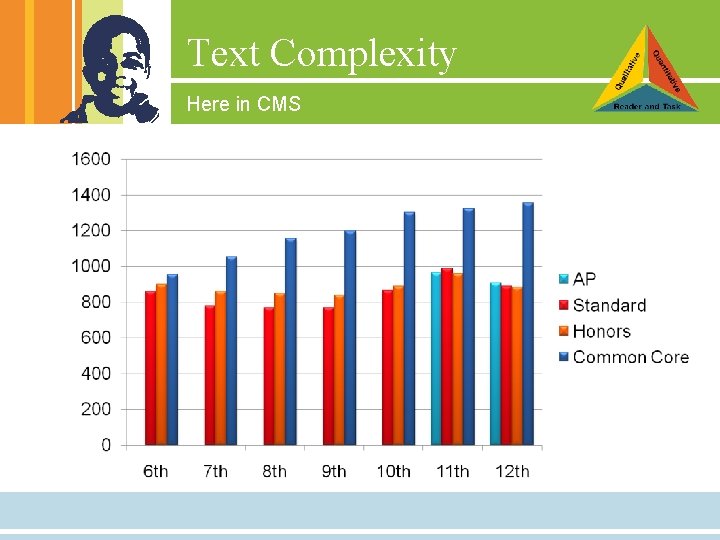
Text Complexity Here in CMS
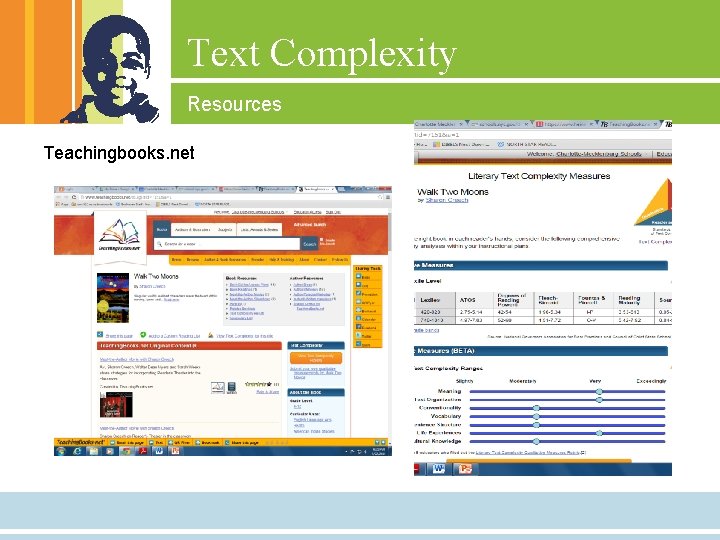
Text Complexity Resources Teachingbooks. net
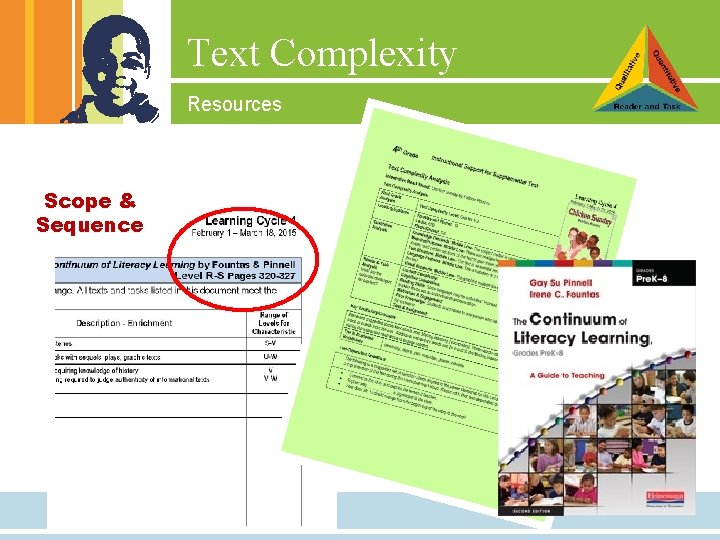
Text Complexity Resources Scope & Sequence
Text Complexity Examples of “TEXT”
Text Complexity Examples of “TEXT”
Text Complexity Examples of “TEXT”
Text Complexity Examples of “TEXT”
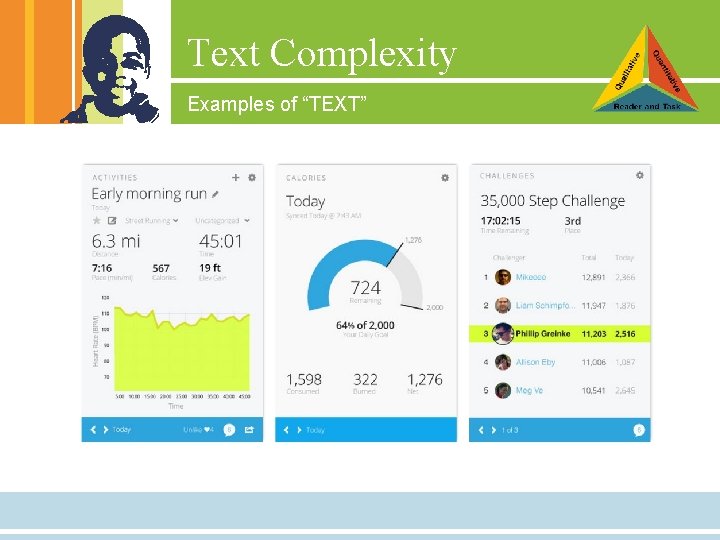
Text Complexity Examples of “TEXT”
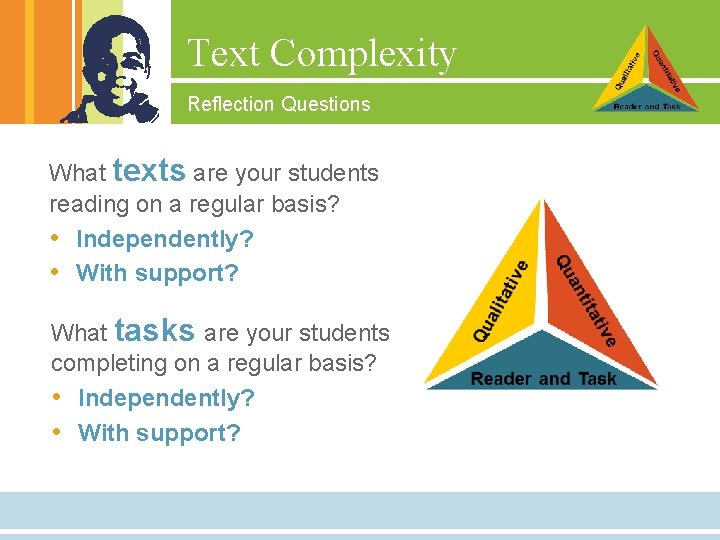
Text Complexity Reflection Questions What texts are your students reading on a regular basis? • Independently? • With support? What tasks are your students completing on a regular basis? • Independently? • With support?
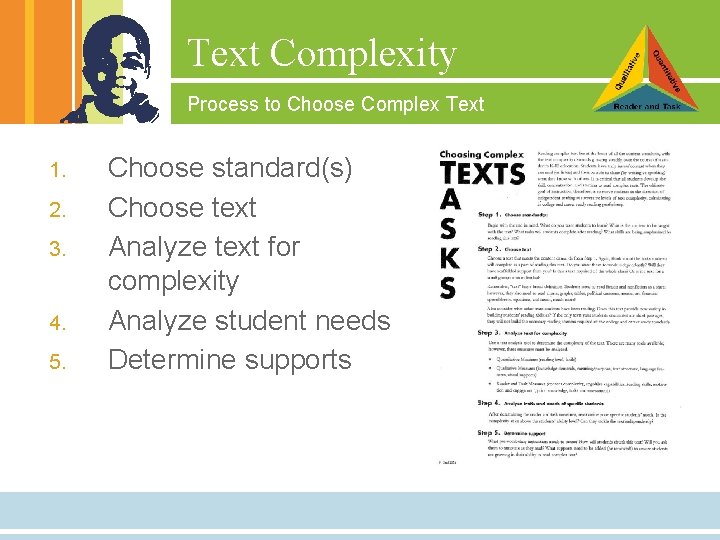
Text Complexity Process to Choose Complex Text 1. 2. 3. 4. 5. Choose standard(s) Choose text Analyze text for complexity Analyze student needs Determine supports
- Slides: 24