
Texas State University Leadership Institute Building Effective Teams
Texas State University Leadership Institute “Building Effective Teams” Dr. Robert Konopaske Management Department February 12, 2011 1
Get ready for teamwork! Teams can make magic! http: //www. youtube. com/watch? v=Tz. NACAG 74 QA U. S. organizations use teams for a variety of reasons 80% of companies with more than 100 employees use teams 90% of all U. S. employees work part of their day in a team Chances are…you’ll be a member of one (or more) teams at your work! 2
Advantages of teams Improved customer satisfaction Improved product & service quality Increased speed & efficiency Higher job satisfaction Better decision making More creative problem solving 3
Disadvantages of teams Initially high employee turnover Social loafing Lowered quality of group decision making Groupthink Inefficient meetings Domination by a few members Lack of accountability 4
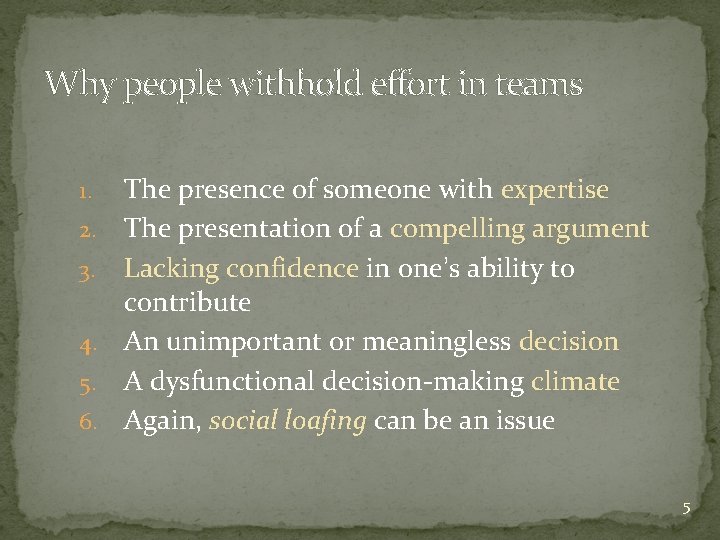
Why people withhold effort in teams 1. 2. 3. 4. 5. 6. The presence of someone with expertise The presentation of a compelling argument Lacking confidence in one’s ability to contribute An unimportant or meaningless decision A dysfunctional decision-making climate Again, social loafing can be an issue 5
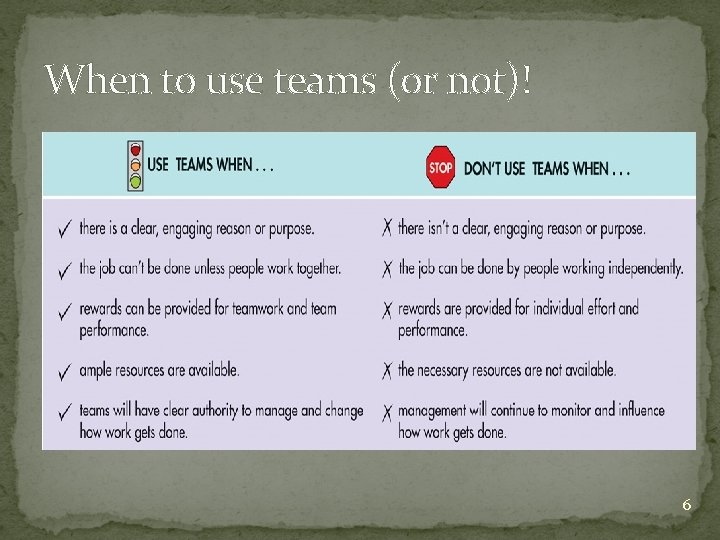
When to use teams (or not)! 6
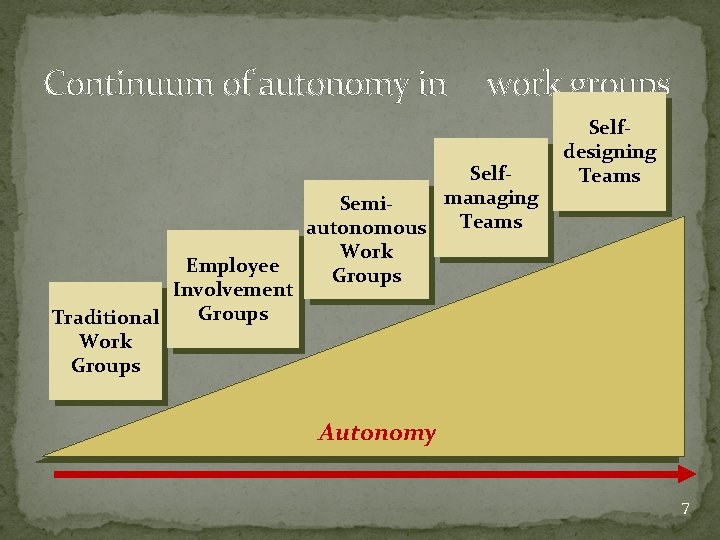
Continuum of autonomy in Employee Involvement Groups Traditional Work Groups work groups Selfmanaging Semi. Teams autonomous Work Groups Selfdesigning Teams Autonomy 7
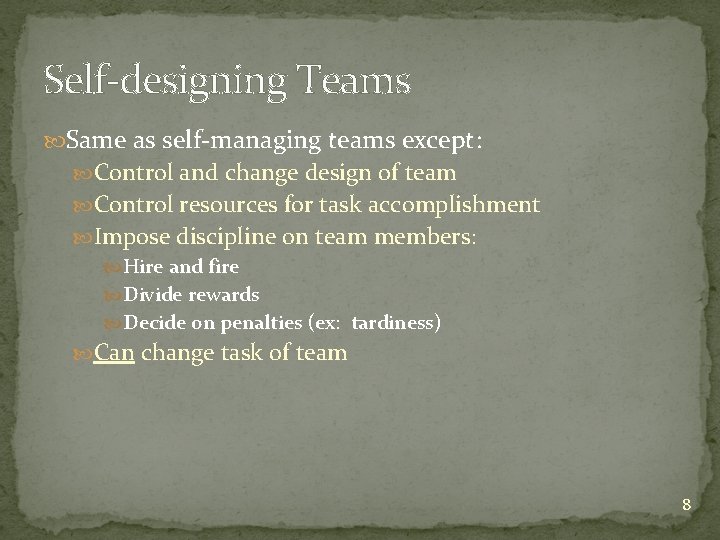
Self-designing Teams Same as self-managing teams except: Control and change design of team Control resources for task accomplishment Impose discipline on team members: Hire and fire Divide rewards Decide on penalties (ex: tardiness) Can change task of team 8
Special type of team: Virtual Geographically and/or organizationally dispersed coworker who use telecommunication & IT to accomplish an organizational task Tips for creating successful virtual teams: Select self-starters and strong communicators Keep the team focused on clear, specific goals Provide frequent feedback Periodically bring team members together & use team building Improve communications & ask team members for feedback on how well team is working 9
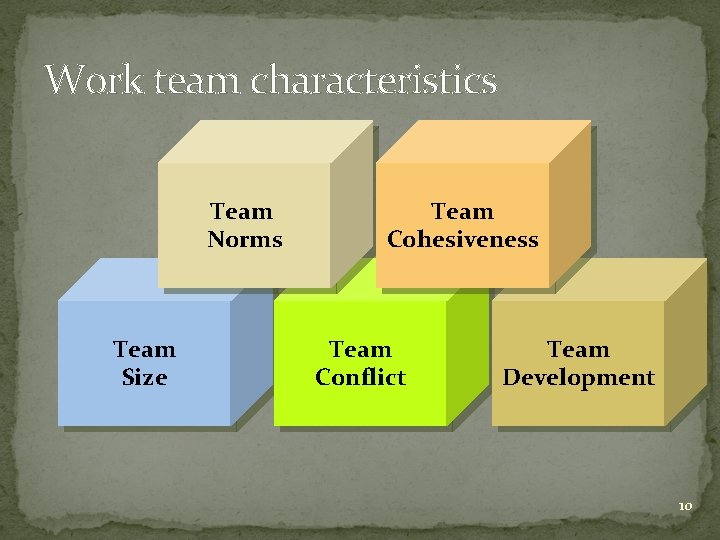
Work team characteristics Team Norms Team Size Team Cohesiveness Team Conflict Team Development 10
Team norms Informally agreed-on standards that regulate team behavior Powerful influence on work behavior Regulate the everyday behaviors of teams e. g. , soldiering 11
Team cohesiveness The extent to which members are attracted to the team and motivated to remain in it Cohesive teams: retain their members promote cooperation have high levels of performance Promote team cohesiveness by: 1. Make sure all team members are present at team meetings 2. Create additional opportunities for teammates to work together 3. Engage in nonwork activities as a team 4. Make employees feel that they are part of a “special” organization 12
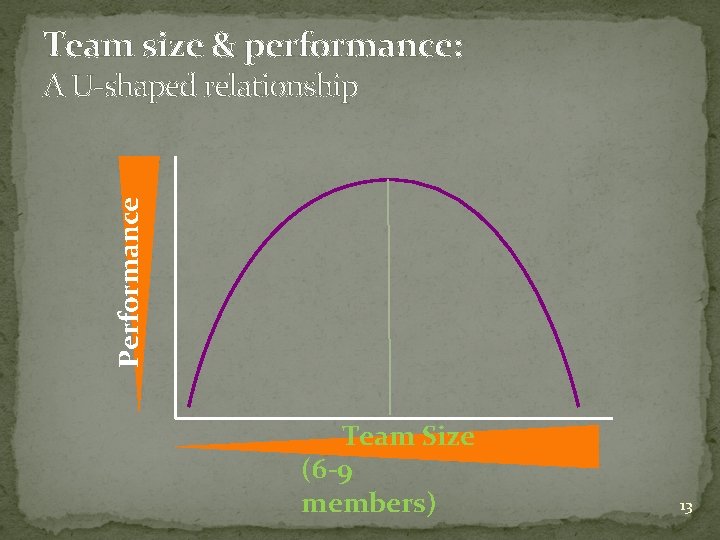
Team size & performance: Performance A U-shaped relationship Team Size (6 -9 members) 13
Team conflict C-type Conflict cognitive conflict focuses on problems and issues associated with improvements in team performance A-type Conflict affective conflict emotional, personal disagreements associated with decreases in team performance Both types often occur simultaneously 14
Team Development: Stages Forming – 1 st stage of team development; get to know other members; set ground rules Storming – 2 nd stage; conflict over what should be done & how to do it; team leader nudges group toward team goals Team will be ineffective if it gets stuck here Norming – 3 rd stage; informal rules; members get used to roles; group cohesion grows Performing – 4 th stage; performance high b/c team has matured; it’s fully functioning now 15
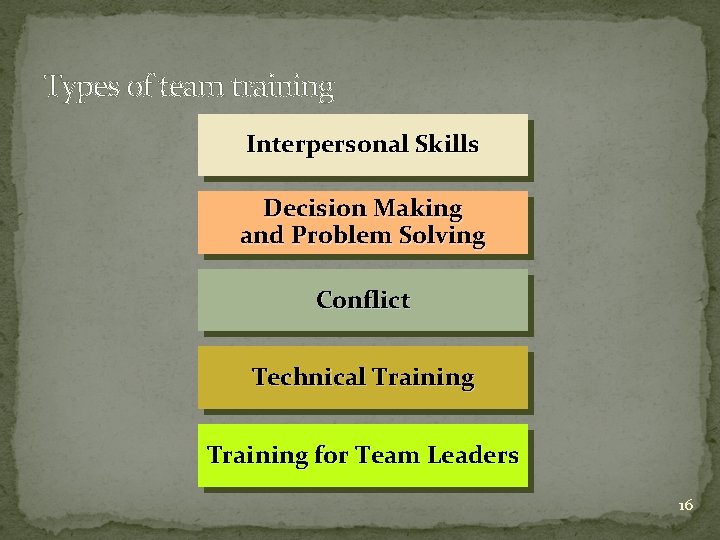
Types of team training Interpersonal Skills Decision Making and Problem Solving Conflict Technical Training for Team Leaders 16
Causes of Unproductive Teams Power struggles Individual behavior Unequal Workload Lack of top management support Poor leadership Lack of focus Capability issues Groupthink http: //www. youtube. com/watch? v=q. Ypb. St. Myz_I 17
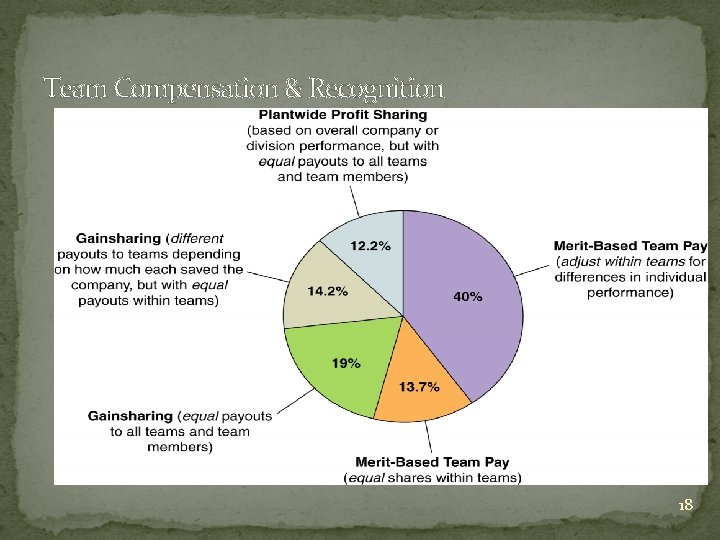
Team Compensation & Recognition 18
- Slides: 18