
Texas Geography Understanding the physical and human characteristics

- Slides: 20
Texas Geography Understanding the physical and human characteristics of our state
6 Geographical Questions • Location • Place • Regions • Human-Environment Interaction • Human Systems • Physical Systems
Location – Where is it? • Absolute Location – The exact location of a place on the earth’s surface • Relative Location – The location of a place in relation to other places • The Absolute location and Relative location of Texas affect it in many ways – How has Texas’ relative location to Mexico affected it?
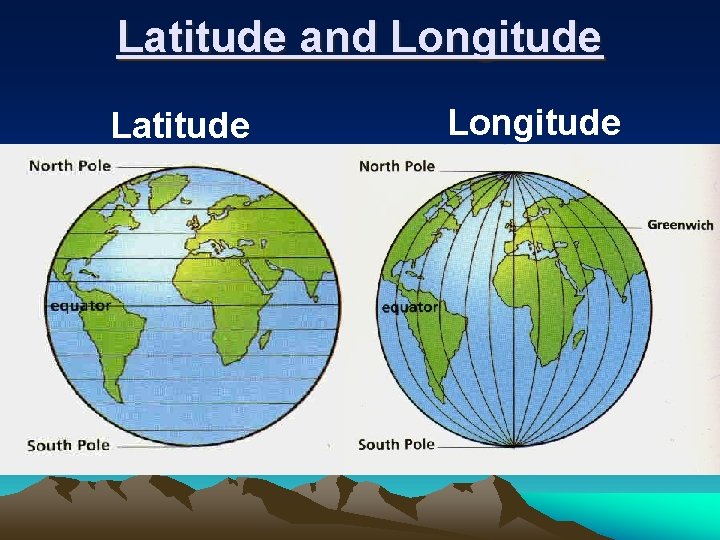
Latitude and Longitude Latitude Longitude
Using Latitude and Longitude • The Absolute Location of a place is given using latitude and longitude coordinates • Coordinates are written using a numerical measurement and a directional label. • Latitude is given first followed by longitude • (29° N, 95° W) is the approximate location of Kingwood on the earth’s surface
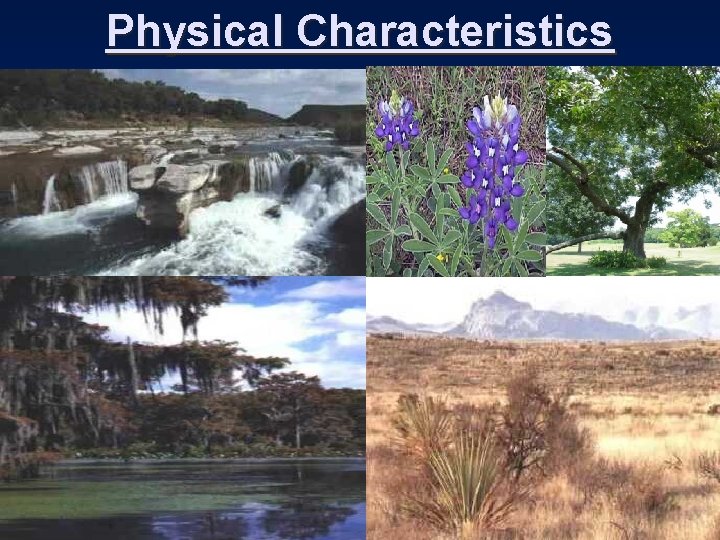
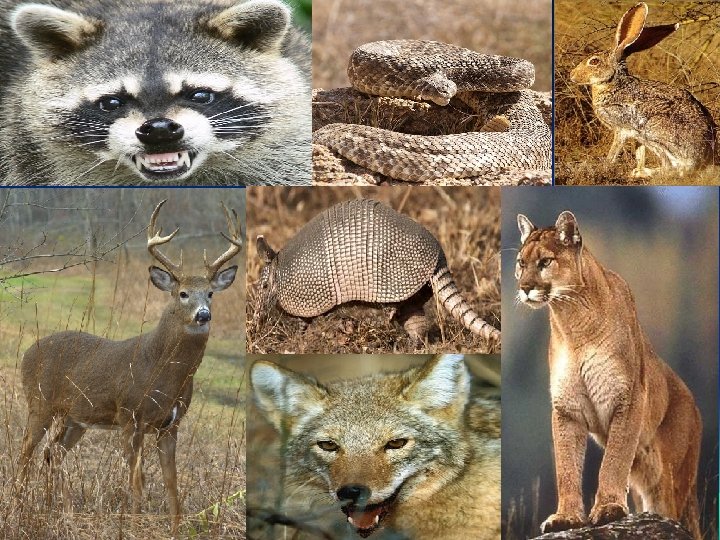
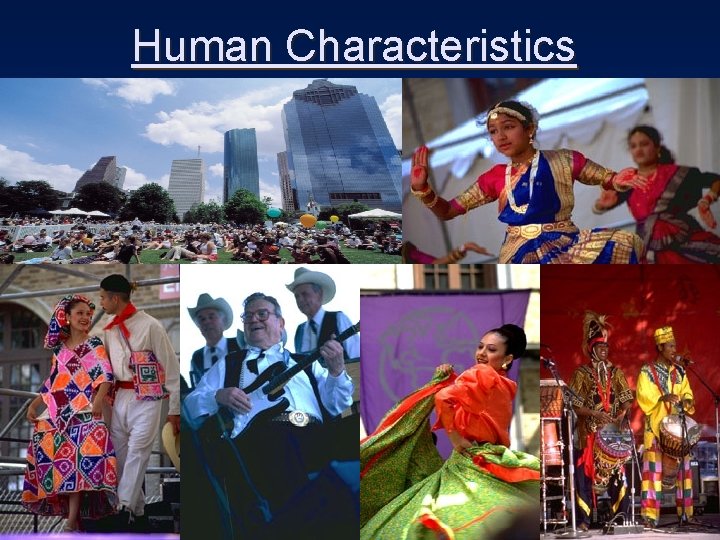
Place – What is it like? • Place refers to the physical and human characteristics of a location • Physical Characteristics include: – Landforms, Climate, plants, animals • Human Characteristics include: – Language, Religion, Architecture, Music, Politics, ways of life
Physical Characteristics
Human Characteristics
Regions – How does it compare to other places? • Geographers divide areas into regions in order to better study them. • Regions are places that are united based on common characteristics • Regions can be based on physical, human, business and other characteristics
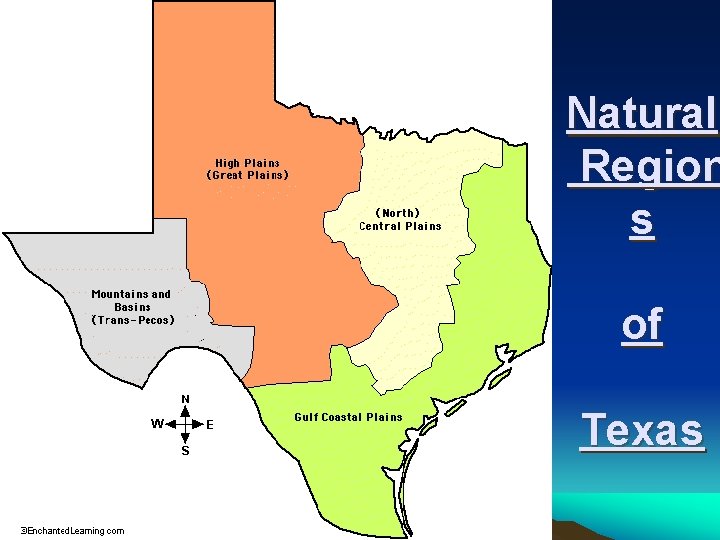
Natural Region s of Texas
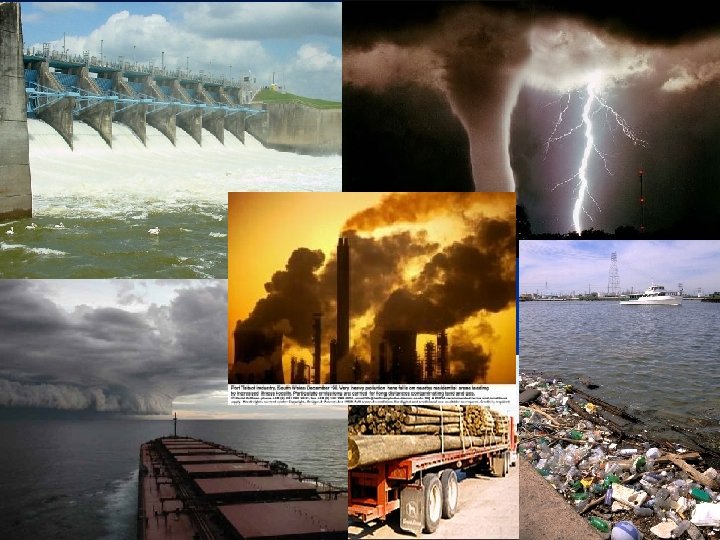
Human-Environment Interaction How do humans react to their environment and how does it affect them? • Ex: Pollution Deforestation Hurricanes/Tornadoes Farming Damming Rivers to make lakes
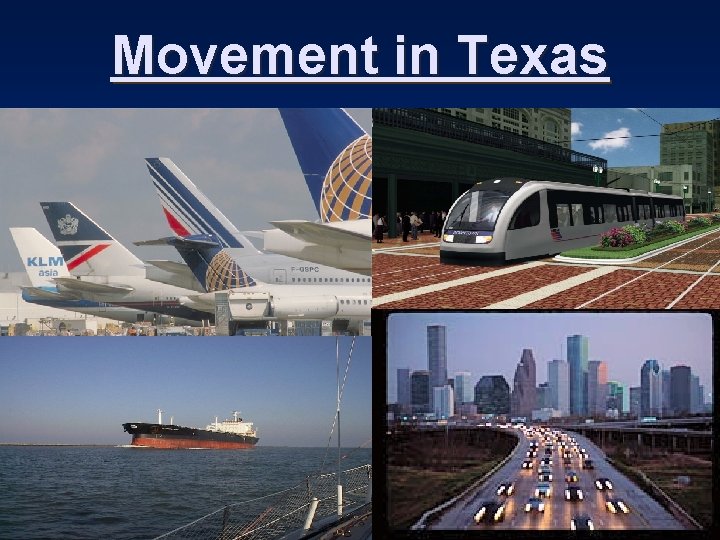
Human Systems • Movement - How people move through the environment • Cultural Diffusion - new ideas brought by migrating people become widely accepted. • People bring ideas and goods with them when they move from one place to another.
Movement in Texas
Why Geography? • Geography prepares us for modern life • People, businesses, governments depend on geography everyday to meet their needs • Computer software such as GIS and GPS use geography to help people
Sizing Up Texas • Second largest US State • The area of Texas is 267, 277 square miles • Some parts of Texas are closer to the capitals of other states than to Austin.
Sizing Up Texas • Texas is the combined size of: New York Pennsylvania Ohio Illinois Connecticut Rhode Island Massachusetts Vermont New Hampshire New Jersey Maine
Sizing Up Texas • El Paso, Texas is closer to the Pacific Ocean than to Houston. • Some students in Texas live 4 hrs from the nearest school • How could these geographic facts affect Texas?