
Texas Demographic Characteristics and Trends for NonProfit Organizations


- Slides: 43
Texas Demographic Characteristics and Trends for Non-Profit Organizations One. Star Foundation Austin, Texas April 23, 2015 @Texas. Demography
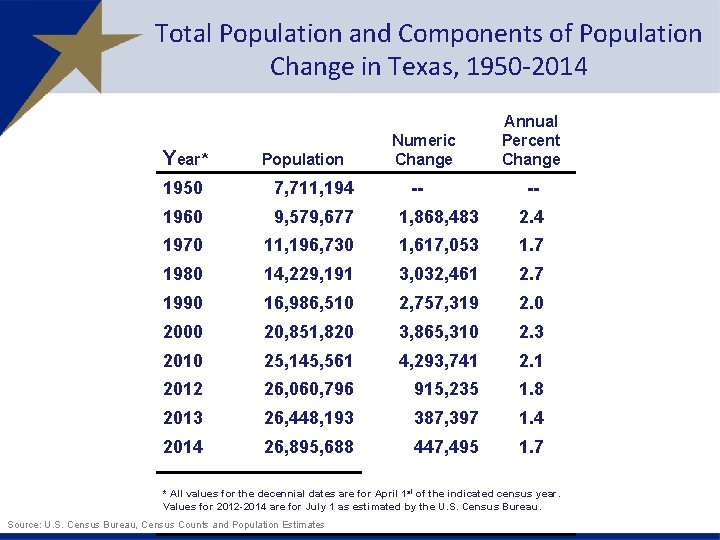
Total Population and Components of Population Change in Texas, 1950 -2014 Year* Population Numeric Change -- Annual Percent Change 1950 7, 711, 194 -- 1960 9, 579, 677 1, 868, 483 2. 4 1970 11, 196, 730 1, 617, 053 1. 7 1980 14, 229, 191 3, 032, 461 2. 7 1990 16, 986, 510 2, 757, 319 2. 0 2000 20, 851, 820 3, 865, 310 2. 3 2010 25, 145, 561 4, 293, 741 2. 1 2012 26, 060, 796 915, 235 1. 8 2013 26, 448, 193 387, 397 1. 4 2014 26, 895, 688 447, 495 1. 7 * All values for the decennial dates are for April 1 st of the indicated census year. Values for 2012 -2014 are for July 1 as estimated by the U. S. Census Bureau. Source: U. S. Census Bureau, Census Counts and Population Estimates
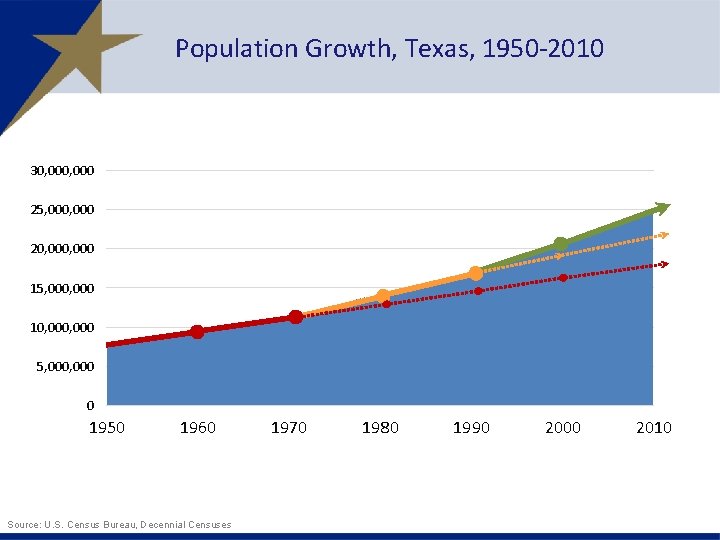
Population Growth, Texas, 1950 -2010 30, 000 25, 000 20, 000 15, 000 10, 000 5, 000 0 1950 1960 Source: U. S. Census Bureau, Decennial Censuses 1970 1980 1990 2000 2010
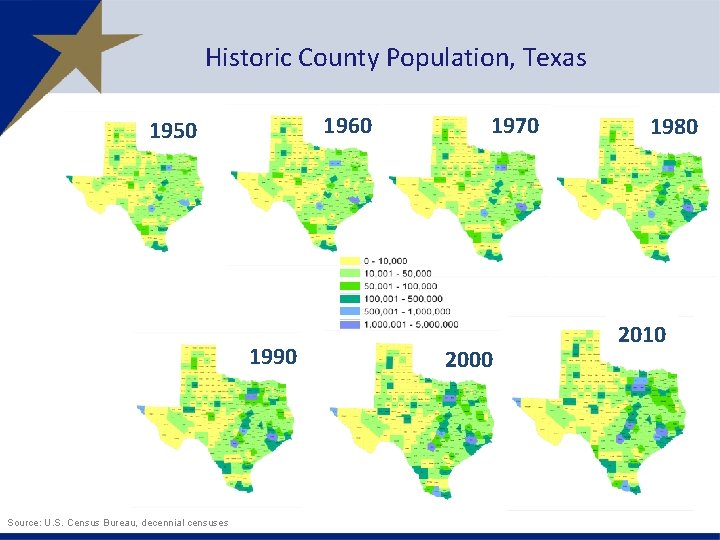
Historic County Population, Texas 1960 1950 1990 Source: U. S. Census Bureau, decennial censuses 1970 2000 1980 2010
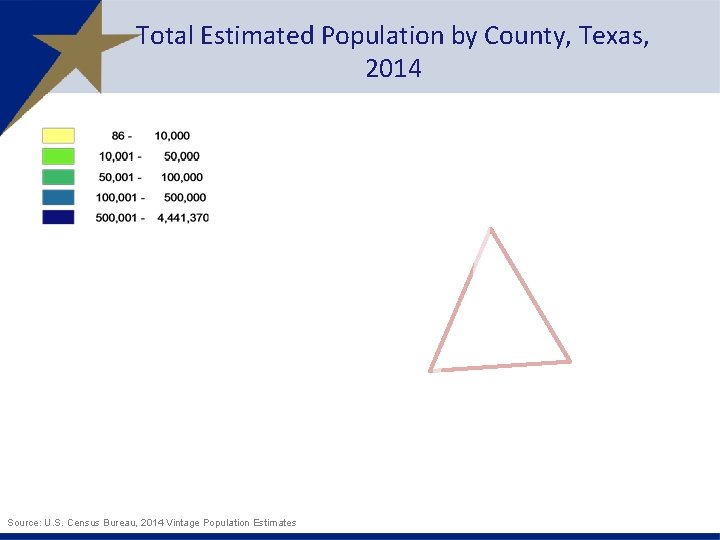
Total Estimated Population by County, Texas, 2014 Source: U. S. Census Bureau, 2014 Vintage Population Estimates
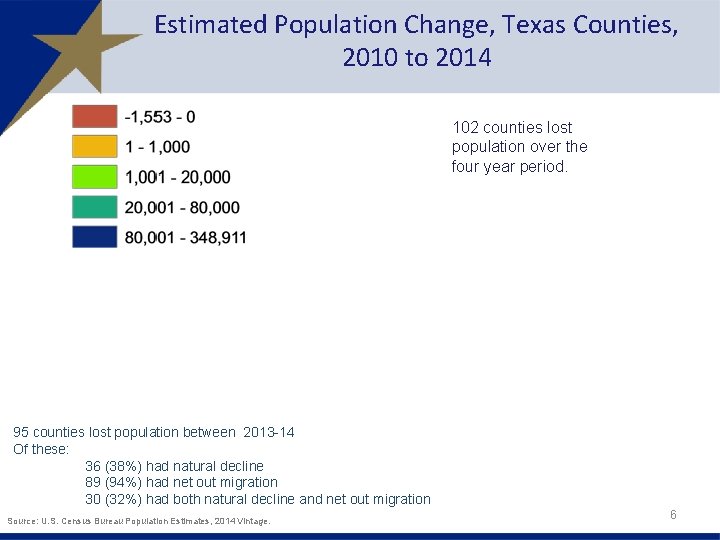
Estimated Population Change, Texas Counties, 2010 to 2014 102 counties lost population over the four year period. 95 counties lost population between 2013 -14 Of these: 36 (38%) had natural decline 89 (94%) had net out migration 30 (32%) had both natural decline and net out migration Source: U. S. Census Bureau Population Estimates, 2014 Vintage. 6
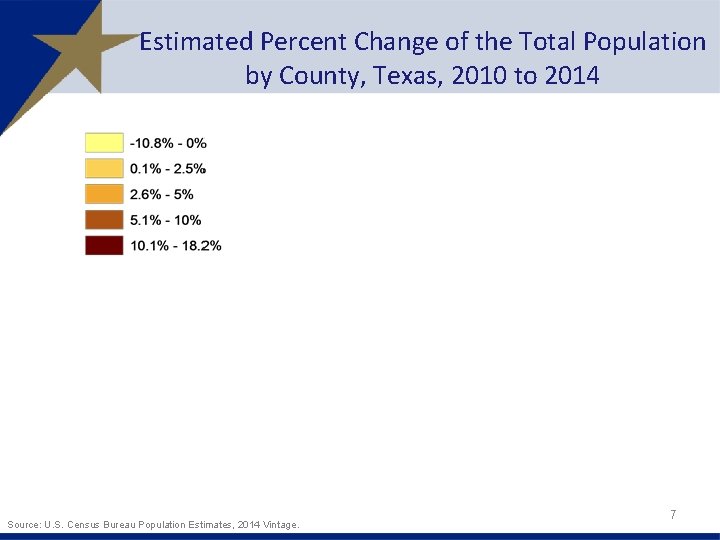
Estimated Percent Change of the Total Population by County, Texas, 2010 to 2014 Source: U. S. Census Bureau Population Estimates, 2014 Vintage. 7
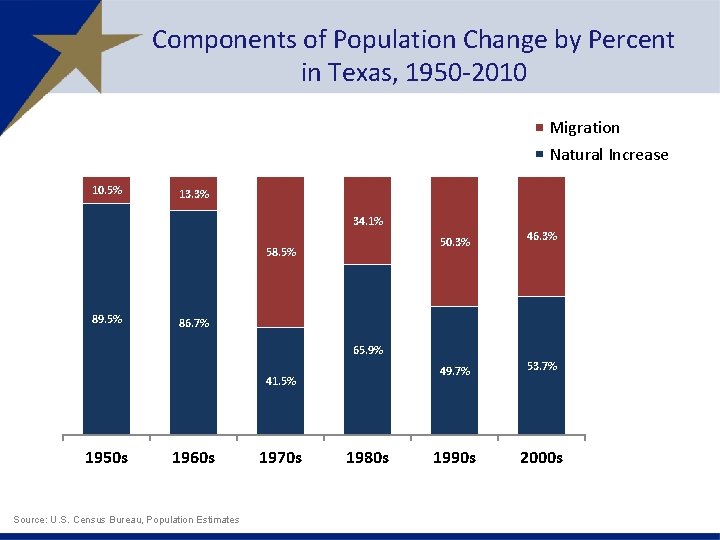
Components of Population Change by Percent in Texas, 1950 -2010 Migration Natural Increase 10. 5% 13. 3% 34. 1% 58. 5% 89. 5% 50. 3% 46. 3% 49. 7% 53. 7% 1990 s 2000 s 86. 7% 65. 9% 41. 5% 1950 s 1960 s Source: U. S. Census Bureau, Population Estimates 1970 s 1980 s
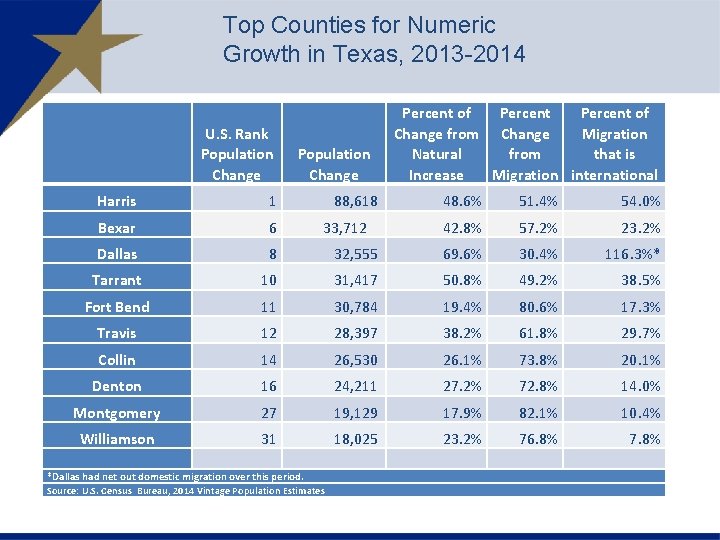
Top Counties for Numeric Growth in Texas, 2013 -2014 U. S. Rank Population Change Percent of Change from Change Migration Natural from that is Increase Migration international Harris 1 88, 618 48. 6% 51. 4% 54. 0% Bexar 6 33, 712 42. 8% 57. 2% 23. 2% Dallas 8 32, 555 69. 6% 30. 4% 116. 3%* Tarrant 10 31, 417 50. 8% 49. 2% 38. 5% Fort Bend 11 30, 784 19. 4% 80. 6% 17. 3% Travis 12 28, 397 38. 2% 61. 8% 29. 7% Collin 14 26, 530 26. 1% 73. 8% 20. 1% Denton 16 24, 211 27. 2% 72. 8% 14. 0% Montgomery 27 19, 129 17. 9% 82. 1% 10. 4% Williamson 31 18, 025 23. 2% 76. 8% 7. 8% *Dallas had net out domestic migration over this period. Source: U. S. Census Bureau, 2014 Vintage Population Estimates
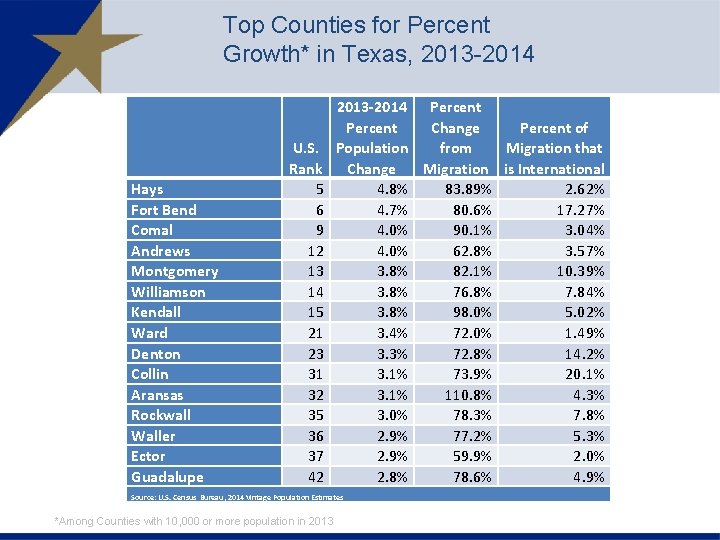
Top Counties for Percent Growth* in Texas, 2013 -2014 Hays Fort Bend Comal Andrews Montgomery Williamson Kendall Ward Denton Collin Aransas Rockwall Waller Ector Guadalupe U. S. Rank 5 6 9 12 13 14 15 21 23 31 32 35 36 37 42 2013 -2014 Percent Change Percent of Population from Migration that Change Migration is International 4. 8% 83. 89% 2. 62% 4. 7% 80. 6% 17. 27% 4. 0% 90. 1% 3. 04% 4. 0% 62. 8% 3. 57% 3. 8% 82. 1% 10. 39% 3. 8% 76. 8% 7. 84% 3. 8% 98. 0% 5. 02% 3. 4% 72. 0% 1. 49% 3. 3% 72. 8% 14. 2% 3. 1% 73. 9% 20. 1% 3. 1% 110. 8% 4. 3% 3. 0% 78. 3% 7. 8% 2. 9% 77. 2% 5. 3% 2. 9% 59. 9% 2. 0% 2. 8% 78. 6% 4. 9% Source: U. S. Census Bureau, 2014 Vintage Population Estimates *Among Counties with 10, 000 or more population in 2013
Estimated Number of Net Migrants by County, Texas, 2013 to 2014 Source: U. S. Census Bureau Population Estimates, 2014 Vintage. 11
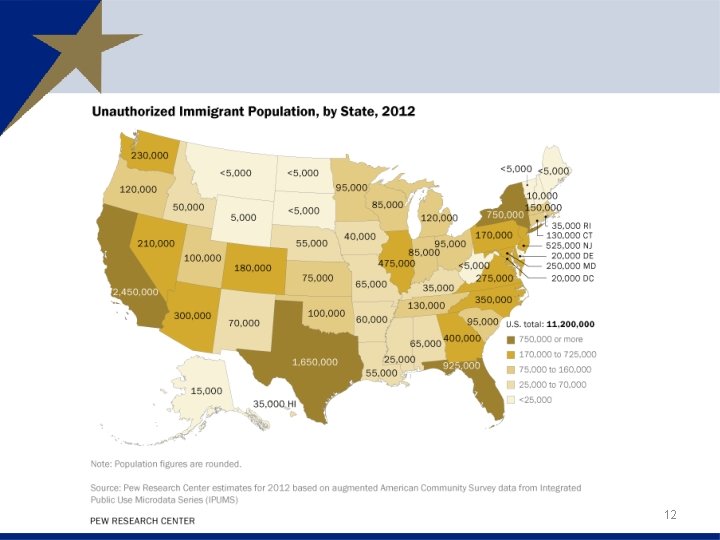
12
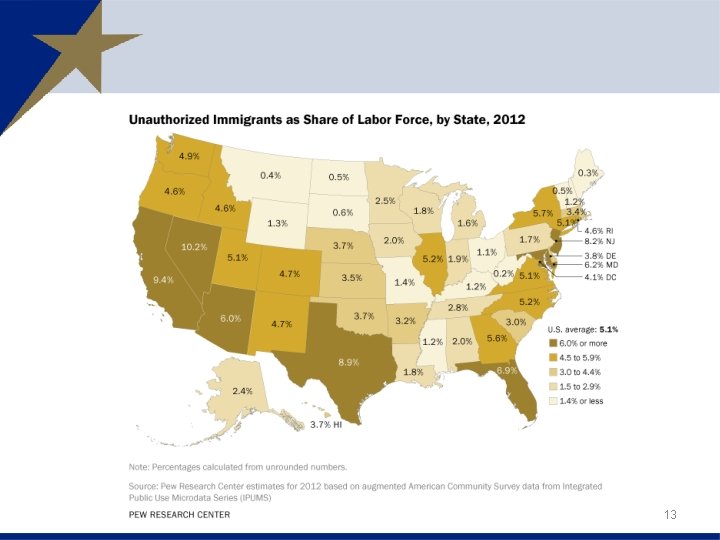
13
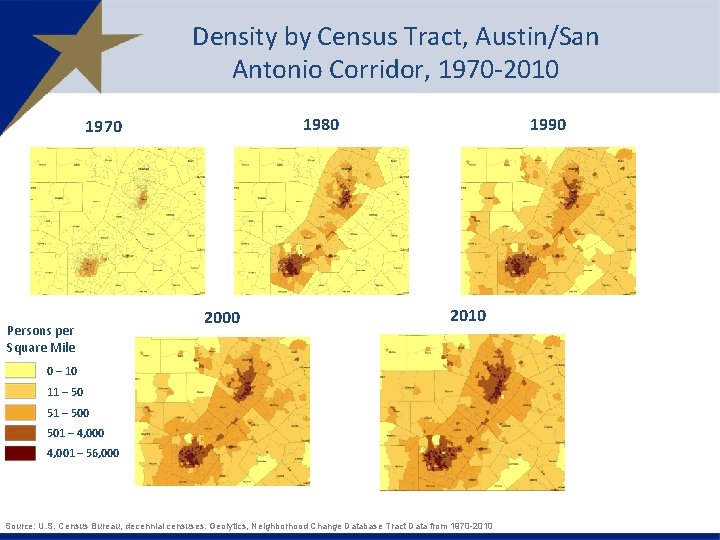
Density by Census Tract, Austin/San Antonio Corridor, 1970 -2010 1980 1970 Persons per Square Mile 2000 1990 2010 0 – 10 11 – 50 51 – 500 501 – 4, 000 4, 001 – 56, 000 Source: U. S. Census Bureau, decennial censuses. Geolytics, Neighborhood Change Database Tract Data from 1970 -2010
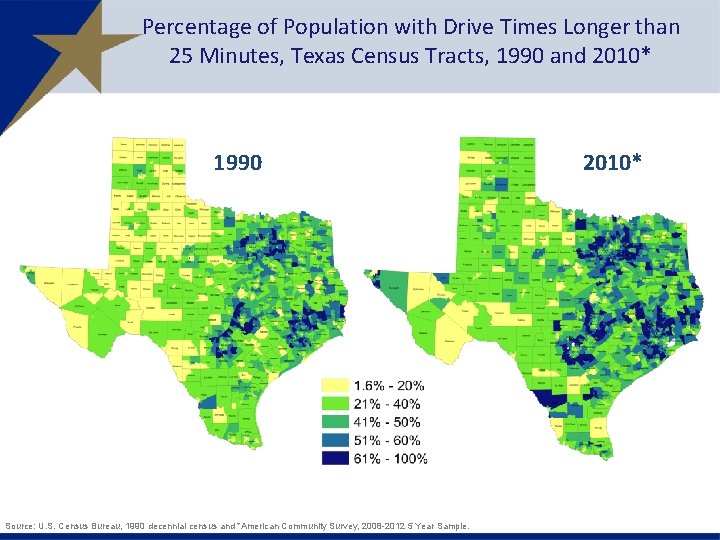
Percentage of Population with Drive Times Longer than 25 Minutes, Texas Census Tracts, 1990 and 2010* 1990 Source: U. S. Census Bureau, 1990 decennial census and *American Community Survey, 2008 -2012 5 Year Sample. 2010*
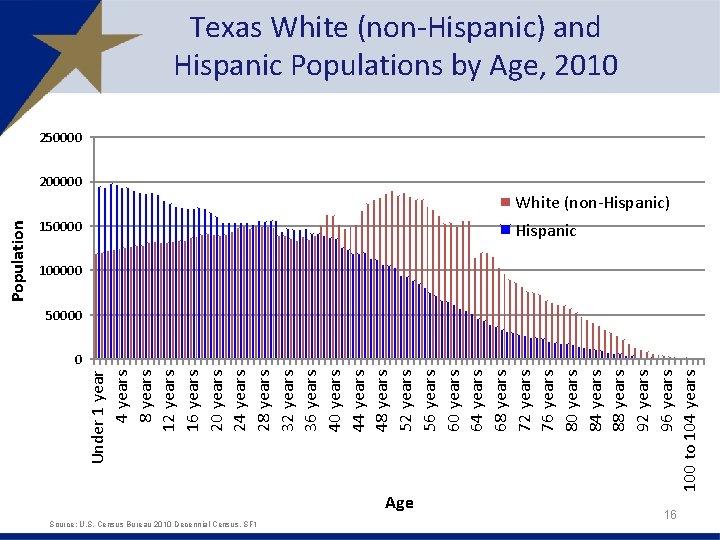
Under 1 year 4 years 8 years 12 years 16 years 20 years 24 years 28 years 32 years 36 years 40 years 44 years 48 years 52 years 56 years 60 years 64 years 68 years 72 years 76 years 80 years 84 years 88 years 92 years 96 years 100 to 104 years Population Texas White (non-Hispanic) and Hispanic Populations by Age, 2010 250000 200000 White (non-Hispanic) 150000 Hispanic 100000 50000 0 Age Source: U. S. Census Bureau 2010 Decennial Census, SF 1 16
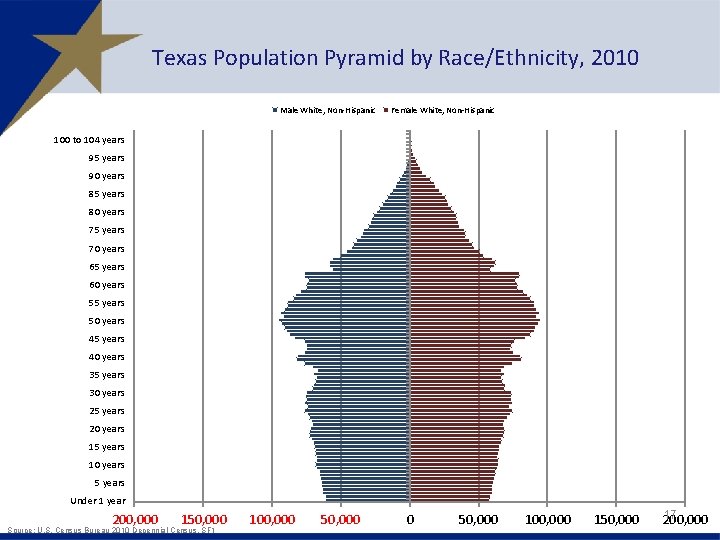
Texas Population Pyramid by Race/Ethnicity, 2010 Male White, Non-Hispanic Female White, Non-Hispanic 100 to 104 years 95 years 90 years 85 years 80 years 75 years 70 years 65 years 60 years 55 years 50 years 45 years 40 years 35 years 30 years 25 years 20 years 15 years 10 years 5 years Under 1 year 200, 000 150, 000 Source: U. S. Census Bureau 2010 Decennial Census, SF 1 100, 000 50, 000 100, 000 150, 000 17 200, 000
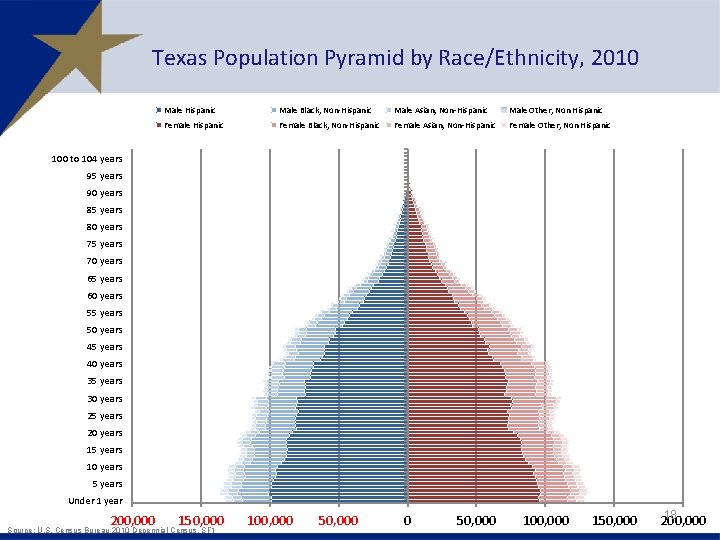
Texas Population Pyramid by Race/Ethnicity, 2010 Male Hispanic Male Black, Non-Hispanic Male Asian, Non-Hispanic Male Other, Non Hispanic Female Black, Non-Hispanic Female Asian, Non-Hispanic Female Other, Non Hispanic 100 to 104 years 95 years 90 years 85 years 80 years 75 years 70 years 65 years 60 years 55 years 50 years 45 years 40 years 35 years 30 years 25 years 20 years 15 years 10 years 5 years Under 1 year 200, 000 150, 000 Source: U. S. Census Bureau 2010 Decennial Census, SF 1 100, 000 50, 000 100, 000 150, 000 18 200, 000
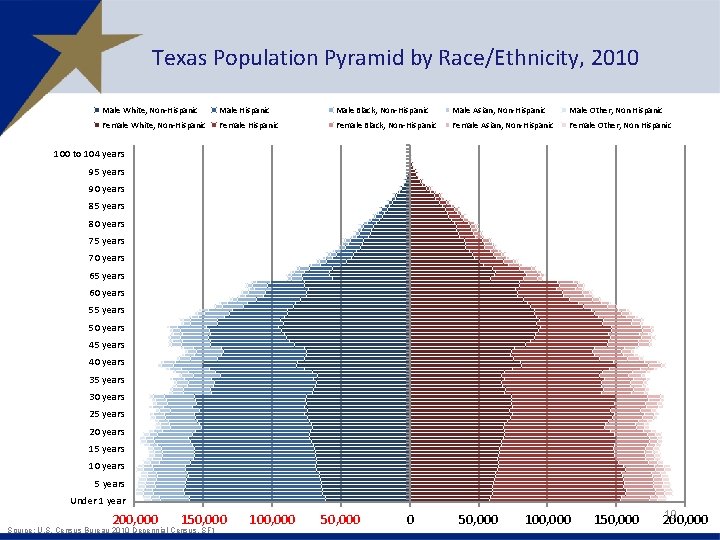
Texas Population Pyramid by Race/Ethnicity, 2010 Male White, Non-Hispanic Male Black, Non-Hispanic Male Asian, Non-Hispanic Male Other, Non Hispanic Female White, Non-Hispanic Female Black, Non-Hispanic Female Asian, Non-Hispanic Female Other, Non Hispanic 100 to 104 years 95 years 90 years 85 years 80 years 75 years 70 years 65 years 60 years 55 years 50 years 45 years 40 years 35 years 30 years 25 years 20 years 15 years 10 years 5 years Under 1 year 200, 000 150, 000 Source: U. S. Census Bureau 2010 Decennial Census, SF 1 100, 000 50, 000 100, 000 150, 000 19 200, 000
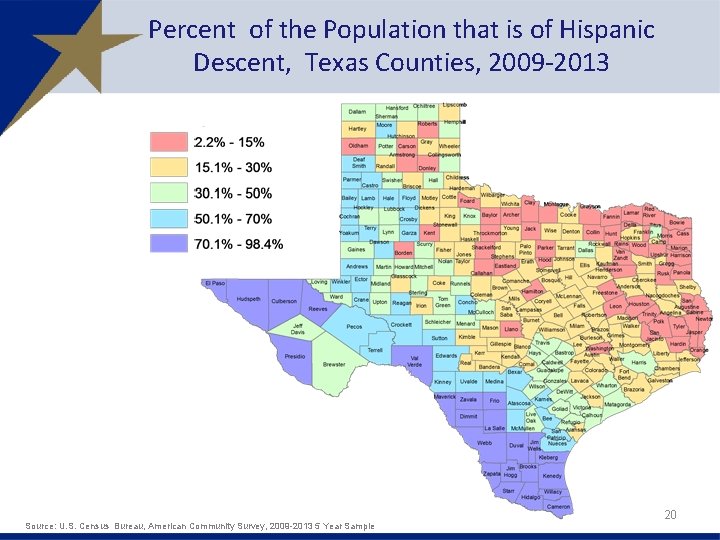
Percent of the Population that is of Hispanic Descent, Texas Counties, 2009 -2013 Source: U. S. Census Bureau, American Community Survey, 2009 -2013 5 Year Sample 20
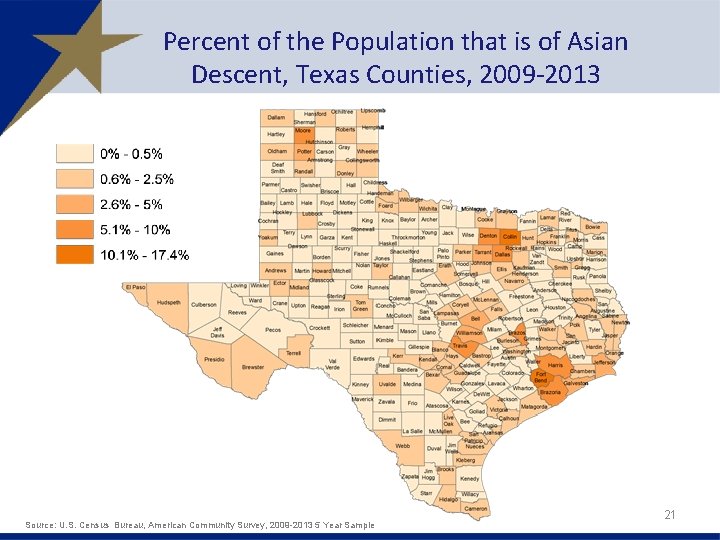
Percent of the Population that is of Asian Descent, Texas Counties, 2009 -2013 Source: U. S. Census Bureau, American Community Survey, 2009 -2013 5 Year Sample 21
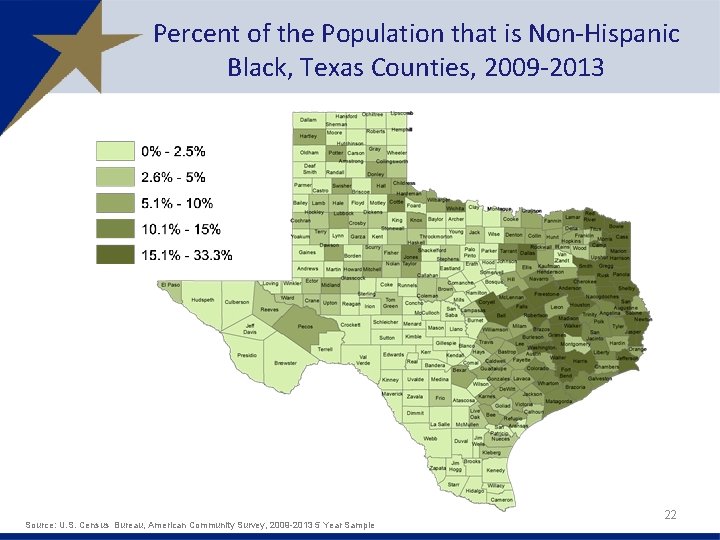
Percent of the Population that is Non-Hispanic Black, Texas Counties, 2009 -2013 Source: U. S. Census Bureau, American Community Survey, 2009 -2013 5 Year Sample 22
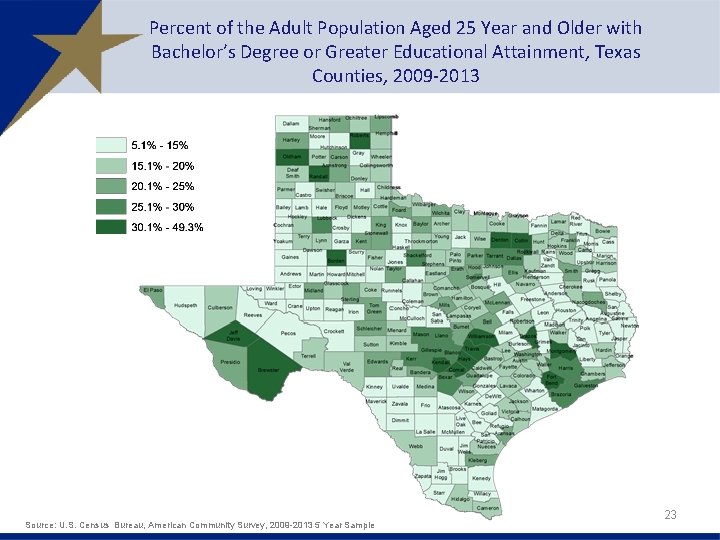
Percent of the Adult Population Aged 25 Year and Older with Bachelor’s Degree or Greater Educational Attainment, Texas Counties, 2009 -2013 Source: U. S. Census Bureau, American Community Survey, 2009 -2013 5 Year Sample 23
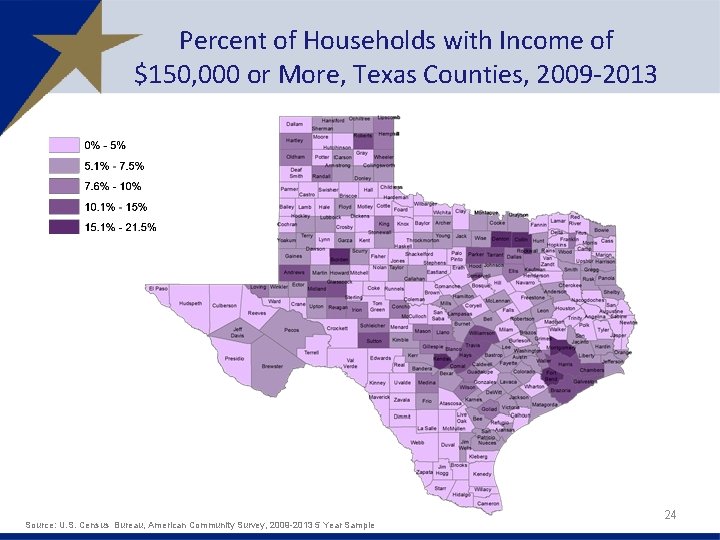
Percent of Households with Income of $150, 000 or More, Texas Counties, 2009 -2013 Source: U. S. Census Bureau, American Community Survey, 2009 -2013 5 Year Sample 24
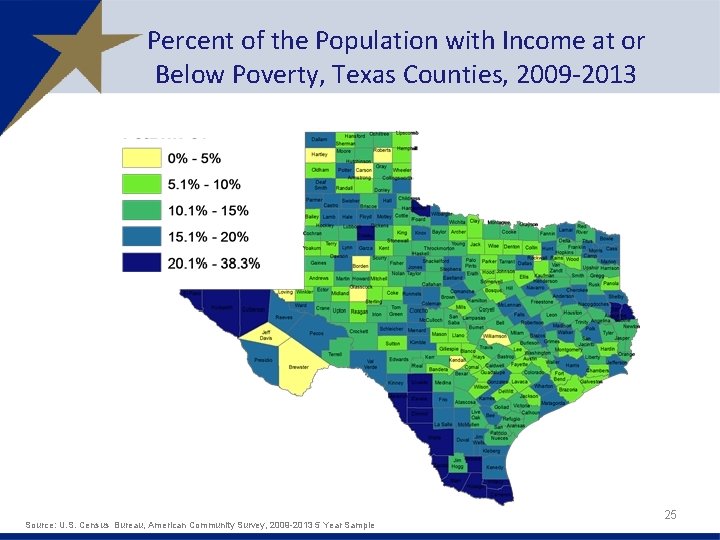
Percent of the Population with Income at or Below Poverty, Texas Counties, 2009 -2013 Source: U. S. Census Bureau, American Community Survey, 2009 -2013 5 Year Sample 25
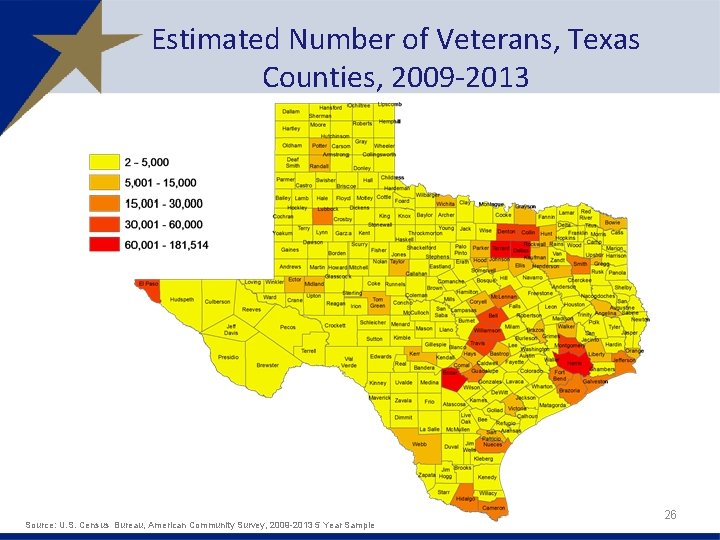
Estimated Number of Veterans, Texas Counties, 2009 -2013 Source: U. S. Census Bureau, American Community Survey, 2009 -2013 5 Year Sample 26
Estimated Percent of the population who are Veterans, Texas Counties, 2009 -2013 Source: U. S. Census Bureau, American Community Survey, 2009 -2013 5 Year Sample 27
Median Age, Texas Counties, 2009 -2013 Source: U. S. Census Bureau, American Community Survey, 2009 -2013 5 Year Sample 28
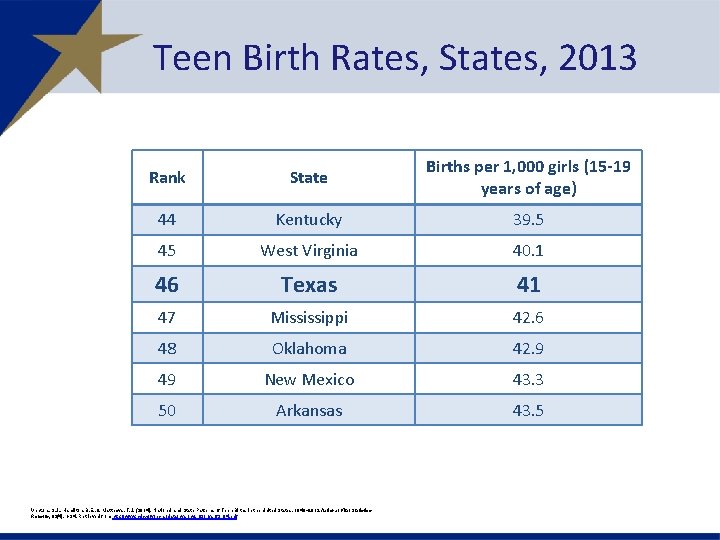
Teen Birth Rates, States, 2013 Rank State Births per 1, 000 girls (15 -19 years of age) 44 Kentucky 39. 5 45 West Virginia 40. 1 46 Texas 41 47 Mississippi 42. 6 48 Oklahoma 42. 9 49 New Mexico 43. 3 50 Arkansas 43. 5 Ventura, S. J. , Hamilton, B. E. , & Matthews, T. J. (2014). National and State Patterns of Teen Births in the United States, 1940– 2013. National Vital Statistics Reports, 63(4), 1 -34. Retrieved from http: //www. cdc. gov/nchs/data/nvsr 63/nvsr 63_04. pdf.
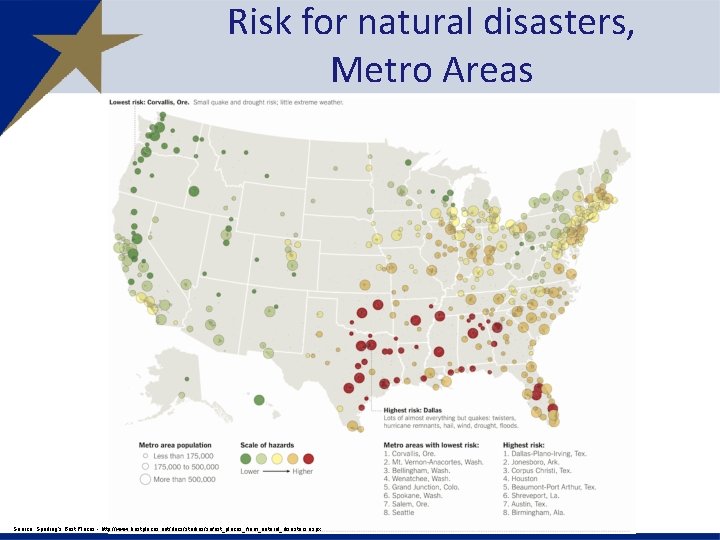
Risk for natural disasters, Metro Areas Source: Sperling’s Best Places - http: //www. bestplaces. net/docs/studies/safest_places_from_natural_disasters. aspx
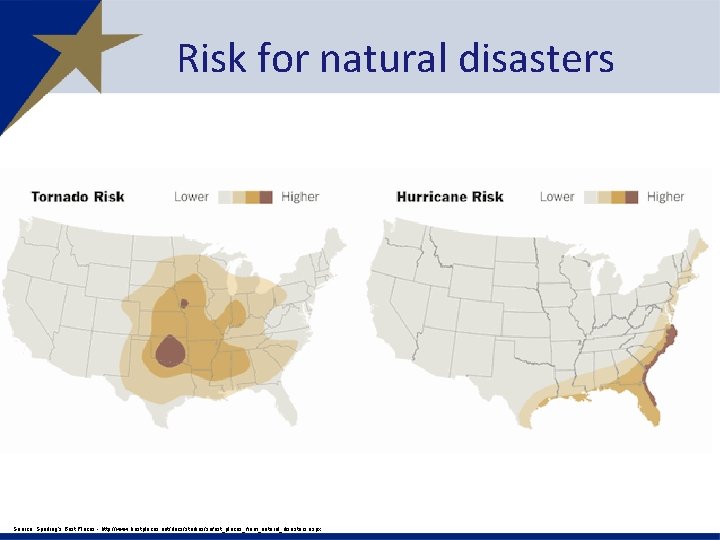
Risk for natural disasters Source: Sperling’s Best Places - http: //www. bestplaces. net/docs/studies/safest_places_from_natural_disasters. aspx
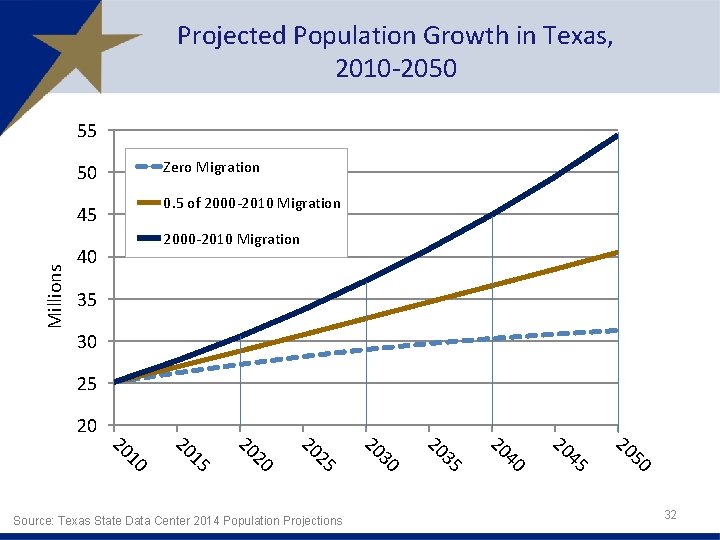
Projected Population Growth in Texas, 2010 -2050 55 Zero Migration 50 0. 5 of 2000 -2010 Migration Millions 45 2000 -2010 Migration 40 35 30 25 20 20 50 45 35 30 40 20 20 25 20 15 10 20 20 Source: Texas State Data Center 2014 Population Projections 32
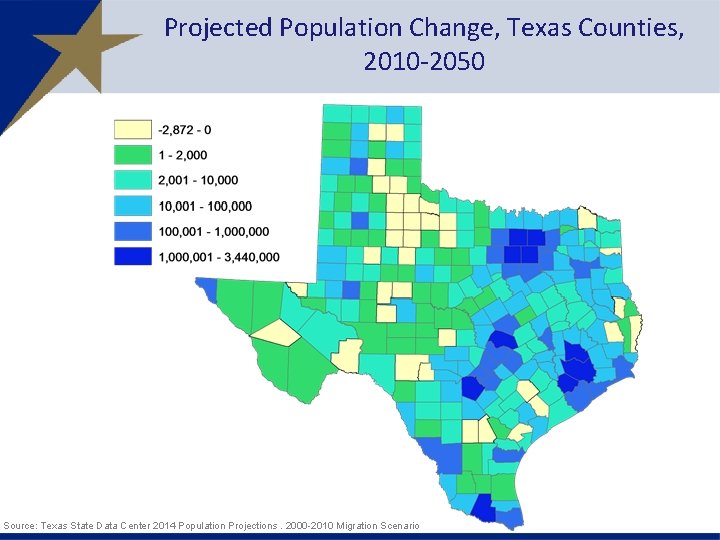
Projected Population Change, Texas Counties, 2010 -2050 Source: Texas State Data Center 2014 Population Projections. 2000 -2010 Migration Scenario
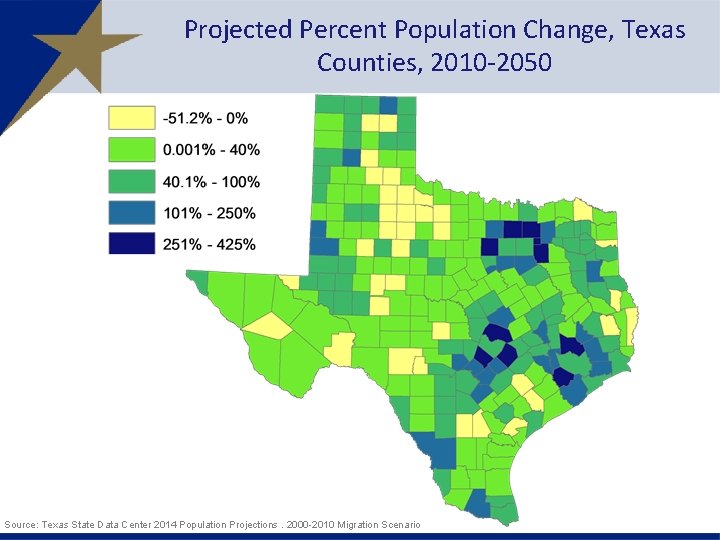
Projected Percent Population Change, Texas Counties, 2010 -2050 Source: Texas State Data Center 2014 Population Projections. 2000 -2010 Migration Scenario
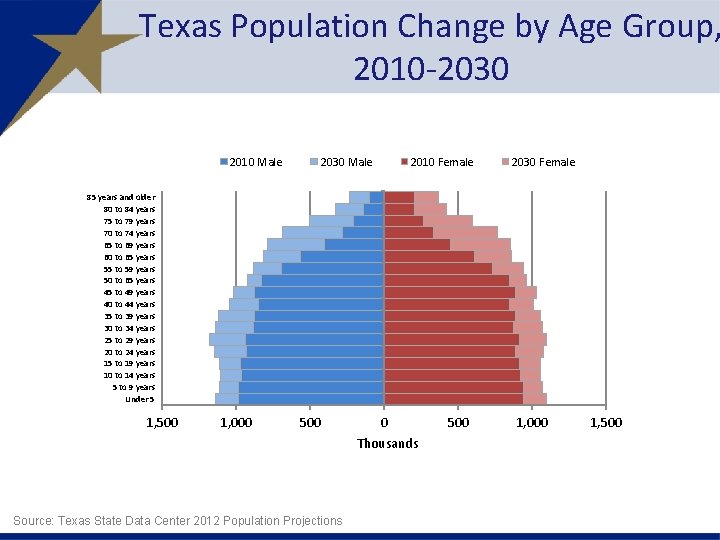
Texas Population Change by Age Group, 2010 -2030 2010 Male 2030 Male 2010 Female 2030 Female 85 years and older 80 to 84 years 75 to 79 years 70 to 74 years 65 to 69 years 60 to 65 years 55 to 59 years 50 to 65 years 45 to 49 years 40 to 44 years 35 to 39 years 30 to 34 years 25 to 29 years 20 to 24 years 15 to 19 years 10 to 14 years 5 to 9 years Under 5 1, 500 1, 000 500 Source: Texas State Data Center 2012 Population Projections 0 Thousands 500 1, 000 1, 500
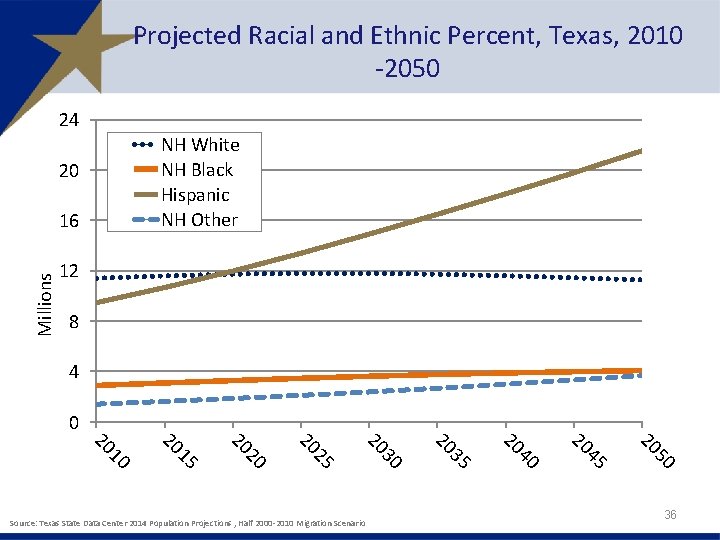
Projected Racial and Ethnic Percent, Texas, 2010 -2050 24 NH White NH Black Hispanic NH Other 20 Millions 16 12 8 4 0 20 20 20 50 45 40 35 30 25 15 10 20 20 20 Source: Texas State Data Center 2014 Population Projections , Half 2000 -2010 Migration Scenario 36
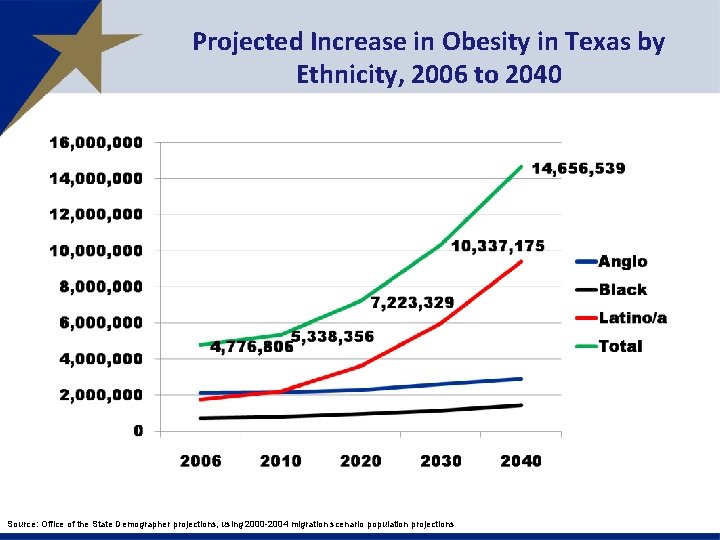
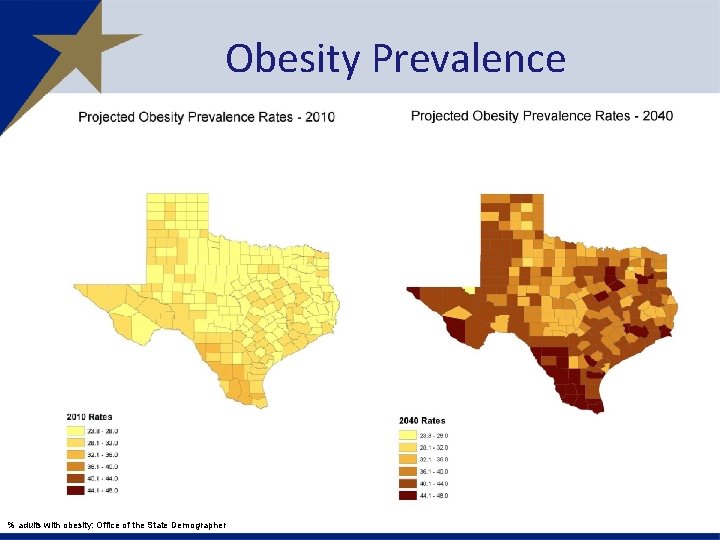
Projected Increase in Obesity in Texas by Ethnicity, 2006 to 2040 Source: Office of the State Demographer projections, using 2000 -2004 migration scenario population projections
Obesity Prevalence % adults with obesity: Office of the State Demographer
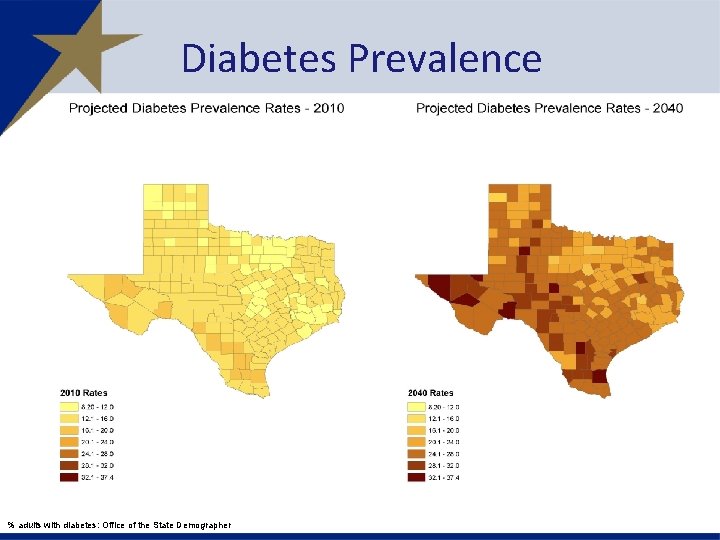
Diabetes Prevalence % adults with diabetes: Office of the State Demographer
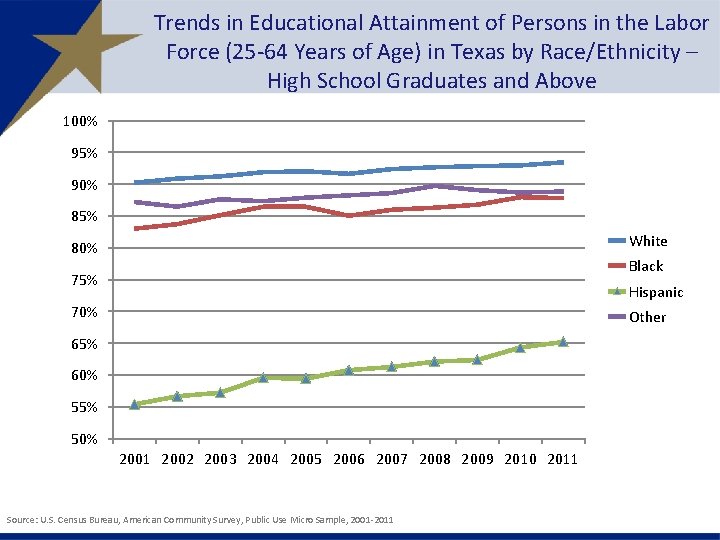
Trends in Educational Attainment of Persons in the Labor Force (25 -64 Years of Age) in Texas by Race/Ethnicity – High School Graduates and Above 100% 95% 90% 85% White 80% Black 75% Hispanic 70% Other 65% 60% 55% 50% 2001 2002 2003 2004 2005 2006 2007 2008 2009 2010 2011 Source: U. S. Census Bureau, American Community Survey, Public Use Micro Sample, 2001 -2011
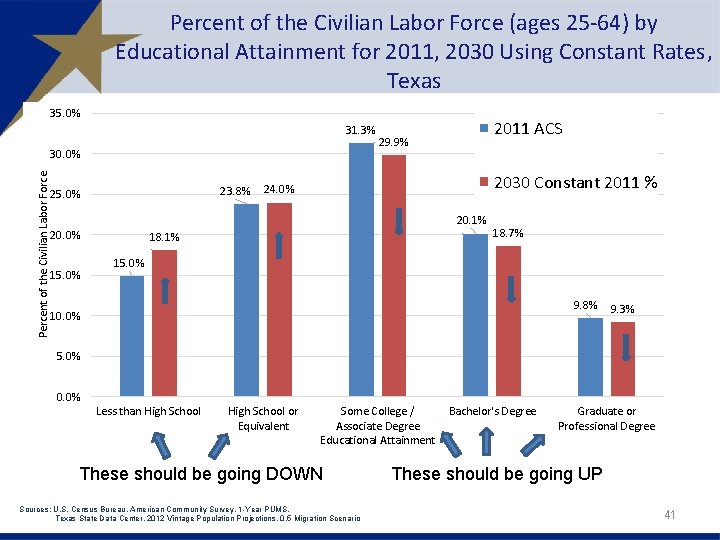
Percent of the Civilian Labor Force (ages 25 -64) by Educational Attainment for 2011, 2030 Using Constant Rates, Texas 35. 0% 31. 3% Percent of the Civilian Labor Force 30. 0% 23. 8% 25. 0% 2011 ACS 29. 9% 2030 Constant 2011 % 24. 0% 20. 1% 20. 0% 15. 0% 18. 1% 18. 7% 15. 0% 9. 8% 10. 0% 9. 3% 5. 0% 0. 0% Less than High School or Equivalent Some College / Associate Degree Educational Attainment These should be going DOWN Sources: U. S. Census Bureau, American Community Survey, 1 -Year PUMS. Texas State Data Center, 2012 Vintage Population Projections, 0. 5 Migration Scenario Bachelor's Degree Graduate or Professional Degree These should be going UP 41
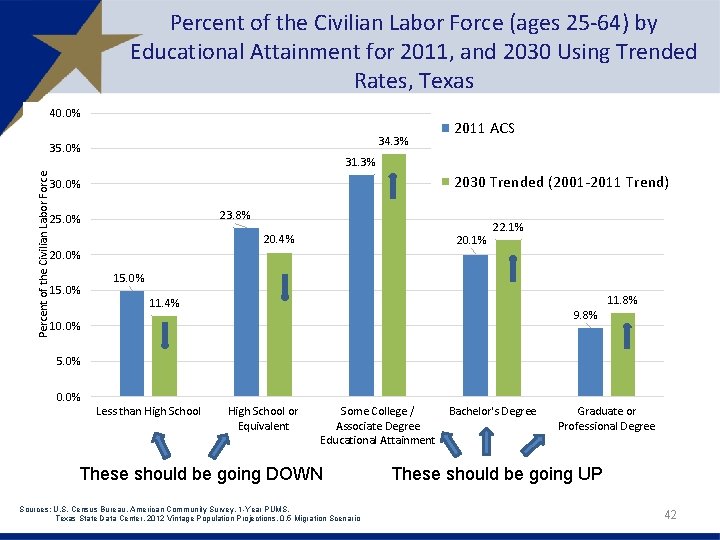
Percent of the Civilian Labor Force (ages 25 -64) by Educational Attainment for 2011, and 2030 Using Trended Rates, Texas 40. 0% 34. 3% Percent of the Civilian Labor Force 35. 0% 2011 ACS 31. 3% 2030 Trended (2001 -2011 Trend) 30. 0% 23. 8% 25. 0% 20. 4% 20. 1% 22. 1% 20. 0% 15. 0% 11. 4% 9. 8% 10. 0% 11. 8% 5. 0% 0. 0% Less than High School or Equivalent Some College / Associate Degree Educational Attainment These should be going DOWN Sources: U. S. Census Bureau, American Community Survey, 1 -Year PUMS. Texas State Data Center, 2012 Vintage Population Projections, 0. 5 Migration Scenario Bachelor's Degree Graduate or Professional Degree These should be going UP 42
Contact Lloyd B. Potter, Ph. D. Office: (210) 458 -6530 Email: Lloyd. Potter@UTSA. edu Internet: http: //osd. state. tx. us Twitter: @Texas. Demography 43