
Texas Death Registration Roles Responsibilities 2012 VSU Regional

Texas Death Registration: Roles & Responsibilities 2012 VSU Regional Conferences Tara Carmean & Victor Farinelli
A brief overview of the U. S. Death Registration System HISTORY
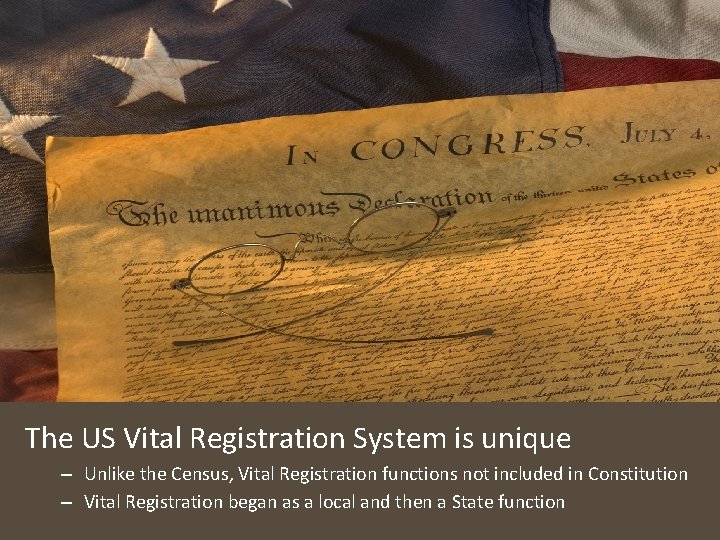
The US Vital Registration System is unique – Unlike the Census, Vital Registration functions not included in Constitution – Vital Registration began as a local and then a State function
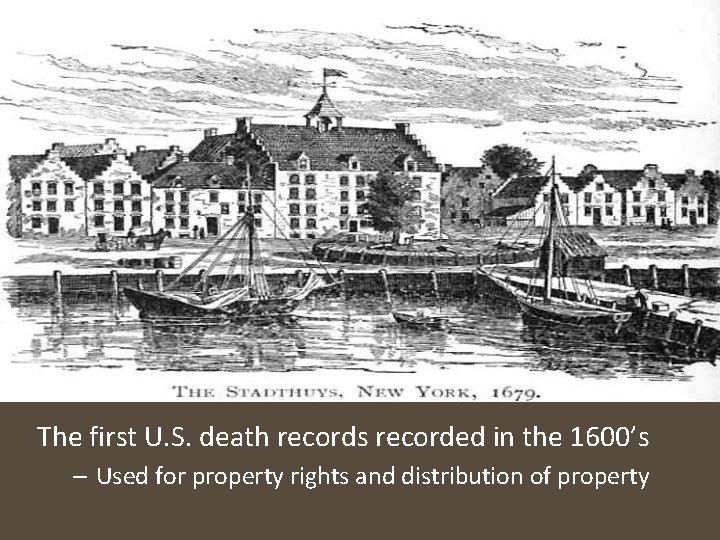
The first U. S. death records recorded in the 1600’s – Used for property rights and distribution of property

Industrialization and rapid urbanization – Overcrowding and poverty – Polluted water and sanitary issues – Major epidemics
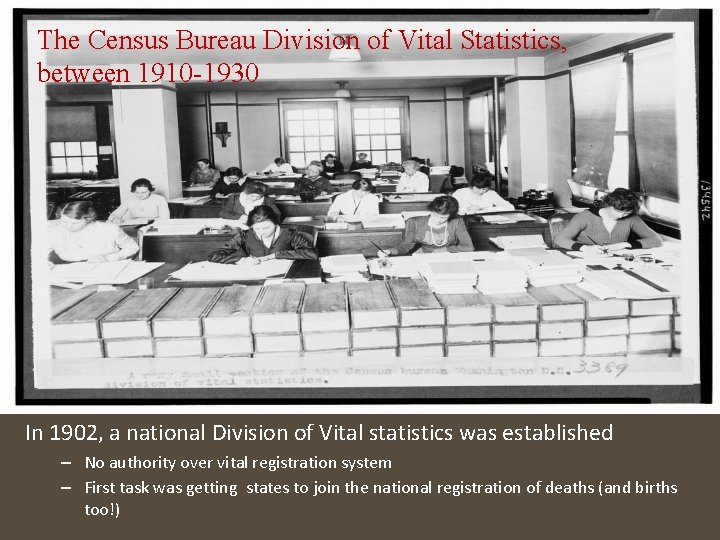
The Census Bureau Division of Vital Statistics, between 1910 -1930 In 1902, a national Division of Vital statistics was established – No authority over vital registration system – First task was getting states to join the national registration of deaths (and births too!)
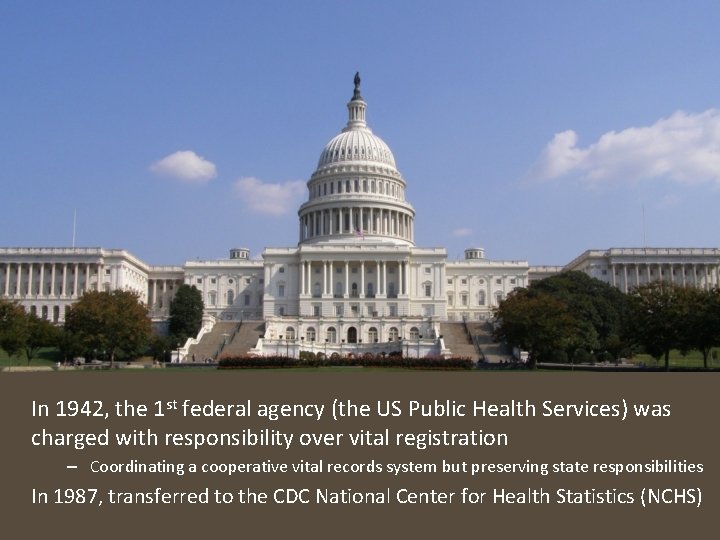
In 1942, the 1 st federal agency (the US Public Health Services) was charged with responsibility over vital registration – Coordinating a cooperative vital records system but preserving state responsibilities In 1987, transferred to the CDC National Center for Health Statistics (NCHS)
More about the document you’re responsible for THE DEATH CERTIFICATE
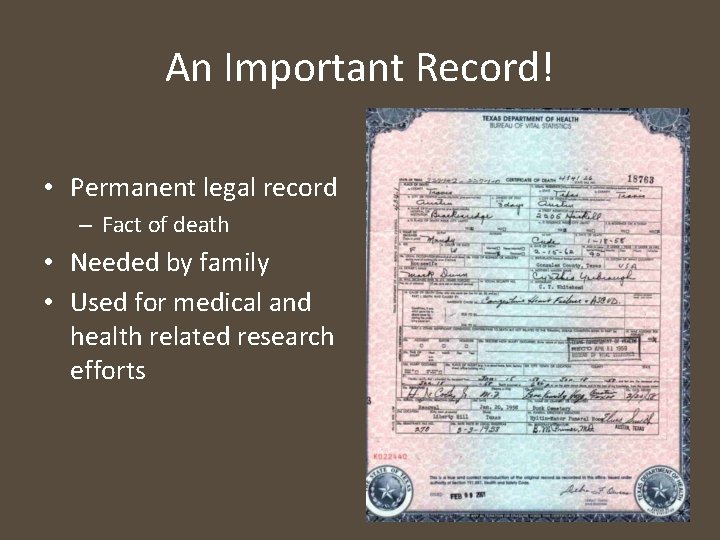
An Important Record! • Permanent legal record – Fact of death • Needed by family • Used for medical and health related research efforts
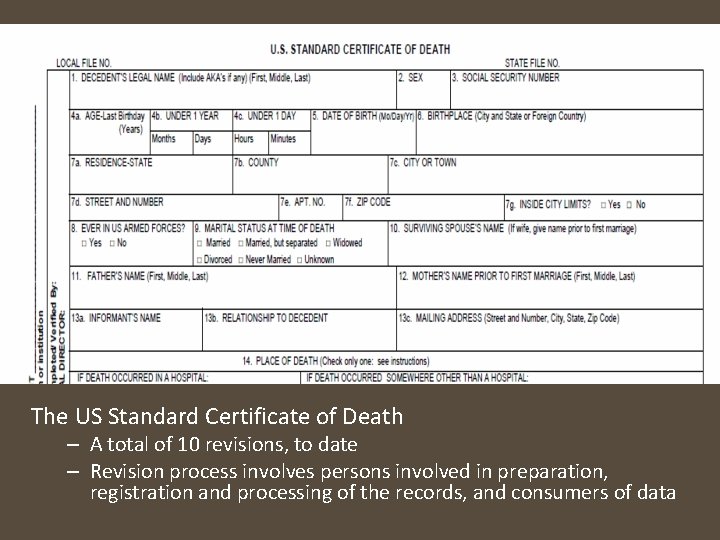
The US Standard Certificate of Death – A total of 10 revisions, to date – Revision process involves persons involved in preparation, registration and processing of the records, and consumers of data
Electronic Death Registration System – Promoted improve data quality, timeliness and real-time linkage capabilities – Recommended by partnership between NCHS, NAPHSIS, and the SSA
Texas Electronic Registrar (TER) Everyone should use TER: The person in charge of interment or removal of a body HSC 193. 002 The person completing the medical certification HSC 193. 005(h) The State Registrar has supervisory power of local registrars to ensure uniform compliance HSC 195. 002

Selected responsible for filing a death certificate PARTNERS
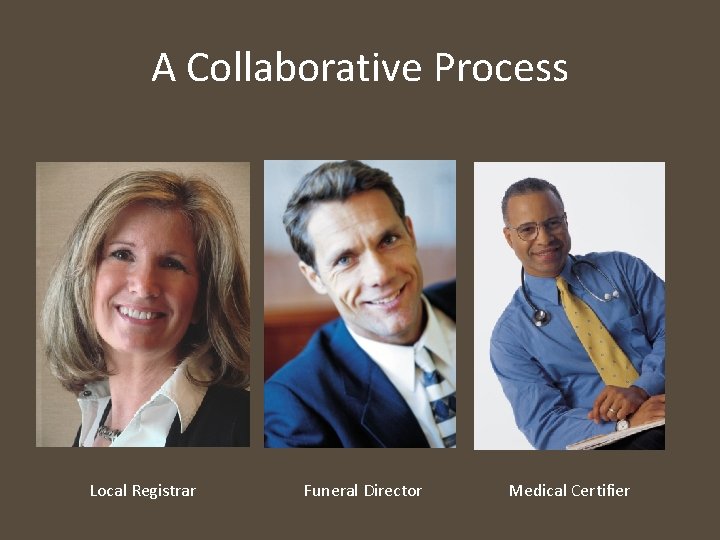
A Collaborative Process Local Registrar Funeral Director Medical Certifier
Funeral Directors In Texas, approximately: • 5000 Funeral Directors • 1500 establishments (Per TFSC, 2012)
Funeral Director Responsibilities • Send Report of Death within 24 hours TAC 181. 2 • Obtain personal info from qualified person HSC 193. 004
More Funeral Director Responsibilities • Assign a Medical Certifier – Notify JP or ME office when appropriate • Demographically certify the record • Release the record to the Local Registrar
Time Requirements • 24 hours – A Report of Death must be filed with the Local Registrar within 24 hours of taking custody of the body. TAC 181. 2 (a) • 10 Days – Death certificates must be filed within 10 day from the date of death. HSC 193. 003(a)

Medical Certifiers May Include: • Physicians • Primary Care Physicians • ER Doctors • Hospice Doctors • VA Doctors • Other specialties • Medical Examiners • 12 ME’s offices in TX • Justices of the Peace
Medical Certifiers Physicians Medical Examiners & Justices of the Peace • Can certify natural deaths in persons above six years of age • Must certify any death occurring by any means other than natural causes
Medical Certifier Responsibilities • Verifying the date of death • Enter the Cause of Death – This represents the best medical opinion • Medically certify the record – Certify within 5 days of receiving notification. HSC 193. 005(b) • Complete Medical Amendments, as needed
Time Requirements! • 5 Days – The Medical Certifier must complete the medical certification within 5 days after being designated. HSC 193. 005 (b)
Local Registrar In Texas: • 254 Counties • 445 Local Registration Offices Local Registrars include: • Justice of the Peace • County & District Clerk • Municipal Clerks • City Clerks
Local Registrar Responsibilities • Secure a complete record for each death HHS 191. 16(a) • Review each record for completion HHS 191. 027(a) • Record the certificate and release to State • Issue Burial Transit Permits, as needed
Time Requirements • 10 Days – Death certificates must be filed within 10 day from the date of death. HSC 193. 003(a)
TX Vital Statistics Unit (VSU) General Duties • Oversees vital registration in TX • Provides instructions and forms • Files and processes records • Preserves records • Issue records Death Registration Specific Duties • Issues Disinternment Permits • Demographic Amendments
Disinternment Permits • Serves as authority to disinter, transport and reinter a body within this state • Funeral Director or embalmer initiates application (VS-271), & consent form (VS-271. 1) – Need signed consent from cemetery, owner of plot, and deceased’s next-of-kin • State Registrar issues in four parts – Copies retained by funeral director, sexton of the cemetery, the local registrar, and the State Registrar

Other partners that rely on accurate and complete records OTHER PARTNERS
Department of State Health Services Center for Health Statistics (CHS) Mission: the source for timely, accurate and useful health information in TX. Reports include: Vital Statistics Annual Reports
National Center for Health Statistics (NCHS) The principal health statistics agency in the US! NCHS is required by law to: • Collect state data annually • Provide assistance in achieving comparability of data Public Health Service Act, 42 USC 242 k Data collected through the Nation Vital Statistics System (NVSS)
Resources • VSU website: www. texasvsu. org • VSU Handbook on Death Registration: http: //www. dshs. state. tx. us/vs/handbooks/d eath/ • DSHS Center for Health Statistics (CHS): http: //www. dshs. state. tx. us/chs/ • National Center for Health Statistics (NCHS): http: //www. cdc. gov/nchs/
- Slides: 31