
Texas Commission On Law Enforcement Basic Instructor Course
Texas Commission On Law Enforcement Basic Instructor Course TCOLE #1014 UNIT THREE & UNIT FOUR HOSTED BY: Bexar County Sheriff’s Office 10 -17 -2014 Training Academy Prepared by Deputy Chief George D. Little, BCCO PCT #4 1
UNIT THREE 3. 0 working knowledge of the three (3) domains or modes of learning and their impact on the learning process.
3. 1. 1 Define Cognitive Learning (Define): (Define) deals with the recall or recognition of knowledge and the development of intellectual abilities and skills 3
3. 1 Cognitive Learning Examples: Intoxilyzer Algebraic Formulas, Forensic Science, History of Law Enforcement 3. 1. 2 Gestalt theory described cognitive learning as the “click of understanding” or “insight”
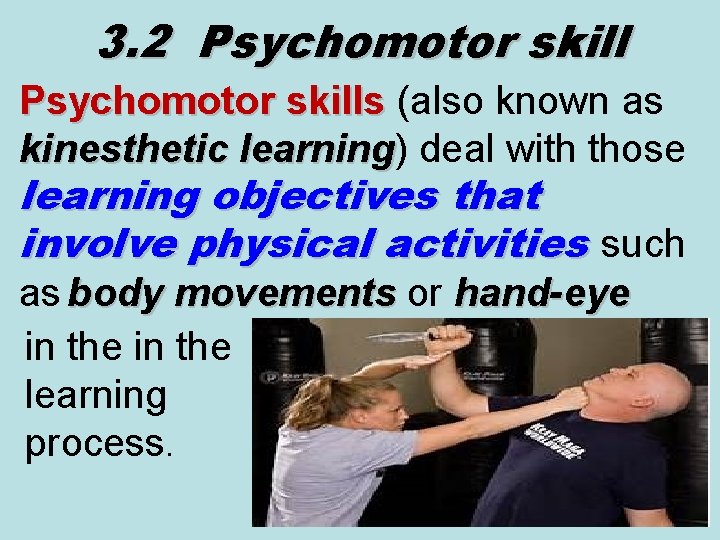
3. 2 Psychomotor skills (also known as Psychomotor skills kinesthetic learning) learning deal with those learning objectives that involve physical activities such as body movements or hand-eye in the learning process.
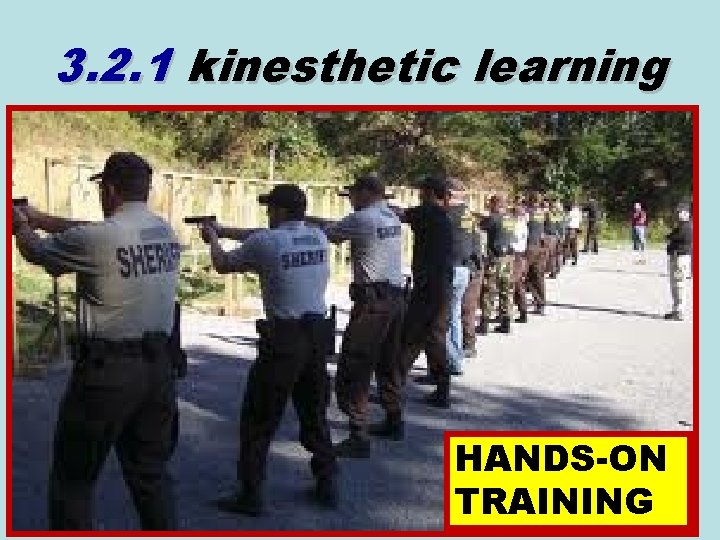
3. 2. 1 kinesthetic learning HANDS-ON TRAINING
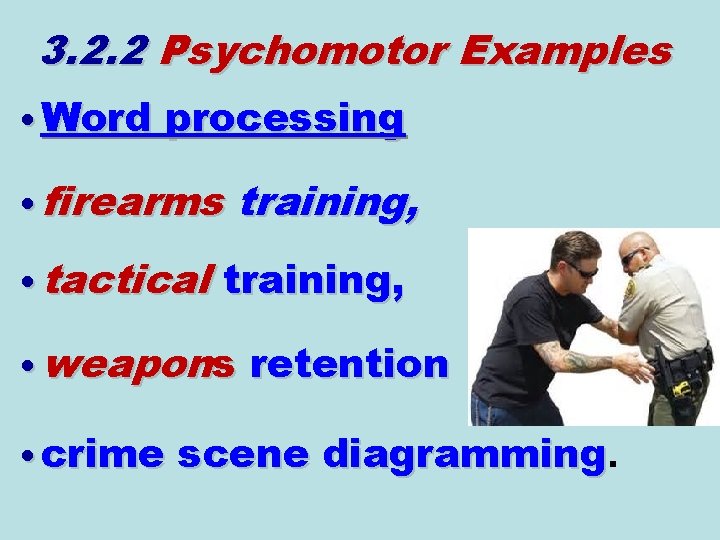
3. 2. 2 Psychomotor Examples • Word processing • firearms training, • tactical training, • weapons retention • crime scene diagramming
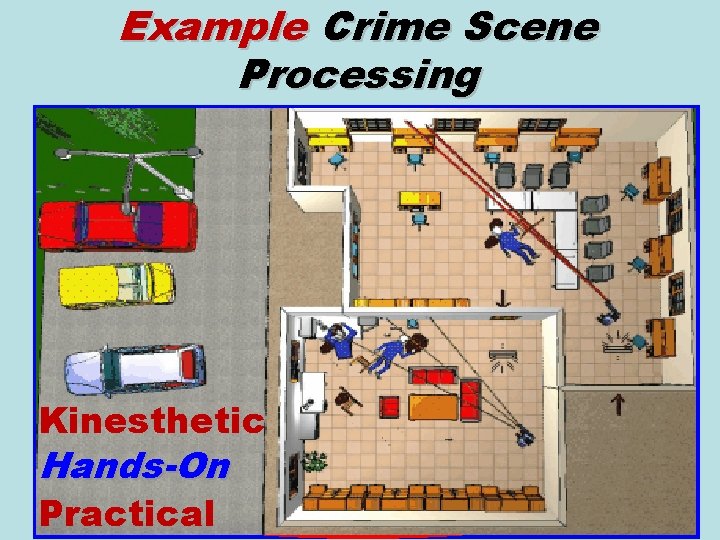
Example Crime Scene Processing Kinesthetic Hands-On Practical
3. 3. 1 Affective Learning Affective learning deals with Affective learning changes in • interest, • attitudes, . • values, values and. • the development of appreciations and adequate adjustment.
3. 3. 1 The Domains of Learning Examples: Ethics, Criminology Communications skills, Police officer’s role in society, role Community policing, such policing as, v Crime prevention 10
3. 3. 2 The Affective Domain includes the following: A. Sensitivity to the human factor in the classroom (classroom climate) B. Human values C. Human relations D. Emotional conduct E. Interests F. Social attitudes G. Values
3. 3. 3 Affective Predispositions A. Likes and dislikes directed towards the topic/subject B. Likes and dislikes directed toward the instructor, instructor including positive or negative preconceptions about that instructor
3. 3. 3 Affective Predispositions Continued C. Positive or negative preconceived notions about the subject NEGATIVE IN PRODUCES NEGATIVE OUT
3. 3. 3 Affective Predispositions Continued D. Circumstances surrounding presence in the class E. Awareness of hidden agenda of social and affective climate created by interaction between teacher and participant (example: difference in rank between instructor and participant)
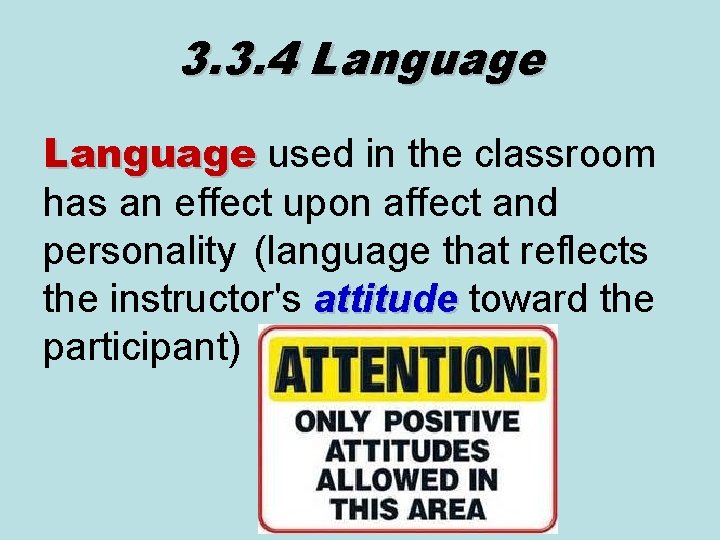
3. 3. 4 Language used in the classroom has an effect upon affect and personality (language that reflects the instructor's attitude toward the participant)
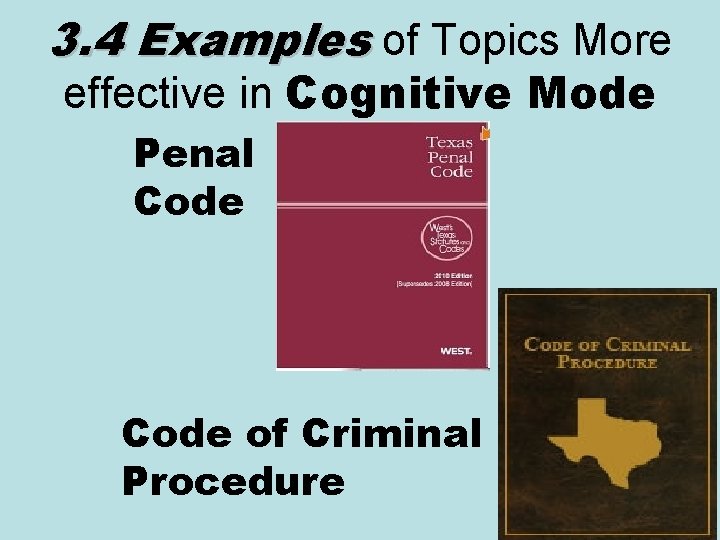
3. 4 Examples of Topics More effective in Cognitive Mode Penal Code of Criminal Procedure
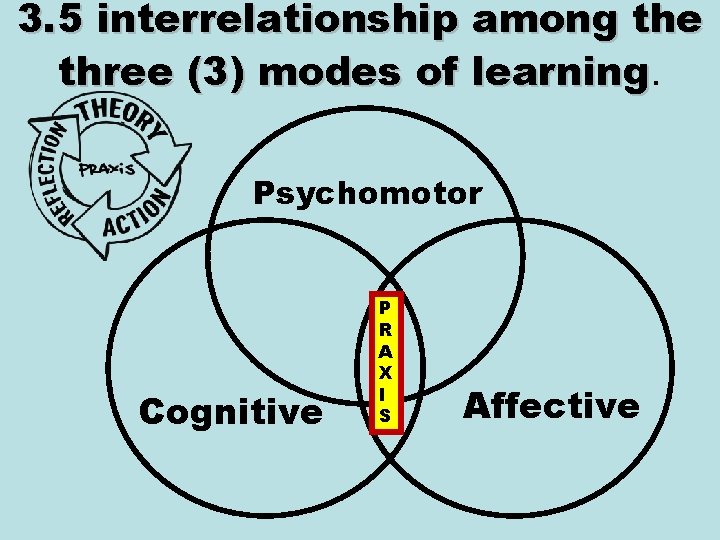
3. 5 interrelationship among the three (3) modes of learning. Psychomotor Cognitive P R A X I S Affective
3. 5. 1 The Domains of Learning The most effective learning takes place when there is a positive relationship between cognitive domain and the affective domain. 18
3. 5. 2 Modes of Learning • The instructor is not only the content expert or specialist he/she must be acutely aware of classroom climate, and take positive steps to always ensure that the entire environment is conducive to the learning process. CONTENT EXPERT 19
3. 5. 3 Modes of Learning • When psychomotor activities are added – then learning is reinforced and retained Intuitive responses Motor Memory Muscle Memory 20
UNIT FOUR
4. 0 Factors Affecting Learning Knowledge of the factors affecting learning. These factors include; . • participant factors • instructor factors and • environmental factors
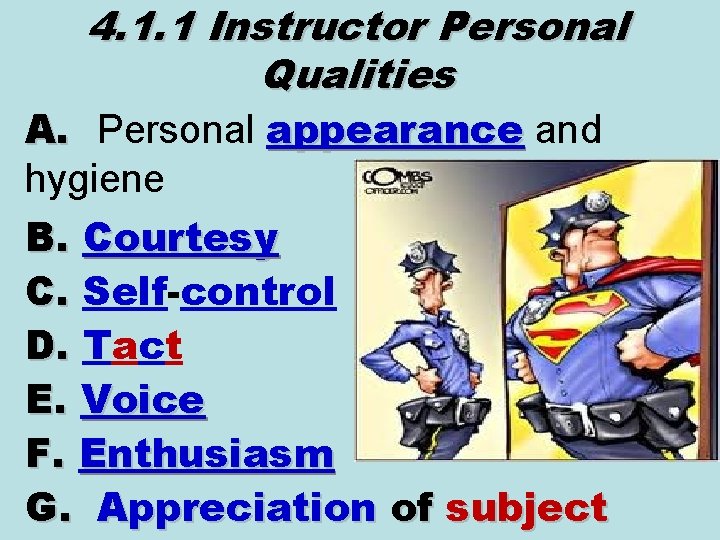
4. 1. 1 Instructor Personal Qualities A. Personal appearance and hygiene B. Courtesy C. Self-control D. Tact E. Voice F. Enthusiasm G. Appreciation of subject
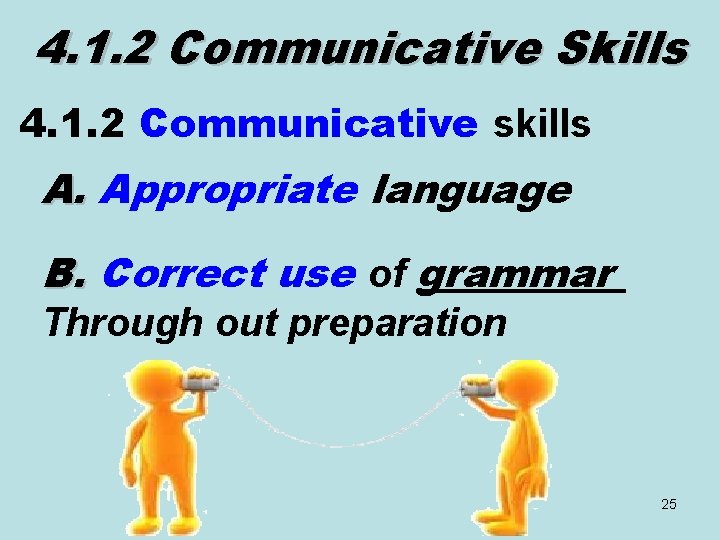
4. 1. 2 Communicative Skills 4. 1. 2 Communicative skills A. Appropriate language B. Correct use of grammar Through out preparation 25
Instructors Needs 4. 1. 3 Knowledge of subject 4. 1. 4 Thorough preparation 4. 1. 5 Professionalism action 4. 1. 6 Instructor/participant interaction
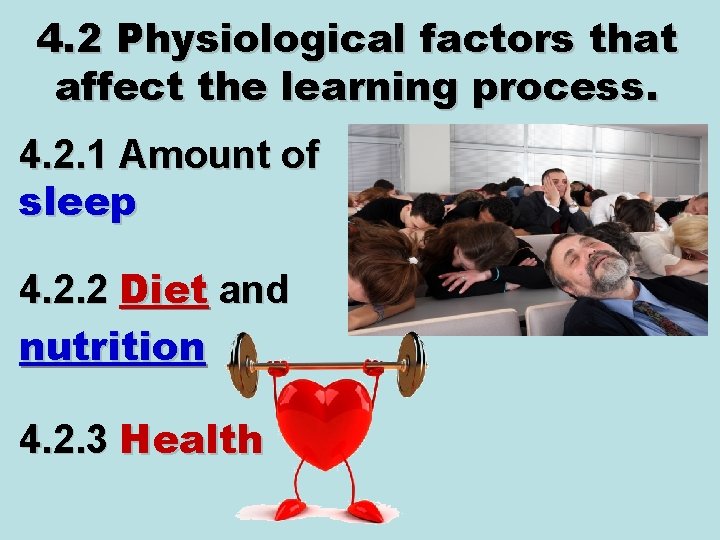
4. 2 Physiological factors that affect the learning process. 4. 2. 1 Amount of sleep 4. 2. 2 Diet and nutrition 4. 2. 3 Health
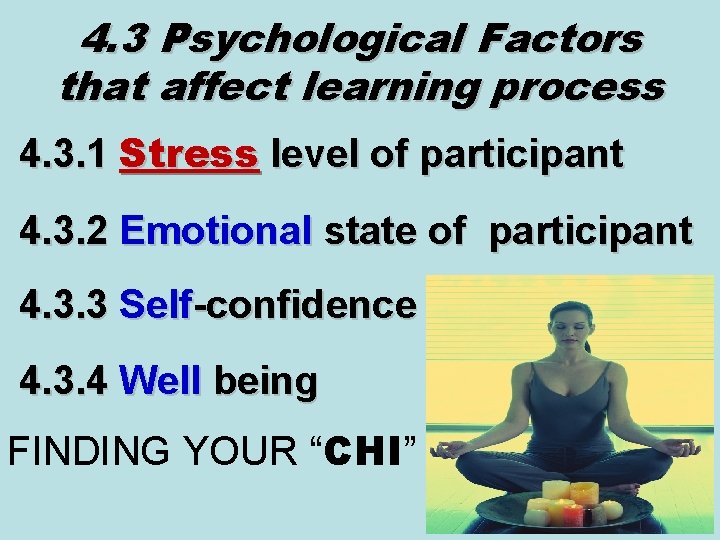
4. 3 Psychological Factors that affect learning process 4. 3. 1 Stress level of participant 4. 3. 2 Emotional state of participant 4. 3. 3 Self-confidence 4. 3. 4 Well being FINDING YOUR “CHI”
4. 4 Experiential Factors 4. 4. 1 Prior knowledge 4. 4. 2 Prior training TRAIN – the TRAINER
4. 5 Readiness Factors of Learner 4. 5. 1 Prior learning 4. 5. 2 Motivation 4. 5. 3 Ability to concentrate Ability to 4. 5. 5 Barriers
4. 6 Environmental Factors that affect learning process 4. 6. 1 4. 6. 2 Temperature 4. 6. 3 Sound quality 4. 6. 4 Instructional aids 4. 6. 5 Distractions 4. 6. 6 Room arrangement Lighting

TAKE A 10 -MINUTE BREAK
- Slides: 33