
Teuvo Kohonen Dr Eng Emeritus Professor of the

- Slides: 44
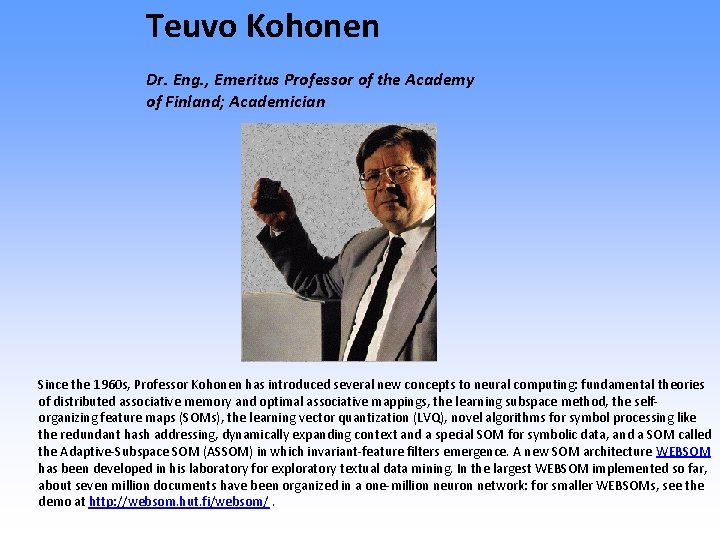
Teuvo Kohonen Dr. Eng. , Emeritus Professor of the Academy of Finland; Academician Since the 1960 s, Professor Kohonen has introduced several new concepts to neural computing: fundamental theories of distributed associative memory and optimal associative mappings, the learning subspace method, the selforganizing feature maps (SOMs), the learning vector quantization (LVQ), novel algorithms for symbol processing like the redundant hash addressing, dynamically expanding context and a special SOM for symbolic data, and a SOM called the Adaptive-Subspace SOM (ASSOM) in which invariant-feature filters emergence. A new SOM architecture WEBSOM has been developed in his laboratory for exploratory textual data mining. In the largest WEBSOM implemented so far, about seven million documents have been organized in a one-million neuron network: for smaller WEBSOMs, see the demo at http: //websom. hut. fi/websom/.
Gender detection
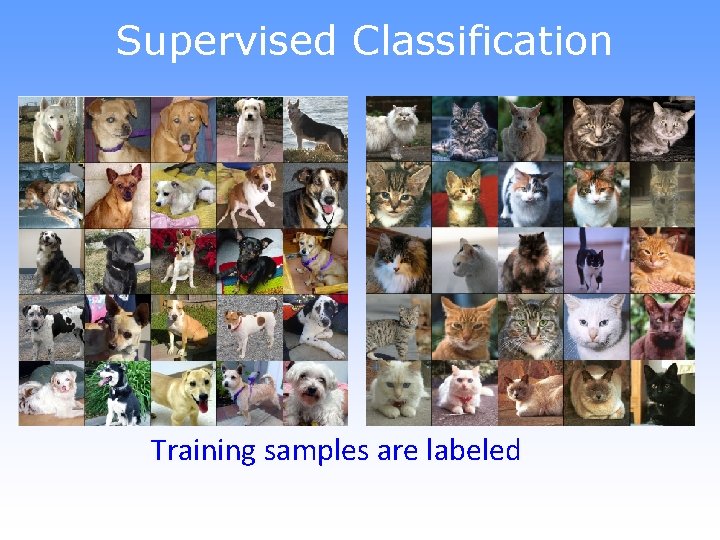
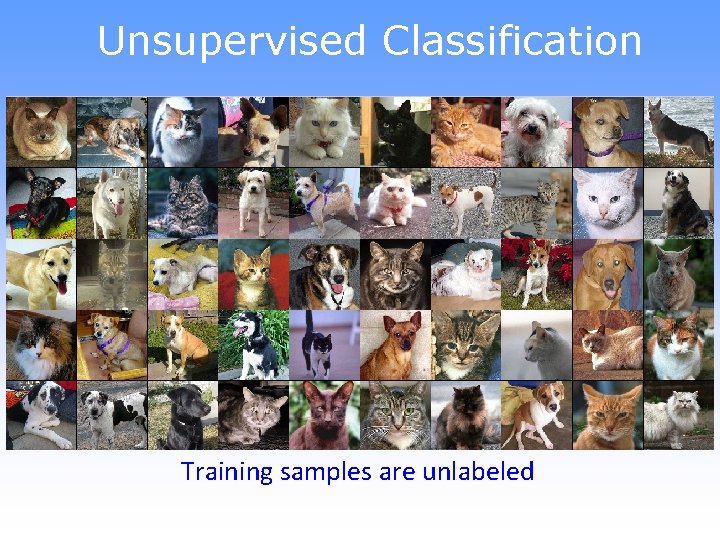
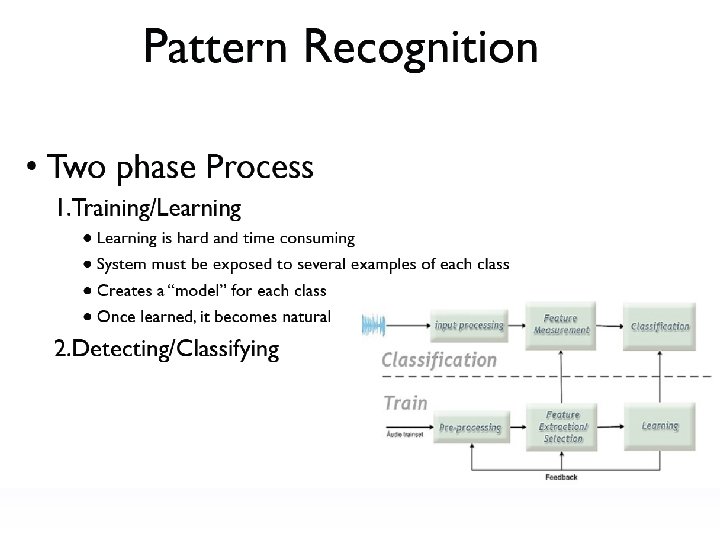
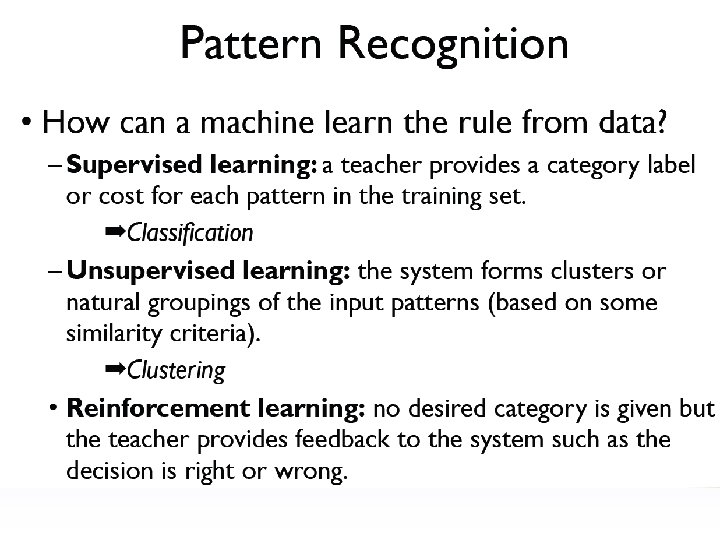
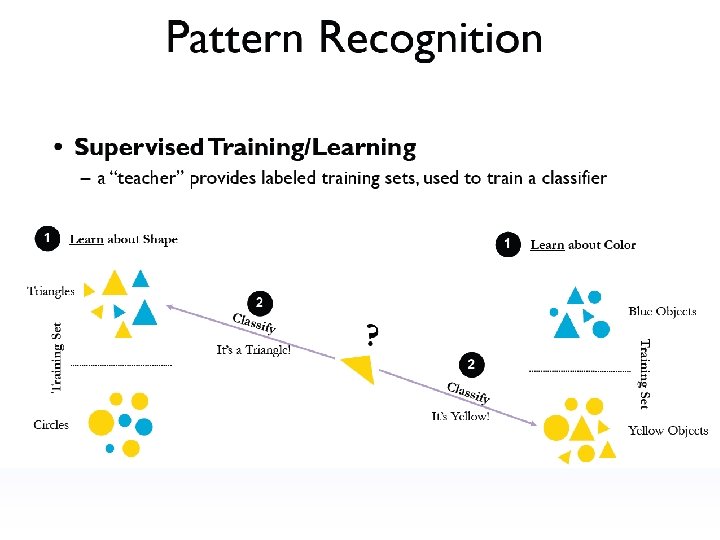
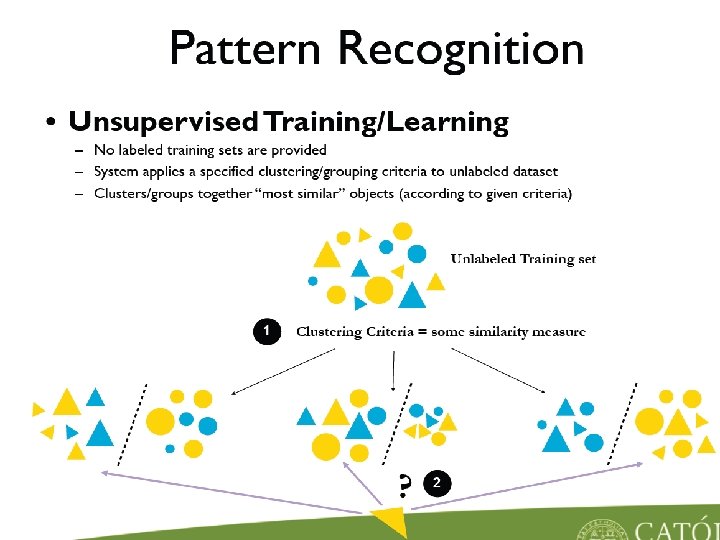
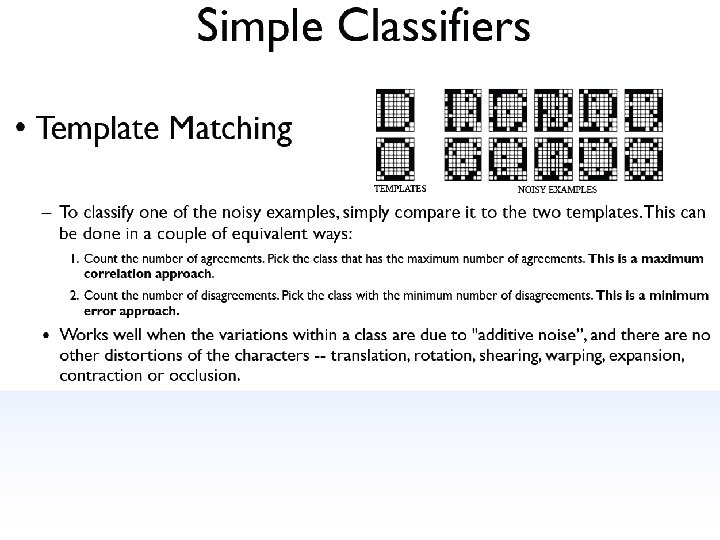
The classification or description scheme is usually based on the availability of a set of patterns that have already been classified or described. This set of patterns is termed the training set, and the resulting learning strategy is characterized as supervised learning. Learning can also be unsupervised, in the sense that the system is not given an a priori labeling of patterns, instead it itself establishes the classes based on the statistical regularities of the patterns.
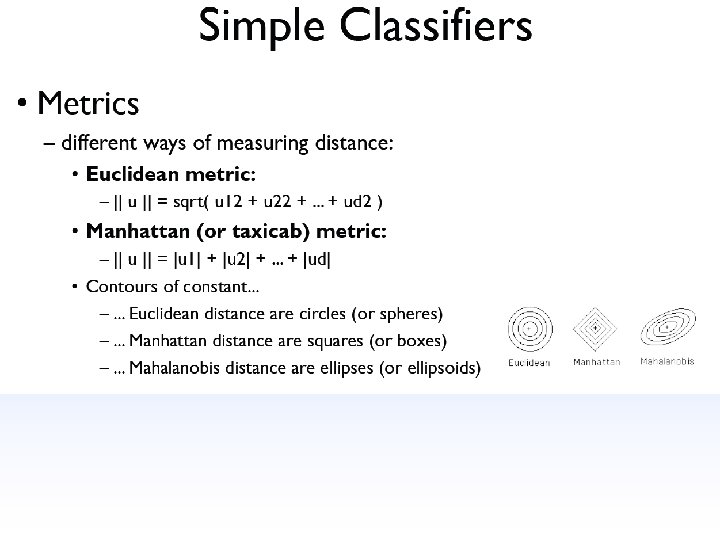
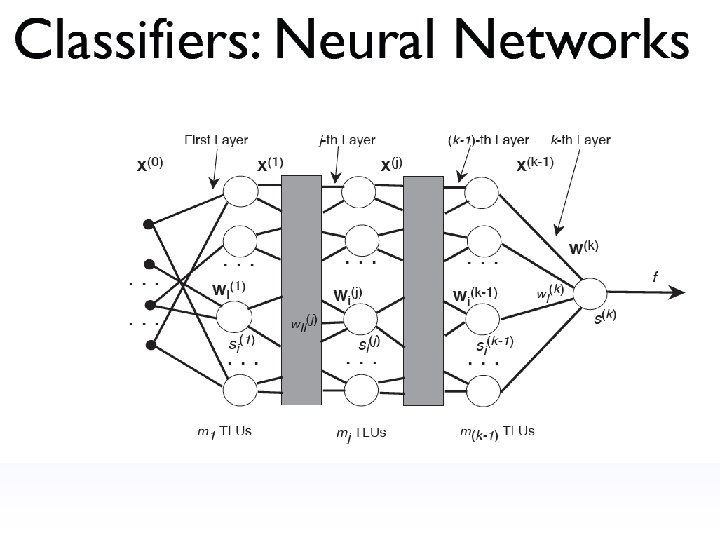
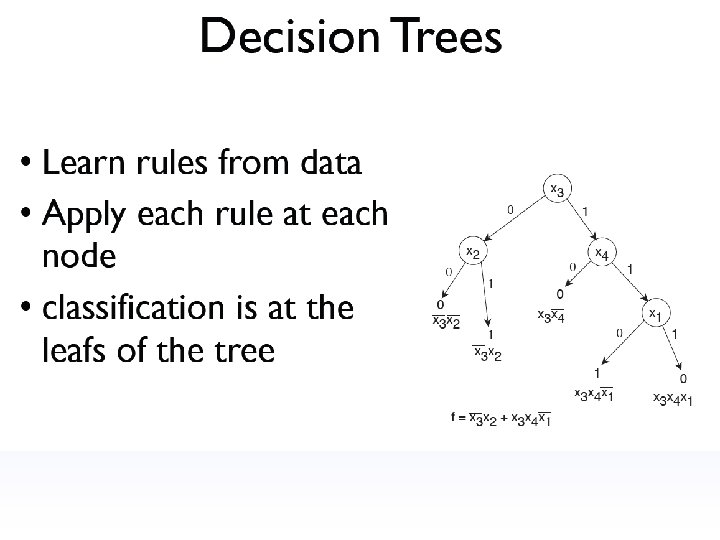
The classification or description scheme usually uses one of the following approaches: statistical (or decision theoretic) or syntactic (or structural). Statistical pattern recognition is based on statistical characterizations of patterns, assuming that the patterns are generated by a probabilistic system. Syntactical (or structural) pattern recognition is based on the structural interrelationships of features. A wide range of algorithms can be applied for pattern recognition, from simple naive Bayes classifiers and neural networks to the powerful KNN decision rules.
Pattern recognition is more complex when templates are used to generate variants. For example, in English, sentences often follow the "N-VP" (noun - verb phrase) pattern, but some knowledge of the English language is required to detect the pattern. Pattern recognition is studied in many fields, including psychology, ethology, cognitive science and computer science. Holographic associative memory is another type of pattern matching where a large set of learned patterns based on cognitive meta-weight is searched for a small set of target patterns.
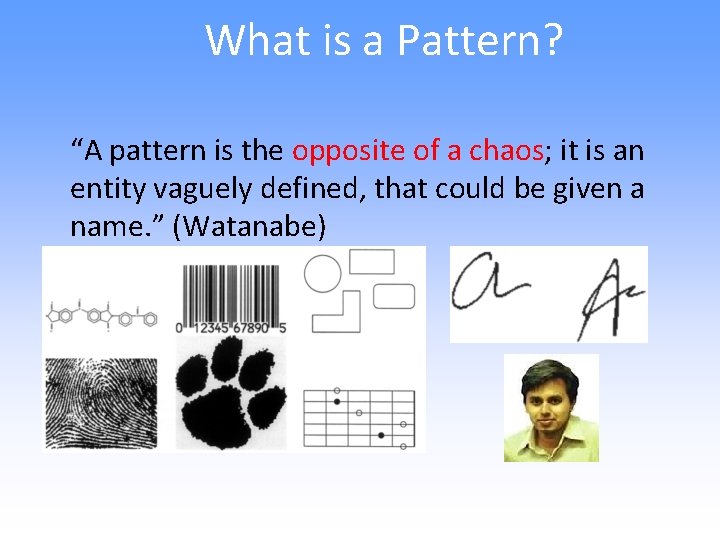
What is a Pattern? “A pattern is the opposite of a chaos; it is an entity vaguely defined, that could be given a name. ” (Watanabe)
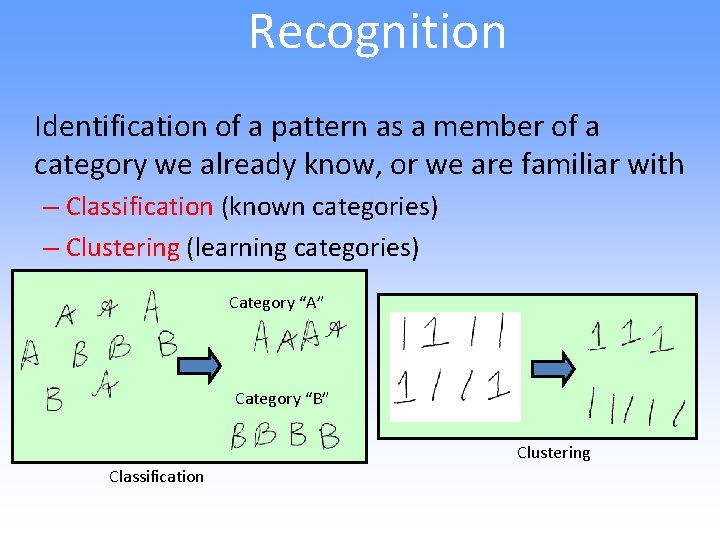
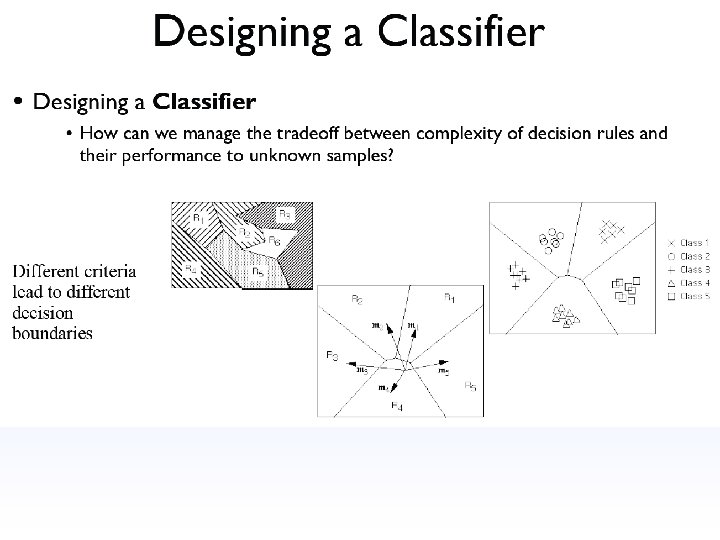
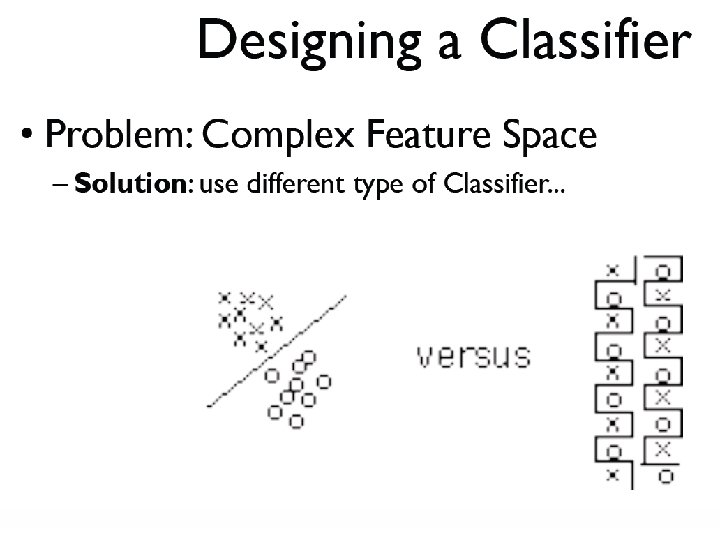
Recognition Identification of a pattern as a member of a category we already know, or we are familiar with – Classification (known categories) – Clustering (learning categories) Category “A” Category “B” Clustering Classification
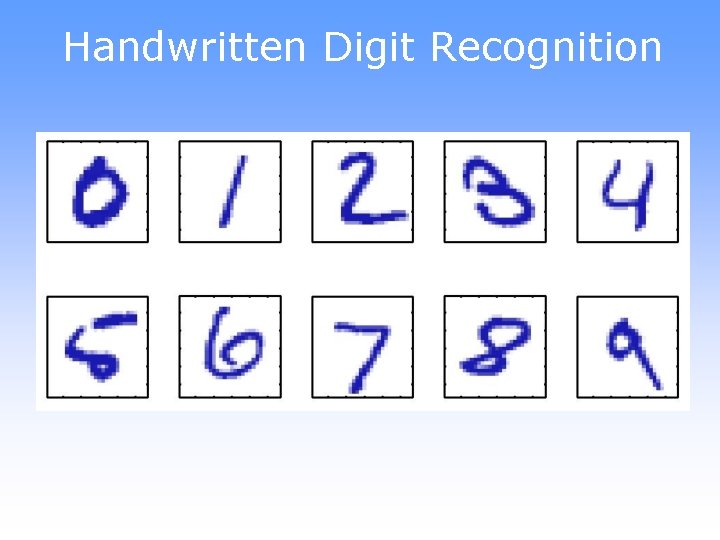
Handwritten Digit Recognition
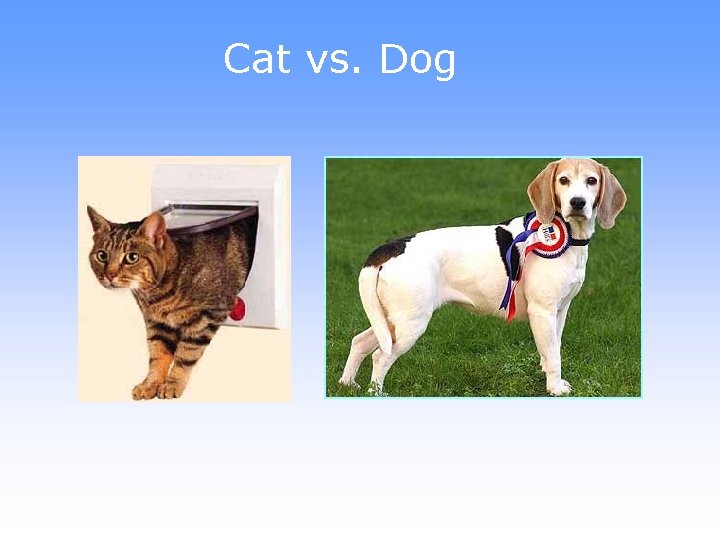
Cat vs. Dog
Supervised Classification Training samples are labeled
Unsupervised Classification Training samples are unlabeled
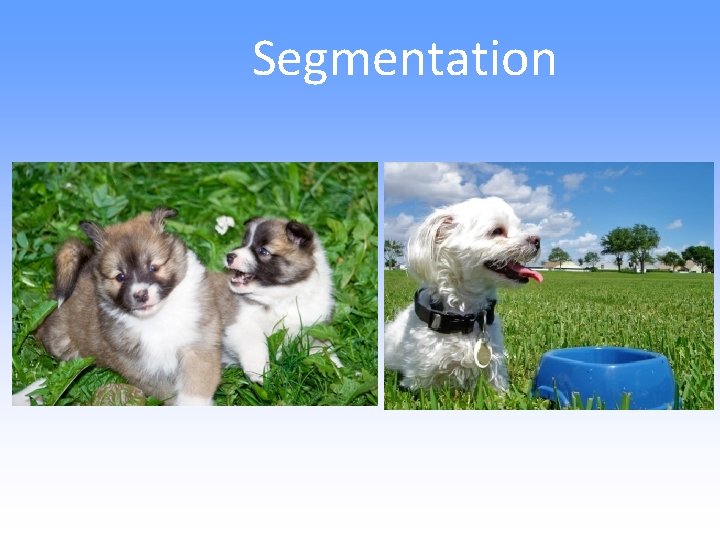
Segmentation
Pattern Recognition • Given an input pattern, make a decision about the “category” or “class” of the pattern • Pattern recognition is needed in designing almost all automated systems • Other related disciplines: data mining, machine learning, computer vision, neural networks, statistical decision theory • This course will present various techniques to solve P. R. problems and discuss their relative strengths and weaknesses
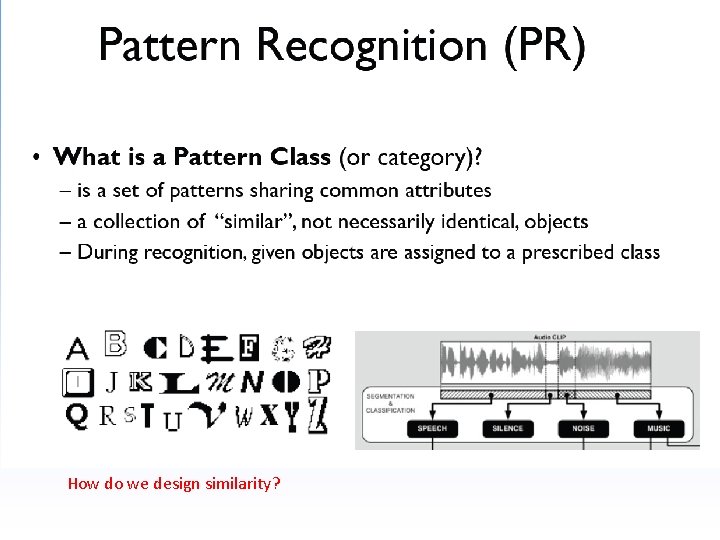
How do we design similarity?
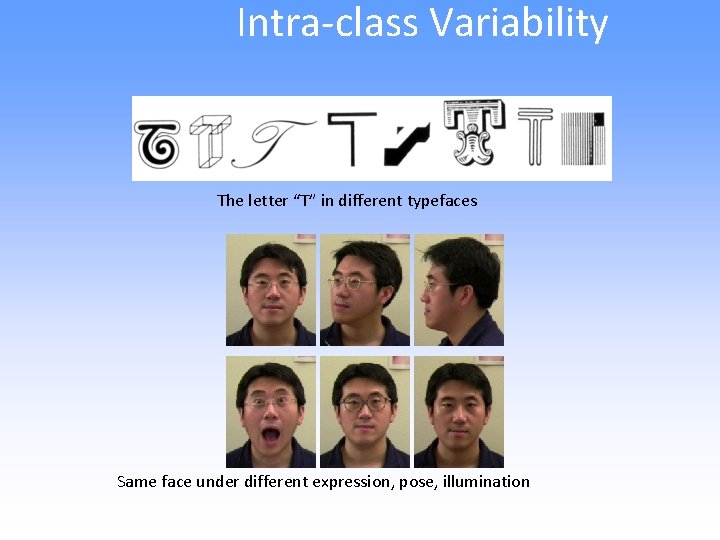
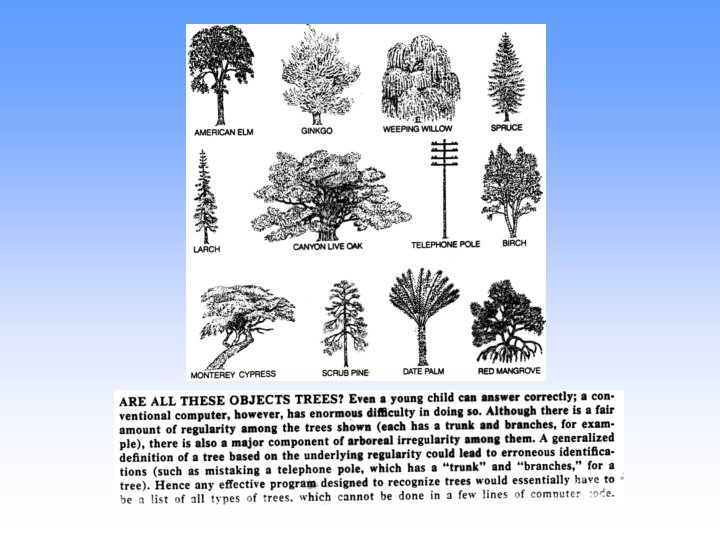
Intra-class Variability The letter “T” in different typefaces Same face under different expression, pose, illumination
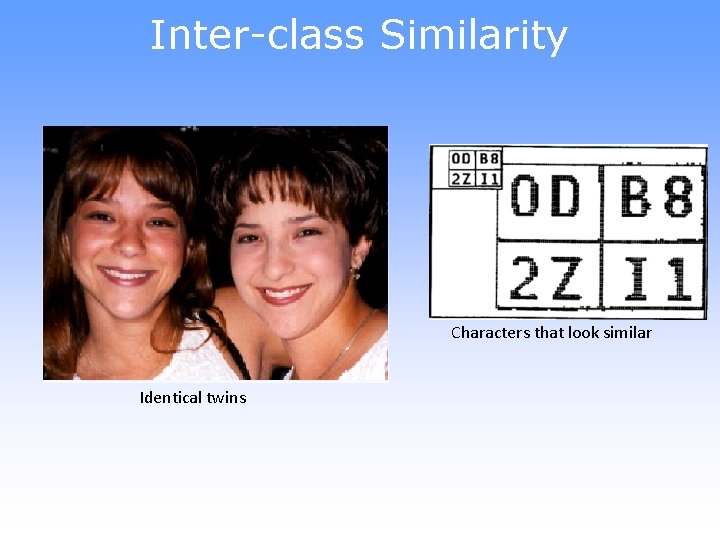
Inter-class Similarity Characters that look similar Identical twins
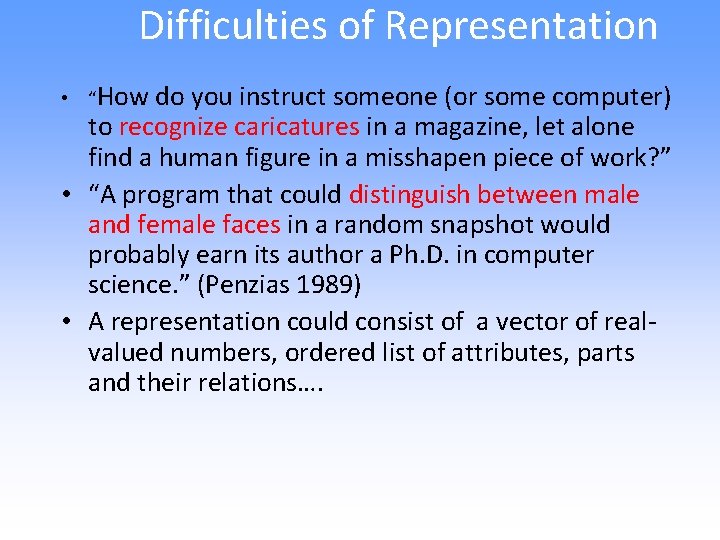
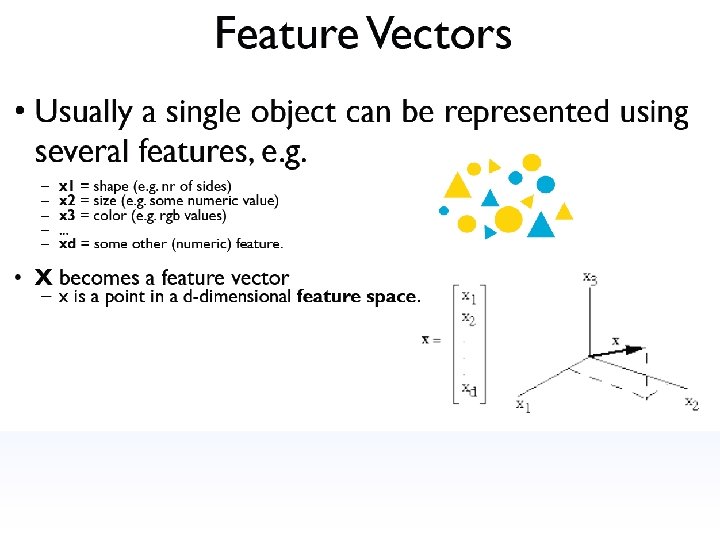
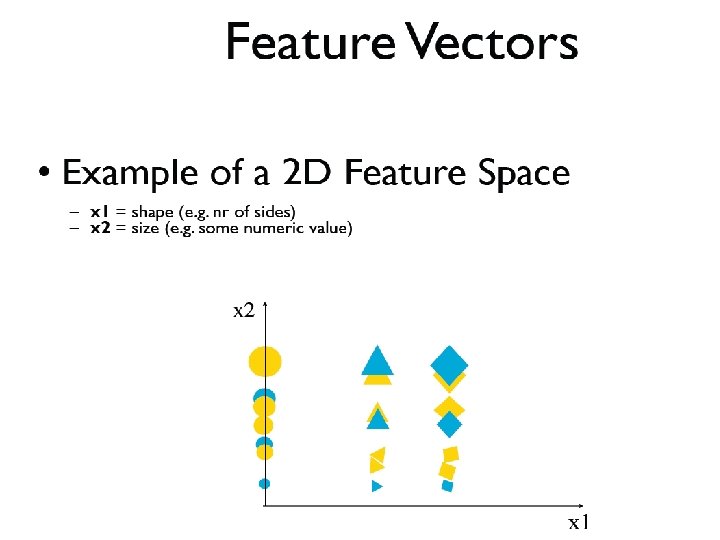
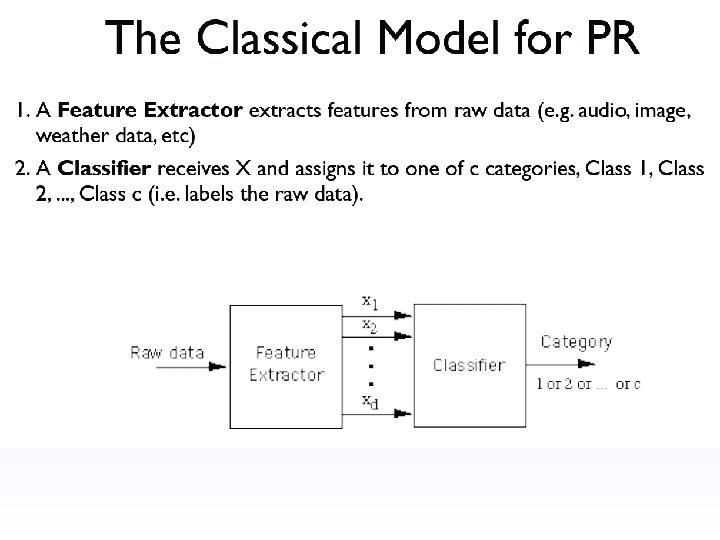
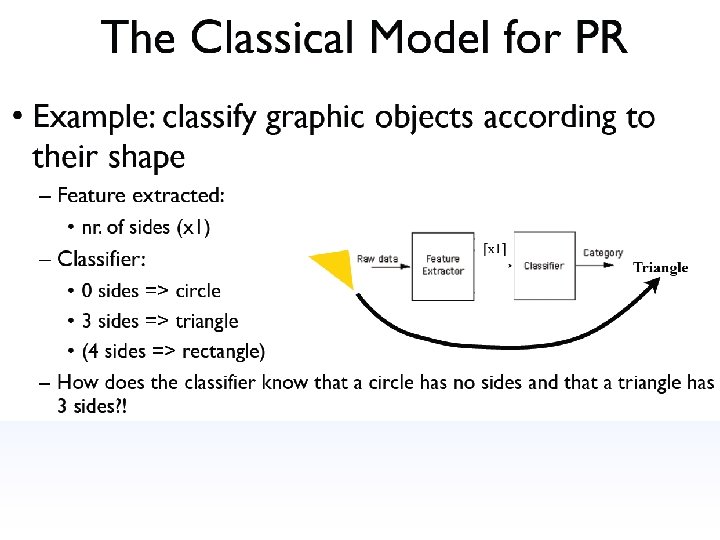
Difficulties of Representation • “How do you instruct someone (or some computer) to recognize caricatures in a magazine, let alone find a human figure in a misshapen piece of work? ” • “A program that could distinguish between male and female faces in a random snapshot would probably earn its author a Ph. D. in computer science. ” (Penzias 1989) • A representation could consist of a vector of realvalued numbers, ordered list of attributes, parts and their relations….
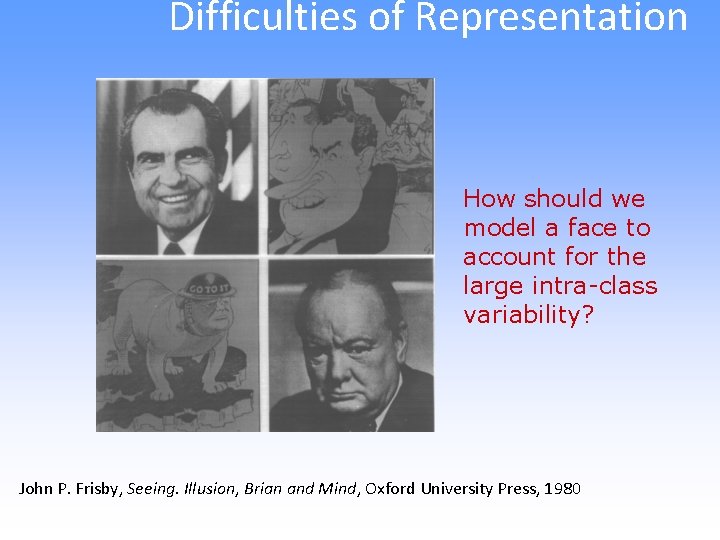
Difficulties of Representation How should we model a face to account for the large intra-class variability? John P. Frisby, Seeing. Illusion, Brian and Mind, Oxford University Press, 1980
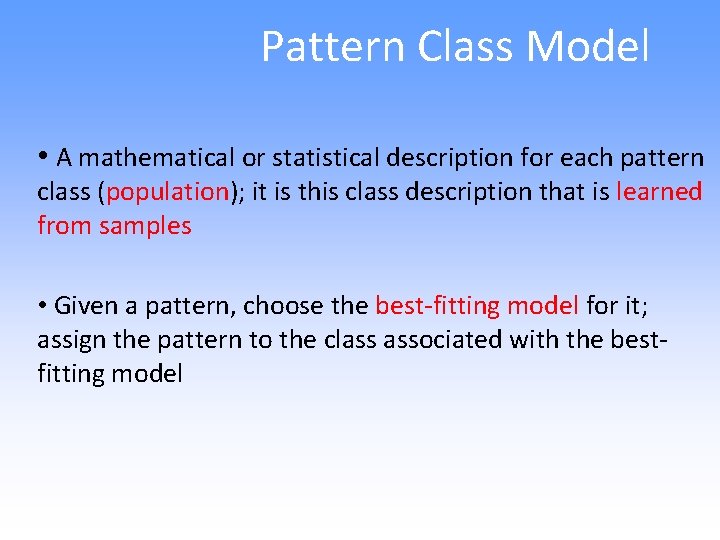
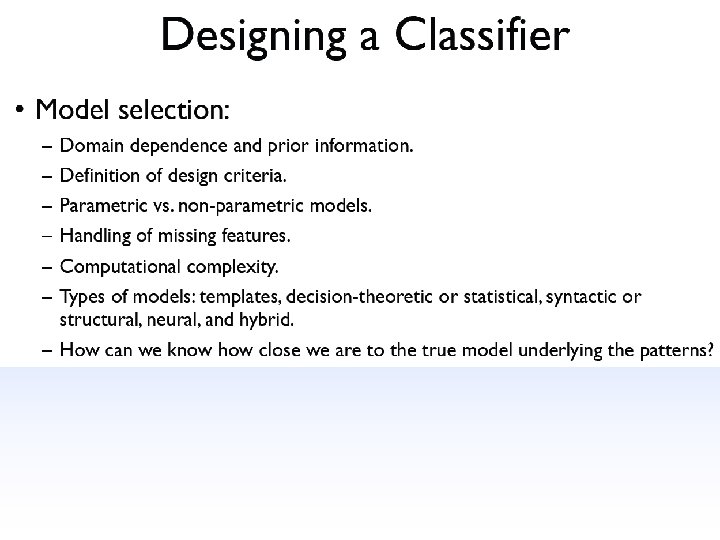
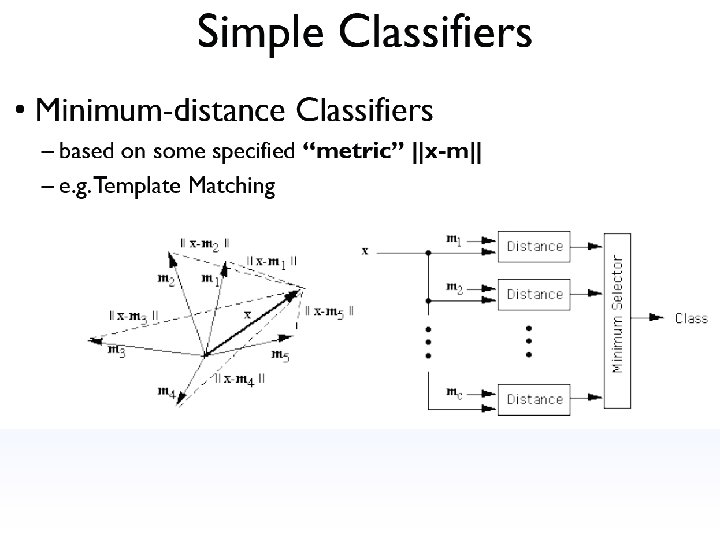
Pattern Class Model • A mathematical or statistical description for each pattern class (population); it is this class description that is learned from samples • Given a pattern, choose the best-fitting model for it; assign the pattern to the class associated with the bestfitting model
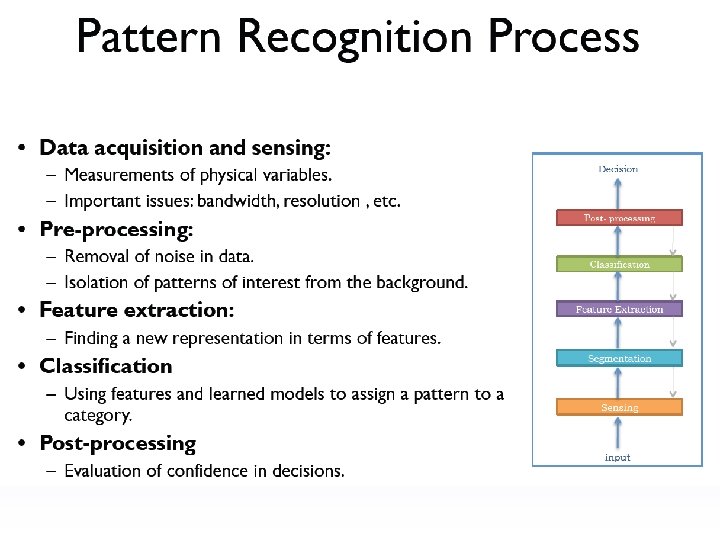
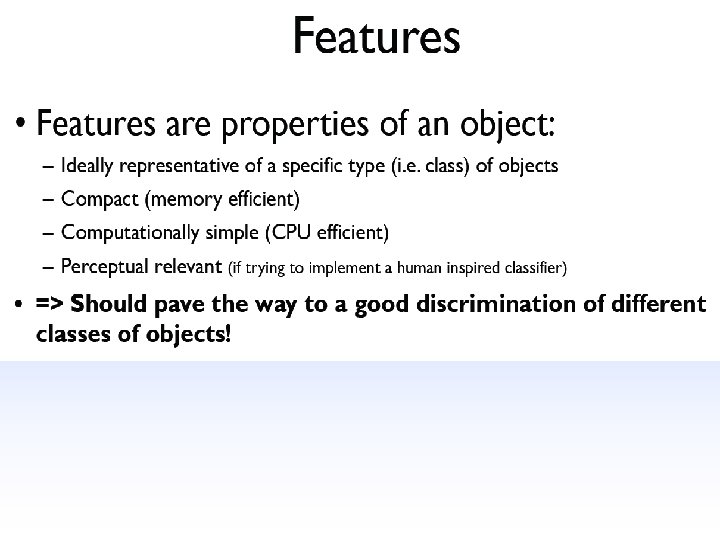
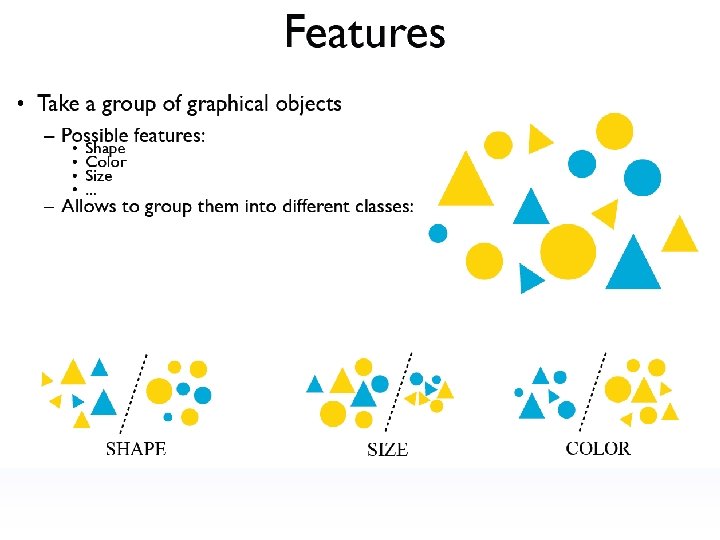
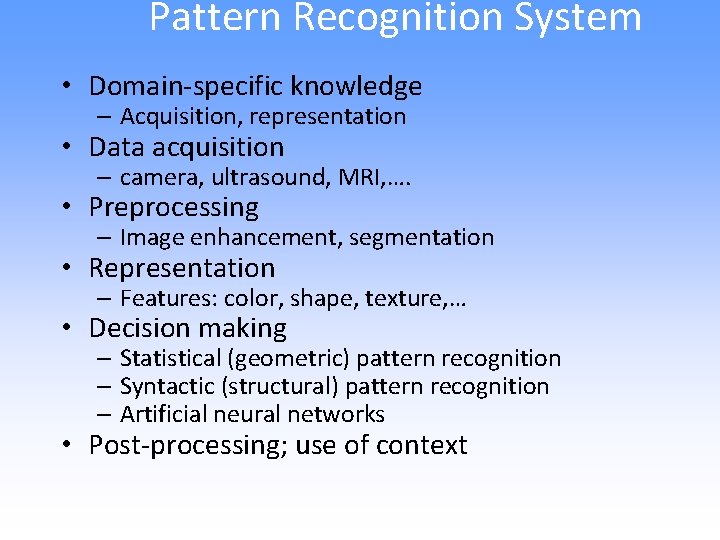
Pattern Recognition System • Domain-specific knowledge – Acquisition, representation • Data acquisition – camera, ultrasound, MRI, …. • Preprocessing – Image enhancement, segmentation • Representation – Features: color, shape, texture, … • Decision making – Statistical (geometric) pattern recognition – Syntactic (structural) pattern recognition – Artificial neural networks • Post-processing; use of context