
Tetanus 18 December 2021 Coffs Harbour Divisional Training
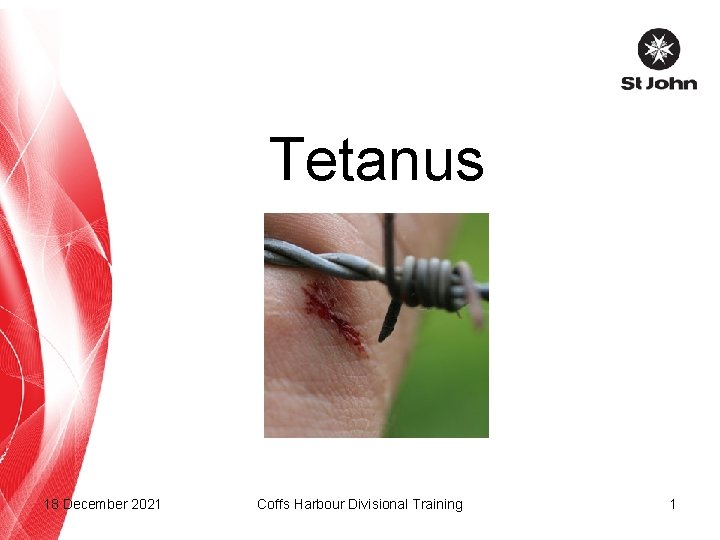
Tetanus 18 December 2021 Coffs Harbour Divisional Training 1
What is Tetanus? • The term Tetanus comes from the Ancient Greek word "taut" or "to stretch“. • Tetanus may also be known as ‘lockjaw’. 18 December 2021 Coffs Harbour Divisional Training 2
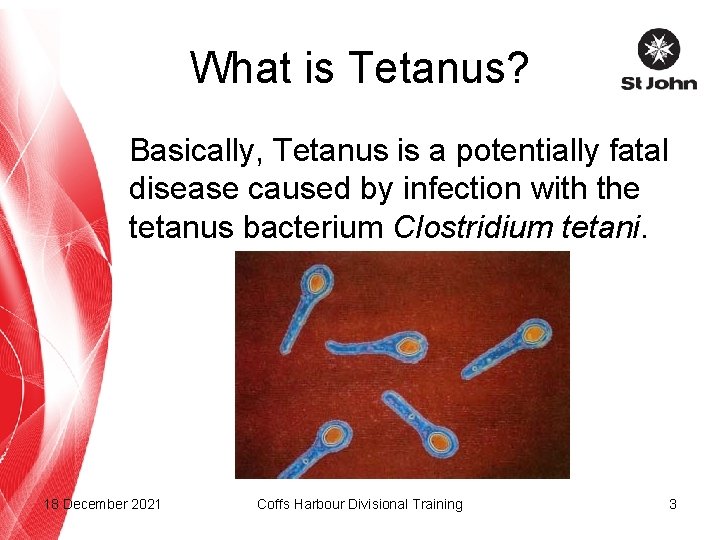
What is Tetanus? Basically, Tetanus is a potentially fatal disease caused by infection with the tetanus bacterium Clostridium tetani. 18 December 2021 Coffs Harbour Divisional Training 3
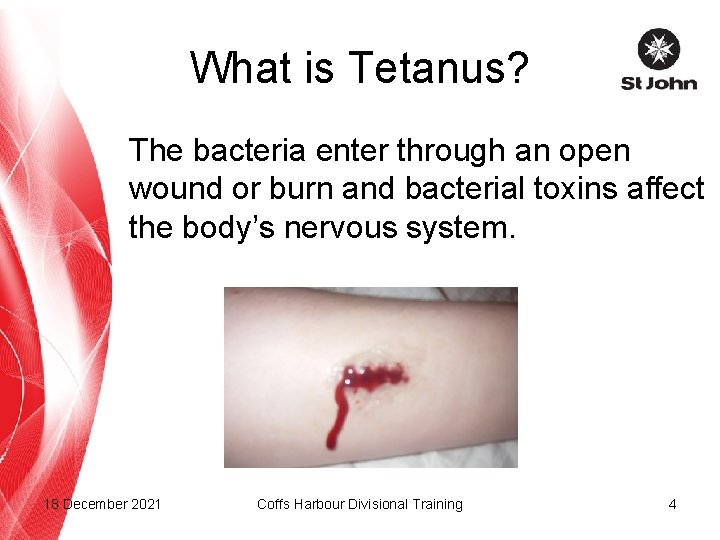
What is Tetanus? The bacteria enter through an open wound or burn and bacterial toxins affect the body’s nervous system. 18 December 2021 Coffs Harbour Divisional Training 4

Rust? Tetanus is often associated with rust, especially rusty nails, but this concept is a bit misleading. 18 December 2021 Coffs Harbour Divisional Training 5
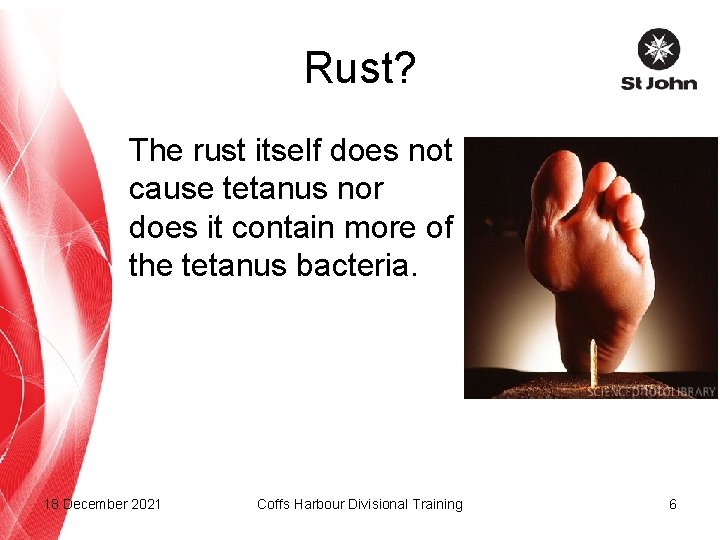
Rust? The rust itself does not cause tetanus nor does it contain more of the tetanus bacteria. 18 December 2021 Coffs Harbour Divisional Training 6
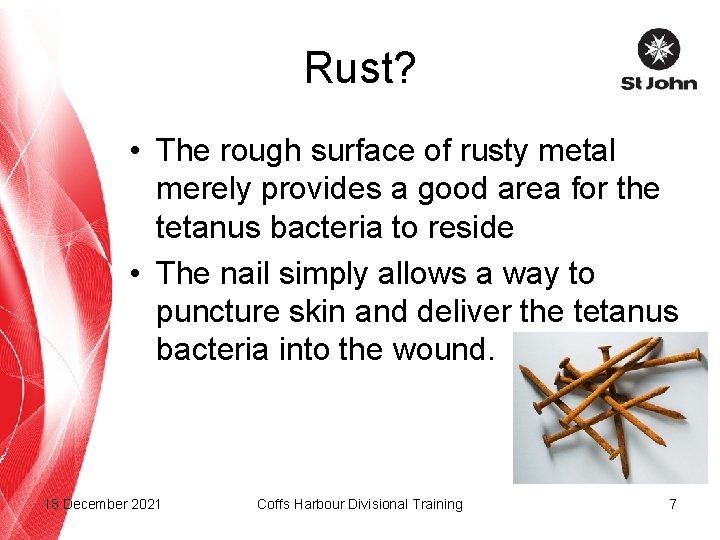
Rust? • The rough surface of rusty metal merely provides a good area for the tetanus bacteria to reside • The nail simply allows a way to puncture skin and deliver the tetanus bacteria into the wound. 18 December 2021 Coffs Harbour Divisional Training 7
Tetanus in Australia Tetanus is rare in Australia, and occurs mainly in older adults who have never been vaccinated against the disease or were vaccinated a long time ago 18 December 2021 Coffs Harbour Divisional Training 8
Tetanus in Australia Often adults become infected through a tetanus-prone wound or travelling to countries where tetanus is more prominent. 18 December 2021 Coffs Harbour Divisional Training 9
How is it spread? • Usually occurs after an incubation period of 3 to 21 days. • May occur through unnoticed punctures to the skin that are contaminated with soil, dust or manure) 18 December 2021 Coffs Harbour Divisional Training 10
How is it spread? • Through major injuries such as open fractures, dirty or deep penetrating wounds, and burns. • Tetanus is not passed on from one person to another. 18 December 2021 Coffs Harbour Divisional Training 11
How is it prevented? • Tetanus vaccine is given at 2, 4 and 6 months of age, with boosting doses at 4 years, between 15 to 17 years, and at 50 years of age. • Adults who haven't had a booster in the last ten years should get one when they turn 50. 18 December 2021 Coffs Harbour Divisional Training 12
How is it prevented? Open fractures, deep penetrating wounds, contaminated wounds or burns • disinfect the wound and seek medical attention • receive a boosting dose of tetanus vaccine if more than 5 years have elapsed since their last dose. 18 December 2021 Coffs Harbour Divisional Training 13
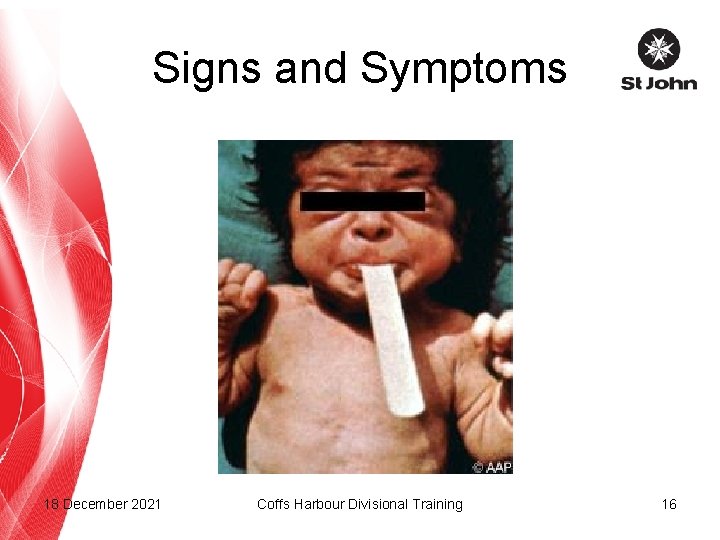
Signs and Symptoms • Stiffness of the jaw (lockjaw, often the first sign) • Difficulty swallowing • A stiff neck • Irritability and headaches • Chills and fever • Generalised stiffness • Spasms – local or general 18 December 2021 Coffs Harbour Divisional Training 14
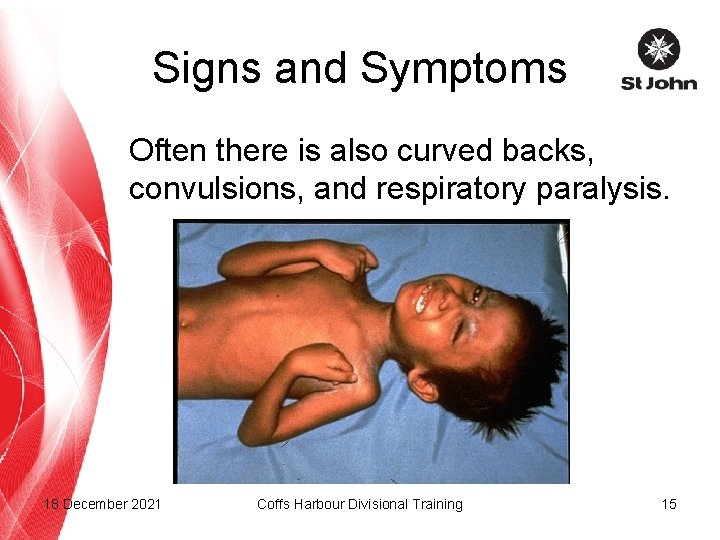
Signs and Symptoms Often there is also curved backs, convulsions, and respiratory paralysis. 18 December 2021 Coffs Harbour Divisional Training 15
Signs and Symptoms 18 December 2021 Coffs Harbour Divisional Training 16
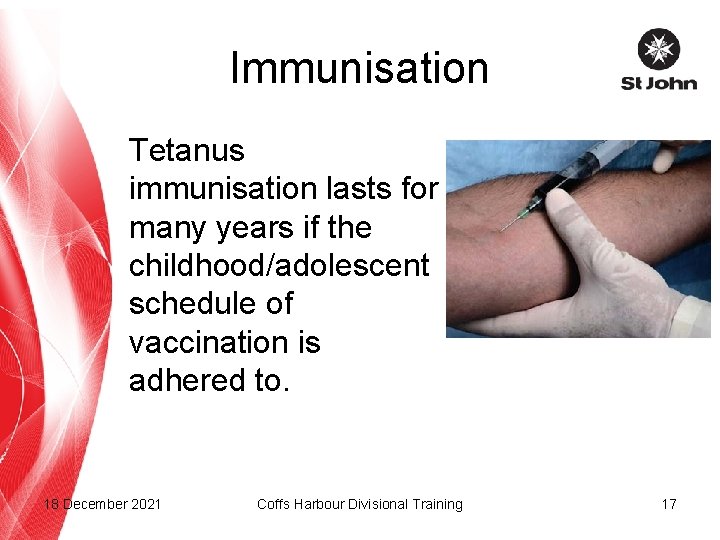
Immunisation Tetanus immunisation lasts for many years if the childhood/adolescent schedule of vaccination is adhered to. 18 December 2021 Coffs Harbour Divisional Training 17
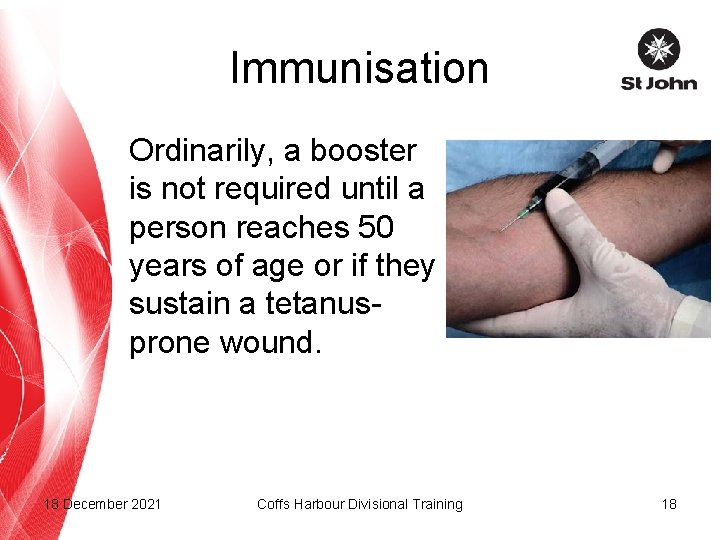
Immunisation Ordinarily, a booster is not required until a person reaches 50 years of age or if they sustain a tetanusprone wound. 18 December 2021 Coffs Harbour Divisional Training 18
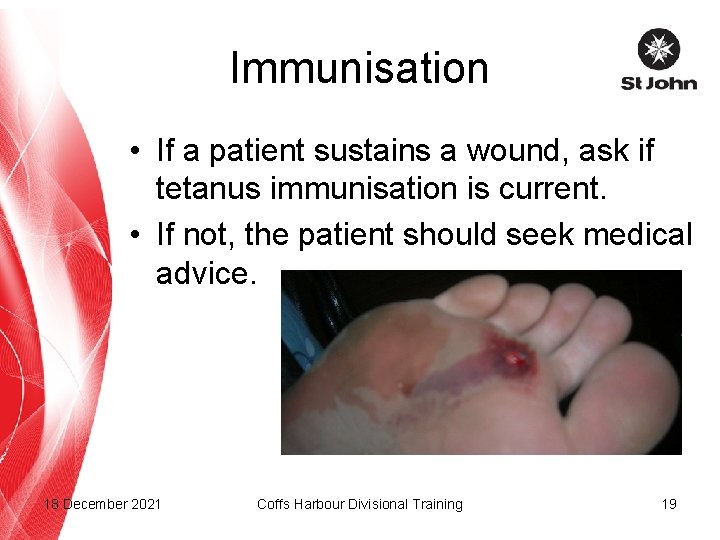
Immunisation • If a patient sustains a wound, ask if tetanus immunisation is current. • If not, the patient should seek medical advice. 18 December 2021 Coffs Harbour Divisional Training 19
Immunisation Standard practice in many places is to give the booster to any patient with a puncture wound who is uncertain of when he or she was last vaccinated. 18 December 2021 Coffs Harbour Divisional Training 20
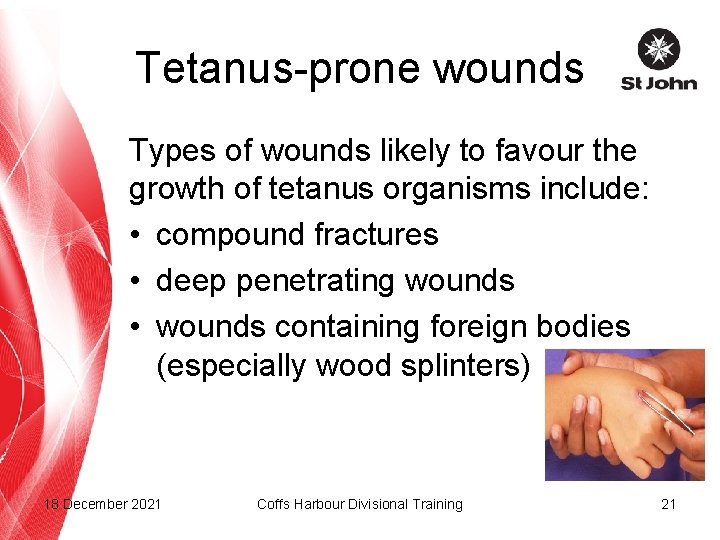
Tetanus-prone wounds Types of wounds likely to favour the growth of tetanus organisms include: • compound fractures • deep penetrating wounds • wounds containing foreign bodies (especially wood splinters) 18 December 2021 Coffs Harbour Divisional Training 21
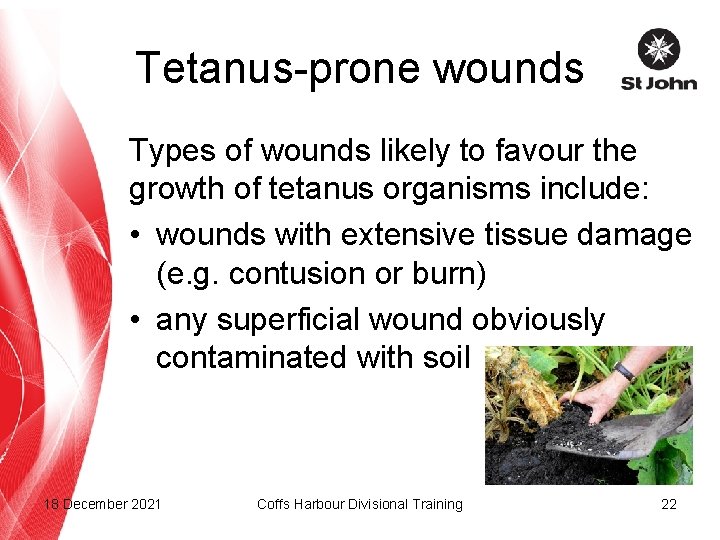
Tetanus-prone wounds Types of wounds likely to favour the growth of tetanus organisms include: • wounds with extensive tissue damage (e. g. contusion or burn) • any superficial wound obviously contaminated with soil 18 December 2021 Coffs Harbour Divisional Training 22
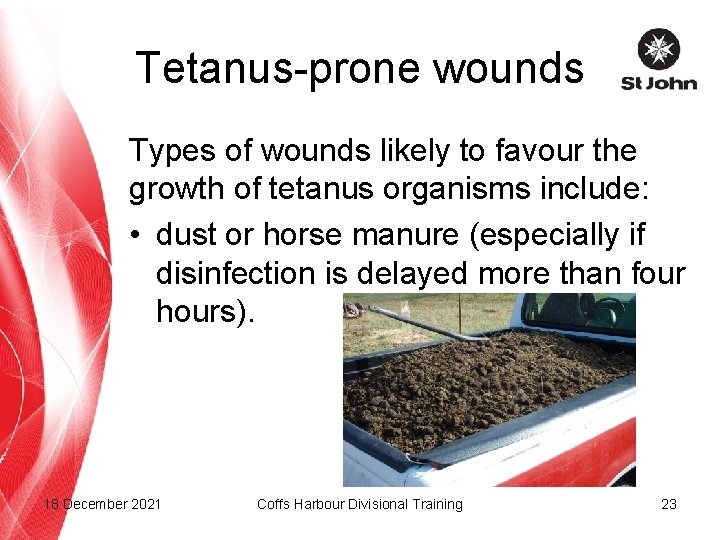
Tetanus-prone wounds Types of wounds likely to favour the growth of tetanus organisms include: • dust or horse manure (especially if disinfection is delayed more than four hours). 18 December 2021 Coffs Harbour Divisional Training 23
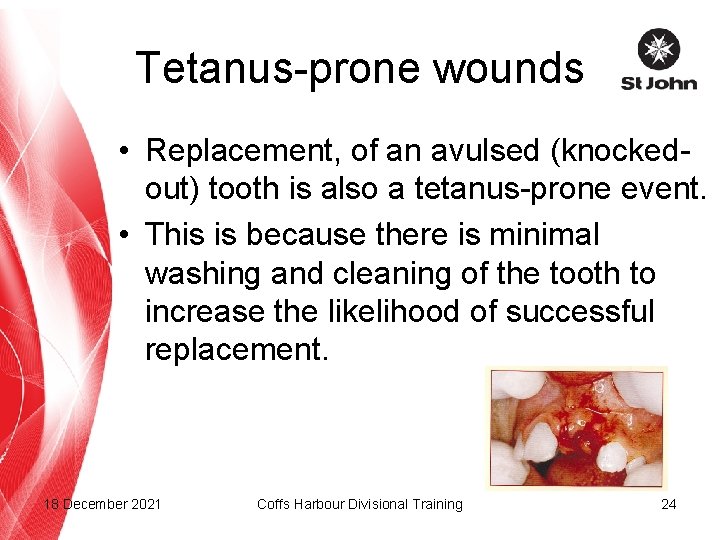
Tetanus-prone wounds • Replacement, of an avulsed (knockedout) tooth is also a tetanus-prone event. • This is because there is minimal washing and cleaning of the tooth to increase the likelihood of successful replacement. 18 December 2021 Coffs Harbour Divisional Training 24

Questions 18 December 2021 Coffs Harbour Divisional Training 25
- Slides: 25