
Testing Stellar Evolution Models in the Gaia Era



![Stellar Modeling Challenges M 92 [Fe/H]=-2. 2 �� solar=1. 9258 (DSEP) Other subdwarfs have](https://slidetodoc.com/presentation_image_h2/a4a300bab4a510a17427822a83b4fb27/image-7.jpg "Stellar Modeling Challenges M 92 [Fe/H]=-2. 2 �� solar=1. 9258 (DSEP) Other subdwarfs have")



![Metal-poor Models Only the most metal poor stars shown ([Fe/H]<-1. 8) Left panel –](https://slidetodoc.com/presentation_image_h2/a4a300bab4a510a17427822a83b4fb27/image-20.jpg "Metal-poor Models Only the most metal poor stars shown ([Fe/H]<-1. 8) Left panel –")
- Slides: 27
Testing Stellar Evolution Models in the Gaia Era CHRISTINA GILLIGAN
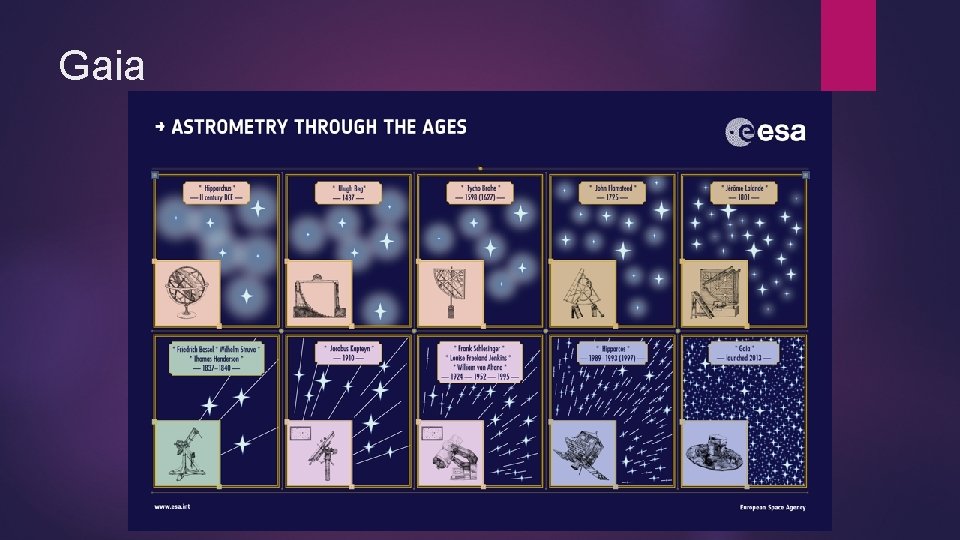
Gaia
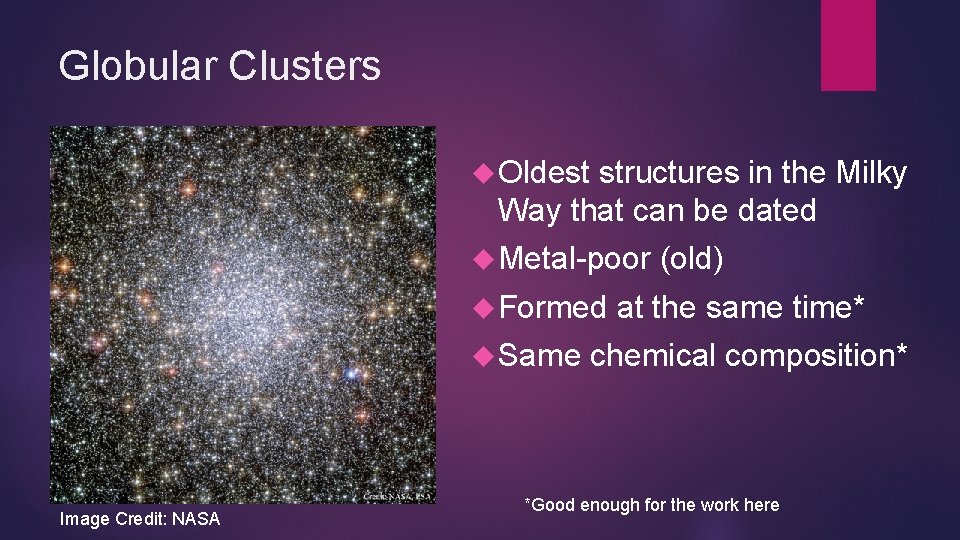
Globular Clusters Oldest structures in the Milky Way that can be dated Metal-poor Formed Same Image Credit: NASA (old) at the same time* chemical composition* *Good enough for the work here
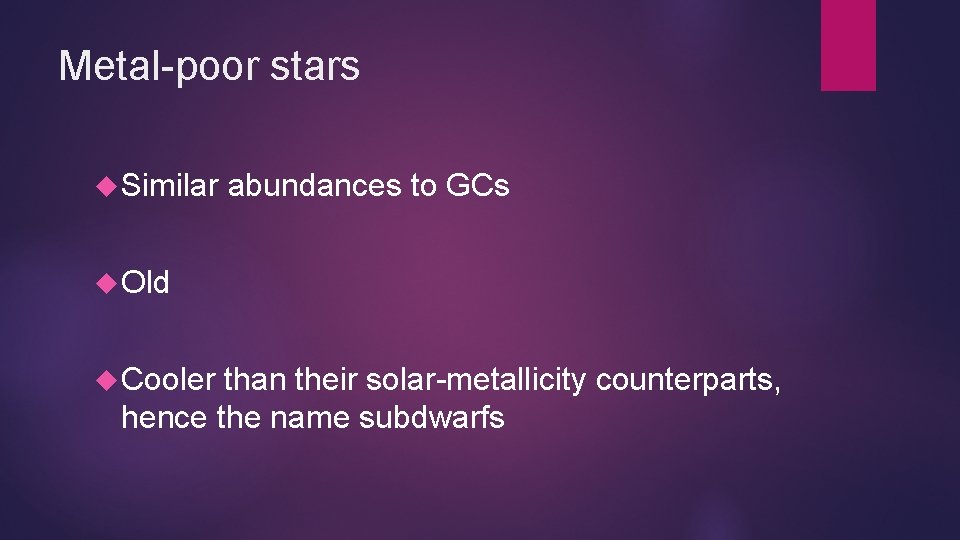
Metal-poor stars Similar abundances to GCs Old Cooler than their solar-metallicity counterparts, hence the name subdwarfs
Stellar Modeling Challenges ALL STARS ARE NOT THE SUN Image Credit: NASA
Stellar Modeling Challenges ALL STARS ARE NOT THE SUN Image Credit: NASA
Stellar Modeling Challenges M 92 [Fe/H]=-2. 2 �� solar=1. 9258 (DSEP) Other subdwarfs have much lower �� MLT
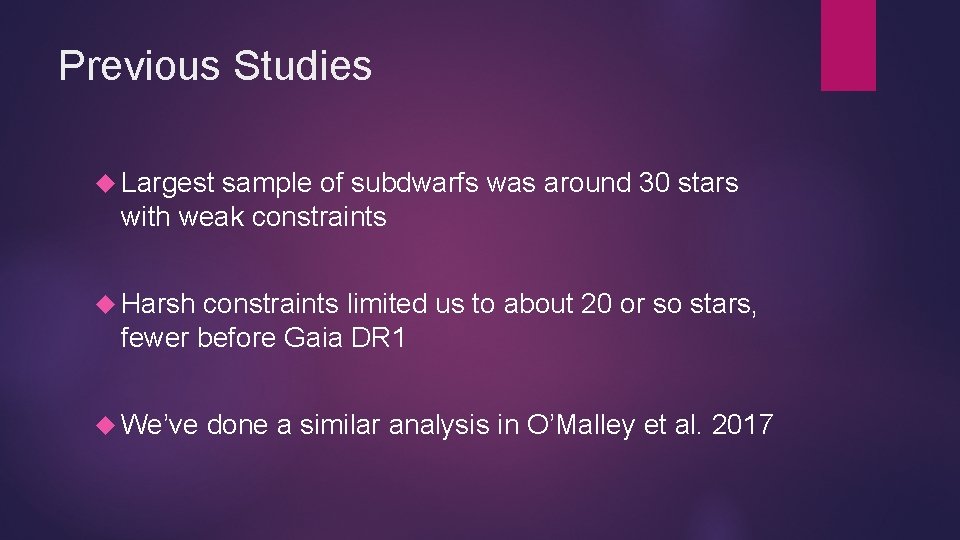
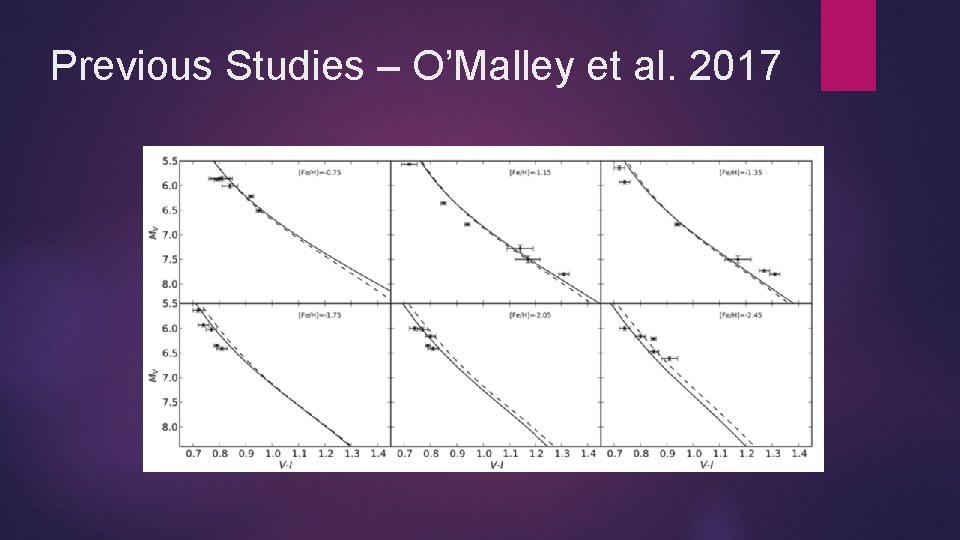
Previous Studies Largest sample of subdwarfs was around 30 stars with weak constraints Harsh constraints limited us to about 20 or so stars, fewer before Gaia DR 1 We’ve done a similar analysis in O’Malley et al. 2017
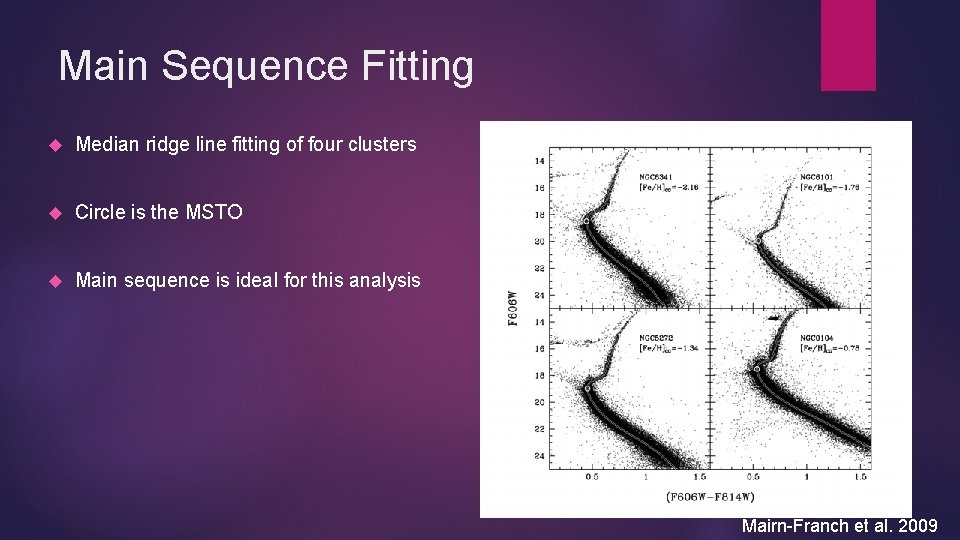
Main Sequence Fitting Median ridge line fitting of four clusters Circle is the MSTO Main sequence is ideal for this analysis Mairn-Franch et al. 2009
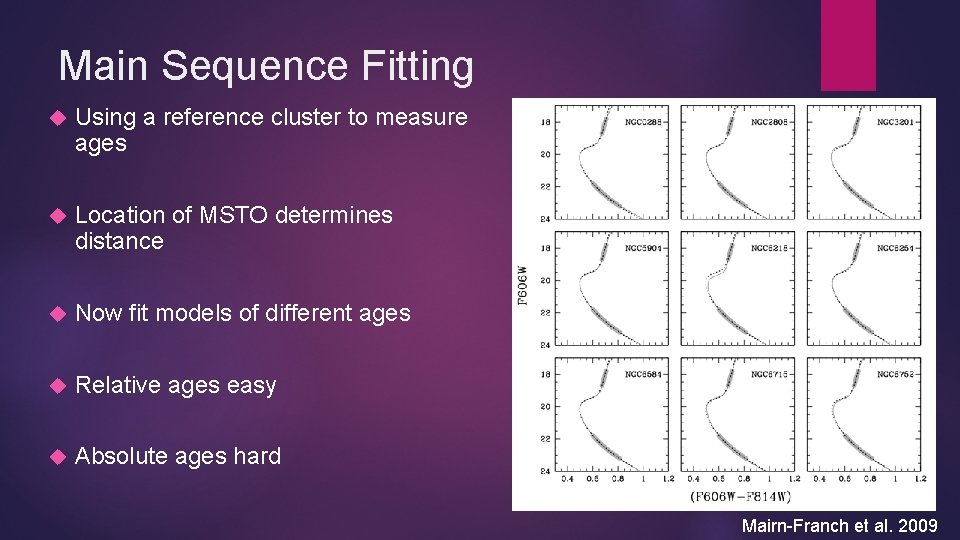
Main Sequence Fitting Using a reference cluster to measure ages Location of MSTO determines distance Now fit models of different ages Relative ages easy Absolute ages hard Mairn-Franch et al. 2009
Previous Studies – O’Malley et al. 2017
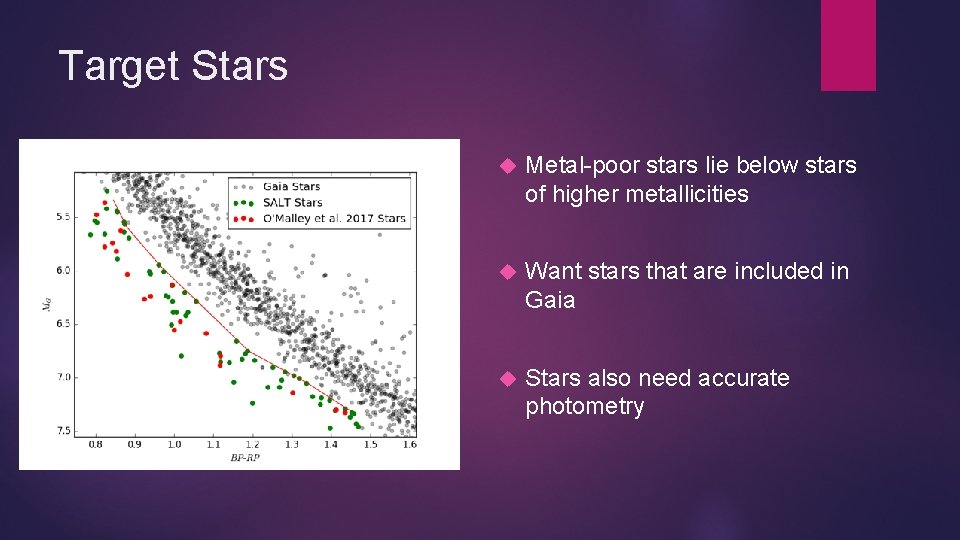
Target Stars Metal-poor stars lie below stars of higher metallicities Want stars that are included in Gaia Stars also need accurate photometry
SALT HRS Spans 2+ semesters SALT HRS in HR mode 51. 2 observing hours 67 total hours Image Credit: s. ALT
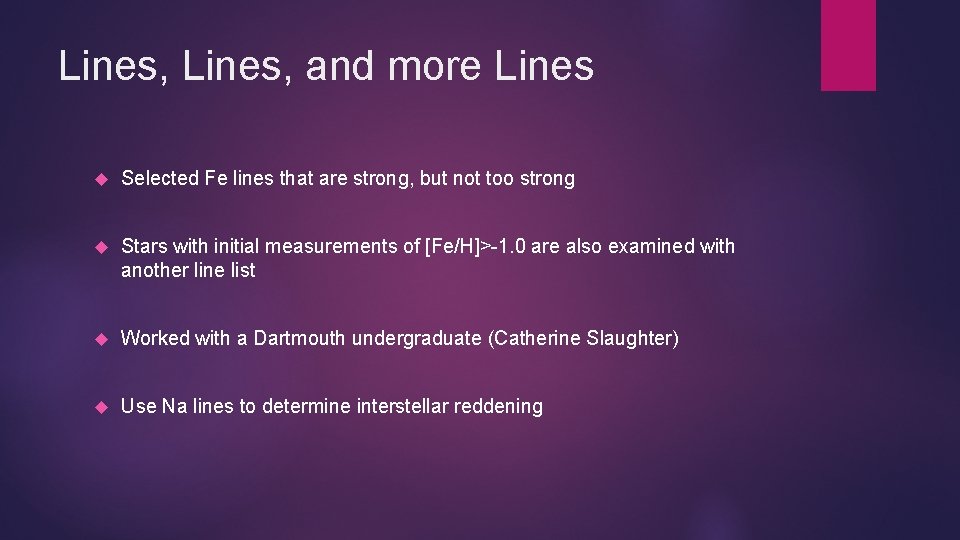
Lines, and more Lines Selected Fe lines that are strong, but not too strong Stars with initial measurements of [Fe/H]>-1. 0 are also examined with another line list Worked with a Dartmouth undergraduate (Catherine Slaughter) Use Na lines to determine interstellar reddening
Flowchart Measure Equivalent Widths Run MOOG Create Model Atmosphere Check for trends Trust the abundances from MOOG
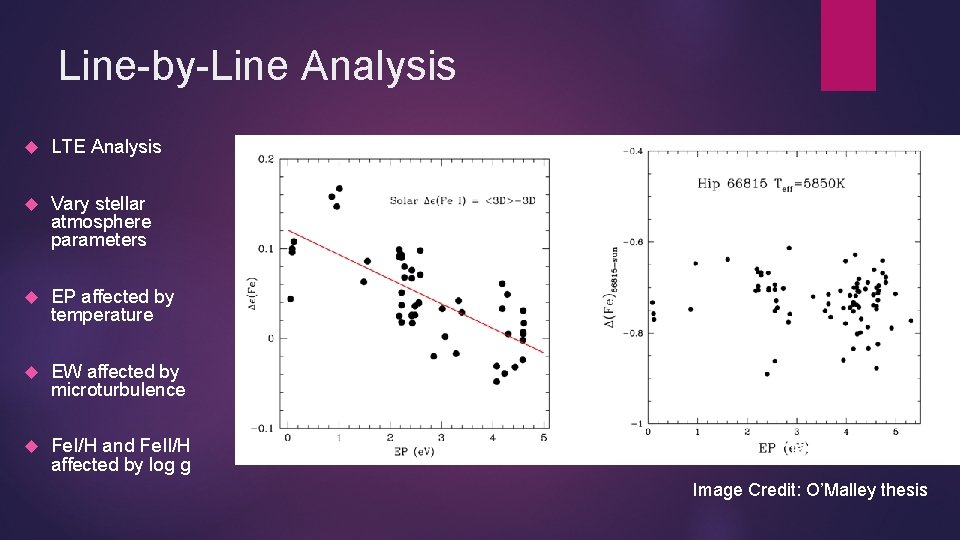
Line-by-Line Analysis LTE Analysis Vary stellar atmosphere parameters EP affected by temperature EW affected by microturbulence Fe. I/H and Fe. II/H affected by log g Image Credit: NASA Image Credit: O’Malley thesis
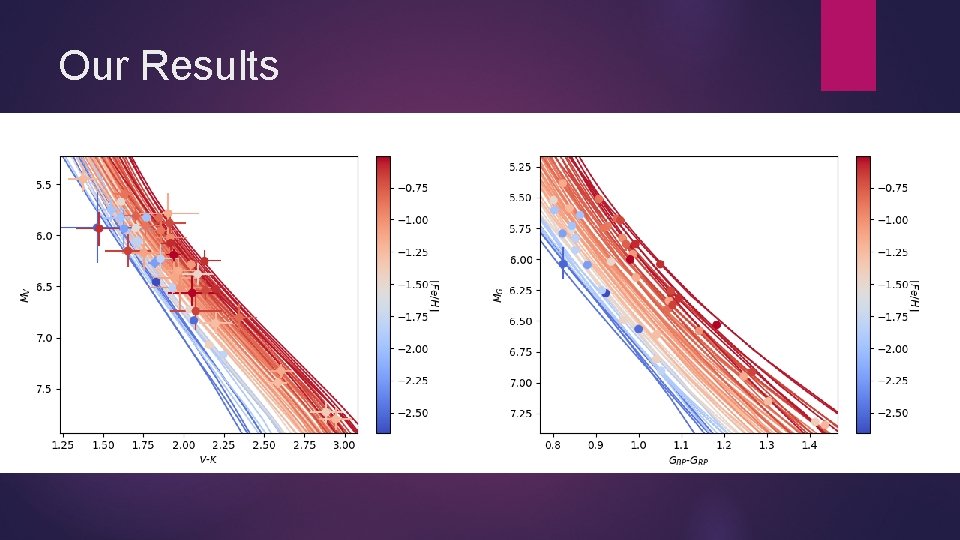
Our Results
Our Results
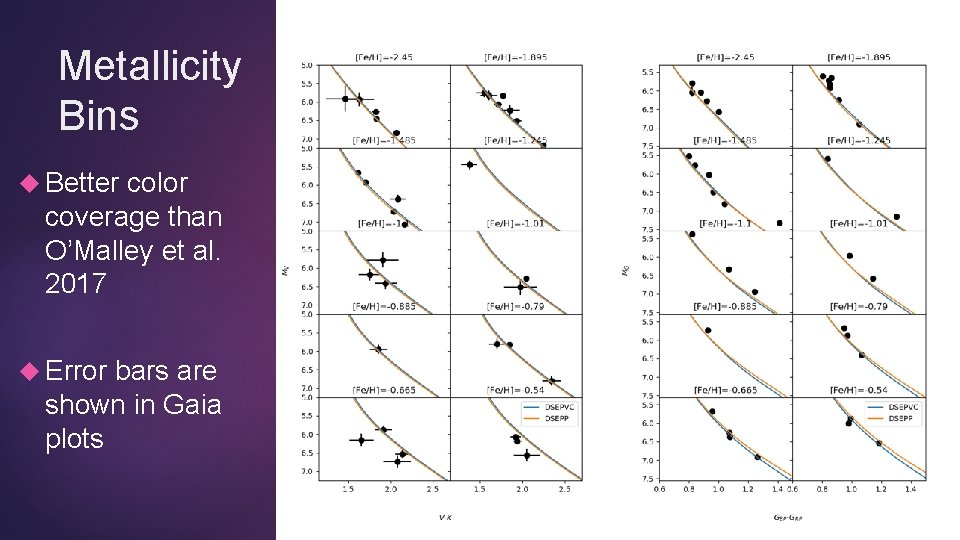
Metallicity Bins Better color coverage than O’Malley et al. 2017 Error bars are shown in Gaia plots
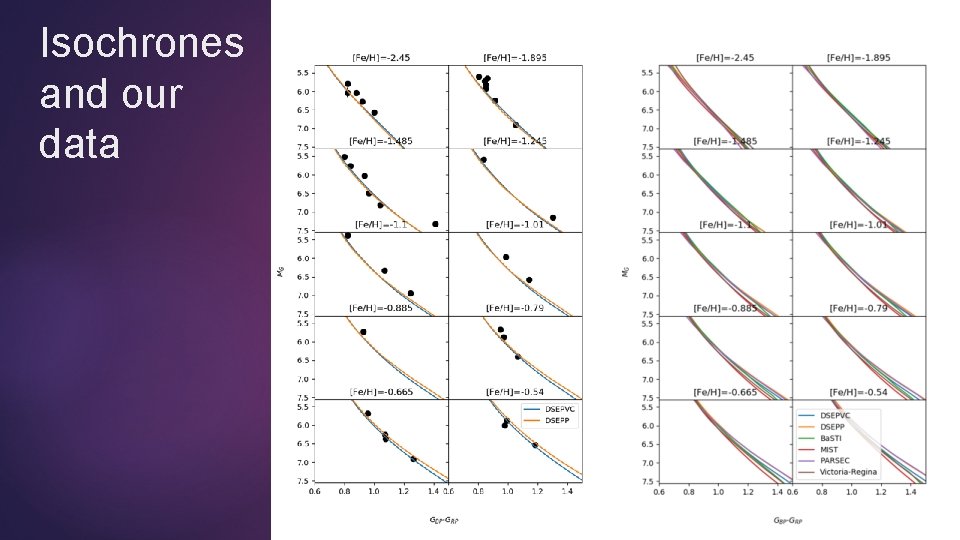
Metal-poor Models Only the most metal poor stars shown ([Fe/H]<-1. 8) Left panel – models from DSEP Right panel– all other models Models mostly agree!
Isochrones and our data
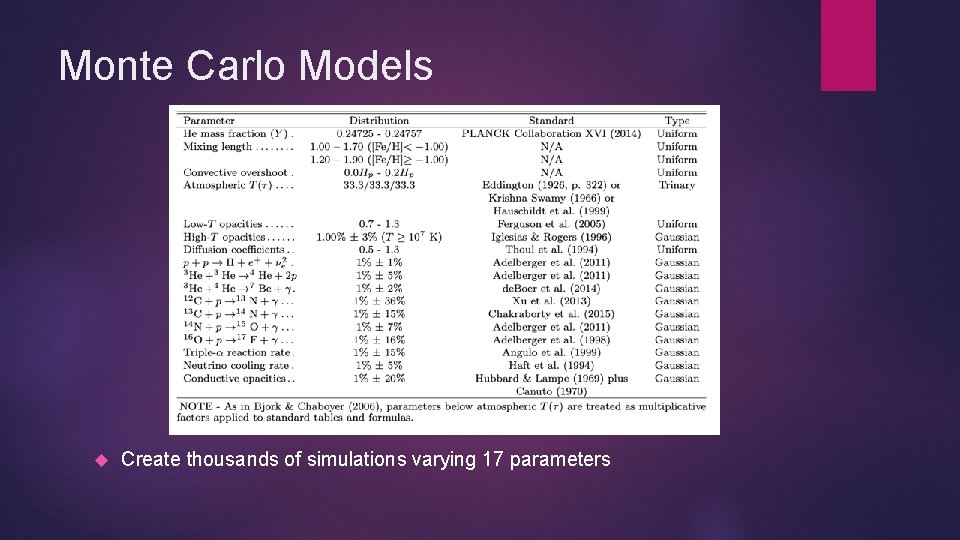
Monte Carlo Models Create thousands of simulations varying 17 parameters
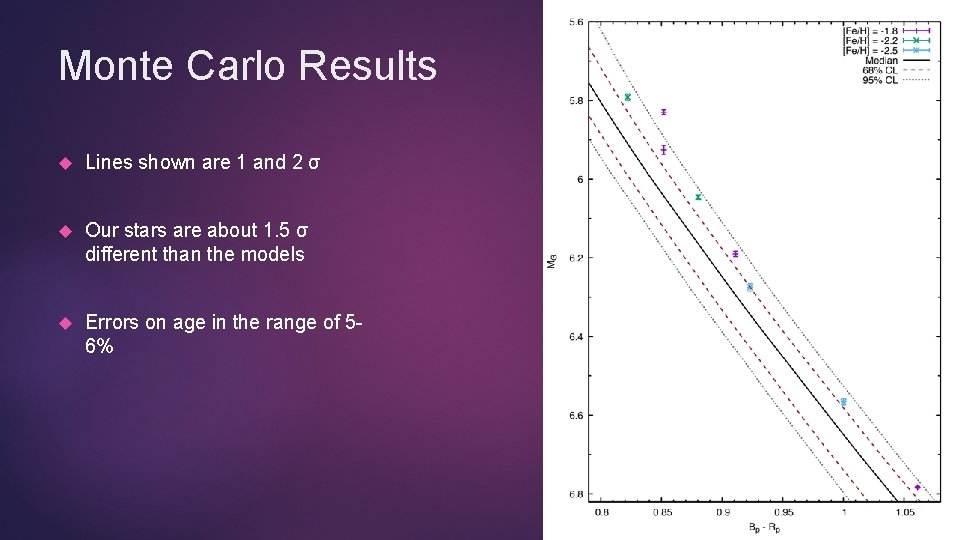
Monte Carlo Results Lines shown are 1 and 2 σ Our stars are about 1. 5 σ different than the models Errors on age in the range of 56%
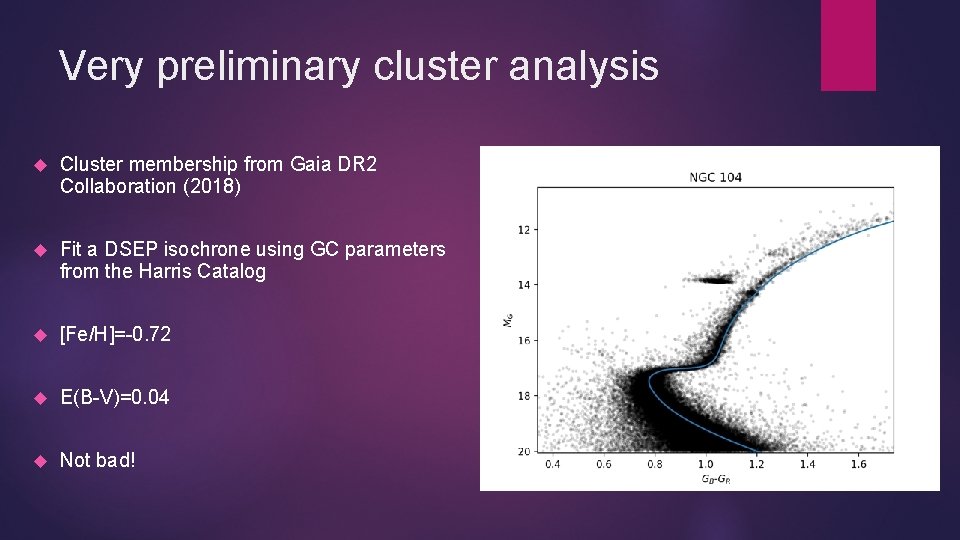
Very preliminary cluster analysis Cluster membership from Gaia DR 2 Collaboration (2018) Fit a DSEP isochrone using GC parameters from the Harris Catalog [Fe/H]=-0. 72 E(B-V)=0. 04 Not bad!
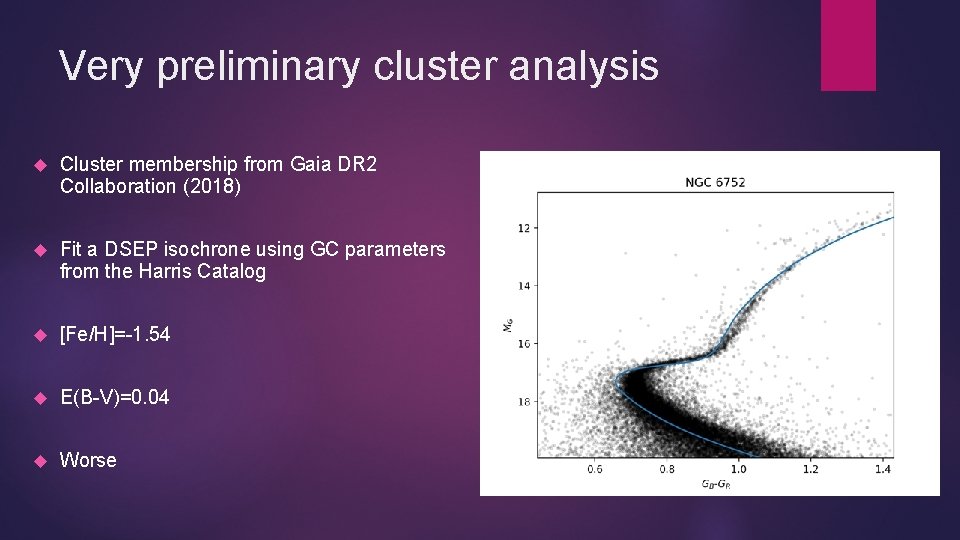
Very preliminary cluster analysis Cluster membership from Gaia DR 2 Collaboration (2018) Fit a DSEP isochrone using GC parameters from the Harris Catalog [Fe/H]=-1. 54 E(B-V)=0. 04 Worse
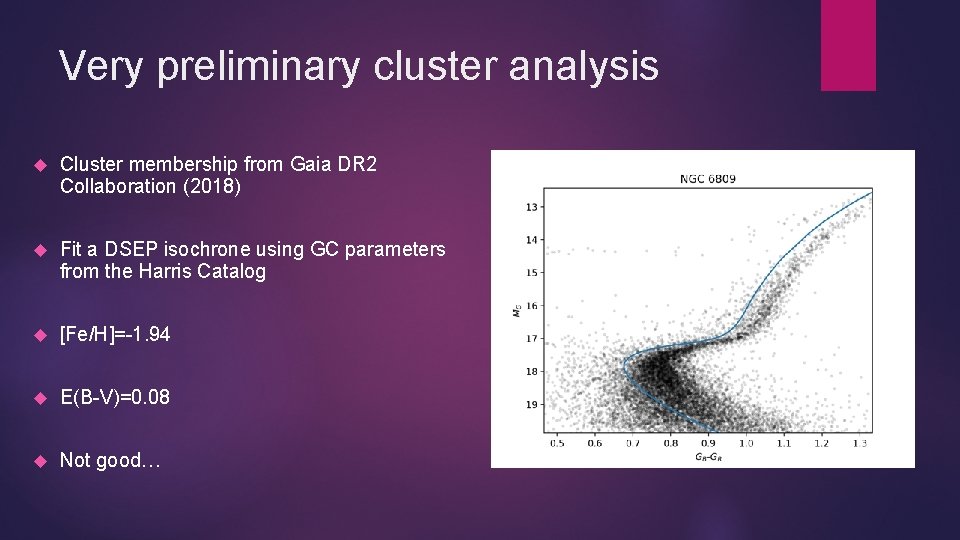
Very preliminary cluster analysis Cluster membership from Gaia DR 2 Collaboration (2018) Fit a DSEP isochrone using GC parameters from the Harris Catalog [Fe/H]=-1. 94 E(B-V)=0. 08 Not good…
Future work Understanding how to properly use the Gaia data More photometry from SAAO More spectra Globular Cluster analysis