
Testing Fume Hoods Isolators Chemical Production Development site
- Slides: 26
Testing Fume Hoods & Isolators Chemical Production & Development site Geel Michel Vangeel – EHS Department – October 2010
Very Toxic Substances n Active Pharmaceutical Ingredients / Isolated Process Intermediates (APIs/IPIs), usually PBOELHHC 3 B and 4 n The “gens”: Carcinogens / Mutagens / Reprogens n IDLH : Immediately Dangerous to Life and Health The use of ventilation controls must be managed very carefully when very toxic substances are handled 2
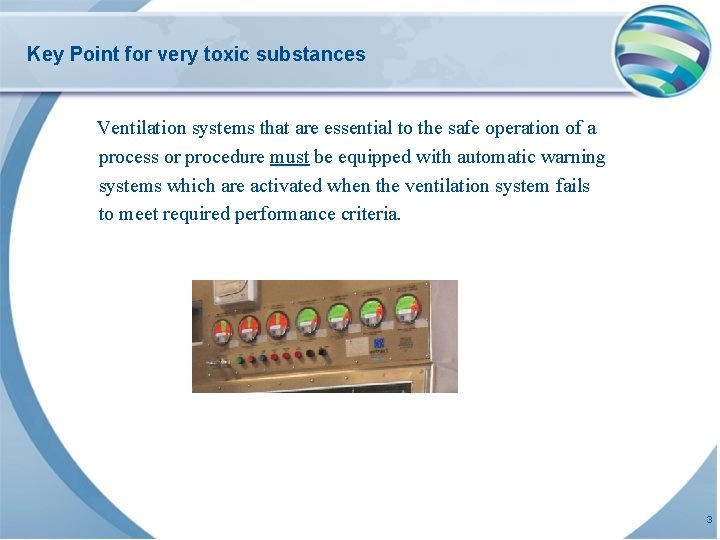
Key Point for very toxic substances Ventilation systems that are essential to the safe operation of a process or procedure must be equipped with automatic warning systems which are activated when the ventilation system fails to meet required performance criteria. 3
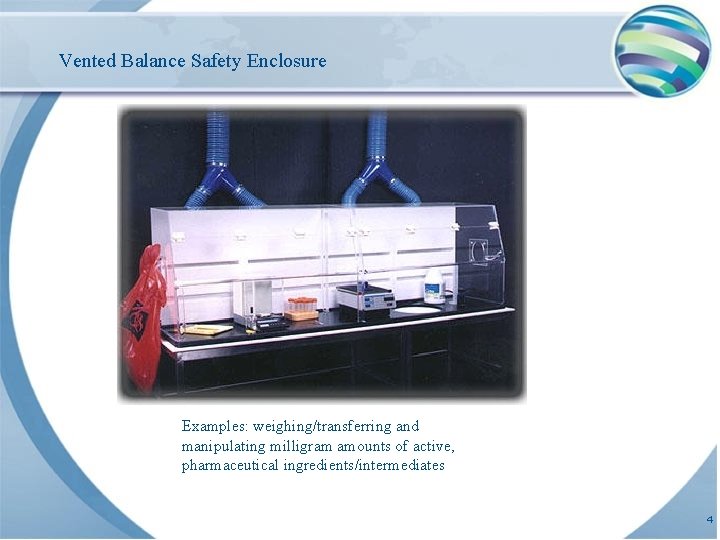
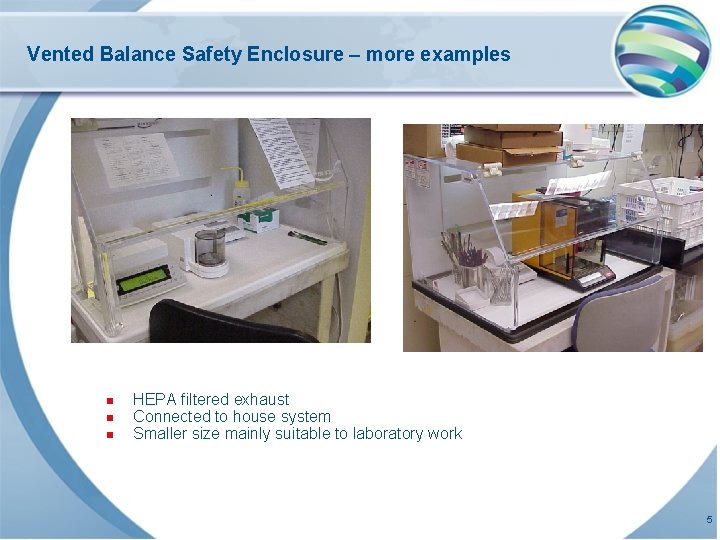
Vented Balance Safety Enclosure Examples: weighing/transferring and manipulating milligram amounts of active, pharmaceutical ingredients/intermediates 4
Vented Balance Safety Enclosure – more examples n n n HEPA filtered exhaust Connected to house system Smaller size mainly suitable to laboratory work 5
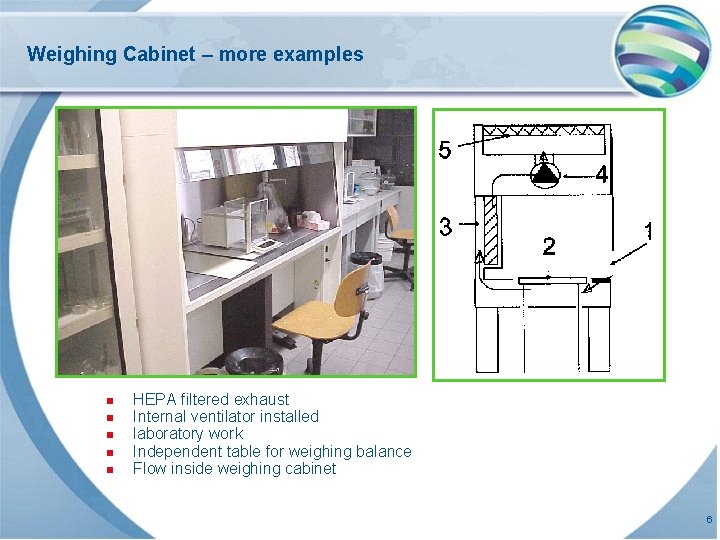
Weighing Cabinet – more examples n n n HEPA filtered exhaust Internal ventilator installed laboratory work Independent table for weighing balance Flow inside weighing cabinet 6
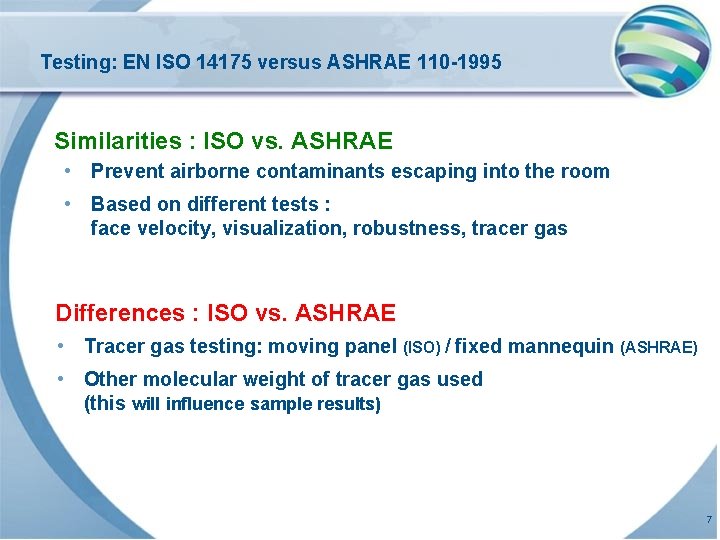
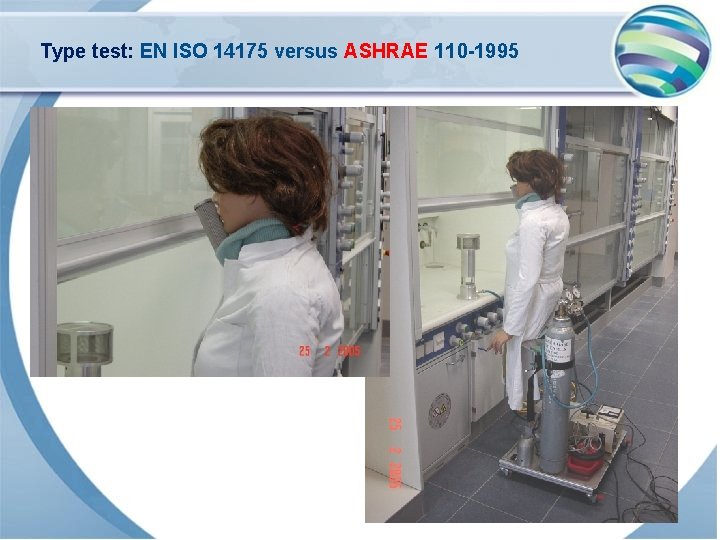
Testing: EN ISO 14175 versus ASHRAE 110 -1995 Similarities : ISO vs. ASHRAE • Prevent airborne contaminants escaping into the room • Based on different tests : face velocity, visualization, robustness, tracer gas Differences : ISO vs. ASHRAE • Tracer gas testing: moving panel (ISO) / fixed mannequin (ASHRAE) • Other molecular weight of tracer gas used (this will influence sample results) 7
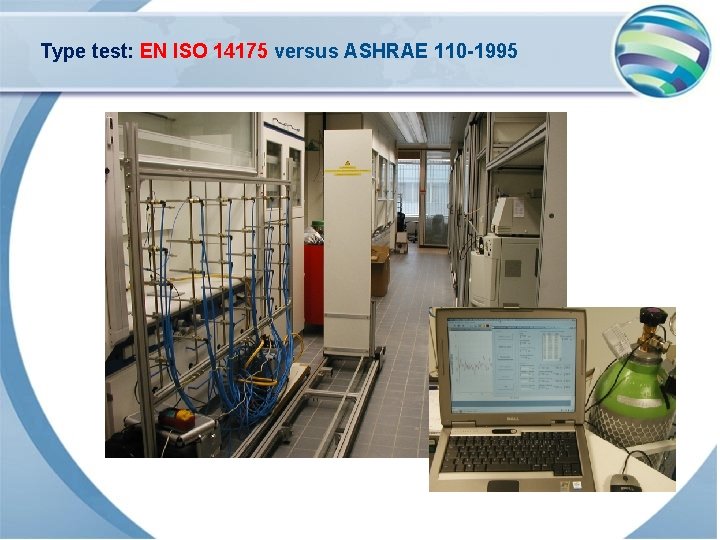
Type test: EN ISO 14175 versus ASHRAE 110 -1995
Type test: EN ISO 14175 versus ASHRAE 110 -1995
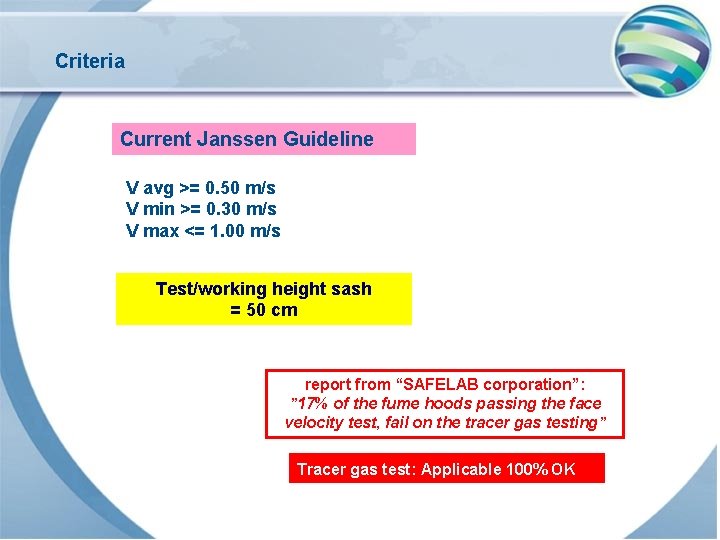
Criteria Current Janssen Guideline V avg >= 0. 50 m/s V min >= 0. 30 m/s V max <= 1. 00 m/s Test/working height sash = 50 cm report from “SAFELAB corporation”: ” 17% of the fume hoods passing the face velocity test, fail on the tracer gas testing” Tracer gas test: Applicable 100% OK
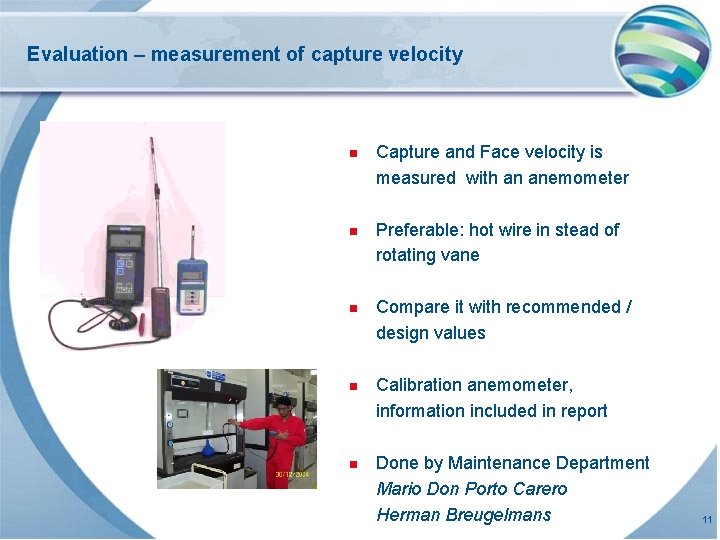
Evaluation – measurement of capture velocity n Capture and Face velocity is measured with an anemometer n Preferable: hot wire in stead of rotating vane n Compare it with recommended / design values n Calibration anemometer, information included in report n Done by Maintenance Department Mario Don Porto Carero Herman Breugelmans 11
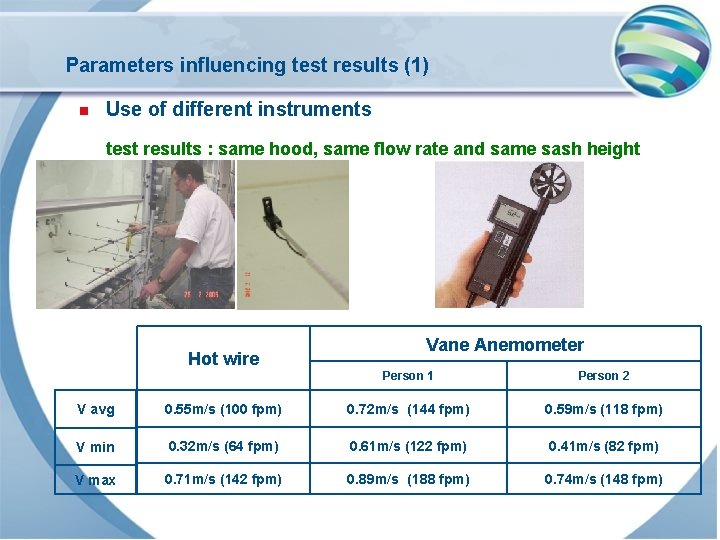
Parameters influencing test results (1) n Use of different instruments test results : same hood, same flow rate and same sash height Hot wire Vane Anemometer Person 1 Person 2 V avg 0. 55 m/s (100 fpm) 0. 72 m/s (144 fpm) 0. 59 m/s (118 fpm) V min 0. 32 m/s (64 fpm) 0. 61 m/s (122 fpm) 0. 41 m/s (82 fpm) V max 0. 71 m/s (142 fpm) 0. 89 m/s (188 fpm) 0. 74 m/s (148 fpm)
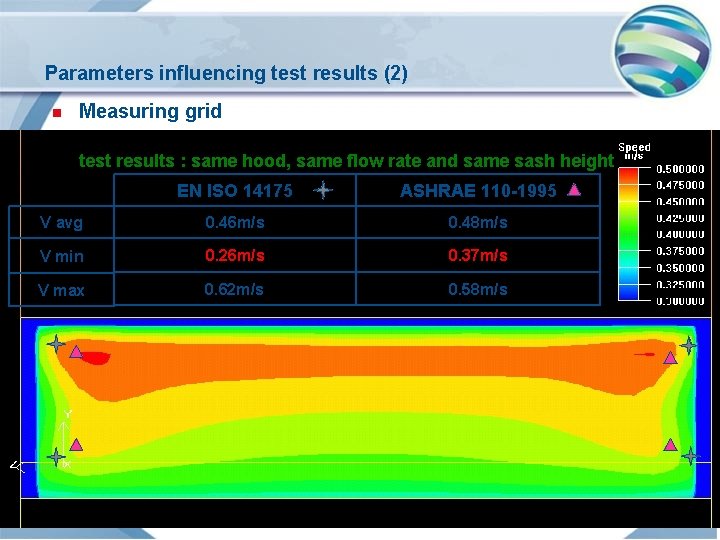
Parameters influencing test results (2) n Measuring grid test results : same hood, same flow rate and same sash height EN ISO 14175 ASHRAE 110 -1995 V avg 0. 46 m/s 0. 48 m/s V min 0. 26 m/s 0. 37 m/s V max 0. 62 m/s 0. 58 m/s
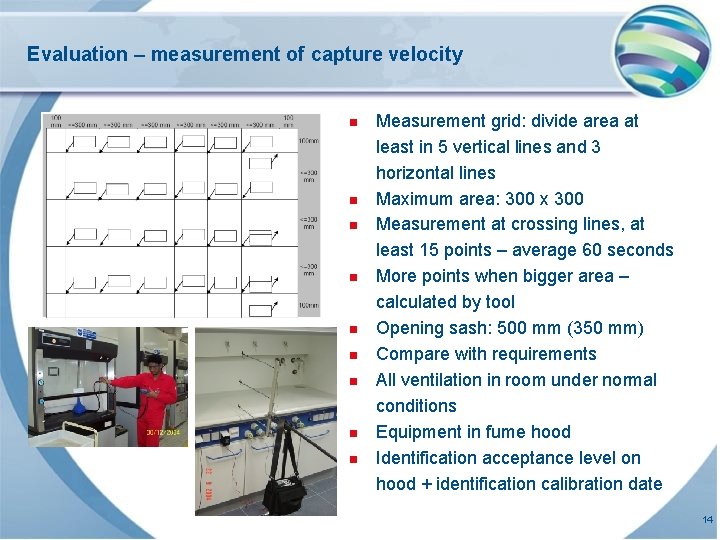
Evaluation – measurement of capture velocity n n n n n Measurement grid: divide area at least in 5 vertical lines and 3 horizontal lines Maximum area: 300 x 300 Measurement at crossing lines, at least 15 points – average 60 seconds More points when bigger area – calculated by tool Opening sash: 500 mm (350 mm) Compare with requirements All ventilation in room under normal conditions Equipment in fume hood Identification acceptance level on hood + identification calibration date 14
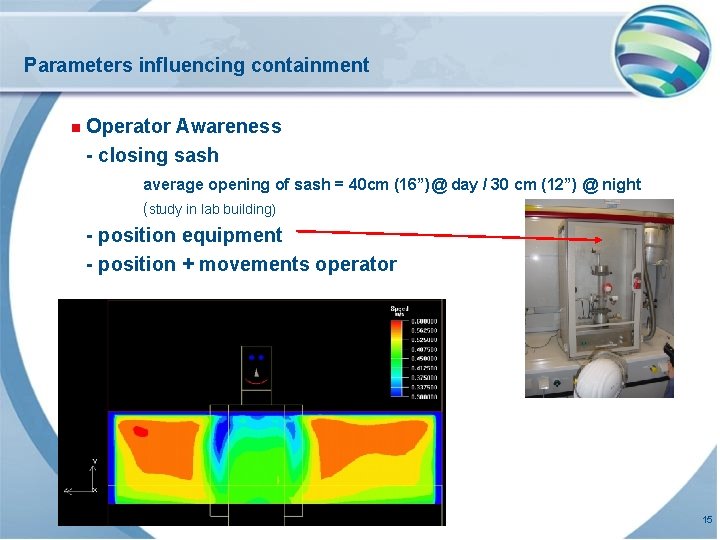
Parameters influencing containment n Operator Awareness - closing sash average opening of sash = 40 cm (16”)@ day / 30 cm (12”) @ night (study in lab building) - position equipment - position + movements operator 15
Periodic Inspection and Maintenance n A detailed plan of periodic maintenance must be established and adhered to n The objective is to verify that – the system is performing to specifications – Proper maintenance, cleaning and chemical treatment (if necessary) is undertaken is in the complete ventilation system – Any faults, abraded surfaces contamination are detected and corrected. – acceptable quality of air is entering the structure n The periodic maintenance frequency will vary with task but is typically annualy, additional monitoring when changes occur 16
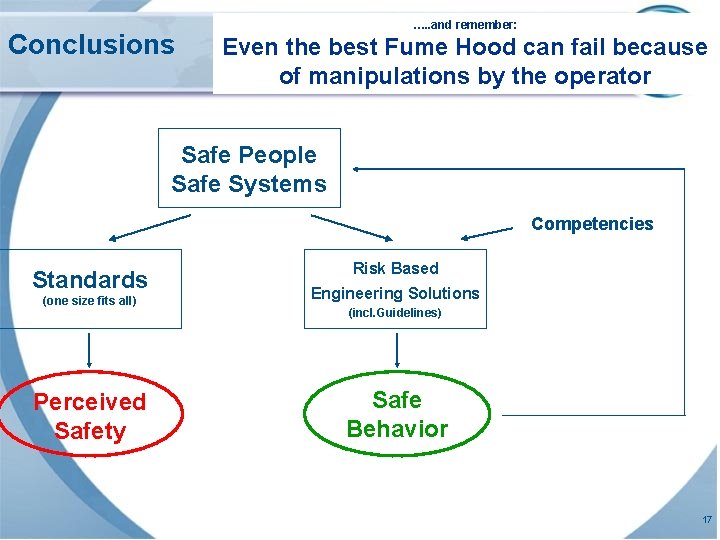
Conclusions …. . and remember: Even the best Fume Hood can fail because of manipulations by the operator Safe People Safe Systems Competencies Standards Risk Based (one size fits all) Engineering Solutions Perceived Safety Safe Behavior (incl. Guidelines) 17
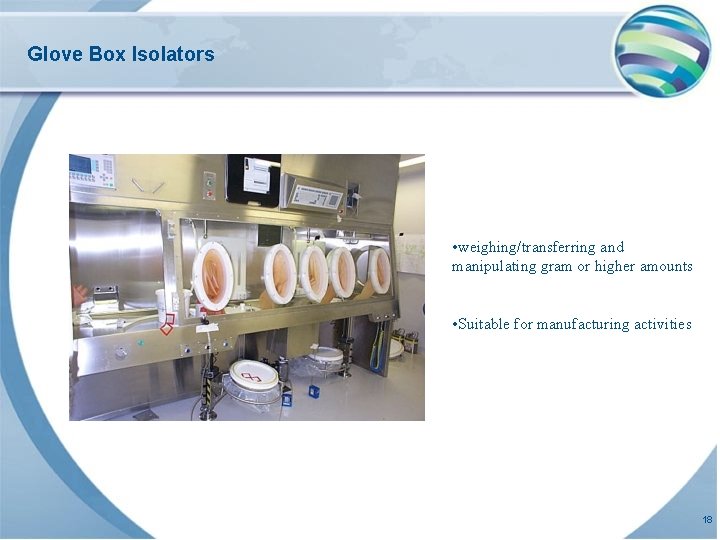
Glove Box Isolators • weighing/transferring and manipulating gram or higher amounts • Suitable for manufacturing activities 18
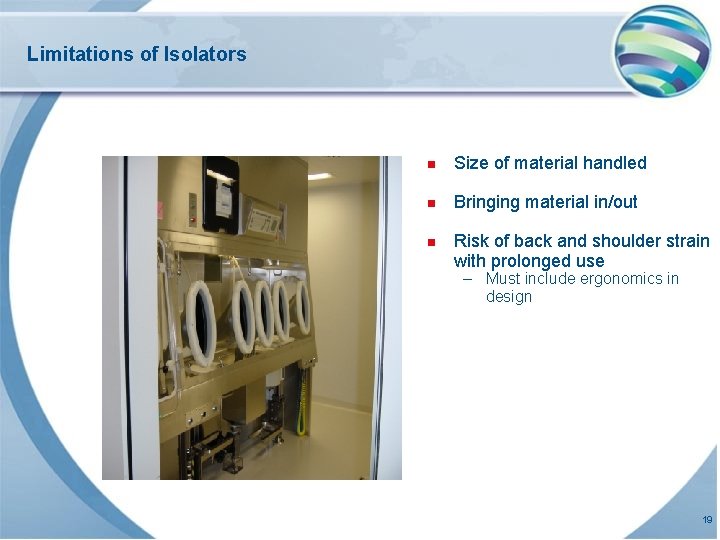
Limitations of Isolators n Size of material handled n Bringing material in/out n Risk of back and shoulder strain with prolonged use – Must include ergonomics in design 19
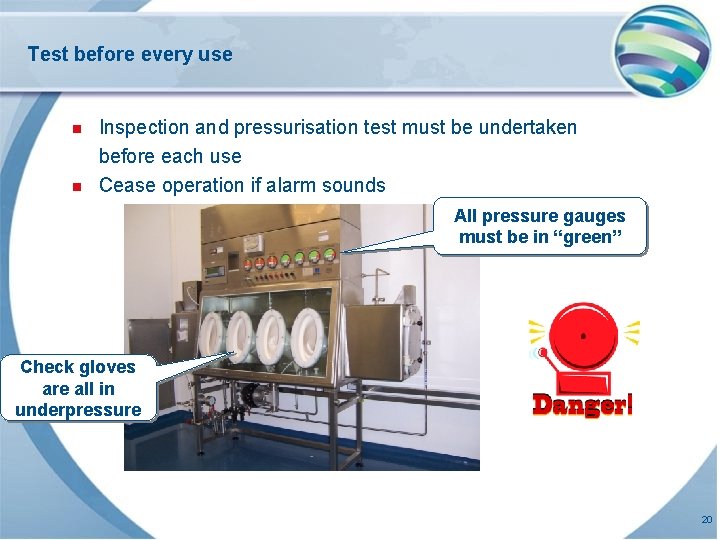
Test before every use n n Inspection and pressurisation test must be undertaken before each use Cease operation if alarm sounds All pressure gauges must be in “green” Check gloves are all in underpressure 20
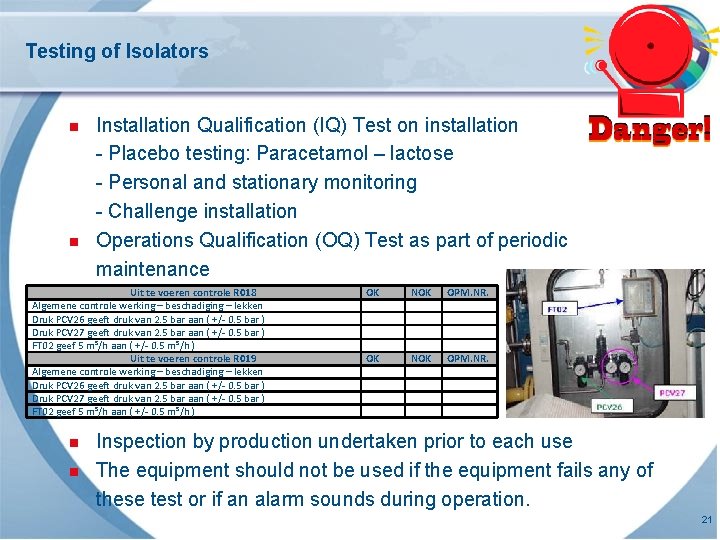
Testing of Isolators n n Installation Qualification (IQ) Test on installation - Placebo testing: Paracetamol – lactose - Personal and stationary monitoring - Challenge installation Operations Qualification (OQ) Test as part of periodic maintenance Uit te voeren controle R 018 Algemene controle werking – beschadiging – lekken Druk PCV 26 geeft druk van 2. 5 bar aan ( +/- 0. 5 bar ) Druk PCV 27 geeft druk van 2. 5 bar aan ( +/- 0. 5 bar ) FT 02 geef 5 m³/h aan ( +/- 0. 5 m³/h ) Uit te voeren controle R 019 Algemene controle werking – beschadiging – lekken Druk PCV 26 geeft druk van 2. 5 bar aan ( +/- 0. 5 bar ) Druk PCV 27 geeft druk van 2. 5 bar aan ( +/- 0. 5 bar ) FT 02 geef 5 m³/h aan ( +/- 0. 5 m³/h ) n n OK NOK OPM. NR. Inspection by production undertaken prior to each use The equipment should not be used if the equipment fails any of these test or if an alarm sounds during operation. 21
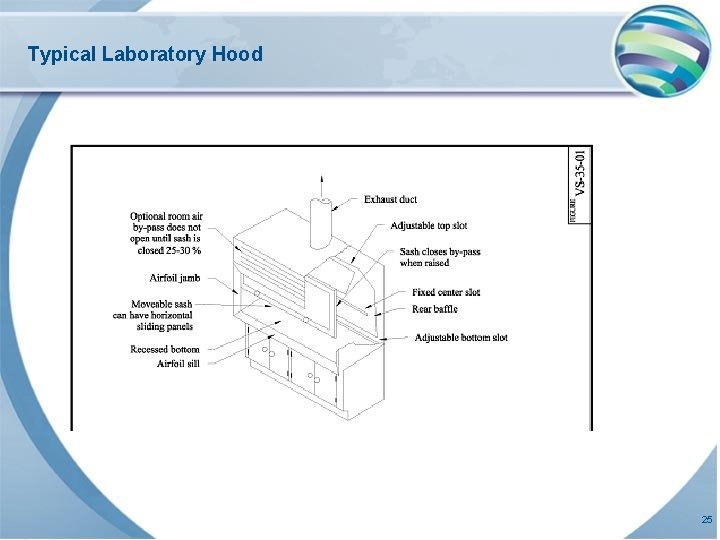
Design guidance n A selection of drawings from the ACGIH manual follow, showing recommended designs. Further details are provided in the manual 22
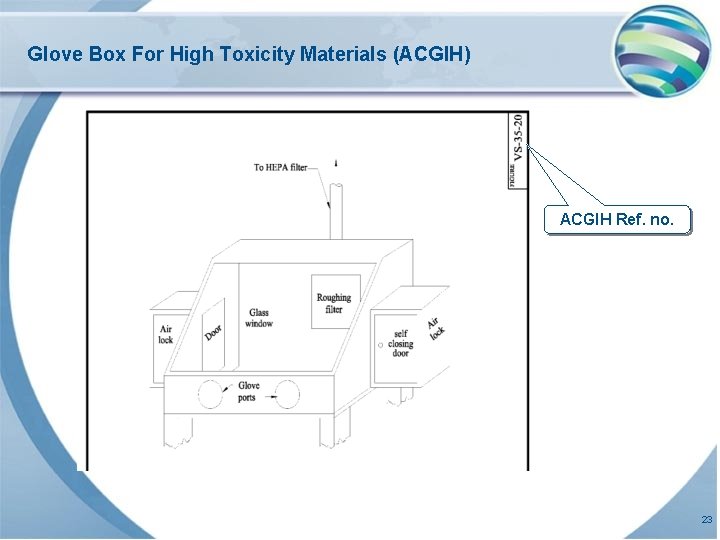
Glove Box For High Toxicity Materials (ACGIH) ACGIH Ref. no. 23
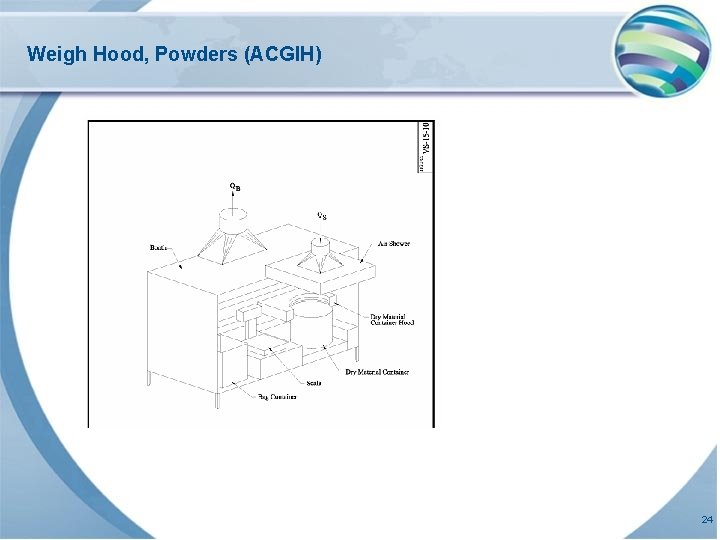
Weigh Hood, Powders (ACGIH) 24
Typical Laboratory Hood 25
Summary n Great care must be taken in control of exposure to very hazardous substances n Regular testing must be scheduled and documented n Combination Engineering controls and Safe Behaviour & training 26