
Testing for Carbohydrates AS Level Biology Foundations in

Testing for Carbohydrates AS Level Biology Foundations in Biology Basic Components of Living Systems
16 January 2022 Testing for Carbohydrates and Sugars Lesson Objectives: To be able to: • Describe the test for reducing and non-reducing sugars • Explain when the Benedicts test can be described as both qualitative, semi-quantitative and quantitative. • Analyse results obtained from the Benedicts test
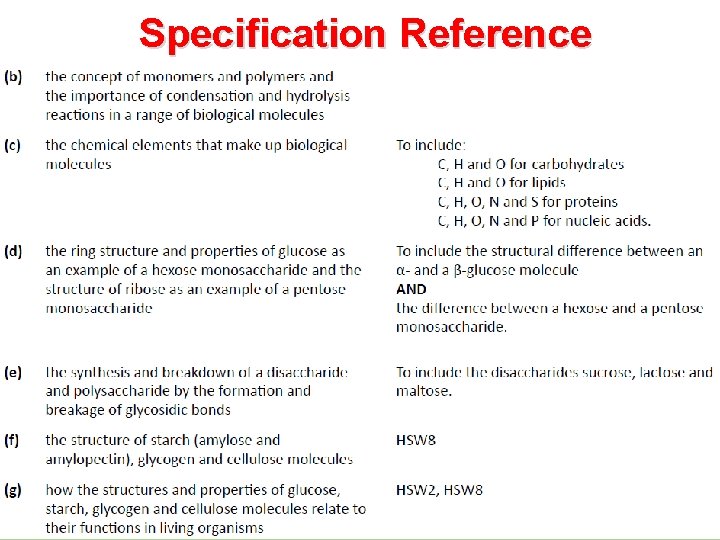
Specification Reference
Iodine test for starch 4 of 30 © Boardworks Ltd 2008
Benedict’s test for reducing sugars 5 of 30 © Boardworks Ltd 2008
![Benedict's test: reducing sugars [All monosaccharides + maltose and lactose] Sucrose and polysaccharides NOT](http://slidetodoc.com/presentation_image_h2/7713cdb052c78107ae3c02b9a2d8f92b/image-6.jpg "Benedict's test: reducing sugars [All monosaccharides + maltose and lactose] Sucrose and polysaccharides NOT")
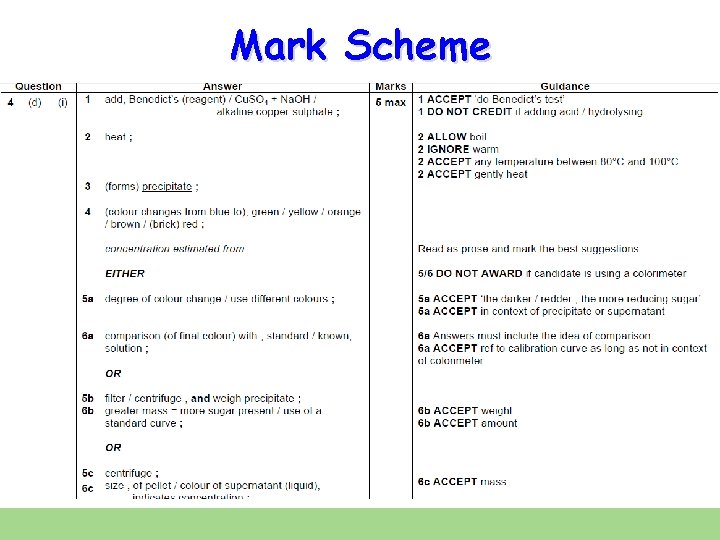
Benedict's test: reducing sugars [All monosaccharides + maltose and lactose] Sucrose and polysaccharides NOT reducing sugars Use Practical Activity Sheet 1, then answer the questions Method Starting Final colour Colour (positive result) (Negative Result) 1. Add 2 cm 3 of the sample to be tested Blue to a test tube. If the sample is not already in liquid form, first grind it up in water. 2. Add 2 cm 3 of Benedicts reagent. 3. Heat the mixture in gently boiling water bath for 5 minutes. Green –very low Yellow- low Brown – medium Brick-red/orange red- high

Practical 1 Questions
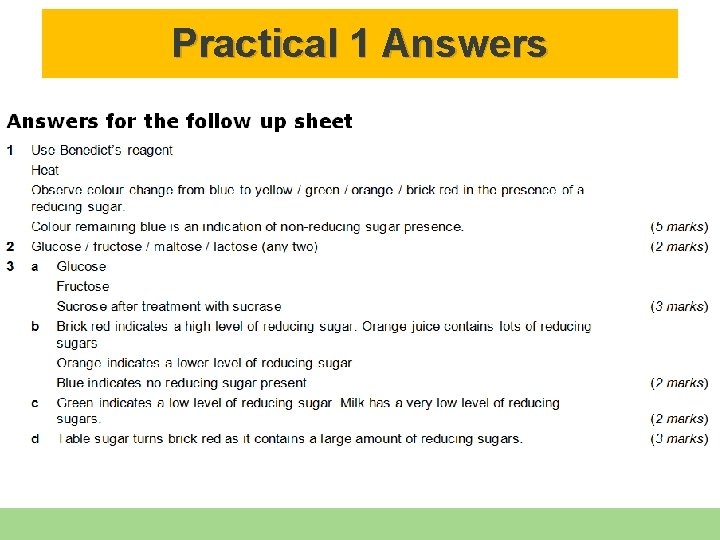
Practical 1 Answers
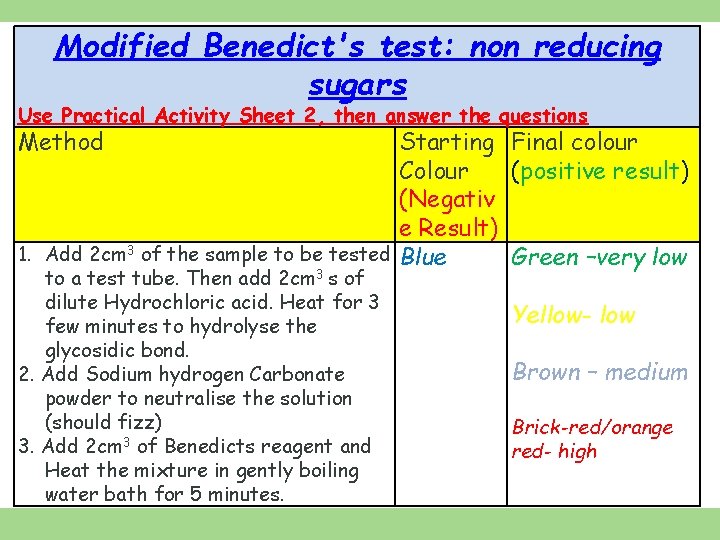
Modified Benedict's test: non reducing sugars Use Practical Activity Sheet 2, then answer the questions Method Starting Final colour Colour (positive result) (Negativ e Result) 1. Add 2 cm 3 of the sample to be tested Blue Green –very low to a test tube. Then add 2 cm 3 s of dilute Hydrochloric acid. Heat for 3 few minutes to hydrolyse the glycosidic bond. 2. Add Sodium hydrogen Carbonate powder to neutralise the solution (should fizz) 3. Add 2 cm 3 of Benedicts reagent and Heat the mixture in gently boiling water bath for 5 minutes. Yellow- low Brown – medium Brick-red/orange red- high
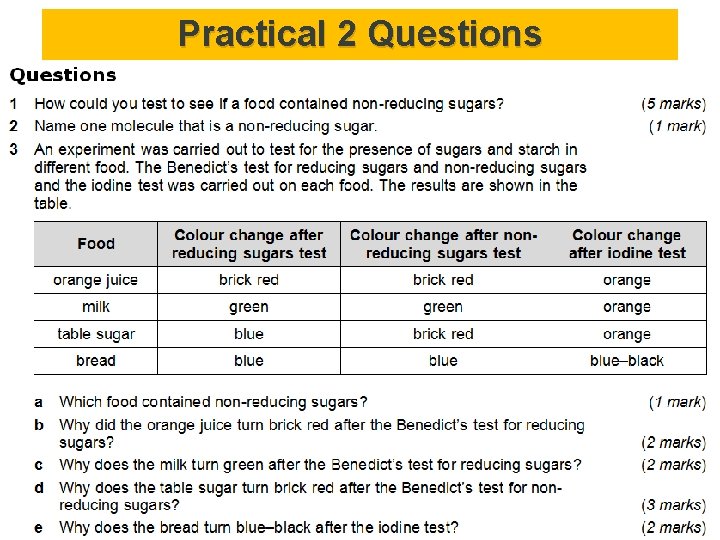
Practical 2 Questions
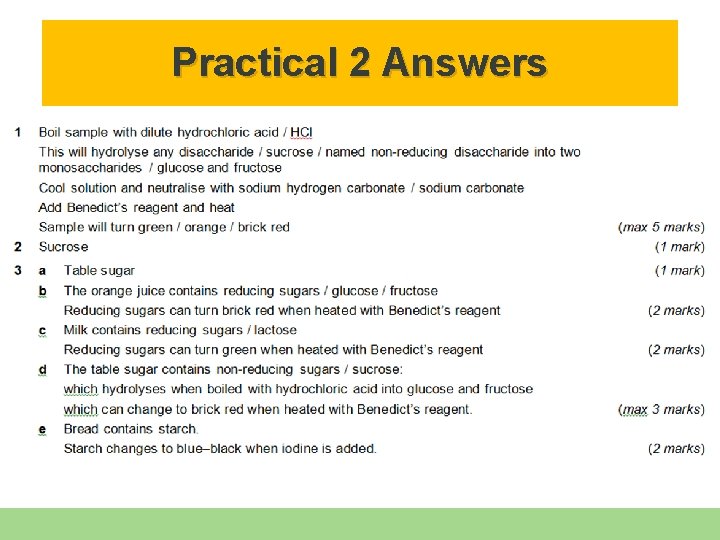
Practical 2 Answers
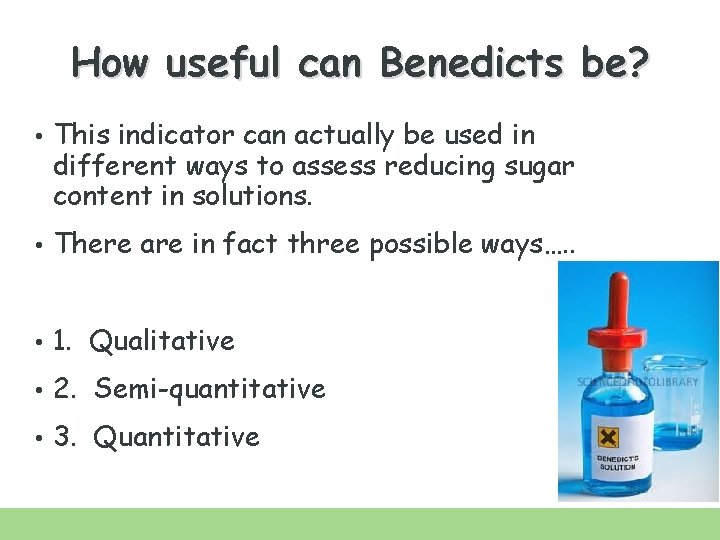
How useful can Benedicts be? • This indicator can actually be used in different ways to assess reducing sugar content in solutions. • There are in fact three possible ways…. . • 1. Qualitative • 2. Semi-quantitative • 3. Quantitative
Which statement describes a (a) qualitative (b) semi-quantitative (c) quantitative method of using Benedicts? q. A red precipitate (Copper oxide) shows that a reducing sugar is present, with NO indication of the exact amount. q. If you weighed the amount of copper oxide precipitate then this would give you a numerical value for the amount. q. The more colour changes seen on heating with Benedicts, the more sugar can be estimated to be in the sample being tested.
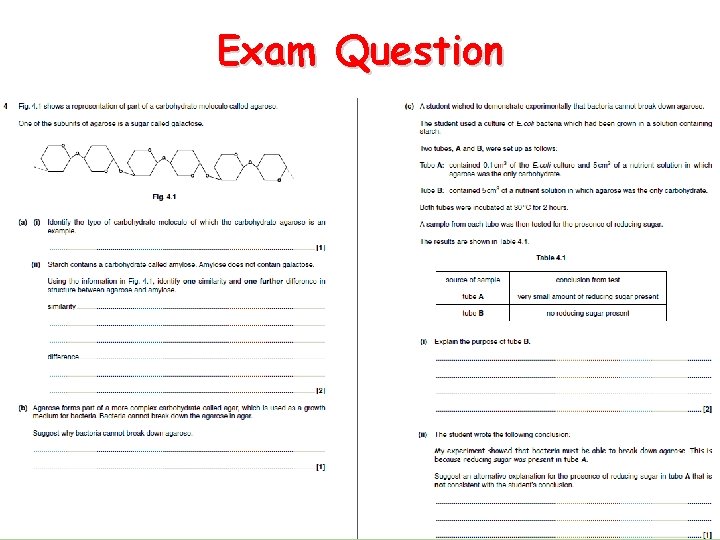
Exam Question
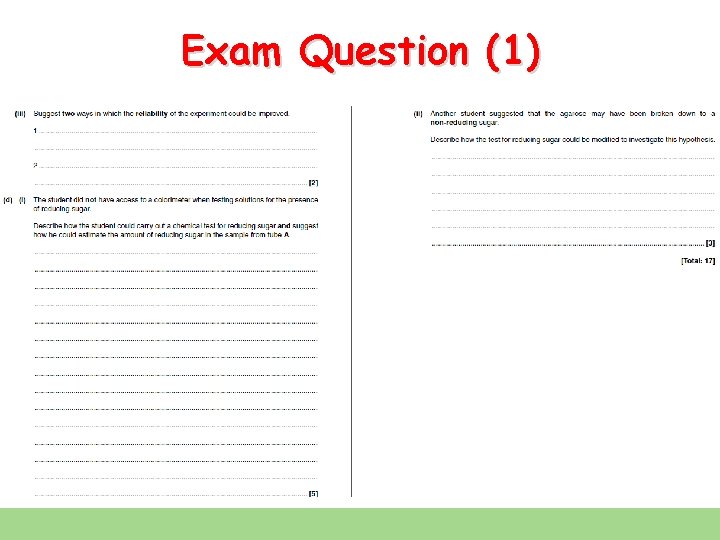
Exam Question (1)
Mark Scheme
Mark Scheme
Mark Scheme
Mark Scheme
Mark Scheme
Exam Question (2)
Exam Question (2)
Mark Scheme
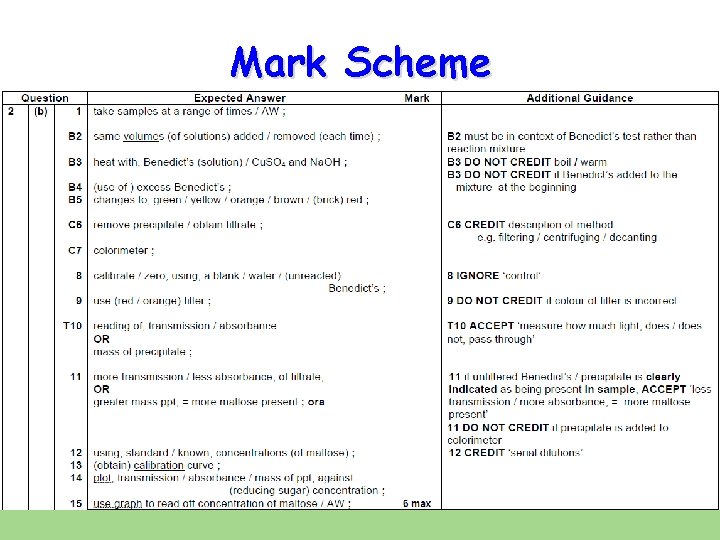
Mark Scheme
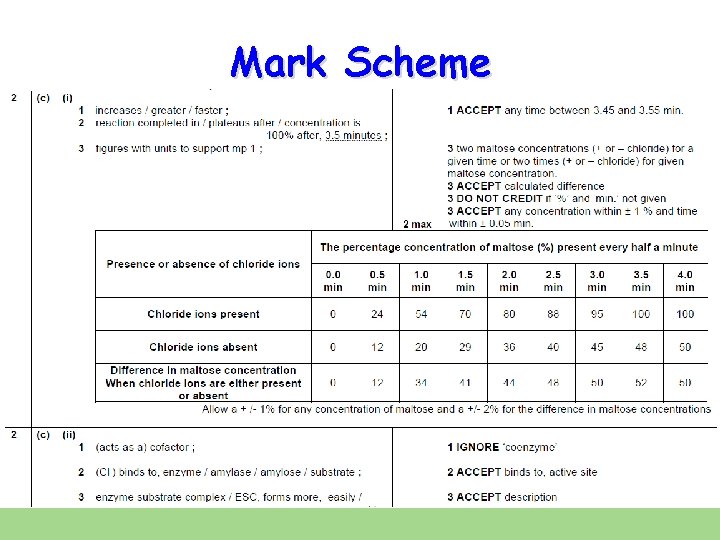
Mark Scheme
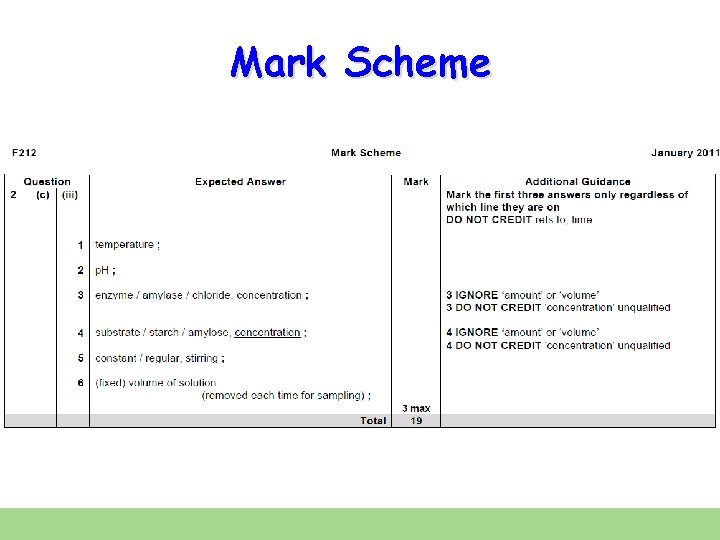
Mark Scheme
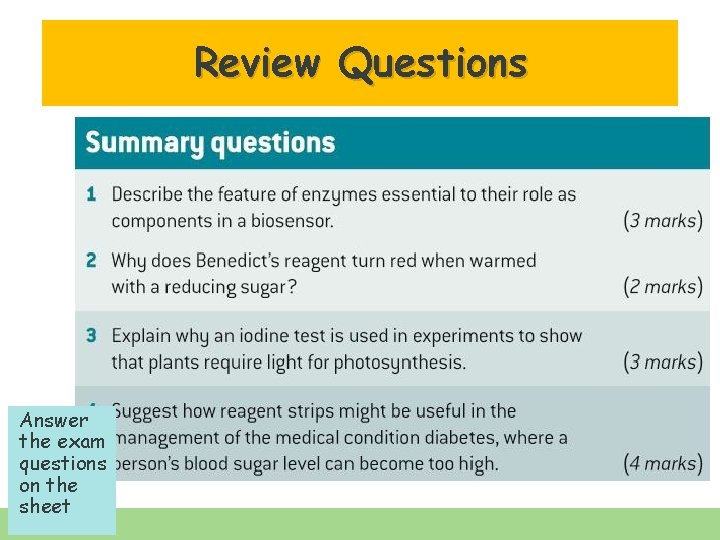
Review Questions Answer the exam questions on the sheet
16 January 2022 Testing for Carbohydrates Back to the Objectives… Lesson Objectives: To be able to: • Describe the test for reducing and non-reducing sugars • Explain when the Benedicts test can be described as both qualitative, semi-quantitative and quantitative. • Analyse results obtained from the Benedicts test
- Slides: 28